
Lawfare Daily: Why We Fall for Charlatans, with Quico Toro
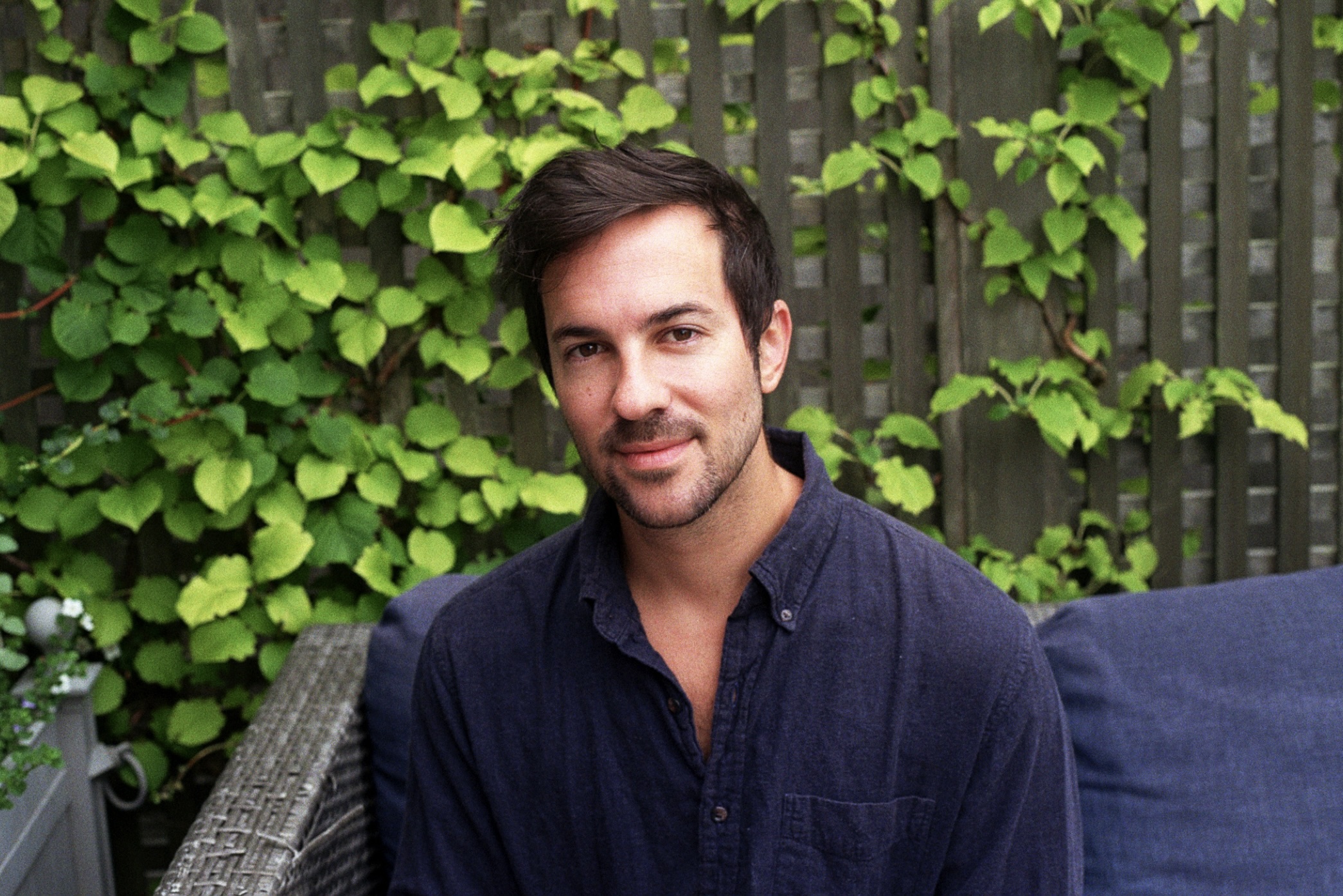
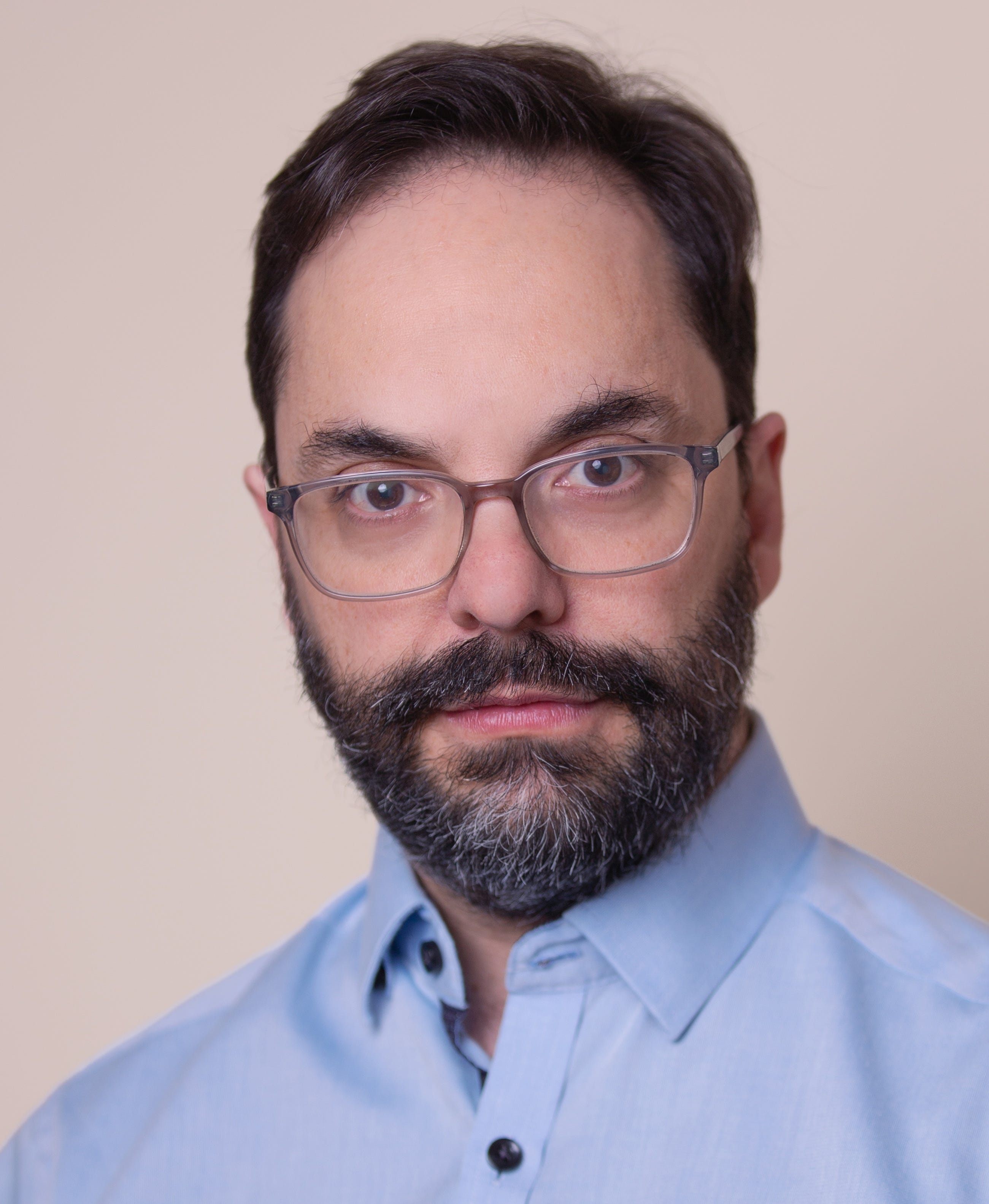
On today’s episode, Lawfare Managing Editor Tyler McBrien sits down with Quico Toro, global opinion columnist at the Washington Post and Director of Climate Repair at the Anthropocene Institute, to talk about his new book, “Charlatans: How Grifters, Swindlers, and Hucksters Bamboozle the Media, the Markets, and the Masses,” which he wrote with his co-author, Moisés Naím.
They discuss what defines a charlatan, the cognitive biases they exploit to take people in, and how technological and societal changes have made charlatanism one of today’s most urgent crises.
To receive ad-free podcasts, become a Lawfare Material Supporter at www.patreon.com/lawfare. You can also support Lawfare by making a one-time donation at https://givebutter.com/lawfare-institute.
Click the button below to view a transcript of this podcast. Please note that the transcript was auto-generated and may contain errors.
Transcript
[Intro]
Tyler McBrien: It's
the Lawfare Podcast.
I'm Tyler McBrien, managing editor of Lawfare, with Quico
Toro, global opinion columnist at the Washington Post and director of climate repair
at the Anthropocene Institute.
Quico Toro: The
victims, or the potential victims, are all of us, right? Like, if you're a
normal person, you're a vi-, a potential victim.
It's the charlatans that are different. It's the charlatans
that are weird. And, of course, we want to gawk at them because they get away
with amazing stuff.
Tyler McBrien: Today we're talking about a new book Quico wrote along with his co-author, Moisés Naim called “Charlatans: How Grifters Swindlers and Hucksters Bamboozle the Media, the Markets, and the Masses.”
[Main episode]
So Quico, I want to start where the book starts, that is to
say, in the 16th century. A character named Mamugnà, if I'm saying that correctly,
probably not.
Quico Toro: Mamugnà.
Tyler
McBrien: Mamugnà. That's it.
Can you describe that story, where
you start, and why you started with this particular charlatan?
Quico Toro: So, Mamugnà
was a fascinating guy. He was from the east, the mystical, unknown Cyprus,
which was a colony of Venice at the time––that Venice had lost, actually, some
years before.
Because in the end of the 16th century, if you think about
Europe at that time, Venice had been this kind of Mediterranean superpower
because they controlled all the trade coming from the Silk Road.
But by the end of the 16th century, the Spanish had found a way
to the Amer––had discovered the Americas, as they would see it. The Portuguese
had started to get a trading network all throughout Africa and into Asia.
So there was no point to Venice anymore. So the city that had
been really used to running the Mediterranean suddenly didn't have enough money
to maintain an armed forces that could protect its empire.
So they had lost Cyprus. So he was a kind of refugee, really.
He made his way back to Venice, and he convinced the city fathers of Venice
that in the mystical east, they had found the recipe for transmuting base metal
into gold.
So this was cutting-edge science in the 1580s. Every court had
an alchemist. And Mamugnà actually got the city fathers of Venice, who believed
that he had figured out, he had finally cracked the code, and he could turn
base metal into gold.
Tyler McBrien: So I
like that you started with that story because it, it establishes from the
outset that charlatanism and charlatans are not a new phenomenon. I mean, they––as
long as we've had recorded history, there are instances of charlatans.
So just even taking this case or even one of the 20+ cases,
what are the main traits, the main patterns, strategies of––what defines a
charlatan?
Quico Toro: Yeah.
Well, the neat thing about Mamugnà is that he didn't convince the senators of
Venice of anything. What he did is he connected with their dreams, right?
They had this vision of the world where Venice would always be
a superpower, and the most important city in southern Europe. Where it would
always be rich and fabulous, and where their position in this world could be
maintained.
And this was a fantasy. This was no longer true by the 1580s. But
they wanted it to be true so badly that they put themselves in the
psychological position where anybody who came along and sold them a fancy tale
about how they could make that dream come true, just would have them from the
get-go because they, their identities were bound up with this dream being true.
So that's what Mamugnà did, but that's what charlatans always
do. And that's what all charlatans do. That is, in a way, what defines the
charlatan. They interpose themselves between you and your dreams, right? And
they convince you that if you want your dream to become true, you need them.
So it's very subtle, but it definitely works. And in the book
we go into the different ways that it works and why it's so difficult to
defend, even though from the outside it seems so obvious that most charlatan
schemes are just nonsense.
Tyler McBrien: Yeah.
You get the sense, reading the book, that it's so easy to fall victim that it
could really happen to anyone. The diversity of charlatans is mirrored only by
the diversity of their victims and their marks in the book.
And I think this speaks to the very elemental psychological
traits that you identify that make all humans, all people who have a sort of a
normal psychology, so to speak, susceptible to this kind of thing. So maybe we
should go there. What were these necessary, sort of, paths into psychology that
you had to service?
What are these cognitive biases that you really focus in on?
Quico Toro: Well, we
didn't have to go very deep, because the best-known sort of granddaddy of the
cognitive biases. The first one you learn about when you go to college and you
take your first psych course is confirmation bias.
And confirmation bias––our disposition to process new data, new
things that come into our minds in light of those that we already believe in
and our prior beliefs, right? So that, that process is very fundamental to the
way the human operating system works, right? And it turns out that this is one
of the best-established facts in social psychology.
This has been, like, studied every possible way. And we go into
every interaction about things that matter to us or that don't matter to us looking
for reasons to keep believing what we already believe. So that's just the way
our mind works. 99% of the time, that disposition helps us to get along as
people and helps society work better.
But there’s, there are some edge cases where some
ill-intentioned people can seize, can see confirmation bias and think of it as
a vulnerability, as something to be exploited, as something that they can work
with. Because if they know that if they just say to you the things that you
already believe and they say it passionately, and as a champion for that thing?
Man, you, it's so hard then to disbelieve the next thing that they say.
Tyler McBrien: And it
makes it even harder because confirmation bias and some of the other cognitive
biases that you talk about are subconscious or even unconscious. They happen so
quickly.
So in, in thinking about that, how can people, you know,
inoculate themselves or check themselves if something is happening in, you
know, such a split second?
Quico Toro: Well, I
mean, it's very hard. You can't prevent confirmation bias as such because you'd
have to like change species, I think. This is really baked deep into the way
our cognition works.
So what you can do is you can add on a new another layer. So,
confirmation bias is definitely fast thinking, but you can always add a layer
of slow thinking, of like reconsidering.
It's very hard to do because it's effortful. You know,
confirmation bias happens automatically before you're even aware of it. Nobody
gets tired of confirmation biasing all day. The thinking is effortful. And not
everybody is as good at it as everybody else. I mean, that's just reality. But
so, that's one thing that you can say.
But the other thing that we saw again and again in the book is
that not always, but often, the people who get taken in are socially isolated.
So social isolation definitely seems to be a risk factor for victimization from
a charlatan. There are obvious exceptions, but often the charlatans, what they
do these days is to try to create a community around their followers, so that
their followers feel embedded in a group of people who are like them and who
get it because they get the charlatan, right?
And here we start to move into more cultish territory. Quite
often we end up with charlatans that, as time goes by, end up in these kind of
cult dynamics.
Tyler McBrien:
Hearkening back to what we spoke about at the top of the conversation, charlatanism
is in many ways timeless. The strategies employed by charlatans and the
psychology that makes victims susceptible have always existed with us.
But the environment in which charlatans operate has changed
vastly. Social isolation, I think, is one example. Can you speak a bit about
how the changing technology, changing societal norms, have really helped, I
think, the side of the charlatan?
And in speaking to that, you know, why you wrote this book now
if it's such a timeless topic.
Quico Toro: Yeah.
The interesting thing is that if you look at charlatans 150
years ago, you mostly only find two varieties, right? There's “get rich quick,”
like Mamugnà, or there's “get well quick,” so cure-all and medical charlatanism.
Which is, you know, snake oil. It's on the cover of our book. You know, it's
very classic.
But why were there really only two? Well, because technology at
the time, without mass media, without electronic communications––it's difficult
for you to micro-target a particular audience, and so you really have to stick
to the most, like broad, widespread niches.
The ones that like you can set up a soapbox and stand on that
and start talking in a market square in any town in Europe in 1580, and find
somebody who will be interested in it. So it's just those two.
But we live in a hugely transformed information ecosystem,
where it is increasingly not just possible, but kind of easy and just
straightforward, with an app, to go and to target a message at a particular
group of people that can be very niche, right?
This is what algorithms are good at, right? This is what the
digital economy offers, is precisely the possibility to target a very narrow
audience. And so with that capability, you see this kind of springtime for
charlatans in that more and more specific niches are being targeted, right?
Tyler McBrien: Can
you pull out one of the charlatans you talk about to really illustrate, to
drive this point home? I mean, one that immediately comes to mind, I think, is
the Turkey FarmVille example. But I mean, you know, take any of the 20+ that
you’ve written about.
Quico Toro: Mehmet
Aydın, from Turkey, is the classic example. Because it's so niche, you know?
He was a kid from an agricultural town just south of Istanbul.
He grew up sort of in a farming family, but then he moved to a city, like so
many people in the developing world do, and he ended up working a city job. And
it was kind of isolated, and he missed small-town, sort of, agricultural life in
Turkey. He realized that a lot of Turkish people in cities do too.
There's just this feeling that like there's a connection to the
soil that makes you truly Turkish. And they miss that, if you live in the city.
And this was also in the glory days of FarmVille. You remember, on Facebook,
the old, like, stupid farm simulator game? Well, it swept the world. It swept
Turkey.
And this kid, Mehmet Aydın, got hooked on it. And he started
thinking, I wonder how I could play with this. And he actually created a kind
of parallel, like copycat FarmVille. He called it Farm Bank.
But Farm Bank wouldn't just be pixels on the screen. It would
also be cows and fields. So he told people that if they gave him money, he
would invest it in Turkish agriculture.
He started to do all this marketing about this, like,
primordial connection of Turkish people to their soil. And he also started
paying really good returns to early investors.
And so it became a kind of mania in Turkey, where urban people,
in 2015, 16, 17, just really wanted to get in on FarmVille.
At one point, they had a distribution network of, like, farm
delis that were selling like cheese and honey and things like this, supposedly
from the farms. They were not from the farms.
The entire thing turned out to be a Ponzi scheme. And Aydın,
and at one point, just disappeared with $80 million. And then there was an even
bigger frenzy in Turkey, sort of wall-to-wall coverage, Turkish media
speculating on where this man had gone with everybody's money.
But there, you see, it's such an interesting case, because it
would never have occurred to me that there were, like, city people––I've never
been to Turkey, you know, I wouldn't have thought of that.
But now with the technology we have now, more and more people
can notice specific niches that nobody else knows about and swindle them.
Tyler McBrien: The
people yearn for the land, it seems. Which is, I think, yeah, universal.
I want to also just follow that story to the end of its
conclusion, because I want to bring in, you know, the role of the law here. I
think the courts are often––we're seeing this now, where charlatan's feet are
put to the fire. And they sort of, the truth has to come out in some way. Not
always.
Can you spin out the rest of his fate in Turkey, and the role
of law enforcement and then the Turkish criminal justice system there?
Quico Toro: I mean,
this is a particular case, in that when you have Ponzi schemes, generally when
they collapse, so many people are left holding the bag altogether that, at the
same time, that the aura around the charlatan kind of pops, okay.
So when Aydın took off, he was finally spotted, like, driving a
white Ferrari in Uruguay, which is where he'd skipped town for. But he got
caught there, so he skipped town again. He ended up in Brazil, in São Paulo.
Tyler McBrien: Not
exactly laying low, was he?
Quico Toro: You know,
he just wanted––he had worked so hard to steal all this money. He wanted to
enjoy some of it. But it turns out there are Turkish people with cameras in
their pockets in Uruguay as well.
So eventually there was too much pressure. The victims’ groups
were, like, hiring private investigators to track him. And eventually he was,
it was clear that he was going to be found in São Paolo, in Brazil.
So he gave himself up. He got extradited back to Turkey from
Brazil. And he was sentenced to 45,000 years in prison, if I recall correctly.
So, yeah, I mean, in this case he ended up in jail because he
got too big, too fast and didn’t take basic precautions. But in other cases
that are not as Ponzi scheme-ish, you end up in a strange situation where very
exploitative charlatans end up with their followers––whose lives they are
destroying––as their biggest defenders, right?
And that's where we're more sort of in the cult kind of
territory.
Tyler McBrien: Could
you pull from the book a case study that really illustrates that dynamic, of
the victims themselves being the greatest defenders? And what do you do in that
case?
I mean, that was––those are some of the more troubling cases
that I read in the book.
Quico Toro: The worst
one for me, like––it's a little bit like choosing my favorite one of my
children, you know, 'cause like I feel so close to all these charlatans in a
very repelled way.
But I think the nastiest one is Edir Macedo, who runs the Universal
Church of the Kingdom of God in Brazil. Which is a kind of very scammy, prosperity
gospel pseudo-church. And now operates in 124 countries around the world. Has
tens of millions of followers. This thing is in more places than McDonald's to
give you an idea.
And what they specialize in is charlataning the world's poorest
people. And for––and scamming them for money. And the pitch is so aggressive
and so effective that Macedo, far from ending up in jail like Mehmet Aydın, is
now one of the richest and certainly one of the most powerful guys in Brazil.
He's a billionaire. He has a bank. He has a broadcast network.
He has a political party that controls, like, dozens of seats in Brazil's
Congress and important city governments as well. Definitely a force in national
politics. He cannot be investigated. He travels on a diplomatic passport.
And there are people in Zambia who started out poor and who are
keeping themselves poorer so he can stay in his private jet. It's really
shocking.
Tyler McBrien: You
mentioned that there's a specter that looms over the book in President Trump. And
that has to do with a bit of the––when you wrote the book, and I think the main
way in which the book talks about him is through Trump University, which of
course happened years ago.
But it raises the question of this Brazilian case, and if one
believes that Trump fits these criteria of a charlatan, what happens when a
charlatan captures a state? And then assumes some element of immunity and
legitimacy throughout that process?
What––I'm not asking you to solve the world's ills, but, you
know, what strategies can be employed then? Or, what's to be done then, when
there is such power accumulation by, by a charlatan?
Quico Toro: I mean,
the real answer is that we wrote the book in 2024. We didn't know who was going
to win the election, right?
So, yeah. It's, we write about Trump University––even though
it's quite an old case, this happened between 2010 and 2015, more or less––precisely
because it is the prepolitical Trump. You know, if Donald Trump had died
peacefully in his sleep one night in December 2014, we still would've put him
in the book, right?
Because the prepolitical Trump clearly is, it's not an edge
case. You know, Trump University––it precisely goes out to target people who
share this dream of becoming wealthy through real estate, and uses that
connection and the trust that the Trump name engendered in people back then––who
saw him as a real estate investment genius––to very aggressively milk them for
money and to give them nothing of any value in return.
Out of the many, many people who at some point paid Donald
Trump––Donald Trump's organization between a few thousand and tens of thousands
of dollars for courses that taught them things that, you know, you could find
on an online search in 20 minutes, or things that, in some cases were not
actually even legal in the places where they were being urged to apply them.
Out of all the people who took these courses, it's never been
possible to identify a single case of somebody launching a successful
investment career on the basis of what they learned at Trump University. So the
political Trump came later, the political Trump raises very different kinds of
questions. But in terms of the modus operandi, and the way of understanding the
world, I think we had enough evidence at the end of 2014.
Tyler McBrien: With
so many charlatans out there throughout history, how did you narrow down your,
your children as you jokingly refer to them? Or, yeah, how did you choose these
case studies?
Quico Toro: I mean, it's
very subjective. We wanted to tell some amazing stories. Because part of––I
mean, the reason charlatans are exciting to read about is that they give rise
to these amazing kinds of conditions, which just make for fun storytelling.
So a lot of it was just that. But the criteria, the idea that
we had in mind all along is that, with charlatans, there's this weird dynamic
where you can have a hundred charlatans, and 99% of them are pitching ideas
based on dreams that you don't share.
You know, like, I don't know––maybe you're Jewish and they're
selling you evangelical Christianity. Or you're a Republican and they're
selling you LGBTI acceptance. Whatever it is, if it's a pitch that's not aimed
at you, and even if you hear it, you can immediately tell that this is complete
nonsense. And so that makes you feel like, how could they fall for it? It makes
you feel kind of haughty and better than the people who fall for it.
And it gives you this false sense of security. You think that
when the 100th pitch comes, the one that talks to you, the one that connects
with your priorities, you think that you're going to be protected to that one
pitch because you could see the other 99, right?
But that's not the case at all. Like, everybody is vulnerable.
So we thought that the way to make that point is to pick a wide enough variety
of different types of charlatans that there's a good chance that somebody, for
any given reader, there's at least one or two people in this book, or there
should be, that they can imagine thinking, wow, at a certain point in my life I
could have fallen for that. Or maybe I did fall for that, or somebody close to
me fell for that or that kind of pitch.
So I think when you see people from various geographies, going
after rich people, middle class people, also poor people in the Global North, South,
Europe, Asia, North America, South America, everywhere––it makes you feel like,
well, first, this is like a very widely spread human experience. It's something
a lot of people go through. And I am not particularly contemptible for having
fallen for one of these because, man, the Gates Foundation fell for one of the
charlatans in our books. Like very sophisticated people.
So yeah, it just––yeah. The reason we picked these particular
25 is that we wanted to maximize the chances that somewhere along the line, you
can think to yourself, oh boy.
Tyler McBrien: Yeah,
that definitely happened to me.
I mean, there was––I also want to ask, you know, if you had any
thoughts on why charlatans and other offshoots, like the scammer or the grifter,
occupies such a large space in our current cultural zeitgeist? And, you know,
throughout, throughout history they are.
There are really compelling characters in the culture, in
fiction, in musical––I mean, “The Music Man,” for example. And even––they often
are protagonists who are portrayed sympathetically. Even when you know they're
a charlatan, sometimes the audience is still rooting for them. I wonder if you
had any thoughts on that weird tension. Is it just their charisma, or what is
it?
Quico Toro: It's
precisely because charlatans, for the most part, are not psychologically normal
human beings, right?
And you know, my, myself, my co-author and I, neither of us is
a psychologist or like a clinical anything. Like, we're not in the business of
diagnosing people.
But that doesn't change the fact that when you flip through the
DSM-IV, the Diagnostic Statistical Manual, and you start to look at the
definition of antisocial personality disorder, and then you look at these
charlatans, God. It rhymes a lot, right?
Often in charlatans we see people who just don't seem capable
or interested in remorse, and like don't treat the damage that they do in other
people's lives as real, quite, you know? And you often see that you're dealing
with people who are very capable manipulators and like really, really love
themselves. So, so there are aspects of this dark triad traits.
And also, not in every case, of course, but in many cases you
see, you know, one, two, or three of those traits in a given charlatan. And
people, these people are psychologically fascinating to normal people because
we know that they're not like us, right?
I think the big, one of the big takeaways from the book, for me
anyway, is that the victims or the potential victims are all of us, right? Like
we, if you're a normal person, you're a vi-, you're a potential victim. It's a
charlatans that are different. It's the charlatans that are weird.
And of course we want to gawk at them because they get away
with amazing stuff, right?
Tyler McBrien: I
mean, you mentioned that charlatanism––I think you likened it to a systemic
ailment, like a diabetes or something. And I think that speaks to the fact that
charlatans have always been with us. They will always be with us. But of
course, you know, someone reading this book is looking for strategies on how to
defend against being taken in by them.
And it reminds me a lot of, you know, some of the prescriptions
could be similar to conversations about guarding against misinformation in
general, or things like that. But what strategies other than, you know, never
having dreams, which I think is nothing any of us should aspire to, what can
people do to be on guard?
Quico Toro: Yeah.
Look, I, I ended up feeling that because charlatans are exploiting our capacity
to dream, and our capacity to dream is so central to what makes human beings
human and distinctive and wonderful and weird, a world without charlatans would
actually be a very sad world, because it would be a world where you can't
exploit people's dreams because nobody believes in anything. A kind of nihilistic,
upside-down, bizarre world.
I don't want to live in that world. So if you've been
victimized or you know someone who's been victimized, like, it's awful. But you
have to take a little bit of pride in having had the capacity to dream. And you
want to protect that.
That said, if you want to protect yourself, I mean, there are a
couple of things that are sort of very easy to say, but very hard to do. The
first of which is to just genuinely make an effort to have a network of living,
non-screen-based people in your life that you talk to, that are different from
you, that you don't agree on everything with, that are different, maybe, stages
in life or are different from you in other ways. And just have friendly
relationships with them.
Because often, the thing that prevents somebody from falling
into the grip of a charlatan is when you're in that initial sort of wondering-about-it
stage, you have a conversation with someone who, whose dreams are different
from yours, and then they can say––to them, it'll be really obvious that the charlatan’s
a charlatan. At least have a chance to step off before you're fully on board. I
think the absence of that has really contributed to the outbreak of charlatanism
in the last few years.
And that's hard, of course. But the other thing is even harder,
is the bad news. Which is that, you know, whatever your dreams are, whatever
those deepest commitments, those things that you need to be true for the world
to make any sense to you, whatever those are, you need to––you have to love
them, but you also have to have the capacity to look at them from the outside,
as somebody who is not like you would look at it.
And you have to do this very painful thing of really
questioning––well, if somebody really wants to mess with me, somebody wants to
take my money or my power, how could they use this commitment? How could they,
how could this commitment of mine look like vulnerability to them?
And so that takes that level of detachment from the things that
you care about the most. Which I am sort of, I despair a little bit of a lot of
people being able to do that because it's just very cognitively demanding
really.
But it helps if you can do that.
Tyler McBrien: I'm
curious why you chose to write this book. How it connects to your other work in
political writing and in climate change research. And I don’t know if you can
speak to your co-author as much, but what does it say that, you know, someone
with your background is writing this book right now?
Quico Toro: Well, you
know, the way the book started really is as simple as Moisés and I are on
WhatsApp a lot 'cause we're South American. And when the charlatan story came
across our transoms, we'd always just like WhatsApp them back and forth and
they'd like talk about it. They're like, man, can you believe this? And just
kind of enjoy the gossip aspect of it, which I think is totally valid. Like,
I'm not going to apologize for that at all.
And after a while it just became clear to us that like this was
a really interesting phenomenon because so many of them were so niche, right?
And so, yeah. I guess a way to say that is that we wrote this because we
noticed. And sometimes that thing that you notice is the thing that, that
demands your attention.
But we also wrote it because we genuinely think that people are
more exposed now and that we're not really ready. There's a sense of, you know,
your environment has changed. There's a new threat or a sort––there's an old
threat, but it has become much more threatening in a short period of time. And
people struggle to adjust to it. And we don't often talk about it.
You know, it's, you hear a lot of talk about a specific
charlatan, right? Like, they get into the news all the time, but what we don't
hear a lot of is people taking that step back and noticing sort of structural
charlatanry, if I can put it that way. The way that we are living in an
increasingly charlatanogenic society.
Tyler McBrien: Before
I wrap here, I wanted to make sure there's anything else I should have asked
you or there's any other topics you wanted to touch on, any other charlatans
you wanted to bring up?
Quico Toro: God. No.
I've had too much of charlatans. Some of the people who helped us with the book,
who, to like check facts and things ended up getting really kind of sad by how
awful the stories are.
Tyler McBrien: So I
was going to say, did the other, did the opposite start to happen at all with
you or anyone who worked on the book?
Where you started seeing charlatans where they actually didn't
exist, or people who you thought were charlatans at first, actually, you peeled
back the layer and they weren't causing harm. Or there was actually, you know––
Quico Toro: Yes,
yeah, yeah. That was, I mean, that happened. And we write about her in the
book.
I mean, out of the 25 stories, the one person that we end up
sort of absolving and saying, okay, she's not a charlatan is Cathy Nichols who
runs this online astrology empire.
I'm not into astrology. I think it's kind of nonsense. But a
lot of people are, and it's a free country. And the people who follow her seem
to really get a lot out of it in their own way and for their own lives, and she
doesn't seem to really be doing harm that we could find. We couldn't find a
life that you could say, okay, she blighted this person's life.
So after like a bunch of research, we're like, she's not a
charlatan.
Tyler McBrien: To our
astrology-following listeners out there. We hear you too. And if it brings
meaning to your life, and there's no harm involved, then that's okay with us.
Well, Quico Toro, thank you so much for joining us for sharing
about charlatanism. I hope you didn't get too jaded in the process, as you
mentioned. And I really appreciate you taking the time.
Quico Toro: Thank you
so much.
Tyler McBrien: The Lawfare Podcast is produced in cooperation with the
Brookings Institution. You can get ad-free versions of this and other Lawfare
podcasts by becoming a Lawfare material supporter at our website,
lawfaremedia.org/support. You'll also get access to special events and other
content available only to our supporters.
Please rate and review us where we get your podcasts. Look out
for other shows including Rational Security, Allies, The Aftermath,
and Escalation, our latest Lawfare Presents podcast series about
the war in Ukraine. Check out our written work at lawfaremedia.org.
The podcast is edited by Jen Patja. Our theme song is from ALIBI
Music. As always, thanks for listening.

.jpg?sfvrsn=68f3cd7e_4)
