
Litigating in the Shadows: Federal Funding and the Supreme Court
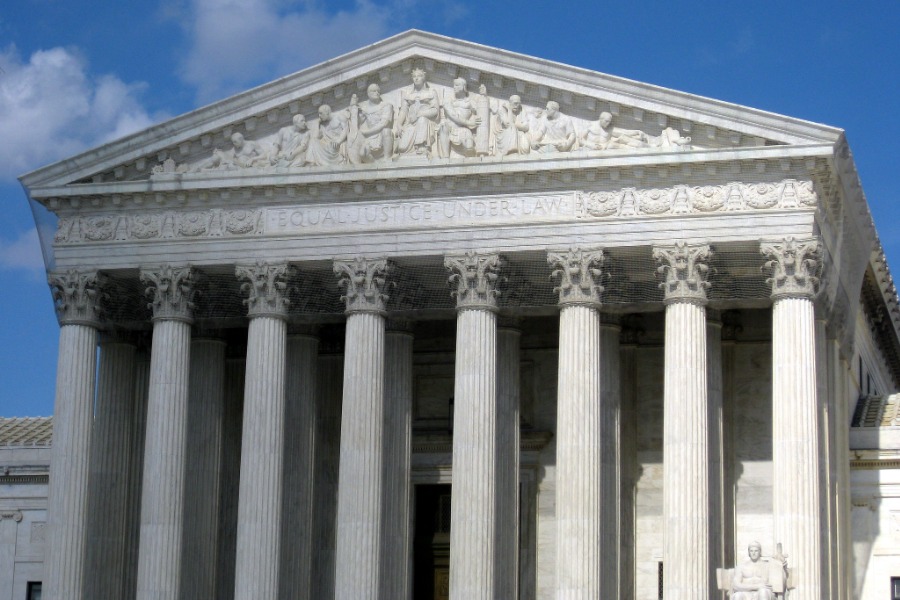

The Supreme Court’s willingness to stay lower court rulings against the Trump administration’s policies on the so-called shadow docket has frustrated litigants and judges alike. That dynamic has been particularly apparent in the context of federal funding disputes, where the Court has issued three thinly reasoned interim orders—in Department of Education v. California, National Institutes of Health v. American Public Health Association(APHA), and Department of State v. AIDS Vaccine Advocacy Coalition—staying lower court decisions that required the government to disburse appropriations in accordance with the law. And yet there are important lessons that litigants challenging the Trump administration’s funding actions and others might take away from how these cases have unfolded in the shadows.
The shadow docket, also referred to as the emergency docket or the interim docket, is by now familiar to Supreme Court watchers. Among other things, the shadow docket includes the Court’s resolution of emergency applications to stay a lower court decision before the appellate process has run its course. As opposed to the merits docket, in which the Court reviews decisions by the lower federal and state courts after full briefing and oral argument, the Court’s shadow docket orders are typically issued on an expedited time frame after truncated briefing and without oral argument. In the face of extensive public criticism—distilling the finer points of which would vastly outstrip the scope of this article—the Court has repeatedly utilized the shadow docket to hand the Trump administration victories on issues ranging from removing the heads of independent agencies to immigration enforcement. Although these orders are preliminary in nature, they have significant effects on the course and shape of litigation.
In particular, the Supreme Court’s recent shadow docket orders have changed the jurisprudential landscape for litigants seeking to challenge the Trump administration’s efforts to terminate federal grants en masse. In a 1988 decision, Bowen v. Massachusetts, the Court held that litigants may challenge agency decisions to withhold federal funding in federal district court under the Administrative Procedure Act, even if doing so might require the government to pay them money. But in its shadow docket orders in California and APHA, the Court indicated instead that litigants must assert breach of contract claims in the Court of Federal Claims—a specialized national court that typically resolves cases concerning contracts with the government—under the Tucker Act if they wish to obtain relief for their terminated grants. And, in AIDS Vaccine Advocacy Coalition, the Supreme Court indicated that certain types of challenges to the government’s failure to disburse federal appropriations cannot proceed at all. These brief, thinly reasoned orders have dramatically limited the legal avenues that are available to hold the Trump administration accountable for seizing the power of the purse from Congress.
These developments have posed steep challenges for litigants. Because the Trump administration has demonstrated that it is willing to aggressively rely on the shadow docket, litigants have to prepare for the possibility of prolonged litigation at different levels of the federal court system; early wins are not necessarily safe. Litigants have also had to shift tactics multiple times in response to the Supreme Court’s decisions, asserting new types of claims and arguments in the hope that they will have a different result. But because the Court rarely explains its reasoning on the shadow docket, litigants necessarily have to guess at whether a new theory will pass muster under the Court’s undisclosed view of the law. Lower courts, too, have struggled—through no fault of their own—to faithfully apply the Court’s edicts.
And yet litigants in the funding context have proceeded regardless. There are three key strategic lessons that those puzzling over how to litigate in the face of the shadow docket might glean from litigants’ efforts.
First, the possibility of accelerated Supreme Court review does not make litigation futile. Litigants have been successful at unlocking billions of dollars in funding that the Trump administration has attempted to withhold—even after the Court made it more difficult to do so. There have been significant ancillary gains as well: Litigation has exposed unlawful Trump administration conduct to a public audience, and has thrown sand in the administration’s proverbial gears, making it more difficult for the administration to fulfill its agenda. The Supreme Court’s funding-related shadow docket orders have generally also reasoned that the administration is likely to succeed with respect to its jurisdictional or procedural arguments, rather than expressly validating the administration’s conduct.
Second, the Supreme Court’s shadow docket orders may not be the final word. “The purpose of … interim equitable relief is not to conclusively determine the rights of the parties, … but to balance the equities as the litigation moves forward.” To that end, the Court has emphasized that its “interim orders are not conclusive as to the merits,” although those orders do “inform how a court should exercise its equitable discretion in like cases”—a description that, admittedly, raises more questions than it answers. But the Court can change its mind, and has done so, staying a district court’s order on the shadow docket only to affirm it at a later stage of the case. However unlikely, it remains possible that the Supreme Court could reach a different conclusion on the proper venue for challenges to grant terminations after further review and fuller briefing, or that difficulties litigants may encounter in the Court of Federal Claims could reveal fundamental flaws in the Court’s limited reasoning.
Third, the brevity of the Supreme Court’s shadow docket orders leaves room for litigants to innovate. Even the Court’s merits opinions tend to speak in terms of broad rules and standards to be applied to specific cases by lower courts; the Court cannot address every conceivable scenario that might arise in the future. The Court’s shadow docket orders leave lower courts with even less law to apply. What Justices Neil Gorsuch and Brett Kavanaugh have characterized as “def[iance]” of the Court by lower court judges might be better interpreted as a good-faith attempt to apply the Court’s Delphic pronouncements.
Take the Supreme Court’s fractured decision in APHA, which required litigants to assert challenges to specific grant terminations in the Court of Federal Claims while allowing them to challenge broader policy decisions in district court. The single paragraph of reasoning in the Court’s order largely restates the Court’s (likewise brief) reasoning from California—suggesting that challenges to grant terminations cannot proceed in district court under the Administrative Procedure Act. But that order conceals significant divisions among the justices themselves. Chief Justice John Roberts and Justices Sonia Sotomayor, Elena Kagan, and Ketanji Brown Jackson would have allowed all claims to proceed in district court, while Justices Clarence Thomas, Samuel Alito, Gorsuch, and Kavanaugh would have required everything to proceed in the Court of Federal Claims.
Justice Amy Coney Barrett provided the controlling swing vote, and it is her concurring opinion to which lower courts and litigants have had to look for some semblance of guidance. She reasoned that, under California, challenges to grant terminations belong in the Court of Federal Claims. But plaintiffs have long sought “vacatur of internal agency guidance on arbitrary-and-capricious grounds in district court or directly in the D.C. Circuit,” and “it would be confusing … to suggest that the [Court of Federal Claims] is the right forum for that claim.” Thus, her “preliminary judgment [was] that the plaintiffs’ challenges to the grant terminations belong in the [Court of Federal Claims], and their APA challenges to the guidance belong in district court.”
Sounds clear enough. But litigants and lower courts continue to grapple with how Justice Barrett’s two-track model of litigation applies to specific claims and fact patterns, and these disputes show no signs of abating anytime soon. Litigants have pressed on several key points.
First, does APHA, which deals with claims under the Administrative Procedure Act, impede so-called nonstatutory challenges to grant terminations? Even in the absence of a specific statutory cause of action, courts have long had the power to “grant injunctive relief … with respect to violations of federal law by federal officials,” including constitutional violations. As Dan Jacobson and I have argued, the government’s Tucker Act defense should not apply to such claims, which typically cannot be asserted in the Court of Federal Claims. APHA says nothing to the contrary, and lower courts have continued to allow constitutional challenges—like First Amendment and separation-of-powers claims—to proceed in district court (although they may face other problems). Indeed, in some cases, the Trump administration has declined to even raise the Tucker Act as a defense, relying instead on other arguments.
Second, does APHA apply to all Administrative Procedure Act claims? APHA focused on arbitrary-and-capricious claims asserted by challengers who had a direct contractual relationship with the government. Litigants may still be able to press so-called contrary-to-law claims based on violations of other statutes, as Harvard University did with a Title VI claim. And lower courts have held that the Tucker Act does not apply to litigants who lack any contractual relationship with the government, like subcontractors who contract with a grantee or downstream beneficiaries of government grants. There also remain persistent questions about whether grant agreements even constitute contracts, as they may lack the quintessential element of consideration—a direct benefit to the government.
Third, what about challenges to grant conditions, rather than terminations? The Trump administration has sought to impose conditions on federal funding to force grantees to comply with certain aspects of its policy agenda, like conditioning federal transportation funding on states’ willingness to cooperate with immigration enforcement. Lower courts have held—almost uniformly—that challenges to these conditions may proceed in district court, including, post-APHA, because they fall within Justice Barrett’s carve-out for challenges to agency policies and guidance. But the line between a challenge to an unlawful condition and a challenge to a grant that was terminated for an unlawful reason may not always be straightforward.
Fourth, is review in the Court of Federal Claims an adequate substitute for bringing a claim in district court, as Justice Barrett’s concurring opinion seems to presuppose? Decades of precedents in that court and the U.S. Court of Appeals for the Federal Circuit have seemingly operated under the presumption that grant termination cases belong in district court, given fundamental differences between those cases and the contract cases that the Court of Federal Claims typically hears. The Supreme Court’s indications to the contrary may require the Federal Circuit and the Court of Federal Claims to reinterpret, modify, or even reconsider those precedents, including on questions like available remedies. Or, conversely, the Supreme Court may have to reconsider its own preliminary conclusion that grant termination cases belong in the Court of Federal Claims. These issues are likely to unfold in the near future.
***
As these federal funding cases have illustrated, the rise of the shadow docket has ultimately created a judicial management problem for the Supreme Court. As much as it seems to be trying, the Court lacks the capacity to rush to the Trump administration’s defense in every challenge to administration policy that arises in the federal courts. The Court relies on the willingness and ability of the 800-odd lower court judges across the country to correctly follow its decisions—to strive to reach the result that the Court believes is appropriate in a given range of cases. The Court might wish to consider whether its aggressive use of unexplained shadow docket orders to guide lower courts has instead had the opposite effect, leaving them rudderless and increasingly at odds with the Court itself. Until then, litigants, in the federal funding context or otherwise, should not be overly deterred by the existence of the shadow docket or give these largely unexplained interim decisions more weight than they deserve.

-(2)-(2)-(1).jpg?sfvrsn=21cee67a_7)
