Potential Partners on the Ground in Iran
Editor’s Note: The lack of fighters on the ground has made it much harder for the United States and Israel to achieve decisive results in their war with Iran. President Trump has bandied about the idea of supporting Iranian Kurds, backing them with airpower and perhaps other assistance. The Washington Institute for Near East Policy’s Ido Levy assesses this option, noting both what a U.S. and Israeli-backed Kurdish force might accomplish and the many limits.
Daniel Byman
***
As Israel and the United States conduct a campaign mostly from the air against Iran, Iranian Kurdish groups could serve as partner forces on the ground. U.S. President Trump said on March 5 that he thought an offensive into Iran by Iranian Kurdish groups based in Iraq would be “wonderful” (though he later backtracked). One CNN report cites multiple sources claiming that the CIA has been arming Iranian Kurdish groups for months in preparation for a popular uprising, and Reuters reported that Israel might also be aiding these groups to enable them to seize towns along the Iran-Iraq border. U.S. and Israeli strikes have hit numerous military and police targets in the Kurdish-majority provinces of northwest Iran, possibly to soften regime forces before a ground attack.
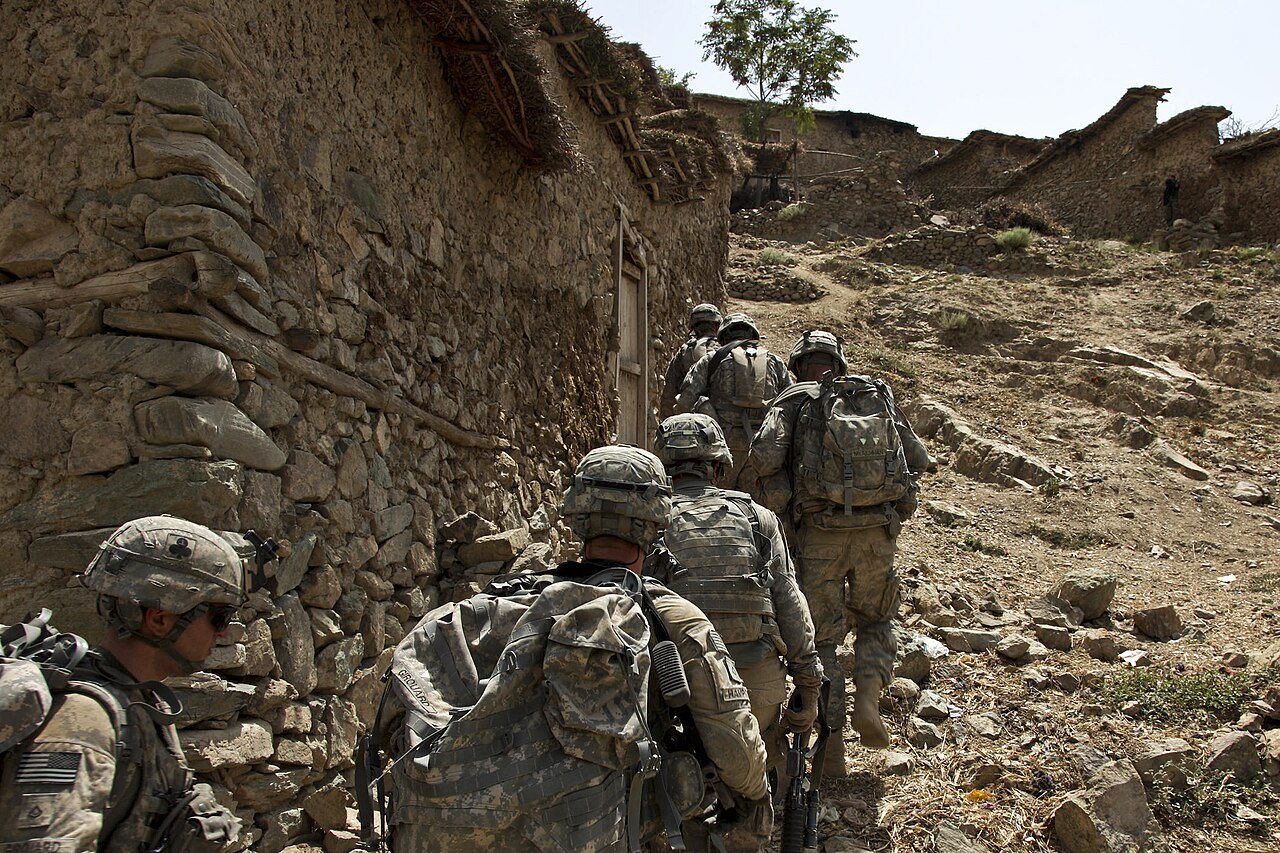
The United States has considerable experience working with partner forces in Iraq, Afghanistan, Syria, Somalia, and elsewhere against common foes, often with partners delivering the bulk of the ground forces while U.S. airpower and special operations forces provide an edge to enable victory. A recently formed coalition of Iranian Kurdish armed groups could provide this opportunity in Iran, but their effectiveness would depend on a long-term U.S. commitment to their defense, as well as smoothing over diplomatic concerns in Ankara, Baghdad, and Erbil.
Armed Iranian Kurdish Opposition Groups
Most of the world’s 25-30 million Kurds reside in northern Iraq, northeastern Syria, southeastern Turkey, and northwestern Iran. The Kurdish population of Iran makes up about 10 percent of the country’s population of approximately 92 million people and is concentrated in the provinces of Kurdistan, West Azerbaijan, Kermanshah, Ilam, Hamadan, and Lorestan. The majority-Kurdish part of Iran is often called Iranian Kurdistan, or Rojhalat, meaning “Eastern Kurdistan” in the Kurdish language, referring to the eastern part of the Kurds’ indigenous lands.
Although no independent Kurdish state has existed for long, Kurdish groups have rebelled repeatedly over the past two centuries to attain autonomy or independence. One such revolt occurred in Iran in 1945. Rebels led by Iranian Kurdish political leader Qazi Muhammad and Iraqi Kurdish figure Mustafa Barzani founded the short-lived independent Kurdish Republic of Mahabad with Soviet support. Although government forces ultimately suppressed the revolt and executed Muhammad, it helped increase the stature of his Democratic Party of Iranian Kurdistan (PDKI), which was established in 1945 with a socialist and Kurdish nationalist ideology and is the oldest active Iranian Kurdish armed faction. For his part, Barzani escaped and became a pivotal figure in preparing the ground for the remarkable level of autonomy achieved in Iraqi Kurdistan.
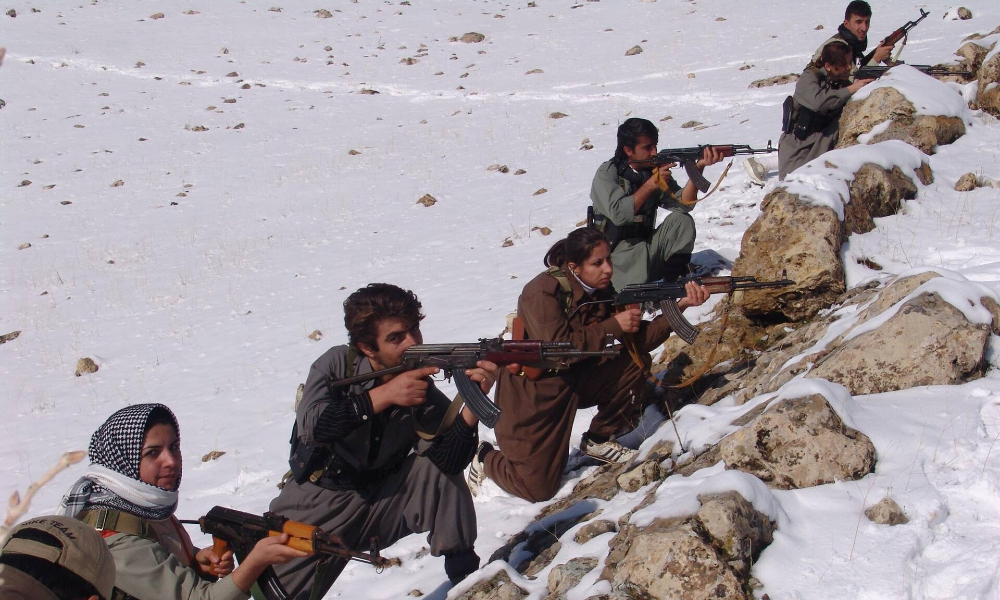
On Feb. 22, PDKI and four other Kurdish groups joined together to form the Coalition of Political Forces of Iranian Kurdistan. The other four are the Free Life Party of Kurdistan (PJAK), the Kurdistan Freedom Party (PAK), the Komala of the Toilers of Kurdistan, and the Organization of Iranian Kurdistan Struggle (Khabat). Founded in 2004, PJAK is an Iranian offshoot of the Turkey-based leftist Kurdistan Workers’ Party (PKK) that has conducted attacks regularly on Iranian regime targets. PAK was founded in 1991 to fight for an independent Kurdish republic. Komala is the Iranian Kurdish socialist party, founded in 1969; two of its three branches joined the coalition, but its communist wing has refused to join. Khabat formed in 1980 as a religious Kurdish nationalist alternative to the secular leftist groups dominating the nationalist scene.
All of these groups have experience waging insurgency against Iran. Severe repression by the Iranian regime has pushed them to shelter across the border in Iraq’s Kurdistan region, which operates autonomously under the Kurdistan Regional Government (KRG) and possesses its own military forces.
Capabilities and Intentions of the Kurdish Coalition
The new coalition of Kurdish groups recently announced that it sought to overthrow the regime and “achieve the Kurdish people’s right to self-determination, and to establish a national and democratic entity based on the political will of the Kurdish nation in Iranian Kurdistan.” The coalition, however, is probably unwilling to operate beyond Iranian Kurdistan.
The Kurdish groups have significant, if limited, fighting capabilities. One Economist report says the coalition has only 2,500 fighters at its disposal, though another analysis cites Iranian Kurdish sources that estimate the force numbers at 8,000-10,000 troops. In terms of weapons, these organizations are mostly armed with small arms and light weapons. PJAK likely stands as the most capable, with years of fighting experience and affiliation with the veteran PKK. Over the years, it has demonstrated its capacity to execute damaging attacks on Iranian security forces, including on contingents of the feared Islamic Revolutionary Guard Corps (IRGC). The other groups have been less active in carrying out attacks and have suffered from Iranian efforts to undermine them. Since 2018, Iran has launched drones and ballistic missiles at Iranian Kurdish opposition bases located in Iraq.
Following the September 2022 outbreak of sustained mass protests in Iran triggered by the death of Jina (Mahsa) Amini, an Iranian Kurdish woman who died in the custody of Iran’s infamous morality police, Iran ramped up cross-border strikes and pressure on the KRG to relocate the opposition groups in the latter’s territory. In March 2023, the Iraqi and Iranian governments signed a security agreement to disarm Iranian Kurdish opposition groups and move them away from the Iran-Iraq border, resulting in several factions moving farther from the border, likely with KRG cooperation. Opposition parties were largely moved to camps and disarmed, though PJAK, having vowed to keep its arms, remained unaffected because its bases are located in the Qandil Mountains together with PKK cadres, outside of KRG control.
While PJAK likely holds the bulk of the coalition’s fighting capabilities for now, the parties could mobilize additional forces under the right conditions. Previously disarmed cadres could return to fighting with a weakened and distracted Iran unable to apply cross-border pressure. As occurred during the war against the Islamic State, Kurds living in exile or fighters hailing from other countries might also volunteer to join the coalition. If the opposition groups successfully cross into Iran and establish a foothold, they might draw on the large Iranian Kurdish population, which could feel freer to take up arms as the regime weakens. The Syrian Kurdish experience could be a precedent; the People’s Defense Units (YPG) was a small armed group when the Syrian Civil War started in 2011, but it quickly expanded and formed self-defense committees in Kurdish areas, finally reaching its zenith after partnering with the United States and renaming itself the Syrian Democratic Forces (SDF).
The Prospect of Partnership
In the Iranian Kurdish opposition groups, the United States could have a strong partner ground force, but there are important limitations to what they could achieve. Kurdish opposition groups could support U.S. war aims by disrupting and denying the regime’s use of the Iranian Kurdistan region. U.S.-Israeli strikes have already targeted numerous regime installations in the region, and a partner ground force could be a force multiplier for these efforts, attacking other targets or providing intelligence assistance. With proper support and sufficient mobilization, they could also defend territory in Iranian Kurdistan.
Like the SDF, Iranian Kurdish opposition groups will need U.S. support to operate against the regime in Iran. This support could involve airstrikes and intelligence to aid partner ground forces, as well as some training and funding to upgrade their combat power. The United States has achieved significant success in previous conflicts when partnering with irregular forces, including the SDF, the Afghan Northern Alliance, Iraqi tribal groups, and the Iraqi Peshmerga.
This kind of partnership would most likely require a small presence of U.S. advisers, be they special operations or intelligence forces, to coordinate close air support and bolster partner ground units. Good relations between U.S. and partner personnel are a force multiplier because trust makes partnerships run smoothly and effectively, and, given the positive experience of U.S. partnership with similar Kurdish groups in Iraq and Syria, there is significant potential for that here.
The Iranian Kurdish groups are closely tied to the region in which they would be fighting; this is both an advantage and a potential limitation. These personal and familial links, as well as an ideological commitment to the territory can fuel a strong will to fight toward the goals of expelling Iranian regime forces and defending local Kurdish communities. At the same time, the opposition groups understand the danger of Iranian regime reprisals against rebellions, having experienced them regularly since 1979. In fact, some Kurdish opposition figures have already expressed their readiness to strike but are cautious about starting a fight they might not be able to win. These groups might remain reluctant if they feel U.S. support to be insufficient to enable them to defend themselves and Iranian Kurdish communities from regime reprisals.
Even if they do begin operating in Iran, Iranian Kurdish groups are not likely to conduct significant operations outside the Kurdistan region. An armed uprising to overthrow the regime in other areas could certainly benefit from a Kurdish rebellion, pulling regime attention to multiple fronts, but the Kurdish groups will most likely not do it by themselves. They might cooperate with other opposition groups in this endeavor, sharing intelligence and know-how with those seeking to rebel. But it is not certain this would happen, and there are opposition groups concerned that a Kurdish offensive could encourage secessionism and lead to civil war or a breakup of Iran.
Partnering with Kurdish opposition groups for an armed uprising against the Iranian regime would require considerable commitment from the United States. It would work most effectively as a long-term arrangement, likely going beyond the current conflict to ensure the groups can sustain their operations and secure the Iranian Kurdistan region. Although the Trump administration seeks withdrawal from Syria, where U.S. forces aided the SDF, it has kept in place advisory presences elsewhere, for example, with Somalia’s federal government forces, and could be pursuing new partnerships in Latin America. Regarding Iran, President Trump has yet to dismiss deploying ground troops and seems to be signaling readiness to do so with the deployment of an amphibious U.S. Marine Corps contingent to the Middle East. Much like the United States implemented a no-fly zone to protect the Iraqi Kurdistan region after 1991, allowing the KRG to develop, there would need to be a similar arrangement for Iranian Kurdish groups, at least for an initial period. The groups would also need arms and training, ground advisers (whether intelligence or special operations forces), and air support.
A U.S. partnership with the Iranian Kurdish coalition would also require U.S. political support, to resolve both legal issues in the United States and diplomatic issues with U.S. partners in the region. PJAK, currently the most capable of the Kurdish opposition groups, has been designated as a terrorist organization by the U.S. Treasury Department since 2009 due to its affiliation with the PKK. However, this impediment could be removed. The PKK recently announced its disbandment, and PJAK’s regular practice of almost exclusively attacking regime targets rather than civilians could serve as justification for removing this designation.
Moreover, the United States would have to coordinate diplomatically with the Iraqi government, the KRG, and Turkey. The Iraqi federal government, heavily influenced by Iran-backed militias, would likely seek to distance itself from this initiative. Turkey has waged a long battle against the PKK and will likely view unfavorably any initiative to support a PKK offshoot, as it did with the YPG. The United States would need to reassure these actors and put pressure on the opposition groups to confine their activities to Iran alone. The KRG might sympathize with the opposition groups, but it would seek to avoid negative repercussions from a perception that it is involved in destabilizing Iran.
In sum, partnering with the Iranian Kurdish opposition groups has potential, but it would involve significant risks and costs. While the proposition holds some short-term benefits relating to the immediate war, its main advantage would be in creating a long-term dilemma for the regime if the Islamic Republic survives this war and bestowing the United States with a friendly force in Iran.