Presidential Discretion and the Insurrection Act
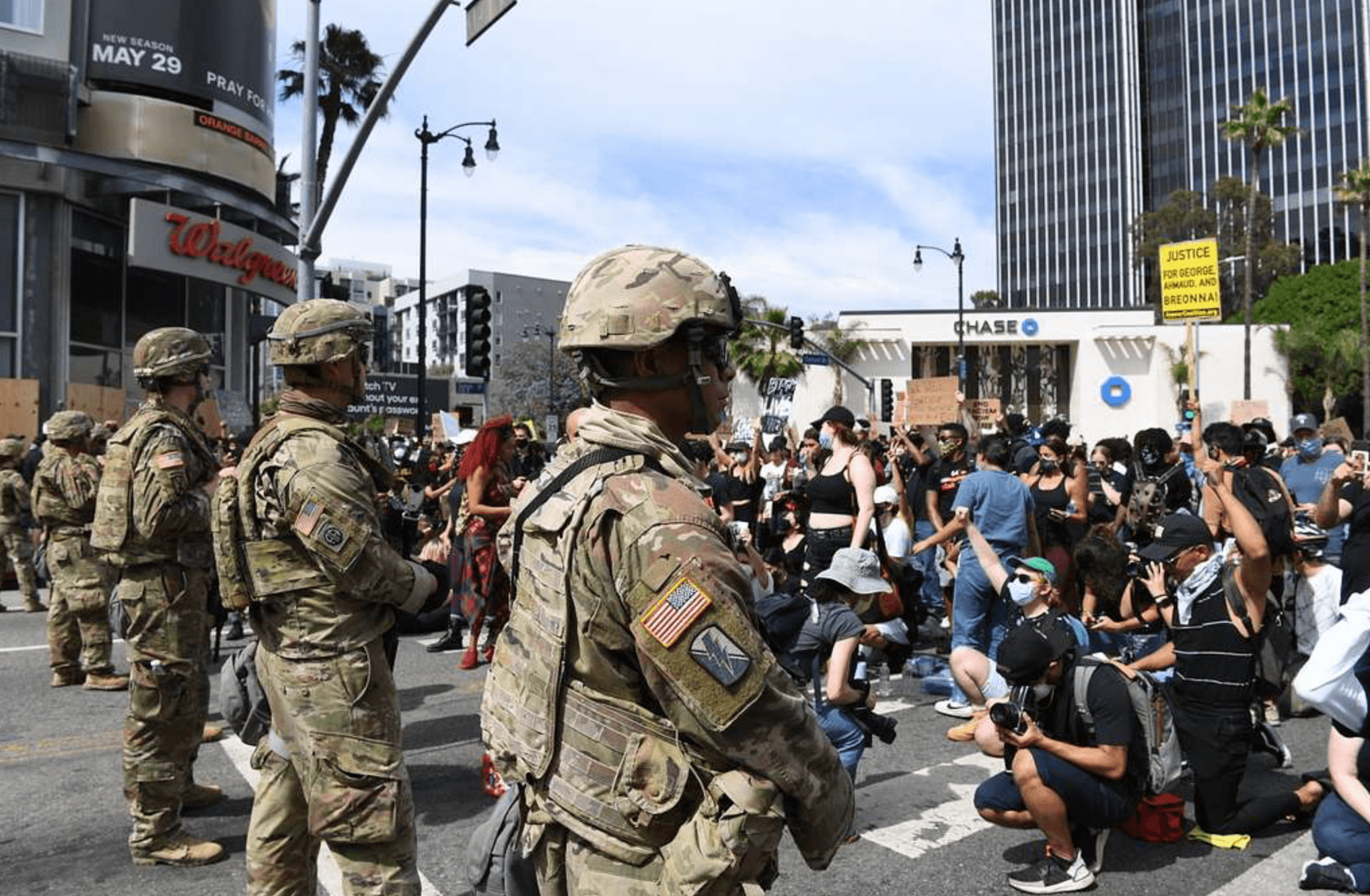

In Trump v. Illinois, a majority of the Supreme Court ruled that before federalizing the National Guard under 10 U.S.C. § 12406(3), the president likely must show that he is unable to execute federal law with the regular active-duty forces of the U.S. military. However, the Court also determined that § 12406 is not excepted from the demands of the Posse Comitatus Act, which prevents the U.S. military from participating in the execution of federal law, rendering this provision of the statute essentially unusable in the president’s efforts to enforce his immigration policies. The Supreme Court ruling capped a year of litigation precipitated by the administration’s efforts to use § 12406 to federalize the National Guard to pursue its immigration activities in Los Angeles, Portland, and Chicago. With its ruling on § 12406(3), the Supreme Court further diminished the president’s ability to directly interfere in domestic activities in pursuit of his most controversial policies. With the midterm elections looming and § 12406 now unavailable, the likelihood of the current president resorting to the Insurrection Act, the statute affording him the most oppressive domestic suppression capabilities, has only increased.
For years, President Trump has pushed a harmful narrative about “rigged” elections. Since taking office in January 2025, the Trump administration has embarked on a systematic campaign of activities designed to undermine the integrity of the upcoming midterm elections. As the midterms in November approach with the distinct possibility of Republican losses in Congress, there is growing reason to anticipate that the president may reach for the most draconian device in his nefarious toolbox to prevent that outcome. By invoking the Insurrection Act, President Trump could dispatch the regular military, the federalized National Guard, federal law enforcement or, arguably, even ICE agents to sites, including polling stations, throughout the country based on his determination that rebellions, or conspiracies, or unlawful combinations were interfering with the midterm elections. With a Republican Congress disinclined to rein in the president’s most zealous and overreaching use of this dangerous statute, it will likely fall to the courts to interpret what the provisions of the Insurrection Act actually mean, and how much deference the president should receive in interpreting those terms. The outcome of the midterm elections and the future course of American democracy may well depend on those judicial determinations.
10 U.S.C. § 12406 and Martin v. Mott
One of the principal issues addressed by the U.S. Court of Appeals for the Seventh Circuit (relating to the presidential effort to federalize the National Guard for deployment in Chicago) and by the U.S. Court of Appeals for the Ninth Circuit (relating to the presidential effort to federalize the National Guard in Los Angeles and Portland) was ascertaining the level of deference that the courts should accord to presidential determinations made regarding satisfaction of the predicate elements of 10 U.S.C. § 12406. In considering the question, each court examined two elderly U.S. Supreme Court decisions, both of which are likely to figure significantly in any litigation precipitated by an effort to invoke the Insurrection Act.
Martin v. Mott was a replevin action that collaterally attacked the court-martial conviction of a militiaman, Jacob Mott, who disobeyed a presidential call to muster and whose mare had been seized by Martin, a deputy U.S. marshal, to satisfy the fine imposed at that court-martial. Associate Supreme Court Justice Joseph Story’s 1827 opinion addressed various challenges to that order and the prior proceedings. The Mott opinion offers the following query:
Is the President the sole and exclusive judge of whether the exigency has arisen, or is it to be considered as an open question, upon which every officer to whom the orders of the President are addressed, may decide for himself, and equally open to be contested by every militia-man who shall refuse to obey the orders of the President?
Answering, Story wrote: “We are all of opinion, that the authority to decide whether the exigency has arisen, belongs exclusively to the President, and that his decision is conclusive upon all other persons.” Since 1827, Story’s answer has echoed through the ensuing years in terms of defining who decides whether “the exigency has arisen” and whether that decision is susceptible to judicial review.
Story was commenting on the authority delegated by Congress to the president in the Militia Act of 1795, which is a direct antecedent of the collection of statutes now codified in Title 10 and designated as the Insurrection Act (10 U.S.C. §§ 251-255). But a closer examination of Story’s comments provides nuance and context to the scope of presidential authority that the justice actually was sanctioning. Before deciding that, under the specific circumstances presented, the presidential authority to decide “whether the exigency has arisen” was “exclusive,” Story observed:
The power thus confided by Congress to the President, is, doubtless, of a very high and delicate nature. A free people are naturally jealous of the exercise of military power; and the power to call the militia into actual service is certainly felt to be one of no ordinary magnitude. But it is not a power which can be executed without a correspondent responsibility. It is, in its terms, a limited power, confined to cases of actual invasion, or of imminent danger of invasion. If it be a limited power, the question arises, by whom is the exigency to be judged of and decided?
Story’s conclusion that the president should have “exclusive authority” to determine whether an exigency exists was based on his analysis of what would happen if Mott’s claims were accepted: It would undermine good order and discipline in the ranks, weaken the authority of the military chain of command, and threaten national security. His opinion did not address—and in the context of the appeal he was addressing could not have addressed—the general ability or authority of courts to review a president’s purported justification for the mobilization and use of the armed forces under a statute, or the legality of any measures he may direct them to employ. No issues beyond the legal authority for the mobilization order, the court-martial, and the resulting seizure were raised in the appeal and any commentary by Story beyond these matters is rightfully viewed as dicta.
Nearly two centuries have passed since Mott was decided. Still, its interpretation and application have become a focal point in the litigation precipitated last year by the administration’s efforts to federalize National Guard units under the authority of 10 U.S.C. § 12406 and introduce those federalized National Guard troops into circumstances generally handled by local law enforcement authorities. Mott will certainly be scrutinized again if (when?) any presidential invocation of the Insurrection Act is challenged in the courts, and its interpretation and application may be critical, perhaps determinative. The decisions issued by the Seventh (Illinois v. Trump) and Ninth (Newsom v. Trump) Circuits addressing the administration’s efforts to federalize the National Guard in support of the president’s immigration policies have furnished a more contemporary lens through which Martin v. Mott should be read—a lens that should guide applying Mott properly to any presidential effort to invoke the Insurrection Act as an attempt to influence, or abrogate, the 2026 midterm elections.
The language of 10 U.S.C. § 12406 reads:
Whenever—
(1) the United States, or any of the Commonwealths or possessions, is invaded or is in danger of invasion by a foreign nation;
(2) there is a rebellion or danger of a rebellion against the authority of the Government of the United States; or
(3) the President is unable with the regular forces to execute the laws of the United States;
the President may call into Federal service members and units of the National Guard of any State in such numbers as he considers necessary to repel the invasion, suppress the rebellion, or execute those laws. Orders for these purposes shall be issued through the governors of the States or, in the case of the District of Columbia, through the commanding general of the National Guard of the District of Columbia.
Last year, the Trump administration sought to deploy the National Guard in Los Angeles, Chicago, and Portland relying on 10 U.S.C. § 12406 and a presidential memorandum intended to legally justify the mission. Together, these authorities arguably allowed the federal activities to remain within the constraints of the Posse Comitatus Act. Nonetheless, and not surprisingly, each of the attempted deployments precipitated litigation with both the Seventh and Ninth Circuits issuing opinions addressing the proper application of Martin v. Mott. If the president invokes the Insurrection Act, it will almost certainly face legal challenges. One of the central questions courts will have to address is how much deference to give the president’s justification for deploying armed forces—both active-duty military and federalized National Guard—against American citizens on domestic soil.
In both Newsom v. Trump and Illinois v. Trump, the government asserted, both in public statements and in its legal filings, that Mott establishes that presidents possess judicially unreviewable authority to determine the existence of exigent circumstances justifying a domestic use of the armed forces. Taken to its broadest construction in the context of the Insurrection Act, this means that the president may deploy active-duty military and federalized National Guard troops whenever and wherever he deems appropriate and leave those troops deployed for as long as he sees fit. As support for this expansive view, the government relied primarily on the one sentence found in the Mott opinion in which Justice Story, in what he described as a “sound rule of [statutory] construction” rather than a doctrine of constitutional law, stated: “We are all of opinion, that the authority to decide whether the exigency has arisen, belongs exclusively to the President, and that his decision is conclusive upon all other persons.” The following cases from the Ninth and Seventh Circuits examine and apply Mott (arranged chronologically by decision date).
Newsom v. Trump—Ninth Circuit (June 19, 2025)
In Newsom, the Ninth Circuit agreed with Justice Story’s characterization of the question raised as one of statutory construction, saying: “to what extent has Congress, in § 12406, committed the challenged decision [to mobilize and deploy the Guard] to the President’s discretion” presented purely a matter of justiciable statutory interpretation falling squarely within “the province and duty of the judicial department to say what the law is.”
The government insisted that whenever a statute, such as § 12406, “commits decision making to the discretion of the President, judicial review of the President’s decision is not available.” The Ninth Circuit disagreed, observing that § 12406 enumerates three predicate conditions for the president’s calling forth of the National Guard without making the president the sole judge of whether any one or more of those preconditions exist. Having concluded that the president’s determination was subject to judicial examination, the Ninth Circuit next addressed the question of whether the president’s decision was owed deference by the court in its review and, if so, how much? It was in considering this critical question that the court examined the holding in Mott and concluded that Mott “and its progeny” dictate that the president’s determination be accorded a “great level of deference” and that its review of that determination be “especially deferential.”
Closer examination, however, suggests that the Ninth Circuit’s expansive interpretation of this required deference rests on a more tenuous and debatable foundation than that court acknowledges. The court’s reference to Mott “and its progeny” warrants scrutiny: The sole case it identifies is Luther v. Borden, decided 22 years after Mott in 1849, by Chief Justice Roger B. Taney—who was not even appointed to the Court until nearly a decade after Mott was handed down. (The limited reach of this lineage is underscored by Oregon v. Trump, decided a few months after Newsom in the context of National Guard deployments in Portland, wherethe Ninth Circuit again cited only Mott and Luther as its authority for evaluating Congress’s delegation to the president of the power to call forth the militia.)
Luther is no prototype for concluding that presidential action “calling forth” the militia is unreviewable by the courts. In Luther, the governor under Rhode Island’s existing charter (which dated back to 1663) declared martial law and requested the president provide federal troops to stop the anticipated violence. President Tyler, however, declared he had no power to anticipate insurrections, and three subsequent requests for assistance were similarly denied. By the time the president decided that intervention might be necessary to prevent the opposition army (led by contending Gov. Thomas Dorr) from using force, the secretary of war had determined that Dorr’s men had dispersed and the already-prepared proclamation would not be necessary. President Tyler, somewhat belatedly, recognized the charter government as the legitimate executive authority in Rhode Island, and Taney’s opinion treated that endorsement“as effectual as if the militia had been assembled under his orders”—an equivalence that obscured a critical factual difference from Mott: The militia was never actually called forth. What the Supreme court held in Luther was therefore Tyler’s choice of which competing faction constituted Rhode Island’s lawful government—not any decision to deploy the militia, which never occurred.
The distinction likely explains why Chief Justice Taney characterized Mott as involving a question “very similar” to—but not the same as—the one arising in Luther. When the Ninth Circuit nonetheless concludesthat Luther’s “view of Martin has remained the settled understanding of the Supreme Court and among legal scholars,” it glosses over that difference. Mott addressed the president’s authority to call forth the militia during wartime against a foreign invader; Luther addressed whether a court could second-guess a presidential determination accompanied only by a belated, and never-executed, expression of intent to mobilize the militia in support of that government. As Taney himself acknowledged in Luther, “It is true that in this case the militia were not called out by the President”—a concession that undermines Luther’s fitness as unequivocal confirmation of Mott.
A final point regarding the Ninth Circuit’s discussion of Mott: The court explained that, although Mott directly involved an issue of foreign policy while the Los Angeles deployment of the Guard arose in the context of a domestic dispute, the statutory breadth of § 12406 includes the federalizing of the National Guard where there is an invasion by a foreign nation. The court then returned to Luther,noting that the dispute in Rhode Island—again, one in which “the militia were not called out by the President”—was an example of a purely domestic confrontation that Mott nevertheless governed. Focusing on this domestic/foreign distinction arguably weakens Mott’s standing as the paradigmatic authority for invocations of the Insurrection Act. Unlike § 12406, none of the statutes comprising the Insurrection Act mention or address its use in the context of an “invasion” or incursion by a foreign nation—each is framed exclusively as a response to domestic unrest. To the extent Mott derives its force from a foreign invasion context, it maps imperfectly onto the Insurrection Act’s purely domestic framework.
As for the standard of review, the Ninth Circuit framed it as “[c]onsistent with [Mott]”—that “courts may at least review the president’s determination to ensure that it reflects a colorable assessment of the facts and law within a ‘range of honest judgment.’” Indeed, shortly after issuing its opinion in Newsom, the Ninth Circuit, in Oregon v. Trump, rejected the government’s argument that the president could federalize the National Guard “on no evidence whatsoever” and that courts were precluded from scrutinizing a decision that was “ obviously absurd or made in bad faith.”
Illinois v. Trump—Seventh Circuit (Oct. 16, 2025)
The Seventh Circuit devoted considerably less discussion to Mott. The court summarily rejected the government’s contention that Mott renders the president’s determination of the existence of an emergency unreviewable by the courts, insisting that Mott’s broad language“must be read in context.” The court specified that the “context” in question was expressed in Justice Story’s “incredulity at the prospect that every officer under the President’s command could make his own determination whether an imminent threat of invasion existed and could refuse to obey the President’s orders or be subject to civil liability if he enforced what was later deemed an invalid order.” Continuing, the Seventh Circuit observed: “Here, by contrast, the question is whether courts, not subordinate militiamen, may review the President’s determination under § 12406, primarily as to whether political protests have become violent to the extent that they constitute a rebellion or that the administration is ‘unable’ to execute federal law with the ‘regular forces’ available to it.” Allowing for differences in statutory language between § 12406 and the Insurrection Act, this is a reasonable distillation of the circumstances likely to present themselves should the president invoke the Insurrection Act in connection with the 2026 midterm elections.
The Seventh Circuit also observed that while it agreed with the Ninth Circuit that the president should be granted “a great level of deference” on the question of whether one of the statutory predicates exists, it was not prepared, at that early stage of the proceedings (addressing the government’s request for a stay of the district court’s temporary restraining order) to say “exactly how deferential the standard should be.” However, in closing its opinion, the court noted that the government had been unable to satisfy any of the required predicates for action under § 12406 “even with the benefit of considerable deference to its judgments.”
The Seventh Circuit then moved to a topic that will be of considerable consequence in litigation directed at any presidential invocation of the Insurrection Act: the meaning of the specific terms used in the operative statutes. The Militia Act of 1795, the statute at issue in Mott and Luther and the forebear of the current Insurrection Act, contains only two words that trigger its use: “invasion,” which was the predicate for its application in Mott,and “insurrection,” which was the predicate in Luther. Neither appellate court opinion analyzes the meaning of those terms given that, on the facts presented, the existence of an “invasion” in Mott and an “insurrection” in Luther was not contested. In reference to § 12406 (which was the statute at issue in both Newsom and Illinois), however, the Seventh Circuit said the meaning accorded the terms “rebellion” and “unable with the regular forces to execute the laws” are matters of statutory interpretation, “a function that is precisely the business of the judiciary.”
Thus, the Seventh Circuit advised (in the context of examining § 12406), “where neither the President nor the district court is entitled to deference is on the meaning of the statute—what constitutes a ‘rebellion’ and what it means to be ‘unable with the regular forces to execute the laws.’” The court noted that these are “matters of statutory interpretation” and then proceeded to analyze the term “rebellion,” which appears in § 12406 and in two of the three statutes comprising the Insurrection Act (10 U.S.C. §§ 251 and 252). Noting that “political opposition is not rebellion,” the court concluded that the activities in Illinois cited by the government as the predicate for federalization and deployment of the National Guard did not constitute “rebellion” under § 12406, nor did those alleged activities significantly impede the ability of federal officers to enforce federal immigration laws—the second trigger for invocation of § 12406.
As emphasized by the Seventh Circuit, it is for the courts to determine whether the available evidence is sufficient to satisfy the statutory predicates necessary to trigger the presidential authority to act. This expression of judicial authority is especially significant given that the statutes comprising the Insurrection Act collectively use a host of statutorily undefined terms that serve as the conditions for lawful invocation: “insurrection” (10 U.S.C. § 251); “unlawful obstructions,” “combinations,” “assemblages,” “rebellion that make it ‘impracticable’ to enforce the law” (10 U.S.C. § 252); and “insurrection,” “domestic violence,” “unlawful combination or conspiracy,” “opposes or obstructs” execution of federal law, or—in the statute’s most expansive formulation—circumstances so hindering the “execution of the laws of a state that any part or class of its people is deprived of a right, privilege, immunity or protection named in the Constitution and secured by law, and the constituted authorities of that State are unable, fail, or refuse to protect that right, privilege, or immunity, or to give that protection” (10 U.S.C. § 253).
Trump v. Illinois—U.S. Supreme Court (Dec. 23, 2025)
The government appealed the Seventh Circuit’s decision to the Supreme Court, where the focus on § 12406 shifted from the question of the judicial deference owed to the presidential determination to invoke the statute to the meaning of “regular forces” as used in the statutory phrase “unable with the regular forces to execute the laws of the United States.” A majority of the Court concluded that the phrase “regular forces” likely refers to the “regular forces of the United States military” and, because the government had not identified any statute that allowed the president to employ the regular military to “execute the laws” as stated in § 12406(3) consistent with the Posse Comitatus Act, the government had failed to establish a predicate for exercising authority under § 12406. By resolving the case on these grounds, the majority found it unnecessary to “address the reviewability of findings made by the President under § 12406(3) or any other statute.” Consequently, for the majority, there was no need to address Mott or Luther or the issue of the proper standard of review of a presidential determination made under § 12406 or any other statute.
The Supreme Court’s decision creates a dilemma for the president with respect to § 12406. The statute requires that the president demonstrate that he is unable to execute federal law with the use of the U.S. military. However, § 12406 is not excepted from the demands of the Posse Comitatus Act, which prevents the U.S. military from participating in the execution of federal law in the first place. Arguably, by disposing of the case in this manner, the Supreme Court removed § 12406(3) from the president’s toolbox with respect to future efforts to use military force domestically while concomitantly making it more likely that the Insurrection Act will, by necessity, become his future tool of choice.
* * *
The Seventh and Ninth Circuits’ recent opinions (the Supreme Court having sidestepped the question of the standard of review to be used with regard to a presidential determination under § 12406) and a closer examination of Mott’s and Luther’s underlying facts together counsel the same conclusion: Mott’s declaration that the determination of the exigency “belongs exclusively to the president, and that his decision is conclusive upon all other persons” is best read in light of the Court’s concern about the effect on good order and discipline if individual militia members were left to judge the validity of the president’s order. The “exigency” before Justice Story in Mott was an invasion of the United States by the most powerful nation on earth that left the White House a burned shell and the entire government in disarray. Aside from the Civil War, no similar “exigency” has ever been visited upon the homeland. As explained earlier, Luther v. Borden—in which the president never actually “called forth” the militia—is factually unsuited to serve as an endorsement of Mott. In sum, it is difficult to conjure any circumstance in which this president invokes the Insurrection Act that will resonate on any level with the “exigencies” found in Mott or Luther. Those hoary rulings should be read by the courts as furnishing, at most, a precedential gloss to be considered in the overall context of examining this president’s decisions—not through de novoreview,but through a deference extending no further than ascertaining whether those decisions “reflect a colorable assessment of the facts and law within a ‘range of honest judgment.’”
The source of the president’s power under the Insurrection Act is statutory—not constitutional—and, per Justice Story, is a “limited power.” As a “limited power” defined by statute, it falls to the courts to interpret whether the statute is properly invoked. A reviewing court must be satisfied that any invocation of the Insurrection Act satisfies every statutory requirement. Both the Seventh and Ninth Circuits have confirmed that the government should not prevail with the argument that the president’s decision is unreviewable. In Newsom, the Ninth Circuit specifically rejected the government’s contention that the president could federalize the National Guard “on no evidence whatsoever” and that courts were barred from reviewing “a decision that was obviously absurd or made in bad faith.”
Careful calibration of the judicial deference afforded the president will serve to ensure that the exercise of the “limited” delegations of authority made in the Insurrection Act are not abused. This is the prudent judicial approach—not only because of the legacy of this administration’s abuses of power and maladministration, but principally because the Insurrection Act has received virtually no judicial or congressional scrutiny and its statutory text is awash with undefined terms susceptible to dangerous distortion. As a matter of constitutional structure, “It is emphatically the duty of the Judicial Department to say what the law is”—and so the courts can, and should, undertake the task of careful statutory interpretation to assure that terms such as “rebellion,” “unlawful obstructions,” “combinations,” “assemblages,” “domestic violence,” and “oppose or obstruct” are construed consistently with the First Amendment rights of the people and the 10th Amendment rights of the states.
In Illinois v. Trump, the Seventh Circuit drew a critical distinction between the factual circumstances on which the president bases his determination to act and whether those facts satisfy the predicate conditions the statute identifies as warranting its invocation. Consider the following example: The government presents facts showing that, in a particular locale, there is considerable activity—characterized by the government as highly disruptive and dangerous to election security—that is actually composed of political protests and actions expressing civil dissatisfaction with government interference in the election process. While the president’s decision to act is entitled to an appropriate level of deference, whether those facts adequately satisfy—to use 10 U.S.C. § 252 as an example—the statutory requirement that there be an “unlawful obstruction, combination, assemblage … or rebellion” making it “impracticable to enforce the laws of the United States by the ordinary course of judicial proceedings” is a matter of statutory interpretation for the court.
One final example illustrates the necessity for calibrated judicial deference and careful scrutiny. In the litigation surrounding § 12406, the government insisted that whenever a statute “commits decision making to the discretion of the President, judicial review of the President’s decision is not available.” Taken to its logical conclusion, that contention would arguably sanction the president suspending the writ of habeas corpus in connection with an Insurrection Act invocation on the grounds that, in his view, “unlawful assemblages” are making it “impracticable” to enforce federal law “in the ordinary course of judicial proceedings.” In Ex parte Merryman, Supreme Court Chief Justice Roger B. Taney wrote that only Congress—not the president—has the authority to suspend the writ. But absent careful and probing judicial review, is there any reason to believe this Congress will countermand this president’s suspension of the Great Writ?
Editor's note: This article has been updated to correct an earlier error regarding Ex Parte Merryman.