Putting Press Freedom to the Test
The FBI’s search of a Washington Post reporter’s home raises questions about the protections afforded to journalists in leak cases.



It is the morning of Jan. 15, and reporters are lined up at the U.S. District Court for the District of Maryland for a hearing in the case of Aurelio Perez-Lugones, a government contract worker accused of mishandling national security materials. A few days earlier, in an affidavit filed Jan. 9, the government had alleged that Perez-Lugones, a systems administrator employed by an unnamed government contractor, illegally retained national security documents.
The hearing—in which the defense is set to request Perez-Lugones’s pretrial release after the government asked for a review of a previous release order—hardly seems media-worthy. But the packed gallery suggests otherwise.
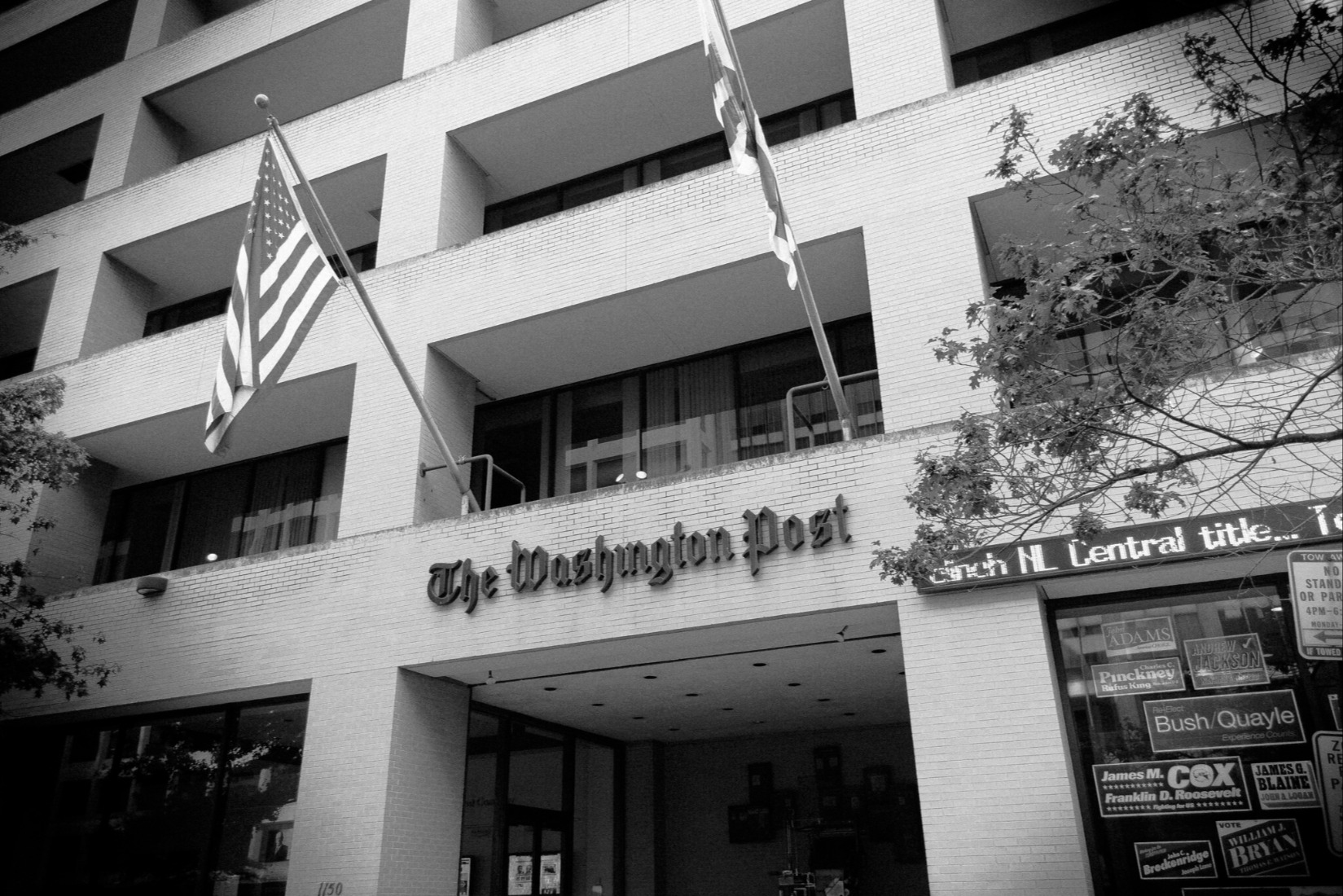
The reason is that one day earlier, the FBI conducted a search of the house of Washington Post reporter Hannah Natanson. Perez-Lugones is believed to have leaked classified materials to Natanson—inextricably linking his case to complex questions about media freedom in the United States.
The hearing is over practically before it begins. One of Perez-Lugones’s defense attorneys, Francisco Carriedo, tells the judge presiding over the hearing, George L. Russell, that his client does not wish to proceed because of the media attention of the last 24 hours.
After several minutes of discussion, Carriedo addresses the court: “Your Honor, after speaking with Mr. Perez-Lugones, we are not prepared to move forward with today's hearing. So at this time the defense would consent to detention in this case.”
Judge Russell asks the defendant if he understands what his lawyer has asked for.
“Yes, Your Honor,” Perez-Lugones replies.
Perez-Lugones, dressed in coral scrubs, shuffles out of the courtroom in shackles. Outside the courthouse, reporters pepper the attorneys with questions about the outcome of the hearing, the documents allegedly leaked, and Perez-Lugones’s connection to Natanson.
Eventually, the reporters pack up their camera equipment and disperse. The Baltimore street becomes quiet.
In the days following the search on Natanson’s home, many in the media and elsewhere have worried about a chilling effect on reporters and potential whistleblowers. Advocates have also invoked the First Amendment: The search, critics have insisted, was an unconstitutional encroachment on press freedom. Commentators have even agonized over the possibility that the search represented only the beginning of a more aggressive posture toward journalists—in which not only are leakers to the media prosecuted under the Espionage Act, but the media is prosecuted, too.
An Early Morning Search
Jan. 14 was not a quiet day for Natanson. Early in the morning, the FBI conducted a search of the Washington Post reporter’s home as part of an investigation into Perez-Lugones for allegedly leaking the documents he mishandled, presumably to Natanson. According to reports, Natanson had her cellphone, a recording device, a Garmin watch, and two laptops seized, but was told that she was not the focus of the investigation. The same morning, the government also issued the Washington Post a subpoena requesting information related to Perez-Lugones.
Natanson is well-known for her coverage of the Trump administration, including efforts to fire federal workers. She published a story last week—which cited government documents obtained by the Post—that covered the U.S.’s capture of Venezuelan President Nicolás Maduro.
But the impetus for the search warrant in the case centered on Perez-Lugones, not Natanson. The affidavit alleges that Perez-Lugones took notes on information from a classified system on a notepad, which he then brought home. He is also accused of taking a screenshot of a classified report about an unidentified foreign country, speculated to be Venezuela. Investigators reportedly recovered these materials during a search of his residence.
The criminal complaint in the case does not charge Perez-Lugones with disclosing that information, although a separate filing mentioned the possibility of his disseminating it if not detained pretrial—which prompted the judge in the case to issue a review of his pretrial release.
Such obscurity is not, in and of itself, atypical; arrests in classified documents cases often proceed on the basis of allegations of mishandling of material and are later superseded with updated charging documents if and when further evidence is uncovered.
But in the immediate aftermath of the search, Trump administration officials were quick to suggest classified information had indeed been leaked. Attorney General Pam Bondi commented on X:
This past week, at the request of the Department of War, the Department of Justice and FBI executed a search warrant at the home of a Washington Post journalist who was obtaining and reporting classified and illegally leaked information from a Pentagon contractor. The leaker is currently behind bars. I am proud to work alongside Secretary Hegseth on this effort. The Trump Administration will not tolerate illegal leaks of classified information that, when reported, pose a grave risk to our Nation’s national security and the brave men and women who are serving our country.
In a tweet a few hours after the search, FBI Director Kash Patel similarly implied a leak had occurred. He also claimed that the “leaker” had been arrested that week—as opposed to on Jan. 9, the date the affidavit in Perez-Lugones’s case was filed:
This morning the @FBI and partners executed a search warrant of an individual at the Washington Post who was found to allegedly be obtaining and reporting classified, sensitive military information from a government contractor—endangering our warfighters and compromising America’s national security. The alleged leaker was arrested this week and is in custody. As this is an ongoing investigation, we will have no further comment.
The search of Natanson’s home quickly drew backlash from the public and the media, particularly with regard to its implications for freedom of the press. Washington Post Executive Editor Matt Murray said that the search was “deeply concerning and raises profound questions and concern[s] around the constitutional protections for our work.”
“It is exceedingly rare, even in investigations of classified disclosures, for federal agents to search a reporter’s home,” the New York Times noted.
On Jan. 14—the same day that the FBI searched Natanson’s home—the Reporter’s Committee for Freedom of the Press filed a brief to unseal documents relating to the search of Natanson's home and the seizure of her devices. The brief requested that the court unseal the warrant in the case because “[t]he public is…left with no means to understand the government’s basis for seeking (and a federal court’s basis for approving) a search with dramatic implications for a free press and the constitutional rights of journalists.” On Jan. 21, the FBI released the search warrant for Natanson’s home, although the application for that warrant remains undisclosed to the public.
That same day, The Washington Post filed a brief requesting that federal law enforcement return Natanson’s seized belongings, arguing that “almost none” of the materials were relevant to the warrant and that the search “flouts the First Amendment and ignores federal statutory safeguards for journalists.” A magistrate judge ordered the government to preserve but not review materials seized from Natanson (including materials seized pursuant to two separate search warrants for her car and her person) until further briefing and scheduled a hearing on the matter for Feb. 6.
The Espionage Act
The Espionage Act—the statute at the core of most media leak cases—was enacted at President Woodrow Wilson’s behest soon after the United States entered World War I and was last modified in 1950. For most of its history, the law was used to prosecute U.S. citizens who allegedly spied for the Soviet Union, from Julius and Ethel Rosenberg to Aldrich Ames, and people accused of passing state secrets on to other foreign adversaries. This made sense in light of its original context. The statute was passed in wartime and before there even was a classification system for sensitive government information.
More recently, however, the Espionage Act has attracted notice for how it has been deployed against leakers of classified information—to the press, not to foreign powers. A seminal example is Daniel Ellsberg’s prosecution for leaking the Pentagon Papers. Those charges were dismissed in 1973. But Samuel Morison, a civilian intelligence analyst for the U.S. Navy who shared satellite imagery with a British magazine, fared worse a decade later. His conviction represented the first time the government successfully prosecuted an employee under the act for providing information to the press.
The amount of public attention devoted to media leak prosecutions may belie the reality that they are actually (or at least, were actually) rare. In a 2013 Harvard Law Review article, David Pozen identifies roughly a dozen media leak prosecutions in the then-96 years since the Espionage Act was enacted. Yet this century has seen the pace of prosecutions pick up considerably. In the post-Sept. 11 era, the Espionage Act has increasingly come to be viewed as a kind of official secrets law that allows the government to pursue people who knowingly leak classified information—regardless of their reasons and regardless of whom they’re leaking to.
The Obama administration was responsible for eight of the 96 aforementioned prosecutions, Chelsea Manning and Edward Snowden among them. During his first term, President Trump brought at least seven prosecutions against alleged leakers to the media, most notably Reality Winner.
But rare as Espionage Act prosecutions against leakers to the press are, prosecutions against the press themselves are even rarer—that is to say, they’ve been all but nonexistent. The only possible exception to that rule is WikiLeaks founder Julian Assange, whom the Trump Justice Department indicted on 17 counts under the Espionage Act in 2019. This case is complicated because many analysts argue that Assange wasn’t a journalist at all but an activist and hacker who actively coaxed the leaks he then published and also had relations with foreign intelligence actors.
Even subpoenas of journalists in Espionage Act cases have been few and far between: Notably, in 2008 the George W. Bush administration tried to compel then-New York Times reporter James Risen to reveal his sources; he repeatedly refused to comply, eventually lost in the Fourth Circuit, and then was never called to testify anyway. Judith Miller, also of the Times, spent 85 days in jail over a similar objection to testifying about her sources.
The closest comparator to today’s events is a 2010 episode involving a Fox News reporter named James Rosen. The Obama administration sparked substantial outcry when it obtained a search warrant for his emails. The Justice Department’s seizure of call records for the work and personal phone numbers of Associated Press reporters and editors in 2012 also caused a stir.
Searching a journalist’s home and leaving with her personal effects, however, seems another matter altogether in the breadth and depth of the intrusion. The surrounding context—including Secretary of Defense Pete Hegseth’s unprecedented crackdown on leakers even of unclassified information, complete with polygraphs and NDAs, and reports that President Trump is eager to use the Espionage Act not merely against leakers but also the media outlets they leak to—has raised reasonable concerns that this is the first step across a rubicon. Whether breaching that boundary is illegal, however, is another question entirely.
The Privacy Protection Act and First Amendment Protections
Executing a search warrant at a journalist’s home represents an escalation in the Trump administration’s clashes with the news media and may mark new territory in First Amendment jurisprudence.
In the landmark 1972 case Branzburg v. Hayes, the Supreme Court ruled that the First Amendment grants the press no special immunity from generally applicable laws. The court held that a journalist could not claim First Amendment protection to withhold from a grand jury confidential information he obtained over the course of his reporting.
However, the Court has been clear that the First Amendment affords journalists protections against prior restraints on expression—where government officials preemptively block the publication of certain material. The search’s constitutionality, then, may turn on whether the government seized materials as a prior restraint on the Post’s expression. That’s precisely the argument lawyers for The Washington Post make in their filing requesting the return of all seized materials.
Under existing Supreme Court case law, any system of prior restraint on expression “bears a heavy presumption against its constitutional validity.” The government must prove that the restrained material would have “inevitably, directly, and immediately” caused immense harm to the country. Even if the seizure did not constitute an impermissible prior restraint, the Post argues, the government exceeded the scope of its warrant, which was confined to records received or related to Perez-Lugones as evidence of violations of the Espionage Act. According to the Post, the FBI seized a large volume of information from Natanson’s home unrelated to its investigation—information that is further protected under attorney-client privilege as well as a 1980 statute that grants special protection to journalists’ notes and work product.
The Privacy Protection Act of 1980 makes it unlawful for the government, as part of an investigation or prosecution of a crime, to search and seize “work product materials” and “documentary materials” intended for publication. Those whose rights are violated under the statute are entitled to sue for damages. The law was passed in reaction to Zurcher v. The Stanford Daily, a 1978 case in which the Supreme Court held that the Fourth and First Amendments did not prohibit police from lawfully executing a search warrant inside a college newsroom for photos revealing the identities of demonstrators believed to have assaulted police officers.
But the PPA has carveouts. The statute contains a specific exception for searches and seizures of classified information, providing that the government may search and seize materials if the offense to which the materials relate consists of “the receipt, possession, or communication of information relating to the national defense, classified information, or restricted data.” In its filing, The Post argues that this exception would only justify seizure of documents related to Perez-Lugones—an “infinitesimal fraction” of the data seized by the FBI in its “seize-everything-sort-it-out-later” approach.
More generally, the PPA does not impair law enforcement’s legal authority to search or seize materials in the possession of someone authorities have probable cause to believe has committed a crime “to which the materials relate.” Government officials reportedly told Natanson and the Washington Post that they were not the focus of a criminal investigation, which would appear to be in tension with invoking the suspected-of-criminality exception.
There is, however, precedent for the government invoking the exception in order to obtain a search warrant for a journalist—without actually charging him with any crime. The Obama administration did just that in the case of Rosen, the Fox News reporter whose emails the government received permission to lawfully access, by describing him in an affidavit as an “aider, abettor, and/or coconspirator” in a leak. The episode created so much controversy that the Department of Justice subsequently implemented guidance, explained in more detail below, barring investigators from portraying journalists as criminals to obtain a warrant to search their possessions unless they truly intend to prosecute them. Trump’s Department of Justice has repealed this guidance, however—opening the possibility that, despite reportedly telling her otherwise, federal authorities portrayed Natanson to the court as a criminal suspect to skirt requirements of the PPA.
Finally, the PPA permits authorities to search and seize documents if the government has reason to believe that issuing a subpoena for such information would result in the destruction or concealment of the materials or cause delay to an investigation that would threaten “the interests of justice.” But the same day the FBI searched Natanson’s home, the government issued a subpoena to The Post seeking substantially the same materials, that is, communications with and documents sent by Perez-Lugones, according to the Post’s legal filing. The brief argues that the government could similarly have served Natanson a subpoena, too, rather than resorting to a more intrusive search warrant.
It is unclear whether the FBI searched Natanson’s home pursuant to one of these exceptions without knowing the government’s legal justification for its action. That is why the Reporters Committee for Freedom of the Press filed its brief requesting a judge unseal judicial records relating to the FBI’s search of Natanson’s home.
First Amendment Defenses
More serious First Amendment arguments are sure to arise if the Trump administration does decide not to stop at searching journalists’ homes but actually moves to bring charges against them, too. The Espionage Act would be the most likely vehicle for such a case.
The lack of prosecutions of journalists under the Espionage Act thus far necessarily means there’s a lack of precedent on the subject. Section § 793(e) of Title 18—the section of the statute covering those “unauthorized possession of, access to, or control of” (according to the accepted interpretation of the act) classified information—criminalizes not only the wilful communication, deliverance or transmission of such information, but the retention, too, even without specific intent.
This is language that on its face would seem to encompass members of the press who become privy to any type of classified information, even if they don’t publish it. (Indeed, 793(e) doesn’t mention publication—a technicality some have suggested indicates it was never intended to apply to the press at all.) The wide sweep of the provision, Lawfare contributor and Georgetown Law professor Steve Vladeck has written, has led some to call it “pretty much one of the scariest statutes around.” Nonetheless, in the nearly 110 years since the law passed there has been nary a single federal appellate case addressing whether 793(e) applies to the press, or to what extent the First Amendment does—or does not—get in the way.
The Pentagon Papers case, New York Times v. United States, may seem like a perfect example. But that dispute involved the White House attempting to use the Espionage Act as a prior restraint; that is, to prevent further publication of stories based on the leaked files. The Supreme Court, with several of its justices trumpeting the essential role of a free press in our democracy, ultimately determined that the government had failed to satisfy the same “heavy burden” that the Post’s filing argues was required for the search of Natanson’s home. Yet multiple justices also declared in dicta that matters might well be different had a criminal prosecution been brought after the fact of publication.
A court would have been forced to address exactly this issue in the Assange case. Even the drawing of a distinction between him and journalists as the profession is traditionally conceived would have shed some light on the judiciary’s thinking on whether the Fourth Estate deserves special protections—but Assange entered a guilty plea before the case could reach that point.
The next-closest thing to an answer on the questions emerged in the Eastern District of Virginia in 2006 in United States v. Rosen, a case regarding leaking of classified materials not by the press, but by two AIPAC lobbyists. A judge there ruled that the Espionage Act could be applied to the lobbyists’ activities but that the government would have to show the defendants knew that disclosing the information could potentially harm the United States. Eventually, the White House changed hands, and the government dropped the charges rather than attempt to meet that burden. Along the way, however, the judge did reject the defendants’ motion to dismiss their indictment for “aiding and abetting” (by inviting the source to a baseball game and providing a fax machine for the transmission of documents) a violation of 793(d), suggesting that the newsgathering process itself could theoretically expose journalists to liability.
One court at the federal appellate level has addressed First Amendment defenses in media leak prosecutions under 18 U.S.C. § 793, but only as they relate to the leaker under, again, 793(d)—not to the reporter or publication whom he made privy to the leak. That was in United States v. Morison, the 1988 case involving the Navy analyst who shared satellite imagery with a British magazine. Morison argued on appeal that his conviction should be void, on the grounds that the First Amendment protected disclosures to the press (as opposed to a foreign government). The Fourth Circuit rejected that argument, citing Branzburg v. Hayes. Concurring judges did acknowledge a significant First Amendment interest—but also noted the extra deference typically afforded to the government in matters of national security. The Supreme Court declined to review the case, but ultimately, President Bill Clinton pardoned Morison.
The only other place to look for clues about courts’ likely outlook on an Espionage Act prosecution against the press is First Amendment Supreme Court cases related not to classified information, but to other information that is somehow privileged. (It should be noted that these cases speak only to the publication of the information, not to its collection or retention.) One jurisprudential line is of particular interest here: stretching at least from 1977’s Oklahoma Publishing Co. v. District Court; to 1978’s Landmark Communications v. Virginia; to 1979’s Smith v. Daily Mail; to 1989’s Florida Star v. B.J.F.; to, finally, 2001’s Bartnicki v. Vopper. These were all cases in which reporters or news organizations faced prosecution for violating various privacy laws and in which the court determined that the press couldn’t be held liable under the First Amendment for publishing true, newsworthy information. Yet what the court didn’t say was that this rule was absolute—and, indeed, in Bartnicki it made very clear that it wasn’t.
Bartnicki involved a dispute between a radio commentator who played a tape of an illegally intercepted conversation provided to him by an unidentified person that reflected negatively on a union negotiating with a local school board. Justice John Paul Stevens, in a 6–3 opinion, wrote that a “stranger’s illegal conduct does not suffice to remove the First Amendment shield from speech about a matter of public concern.” He also took care, however, to note that the court continued to refuse “to answer categorically whether truthful publication may ever be punished consistent with the First Amendment.” There are, Stevens wrote, “important interests to be considered on both sides of the constitutional calculus”; “some intrusions on privacy are more offensive than others.”
An earlier concurrence by Justice Potter Stewart in the Landmark Communications case identified one “most obvious” example of when “the need for secrecy” is “manifestly overwhelming” so that the scale tips away from the free press: national defense.
All this is to say, while there may be First Amendment defenses a journalist could raise to her prosecution under the Espionage Act, what little applicable case law there is suggests those arguments would face an uphill fight.
Justice Department Guidelines
Beyond the statutes that govern—or purport to govern—investigations of the press in leak cases, the Justice Department has also developed its own policies on the issue. These policies have often shifted from administration to administration, and several changes are particularly notable under Trump.
As noted above, in 2013, Attorney General Eric Holder came under scrutiny after it was revealed that the Justice Department had sought to portray a Fox News reporter as a “co-conspirator” in a leak case in order to gain access to his email account, effectively circumventing the PPA. In response, Holder established a policy that prohibited the Justice Department from characterizing journalists as criminals as a method of obtaining leaked materials.
In 2021, Attorney General Merrick Garland built on this policy, explicitly prohibiting the use of search warrants and subpoenas to seize reporting materials or to require reporters to testify about their sources. The 2022 Biden Justice Department media guidelines stipulated that “[c]ompulsory legal process for the purpose of obtaining information from or records of a member of the news media acting within the scope of newsgathering is prohibited except” in specific circumstances, such as “when necessary to prevent an imminent or concrete risk of death or serious bodily harm.”
In 2025, however, Attorney General Pam Bondi modified Justice Department policies to enable law enforcement to use compulsory means to obtain information from the media. Although these means are qualified as “extraordinary measures, not standard investigatory practices,” Bondi notably excluded Holder’s 2013 restriction on bad faith portrayals of journalists as criminals.
The policy states that before resorting to warrants or subpoenas:
(ii) The government should have made all reasonable attempts to obtain the information, communications records, or business records from alternative sources.
(iii)(A) The government should have pursued negotiations with the affected member of the news media, unless the Attorney General determines that such negotiations would pose a substantial threat to the integrity of the investigation, risk grave harm to national security, or present an imminent risk of death or serious bodily harm.”
It does not appear, however, that the Justice Department reached out to either Natanson or the Washington Post before searching her home. And while the policies stipulate that these actions—including warrants or subpoenas—“may also be subject to the Privacy Protection Act,” it’s unclear, precisely, how that stipulation interacts.
* * *
To put the matter simply, while there may be few clear legal protections for journalists in leak cases, long-standing norms have often shielded members of the media from prosecution, meaning that the scope of the First Amendment's protection for journalists in these cases have never really been put to the test. With the Trump administration eschewing this normative consensus, the laws protecting the media may end up finally being interrogated in court. The question now is how durable—or flimsy—they prove to be.
The path from searching a reporter’s home to prosecuting her is not a straight one. But its slope might be slippier than we think.
-final.png?sfvrsn=b70826ae_3)