Rational Security: “The Right Kind of American for Rational Security” Edition
Scott Anderson, Natalie Orpett and Julia Curlee talked through the week’s big news in national security.
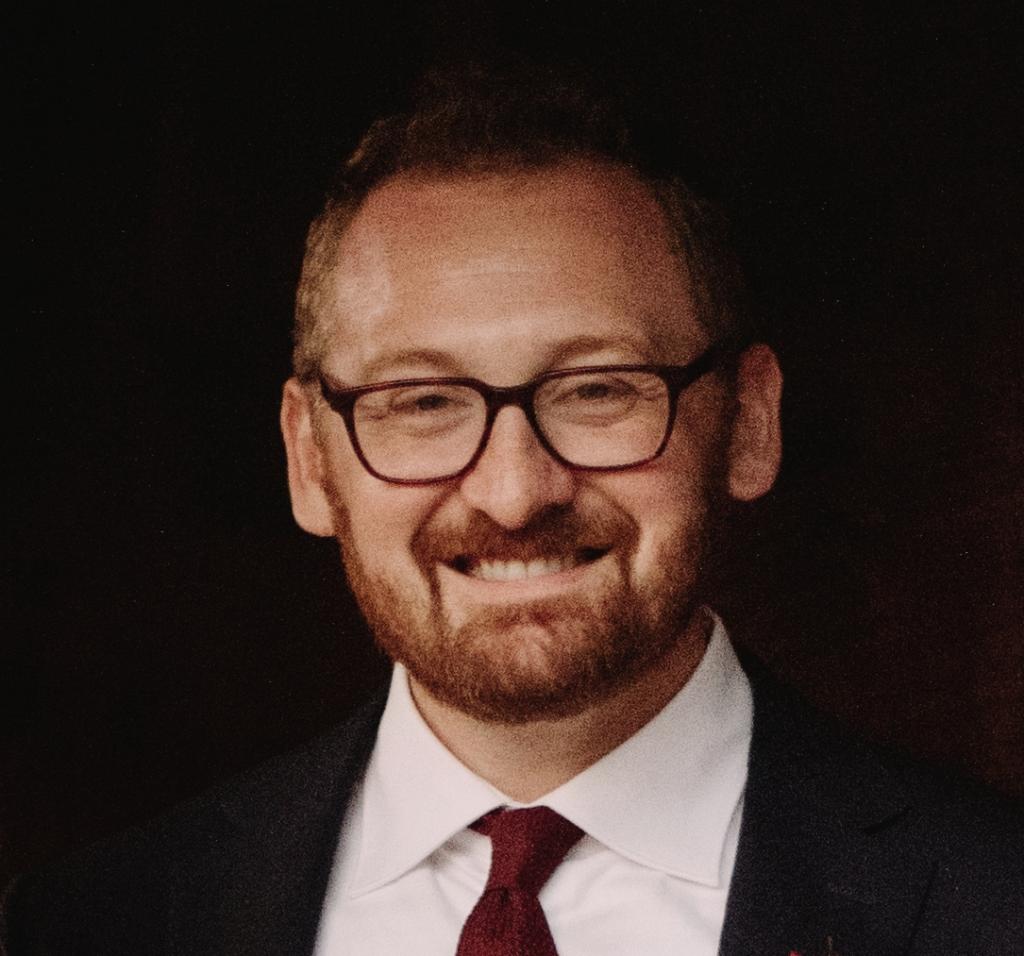


This week, Scott sat down with his Lawfare colleagues Executive Editor Natalie Orpett and Public Service Fellow Julia Curlee to talk through the week’s big news in national security, including:
- "The Xi-Quel." This week, Chinese President Xi Jinping arrives in Washington for a three-day state visit—his first to the U.S. capital in more than a decade, and the second Trump-Xi summit of 2026 after the president’s own trip to Beijing in May. The pageantry will be considerable: Trump plans to greet Xi personally at Joint Base Andrews, followed by a Rose Garden honor guard, a bilateral meeting, and a state dinner. But the substance is heavier than the ceremony. With a 90-day tariff truce set to expire on November 10, China’s rare-earth export controls hanging over global supply chains, a pending $14 billion arms package for Taiwan, and questions about Beijing’s economic lifeline to Iran, the two leaders face a crowded and contentious agenda. What can we actually expect from this summit? Is anyone anticipating a breakthrough—or just a managed continuation of what one analyst called a “managed stalemate”?
- "A Fjord in the Road." On Friday, President Trump announced that the United States, Denmark, and Greenland had reached an agreement giving Washington what he described as “permanent control over security, and all other needs” in Greenland—capping a year of tension in which Trump had repeatedly threatened to take the Arctic island by economic or even military force. Denmark and Greenland insist the deal respects Greenlandic sovereignty and territorial integrity even as it clears the way for a major expansion of the U.S. military footprint and bars adversaries like Russia and China from establishing bases or making “sensitive investments” there without U.S. approval. Does the deal really give Trump the “permanent control” he is touting? And how did a standoff that once looked like an existential crisis for a NATO ally end up here?
- "Contempt of Court." World leaders are gathering in New York this week for the annual high-level session of the UN General Assembly. In his speech before the body, President Trump reiterated a number of standard talking points, notably claiming to be a peacemaker even as he again threatened Iran with annihilation. But his administration may be planning something more dramatic: according to the Wall Street Journal and Reuters, the administration has drafted sanctions measures targeting the entire International Criminal Court—not just individual judges and prosecutors, as before—that could aim to cut the Hague-based tribunal off from the global financial system. The implications reach well beyond The Hague, raising hard questions about the weaponization of dollar dominance and the geoeconomic fallout for the banks, contractors, and allied governments that deal with the court. What is Washington trying to accomplish at Turtle Bay—and at what cost?
In object lessons, Natalie, following in the footsteps of others before, has found a heartwarming use for AI, relatively speaking. Scott continues to nerd out over treaty law and the museums that love it. And Julia has a slightly less uplifting AI story—but one that could come with merch!
To receive ad-free podcasts, become a Lawfare Material Supporter at www.patreon.com/lawfare. You can also support Lawfare by making a one-time donation at https://givebutter.com/lawfare-institute.
Scott R. Anderson is a Senior Editor at Lawfare and General Counsel of the Lawfare Institute. He is also a Senior Fellow in Governance Studies at the Brookings Institution and a Non-resident Senior Fellow in the National Security Law Program at Columbia Law School. He previously served as an Attorney-Adviser in the Office of the Legal Adviser at the U.S. Department of State and as the legal advisor for the U.S. Embassy in Baghdad, Iraq.
Julia Curlee is a Public Service Fellow at Lawfare and a former CIA analyst with twenty-five years of experience in national security. She served as an NSC director in the Biden and second Trump White Houses and as a PDB briefer to the Vice President. She completed multiple tours in the Middle East and South Asia and served in CIA's China Mission Center. She holds master's degrees from the National War College and American University. The opinions presented here are her own and not those of the U.S. government.
Natalie Orpett is the executive editor of Lawfare and deputy general counsel of the Lawfare Institute. She was previously an attorney at the law firm Jenner & Block, where she focused on investigations and government controversies, and also maintained an active pro bono practice. She served as civilian counsel to a defendant in the Guantanamo Military Commissions for more than eight years.