Rational Security: The “(Deep State) Friends We Make Along the Way” Edition
Scott Anderson, Julia Curlee, Eric Columbus and Molly Roberts discussed the week’s big news in national security.




This week, Scott sat down with his Lawfare colleagues Public Service Fellow Julia Curlee and Senior Editors Eric Columbus and Molly Roberts to talk through the week’s big news in national security, including:
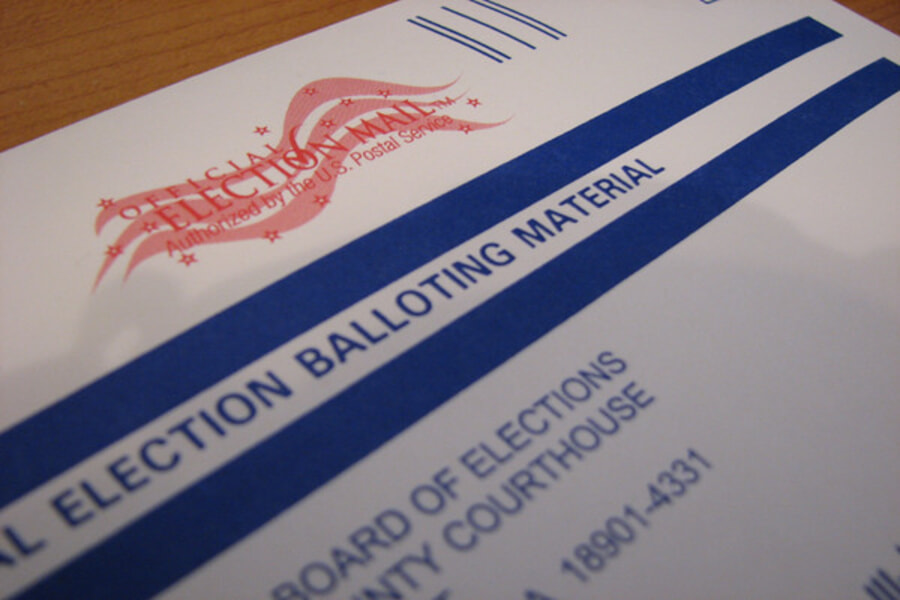
- “The Manchurian Candidates.” In a primetime address to the nation last Thursday, July 16, President Trump declassified a trove of intelligence documents that he claimed prove America’s elections are dangerously vulnerable to foreign interference—particularly by China—and revived his long-standing, evidence-free assertions that the 2020 election was “rigged” against him. He ordered the Justice Department to prosecute those he claims were involved. But intelligence officials past and present, as well as the documents themselves, draw a sharp line between foreign influence campaigns and actual interference with vote counts—and none of the material supports the claim that any votes were changed. What is actually in the documents that President Trump has declassified? And what does his speech tell us about his intentions for the midterm elections and the 2028 elections beyond?
- “Leak and Ye Shall Find.” The Trump administration has dramatically escalated its campaign against leakers, culminating in grand jury subpoenas served to New York Times journalists, some at their homes, over their reporting on security concerns relating to the new Qatari-gifted Air Force One. The Pentagon and the Justice Department have stood up a joint task force to “identify and prosecute leakers,” and the New York Times is now fighting the subpoenas in court, calling them an attempt to intimidate the press that treads on First Amendment rights. The administration insists that reporters aren’t the targets—only the people who actually leaked—and said that the reporters are simply witnesses. How much legal jeopardy do the reporters—and the media more broadly—actually face? And is this a genuine national security effort or an assault on press freedom?
- “Advise and Dissent.” Two of the administration’s most consequential nominees—Jay Clayton, who has been nominated as Director of National Intelligence, and Todd Blanche, who has been nominated as Attorney General—sat for their Senate confirmation hearings last week. Clayton, currently U.S. Attorney for the Southern District of New York, repeatedly declined to say that Joe Biden won the 2020 election, while Blanche was grilled over the now-“dead” anti-weaponization fund, the Epstein files, and the very NYT subpoenas he authorized. Both face unexpectedly narrow paths to confirmation, complicated by the sudden death of Sen. Lindsey Graham. What did we learn from the hearings? And what are each nominee’s prospects for confirmation?
In object lessons, Julia strums to the strifes it seems we can’t escape. Eric compliments the coordinated collection of compost. Scott salutes Mr. The Frog and friends who are back on the small screen (and then gets scooped on another Muppet story). And Molly marvels at one of her many military morale patches.
To receive ad-free podcasts, become a Lawfare Material Supporter at www.patreon.com/lawfare. You can also support Lawfare by making a one-time donation at https://givebutter.com/lawfare-institute.
Scott R. Anderson is a Senior Editor at Lawfare and General Counsel of the Lawfare Institute. He is also a Senior Fellow in Governance Studies at the Brookings Institution and a Non-resident Senior Fellow in the National Security Law Program at Columbia Law School. He previously served as an Attorney-Adviser in the Office of the Legal Adviser at the U.S. Department of State and as the legal advisor for the U.S. Embassy in Baghdad, Iraq.
Julia Curlee is a Public Service Fellow at Lawfare and a former CIA analyst with twenty-five years of experience in national security. She served as an NSC director in the Biden and second Trump White Houses and as a PDB briefer to the Vice President. She completed multiple tours in the Middle East and South Asia and served in CIA's China Mission Center. She holds master's degrees from the National War College and American University. The opinions presented here are her own and not those of the U.S. government.
Eric Columbus is a senior editor at Lawfare. He previously served as special litigation counsel at the U.S. House of Representatives’ Office of General Counsel from 2020 to 2023. During the Obama administration, he served in political appointments at the Department of Justice and the Department of Homeland Security.
Molly Roberts is a senior editor at Lawfare. She was previously a member of the editorial board at The Washington Post, where she covered technology, legal affairs and more, as well as wrote columns about everything from cryptocurrency grift and graft to panda diplomacy at the National Zoo.