Reframing the Conversation on Climate Intervention and Security
Two new reports exemplify how focusing on SRM through an extreme security lens alone can undermine productive research and governance.



In a new report by SilverLining and the Joseph Rainey Center, researchers claim that “America’s atmosphere and weather policies should be rooted in ensuring American weather sovereignty and in eliminating threats from foreign interventions in the weather system.” Indeed, as attention to climate intervention technologies, particularly solar radiation modification (SRM), grows, so too has discourse about the security risks of such technologies. These conversations often invoke genuine geopolitical threats—but they also implicate transboundary resource tensions, conspiracy theories and disinformation, and potential misperceptions around SRM research and testing. These dynamics deserve serious, sustained engagement from policymakers, researchers, and national security professionals.
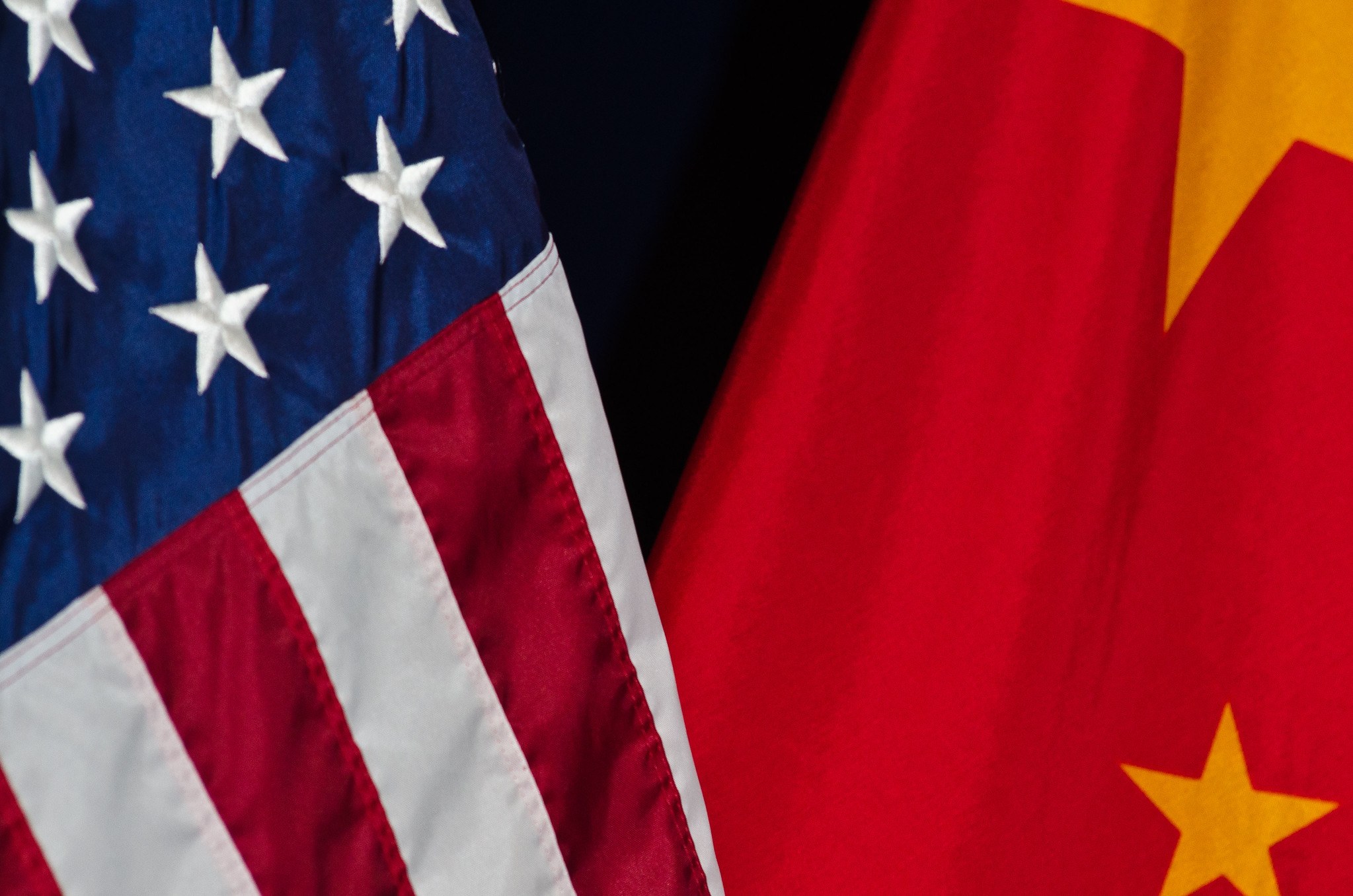
Two new reports exemplify the pitfalls of such discourse, framing SRM through a security lens with dangerous extremes. “The National Security Case for U.S. Leadership in SRM Technology,” published by the American Council for Capital Formation (ACCF) portrays SRM as an emerging strategic domain in which U.S. inaction risks ceding advantage to China. Meanwhile, “Protecting American Weather Sovereignty,” a joint policy brief released by SilverLining and the Joseph Rainey Center for Public Policy, builds a similar argument around the concept of “weather sovereignty”— the United States’ right to monitor and safeguard its own atmosphere against foreign interference.
Both reports argue for genuinely important policy goals: more federal funding for atmospheric monitoring, stronger governance frameworks, and greater U.S. engagement in shaping legitimate international norms around SRM research. But they err in their framing and rationale. Both reports center their argument on the threat that China will weaponize atmospheric modification to damage U.S. interests: disrupting agriculture, targeting power generation, or conducting covert environmental warfare. The evidence they present of China’s intentions is thin, distracting from the genuine geopolitical concerns regarding this technology. Both reports also lose the underlying rationale of why SRM exists as a technology in the first place: a potential tool to address the impacts of climate change for which further research is necessary to determine.
SRM can and should be viewed through an array of lenses, including climate, emerging technology development, scientific infrastructure, and more. Far from advancing the cause of SRM research and governance, viewing SRM through the lens of bellicose security rhetoric alone is likely to poison the international environment in which that research and governance must ultimately take place, amplify the conspiracy theories that already imperil legitimate atmospheric research, and render the reports’ otherwise sensible policy recommendations dead on arrival in the eyes of the allies and multilateral institutions whose cooperation any serious governance framework requires.
The China Threat Framing: More Assertion Than Evidence
The ACCF report warns that China’s weather modification capabilities, integrated with its military-civil fusion strategy and advances in artificial intelligence (AI), create a serious risk that Chinese atmospheric research could be weaponized against the United States. The SilverLining/Rainey brief goes further, asserting that China “races to become a ‘weather superpower’” and is developing programs “specifically focused on the militarization of its atmospheric research.” Both reports invoke scenarios in which a foreign-induced drought wrecks American agricultural production.
These claims warrant serious scrutiny, because the reports provide almost no concrete evidence for them. China does operate the world’s largest weather modification program, employing tens of thousands of personnel and conducting hundreds of thousands of localized cloud-seeding operations over the past two decades. This is real, documented, and worth monitoring. But there is a significant analytical leap from “China has the world’s largest cloud-seeding program” to “China aims to covertly disrupt American weather in ways that are hard to detect with current technologies.” The reports make that leap without bridging it and mislead readers on what is even possible with SRM. SRM is a global-scale technology that would lack the necessary precision and predictability. There is still deep uncertainty in regional outcomes across SRM approaches: No single country can be targeted without impacts on the rest of the world. Implying that China might attack American weather with SRM as the tool is not only a political leap, but a massive technical one. Suggesting otherwise creates a dangerous narrative about a technology that is still nascent.
The more plausible interpretation of China’s atmospheric investment is that it is doing exactly what it says it is doing: managing the risks of climate change to its own agriculture, water supply, and economic stability. China faces severe climate vulnerabilities, including water scarcity in its northern breadbasket, drought on the Loess Plateau, and increasingly erratic monsoons. Its investment in weather modification is almost certainly primarily defensive adaptation, consistent with its broader strategic approach to climate risk. Just as China has invested massively in solar and wind energy to ensure its own energy security—and it is now using that technological lead as geopolitical leverage—it is investing in atmospheric science to manage its domestic climate vulnerabilities. That may create competitive dynamics with the United States, but those dynamics are not equivalent to weaponization.
Notably, the focus on China also obscures the fact that the power to act looks markedly different in SRM. SRM, particularly stratospheric aerosol injection, would have relatively lower costs and infrastructure needs as compared to other global-scale technologies, with estimates in the range of $10-15 billion/year for one degree Celsius of warming avoided. In this context, an array of countries—or groups of them—would have the ability to research and potentially deploy SRM. The international governance landscape of SRM is also still in its infancy and remains deeply fragmented. Introducing China as a singular threat without presenting the broader geopolitical picture does a disservice to why and how SRM might exist in the world.
The Broader Security Picture
Ironically, the adversarial China framing minimizes the more serious and substantiated security arguments for the policies that both reports recommend. The genuine geopolitical risks of climate change and SRM development are less about deliberate weaponization and more about structural vulnerabilities, competitive asymmetries, and governance failures that could destabilize the international system.
The first and most important of these is the compound risk of unmanaged climate change itself. As the literature on El Niño, food security, and geopolitical stability has demonstrated, climate disruption is already a threat multiplier of the first order. Countries that fail to develop adequate adaptation and monitoring capacity will face growing instability driven by drought, crop failure, water conflict, and displacement. There are very real unknowns about how those most affected by these impacts across different regions will ultimately respond, whether through diplomacy, forced conflict, and/or use of SRM. The United States has a strong national security interest in understanding the atmosphere well enough to anticipate and manage climate-driven shocks.
The second structural risk is competitive disadvantage in a climate-changed world. If China develops superior atmospheric science capabilities—better models, better monitoring, better attribution tools—it will have informational advantages in managing its own climate risks and, potentially, in shaping international negotiations over SRM governance. The United States’ current underinvestment in atmospheric science, compounded by the Trump administration’s cuts to NASA, the National Oceanic and Atmospheric Administration (NOAA), and the scientific workforce, is genuinely alarming from a competitiveness standpoint. But that competitive framing is distinct from “China will weaponize the weather.” The former is a case for institutional investment and multilateral engagement; the latter is a case for arms-race posturing.
A Self-Fulfilling Prophecy
Beyond the evidentiary problems with the China threat framing, there is a deeper strategic problem: The framing may itself accelerate the very dynamics both reports warn against. Treating SRM solely as a strategic competition domain signals to China and other states that the United States views atmospheric research through a zero-sum competitive lens. This is a departure from the cooperative scientific framing that has governed most international atmospheric research to date. It risks triggering exactly the arms race it warns against.
This is not a hypothetical concern. The history of dual-use technology governance, from nuclear to cyber to space to biothreats, shows that escalatory rhetoric about adversary capabilities tends to produce reciprocal escalation. The SilverLining/Rainey brief’s invocation of “weather sovereignty” as a national security concept, combined with its claim that China is conducting “clandestine” atmospheric research targeting U.S. interests, is precisely the kind of language that, if taken up by the national security establishment, could harden positions on both sides and make cooperative governance harder to achieve. This extends beyond cooperation between states, with the potential to erode cooperation between academia, civil society, and research institutions around the world. The brief’s authors are presumably aware that effective governance of SRM will require multilateral and broad institutional participation, yet the framing they have chosen makes this less likely.
Additionally, though both reports try to debunk existing conspiracy theories about weather modification and geoengineering, the broader framing in the reports may actually amplify them. Chemtrail conspiracy theories and a range of related disinformation narratives have long claimed that governments are secretly modifying weather for nefarious purposes.
Both reports acknowledge this challenge. However, the reports’ assertions that foreign powers may already be or have interest in covertly manipulating U.S. weather pours gasoline on the disinformation fire, creating narratives about targeted weaponization of SRM that are technologically virtually impossible. At the same time, such a posture may play into the hands of China and Russia, both of which have blamed extreme weather events in the United States and Europe on U.S. military weather weapons. Again, these reports risk dangerous escalation dynamics with U.S. competitors and adversaries by pushing toward a zero-sum framing that interprets any action on SRM as a security threat.
The U.S. Credibility Problem
There is a final—and particularly uncomfortable—dimension of the SRM discussion that is conspicuously absent from both reports: the question of whether the United States is currently in a position to provide credible international leadership on climate governance norms. The Trump administration has withdrawn from the Paris Agreement, systematically dismantled the scientific agencies whose work the reports cite as underfunded, presided over the closure of the United States Agency for International Development, and adopted an approach to international law and alliance norms that most allied governments regard as deeply destabilizing. None of these developments inspire confidence about the United States’ ability to lead in this arena.
The ACCF report calls for a Group of 7+ SRM Governance Compact to coordinate allied norms. The SilverLining/Rainey brief invokes the Montreal Protocol as a model and calls for U.S. leadership in building “coalitions with allied nations for cooperative research and monitoring.” These might be ideas to consider. They require, however, that allied nations trust U.S. leadership and believe U.S. commitments will be honored across administrations. That trust is not currently in abundant supply.
Further still, wrapping policy recommendations in the nationalist “American weather sovereignty” framing and the aggressive China-threat rhetoric that animates both reports does not build that trust; it undermines it. The Montreal Protocol, which the SilverLining/Rainey brief correctly cites as a governance success model, worked because it was built on scientific consensus, multilateral negotiation, and transparent compliance mechanisms. It worked because it had international legitimacy. It was not built on one superpower asserting that another was conducting clandestine atmospheric attacks. Multilateral governance cannot be built on national competitive dominance.
There is also a domestic dimension to this credibility problem. Both reports call for expanded investment in NOAA, NASA, and related atmospheric and climate science programs. The current administration has been cutting these programs, not expanding them. The ACCF report goes so far as to suggest that the SRM decision-making should be separate from climate. But there is no SRM research without climate change research. Reports that frame the issue in America-first national security language may be strategically designed to make funding requests more palatable to the current White House, a pragmatic calculation. But if SRM becomes coded as a partisan project, climate constituencies may oppose SRM research categorically for years—shrinking space for legitimate governance and potentially weakening U.S. scientific leadership in global conversations.
What a Better Conversation Looks Like
None of this is to say that security considerations are irrelevant to SRM governance; they are not, and the broader field needs to engage them seriously. There are genuine and substantiated concerns worth naming clearly. The governance gap is real: No international framework currently exists to monitor, attribute, or regulate large-scale atmospheric interventions, and the rate of private and state investment in this space is outpacing the development of oversight mechanisms. The monitoring deficit is real: U.S. airborne and satellite capabilities for observing atmospheric chemistry are aging, underfunded, and in some cases being canceled, creating genuine blind spots at a moment when situational awareness matters. The deterrence problem is real: The lack of attribution capabilities means that if a deliberate atmospheric intervention did occur, whether by a state or a private actor, the United States would likely be unable to identify it with confidence, undermining any deterrence posture. And the legitimacy problem is real: Those who will be most affected by climate change and SRM have insufficient agency to shape outcomes.
What would a better framing look like? It would acknowledge that climate change is itself the primary security threat, and that the idea of SRM is a subset of the broader challenge of managing climate-driven instability. It would locate the primary risk not in deliberate adversarial weaponization but in the ungoverned deployment of poorly understood technologies by states and private actors without adequate transparency or oversight. It would frame building legitimate multilateral cooperation on SRM governance not as a concession to adversaries but as a U.S, strategic interest. And it would be honest about the current constraints on U.S. credibility and the work required to rebuild it.
The specific recommendations in both reports—expanded monitoring, a federal SRM oversight framework, modernization of international agreements like the ENMOD (Environmental Modification) Convention, public-private partnerships for atmospheric data, and investment in attribution capabilities—are largely helpful. But they would be more effective, and more likely to achieve durable support, if they were grounded in the full complexity of climate change and its security challenges rather than reduced to a China threat narrative. The ways in which SRM technologies are researched and governed matter significantly for how they will be perceived by the world. Getting the security context right is a prerequisite for getting the governance right. These reports, despite their good intentions, move the conversation in the wrong direction.