Students, Spies, and Self-Inflicted Wounds

When I was a relative beginner in my own career, during a coffee meeting with a colleague from another government agency, I asked what I needed to know to successfully recruit Chinese sources. He had about a decade on me in terms of experience, spoke Mandarin (at that time I did not), knew the culture, and was responsible for no small amount of minor intelligence coups; I expected him to offer me some sort of skeleton key that would easily open a door to professional success. Instead, he simply smiled with a hint of bemusement and replied—in a tone suggesting that I was a mere child in this world—“time on target.” It was his laconic way of telling me that the biggest determinant of success in this particular arena was the sheer number of weeks and months I could devote to building deep rapport and trust with any given potential asset.
The United States came late to the world of spying, but after World War II, it made up for lost time with funding, resources, and generally aggressive operations throughout the postwar era. The country, in the end, won the Cold War, and for a time the nation enjoyed a respite from history: The very concept of great power competition seemed little more than an artifact of the past.
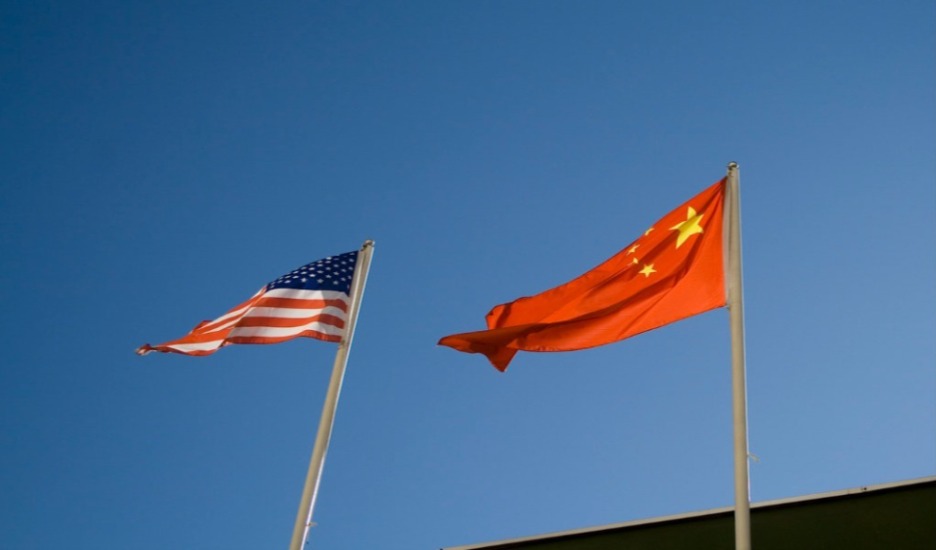
History, though, has a rude way of upsetting one’s assumptions. The United States now finds itself once again engaged in a struggle for global hegemony, this time against the People’s Republic of China. Even those hoping to avoid a military clash concede that such conflict is increasingly likely, and major think tanks now regularly examine potential flashpoints and the course such a war might take.
While intelligence rarely prevents such wars, or even stops them from expanding—many of its students are skeptical of both propositions—an effective intelligence apparatus is still one of the arrows a nation needs in its martial quiver. Unfortunately, the current leadership of the United States is taking actions that could very well hobble our ability to effectively harvest intelligence on both the Chinese government and its military technical programs.
The Landscape of Foreign Visas
The Trump administration recently announced its intentions to severely curtail the amount of time that foreign students may spend in the United States. Such students, so long as their course of study is academic and not vocational, generally enter the country under the aegis of an F visa.
Despite assertions from some political quarters, these documents are not given out haphazardly. Applicants go through a vetting process involving both documentary submissions and interviews, requiring interactions with the Department of State and Immigration and Customs Enforcement (the latter is hardly known for encouraging cross-border exchanges). Students admitted under this program are unique compared to other visa holders in that they may stay in the country not for a set time period but, rather, for a “duration of status”—that is, for as long as they are enrolled in an approved educational program. The Department of Homeland Security recently argued that under this system, “past Administrations have allowed foreign students and other visa holders to remain in the U.S. virtually indefinitely, posing safety risks, costing untold amount of taxpayer dollars, and disadvantaging U.S. citizens.” (It should be noted, however, that on this issue—like so many others—the administration seems inconsistent in how serious it is about changing these policies, with Trump himself vacillating between encouraging foreign students and restricting their numbers.)
A large proportion of those affected by such changes would be undergraduates and doctoral students from China; last year they made up roughly 25 percent of all international students in the United States. Curtailing this particular population’s flow into American academia is very much by design—it was a theme during the first Trump administration, and the usual suspects have come out in support of the current effort and against the president’s habitual half-hearted walking back of the proposition.
To be clear, there are legitimate reasons that one could support these restrictions. It is not merely a canard that some Chinese academics pose a very real threat to university-funded research. The Chinese Communist Party makes no secret of its desire to overtake the West by developing superior technology within its own borders, and its most recent attempt to do so—released as a 10-year plan in 2015—has been quite successful. That triumph was enabled in part by a concerted effort to leverage researchers in the United States to obtain technology developed here.
No organization that has seriously considered the issue could in good faith minimize the cost of China’s campaign; it has created an entire ecosystem to enable its subterfuge. (It’s also worth noting that this type of offense is only a fraction of the intelligence activity carried out by Chinese intelligence officers and agents in the United States; the criticism heaped on the first Trump administration’s now infamous China Initiative is not entirely justified, but that is the subject of a different article.)
There’s just one problem with the administration’s proposal: It’s completely unresponsive to the actual problem posed by Chinese academics in the United States. For one thing, the overwhelming majority of the offenders in this regard are not here on F visas. Most are postdoctoral fellows in the country on J visas, a status that would be unaffected by the proposed change. Ironically, the main effect of the proposed actions placing new limits on the F visa program, rather, will be an unintended blow to American counterintelligence efforts.
That is, it will create a huge obstacle in terms of the ability of the United States to recruit future spies against China.
Recruiting Assets
Chinese students here on F visas usually spend four years in the same city while they attend a college or university, and according to one recent exhaustive study, they generally have a favorable impression of the United States and its institutions of higher education (despite a rise in anti-Asian animus over the past few years). At the same time, most report significant homesickness and a sense of alienation from American society. Compounding these negative feelings is a belief that they are expected to conform to certain political views. Much of this pressure comes from local Chinese diplomatic establishments and the student associations they sponsor.
When a foreign population demonstrates an affinity for a host nation—combined with genuine insecurities or problems that can be ameliorated through friendships or favors—it creates a target-rich environment for a special agent from a local FBI field office or a case officer from a CIA national resources station to recruit assets (such an “all hands on deck” approach to these efforts is both entirely legal and quite common). Many of these students will return to China, where, with the mantle of an elite American education, they will rise to positions of influence, power, and access to the inner workings and secrets of the Chinese state, its corporate behemoths, and its scientific and technical hubs. Having these people in the pocket of the United States intelligence community is an absolute good for the national security of our nation.
Perhaps the notion of leveraging someone’s problems to pretextually create a relationship—which can later be mined for the benefit of a government—seems distasteful. But this is what intelligence agencies do. The people who help them are not like James Bond or Jason Bourne, nor are they, as John Le Carre noted, “a squalid procession of vain fools, traitors too, yes; pansies, sadists, and drunkards, people who play cowboys and Indians to brighten their rotten lives.” Individuals who sign up to work covertly on behalf of a government are simply ordinary people who have information of value, and problems or needs that can be solved by those to whom they report. This is the way nations have operated as long as their histories have been chronicled. And if recruiting sources is both inevitable and necessary, it should be done as effectively as possible. Such effectiveness requires a talent pool from which to draw. And by potentially limiting F visa holders, the present administration is threatening to drain that pool quickly.
They are threatening, as that colleague from another agency might have put it over coffee, to reduce our “time on target.”
The Consequences of Losing Assets
We’ve already seen what it can look like when the U.S. government loses access to intelligence on China. Early in the first Trump administration, the New York Times reported that the Chinese government had killed or jailed more than two dozen of the CIA’s assets in the country. Other sources quickly backed these findings, and media outlets from around the globe amplified the story. Different theories offered different explanations for the compromise: Some suggested the losses came about as the result of a mole within the CIA; others averred that failures in operational security were to blame. The causes of this tragedy do not necessarily matter for the purposes of this article—the consequences do. In short order, the American government went nearly blind with respect to the inner workings of its greatest strategic competitor.
Rebuilding such a lost network can take decades. Difficulties abound in recruiting sources who can provide valuable political insights or in-depth technical knowledge. At the outset, determining who in a foreign government or company has information of value that could bolster our national interests is less obvious than it might seem. Nations structured in part or in whole on authoritarian principles rarely advertise who in their employ holds their most valued secrets. And even when such a person is identified, the very fact that he knows such information indicates that at least at some point, his loyalty to his country and its interests were such that he was trusted enough with its most sensitive holdings. Convincing such a person to shift his allegiances to a new entity is, to say the least, a nearly impossible task (it is not a coincidence that so many United States case officers have experience carrying out proselytization missions for religious purposes abroad).
As an unclassified volume of “Studies in Intelligence” noted some years ago, recruiters have traditionally relied on a number of different levers to facilitate this shift: money, ideology, coercion, or ego. But the United States is slashing its intelligence budget, and ideology cannot be relied on in an era when the United States seems uninterested in its own international moral authority, choosing to focus inward and isolating itself from the global community in almost all respects (another policy decision that will redound to the benefit of China). Anyone who has handled a covert asset will aver that while coercion might result in a one-time dump of information, it is not a solid base on which to build an ongoing relationship. At least everyone has an ego, I guess.
Recruitment difficulties are exacerbated when the adversary’s security services use ubiquitous technical surveillance, encourage citizens to inform on each other, pass draconian counterespionage laws with extraterritorial reach, and execute those who violate such laws. Language barriers and cultural nuances compound such obstacles.
Building out an intelligence network in the People’s Republic of China, in other words, is not a task undertaken with anything resembling ease. With the reported loss of assets discussed above, it’s safe to say that the United States is considerably less informed about China’s intentions than it has been in decades past. It is particularly frustrating for those of us gravely concerned about the threat China poses to American interests that the current administration is contemplating shutting down the pipeline that might provide one of our best options for recruiting new China-focused assets.
* * *
Many practitioners of intelligence collection and counterintelligence investigations (including no small number of my own mentors and former colleagues) would vehemently disagree with the arguments I’ve forwarded here. Balancing the security of our research laboratories and university systems against potential, but yet unrealized, recruitments of future spies is both a difficult and necessarily speculative task. But however one resolves the calculus, the consequences are real: Impacts will be felt in the realms of national security; international relations; advances or slowdowns in areas of scientific research; the ability of colleges and universities to leverage foreign tuition payments to subsidize the attendance of our own citizens; and, not in the least, the lives of potential spies for the United States, actual spies for China, and the large numbers of foreign students who truly are engaged in nothing more than legitimate research that could benefit either country in ways both predictable and unseen.
One thing is clear: All will be affected in some form or fashion. And while I wish that this sentiment could go without saying—because there is no national security sibyl who can spell out such consequences in advance, and because even those occurrences will have second- and third-order effects we cannot imagine—any such decision about how to proceed with respect to issuing visas to students from geopolitical rivals should come only after serious thought has been given to potential unintended aftershocks.
A bit of epistemic humility is in order. A country that bases its intelligence policy on xenophobia, the fever dreams of a few influencers on X, and vague notions of a white nationalist ethno-state is not a nation that is serious about national security. Our citizenry deserves better.
-1.jpg?sfvrsn=dd1c6b99_5)