The Situation: Cheating on The Situation
.jpg?sfvrsn=407c2736_6)
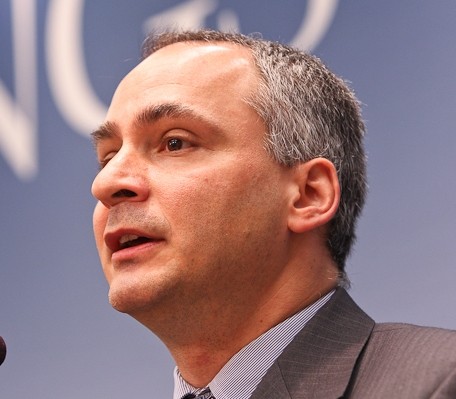
The Situation on Wednesday took a look at The Situation from the vantage point of a city facing a less self-inflicted situation.
One funny thing about watching The Situation from abroad is that it seems to speed up. I have spent the last several days in Ukraine in an intensive series of meetings with a diverse array of people all focused—in very different ways—on the war here. The Situation shows up in these conversations not infrequently, because people want to understand where the United States stands and where it is likely to stand over the coming weeks, months, and years. But it is never the focus. It is not even the background. It is one of several backgrounds.
When you go abroad and you focus intensively on the security problems of another country, you dramatically reduce the number of hours per day that you dwell on The Situation. You read many fewer news stories. You don’t read legal briefs or court opinions. You may miss presidential statements. And the result is that the number of Situation frames per second decreases, making The Situation’s movements jerkier. The picture hops from image to image. You glance over at it and it looks different. You miss things.
And so you learn things in funny ways:
- I received a text Thursday that read, “DNI Tulsi Gabbard overseeing FBI raid at Fulton County elections board is terrifying. They are calming the ICE stuff but going full tilt on other awful things.” This was how I learned, a day late, that there had been an FBI search warrant at the Fulton County elections board in the first place, much less that Gabbard had been present for it. And it was the first indication I had that the “ICE stuff” might be calming.
- Even as I am writing these words, I received a text that reads, “I am procrastinating from writing about Don Lemon. #jesuislemon.” I paused before responding, “What’s up with Don Lemon? Why #jesuislemon?” I kind of knew what the answer would be: “DOJ arrested him.” And so I learned about Lemon’s arrest.
There is emotional health in watching The Situation in jerky fast motion while focusing on other things—though there are probably healthier ways of disengaging from The Situation than going to a war zone in a time of pretty desperate cold. One doesn’t actually need to learn about every outrage in real time. There is value in forcing oneself to study something serious, rather than wallowing endlessly in the self-destructive inanity of American executive governance.
But there is also a certain stress associated with not keeping up. The Situation is a jealous mistress. She wants all of your attention all of the time. She wants you to believe that the fate of democracy rests on your knowing that Lemon was arrested the moment that fact broke via some news alert or on social media. She wants you to experience distress if you get a text that you can’t quite parse about Tulsi Gabbard, ICE, the FBI, Fulton County, and some search warrant. The Situation does not want Lawfare to write about other security issues. It does not want me to think about Ukraine—except, of course, when I write about Ukraine as an expression of The Situation. The Situation wants to absorb you completely and it will stress you out when you resist absorption.
It works. This weekend finds me in Odesa, a city almost completely without power and under regular bombardment by Russian forces. It is quiet here right now because of an eerie pause in Russian attacks on Ukrainian power infrastructure—a pause requested both by President Trump and by Ukrainian negotiators at peace talks. As the New York Times describes the matter:
An adviser to the Ukrainian president’s office said that Ukraine had asked for a pause in strikes in a meeting with Russian negotiators last weekend, and that the Russian side had agreed, but not in writing. In Russia, reports of an order to hold fire temporarily on Kyiv and Ukrainian energy targets surfaced early Thursday on the Telegram accounts of pro-war bloggers close to the Russian military.
The pause is scheduled to last only until Feb. 1, when it is also forecast to grow dangerously cold once again all over Ukraine.
The press in the United States—understandably absorbed by The Situation and its latest abominations in Minnesota and elsewhere—has dramatically undercovered the power crisis here. Millions of people have no electricity and heat at a time when temperatures are headed below zero and the capacity to repair infrastructure is gravely impaired. I understand, really. Even being here, absorbed 24-7 in thinking about this country’s overwhelming security difficulties, I feel a little bit guilty every time I get one of these texts that reminds me that The Situation is jealous of my attention. I have looked away, because I am a bad citizen. I have looked away because I don’t care enough about my own community. I have looked away because I am unfaithful.
I know this is nonsense. The fight to preserve democracy takes place worldwide. One front is in Minnesota. And it is well-covered. And another front is here—where actual bombs fall every day, and where people don’t have electricity or heat, and where the temperatures will be below zero shortly. And there is a real danger that this front gets ignored because of The Situation’s jealousy for our attention, because The Situation is our situation, because going out and defending our own democracy is hard enough—but what can we really do to help people in Kyiv who live on the 16th floor of a Soviet-era apartment building which has no electricity or heat except in a single elevator it is dangerous to get into? So my job is to think about this while it is hard for others to do so, because it is hard for others to do so—to remind people that there is a profound connection between stopping ICE violence in the streets in Minneapolis and the larger struggle by free peoples to avoid domination by authoritarianism, that there is a seamless web binding together disparate components of the fight against despotism. And my job, sometimes, is to make visible the often-invisible threads of that web, even if that means sometimes missing the details of The Situation. I believe this very deeply.
But I don’t always feel it. So every time I get a text that reflects that The Situation is changing faster than I can follow from here, I feel a pang of guilt—and a pang of fear as well, because how on Earth am I going to catch up? And I tell myself that The Situation doesn’t own me. And I tell myself all the things that appear in the paragraphs above, which I really do believe. And I tell myself that The Situation will be there waiting for me when I get home. And sometimes, as I felt compelled to do with the Fulton County FBI raid and Gabbard—I actually dive in and do a crash course and help write something. But that guilt for cheating on The Situation never really goes away.
That’s the thing about all-consuming political environments: They are all-consuming even when you venture to other all-consuming political environments.
Which is one reason why The Situation continues tomorrow—even if I miss details.
-final.png?sfvrsn=b70826ae_3)