The Deal Washington Cannot Broker
Washington has no unilateral answer for Russia’s demand to dissolve the legal record of aggression—Ukraine’s most durable leverage.
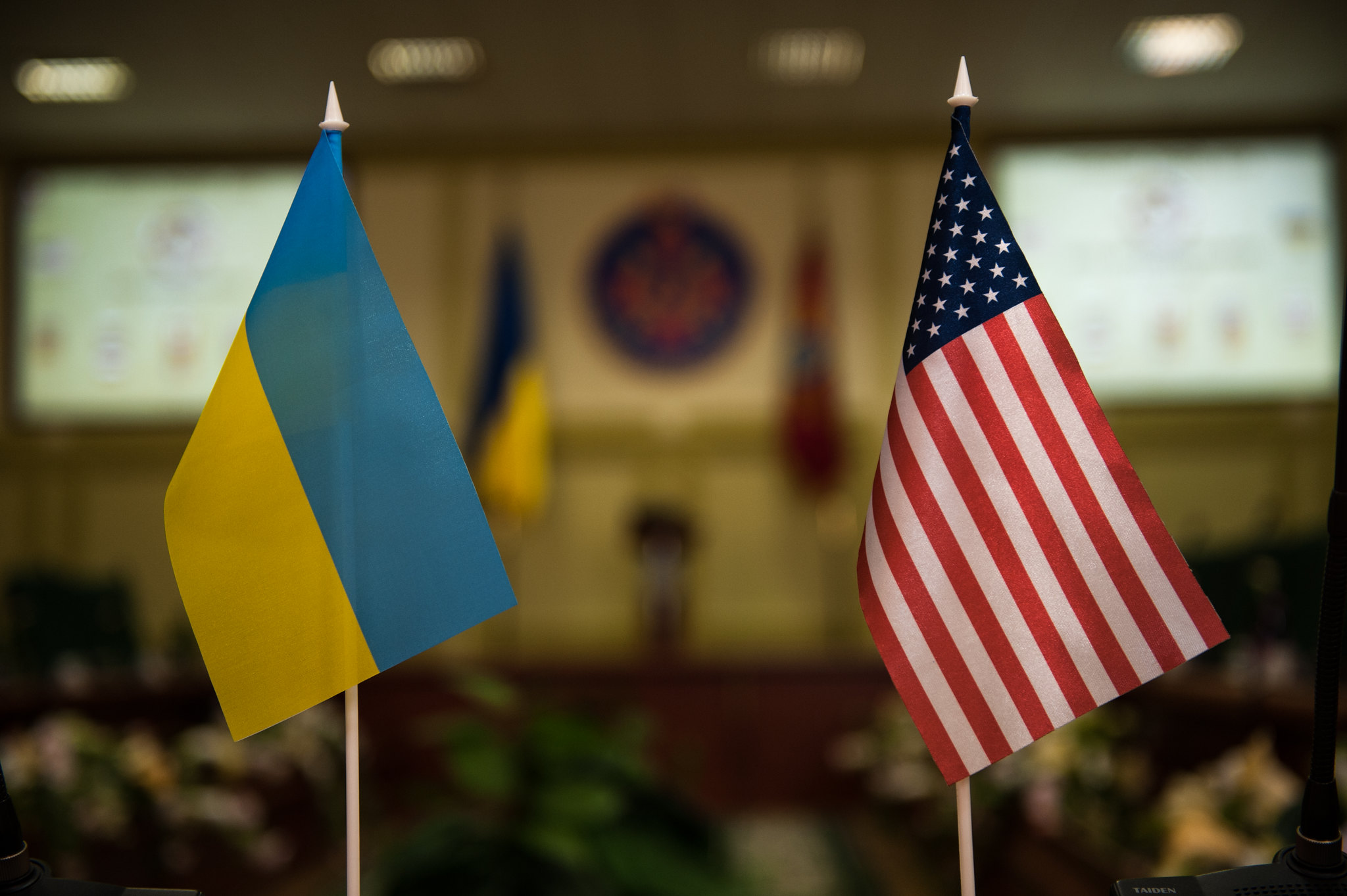

The Russia-Ukraine peace talks have stalled. The Iran war has diverted Washington’s attention and resources, releasing pressure on the Kremlin. Russia has inflated its demands over Donbas, but as President Volodymyr Zelenskyy summarized, “The question is not really about Donbas.” Yet the current debate does not fully explain why the question extends beyond territory. Existing discussions focus on why territorial concessions would fail, how far apart their positions remain, or whether Ukraine should accept a new reality of losing a fifth of its territory. That analysis misses an underlying problem: whether the international system continues to treat Russia’s war as a violation or normalizes it.
Since 2014, when Russia began the invasion’s first wave, international institutions, including the United Nations General Assembly and the International Court of Justice, have established a legal record characterizing Russia’s actions as violations of international law, demanding that Russia reverse course. That record has been used to cut Russia’s revenue through sanctions, which have locked Russia into bearing the full fiscal burden of governing occupied territories alone, isolated from the international financing, investment, and reconstruction support that are ordinarily available. One of the Kremlin’s central objectives in these negotiations is to dissolve that record—by normalizing Russia’s aggression. Ukraine’s most durable leverage is that record. This tension gives the current impasse a structural dimension.
Russia has consistently challenged the legitimacy of international determinations that characterize its actions in Ukraine as violations of international law. Beyond that, it advocates withdrawing claims and investigations before international tribunals and halting new General Assembly resolutions that extend the record. The Kremlin also demands the lifting of sanctions on Russian assets and persons enacted in response to the record. Yet the role of that record and the normalization Russia demands is underexplored in the current public debate on the peace process. This piece argues that the legal record is not a peripheral item on Russia’s list of conditions: It is the element that enables the entire architecture of costs imposed on Russia for its aggression. The legal record is also a dimension where Ukraine could negotiate from a position of strength, for instance, by deferring recurring UN resolutions in exchange for concessions that the current structure of negotiations lacks.
Not reckoning with this dimension while pushing Ukraine toward territorial concessions risks undermining the very instrument that generates long-term costs for Moscow without delivering the normalization Russia actually seeks.
Normalization: Russia’s Structural Objective
The negotiating dynamic that has taken shape since the Anchorage summit avoids any language characterizing Russia as an aggressor. The U.S. approach is to set aside the question of wrongfulness to find common ground with Russia. In February 2025, the United States tried to extend this attitude to the wider international community by voting alongside Russia against a General Assembly resolution affirming Ukraine’s sovereignty. The resolution passed regardless.
This tension over the war’s legal record appears in public communications between the Ukrainian and U.S. governments. At the February 2025 Oval Office meeting, Zelenskyy opened by showing President Trump photographs of Ukrainian prisoners of war—starved and beaten—before and after captivity. In May 2025, Secretary of State Marco Rubio was asked during his congressional testimony whether President Vladimir Putin is a war criminal. He refused to say the word, acknowledging that “war crimes have been committed” but insisting that his “job is to end the war.” One side insists the legal record matters; the other doesn’t want it to get in the way.
The Russian government considers the legal record as a fundamental issue in the negotiations. Several months before the Anchorage summit, Foreign Minister Sergey Lavrov said dissolving that record entirely, including termination of legal proceedings and arrest warrants, was a condition for direct talks between Russia and Ukraine. In November 2025, elaborating on his understanding of what had been agreed to at the Anchorage summit, Putin stated that Russia needs international recognition of its annexed territories. Without it, whatever the outcome of negotiations, Ukraine retains a plausible argument under international law to restore sovereignty over its territory, including by the use of force. “We need this recognition,” he said, “but not from Ukraine.” That said, if negotiations are successful, military reconquest is not a likely scenario. The more realistic threat to the Kremlin is that the legal record structurally bleeds Russia over time.
This pattern has played out before. Indonesia withdrew from East Timor not because it was militarily forced: Its entire army, supplied with U.S. weapons, was fighting a guerrilla movement whose only source of weapons was the ones it could capture. As Indonesian Foreign Minister Ali Alatas described in his memoirs, East Timor became a “pebble in the shoe:” a persistent irritant that consumed diplomatic capacity, blocked commercial arrangements, and shadowed every international interaction. The occupier bore the isolated burden of governing the territory, compounded by the inability to offset costs through international funding or to earn proceeds that the territory ordinarily generated. The dynamic amounted to a structural tax on state power, one that made Indonesia vulnerable when economic and political shocks hit.
This is not an argument that Ukraine should wait for Russia to crumble. The point is that the legal record constitutes real leverage in Ukraine’s hands, unfolding slowly but steadily. If the legal record were irrelevant, aggressors in both cases would not seek to structure the entire negotiating framework to sideline it. Normalization is the structural objective underlying territorial questions. Russia does not need a deal to hold territory; it holds territory by force regardless of what happens at the negotiating table. What it needs is a deal to stop the legal record from generating costs for holding that territory.
To see why, consider the costs Russia faces.
A Stone in the Shoe
Sanctions do not account for all the financial costs Russia bears. It is their interaction with the other side of the ledger—expenditures—that matters. The occupation inflates Russia’s spending: Since 2014, Crimea alone required federal subsidies of $1 to $2.7 billion annually, covering roughly two-thirds of the peninsula’s budget. A decade later, those costs have risen rather than declined. In 2025, the four additional occupied territories were allocated roughly three times Crimea’s budget, even as cities and infrastructure were still being destroyed. When the fighting ends, the occupation bill will continue. Historically, the postconflict administration of devastated territory has rivaled the cost of the military operations themselves. The costs Russia currently bears will outlast the war that created them.
Kyrylo Budanov, Ukraine’s chief negotiator, told Bloomberg on April 4 that Russia has a clear incentive to reach a deal precisely because of this dynamic: “Unlike us, they are spending their own money. These are enormous sums—already in the trillions.” According to Germany’s Federal Intelligence Service, Russia’s real annual military expenditure reached approximately 250 billion euros in 2025. Budanov added that this calculus is known—both sides have precise data on how long resources will last and the cost of continued occupation.
Russia’s structural problem is the interaction between declining revenue and rising expenditure—and how the legal record makes that interaction inescapable. Any state governing legitimate territory can seek financing from the World Bank and international investment. Russia cannot, because the legal record codes the territories as occupied, and the institutional system acts accordingly. Even in Russia itself, the World Bank has stopped all programs since 2022. Meanwhile, private investors in the occupied territories face legal risk where the title is contested. The occupied territories are, in financial terms, a black hole: Costs flow in; no international support flows back. The original 28-point U.S. peace plan implicitly acknowledged the problem by proposing World Bank reconstruction financing—but that proposal requires treating the occupied territories as legitimately governed, which the legal record prevents. Without normalization, the gap will only widen.
In the international affairs dimension, Russia’s diplomatic machinery has operated in firefighting mode since 2014. Most Russian interactions in international forums are overshadowed by the war, extending even to the Olympics. Russia has been expelled or suspended from approximately 42 international organizations, and Western countries have expelled roughly 670 Russian diplomats in the largest wave of expulsions in modern diplomatic history. Being condemned by the majority of states in the General Assembly is antithetical to Russia’s aspirations to be a leader in a multipolar world order. Normalization is not one policy priority among many; it is the precondition for Russia resuming normal international relations on any front.
The international system, configured by a decade of legal determinations, is now structurally biased against Russia. The costs accumulate for Russia, which exerts asymmetrical short-term pressure that is devastating for Ukraine. This is a reality that both sides of the negotiation must reckon with. The question is how Ukraine can use the legal record and the costs it generates rather than let them be sidelined in the negotiations. Russia and the United States appear to recognize the stakes: Both have concluded that the key lies with the one actor whose position sustains the legal architecture. This is why pressure is flowing toward Kyiv.
Where Is a Kill Switch?
Ukraine occupies a unique position in the institutional architecture that mounts pressure on Russia. It is the applicant before the International Court of Justice, the state that invoked the Genocide Convention, and the party whose territorial integrity the UN General Assembly has affirmed in resolution after resolution. The question sustaining every move of the international system against Russia is: Are we acting in support of a cause the injured party itself maintains? If Ukraine walks away, the willingness of other states to bear costs erodes. That is structural leverage—not the leverage to dictate terms, but the leverage that comes from being the one actor whose position sustains the architecture generating costs for Russia.
In December 2025, Putin told NBC News that he and Trump had “coordinated positions” in Anchorage and that “the issue lies entirely on the other side—the leaders of the Kyiv regime.” Putin understands that if Ukraine’s position collapses, the geopolitical oxygen sustaining the broader enforcement ecosystem will thin.
But Ukraine does not hold a kill switch either. Even if Kyiv signed a peace settlement tomorrow, the architecture would not disappear. The International Criminal Court would not automatically end its investigations, and the International Court of Justice cannot recall orders that Russia has already violated. Other states would not be compelled to lift sanctions enacted under their own domestic law. Ukraine’s acquiescence would drain the political oxygen from the system, but the system’s decentralized structure means no single actor, including the injured party, can switch it off unilaterally.
The resilience of this architecture has already been tested. In February 2025, the United States voted alongside Russia against a UN General Assembly resolution affirming Ukraine’s sovereignty. The resolution passed regardless, 93-18. In February 2026, support rebounded to 107. The reasons deserve fuller treatment than this piece can offer, but one factor is structural: Maintaining the record is the default, and departing from it—even in concert with a great power—has its costs.
Between Two Time Horizons
The negotiations involve multiple dimensions: territory, security guarantees, Ukraine’s Western alignment, and the legal record—and the parties occupy different positions of strength in each. In the territorial and security dimensions, Ukraine faces demands framed as nonnegotiable. In the dimension this piece has identified, the positions are reversed: Ukraine holds structural leverage. These dimensions are intricately linked. Accepting recognition of Russia’s territorial gains, for instance, may appear pragmatic in isolation, but it risks dissolving the legal record that constitutes Ukraine’s most durable leverage. Evaluating any proposal in one dimension without accounting for its costs in the other produces an incomplete picture.
However, Ukraine can take the initiative with the legal record rather than respond to ultimatums. The East Timor precedent illustrates what this could look like, including by deferring the General Assembly’s annual condemnatory votes pending a diplomatic process, without removing the issue from the agenda or altering the underlying legal determinations. The substance stays intact; only the visibility is modulated. Russia itself has argued that the General Assembly’s emergency special session on Ukraine is unjustified while negotiations are actively pending. This argument, whatever its motivation, points toward the same procedural logic. The legal record, in other words, is not a blunt instrument—it is modular enough to be negotiated from a position of structural strength rather than conceded under pressure. What Ukraine and its allies can ask for in return, and what Russia is prepared to concede, are separate questions that can arise only once this dimension is on the table.
Finally, the sticking points in the negotiation operate in different time frames, which the parties are trying to navigate simultaneously. The territorial and security pressure on Ukraine is immediate, particularly attrition warfare, territorial losses, and strain on political will. In the long term, the legal record incrementally accumulates costs for Russia, costs that grow with every square kilometer of unrecognized territory it must govern alone. A settlement that trades Ukraine’s structural leverage for short-term relief locks in the outcome of one dimension while forfeiting the other. The challenge for all parties is navigating between the urgency of the present and the structural logic of the decades ahead.