The Merit Systems Protection Board’s Independence Is Dead
The adjudicatory agency tasked with hearing employment disputes is a shell of its former self.

Since the Civil Service Reform Act of 1978 (CSRA), Congress has assigned primary responsibility for adjudicating federal employment disputes to the Merit Systems Protection Board (MSPB). The board consists of three members appointed by the president, removable “only for inefficiency, neglect of duty, or malfeasance in office.” To promote impartiality, no more than two members may belong to the same political party, and the board may act only with a two-member quorum.
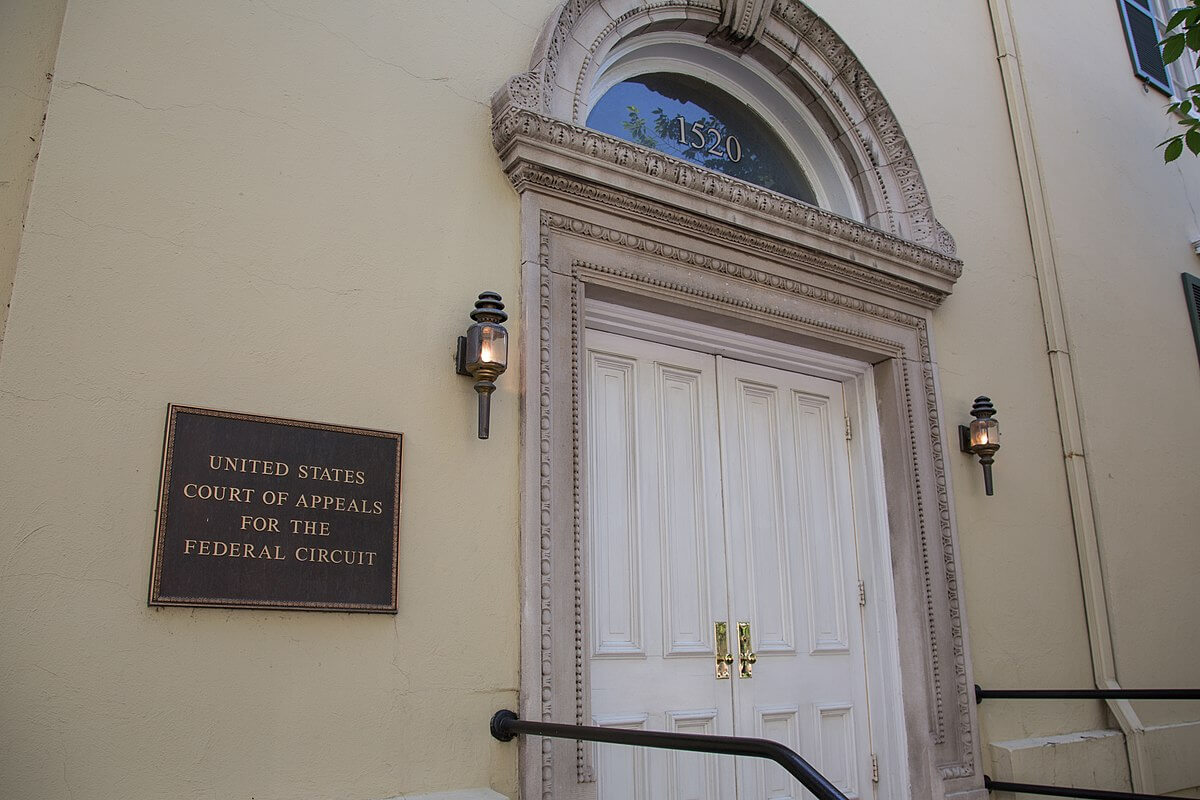
Because the CSRA provides a comprehensive adjudicatory regime for employment disputes, employees generally must exhaust their claims before the MSPB prior to seeking judicial review in federal court. Claims submitted to the MSPB are adjudicated initially by an administrative judge. Either the government or the employee may appeal the administrative judge’s decision to the board. Then, only after the board issues a final decision may a federal employee seek judicial review in the U.S. Court of Appeals for the Federal Circuit.
The MSPB is a shell of its former self. Since President Trump’s inauguration, three developments have eroded any confidence that federal employees may have had in the MSPB’s independence and impartiality. First, in Harris v. Bessent, the U.S. Court of Appeals for the District of Columbia Circuit held that Congress may not prohibit the president from removing the MSPB’s board members, thereby upholding Trump’s removal of Chair Cathy Harris. Second, the MSPB lacked a quorum to review appeals from March to October 2025, leaving employees in procedural limbo and foreclosing the possibility of judicial review. Third, and finally, the Justice Department has argued that the MSPB is legally obligated to follow interpretations of the Office of Legal Counsel (OLC). If accepted, that position would permit the OLC to exert control over the MSPB’s interpretations of civil service law.
On Jan. 9, the full D.C. Circuit declined to rehear Harris v. Bessent. The decision may represent the final nail in the coffin for the MSPB’s independence. Courts should no longer pretend that the MSPB operates as Congress intended. If Congress wishes to preserve independence in the adjudication of federal employment disputes, it must act legislatively—either by creating a court dedicated to civil service law or by permitting existing courts to hear such claims.
The President’s Removal Power
At the core of the MSPB’s unraveling lies a more fundamental shift in constitutional law: the steady expansion of the presidential power over administrative agencies. For much of the modern administrative state, Congress relied on for-cause removal protections to insulate adjudicatory agencies from direct presidential control. That settlement has been under pressure for more than a decade, as the Supreme Court cast increasing doubts on Congress’s authority to limit the president’s ability to remove principal officers.
Article II of the Constitution provides that “the executive power shall be vested in a President.” In Seila Law v. CFPB, the Supreme Court held that the president must have authority to remove principal officers who wield significant executive power, so that those officers “remain accountable to the President, whose authority they wield.” At the same time, the Supreme Court preserved a limited exception for officers serving on multimember commissions that exercise quasi-legislative or quasi-judicial power, consistent with its earlier decision in Humphrey’s Executor v. United States. Oral arguments in Trump v. Slaughter, however, indicated that the Court is poised to overturn—or at least substantially limit—Humphrey’s Executor.
The respective removals of Special Counsel Hampton Dellinger and MSPB Chair Harris have brought these issues squarely to the forefront for agencies that govern the civil service. Following the D.C. Circuit’s decision to stay an injunction restoring Dellinger’s position, Dellinger ended his lawsuit because he believed that his “odds of ultimately prevailing before the Supreme Court are long.” Meanwhile, in Trump v. Wilcox¸ the Supreme Court stayed an order enjoining Harris’s removal, concluding that the government was likely to show that the MSPB “exercise[s] considerable executive power.” The Court declined, however, to address whether the MSPB falls within the exception for multimember commissions.
Following the Supreme Court’s order, a divided panel of the D.C. Circuit held in Harris v. Bessent that removal protections for MSPB members violate Article II. Writing for the majority, Judge Gregory Katsas held that the MSPB exercises “substantial powers that are both executive in nature and different from the powers that Humphrey’s Executor deemed to be merely quasi-legislative or quasi-judicial.” The panel stitched together several different precedents to narrow sharply—if not effectively hollow out—Humphrey’s Executor. In its view, Congress may delegate neither judicial nor legislative power, and, therefore, any power exercised by agencies within the executive branch must be executive in nature. Even so-called quasi-legislative and quasi-judicial powers, the court reasoned, are executive in nature. Accordingly, the president must have the authority to remove any principal officer exercising significant quasi-legislative or quasi-judicial power because these powers are executive in nature. On this logic, the majority speculated that “Humphrey’s Executor thus governs only agencies with purely advisory functions—like, say, the United States Commission on Civil Rights.” At the same time, the majority acknowledged that—unless and until the Supreme Court finally overturns it—Humphrey’s Executor still supports Congress’s power to impose removal protections on agencies that exercise the narrowest forms of quasi-legislative or quasi-judicial power.
The panel adopted an exceptionally narrow understanding of quasi-legislative and quasi-judicial powers. Under its reasoning, only the limited and historically contingent functions expressly identified in Humphrey’s Executor—such as advising Congress or acting as a judge-like adjudicator without policymaking authority—can fall within those categories. Modern forms of administrative adjudication and rule implementation, even when long understood as quasi-judicial or quasi-legislative, are recharacterized as exercises of executive power simply because they occur within the executive branch.
Applying that framework, the D.C. Circuit panel concluded that the MSPB’s authority could not be described as plausibly quasi-legislative or quasi-judicial. Emphasizing the board’s power to regulate the removal of its administrative law judges, issue final decisions, award reinstatement and back pay, and to represent itself in litigation, the court reasoned that the MSPB exercises significant executive power that places it squarely outside the Humphrey’s Executor exception. On this view, the board’s adjudicatory function is not analogous to the restrained model contemplated in 1935 but instead reflects modern administrative governance in which adjudication is inseparable from policymaking and enforcement.
The D.C. Circuit panel’s myopic conception of quasi-legislative and quasi-judicial power dramatically constrains Congress’s ability to insulate agencies from presidential control. By anchoring the constitutional analysis to a limited account of the Federal Trade Commission’s power in 1935, the decision ignores that the categories of quasi-legislative and quasi-judicial power predated Humphrey’s Executor and were understood more broadly at the time. Although the D.C. Circuit declined to “decide whether Congress may restrict the President’s ability to remove officers with solely adjudicatory functions,” its cramped understanding of what qualifies as quasi-judicial effectively resolves the question. Modern administrative adjudication—because it involves finality, remedial discretion, and the application of broad statutory standards—will almost always be reclassified as executive power, leaving Congress with little practical ability to design independent adjudicatory bodies within the administrative state. The decision by the full D.C. Circuit not to rehear Trump v. Bessent means that any effort to restore removal protections for the MSPB must come from the Supreme Court.
Some possibility remains that the Supreme Court may ultimately retain an exception from the president’s removal power for principal officers within adjudicatory agencies. During oral arguments in Trump v. Slaughter, several justices pressed the government on whether Congress retains authority to structure agencies that primarily adjudicate disputes, invoking historical examples of claims courts and other adjudicatory institutions designed to operate with independence. Those exchanges point toward a narrower—and more historically grounded—path: The Court could reject the D.C. Circuit’s efforts to collapse quasi-judicial power into the executive power, reaffirm that adjudication has long occupied a distinct constitutional space, and preserve Congress’s authority to protect principal officers who perform predominantly adjudicatory functions. Whether the Court is willing to take that path remains uncertain. But if it does not, the MSPB’s fate will stand as a warning that adjudication of federal employment disputes within the executive branch may no longer be constitutionally sustainable.
The OLC’s Efforts to Control MSPB Interpretations
The erosion of the MSPB’s independence has not occurred solely through structural attacks on removal protections for the board. It has also unfolded through a subtle campaign to subordinate the board’s legal interpretations to the Department of Justice, and ultimately to the president.
The Trump administration has advanced an expansive conception of the attorney general’s authority over legal interpretation. Although OLC opinions are binding on Cabinet departments, the OLC would not issue decisions binding independent agencies without their consent. President Trump, however, has ordered that “[t]he President and the Attorney General’s opinions of questions of law are controlling on all employees in the conduct of their official duties,” including employees within independent agencies.
In recent filings, the Department of Justice has argued that the MSPB must obey the OLC’s precedents. In Jackler v. Department of Justice, the Justice Department argued that an OLC opinion issued in September 2025 “provides binding legal advice within the Executive Branch” and therefore must control the MSPB’s handling of constitutional questions in removal cases. The OLC’s opinion purports to overturn the MSPB’s decision in Davis-Clewis v. Department of Veterans Affairs. By the department’s account, because the OLC speaks for the executive branch, any MSPB decision inconsistent with the OLC’s interpretation “does not represent the legal position of the Executive Branch” and must be vacated or remanded. This is a striking claim. The MSPB is not a litigating component of the Justice Department, nor is it an executive department subject to the attorney general’s supervisory authority. Congress instead designed the board as an adjudicatory body meant to resolve disputes between agencies and employees—including the Justice Department itself—according to law. Treating the OLC’s views as binding on the MSPB collapses that adjudicatory function into the very chain of command whose actions the board is supposed to review.
If accepted, this model fundamentally alters the nature of MSPB adjudication. The CSRA presupposes that the MSPB will apply statutes and precedent neutrally, subject to judicial review—not that it will take direction from the OLC when the executive branch dislikes the board’s answers. Allowing the OLC to dictate legal interpretation of civil service laws deprives the MSPB of its independence and enables the OLC to construct precedents that are more favorable to agency employers. Structural removal protections matter little if the board’s legal reasoning is overridden through the Justice Department’s “guidance.” In that sense, the OLC’s asserted authority over MSPB interpretation completes the transformation already begun by attacks on removal protections: the conversion of an adjudicatory body into an instrument of presidential control.
The MSPB’s Quorum Problems
The removal power and the asserted authority to control the MSPB’s legal interpretations matter only if the board is permitted to function at all. With the expansion of the removal power, the MSPB’s quorum requirement—designed as a safeguard for deliberation and impartiality—has become a point of leverage to assert presidential control.
The MSPB can act only with a quorum of two members. When the president possesses at-will removal authority, that quorum requirement becomes fragile. By removing at least two members from the board, the president can break the agency’s quorum and halt its ability to issue decisions. As recent events illustrate, the president need not remove the entire board to paralyze it; selective removals or the refusal to fill vacancies can suffice. This dynamic converts the quorum rule from a protection of collective decision-making into a tool for preventing adjudication altogether.
The consequences for federal employees are severe. During periods without a quorum, employees can receive initial decisions from administrative judges, but if either party seeks board review, those cases stall indefinitely. In Rodriguez v. Department of Veterans Affairs, the U.S. Court of Appeals for the Federal Circuit treated the absence of a quorum as a temporary procedural defect rather than a structural denial of adjudication, leaving employees trapped in limbo.
This problem is not hypothetical. The MSPB has a long and troubling history of lacking a quorum. From January 2017 until March 2022, the board lacked a quorum for more than five years. During that period, the MSPB was unable to issue final decisions on petitions for review, producing a roughly 3,800 case backlog and leaving thousands of employees without timely resolution of claims involving removals, suspensions, and whistleblower retaliation. Although the MSPB adopted rules in 2024 to allow limited internal actions to proceed without a quorum, those measures did not—and could not—solve the core problem. The board still may not issue final, precedential decisions on petitions for review without two members and thus cannot perform its central function during quorum lapses.
The Senate confirmed a new MSPB member in October 2025, restoring its quorum. The relatively quick restoration prevented a similar backlog that resulted from 2017 to 2022, but the quorum’s restoration underscores a deeper structural vulnerability rather than resolving it. Because the president can now remove board members at will, party-balancing requirements offer little protection. A president might remove members of the opposing party, replace them with loyalists, or leave seats vacant long enough to prevent the board from acting. Even when a quorum technically exists, the threat of removal hangs over members, and the ease with which quorums are broken ensures that the MSPB’s capacity to function depends on presidential forbearance rather than statutory design.
In short, the MSPB’s quorum requirement—once a structural feature meant to safeguard neutral, bipartisan adjudication—has become another point of presidential control. Removal authority means quorums can be destroyed at will; the exhaustion doctrine prevents employees from escaping to federal court; and repeated historical failures show that these are not isolated or accidental breakdowns. Even when quorums are restored, the combination of removal power and partisan manipulation means that the MSPB’s ability to act remains contingent and fragile. Congress designed the MSPB to be an independent adjudicator. In practice, quorum fragility has converted it into an agency that can be silenced whenever its decisions become inconvenient.
The MSPB No Longer Functions as Congress Intended
The CSRA’s channeling and exhaustion regime rests on a specific legislative bargain: Congress would strip district courts of jurisdiction over most federal employment disputes and, instead, create a separate, independent adjudicator to decide those disputes before judicial review. Congress did not simply assign cases to “an agency.” It deliberately split the original agency tasked with personnel management—the Civil Service Commission—to separate the task of managing personnel from the task of adjudicating employment disputes. It created the independent MSPB precisely to eliminate the inherent conflict of having the government’s chief personnel office also serve as the appellate review in adverse actions.
In establishing the MSPB, the Senate Committee Report framed this independence as a “cornerstone” of civil service reform responsible for safeguarding the merit system. Independence was necessary to ensure that “the Board should be insulated from the kinds of political pressures that have led to violations of merit principles in the past.” Indeed, “[a]bsent the mandate for independence of the Merit Systems Protection Board, it is unlikely that the committee would have granted the Office of Personnel Management the power it has or the latitude to delegate personnel authority to the agencies.” In other words, without the MSPB’s independence, Congress would not have created the civil service system that we have today.
Those design choices are now eviscerated. If the president can remove MSPB members at will, then the statutory features Congress had treated as safeguards—partisan balancing, staggered terms, and decisional independence—become discretionary norms that survive only as long as the White House tolerates them. The same is true of the CSRA’s broader architecture.
The U.S. Court of Appeals for the Fourth Circuit recently underscored that Congress’s decision to channel claims away from district courts was “predicated on the existence of a functioning and independent MSPB and Special Counsel,” and remanded for fact finding on whether that premise has been undermined. Contrary to the Federal Circuit’s decision in Rodriguez, the Fourth Circuit suggested that the MSPB no longer functioned as intended because it lacked a quorum and that the government had argued that the board’s removal protections violated the separation of powers. The Fourth Circuit explained that Congress’s jurisdiction-stripping design presupposes not just a process, but one capable of “adequate and independent review,” such that if key Senate-confirmed positions “go unfilled” or if the MSPB and special counsel cannot perform their duties, “the framework of the CSRA would be thwarted” and congressional intent “defeat[ed].” In other words, exhaustion and channeling make sense only if the adjudicatory institutions Congress created actually exist as Congress designed them.
If the MSPB is no longer structurally independent—or can be disabled through at-will removals and partisan restructuring—then the CSRA’s exhaustion regime risks becoming a one-way ratchet: Employees are barred from federal court on the theory that Congress provided an adequate substitute, even when that substitute no longer provides the neutral, functioning review Congress intended. At that point, Congress faces an unavoidable choice. One option is to take adjudication out of the executive branch entirely by creating an Article I court for civil service disputes. The other is more modest but immediate: Amend the CSRA to permit covered employees to proceed directly to federal district court (or to a specialized appellate path) when the MSPB lacks a quorum, cannot act in a timely fashion, or otherwise fails to provide the independent adjudication Congress designed. This all assumes that the civil service avoids the darkest possibility: a decision from the Supreme Court that the CSRA is wholly unconstitutional. Provided the administrative state weathers that possibility, Congress will need to restore the basic bargain that animated the CSRA.