The Paranoid Style in American Oversight, Part I
Senator Grassley’s account of how and why the FBI investigated Trump’s role in the false electors plot is a feat of political conspiracy.
Editor’s note: Read “The Paranoid Style in American Oversight, Part II,” here.
In the face of various criminal indictments against Donald Trump, the president’s supporters—particularly his political appointees and those in Congress—have often constructed elaborate theories about government actors conspiring to handicap his political fortunes. Rather than accepting the most likely explanation that these charges may stem from actual illicit behavior, Trump allies have concocted conspiracies and fostered paranoia.
One particular strand of this conspiracy involves the FBI’s investigation into the 2020’s false electors scheme, code-named ARCTIC FROST. Nefarious accounts of the case’s origin and progress have been passed like purported samizdat among the more extreme and credulous corners of the conservative community for some time now. But few have proselytized with the frequency or volume of Sen. Chuck Grassley (R-Iowa). Aided by documents provided by individuals he claims are whistleblowers, Grassley has put forward the argument that, but for the machinations of politically motivated personnel, the FBI would not have opened the investigation.
Although Grassley has publicly posted emails, draft case openings, interview write-ups, and other pages pulled from the ARCTIC FROST file and the bowels of the FBI’s information technology systems, what results is less a documentary record than a collection of random exhibits seemingly designed to impugn the integrity of individual FBI employees. The piecemeal and nonchronological manner in which many of these documents have been released, and the lack of necessary context, distorts the narrative of how ARCTIC FROST began.
Here, I provide an orderly road map to understanding exactly how ARCTIC FROST was opened. When the emails and internal documents on which the senator relies are rearranged in a chronological fashion, and compared to extant Justice Department and FBI policies—including ones enacted by Trump’s own appointees—a different story emerges. In this more organized telling, special agents and federal prosecutors did not take a single administrative or operational action without predication and justification, in any manner outside of normal practices, or with any sort of partisan motives. The tale it tells is not as full of Sturm und Drang as the one spun by Grassley, but it does have the modest advantage of being true. Due to the sheer amount of material surrounding the case, the corrective I offer to Grassley and his allies’ accounts will be split into three separate articles.
I worked in the FBI’s Washington Field Office as a supervisory special agent at the time of the events detailed in this article, but at the time during which they occurred, I did not personally know any of the special agents involved. All facts, arguments, and conclusions in this article are based solely on documents released and posted online by Grassley, other members of Congress, federal agencies, and related news stories.
* * *
The earliest document made public by Grassley is an email dated Feb. 14, 2022, from Timothy Thibault, an assistant special agent in charge of the criminal program at the FBI’s Washington Field Office, to Michelle Ball, a line-level investigator on a public corruption squad. Grassley’s release also includes the email’s attachment, an early and partial draft of an electronic communication—the FBI’s standard form of internal documentation, referred to as an EC—opening a case on the false electors plot.
Thibault has been a target of Grassley’s ire for many years. The senator has repeatedly painted him as an incorrigible political actor who personally stymied the FBI’s investigation into Hunter Biden. Grassley isn’t alone in his vendetta—Rep. Jim Jordan (R-Ohio) has also parroted the allegation. In fairness, the end of Thibault’s career is not without controversy, and the Office of Special Counsel did warn him about reposting a political action committee’s link to an Atlantic article entitled “Donald Trump Is a Broken Man.” But any account of Thibault’s career must include his work conducting aggressive public corruption investigations against prominent Democratic congressmen. (It is a mistake to think that most FBI agents favor one party over the other.) And as for his supposed interference in the Hunter Biden issue, both his attorneys and former FBI Director Christopher Wray confirmed that Thibault never supervised or otherwise directed the matter, and was not even assigned to the field office out of which the case was investigated.
The email sent to Ball demonstrates, if anything, that Thibault did not express a strong early opinion about on whom the potential investigation should focus; while he stated that the case would need to encompass the Trump campaign as a corporate entity, he notes that it would also need to begin as an “UNSUBs” case—FBI jargon for “unknown subjects.” Indeed, the draft opening EC does not contemplate using legal process to collect information on anyone other than the fraudulent electors in individual states. Thibault also made clear that as a sensitive investigative matter, the case would require review by the office’s chief division counsel, as well as an analysis of whether Attorney General William Barr’s memorandum on politically sensitive investigations placed any restrictions on opening it. Based on another email that Grassley himself provided, Thibault actually sought to ensure compliance with the Barr memorandum by bringing it to the attention of the U.S. Attorney’s Office for the District of Columbia.
These are not the actions of someone looking to railroad a specific individual. The correspondence makes clear that few conclusions had yet been drawn as to whom the investigation should target at the time of its opening. The Feb. 14, 2022, email also demonstrates that the Washington Field Office was quite sensitive to complying with standing Justice Department and FBI policies on matters related to potentially controversial investigations.
In a subsequent release, Grassley provided an email dated Feb. 22, 2022 (page 3 of the linked document), from Thibault to an FBI supervisor, which the senator claimed showed “Thibault hand-picked subordinate agents … who are both referenced in the documents released, to conceal his role as an initiating agent.”
This insinuation lacks merit on multiple levels. First, investigators often come from diverse professions and myriad backgrounds, and as a result, it is common for a managerial figure—either a supervisory special agent or an assistant special agent in charge—to suggest or select specific personnel for particular cases. Former investment bankers frequently end up probing white-collar matters, while ex-police officers often focus on violent crime. Special agents with foreign language abilities or time spent living abroad often work counterintelligence and international terrorism matters. Failing to leverage these individual strengths would be a waste of government resources.
In this case, the Feb. 22 email specifically references two investigators. Ball was chosen from Squad CR-15—the Washington Field Office’s elite federal public corruption squad, ultimately disbanded by Kash Patel—and had been a journalist, later helping to debrief a Russian spy in a case rife with political sensitives. Not using someone like her (who was already assigned to the appropriate squad) in an investigation that would have to navigate minefields about the legitimacy of the democratic process—and which would inevitably attract extensive media coverage—would have been foolish. Similarly, a case this high profile would necessarily involve frequent and extensive interactions with high-caliber defense counsel, so selecting Jamie Garman, one of the FBI’s few special agents who had previously served as an assistant U.S. attorney, made equal sense.
Second, if Thibault was truly trying to conceal his hand in all of this, as Grassley contends, none of this would be in writing. Every government employee knows that official correspondence is maintained and stored—permanently or temporarily, depending on its nature—pursuant to the Federal Records Act and the Presidential Records Act. The Feb. 22, 2022, email on which Grassley relies to impugn Thibault’s character contains exactly one substantive paragraph; if this was a nefarious attempt to obfuscate the case’s origins, everything in it could have been relayed in a 30-second phone call that would not have risked future exposure.
Three days later, as one of Grassley’s releases shows, a public corruption squad supervisor and Thibault exchanged correspondence (page 4 of the linked document) about whether enough predication existed to open a preliminary investigation into the matter. A preliminary investigation is one that is opened, pursuant to the FBI’s Domestic Investigations and Operations Guide (DIOG), based on “information or an allegation” with respect to criminal activity or a threat to national security; it offers comparatively few techniques and authorities compared to a full investigation, which under DIOG requires an “articulable factual basis” about the suspected activity or threat. Grassley uses this email exchange to allege that the supervisor, in the senator’s words (page 5 of the linked document), “explicitly mentioned the limitations on what sort of case they could open – a “PI” or Preliminary Investigation – and yet ASAC Thibault found a way to ultimately open a full field criminal investigation with DOJ and FBI leadership’s approval[.]”
But Grassley neglects a key fact that undercuts his argument. When the opening EC was formalized and signed a few weeks later, it contained something referenced only in the original draft attached to Thibault’s Feb. 14, 2022, email: documentation from the National Archives and Records Administration, which compared the legitimate election certificates to the fraudulent ones provided by the subjects of ARCTIC FROST. (FBI Director Kash Patel has made this document public, and Jordan’s committee has posted it online, but the version provided by them does not contain the attachments; the relevant documents are, however, available on the website for the National Archives.) These certificates, both legitimate and fake, clearly provide an “articulable factual basis” for believing that groups of people tried to criminally thwart the certification of the 2020 presidential election.
To be clear, Grassley is not ignorant that these attachments exist; the earlier draft he publicized mentions that a nonprofit had requested them pursuant to the Freedom of information Act (FOIA), and he himself has released yet another draft of the opening EC, which makes reference to them. But he never acknowledged this evidence, in writing or in speech, at the time he heaped calumny on Thibault. It is difficult to view this elision of facts as anything other than dishonesty by omission.
* * *
Grassley’s anger at the FBI is not limited to their substantive actions in opening this case but also extends to their punctuation; he seems particularly concerned about a Washington Field Office lawyer’s use of an exclamation point in reference to the letterhead memorandum signed by Attorney General Merrick Garland. So incensed was he at this particular choice that he felt the need to both bold and underline the three words before it when he released the memorandum to the public (page 5 of the linked document; all bracketed comments and the textual emphasis at the end were added by Grassley):
The LHM [Letter Head Memorandum] was signed by the AG [Attorney General] today but I was advised the case is not considered “open” (i.e., we can’t start working it) until the DD [Deputy Director] signs out the EC [Electronic Communication] in Sentinel. The EC is at CID now, however, so we are close!
Grassley extrapolates that these three words “show evidence of the FBI’s team’s excitement to open Arctic Frost.” As a preliminary matter, there is absolutely nothing wrong with an investigative team expressing enthusiasm about the opening of a properly predicated case. But even if one accepts Grassley’s contentions about the investigation’s origins, there is a much simpler and entirely innocuous explanation for the email’s tone.
In order to obtain the approval of the deputy director on something, one must almost always first get the concurrence of many in the chain of command below him, and given that the FBI is bifurcated into two hierarchies—the field offices and headquarters—two ladders of approval must be climbed. In this case, as the opening EC demonstrates, the document required the signatures not just of the author but also a supervisory special agent, an assistant special agent in charge, an assistant director in charge, two assistant directors at headquarters, and an executive assistant director also at the Hoover Building—all before it even reached the deputy director’s desk. What Grassley sees as unjustified and malevolent elation might simply be relief at the impending conclusion of a time-consuming bureaucratic process.
Grassley would also later take issue with the fact that Thibault was one of these signatories of the EC and therefore supposedly violated the FBI’s rule on the self-approval documents, but the senator’s contention relies on a fundamental misinterpretation of why the rule exists. The purpose of the rule is to prevent anyone from serializing a document to a case file without any other oversight of his or her action; in this case, not only was Thibault not the signatory responsible for the opening’s serialization—that would not occur until the deputy director signed it—but six other individuals, besides the two of them, independently reviewed it before it was final. The whole argument is nonsense on stilts.
* * *
As ARCTIC FROST’s opening documentation makes clear, the case examined dozens of subjects. But Grassley has reserved much of his anger for the fact that one of them was Trump. While this focus makes a certain amount of sense given Grassley’s political loyalties, the story he constructs about how and when Trump came to be named as subject ignores the very rules and policies he claims to want the FBI to follow.
Most of the subjects mentioned in a March 22, 2022, draft version of the opening EC are still UNSUBs at this point, but three individuals are named: John Eastman, Boris Epshteyn, and Rudolph Giuliani. The EC makes clear that these three individuals had all conspicuously implicated themselves in the plot to submit alternate fraudulent elector certificates. Eastman wrote a series of memoranda, with the most famous entitled “January 6 scenario,” in which he articulated ways to leverage the legal system to slow down or outright stop the certification of the 2020 election. (His legal reasoning was so lackluster that even the Claremont Review of Books, which has served as the preferred megaphone for the more intellectual and philosophical adherents to Trump’s agenda, published an article noting that “constitutionalists who cherish the rule of law and the legitimacy of our governing institutions have every reason to be deeply troubled by the Eastman memos and the effects they might have had on the peaceful transition of power.” Other conservative outlets followed suit.)
The EC also cites public statements from both Giuliani and Epshteyn about their support for this legal legerdemain; in an interview given shortly before the case began, Epshteyn admitted, “I was part of the process to make sure there were alternate electors … under the leadership of Rudy Giuliani.” (Epshteyn also claimed that everything was done legally, but one federal and several state grand juries would disagree with this contention.) Trump is not listed here as a subject.
Grassley sees some sort of hidden malfeasance in Trump’s absence, because he produced another email dated Feb. 24, 2022, in which Thibault notified a federal prosecutor that Trump would be a named subject. To highlight this seeming oddity, Grassley provides yet an additional message that seems to muddy the issue. In an email dated Feb. 25, 2022, Ball confirmed to Thibault that investigators did want to list Trump as a named subject. The apparent contradiction between these emails and the March 22, 2022, draft opening EC puzzles him, as does an email dated March 25, 2022, in which a headquarters official assigned to the Public Corruption Unit sent Thibault a draft containing more changes from the Office of General Counsel. At Patel’s confirmation hearings, Grassley vented over the perceived discrepancy:
Between March 22 and April 13, other versions of the document opening the investigation existed, because a ninth email shows that the FBI General Counsel’s office made edits on March 25. Was Trump still removed as an investigative subject? If so, which Justice Department and FBI officials – other than Jack Smith – later added him for prosecution?
But perhaps there is a simple explanation for all of this.
The Barr memorandum, which Thibault himself brought to the attention of the U.S. Attorney’s Office, requires the approval of the attorney general for certain sensitive investigations. As Trump was not a declared candidate at this time for the 2024 election, this approval was not formally needed. But given the rampant speculation—often encouraged by Trump himself—that he might run for office again, the FBI and the Justice Department apparently decided to err on the side of caution and assume that the memorandum applied. Accordingly, FBI Director Christopher Wray drafted a memorandum for Deputy Attorney General Lisa Monaco to submit to her superior for his signature. Attorney General Garland provided that signature on April 5, 2022, and Trump appears in the next and final draft of the opening EC.
So even if the investigative team knew that there was an “articulable factual basis” to include Trump as a subject, and even if they discussed it among themselves, it would have been improper for them to draft a case opening stating so prior to receiving attorney general approval. Presumably the group waited, then, until after April 5 to add Trump as subject to the EC. And the remaining emails released by Grassley show that shortly after this date, they did so. The opening EC was finalized, signed, and the casework began.
What happened immediately afterward will be the subject of the next article.
* * *
Grassley is fond of alluding to Justice Louis Brandeis’s contention that “sunlight is the best disinfectant.” Grassley mentions it at the end of a long missive about ARCTIC FROST that he sent at one point, to Attorney General Pam Bondi and FBI Director Patel. But Grassley ignores the fact that for that sterilization to take place, light must be shed on everything—not just selected excerpts from a case file. The documents provided to the public about the FBI’s endeavors against Trump have been hand-picked and released nonchronologically, without any context about the larger investigation or controlling FBI and Justice Department policies, and trussed by little more than insinuations that, when compared to the actual historical record, reveal themselves as nothing more than the unfounded makings of a conspiracy theory.
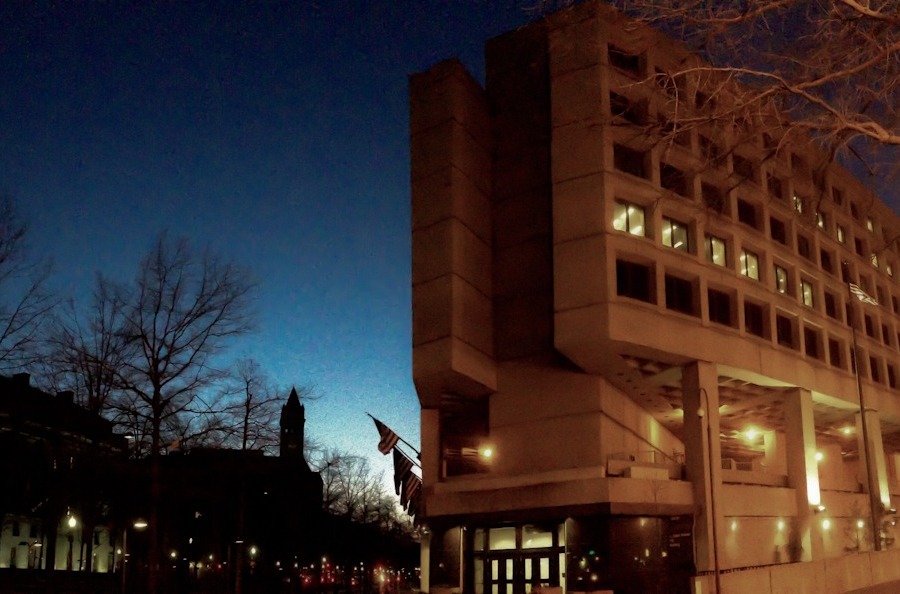
Grassley is not alone in spinning this particular web, even if it is more dross than silk. He has been assisted by his House of Representatives counterpart, Jim Jordan, and has received succor from two other zealots, who—perhaps as a reward for their unbounded dedication to undermining the legitimacy of the 2020 election—ascended to the seventh floor of the J. Edgar Hoover Building. FBI Director Kash Patel and recently departed Deputy Director Dan Bongino have selectively released ARCTIC FROST documents to both legislators, and have haphazardly heaped invective on the case’s participants. Examining the theories that the four have constructed, and explaining why they are built on a house of cards, will be the focus of the next two articles in this series.
And to be clear, not all such theories have dramatic consequences: The genius of “Hamlet” or “The Tempest” would not diminish if Edward de Vere or Francis Bacon were discovered to have authored the plays, and whether a few people believe that Stanley Kubrick helped fake the moon landings does not impact one’s enjoyment of “Paths of Glory” or “Barry Lyndon.” But Grassley is not tasked with making works of fiction: He is an elected official conducting oversight of the FBI, and demanding reforms to its culture and processes. The accusations he makes in hearings, and the insinuations his press releases promote, have very real consequences for the effectiveness and integrity of federal law enforcement.
Grassley’s choice to view legitimate investigations through a partisan mindset has one more consequence worth mentioning: He has destroyed the careers of individuals who have not been credibly accused of any policy violation or investigative deficiency. Thibault resigned shortly after ARCTIC FROST was opened, with a nearly two-decade career honorably serving his country as an investigator and SWAT operator reduced to a footnote amid the clamor of Grassley’s calumny. But at least he left the organization under his own steam. Ball and Garman were not granted that dignity: Patel simply fired them. Their squad—arguably the most adept and experienced collection of public corruption investigators in the entire country—was summarily disbanded.
In his letter to Bondi and Patel, Grassley states that “[i]t is important that every individual at your agencies maintains the highest level of professionalism, and does not allow political bias to motivate or guide their investigative work.” The electorate surely would not disagree with this sentiment. But it should demand the same rigor and honesty from him, too—and when it comes to how ARCTIC FROST began, objectivity and truth seem like secondary concerns to him.