The Prosecution of Smartmatic
A rare corporate FCPA indictment tests whether courts will more closely interrogate prosecutorial motive.

Justice Department investigations into companies suspected of having violated the Foreign Corrupt Practices Act (FCPA)—which prohibits corrupt payments to foreign officials in exchange for business—typically end in settlements rather than sentences. There are believed to have been fewer than 30 full jury trials pursuant to the statute in its history. Charges against companies themselves, as opposed to individuals within them, are even rarer: The Justice Department hasn’t bothered to bring any in 15 years—or it hadn’t, until this fall.
The department surprised corporate compliance experts in October 2025 when prosecutors in the Southern District of Florida secured a superseding indictment against Smartmatic, a voting systems vendor that became a target of right-wing conspiracy theories following the 2020 election. The political world, considering the circumstances, may have been less than shocked.
Now, Smartmatic is asking a federal judge to dismiss the case against it, alleging vindictive or selective prosecution—a towering legal obstacle that in recent months has looked easier than ever to surmount. That’s because prosecutors, much less presidents, typically don’t speak loudly and proudly of their desire to avenge themselves against their perceived enemies. The current president, however, does.
Smartmatic joins a list of high-profile defendants who have made unusually strong claims of vindictive or selective prosecution over the past year: James Comey, Letitia James, and Kilmar Abrego Garcia have mounted similar challenges. These people, of course, have something in common. They somehow, some way, upset Donald Trump or those around him. Comey oversaw the probe into possible collusion between Trump’s 2016 campaign and Russia; James won a $450 million judgment against Trump and the Trump Organization for civil fraud; and Abrego Garcia embarrassed the Trump administration by earning the country’s sympathy after his unlawful deportation to an El Salvador megaprison.
What has Smartmatic done to run afoul of the White House? In reality, nothing—apart from providing ballot-marking devices to Los Angeles County for use in the 2020 race for the White House. But in the wild world of MAGA election denialism, Smartmatic is responsible for the rigging of voting systems around the world, including in the United States to steal that contest from Trump. The success of the company’s new motion depends on whether it can convince a judge that prosecutors are targeting Smartmatic not because of the facts of the case but because of this fantasy.
A Textbook Case
The case against Smartmatic is relatively straightforward, even if the context surrounding it isn’t.
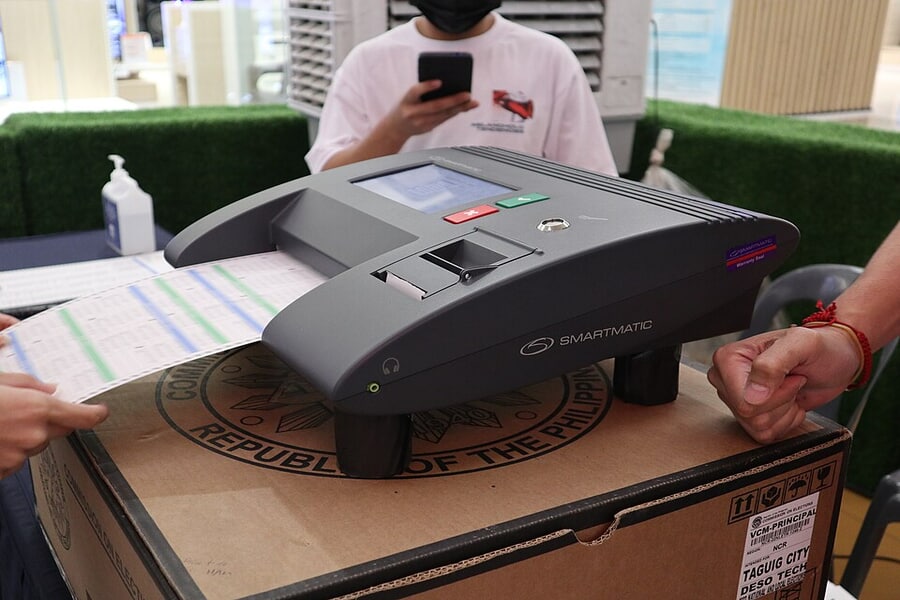
In August 2024, President Biden’s Justice Department indicted two executives of SGO Corporation Limited—more commonly known as Smartmatic—as well as the former chairman of the Republic of the Philippines’s elections commission and one other alleged co-conspirator for violating the FCPA. The executives allegedly directed “at least $1 million in bribes” to the then-chairman in an effort to secure contracts for the nation’s 2016 elections, overcharging for their services and then laundering the surplus through a slush fund.
The indictment didn’t strike FCPA watchers as unusual at the time. The Justice Department’s decision not to name Smartmatic the company in the case was also typical: Modern-day corporate enforcement has long preferred securing companies’ cooperation in cases against individuals over bringing cases against the companies themselves. Then-Deputy Attorney General Sally Yates effectively formalized that policy in a 2016 memorandum. The Justice Department last took a company to trial on FCPA charges in 2010. Over the intervening decade and a half, the government has responded to corporate FCPA misconduct with a combination of deferred prosecution agreements, nonprosecution agreements, and declinations.
That doesn’t mean the Justice Department couldn’t have charged—or couldn’t now charge—companies under the FCPA: The principle of respondeat superior provides that so long as the criminal conduct of any individuals was undertaken within the scope of their employment and intended to benefit their employer, the employer may, too, be found liable. But, as a matter of prosecutorial discretion, the department has chosen not to. It is precisely this matter of discretion that renders so strange the Trump Justice Department’s decision regarding Smartmatic: This administration hasn’t opted, as any administration very well could, to go tougher on corporations in FCPA enforcement. On the contrary, it has pulled back from robust FCPA enforcement altogether.
An executive order in February 2025 paused enforcement under the statute, instituted a six-month embargo, and required a review of all existing investigations to “restore proper bounds” on prosecutions. This summer, Deputy Attorney General Todd Blanche revealed new guidelines for pursuing FCPA cases, instructing that prosecutions should involve or implicate a trafficking organization, the competitiveness of U.S. businesses, national security, or egregious misconduct. “Effective today,” read the memo, “prosecutors shall focus on cases in which individuals have engaged in criminal misconduct and not attribute nonspecific malfeasance to corporate structures.” The Justice Department has largely acted accordingly.
In other words, as compliance blogger Matt Kelly told me, “They’re not going to indict a company unless the Moon is in the seventh house and Jupiter aligns with Mars.” Except that they did indict Smartmatic, in a superseding indictment whose only meaningful difference from its earlier incarnation was the addition of the company’s name to the list of defendants.
The Moon in the Seventh House
What explains the Justice Department’s decision to prosecute Smartmatic, if its posture on FCPA enforcement points in the opposite direction? Smartmatic has a simple answer: animus.
The company, as it recounts in its motion to dismiss, had been cooperating with the investigation into its executives for several years, including by “producing millions of pages of documents and making fact presentations to the DOJ.” The case was well on its way to trial when, last summer, the department “showed renewed interest in holding … SGO accountable,” prompting settlement negotiations. U.S. Attorney for the Southern District of Florida Jason Reding Quiñones—the man currently overseeing the so-called Grand Conspiracy probe into Obama and Biden officials supposed to have plotted to violate Trump’s civil rights—shut those talks down soon after his swearing-in. Three days after that, his office indicted Smartmatic.
Around the same time, justice watchers may remember, President Trump sent a Truth Social addressed directly to then-Attorney General Pam Bondi demanding the prosecution of his political enemies. He also posted the following missive in October: “What’s worse, the NBA Players cheating at cards … or the Democrats cheating on Elections … I hope the DOJ pursues this with as much ‘gusto’ as befitting the biggest SCANDAL in American history!” A few months earlier, he posted, “The 2020 election was a total FRAUD! The evidence is MASSIVE and OVERWHELMING. A Special Prosecutor must be appointed.”
None of these messages were directed specifically at Smartmatic. But Smartmatic has specifically featured in conspiracy theorizing around the 2020 elections. Rudy Giuliani, Sidney Powell, and other “Big Lie” proponents went on Fox News to falsely claim the firm’s involvement in a “huge criminal conspiracy” to miscount votes in a number of competitive states. (Actually, Smartmatic operated only in blue as blue can be Los Angeles County, and it only supplied ballot-marking devices not involved in the tabulation of votes.) And Trump himself has reshared tweets and videos leveling variations on those accusations.
Mike Lindell, the MyPillow CEO turned fevered election denier, at one point told the press that he had discussed with the president punishing those involved in the 2020 race: “We can go back and address the 2020, the 2022, all these elections and … melt down the machines and turn them into prison bars.”
Smartmatic has at one point or another filed defamation cases against Lindell, as well as against Giuliani, Powell, current U.S. attorney for the District of Columbia and then-Fox News personality Jeanine Pirro, and Fox News itself. The addition of Smartmatic to the indictment has come as a boon for them: Lindell, already having lost his case, has argued it should be reopened because of the allegations against the company. Lawyers for Fox News have argued it needs more time to prepare for its own imminent trial because the charges “fundamentally” change the dispute.
All of which, Smartmatic argues in its motion, amounts to the latest salvo in Trump’s “campaign of retribution” against “those who undermine his mantra that the 2020 election was rigged[,]” in which war he has “demanded the Department of Justice … take up the sword.” Translated from purple prose into legal jargon: This was a vindictive (or selective) prosecution.
Jupiter Aligns With Mars
Proving a vindictive or selective prosecution is devilishly hard.
There are two ways to succeed on a claim of vindictiveness. The first is to show that a prosecutor charged defendants directly in retaliation for exercising their legal rights. The second, more realistic route, is to show a “realistic likelihood” of the same, thereby shifting the burden to the government by creating a presumption of vindictiveness that it must refute by justifying its decision to bring a case.
Succeeding on a claim of selective prosecution, meanwhile, requires showing both that a prosecution had a discriminatory effect and that it was motivated by a discriminatory purpose. Defendants must convince a judge that a case was brought because of a protected characteristic or a constitutional or statutory right, and that those who lack that characteristic or didn’t exercise that right haven’t been—or wouldn’t be—punished for violating the same law.
It’s easy enough to see how Smartmatic’s case could fit this framework. The president’s allies have blamed the firm for his 2020 election loss. The president has echoed their rhetoric, and he has called for the prosecution of entities he insists are responsible for his defeat. The timing of the indictment is dubious, so long after the alleged conduct occurred and so soon before the other defendants were set to go to trial. The mismatch between the case and the Justice Department’s broader FCPA enforcement policy is suspect, too.
Together, Smartmatic says, these amount to a prima facie showing of vindictiveness. The company identifies the same set of circumstances to support its claim of selective prosecution. The last of the above points in particular does bolster that argument: The success of a selective prosecution motion depends on showing that “similarly situated” entities weren’t punished where a defendant was. Smartmatic can furnish examples of cases where misconduct was the same or worse, and yet the Justice Department didn’t try to take a corporation to court. All in all, Smartmatic insists that it has at the very least earned discovery “as to President Trump and his political allies’ … improper involvement in the DOJ’s decision” to charge it.
Narratively compelling as Smartmatic’s story may be, whether it meets the stringent legal standards for vindictive or selective prosecution remains far from certain. Discovery could well show that line prosecutors pushed for the company’s indictment because they believed—as Bloomberg Law has reported they did—that it was insufficiently helpful in the investigation into its executives, or insufficiently willing to submit a guilty plea. That could give Smartmatic trouble in convincing the judge that it wouldn’t have been prosecuted “but for” a vindictive motive, even if discovery also shows improper motivation on the part of Reding Quiñones or any of his Justice Department superiors.
And that’s if Smartmatic manages to earn discovery at all. Usually, defendants fall short. Here, recent examples of vindictive or selective prosecution motions that have made unusual headway—or seemed likely to do so—are instructive.
All Too Realistically Likely
Abrego Garcia managed to secure a presumption of vindictiveness from U.S. District Judge Waverly D. Crenshaw Jr. in the Middle District of Tennessee. His attorneys were able to show that the government had a “significant stake” in retaliating against him for filing a lawsuit challenging his deportation to El Salvador—from which the administration had insisted it was incapable of returning him, until suddenly it secured an arrest warrant enabling just that.
Along the way, administration officials made a number of insulting public statements about Abrego Garcia. Then-Homeland Security Secretary Kristi Noem, for instance, called him a “gang member” and a “terrorist.” Crucially, Judge Crenshaw didn’t find that the animus came from the line prosecutors, or even the acting U.S. attorney for the district, who brought the case against him. He found that it came from the higher echelons of the administration, and that Justice Department and Department of Homeland Security leaders “may have induced” the acting U.S. attorney, even “unknowingly.”
Abrego Garcia’s lawyers also showed that the prosecution was potentially unreasonable—relying in large part on the timing of the indictment. The government’s criminal charges against him for human smuggling came 903 days after a traffic stop in which he was discovered to be driving men who were in the United States illegally. The only relevant event in the interim was his wrongful deportation complaint.
The vindictive or selective prosecution claims by Comey and James never made it as far as Abrego Garcia’s—but that’s not because they were necessarily weaker. Their cases were instead dismissed when Judge Cameron McGowan Currie ruled that Lindsey Halligan, who personally secured their indictments, had been improperly appointed as U.S. attorney. Both defendants were able to summon examples of, as James’s filing put it, “animus through a megaphone”—instances of the president expressing his antipathy toward them and enthusiasm for their punishment on Truth Social and elsewhere, sometimes in all caps. They also had the advantage of serious procedural irregularities in their cases, and it didn’t hurt either that declination memos were penned ahead of their eventual prosecutions.
The idea, moreover, that Comey and James wouldn’t have been prosecuted “but for” the White House’s desire for revenge was entirely plausible: The cases against them were near nonsense—so much so that onetime U.S. Attorney for the Eastern District of Virginia Erik Siebert seemed to prefer resignation to presenting them to a grand jury. Indeed, when the Justice Department attempted to reindict James after the Halligan appointment debacle, it failed—twice.
A lesser-known but equally notable example of a compelling vindictive prosecution claim came recently from Kseniia Petrova, a Russian biomedical researcher working at Harvard Medical School laboratory.
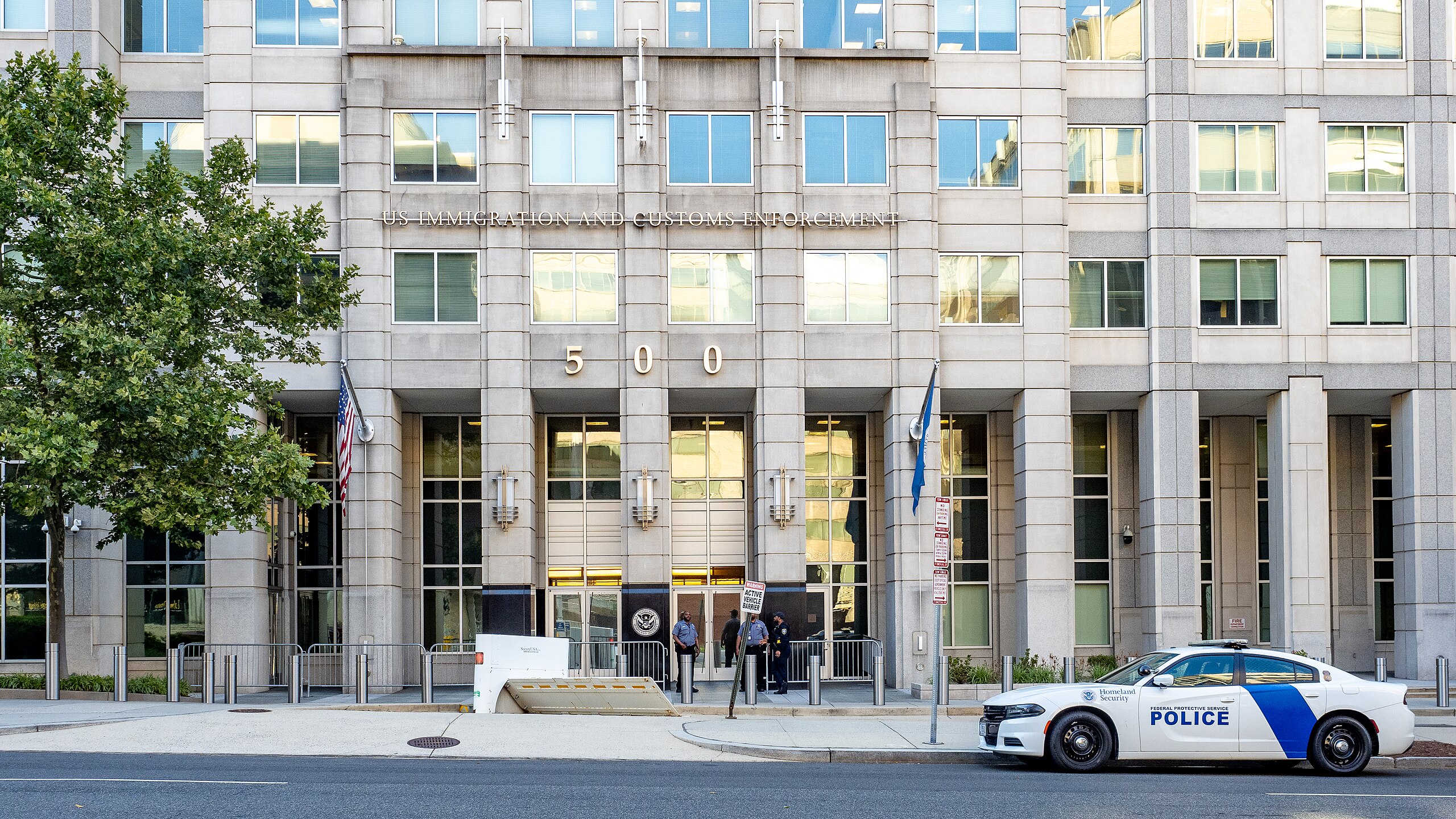
Petrova was stopped at the airport last year when she returned from an international vacation carrying samples of frog embryos from Paris at her supervisor’s request. Her visa was revoked—a move for which a federal judge could find “no legal or factual basis”—and she was held for three months in an Immigration and Customs Enforcement detention center. Her ordeal, about which she penned a New York Timesop-ed, received ample attention from those who viewed it as an example of the administration trying to intimidate noncitizen academics amid its broader campaign against universities and especially against Harvard.
Eventually, Petrova was indicted on smuggling charges that her lawyers say are out of proportion to her minor infraction of failing to declare the samples at customs. They filed a motion to compel discovery in the U.S. District Court for the District of Massachusetts—arguing that “the publicity surrounding her detention” as well as her exercise of her First Amendment rights “provoked, at least in part, the charging decision.” Last week, a magistrate judge sided with Petrova, allowing discovery.
Presumption of Irregularity
While no one would want to be in Smartmatic's shoes, it does enjoy one advantage over these other three litigants: They came first.
While presidential calls for vengeance can help establish vindictiveness, actual prosecutions carried out in apparent response to such calls are the real thing. Already, one judge has found a likelihood that the government vindictively prosecuted Abrego Garcia—and Petrova has earned discovery on similar grounds. The government should count itself lucky to have escaped the transparently vindictive Comey and James prosecutions with dismissal on mere Appointments Clause grounds—otherwise, other judges may very well have reached the same conclusion.
(The Justice Department’s involvement in investigating highly dubious accusations of election interference in Fulton County, Georgia, and Maricopa County, Arizona, don’t hurt Smartmatic either. Nor does Judge James Boasberg’s recent quashal of grand jury subpoenas to the Federal Reserve Board, which he found to have been issued for the improper purpose of pressuring Chair Jerome Powell to lower interest rates.)
All of this speaks to a sea change in this country’s legal landscape. The backdrop for the jurisprudence on vindictive or selective prosecutions is an assumption known as the presumption of regularity. That’s the concept that, “in the absence of clear evidence to the contrary,” courts should assume the government has properly discharged its duties to faithfully execute the law. This expectation explains why the bar for prevailing on such a motion is set so high. Yet this administration has, bit by bit, been rebutting that presumption—through noncompliance, false representations, “arbitrary and capricious” administrative actions, and more. Judges across the country have been saying so for over a year now.
Vindictive or selective prosecutions are about as irregular as can be. The erosion of the presumption of regularity makes vindictive prosecution claims infinitely more plausible, and plausible vindictive prosecution claims erode the presumption of regularity. The politicization of the Justice Department under Trump has made Smartmatic’s motion weighty. Its victory, in turn, would lend future motions even greater strength.