The Risks of Getting Russian and Chinese Nuclear Strategy Wrong
Strategists must understand the great powers’ different approaches to nuclear use.
.jpg?sfvrsn=6f525e12_3)

Editor’s Note: Nuclear first-use is a policymaker’s nightmare. The very possibility of first use shapes diplomacy and the use of conventional force. Drawing on their recent article in International Security, Penn’s Fiona Cunningham and Kristin Ven Bruusgaard of the Norwegian Intelligence School warn of the danger of misperception regarding first use of nuclear weapons and identify ways that major powers might—but often won’t—use nuclear weapons first.
Daniel Byman
***
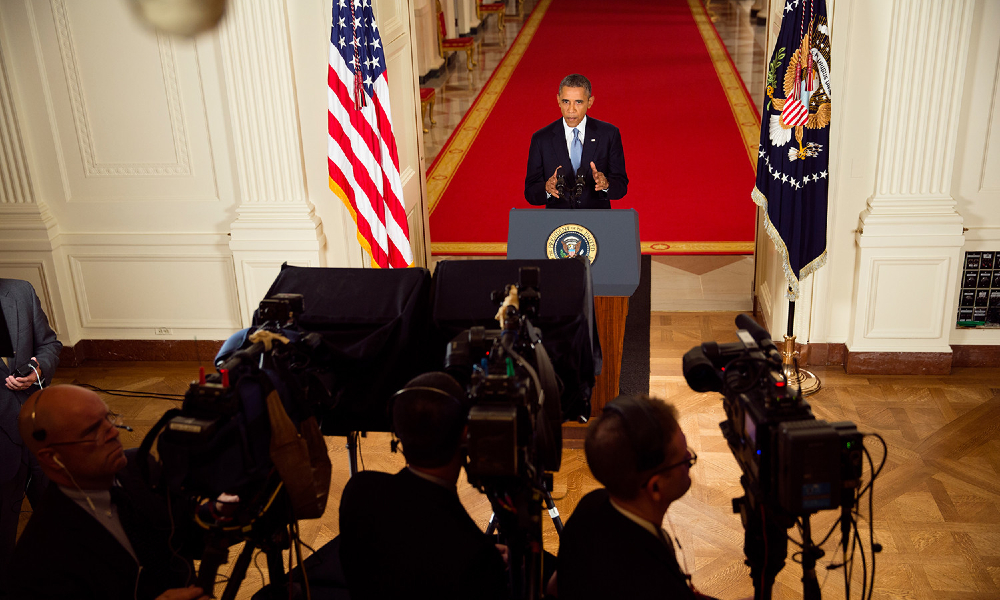
In October 2022, Biden administration officials feared that Russia might use a nuclear weapon in Ukraine. For more than a decade prior, Western strategists had debated whether Russia’s nuclear strategy included an option to “escalate to deescalate” a conflict using a nuclear weapon. Uncertainty about Russia’s threshold for using nuclear weapons led the Biden administration to warn that severe consequences would follow if Russia employed a nuclear weapon in Ukraine.
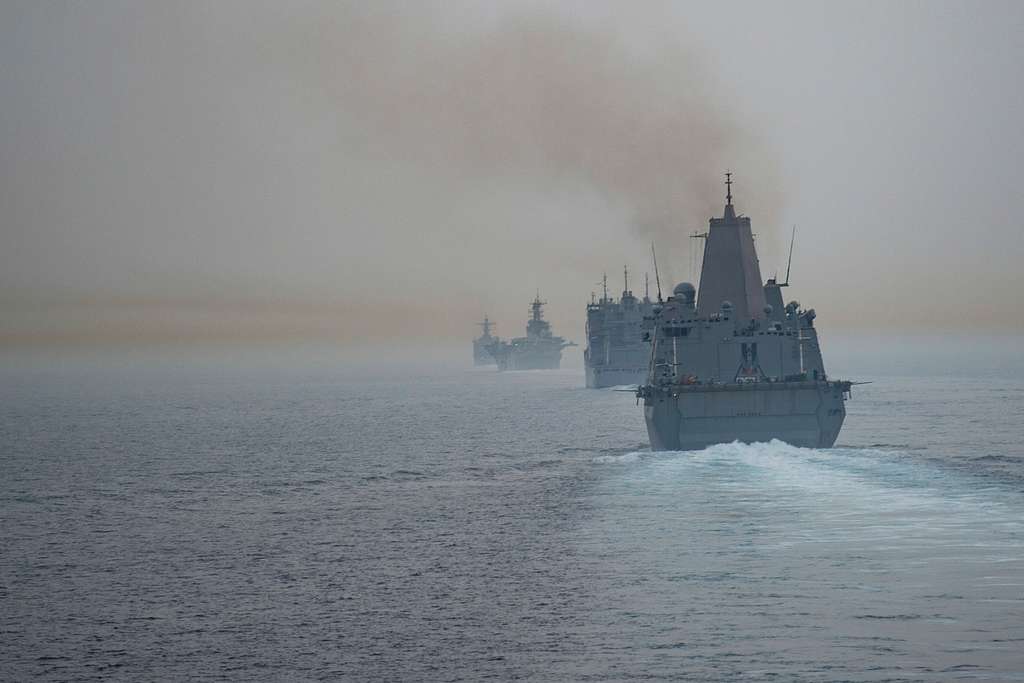
The events the Biden administration believed could have prompted Russia to go nuclear never came to pass in the fall of 2022, and the impact of the U.S. warning remains unclear. But this episode illustrates a broader problem in contemporary great power competition: Russia, China, and the United States struggle to understand whether and when each other might use nuclear weapons first. In addition to fears about Russia, China’s nuclear build-up in recent years has increased uncertainty about its threshold for nuclear use, despite its long-standing No First-Use (NFU) policy.
Nuclear-armed great powers’ peacetime nuclear strategies reveal information about whether and why they believe they might need a first-use option in a future war, as well as the first-use options they have developed. But great powers often mirror-image their own nuclear threshold when interpreting their adversary’s plans about nuclear first use. Alternatively, they estimate that an adversary’s nuclear threshold is lower than their own because they anticipate the worst-case scenario of what an adversary could do based on its nuclear capabilities. Dire assessments of an adversary’s potential to use nuclear weapons might seem prudent, but they can also be a dangerous driver of nuclear escalation in a conflict.
Why Great Powers Might Use Nuclear Weapons First
A nuclear first-use option refers to a state’s development of the capabilities and doctrine in peacetime to carry out the first detonation of a nuclear weapon in a crisis or conflict to attack foreign territory or destroy foreign military forces. To prevent nuclear escalation in a conventional great power conflict, the United States needs to know whether, why, and how Russia or China might use nuclear weapons first. Equally, Chinese and Russian decision-makers need a clear understanding of when the United States could cross the nuclear threshold first.
A great power has five reasons to pursue options for nuclear first use. First, it may do so to counter existential threats from an unfavorable conventional military balance and geography—for instance, to offset an enemy’s conventional precision strike capability that could obliterate a country’s ability to defend itself with conventional forces. Second, an authoritarian great power could act to counter threats to its regime resulting from poor performance in a conventional conflict (although this logic is underdeveloped in academic research). For example, an authoritarian power might launch a nuclear attack to reverse losses in a conventional war that have triggered domestic unrest. Third, a great power could use nuclear weapons first to counter conventional and nuclear threats to allies through extended nuclear deterrence—for example, to counter a shared adversary’s conventional invasion of an ally’s territory. A fourth reason would be to pursue limited conflict objectives, such as seizing disputed territory. Finally, a great power could develop nuclear first-use options because it believes that limiting damage from a nuclear strike is feasible and desirable. For example, it might hold an adversary’s nuclear missile silos at risk with the expectation that doing so will create a bargaining advantage. But very few of these reasons are relevant to more than one great power. These differences increase the likelihood that great power adversaries might misperceive when, how, or why each other would consider nuclear first use.
Western policy debates focus on how Russia or China could use nuclear weapons first to pursue limited war objectives or to preserve their authoritarian regimes. The two most common scenarios are, first, that Russia considers using nuclear weapons in Ukraine to achieve limited objectives through nuclear compellence, to compensate for its conventional failures on the battlefield. This is effectively the scenario feared by the Biden administration in October 2022. The second scenario is that China might use a nuclear first strike during a war over Taiwan that it was losing, to avoid domestic backlash against the Chinese Communist Party (CCP) and to compel the United States to stop defending Taiwan with its conventional forces.
Similarly, Chinese analysts are concerned that the United States may go nuclear first in a war with China to compensate for its loss of conventional superiority to protect its allies and partners. Meanwhile, Russian strategists express concern about a U.S. pursuit of strategic superiority that could incentivize a “massed aerospace attack” to cripple any Russian ability to retaliate with nuclear weapons.
Despite these concerns, there is little evidence that any of the three great powers pursued nuclear-first options to achieve limited conflict objectives or to preserve an authoritarian regime in a conventional war that is going badly. Instead, the great powers generally seek first-use options to escalate to survive or help their allies survive.
How the Great Powers Think About First-Use Options
China has not pursued a first-use option. Although some of its theater-range nuclear delivery systems would be suitable for such a mission, currently there is little evidence to suggest that China’s leaders or experts want or think that they need a nuclear first-use option.
In theory, some of the reasons for great powers to want first-use options could appeal to China, especially to ensure regime security and to pursue limited conflict objectives in a war to achieve reunification with Taiwan. But China’s nuclear experts are skeptical that nuclear compellent threats would be credible, despite what they perceive as Russia’s partially effective nuclear signaling in the Ukraine war. China has instead developed coercive cyberattack, counterspace, and precision conventional missile capabilities to gain more credible leverage to pursue limited conflict objectives in a war over Taiwan. Nor do the writings of People’s Liberation Army researchers or civilian nuclear experts indicate that the CCP might need a first-use option in order to stay in power. Despite the regime security emphasis of Chinese President Xi Jinping’s comprehensive national security concept, it emphasizes political factors as the main regime safeguards and does not single out nuclear weapons.
Russian nuclear strategy exhibits much more explicit incentives for using nuclear weapons first, primarily to counter substantial conventional military threats from NATO. First-use options also play a role in extending deterrence to Belarus but have not been a motivating factor for Russia to develop them. Throughout the entire post-Cold War period, Russia has explicitly stated in its doctrines that a large-scale conventional war could become an existential threat, and that the government would consider using nuclear weapons first in response to such a contingency. This perceived conventional inferiority vis-a-vis NATO has been a key driver of Russia’s investment in a significant, modernized arsenal of nonstrategic nuclear weapons. Of the three great powers, Russia is the most explicit about its first-use plans, in addition to its explicit promises to respond to any nuclear attack with nuclear weapons.
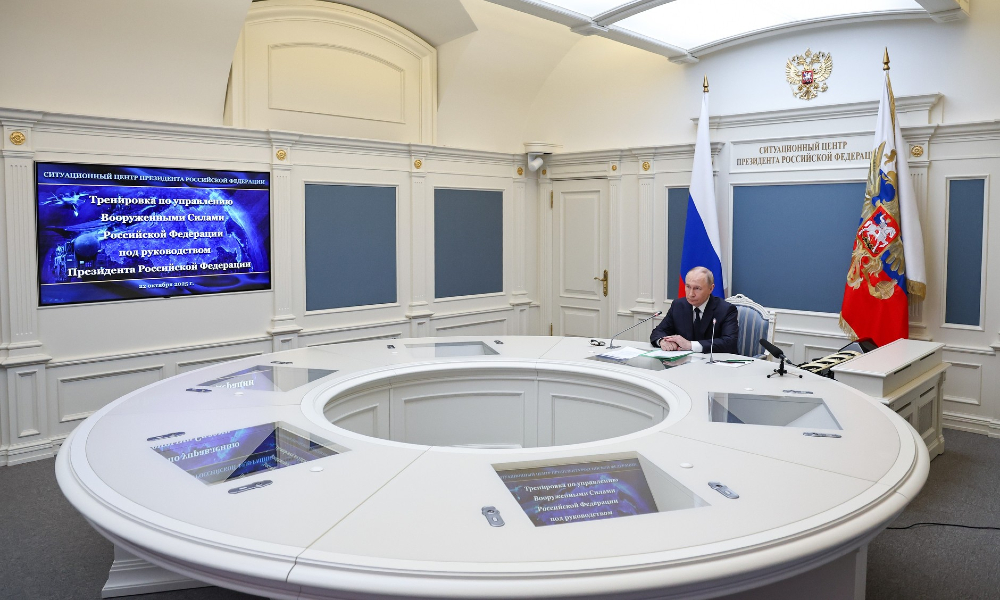
Wars like the one in Ukraine are not the types of conflicts for which Russian nuclear strategy was designed. Russian doctrine and strategic debates did not consider a role for nuclear weapons in such wars before February 2022. Indeed, Russian President Vladimir Putin and his cronies thought the war would be short and victorious, and that they would not necessarily conduct nuclear signaling as actively as they have. Despite the active use of implicit and explicit nuclear threats, Russia has not used nuclear weapons to reach its objective to control Ukraine. In fact, Putin has stated there is no need to use nuclear weapons in such a conflict. Similarly, there is no evidence in Russian strategic debates, doctrines, or posturing to suggest that Putin would consider nuclear use in the face of a direct threat to the regime, although this claim is frequently made in Western policy circles.
U.S. nuclear strategy also preserves first-use options, including both nonstrategic nuclear weapons and damage limitation capabilities. But the reasons the United States has developed these options differ from those of Russia. Unlike Moscow, Washington has been motivated by its extended deterrence commitments and beliefs in the feasibility and desirability of damage limitation. U.S. extended deterrence commitments to allies mean that it cannot forgo the option to use nuclear weapons first, whether in response to nuclear or conventional attacks on allies. Moreover, U.S. experts have argued that limiting damage from an adversary nuclear strike is both technologically feasible and strategically desirable to make extended deterrence guarantees credible, gain a coercive advantage in nuclear crises, and give the president more options if a nuclear war becomes inevitable.
The Risk of Getting It Wrong
Misperceptions of these three very different approaches to nuclear first-use options could fuel escalation in a future U.S.-China or U.S.-Russia war for three reasons. First, any of these three countries could overestimate its adversary’s willingness to use nuclear weapons first and face more pressure to go nuclear themselves. For example, the United States could intend to preempt Chinese first use in response to conventional airstrikes on the Chinese mainland when China has no intention of using nuclear weapons first to respond to those strikes.
Second, a common expectation that an adversary will use nuclear weapons first to achieve limited conflict objectives could lead a state to take deterrent steps that its adversary misreads as transforming a limited conflict into an existential one. This risk might come to pass if, for example, the United States were to use conventional strikes to deter Russian limited nuclear first use. Large-scale conventional strikes against a range of Russian first-strike capabilities or other key nodes for conventional military power could trigger a Russian fear that a larger Western assault was beginning against Russia proper, leading to Russian nuclear employment.
Third, widespread misperceptions of adversary intent to engage in nuclear compellence for limited objectives could lead a state to misread an adversary’s level of resolve if that adversary instead uses nuclear weapons because the stakes are existential. A new U.S. nuclear-armed submarine-launched cruise missile (SLCM-N) might deter Russia from using nuclear compellence to achieve limited objectives. But possessing SLCM-N would be unlikely to deter Russian first use that is intended to counter an existential threat posed by a conventional war with NATO.
In addition to recognizing potential misperceptions, U.S. and allied decision-makers should work to identify the inverse of these scenarios: circumstances in which Russian or Chinese actions to counter misperceptions of imminent U.S. nuclear first use could place the United States in a similar position. For example, if China misperceived that the United States might use nuclear weapons first to overturn PLA successes in a future Taiwan invasion, Chinese leaders could try to deter the United States by conducting conventional strikes that cross geographic thresholds and alter U.S. perceptions of its war aims. Managing nuclear escalation requires not only understanding whether and why great powers have developed nuclear first-use options, but also how those choices might be misperceived in conflict situations.