The Situation: A Legal Puzzle to Ponder
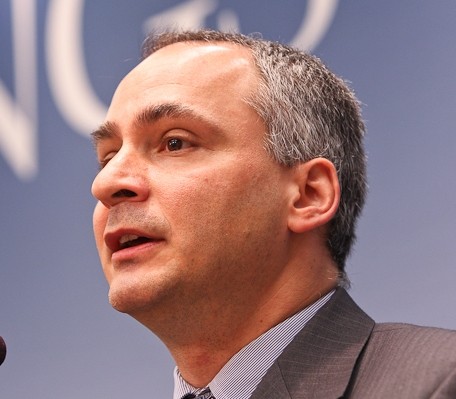
The Situation on Tuesday posed a question millions of Americans have undoubtedly been contemplating—if only subconsciously: Why can’t FBI Director Kash Patel shut up?
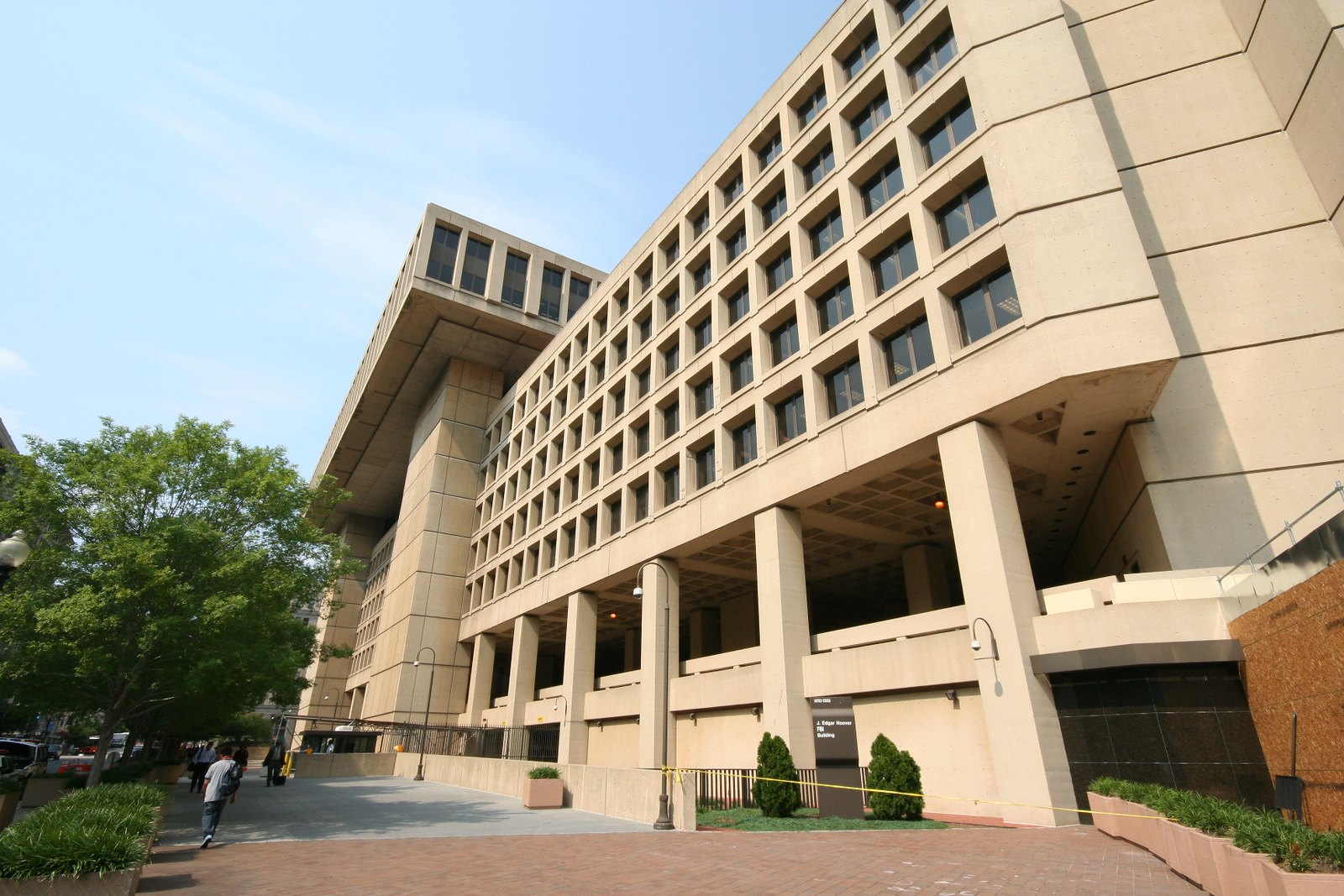
Today, let’s take on a Patel-related question that millions of Americans are undoubtedly not contemplating, not even subconsciously: Would it violate any law if I projected an unflattering image of the man on the external walls of the Hoover Building?
As many readers know, in my non-Lawfare life, I have a thing about mischief with projectors. Most, though not all, of this mischief takes place with respect to Russian diplomatic facilities around the world—about which I have been on a long-term beautification campaign.
But recently, I have become interested in—let’s just say—more domestic targets. The older I get, the more I believe that there are relatively few problems in the world that can’t be solved, or at least ameliorated, with a projector and an appropriate target. And the thought of projecting on the Hoover Building an image of the FBI director struck me as, well, a neat idea. Maybe this image:

Or maybe this one:

But never mind that now. I try to keep my political antics separate from Lawfare, and I have no interest anyway in spilling operational details of my plans. The only relevant question for this site is this one: Would such an operation be legal?
It’s actually not a simple question. My projection operations against the Russian embassy here in town have been tolerated by the United States Secret Service, sometimes cheerfully, sometimes less cheerfully. The last time I did one, a Secret Service officer grumbled to one of my confederates—the one operating my projector at the time—that “unfortunately,” the operation was not in violation of any law. On the other hand, when I last projected on the Washington Monument, the United States Park Police showed up with multiple cars with sirens screaming, produced a regulation that purported to forbid such activities on the National Mall, cited me, and seized a large quantity of my equipment. The Capitol Police, though much nicer about the whole thing, also informed me they had a zero-tolerance policy for projections within their jurisdiction (the immediate Capitol area) and a regulation on point. And the Secret Service, though still considering projections legal, seem to have flipped their position that chalk-on-the-sidewalk protests are similarly kosher.
So I approached the Patel operation with a certain trepidation. Is there any law that says I can’t do it? Is there some regulation that purports to forbid photonic protest activity directed against FBI headquarters? Might some more general law have been interpreted to cover photons? And would I have a First Amendment defense if charged? Put simply, what is the risk that I will face arrest or criminal prosecution for my intended conduct—and to be clear, I very much intend to do this operation—and, if so, what viable defenses might I raise in the context of any prosecution.
I did what any red-blooded American would do in this situation: I retained counsel.
Now, my communications with my lawyer are protected by the attorney-client privilege, which I emphatically do not waive in any way, shape, or form. So I am absolutely not going to tell you anything about the legal advice I have received in response to my concerns.
What I am going to do, however, is explain to you—without saying a word about any legal advice I may or may not have received or any legal research that may or may not have been conducted on my behalf—why I am confident about proceeding with this operation and, indeed, why I intend to proceed with it believing in perfect good faith that I am acting in compliance with the law.
Indeed, I am going to lay out my legal thinking on the subject and—after I do so–I am going to issue a challenge to Patel, because I believe in showing my work, and because Patel can’t seem to shut up and thus may choose to engage with me over this.
Most of all, I am laying out my thinking because I want people to be aware of the law in this area. People ask me frequently about the legality of projection operations. I am not a lawyer—and more particularly, not your lawyer—but I do think people should be generally aware of what expressive activity they can and can’t undertake. To the extent others who are contemplating aggressive protest activity might benefit from my thinking on this subject—which, to be clear, I am not saying or implying is informed by any legal advice I may or may not have received—I consider it a matter of public service to make that thinking available to others who might find it useful.
You ready?
Does Any Law Forbid Projecting Unflattering Images of the FBI Director on the Hoover Building?
Let’s first take a look at both federal and D.C. criminal statutes that are potentially applicable to projecting either of the two images above—and others of their ilk—on the Hoover Building. The exercise reveals that none of those statutes prohibits projecting such images temporarily onto a building.
A few background points relevant to my intended conduct. First, I am not asking anyone for permission to do this. I am not seeking a permit. I am not conditioning my intention to do this projection on any government consent, either from the FBI or from municipal authorities.
Second, I do intend to comply with any law that is both constitutional and that forbids my activity—if any such law exists.
Third, I do not intend to be standing on federal property when I do the projection. Rather, I will be standing on the sidewalk of a public street within line of sight of the building.
With that as background, there does not appear to be a specific regulation forbidding projections on the FBI building, the way there apparently is (unbeknownst to me at the time I did my various operations there) with respect to the National Mall monuments.
That said, the government could attempt to apply offenses within D.C.’s Chapter 33 (covering trespass and injuries to property) to cover the conduct. The text of the relevant statutes, however, makes that approach seem implausible: Consider the statute entitled “Defacing Public or Private Property” codified at § 22-3312.01 of the Washington DC code:
It shall be unlawful for any person or persons willfully and wantonly to disfigure, cut, chip, or cover, rub with, or otherwise place filth or excrement of any kind; to write, mark, or print obscene or indecent figures representing obscene or objects upon; to write, mark, draw, or paint, without the consent of the owner or proprietor thereof, or, in the case of public property, of the person having charge, custody, or control thereof, any word, sign, or figure upon: . . . [a]ny property, public or private, building . . . office.
The statute “criminalizes the conduct of defacing, defiling, or disfiguring property by various means,” as the D.C. Circuit put it in 2011. Most pertinent to the issue here, the Metropolitan Police Department in 2008 took the position that chalking a sidewalk in front of the White House would fall within the scope of the anti-defacement statute. And the D.C. Circuit assumed that was correct, given the law’s express prohibition on writing, marking, and drawing upon property.
But projecting does not involve marking or drawing or writing upon any property. And the statute’s plain language does not appear to cover the act of projecting images temporarily onto public (or private) property and in a fashion that does not physically alter the property.
Rather, to the extent the statute’s verbs contemplate a physical act of marking on property, beginning with more lasting marks (disfiguring, cutting, chipping) before proscribing the act of drawing, painting, or otherwise inscribing, it is clearly not describing illuminating some portions of a building—and not others—with light of different colors and intensity in a fashion that leaves no mark at all on the building. To construe the verb “mark” or “write” in the statute as reaching the ephemeral projection of an image on a building would make it a defacement to shine a flashlight on a building while walking by.
A prosecution under this statute would face other hurdles too. This law, after all, includes the requirement that the defendant act “willfully and wantonly.” But the phrase “willfully and wantonly” connotes an intentional or reckless disregard for the safety of others. And when used in the criminal law, it further suggests acting with malice. This aspect of the statute, in addition to the de minimis and temporary quality of sidewalk chalk, is the reason I think the application of this statute to chalking protests is mischievous and dangerous to First Amendment values. That said, projecting unflattering images of political figures on property is even a greater stretch than chalking. Chalking, after all, does leave a temporary mark on the sidewalk. By contrast, projecting does not. It merely illuminates differentially the surface in a fashion that creates an impression on the human retina.
The D.C. Code also prohibits the display of “certain emblems” when a separate intent requirement is also met. Specifically, Section 22-3312.02 provides that:
It shall be unlawful for any person to burn, desecrate, mar, deface, or damage a religious or secular symbol, or to place or display a sign, mark, symbol, impression, or other emblem, including a Nazi swastika, noose, or real or simulated burning cross, on the private property of another, without the permission of the owner or the owner’s designee, or on public property, where the person acts reckless to the fact that a reasonable person would perceive that the intent of the person acting is to:
(1) Deprive a person or class of persons of equal protection under federal or District law;
(2) Hinder or interfere with, or retaliate for, a person’s exercise of any right secured by federal or District law;
(3) Threaten to injure, break, or destroy a person’s property or harm a person’s financial interests; or
(4) Threaten to do bodily harm to a person.
I find it hard to imagine that this statute could be applied to either of the images above projected on the Hoover Building. The conduct this statute prohibits, as relevant here, would have to be placing or displaying “a sign, mark, symbol, impression, or emblem” on public property. I suppose that if one read it exceptionally broadly, it could encompass the act of projecting any image on a public building on the theory that such image constituted a “mark” or a “sign.”
But Section 22-3312.02 also has a convoluted intent requirement that—with one potential exception—almost certainly places the conduct I am contemplating outside its scope. To be criminally punishable, after all, any act of displaying a projection would need to be done “reckless[ly] to the fact that a reasonable person would perceive” my intent as falling into one of four categories, most of which could not remotely be applied. For example, there’s no way to view the projection of an unflattering image of the FBI director as reflecting some intent on my part to deprive a person or class of persons of equal protection of the laws or to retaliate against any person’s exercise of a right. Neither of the images above evokes violence—nor would I contemplate projecting any image that did. It seems equally implausible that a reasonable observer could interpret my intent as threatening to destroy property or inflict bodily harm. Indeed, my intention would be merely to make fun of Patel.
The only possible exception here is that one could perhaps imagine a prosecution attempted under Section 22-3312.02 based on some theory that the image of Patel sought to harm his financial interests. The theory would assert that the projection—particularly the second image—seeks to detract from sales of Patel’s books and other merchandise.
To protect against this dubious prosecution theory, it would be important to make clear, both in the livestream I will certainly do of the projection and in written material—like this article, for example—precisely what my real purpose is: to wit, that the projected image seeks to advance a broader social, cultural, or political message—like that Patel is a baleful presence at the FBI and that his confusion of the role of FBI director with that of a merch-selling influencer is a bad thing for American society generally and for the FBI, in particular.
As part of the penalties provision for the two statutes just discussed, the D.C. Code makes it unlawful for any person to “willfully . . . place[] graffiti on property without the consent of the owner.” The statute doesn’t define graffiti. The term’s ordinary meaning—typically defined as unauthorized markings using words, symbols, or images on a public surface—doesn’t support application of the statute to illumination for the reasons discussed above. It’s thus no surprise that while criminal prohibitions on graffiti are widespread, I have been able to identify no cases applying any anti-graffiti law to a public projection.
That said, it is possible that the government would seek to apply the D.C. anti-graffiti statute to projecting images on a building. Graffiti is not naturally understood to include images temporarily projected onto buildings, which require no cleanup or other remedial action. At least one case does involve the application of an anti-graffiti statute to public chalking. But the charges in that case were dropped, and the chalker successfully overcame the officer’s qualified immunity claim on First Amendment retaliation grounds. In any event, as noted above, chalking involves “marking” a surface in a way that projecting images does not.
So much for the D.C. statutes. But does federal law offer the Hoover Building any protection from my projector?
Two federal statutes could potentially be used to prosecute the projection of images on the FBI building, but neither clearly encompasses the conduct I am contemplating.
Federal law punishes anyone who “willfully injures or commits any depredation against property of the United States,” making the crime a felony if the damage is more than $1,000. Courts have construed the somewhat archaic term “depredation” to mean “plundering,” robbing” or “pillaging.” And the government prosecuted several defendants for violating Section 1361 in connection with the attack on the U.S. Capitol on Jan. 6, 2021, including for defacing property by writing “Murder the Media” inside the Capitol building.
But to reach my intended conduct under this statute, the government would have to argue that projecting images on the FBI building injures or damages the property in some way. And that’s just not plausible. Unlike graffiti or other physical markings on a building, light projections leave no trace and require no cleanup or remediation. They don’t alter the property at all.
Another statute, which along with accompanying regulations aims more broadly to protect federal property from certain nuisances, could more plausibly apply to what I’m planning. The secretary of homeland security, under this law, may prescribe regulations “for the protection and administration of property owned or occupied by the Federal Government and persons on the property.” This statute also requires that the “regulations shall be posted and remain posted in a conspicuous place on the property.”
Acting pursuant to that statute, the secretary has issued two potentially pertinent regulations. One prohibits “[a]ll persons entering in or on Federal property” from “loitering, exhibiting disorderly conduct or exhibiting other conduct on property that . . . [c]reates loud or unusual noise or a nuisance [or] . . . [o]therwise impedes or disrupts the performance of official duties by Government employees.” A second regulation prohibits “[a]ll persons entering in or on Federal property” from “[w]illfully destroying or damaging property” or “[c]reating any hazard on property to persons or things.”
But I’m not intending to loiter on federal property—or to be on it at all. I’m also not intending to make much noise or to conduct a disorderly projection (Heaven forbid!). I’m certainly not intending to disrupt the performance of any official’s duties. And light is not dangerous and doesn’t create any kind of hazard.
To be sure, the images themselves would be on federal property. But the regulations speak of “persons” entering in or on federal property, not photons. And whether the image can actually be said to be anywhere raises certain physics questions about the nature of light that are probably more than the statute can bear.
More particularly, none of the specifically identified conduct in the regulations seems an apt fit with what I am planning. The most potentially applicable provision is the prohibition on creating a nuisance. But that, too, seems a stretch given that that term is paired with a “loud or unusual noise”—not to mention that civil actions over projections under nuisance laws have generally failed. And again, it is hard to fathom a persuasive argument that the projection of images on the FBI building disrupts the performance of official duties, destroys or damages the building, or creates any kind of hazard.
So neither of the current regulations are relevant. Patel could presumably call Homeland Security Secretary Kristi Noem and try to get her to promulgate anti-projection regulations before I conduct my operation. But as noted above, the statute requires that these regulations be posted in “a conspicuous place on the property,” a requirement clearly designed to ensure that any person entering the property would be aware of these rules. And I have no intention of entering the property at all and thus—even if Noem were to promulgate emergency regulations and post them tomorrow—I will not have seen any such notice.
The bottom line is that there does not appear to be any D.C. or federal law that prohibits projections on the Hoover Building.
Does The First Amendment Protect Projections?
But what if the government takes a more robust view of these various statutes than I do and brings a case anyway? That is, assuming that one of these statutes—or, for that matter, some hypothetical statute that identified projection of images on property more precisely—could be applied to my intended conduct, a question arises whether the First Amendment would provide a viable defense.
I would certainly make the argument if I were ever charged. One of the two courts to have adjudicated a light projection issue in a civil case ruled against the private property owner on the ground that the display of images on the hotel was a type of “public protest[]” that “typically involve[s] activity or expressive conduct that is designed to call attention to the protestors’ message, which is the very essence of the First Amendment.”
Indeed, the terrain here is far from clear, and there are nontrivial arguments on the First Amendment side of the ledger. Professor Maureen Brady, who favors less protection for projection of images on private property than courts have thus far accorded, nonetheless acknowledged in her authoritative Harvard Law Review article on the law of light projections that “a court might be more likely to recognize a First Amendment defense for political projections connected to the site rather than one for a randomly placed advertisement.” As Frank D. LoMonte and Paolo Fiku put it in a law review article about sidewalk chalk protests:
Once the expense of cleanup is removed from the equation, the constitutional question comes even more sharply into focus: Is the government’s interest in the cosmetic appearance of public spaces strong enough to override a speaker’s interest in using that space to make a point, particularly where the association between the message and the location is itself a substantive part of the message?
All that said, I would not bank on the success of this defense. The FBI Hoover Building is almost certainly a nonpublic forum for purposes of First Amendment law. It is a highly restrictive federal building, requiring multiple levels of security to enter. It is surrounded by armed federal protective police who prevent the general public from entering it.
In a nonpublic forum, the government may restrict speech “for its intended purposes, communicative or otherwise, as long as the regulation on speech is reasonable and not an effort to suppress expression merely because officials oppose the speaker’s view.” Stated otherwise, restrictions on First Amendment activities in a nonpublic forum are permissible so long as they are “reasonable in light of the purpose of the forum and are viewpoint neutral.” Applying that analysis recently, the D.C. Circuit rejected a First Amendment challenge to a federal misdemeanor statute prohibiting disorderly conduct inside the (nonpublic) Capitol building because the statute did not discriminate on viewpoint and reasonably sought to prevent interference with congressional activities.
A similar conclusion seems likely with respect to a statute applied to projecting images on the nonpublic FBI Hoover Building. So long as that prohibition applied without respect to viewpoint—flattering images of Patel would violate the law as much as unflattering ones—and reasonably sought to prevent the appropriation of government property or the confusion that could follow from permitting the projection of citizen messages in ways that could be mistaken for government speech, a court could well reject a First Amendment claim.
The D.C. Circuit’s decision in the sidewalk chalking case (Mahoney, et al. v. Doe, et al.) reinforces pessimism about the potential success of a First Amendment challenge. There, the court rejected the claim that applying D.C.’s anti-defacement statute to chalking in a public forum—a sidewalk outside the White House—would violate the chalker’s First Amendment rights. It applied the much more stringent test that the speech restriction must be narrowly tailored to serve a significant government interest. The court reasoned that the anti-defacement statute was content neutral, furthered D.C.’s interest in maintaining the aesthetic appearance of the area in front of the White House, and was narrowly tailored to serve that interest by permitting “ample alternative channels for communication.” In a brief concurrence, then-Judge Brett Kavanaugh concluded that “[w]hen, as here, the Government applies a restriction on defacement in a content-neutral and viewpoint-neutral fashion, there can be no serious First Amendment objection.”
The reasoning in Mahoney would seem to apply in many respects to an application of the anti-defacement statute against the projection of images. And, for what it’s worth, the late Justice John Paul Stevens long ago expressed skepticism about First Amendment protection for images projected on public property.
So I’m not going to be putting my faith in justices.
Here’s what I will put my faith in: D.C. juries.
Given the lack of an on-point statute or regulation, and the fact that D.C. juries have shown excellent judgment with respect to such hazards as sandwiches, I would have no anxiety about submitting my fate to the judgment of my peers if the government behaved irresponsibly here.
Also, I think I would be a fabulous witness in my own defense.
A Challenge to Kash Patel
So here is my challenge to Director Patel. I have laid out my view of the law here. And you should consider yourself on notice that I intend to act on my view of the law. On an evening of my choosing, when the weather is tolerably warm in the near future, I intend to project one or the other or both of the images above—and maybe some others—on your place of work.
But I’m a fair-minded guy, and I’m interested in the law. So if you think that my legal analysis is wrong and that there is some statute that prohibits my intended course of action, say something. You certainly have no inhibitions about tweeting nonsense about pending investigations. Can you and your general counsel’s office come up with a compelling counter-argument to the one I’ve outlined here?
The Situation continues tomorrow.