The Situation: An Investigation Based on Vaporous, Speculative Malice
The Situation on Tuesday considered what Anthropic means by its red lines on military use Claude.
On Friday, James Boasberg—the chief judge of the U.S. District Court for the District of Columbia—found himself in another spat with the Trump administration over that little rule of law thingy.
The judge unsealed an opinion from a few days earlier, in which he had quashed a pair of subpoenas in the investigation of Federal Reserve Chair Jerome Powell.
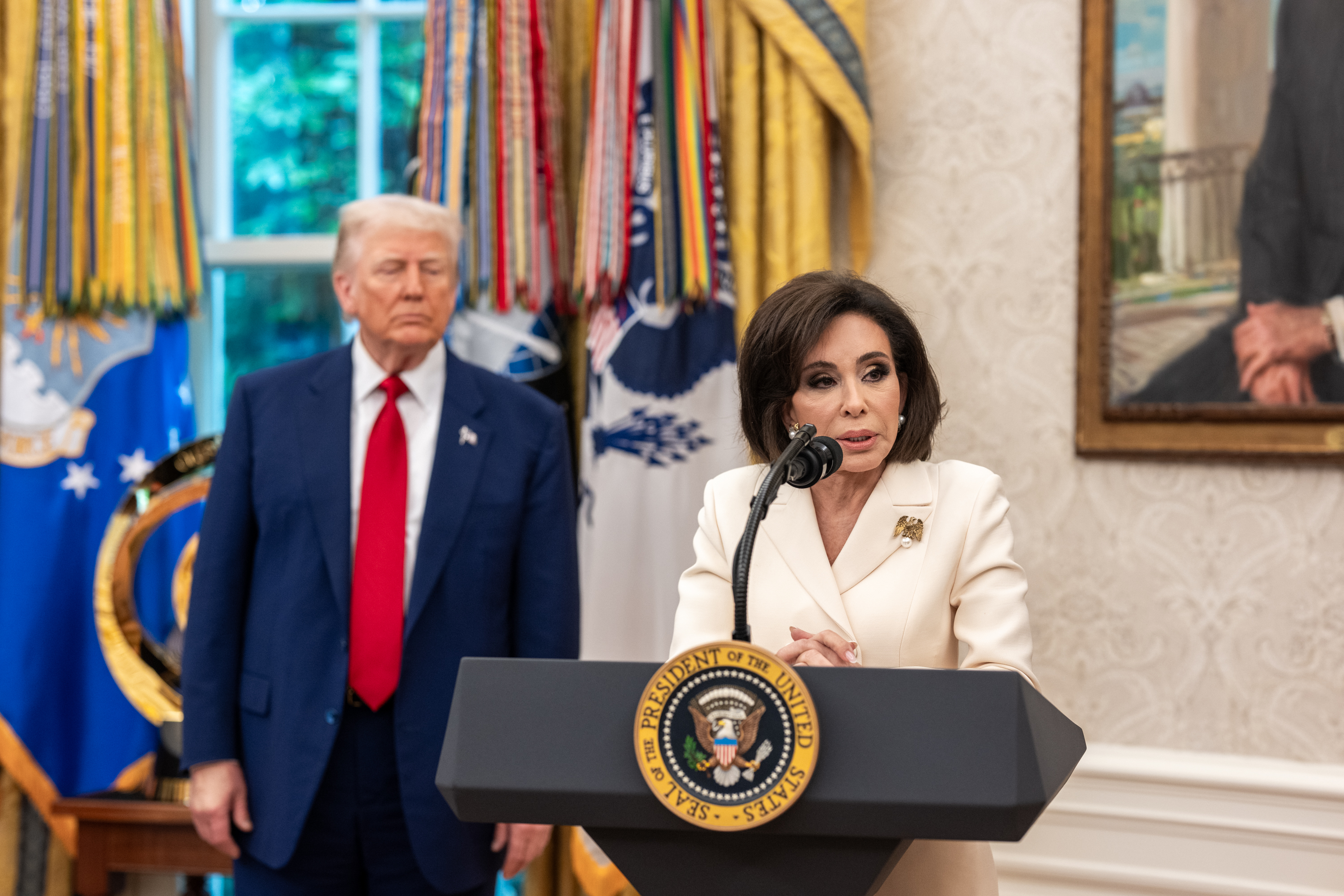
In response, U.S. Attorney Jeanine Pirro gave an unhinged press conference in which she lambasted him as an “activist judge”—though she refrained from commenting on his weight—and swore a blood oath to file a motion for reconsideration and then appeal. She also said she was willing to see acquittals and willing to see grand juries reject her proposed indictments—which was refreshingly candid from a woman who has seen her fair share of both in her short tenure at the helm of an office that should see very few of the former and absolutely none of the latter. She also yelled a lot.
Remarkably, the government’s brief in the matter is scarcely less of a temper tantrum than Pirro’s press conference. It clocks in at a scant nine pages long—which is 38 pages shorter than the Fed’s motion to quash the subpoenas, to which it responds.
And Judge Boasberg is not exaggerating when he says that it contains "essentially zero evidence to suspect Chair Powell of a crime." Indeed, it contains hardly more indication of what the government is even investigating. The document notes that there have been cost overruns in the Fed’s renovations. And it claims there are unspecified discrepancies in a congressional testimony given by Powell. But it doesn’t remotely suggest a basis for thinking that Powell might have lied in his testimony or that criminal conduct led to the cost overruns. It actually doesn’t even try.
The striking thing about the brief, and about Pirro’s press conference, in fact, is that neither seems remotely concerned with establishing that there is a predicate for a criminal investigation at all. In her press conference, Pirro waxed angry that Boasberg would presume to situate himself between the grand jury and the evidence it needs to decide whether a crime has been committed—or to satisfy itself that a crime has not been committed. And the brief does a fair amount of that too, although in slightly less extravagant terms.
But neither shows any awareness that investigative agencies aren’t supposed to initiate criminal investigations at all without an appropriate evidentiary predicate. It’s unclear from the record in this case so far what investigative agency is actually conducting the probe. But normally, to open an investigation in the first place, the agency has to have specific articulable facts indicating that a crime has been or is being committed.
The U.S. attorney’s office, both in court and in public, has said nothing that seems like a legitimate predicate for an investigation. Yes, Powell gave testimony and—according to Pirro—something he said (but don’t ask what) may be inconsistent with something in the public record. And yes, there were cost overruns in the Fed’s renovation, but that is not a crime.
Pirro on Friday mentioned a statute that criminalizes false statements to Congress at her press conference yesterday, but she didn’t mention anything Powell said that might have been a false statement—let alone an intentionally false statement on a material point of fact. If the government has specific articulable facts indicating that a crime has been committed, it’s keeping very quiet about them. It is putting forward only a scant few very non-specific facts, and if it has more, it is choosing not to articulate them.
Let me lay my cards on the table: I don’t believe there is a proper predicate for this investigation.
I think the subpoena issued on the most vaporous of speculative malice. Everything that has come out so far affirms Lawfare’s Roger Parloff’s instinct on the matter from several weeks ago:
[T]he Trump administration, when publicly embarrassed, tends to vindictively double down. If it follows that formula, Pirro or Trump’s other allies will scour the earth searching for new dirt on Powell. Maybe that was the whole reason for the grand jury subpoenas. Maybe Pirro wants to look for purported discrepancies between what Powell said in his testimony and what’s occurring on the ground today at the renovation construction site. Perhaps she’ll find a vegetated roof that’s five feet above ground, and not truly at ground level. Maybe she’ll find some new piece of white marble that is not merely replacing crumbling, old white marble. Maybe she’ll even find some beehives.
Here is what’s not going to happen: First, Judge Boasberg is most unlikely to reconsider his ruling, nor should he—at least not without some hint that there is an evidentiary basis for this subpoena and that is not a scouring of the earth for dirt on Powell. Second, there are very few panels of the D.C. Circuit Court of Appeals that would seriously contemplate reversing Judge Boasberg on this record, though there may be one or two.
That means the question boils down to this: Do Pirro and Solicitor General John Sauer want to take this rather barren record, a record strongly suggestive of malevolently political use of the criminal process, to the Supreme Court?
Normally, such a thing would be unthinkable. Then again, normally, it would be unthinkable to issue such subpoenas in the first place, much less to litigate with them with nine pages of bluster that lacks so much as the remotest evidentiary justification. And let’s face it: Putting this matter in front of the Supreme Court is no crazier than, say, announcing you are withdrawing the appeals of adverse rulings in the law firms’ cases—only to backtrack and then tell the courts you are proceeding with those appeals after all.
In other words, we may end up establishing appellate precedent, at one level or another, on a question of almost mind-boggling stupidity: Is it proper for a court to quash a grand jury subpoena where there is an overwhelming prima facie case of political motivation on the part of the prosecutor and no clear allegation of wrongdoing on the part of any subject, indeed, where there is no clear predicate for an investigation at all?
The Situation continues tomorrow.