Searching for the Crime in Fed Chair Powell’s Testimony

When the U.S. Department of Justice is ordered to bring criminal probes against a president’s critics and enemies, it’s not surprising that the cases they come up with prove startlingly weak.
That’s why we’ve seen a parade of shockingly rickety criminal accusations emerge from President Trump’s compromised Justice Department. First came the tortured, stale accusations in the two-out-of-three-count indictment against former FBI Director James Comey, now dismissed. Then came former presidential aide Lindsey Halligan’s unreproducible indictment against New York Attorney General Letitia James, which, after dismissal, successor prosecutors were unable to cajole two federal grand juries in Virginia to reinstate. Now there’s a bizarre, sprawling, amorphous probe taking shape across South Florida, like an ominous storm system, which appears to stem from decades-old grievances that arose thousands of miles away from that brazenly forum-shopped venue. And, just earlier this month, the New York Times reported that federal prosecutors were questioning James’s “longtime former hairdresser”—arrested in Louisiana on unrelated charges—hoping to scrape up something on James from her.
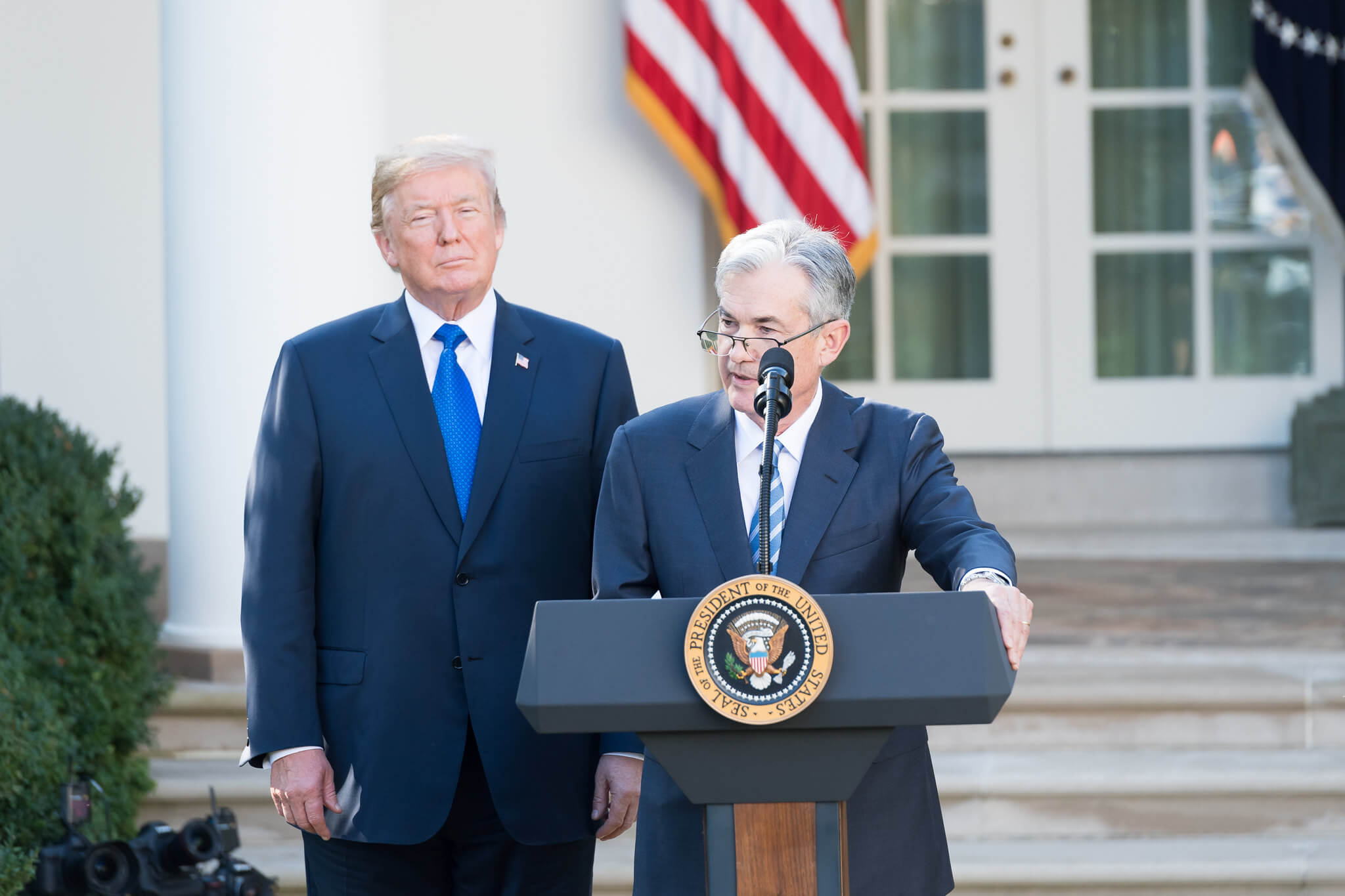
Yet even against this backdrop, when the news emerged on Jan. 11 that U.S. Attorney Jeanine Pirro, of Washington, D.C., had sent grand jury subpoenas two days earlier to the Federal Reserve Board seeking information relating to its chair, Jerome Powell, it was a shocking new low. It was so—thuggish. Not only did the basis for the inquiry look patently pretextual—as Powell said it was, in his video statement—but Powell was not even one of the president’s critics. He was just a guy with integrity who was getting in Trump’s way.
The New York Times has reported that Pirro, acting alone, began an inquiry last November, prompted by newspaper articles about cost overruns. It also said that the week the grand jury subpoenas were issued, Trump had “delivered a broader message to Ms. Pirro and dozens of U.S. attorneys who visited the White House for a meet-and-greet [that] they were too weak, and needed to step up the pace of investigations of his enemies[.]” In an unusual media post issued after Powell’s video statement, and then in an appearance on Fox News, Pirro asserted that she had merely been trying to gather facts, that Powell had not responded to three informal inquiries, and she claimed to be surprised that Powell would have understood her grand jury subpoenas as a threat of indictment. Her comments only seem to confirm that her criminal inquiry is a fishing expedition.
Trump had long been unhappy that Powell was not advocating for lowering interest rates as rapidly as Trump would prefer. It had also appeared, as we will see, that Trump and his allies had been trying to intimidate Powell into stepping down. By statute, the president cannot remove Federal Reserve Board governors except “for cause,” a term that’s been construed to mean “inefficiency, neglect of duty, or malfeasance in office.” And even though the U.S. Supreme Court seems poised to vaporize such tenure protections for board members and commissioners on most independent agencies, it has signaled that it will likely carve out an exception for the Federal Reserve Board, citing its unique structure and history.
Still, why launch a baseless criminal probe when Powell’s term as chair expires in May? Although Powell’s term as a Federal Reserve Board governor does not run out until 2028, many Fed chiefs have stepped down when their terms as chiefs end. Abusively harassing him in this way could backfire, incentivizing him to stay longer than he’d planned, while also aggravating Republican senators into blocking Trump’s replacement nominees, as Sen. Thom Tillis (R-N.C.) has now pledged.
Strangely enough, it is even possible that Trump already has the power to remove Powell—as chair, at least—right now. As several commenters have noted, while 12 U.S.C. § 242 bars Trump from terminating Powell from his 14-year term on the board of governors without cause, it says nothing about protecting a chair’s four-year term in the same manner. Trump might be within his rights to strip Powell of his chair status this afternoon.
In any case, this article does not seek to understand Trump’s or Pirro’s political strategy. It seeks to understand the facts of the situation. What is the claimed predication for this inquiry? What exactly is the crime Pirro thinks she might find?
It’s a question worth asking, even if we only conclude what most people have already presumed: that the probe is pretextual and brought in bad faith to intimidate Powell and curry favor with the president. But we will lay out the facts so that people can judge for themselves. We believe the reader will conclude that this Justice Department is, yet again, flagrantly abusing its prosecutorial powers.
The only public document that lays out any theory for criminalizing Powell’s conduct is a two-page, self-described criminal referral dated July 19, 2025, by a lone member of Congress, Rep. Anna Paulina Luna (R-Fla.). Luna publicized her letter on July 21 in a Fox News co-branded tweet thread.
In the letter, Luna claimed to detect grounds for bringing perjury and false statement charges against Powell stemming from his testimony before the Senate Banking Committee on June 25, 2025, during a semiannual monetary policy briefing. She focused on two brief statements Powell had made in response to questions or comments about the renovation of two Federal Reserve Board buildings—a project that has suffered cost overruns. Each of Powell’s responses had been cut short by committee chair Sen. Tim Scott (R-S.C.), either due to time constraints or, perhaps, due to Scott’s fear that Powell’s answers might prove so convincing that they would make the accusing senators look bad.
So far as we know, no member of the Senate Banking Committee that attended the hearing has issued or co-signed any “criminal referral” relating to Powell’s testimony. None of Luna’s colleagues in the House co-signed hers.
A few days later, on July 25, Trump and Powell had a tense exchange on camera as they toured the renovation construction site wearing hard hats. Trump, flanked by Scott, claimed that the price tag of the renovation project had now ballooned even further to $3.1 billion. Powell contested that number, looked at the document Trump was reading from, and then explained to him that his figure added in the cost of a third building’s renovation, which had been completed in 2021.
To understand the context of the dispute, let’s step back and see exactly what Powell said and the context in which he said it. Then we can assess whether Pirro had any reasonable basis for starting a grand jury inquiry. Spoiler alert: She didn’t.
In 1913, Congress created the Federal Reserve System, including the Federal Reserve Board, to act as the nation's central bank. Originally, the treasury secretary chaired the board, and the board’s offices were housed in the U.S. Treasury Building on Pennsylvania Avenue.
In 1935, Congress restructured the board, making it independent of the Treasury Department. Work on a new home for the board began in 1935, and President Franklin D. Roosevelt dedicated it in October 1937. That building is currently named for Marriner S. Eccles, the Fed’s seventh chairman, who served from 1934 to 1948.
The Eccles building stretches from 20th to 21st Street along Constitution Avenue, fronting the Mall. Consistent with the request of the Commission of Fine Arts at the time, it is clad in White Georgia marble to harmonize with other government buildings in the area, most notably the Lincoln Memorial, located on the Mall at 23rd Street.
Over time, the board’s staff grew. The Fed eventually took over the building next door to the east on Constitution, now known as FRB-East. It is even older, constructed between 1931 and 1933. Over time, it has housed a succession of government agencies, beginning with the U.S. Public Health Service.
Both buildings are on the D.C. Inventory of Historic Sites, and the FRB-East building is on the National Register of Historic Places. During World War II, President Roosevelt and Prime Minister Winston Churchill met at least 12 times at the Eccles building, while plans for the Manhattan Project were first drawn up inside what is now FRB-East.
In the 1970s, the Fed commissioned construction of a third building, the William McChesney Martin Building, just north of the Eccles building. Nevertheless, staff continued to grow, comprising about 3,400 employees as of 2021. By that time, the Fed was leasing additional space in other buildings in the city to accommodate overflow.
In 2017, the board, including then-administrative governor Powell, internally approved a plan to renovate and expand the Eccles and FRB-East buildings. In 2018, during his first term, Trump appointed Powell to become Fed chair, replacing Janet Yellen. In 2020, the Fed submitted a renovation plan to the National Capital Planning Commission, which asked for certain modifications. In September 2021, the planning commission gave final approval to a modified plan.
In approving, the commission explained the reasons for the renovations. “While there have been regular modifications and renovations to the [Eccles] building over its 80-year history,” the commission wrote, “many of the building systems are at the end of their useful life, and the building no longer fully serves the Board’s needs.” As for FRB-East, completed in 1933, it had “not undergone a comprehensive modernization in decades and does not serve the Board’s needs effectively in its current condition and configuration.”
The commission explained the goal of the renovation and expansion of the buildings in these terms:
[It would] address a critical backlog of upgrades; to respond to changes in building codes and regulatory requirements; to accommodate information technology requirements, building security provisions, advancements in environmental awareness and energy efficiency; to address increased utility demands and associated requirements imposed by an increased building population; and to address the integration of technology not anticipated at the time of the buildings’ original design. The proposed programming changes and building additions are needed to increase spatial efficiency, reduce leased space, and consolidate staff, and provide a secure environment for the buildings’ occupants, while accommodating the growing needs of the Board and its visitors.
So work began. In 2022, when Powell’s term as chair expired, President Biden reappointed him.
In March 2023, the Wall Street Journal published an article about the renovation’s cost overruns: “What Will Be Harder for the Fed? Taming Inflation or Its Office Renovation Expense?” Relying on the institution’s public budget filings, the paper reported that the estimated price of the renovations had ballooned to $2.5 billion, up 32 percent from an estimated $1.9 billion price tag in 2019. The article also poked fun at the opulence of the Martin building, which had completed its own renovation in 2021. That building, it said, sported “luxe amenities,” housed artwork from the Fed’s private collection in the basement, and hosted “a pair of hives for Italian honey bees on the roof.”
Nevertheless, the story was balanced. Citing the same publicly available budget documents, the paper wrote that “the cost of the overall project has inflated due to ‘significant increases’ in the cost of steel, cement, wood, and other materials that ‘far exceed standard cost escalations.’” The paper also appeared to concede that renovation was necessary. It cited “current and former staffers and policymakers” as describing “leaky ceilings, antiquated electrical systems, and inefficient heating and cooling systems.”
Soon after President Trump began his second term, he voiced sharp disenchantment with Powell. On April 21, 2025, Trump called Powell a “major loser” for not lowering interest rates, after which the Dow Jones average plummeted 972 points. A week later, the New York Post published an article very similar to the Journal’s, but more inflammatory in tone. Its headline asserted that the board was “blow[ing]” $2.5 billion on renovations, which a critic likened to the “Palace of Versailles.” Referring to the 2021 plans submitted to the National Capital Planning Commission, the paper wrote that they “include rooftop garden terraces, skylights, ornate water features, and a new elevator system that allows board members to be dropped off directly in their VIP dining suite.”
Two months later, on the evening of Powell’s scheduled testimony for the Senate Banking Committee, Republican members of the committee emailed Powell a letter advising him to be prepared to answer questions about the cost overruns and “lavish design choices,” including “rooftop garden terraces, ornate water features, new elevators that drop board members off directly in their VIP dining suite, use of white marble, rooftop Italian beehives, and a private art collection in the basement.”
At the two-hour hearing, two senators did ask Powell about the renovations: chairman Scott and Sen. Mike Rounds (R-S.D.). Though Scott referenced some of the more lurid accusations from the Post articles in his opening statement, it was Rounds who first invited Powell to comment on them:
Powell’s answer, in relevant part, was as follows (36:04):
We do take seriously our responsibility as stewards of the public’s money. ... No one in office wants to do a major renovation of a historic building during their term of office. Much prefer to leave that to your successors. And this is a great example why. Let alone two historic buildings that needed a lot of work. But we decided to take it on because honestly when I was the administrative governor before I became chair, I came to understand how badly the Eccles building needed a renovation. Never had one. It was not really safe, and it was not waterproof and that kind of thing. So we took it on.
... I would also say that the media reports that you accurately quoted—they’re misleading and inaccurate in many, many respects. And I would just point to—there’s no VIP dining room, there’s no new marble. We took down the old marble, we’re putting it back up. We’ll have to use new marble where some of the old marble broke, but there’s no new—there’s no special elevators. They’re old elevators that have been there. There are no new water features. There are no beehives. And there’s no roof terrace gardens. ... All of the sort of inflammatory things that the media carried are either not in the current plan or just inaccurate. Notwithstanding that, the cost overruns are what they are and with respect to that—
Scott then interrupted Powell, saying that Rounds’s time was up. About 10 minutes later, during his own questioning time, Scott returned to the topic. He stressed that it wasn’t just media articles that referred to features like a “rooftop garden” or “ornate water features,” it was the 2021 renovation plan, which was publicly posted at the National Capital Planning Commission website, and he laboriously listed page numbers for those references. Scott, however, never asked Powell any questions about the renovations, nor did he solicit comments from him. He simply invited Powell’s staff to come in and talk to his own staff about the details.
Powell tried to address (47:14) the media criticisms anyway.
Can I just quickly say—some of those are just flatly misleading—the elevators, it’s the same elevator that’s been there since the building was built. So that’s a mischaracterization. And some of those are no longer in the plans. That’s earlier. The plans have continued to evolve.
Scott responded that if certain planned features had been dropped from the plan, he wondered when those features had been dropped. Was it after the Post article came out in April, he wondered. But, again, he didn’t ask Powell to answer his question. Instead, he just asked Powell to have his staff come in and discuss the matter with his staff.
Powell again tried to squeeze in (48:11) an uninvited comment.
Look forward to doing that and if you’ll allow me to say one more sentence—none of those things really were the cost drivers. The real thing is: What were the cost drivers that caused the spending to increase and we have those, too, but those were not the things that did that. We look forward to the conversation.
Shortly after Powell’s testimony, the board posted on its website short and long FAQs about the controversy, which basically provide the responses the committee did not give him time to expand upon during his testimony. Those accounts also assert that the plans and all annual budgets for the renovations were approved by the full board, which is composed of seven Senate-approved members, and that the renovation plans were developed with input from the Commission of Fine Arts, the National Capital Planning Commission, the D.C. Public Space Committee, the D.C. State Historic Preservation Office, and the National Park Service.
The board has also posted an annotated slide deck of pages from the original 2021 plan in which it highlights certain words that it says are being widely misinterpreted. For instance, “garden terrace” does not refer to a rooftop terrace but, rather, to a ground-level lawn that would cover the roof of a parking structure beneath it and help with “stormwater management.” According to the board, such “vegetated roofs,” also known as “green roofs,” are found on other federal buildings, including the Department of Justice and the Department of the Interior, and are “encouraged by the General Services Administration.”
In the same slide deck, the board also backs away from certain terms that do appear in the original plan—like “lounge” or “executive dining room” or “Governors’ private elevator”—asserting that they are “not representative of our previous or planned uses of these spaces.” It does not explain who wrote the original plan or how these terminological imprecisions came about. But as long as Powell’s characterizations of them are accurate, there’s no false statement. And it is hard to imagine any good-faith criminal false statements case being predicated on quibbles over such terminology.
The slide deck also asserts that certain elements that have drawn attention, like four originally planned new “water features” for FRB-East—shallow, narrow, and ornamental pools, basically—have been scrapped from the plans. The deck does not say when those plans were scrapped, but, again, as far as any criminal analysis might go, that could not possibly matter. As long as those features were, in fact, scrapped, no conceivable criminal accusation can arise from Powell’s truthfully testifying that they had been.
The board has also posted a six-minute video tour of the renovation, which gives some idea of its scope and challenges: the asbestos removal and abatement; the installation of blast-resistant windows and other security protections now required for federal buildings; the conversion of an old, underground parking garage into additional office space; and so on.
On July 10, 2025, the director of the Office of Management and Budget, Russell Vought, issued a social media broadside against Powell, accusing him of having “grossly mismanaged” the Federal Reserve Board. Attached to his tweet were screenshots of a two-page letter to Powell. There, Vought suggested that if the Fed had, indeed, dropped certain features that had been contained in the 2021 plan approved by the National Capital Planning Commission, then maybe it was no longer in “compliance with the National Capital Planning Act” and that this might require the Fed to “halt construction” and obtain a new permit. He also demanded answers to a list of questions.
But as aggressive as Vought’s attack on Powell was, he was not alleging criminal wrongdoing. Rather, he seemed to be ginning up an argument that there had been sufficient “mismanagement” to justify a “for cause” termination.
Powell responded on July 17. Early in his polite letter, Powell mentioned that, in light of the controversy, he had asked the Fed’s inspector general to review the renovation.
As an aside, it’s worth noting that the current inspector general for the Federal Reserve is Michael Horowitz, whom Trump transferred there from the Department of Justice, where he had served for 13 years. Horowitz is one of the very few inspectors general whom Trump did not summarily fire shortly after his second term began, suggesting that even Trump has been satisfied with Horowitz’s previous work. Mismanagement and cost overruns are the meat and potatoes of any inspector general’s work, so, in the ordinary course, one might expect other law enforcement officials to sit tight and see what Horowitz concludes. Typically, if an inspector general finds any legitimate predication for a criminal inquiry, he or she will then make a criminal referral—one that carries weight. The fact that Horowitz is already meticulously examining the project makes Pirro’s intervention at this stage all the more inexplicable.
Returning to Powell’s letter to Vought, he provided an overview of why the renovation of these two 90-ish-year-old historic buildings proved so expensive:
While periodic work has been done to keep these buildings occupiable, neither building has seen a comprehensive renovation since they were first constructed. Both buildings were in need of significant structural repairs and other updates to make the buildings safe, healthy, and effective places to work, including the removal of asbestos and lead contamination, complete replacement of antiquated systems such as electrical, plumbing, heating, ventilation, and air conditioning, as well as fire detection and suppression systems.
To allay Vought’s purported concern over compliance with the National Capital Planning Act, Powell explained that “the board is not generally subject to the direction of [the National Capital Planning Commission] with respect to its building projects.” Nevertheless, the board had “voluntarily collaborated” with the commission on this project and had “benefitted from [its] robust ... engagement.” Furthermore, the commission’s guidance provides that a new review is required only if “substantial changes” are made in either the design or plan, which was not the case here. “[T]he board has made only a small number of design changes to scale back or eliminate certain elements and has added no new elements,” he wrote. “These changes were intended to simplify construction and reduce the likelihood of further delays and cost increases.”
Four days later, Rep. Luna released her do-it-your-self criminal referral. She sought criminal probes relating to two answers Powell gave to Sen. Rounds during his June 25 testimony, and to one sentence Powell wrote in his letter to Vought. Her contentions range from false to misguided to unintelligible.
Count one of Luna’s envisioned indictment reads as follows:
“There’s no VIP dining room, there’s no new marble ... there are no special elevators, just old elevators that have been there; there are no new water features, there’s no beehives, and there’s no roof terrace gardens.”
This statement is false. According to the Federal Reserve’s final submission to the National Capital Planning Commission (NCPC), nearly all of those assertions—excluding the beehives are contradicted by the actual project plans.
Hello? The test of whether Powell’s statements were true is not whether they were consistent with words contained in plans drawn up four years earlier, but whether they are consistent with the facts on the ground as Powell understood them to be when he was testifying in June 2025. He explained, in a portion of his testimony that Luna excised, that “the plans continued to evolve.”
Of course, it’s very possible that Powell accidentally misspoke at points on June 25. He was describing a complicated renovation of two buildings, and it is possible he oversimplified. It is evident that he was rushing to get his comments in before he would be cut off, as he ultimately was. Perjury, under 18 U.S.C. § 1621—the first statute Luna cites—applies only when someone “willfully” testifies to something “he does not believe to be true,” while the false statement statute, 18 U.S.C. § 1001, applies when someone “knowingly and willfully mak[es] materially false statements.”
Count two of Luna’s imagined indictment goes like this:
“When I was the administrative governor before I became Chair, I came to understand how badly the Eccles building really needed a serious renovation, had never had one.“
This statement is also false. The Federal Reserve Board conducted a comprehensive renovation of the Eccles Building from 1999 to 2003, which included the replacement of the roof, all major systems, and a full refurbishing of interior and courtyard spaces.
Assuming Luna is correct—that some sort of renovation of the Eccles building took place 22 to 24 years earlier—her charge hinges on somehow disproving beyond a reasonable doubt that Powell didn’t believe the subjective words he hastily spoke: that there had been no “serious” renovation. In any case, his letter to Vought shortly after his testimony—and before Luna’s letter—clarified beyond cavil what his meaning was, showing no intent to deceive: “While periodic work has been done to keep these buildings occupiable, neither building has seen a comprehensive renovation since they were first constructed.”
Finally, count three of Luna’s envisioned indictment, is based on a sentence drawn from from Powell’s letter to Vought. Here, Luna’s line of thinking here is simply unintelligible:
"These changes were intended to simplify construction and reduce the likelihood of further delays and cost increases."
This statement is false. It is contradicted by the Federal Reserve’s final submission to the National Capital Planning Commission (NCPC) and by the assertions made in Director Vought’s own original letter to Chairman Powell. According to those records, the revised plan includes a VIP private dining room, premium marble finishes, modernized elevators, water features, and a roof terrace garden-features that Powell publicly denied existed. While Powell presented the changes as simplifications, the actual project plans suggest the opposite.
Powell was stating why he believed some minor changes were made to the original plan. In response, Luna argues that he was lying because he said that the current plans differ from the original plans. That makes no sense. Powell conceded there were changes; he was explaining why there were changes.
If Luna wants to claim that Powell’s sentence was knowingly and willfully false, she needs to show that some other purpose motivated the plan changes and that Powell knew that. She has not shown—or even alleged—either. (Her final sentence, asserting that the original 2021 plans somehow refute the notion that dropping certain features would simplify the plans, is, again, unintelligible.)
How does a U.S. attorney come to issue grand jury subpoenas to a Federal Reserve Board chair based on allegations as offensively ridiculous as these? And why would a U.S. attorney do that when an experienced inspector general is already scrutinizing every aspect of the renovation at the behest of that chair and with his full cooperation?
No good-faith explanation presents itself.
It’s unclear what happens next. Maybe the blowback Pirro has already received, even from Republicans, will dissuade her from proceeding further down this path. On the other hand, the Kilmar Abrego Garcia case has shown us that the Trump administration, when publicly embarrassed, tends to vindictively double down. If it follows that formula, Pirro or Trump’s other allies will scour the earth searching for new dirt on Powell. Maybe that was the whole reason for the grand jury subpoenas. Maybe Pirro wants to look for purported discrepancies between what Powell said in his testimony and what’s occurring on the ground today at the renovation construction site. Perhaps she’ll find a vegetated roof that’s five feet above ground, and not truly at ground level. Maybe she’ll find some new piece of white marble that is not merely replacing crumbling, old white marble. Maybe she’ll even find some beehives.
No amount of evidence will exonerate Powell in the eyes of such accusers. That’s because the problem lies not with Powell, but with them. They have no judgment and, apparently, no decency. And they’re terrified. They’re terrified that if they cannot please Trump, they will fall out of favor with him.
Like, say, for instance, Trump’s 2018 choice for Federal Reserve Board chair: Jerome Powell.