The Situation: Why Can’t Kash Patel Shut Up?
The Situation on Sunday posed the question of who exactly is the “responsible United States Attorney” in the Eastern District of Virginia.
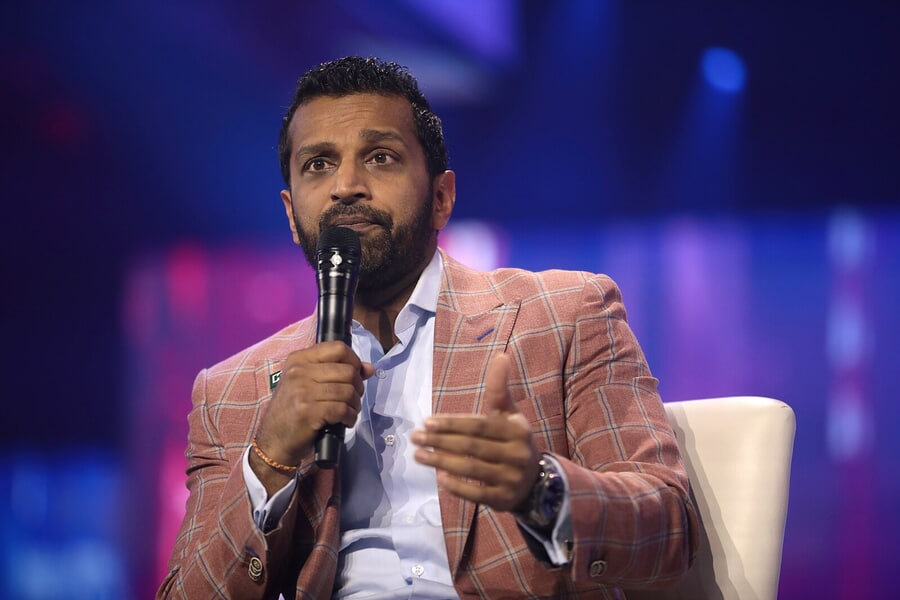
Today, two words of friendly advice to the FBI Director, Kash Patel: Shut up.
The FBI directorship is not a job for a pundit. As one of the present authors has written about before, it is not a job for someone who likes to run his mouth. It is not a job for a person who needs to respond to every point that someone makes on television. The FBI directorship is emphatically not a job for a man who likes to get ahead of the facts.
On Dec. 13, a gunman opened fire on Brown University’s campus in Providence, Rhode Island. The shooting left two dead and nine wounded, with the suspected gunman still at large.
A little over two hours after the shooting began, FBI Director Kash Patel took to X, posting that “FBI personnel are on the scene and assisting this evening after the shooting at Brown University.” The director promised to “update with more information as we are able.”
And update he did. The next day, at 11:38 a.m. EST, Patel tweeted an apparent breakthrough in the case:
An update on the @FBI response at Brown University:
@FBIBoston established a command post to intake, develop and analyze leads, and run them to ground.
We activated the FBI’s Cellular Analysis Survey Team, to provide critical geolocation capabilities.
As a result, early this morning, FBI Boston’s Safe Streets Task Force, with assistance from the @USMarshalsHQ & the @Coventry_RI_PD, detained a person of interest in a hotel room in Coventry, RI, based off a lead by the @ProvidenceRIPD.
We have deployed local and national resources to process and reconstruct the shooting scene - providing HQ and Lab elements on scene.
We set up a digital media intake portal to ingest images and video from the public related to this incident.
And the FBI’s victim specialists are fully integrating with our partners to provide resources to victims and survivors of this horrific violence.
This FBI will continue an all out 24/7 campaign until justice is fully served.
Thanks to the men and women of the FBI and our partners for their continued teamwork. Please continue praying for the victims and their families - as well as all those at Brown University.
Now let’s leave aside for a moment that there is nothing in Patel’s entire post which is out of the ordinary or reflects any unusual FBI effort. Every FBI field office is required to have a Crisis Response Plan, and everything that FBI Headquarters is providing in the way of support here is totally par for the course in a critical incident. If Patel had been on vacation or had gotten lost in the Bermuda Triangle, all of this would happen on autopilot.
But there’s another problem with this tweet: No breakthrough in the case had taken place.
A reader who might reasonably have thought that phrases like “As a result, early this morning” and “detained a person of interest in a hotel room” suggested that FBI spadework had resulted in a dawn assault on a hotel room where the killer was holed up, that the investigation had successfully netted a suspect, and that the people of Providence were thus safe, might have missed the fact that the “person of interest” who had been detained quickly turned out to be a person of only very passing interest.
Nor did Patel bother to correct the record. Indeed, it was left to Rhode Island Attorney General Peter Neronha later that evening to announce that the “person of interest” had been released because there was only a “quantum of evidence which justified detaining this person as a person of interest.” Beyond the tip mentioned by Patel in his tweet, law enforcement did not clarify on what basis the suspect was detained in the first place.
On Dec. 15, there appeared to be another development in the case. Patel, without bothering to note that the former person of interest had been released, tweeted that, “The @FBI and @ProvidenceRIPD are releasing new images of a person of interest in the mass shooting at Brown University on December 13, 2025,” and shared photos of the new suspect. As of the time of publication of this article, that suspect has not been detained.
This is not the first time the FBI director has with some fanfare announced the detention of an investigative subject—only to have that person released a few hours later. Back in September, mere hours after Charlie Kirk was shot and killed during a university speaking event in Utah, Patel tweeted that the “subject for the horrific shooting today . . . is now in custody.” And then, like this weekend, the “subject” turned out not to be in custody.
Two hours later, Patel clarified that the suspect had been "released after an interrogation by law enforcement." The FBI director’s handling of the case later prompted a Senate hearing, in which Patel said that he did not view his announcement “as a mistake.”
Patel doesn’t just jump the gun with respect to arrests in high profile cases. He’s big on search warrants too.
On Aug. 22, as FBI agents were raiding the home of Trump’s former national security advisor John Bolton, Patel tweeted “NO ONE is above the law…@FBI agents on mission” moments after the New York Post ran with a story that a search warrant was being executed at the Bolton residence. One of the present authors was on the scene at the time and described the strange sequence of the raid’s beginning, Patel’s public comments, and the New York Post story:
I was there. For a while, I was the only one there. And even as I was there apparently alone, the New York Post was reporting that the raid was happening.
I was there early that morning. I had already had an encounter with Montgomery County police officers, who did not let me stay on the scene. So I had been circling the block for around an hour, keeping an eye on the situation, when things suddenly started happening. At 6:55 a.m., I texted a colleague that we had action; Montgomery County police cars were sealing off the block on which Bolton’s house stands. I snapped some pictures and took some video. I talked briefly to the Montgomery County police officers, who told me they were there in support of an FBI operation.
And then I started livestreaming. It was 7:05 a.m. when I texted my colleagues that I was going to start a livestream. Two minutes earlier, unbeknownst to me, FBI Director Kash Patel had all but publicly announced the raid:
At 7:14 a.m., nine minutes after I started my livestream, the New York Post tweeted out a story about the search. I looked around. I was still by myself. Yet somehow, a mere nineteen minutes after the police action began on that street in a D.C. suburb, the New York tabloid was reporting details of the operation overtly sourced to administration officials.

In that case, Deputy FBI Director Dan Bongino shared Patel’s comment, adding that “[p]ublic corruption will not be tolerated.” The tweet was also shared by Vice President J.D. Vance.
Next, on Oct. 31 Patel claimed that the FBI had “thwarted a potential terrorist attack and arrested multiple subjects in Michigan who were allegedly plotting a violent attack over Halloween weekend. More details to come.”
No criminal charges had been filed when Patel tweeted the announcement, which reportedly prompted two friends of the alleged terrorists to flee the country. The Wall Street Journal reported: “Two friends of the alleged terrorists in New Jersey and Washington state caught wind of the arrests and moved up plans to leave the country, according to court documents and law-enforcement officials familiar with the investigation.”
Only two of those arrested were ultimately charged.

It is not correct to say that the FBI director should always keep his mouth shut with respect to pending investigations. There are times when public safety requires communication from the Bureau’s leadership. There are also times when the FBI needs information from the public and releasing information to the public can be the best way to get tips and leads; releasing images of a suspect, as the Bureau has now done in the Brown University shooting, can be an effective lead-generating tool. There are even times when there is a responsibility to brief the public about the progress of an investigation.
And yet, in an FBI director, discretion is—most of the time and in most circumstances—the better part of valor. Premature disclosures have civil liberties implications for people who may turn out to be innocent. They also have operational implications—almost always negative. And they can have legal implications too.
Perhaps most importantly, they also have credibility implications. Because you can only announce so many times that you’ve caught a suspect in a major case—only to release them—before the word of the FBI to the public, and to the courts, starts being meaningless. You can only be wrong so many times before people write you, and your agency, off as fools. And being wrong and foolish and lacking candor is toxic stuff for the FBI, which simply has to be credible.
There are a great many professions available for people who like to run their mouths and don’t mind being wrong. The influencer industry, for example, is a growth area—one about which Patel knows a fair bit. His deputy until the other day—or perhaps the next few days—Dan Bongino, and he both were big in the podcasting field as well. That can also be a good spot for people who like to hear themselves talk and don’t mind if they’re full of beans. And hey, we’re not against podcasting. Lawfare has a lot of podcasts. It’s a good biz, though we try to stay on the side of credibility too.
But being wrong—and more particularly being full of shit—is not a good biz for an FBI director. An FBI director simply has to know when to be quiet, when to say less—rather than more—and when to say nothing at all.
The Situation continues tomorrow.