
The Subpoena Detective: A Dispatch From the Times Hearing
On jets, journalism, and a judge.
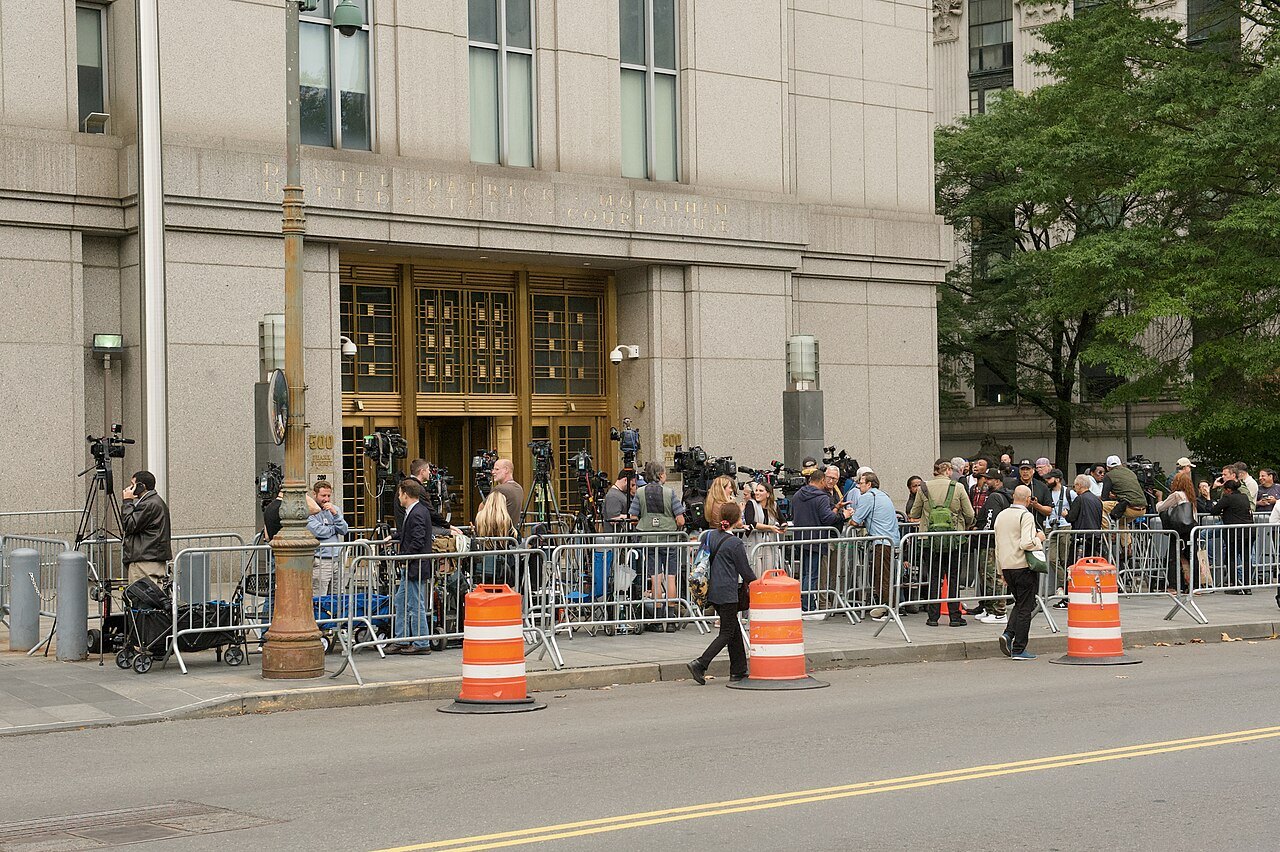
It’s nearly 2:00 p.m. on July 23 in courtroom 23B at the Daniel Patrick Moynihan Courthouse in New York’s lower Manhattan, and the room is, by the standards of the past 24 hours, nearly empty. Yesterday, this same courtroom was packed with curious spectators, eager to catch a glimpse of a hearing in the criminal case against Nicolás Maduro, the former leader of Venezuela.
Today, the gallery holds a noticeably thinner crowd, and the benches appear to be filled almost exclusively with reporters. It’s a fitting audience. We’re here for a hearing about journalism, and the extent to which the government can lawfully interfere with it. Journalists, as it turns out, care about journalism.
At issue is a spate of subpoenas the government issued for the testimony and phone records of several New York Times journalists. The subpoenas followed two Times articles—published on July 8 and July 9, respectively—reporting that President Trump had switched planes during an international trip earlier this month. Rather than depart Turkey on his newly retrofitted jet gifted by Qatar, Trump reportedly opted to fly on the old Air Force One jet. According to the Times’s reporting, the switch followed a recommendation from the Secret Service, which had concerns that the Qatari jet lacked some of the defensive countermeasures built into the previous aircraft. The president, who has previously praised the Qatari jet as the “best plane ever built,” disputed the reporting, saying the switch was made so that the Qatari jet could be shown off to the troops at U.S. military bases.
Within days of the Times’s stories running, federal agents showed up at several reporters’ homes to serve subpoenas ordering them to testify before a grand jury. In a July 11 article published in the Times, a Justice Department spokesperson confirmed that they were issued as a part of an ongoing criminal investigation, claiming that “reporters are not the targets, those leaking classified information are.” Days later, the Times learned that the government had served additional subpoenas on telecommunication companies, seeking phone records associated with the journalists—including phone records of one journalist’s mother and two journalists’ spouses.
The Times swiftly moved to quash the subpoenas, arguing that they were issued in a bad-faith effort to harass and intimidate the journalists. What’s more, the newspaper contended that the government hadn’t come close to meeting the standard set out in New York Times v. Gonzales, the Second Circuit precedent establishing that prosecutors seeking a reporter’s confidential sources must show, among other things, that the information can’t be obtained by other means.
The Justice Department, in response, didn’t ask the court to deny the motion outright. Instead, it asked the court to hold the subpoenas in abeyance for two weeks while it pursued additional investigative steps—steps that, the government suggested, might bear on the scope of the subpoenas and on whether the Gonzales factors could ultimately be satisfied.
Now, around 2:00 p.m., a court officer shouts “All rise!” as Judge Arun Subramanian sweeps into the courtroom and seats himself behind the bench.
The parties make their appearances. For the government, it’s Sean Buckley, chief counsel to the U.S. Attorney for the Southern District of New York. For the New York Times, it’s David O’Neil of Debevoise & Plimpton.
With introductions behind him, Judge Subramanian wastes no more time on pleasantries. He announces that he has a few questions for both sides before turning things over to argument. But it becomes clear almost immediately that “a few questions” is something of an understatement, while “both sides” is a bit of an overstatement. The judge has a legal pad’s worth of questions for the government, and he intends to get an answer to every single one.
Subramanian lobs his opening question at Buckley: Given that the government has asked to hold the subpoenas in abeyance while it pursues further investigative steps, is the government willing to just withdraw them?
Buckley says the government believes the “appropriate measure” is to hold the subpoenas in abeyance while it takes unspecified additional investigative steps. In other words: The government wants to put enforcement of the subpoenas on pause rather than withdraw them entirely.
“Stop you right there,” Subramanian interjects. “So the answer to my question is no?”
Buckley repeats his view that abeyance is the “appropriate measure” at this time.
“So, again, that’s a no, right?” Subramanian retorts.
“Correct,” Buckley concedes.
Having pinned down the government’s position, Subramanian turns to the law. He notes, quoting from the Justice Department’s own filing, that to overcome the qualified reporter’s privilege recognized in Gonzales, the government must show that the information it wants is not obtainable from other sources. You agree, right? he asks aloud.
Buckley acknowledges that is one of the three factors set out by the appeals court in Gonzales.
To that end, Subramanian points out that the government’s own brief admits there are “particular investigative steps” it hasn’t yet taken to obtain the information it seeks. So doesn’t that mean, right now, today, the government fails the Gonzales test?
Buckley tries to explain that those steps weren’t identified back when the subpoenas were issued, but have since come into focus as the investigation has unfolded.
Subramanian, unmoved, restates the question more bluntly: So, at the present time, he stresses, you would agree that the government cannot satisfy the Gonzales test?
Buckley doesn’t have much choice but to concede this point. “Yes, with respect to that factor of the Gonzales test, correct,” he replies.
It’s the kind of admission that tends to end an argument before it starts, and Subramanian treats it that way. “Seems like you’ve got two options,” he says to Buckley. “Either we can quash the subpoenas or you could withdraw the subpoenas.”
The judge adds that both options lead to the same place: The government could issue additional subpoenas down the road after it pursues further investigative steps. If it does, the Times could move to quash the subpoenas again, and the government could come back to court to challenge that motion. “Why isn’t that the right outcome here?” Subramanian asks.
Buckley reaches for a reason, and his answer has something to do with preserving the government’s argument on appeal. The government would like to “preserve the record” with respect to the Gonzales three-factor test, he explains, because there’s a circuit split—the Fourth Circuit’s Sterling decision goes the other way and rejects Gonzales’s framework entirely. Withdrawing now, he suggests, could be read as a concession that Gonzales is the right test.
Subramanian isn’t persuaded, and he says as much at some length, walking Buckley through the reasons why withdrawing the subpoenas now would not prevent the government from someday asking the Supreme Court to resolve the circuit split. “I’m telling you right now,” he says, “that I will not understand any withdrawal of your subpoena here to prejudice some argument that you would make in a subsequent application that the Gonzales test, if you went all the way to the Supreme Court, would not apply.”
Having dispensed with the preservation argument, Subramanian says that he’s simply trying to find a practical way to resolve the parties’ concerns in this litigation. And from the court’s perspective, he notes, holding the subpoenas in abeyance for two weeks wouldn’t be particularly practical. The government’s investigative steps might end up taking longer, requiring the court to extend the abeyance again and again. So rather than keep the proceeding open indefinitely, he says, there are really only two options: quash or withdraw. “Given everything that I’ve told you,” he asks, “what does the government want to do?”
Buckley says the government still maintains it should be held in abeyance but that he understands the court’s rationale if it’s inclined to quash. It is not quite a white flag, but it’s close, which may be why Subramanian returns to the subject minutes later.
For now, though, Subramanian pivots to another matter raised in the filings: whether the court should retain jurisdiction over the dispute if the government issues new subpoenas down the road. Buckley says he doesn’t object to that, as long as the court’s jurisdiction is limited to matters concerning the reporters themselves—not, he cautions, the entirety of the grand jury investigation.
O'Neil, responding to this point on behalf of the Times, agrees that jurisdiction should be retained. However, he thinks the court should retain jurisdiction over the grand jury proceeding as a whole. Given the government’s conduct in this case, he explains, we are concerned that its other investigative steps could impact our clients.
Subramanian says he'll let the parties brief the issue concerning the scope of jurisdiction. For now, everyone agrees: The court keeps jurisdiction over any new subpoenas concerning these reporters.
Then Subramanian asks Buckley whether he’s in charge of the investigation. Buckley says yes.
Having established that Buckley has personal knowledge of the investigation, Subramanian circles back to the timeline. He wants to understand what Buckley meant earlier when he said that additional investigative steps “had not been identified” when the subpoenas went out on July 10.
Buckley, in response, cites the urgency of the national security concerns and the “rapidity with which things were moving on July 10.” Given all of that, he says, the subpoenas were appropriately issued pursuant to federal law and Justice Department regulations. He says he can’t get into much more detail without “compromising” the ongoing investigation or grand jury secrecy under Rule 6 of the Federal Rules of Criminal Procedure.
“Let me stop you right there,” Subramanian says, for maybe the third time this hearing. You said you’re overseeing this investigation, he notes. And you just indicated that, because of the need to get the subpoenas out, there were certain steps that weren’t taken. But doesn’t the entire structure of the law—Gonzales and the Justice Department's own regulations—require subpoenas to reporters to be the last resort, not the first? And wouldn’t you be aware of that?
Yes, Buckley confirms. He was aware of the regulations as of July 10.
Subramanian tries again: So why did subpoenas to reporters go out before anyone had identified what alternative investigative steps existed? To underscore his point, the judge quotes from a Justice Department regulation, which states that the government, when issuing a subpoena to a member of the news media, should first make “all reasonable attempts to obtain the information from alternative sources.” It’s not a matter of Rule 6 or classified information, Subramanian continues. It’s a matter of basic compliance with the law.
With respect to the regulations, Buckley claims that there is an exception to the regulation cited by the judge. That exception was triggered, he says, so we’re not in violation.
The judge is silent for several minutes while he locates the supposed exception cited by Buckley. The text, found in 28 C.F.R. § 50.10(c)(4)(iv), reads as follows:
In investigations of unauthorized disclosures of national defense information or of classified information, where the relevant Department or agency head certifies to the Attorney General the significance of the harm raised by the unauthorized disclosure and that the information disclosed was properly classified, and reaffirms the Department’s or agency’s continued support for the investigation and prosecution, the Attorney General may authorize the Department of Justice, in such investigations, to issue subpoenas to members of the news media. The Attorney General may also authorize the Department, in such investigations, to use subpoenas, 2703(d) orders, or 3123 orders to obtain communications records or business records of a member of the news media.
Subramanian, reading directly from this provision, asks Buckley to point him to any language in it that actually creates an exception to the “should have made all reasonable attempts” language two provisions up. Buckley offers that “should” is merely advisory language. If the attorney general authorizes the issuance of these subpoenas, it’s not a violation of the rules, he says.
Subramanian asks again, more slowly, whether there is any actual textual basis in (iv) that would indicate it serves as an exception to the alternative-sources requirement. Buckley, audibly working through the question in real time, says he thinks it is “clear on the face of the regulation.”
The judge, for his part, doesn’t seem convinced.
Then comes the moment the whole hearing has been quietly building toward. Subramanian asks about a filing the government submitted to a magistrate judge on July 14 in connection with a subpoena issued to a telecommunications company. The July 14 filing, submitted by Assistant United States Attorney Kevin Sullivan, sought something called a “non-disclosure order”—essentially, an order that would prohibit the telecommunications company from informing the journalist that his information had been subpoenaed.
The magistrate granted the government’s request and issued such an order on July 15. But the government had a problem. Sullivan’s July 14 application for a non-disclosure order had affirmed under penalty of perjury that the investigation was “not public.” In fact, it was public. Days earlier, in a July 11 article published by the Times, a Justice Department spokesperson issued an on-the-record statement confirming the existence of the investigation.
All of which left the government in an awkward spot, to put it mildly. Judges tend to take an unsympathetic view of government attorneys misrepresenting facts under oath—particularly in a case where the government stands accused of acting in bad faith to begin with.
Now, turning to this issue, Judge Subramanian asks Buckley if he personally reviewed Sullivan’s July 14 application for a non-disclosure order. Buckley says he didn’t.
“Is Mr. Sullivan here?” Subramanian asks.
He is. He’s been sitting in the gallery this whole time, apparently under the impression that having his name on key filings in the case did not entitle him to a seat at counsel table.
“I mean, he’s on—his name is on all the pleadings here,” Subramanian says. “So why is he in the gallery? You can come up. We have extra chairs here.”
And so Sullivan, moving with the stiff posture of a student called to the principal’s office, makes his way to the well of the courtroom.
Subramanian doesn’t go easy on him. “Mr. Sullivan, when you affirmed in your July 14 application to a judge in this court, under penalty of perjury, that the investigation was not public, that was false, correct?”
Sullivan says the wording was “imprecise”—the full scope of the investigation wasn’t public, even though the Justice Department had, in fact, publicly confirmed the investigation’s existence on July 11.
Subramanian then asks him to confirm what the application did not say. It never told the reviewing judge what the investigation concerned, never mentioned that the records sought were associated with a journalist, never mentioned the Times, right? His point is that the magistrate judge had no way of connecting Sullivan’s non-disclosure application to the investigation that was publicly reported and confirmed by the Justice Department on July 11.
Sullivan concedes all of it, one admission at a time.
Subramanian presses further: “But then you said in your affirmation, ‘The attached subpoena relates to an ongoing criminal investigation that is neither public nor known to all the targets of the investigation.’” That was not correct, right?
Sullivan acknowledges that this statement was “not correct.” We should have been more precise, he says. The full scope of the investigation was not public.
The judge then asks why the application didn’t inform the magistrate judge that the government’s request was related to an investigation involving journalists.
“Judge, it was an oversight on the government’s part,” Sullivan replies. He says the government concluded that it was an oversight after conducting additional legal research later in the week, ultimately determining that it was appropriate to notify the journalists’ counsel about the phone records subpoenas.
“So are you going to do this again?” the judge queries.
“No, your honor, absolutely not,” Sullivan replies.
Subramanian turns the questioning back to Buckley. If this were a civil case, he says, incorrect statements made under penalty of perjury to a federal judge would normally trigger an order to show cause why sanctions shouldn’t be imposed. So can you help me understand why I shouldn’t take further steps here?
Buckley calls it an inadvertent error, promising that it won’t happen again.
Subramanian doesn’t seem entirely satisfied by this response, but he has something else on his mind. He observes that the government didn’t inform the Times’s lawyers about the phone records subpoenas until July 17, with Sullivan’s stated reason being that the government deemed disclosure appropriate after it identified “additional case law.” What was the additional case law? he asks.
“It was the case law that indicates that the account holders could have standing to challenge and move to quash the subpoena with respect to their accounts,” Buckley replies.
The judge is incredulous. That’s the Gonzales case, right? Were you unaware of Gonzales prior to July 17?
Buckley says the government was aware of Gonzales. But it was unaware of that aspect of Gonzales. This was an “inadvertent error,” he insists. “Nobody was looking to pull a fast one on the court.”
Subramanian, still incredulous, clarifies: So prior to July 17, you personally were not aware that, in the leading case on the reporter’s privilege, the court had made very clear that the privilege extended to records of this very kind in the hands of third-party providers?
Buckley replies: At that time I was not.
Then Subramanian wants to know why this was ever a question of case law in the first place. He reads aloud from a Justice Department regulation, 28 C.F.R. § 50.10(e), which provides that members of the news media must be given “reasonable and timely notice” when the attorney general authorizes a subpoena for their phone or business records.
Buckley again points to an exception contained in the regulation itself. This exception is more obvious than the one he cited earlier. It provides that disclosure of the subpoena need not be provided if the attorney general determines that “such notice would pose a substantial threat to the integrity of the investigation, risk grave harm to national security, or present an imminent risk of death or serious bodily harm.”
Subramanian stares at Buckley. You’re saying that determination was made?
Buckley pauses. “Your Honor, I can’t get into that,” he says.
Having grilled Buckley and Sullivan for nearly an hour now, Subramanian seems anxious to wrap things up. Noting that the government has conceded that it made multiple errors, oversights, and omissions during this very hearing, he asks why it is still unwilling to withdraw the subpoenas.
Buckley, for his part, says he doesn’t understand the practical difference between the government withdrawing them and the court quashing them. Moments later, however, he asks for a chance to confer with his colleagues. Subramanian allows a five-minute recess.
When court resumes, Buckley has a new position. “Upon further consideration,” he announces, “the government is prepared unilaterally to withdraw these subpoenas at this time.” If new subpoenas are ever warranted down the line, he says, the government will come back to this court in the first instance.
O'Neil, for the Times, has no objection.
Subramanian extracts a few final commitments from Buckley: that he remains in charge of the investigation, that the office will follow its own regulations and Gonzales going forward, and that nothing like this will happen again.
“We’re not going to have situations where, for instance, someone’s watching ‘Sheep Detectives’ and FBI agents show up at their door, right?” the judge asks. It’s a reference to reports that one of the subpoenaed reporters, Julian Barnes, was watching “The Sheep Detectives,” a film released this year, with his family when government agents showed up to serve him with a subpoena. Buckley promises that won’t happen again.
“I can’t think of anything more inconsistent with ‘The Sheep Detectives’ than having an FBI agent show up at your door,” Subramanian quips in response.
O'Neil, who hasn’t had much to do throughout the hearing, is finally given his turn to address the court. He keeps it short. There are “critical First Amendment interests at stake,” he says, and it matters for the public record that the government is withdrawing unilaterally rather than being forced to. The record here, he continues, is “replete with bad faith,” and the government’s conduct has already had a chilling effect on the reporters’ work. Given all that, he expects that the government won’t try this again.
Subramanian assures him the court will take all of the circumstances into account if the government issues additional subpoenas.
Asked if he has anything to add, Buckley allows himself one small act of defiance: The government disputes any suggestion of bad faith, he says. He leaves it there.
Subramanian turns to housekeeping matters. He orders the Times to submit a letter on the jurisdictional question by Monday and asks the parties to order a transcript of the day’s proceedings.
And with that, court is adjourned.
-(2)-(2)-(1).jpg?sfvrsn=21cee67a_7)
