
Why We’re Suing the State Department Over International Agreements
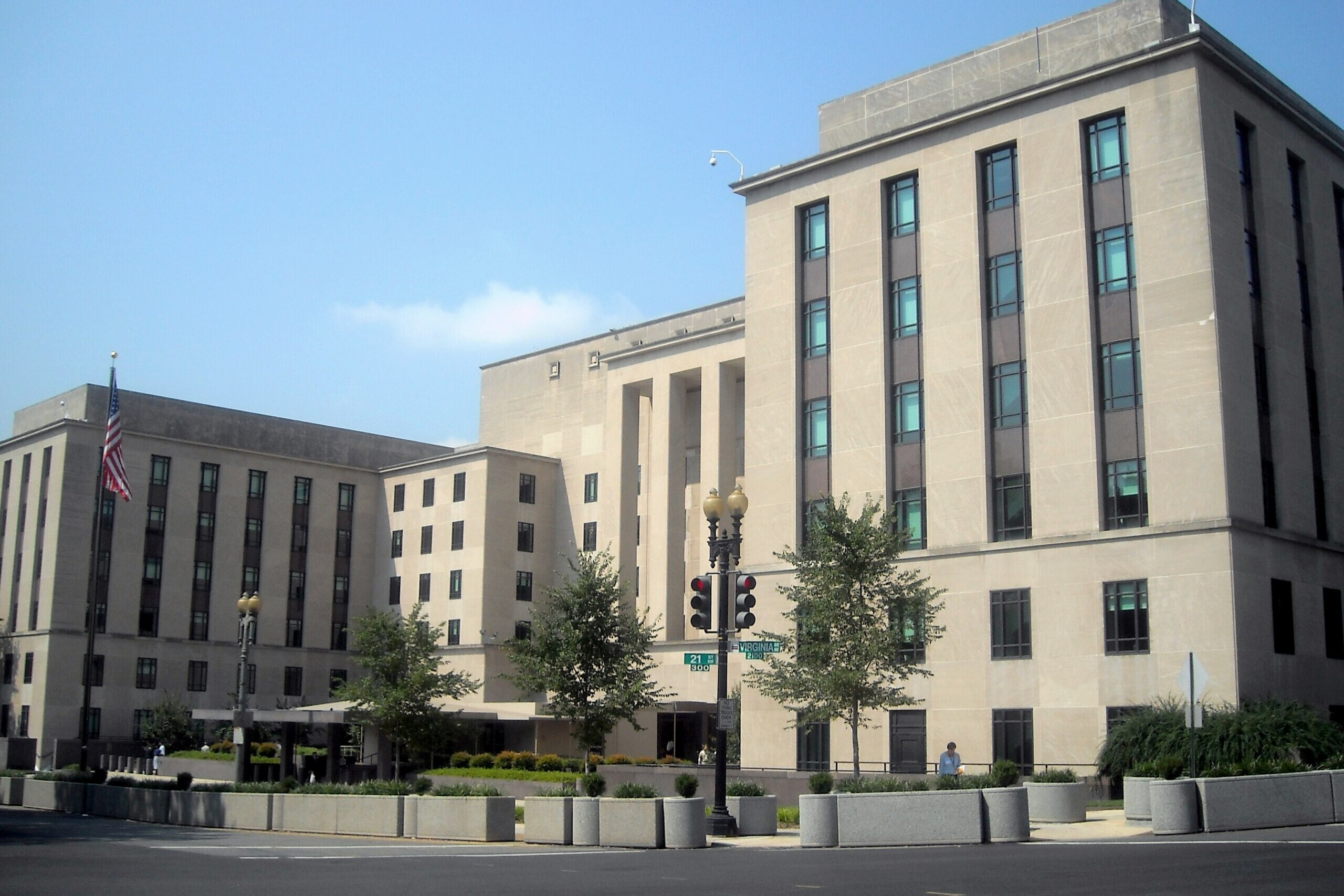

For the past six months, Lawfare has quietly been doing something a little out of the ordinary. Instead of just covering national security litigation, we’ve been the lead plaintiff in a lawsuit against the U.S. Department of State over its failure to disclose international agreements and nonbinding instruments that the Trump administration has entered into, as required by statute.
This past Monday, Aug. 31, a federal district court in Washington, D.C., rejected almost all of the government’s motion to dismiss and confirmed that our lawsuit can proceed to the merits. This seemed like a good time to explain why we’re suing—and to ask for your help.
International agreements—agreements with foreign governments that create binding obligations under international law—are an indispensable part of U.S. foreign policy. But they can present some democratic accountability problems.
Today, the vast majority of international agreements the United States enters into are executive agreements concluded by the president alone, based on assertions of inherent constitutional authority or delegated authority from statutes (or, in some cases, other existing international agreements). Unlike international agreements that receive the advice and consent of the Senate (often called “Article II treaties”) or are approved by Congress as a whole (called “congressional-executive agreements”), executive agreements don’t require anyone’s sign-off outside of the executive branch. In theory, this could allow the president to make commitments that bind the United States beyond the reach of congressional oversight or democratic checks.
In 1972, Congress tried to address this problem by enacting the bipartisan Case-Zablocki Act, which requires the president to disclose various executive agreements to Congress. But the act was never a perfect solution. As Curtis Bradley, Jack Goldsmith, and Oona Hathaway have documented in their scholarship (and on Lawfare), there was “systematic and consistent underreporting to Congress” over the ensuing decades, with hundreds of agreements never making their way to Congress. Meanwhile, separate laws providing for the publication of international agreements gave the executive branch broad discretion to determine what is made public, leaving voters with an even spottier picture.
In recent decades, the executive branch has also increasingly turned to nonbinding arrangements that make political commitments to other countries instead of formal international agreements. Although not binding under international law, such commitments can still shape U.S. foreign policy. But they arguably fall outside the scope of the disclosure obligations Congress set.
For these reasons, in late 2022, Congress took another crack at addressing the issue. After negotiating with the Biden administration, Congress enacted a set of comprehensive reforms to the Case-Zablocki Act, which once again passed with overwhelming bipartisan support. As amended, the law now requires the secretary of state to provide Congress with copies of any finalized or newly operative international agreements over the past month. The reforms also require the secretary of state to outline the underlying legal authority allowing the president to enter into each international agreement. It applies the same obligation to “qualifying non-binding instruments” as well, which it defines as arrangements with foreign parties that “could reasonably be expected to have a significant impact on the foreign policy of the United States,” albeit with some carve-outs for military and intelligence arrangements.
Importantly, the law doesn’t stop at Congress. Within 120 days of a reported international agreement or qualifying nonbinding instrument entering into force, it also requires the department to make the text and related information about legal authorities “available to the public on the website of the Department of State.”
Those involved in drafting these provisions were not shy about their intended effects, as the Senate foreign relations committee made clear in its accompanying report:
The Committee expects that this reform will provide a richer tapestry of information that allows for greater understanding of the use of international accords as a foreign policy tool. Greater congressional input and public insight will lead to a stronger and more sustainable foreign policy.
But the State Department’s rollout hasn’t lived up to these ambitions, particularly when it comes to public disclosure.
As Duncan Hollis recently described for Lawfare, a Government Accountability Office (GAO) audit found that, between October 2023 and March 2025, nearly a third of international agreements and qualifying nonbinding instruments were reported to Congress late. And while the department made eligible international agreements, qualifying nonbinding instruments, and related legal information reported to Congress available to the public about 86 percent of the time, it did so within the statutory deadlines set by Congress only about 53 percent of the time.
The GAO went on to criticize the State Department for failing to set up adequate procedures to identify and track relevant materials, and for posting the requisite materials in four separate, difficult-to-navigate corners of its website. (Specifically, the texts of international agreements are posted on the long-standing Treaties and Other International Acts Series (TIAS) website while relevant legal information about those agreements is posted on a separate page in the department’s FOIA library. Similarly, the texts of qualifying nonbinding instruments are posted on one page in the FOIA library while related legal information is posted on another, in an entirely different file format. None of these pages cross-reference or link to each other.)
But whatever complaints one can make about this period, the department at least regularly posted the required information on its website, suggesting a genuine effort to comply to some extent. That effort appears to have stopped, however, once President Trump returned to the White House, as we describe in our complaint:
The Department did not update the international agreements websites at all in the first several months of 2025. An April 1, 2025 archived version of the TIAS website for binding agreements text contains zero posts from 2025, and a March 4, 2025 archived version of the website for non-binding agreements text similarly lacks any 2025 posts.
By July 2025, the Department had posted some agreements to the websites, and the corresponding websites containing legal authority information. It had posted text for 20 binding agreements, only 7 of which were signed during this administration, and information for 39 binding agreements, only a few of which were signed during this administration; and it had posted text and information for 24 non-binding agreements, only 8 of which were signed during this administration. But the State Department abruptly stopped posting agreements [in July 2025, when many State Department employees were subject to a reduction in force (RIF)], and it has only partially and sporadically resumed posting in recent months.
As of this filing [in March 2026], the State Department has not posted any agreements to the binding agreements text website that have entered into force since June 2025. And, as of the date of this filing, it has not resumed regular and timely posting on the binding agreements information website; rather, it has only sporadically posted to the website, going several months without any update before belatedly adding information in December 2025 and January 2026 for some agreements, most of which entered into force between 6-12 months ago.
As of this filing, the State Department also has not resumed regular and timely posting of agreements or legal authority information to the non-binding agreements websites. Rather, it has only sporadically posted to the websites, going several months without any updates before belatedly adding text and information in late 2025 and early 2026 for a small set of agreements, virtually all of which entered into force between 6-12 months ago.
This collapse of the disclosure system mandated by Congress presents some very specific problems for Lawfare. Over the past two years, Lawfare has covered and analyzed countless aspects of the Trump administration’s foreign policy that hinge on international agreements or nonbinding instruments, from the deportation of migrants to third countries to new deals with trading partners to arrangements with Ukraine regarding its natural resources. But because of the Trump administration’s noncompliance, we’ve been forced to do so without the documents themselves or an understanding of their purported legal basis. This undoubtedly makes it more difficult for us to fulfill our stated mission of better educating the public on matters of national security law and policy. It also directly undermines Congress’s stated legislative purpose of promoting “greater understanding of the use of international accords as a foreign policy tool.”
This is why—after giving the Trump administration more than a year to get its house in order—we ultimately decided to sue. And it’s why, with the support of our expert counsel from the Citizens for Responsibility and Ethics in Washington (CREW), we intend to see the case through until the State Department comes back into full compliance.
This decision shouldn’t be taken as a condemnation of the department or the many career civil servants who work there. I’m a proud alumnus of the Office of the Legal Adviser that manages compliance with the Case-Zablocki Act, and I don’t have any doubts that my former colleagues are working in good faith to comply with the law as best they can. But promptly disclosing the covered international agreements and nonbinding instruments requires State to coordinate closely with several other executive branch components—a fact that the department’s own filings (and responses to the recent GAO report) attest, as they blame omissions and delays on failures by other federal agencies.
Remedying these failures will require commitment from the State Department’s political leadership to create and implement sustainable and timely reporting mechanisms, both within the department and beyond it. Our hope is that our lawsuit may help persuade these political leaders to give civil servants the resources and support they need to comply with the law.
Nor is our decision to sue made in ignorance of the immense difficulties the department has faced over the past 18 months. Thousands of employees have left the department under Secretary Marco Rubio’s watch, either as part of “voluntary” separations following campaigns of intimidation and denigration by Trump administration officials or involuntarily as part of the RIF that the Department implemented last summer. We suspect it’s not a coincidence that the biggest lapses in disclosure occurred as the RIF was being implemented. But that’s not a valid excuse for ignoring requirements imposed by federal law.
As Chief Judge James Boasberg notes in his recent opinion, “every agency must juggle resource constraints; that alone does not weigh against compelling the Secretary to comply with the statutory deadlines.” This is especially true when the resource constraint is a product of the Trump administration’s own policies. Being short-staffed after deliberately shrinking the department’s workforce—without any authorization or support from Congress—can’t be an excuse for failing to meet statutory obligations. If anything, the department’s inability to meet its statutory obligations may indicate that its workforce wasn’t as bloated and wasteful as claimed. Either way, it’s the department’s duty—and the broader executive branch of which it’s a part—to comply with the law as Congress has enacted it.
In our complaint, we identify more than a dozen international agreements and nonbinding instruments that Trump administration officials have discussed or that have otherwise been reported, but that the State Department had not disclosed as of the time of filing. And we made clear that these were representative of a broader pattern of noncompliance—one that we intend to address as we turn to the merits.
That is where you can help, Lawfare readers. Are you aware of an international agreement or nonbinding arrangement that the United States may have concluded since January 2025? Have you been unable to locate it or related information on the State Department’s website? If so, please let us know through the form below.
Otherwise, we will be sure to update Lawfare readers on further developments in this litigation as they happen.

.jpeg?sfvrsn=42734a7d_5)
