
The Trump Administration’s Legal Shell Game
Recent attempts to block wronged federal grantees from having their day in court reflect a broader Trump administration strategy.
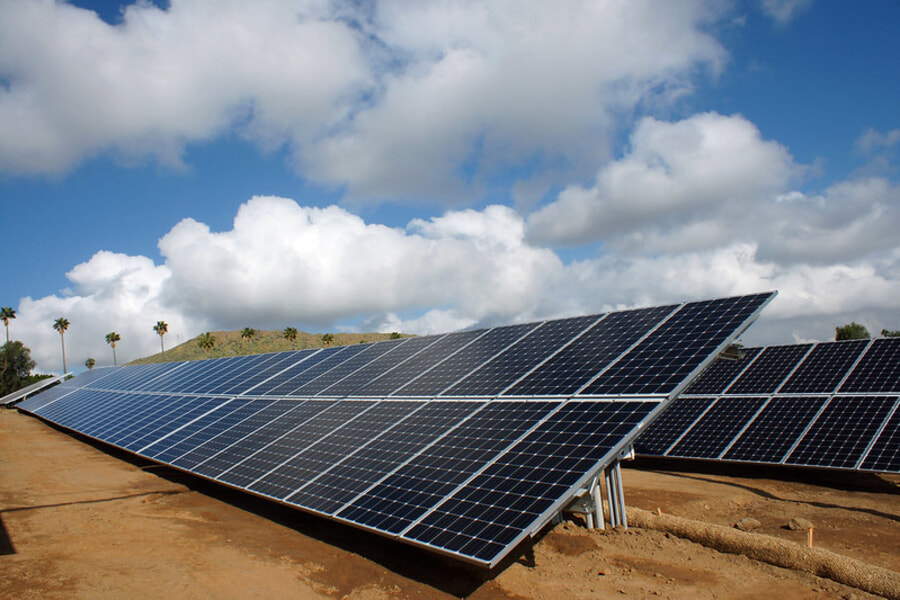

Last summer, the Trump administration abruptly halted billions of dollars in grants for the “Solar for All” program, which was designed to help low-income communities reduce their energy costs. In response, affected organizations and states quickly mounted legal challenges to protect their funding, arguing that the Trump administration’s actions were unlawful.
The Solar for All grant program was created by Congress; grantees had entered into agreements with the federal government to deliver millions of dollars in energy savings to Americans, with many projects already underway. The Trump administration, however, claimed that the 2025 budget bill repealed the grant program’s legal basis, authorizing the Environmental Protection Agency (EPA) to end the program and cancel the grant agreements. But rather than defend its actions on the merits, the administration is taking steps to evade, or at minimum delay, judicial review—including by advancing arguments directly contrary to those it previously put forward. The government’s actions in the Solar for All case could have troubling consequences for plaintiffs in other grant cancellation litigation.
Changes in Grant Litigation
Prior to this administration’s broad efforts to terminate federal grants, there were relatively few legal challenges to such terminations. But it was well established that most such challenges could be brought in federal district courts. Among other things, if such a court finds that a challenger is likely to succeed on the merits, the court can issue a preliminary injunction to keep the funding flowing while the litigation proceeds. Grant recipients challenging the Trump administration’s terminations filed in district courts to great effect in 2025, with judges repeatedly ordering the administration to reinstate unlawfully terminated grants.
However, in a pair of thinly reasoned shadow docket orders previously addressed in Lawfare—Department of Education v. California and National Institutes of Health v. American Public Health Association—the Supreme Court potentially upended this framework. Agreeing with the Trump administration, the Court indicated that challenges to at least some grant terminations are akin to breach-of-contract claims. It also claimed that the Tucker Act—which allows individuals and businesses to sue the federal government for monetary damages in certain circumstances—contains a waiver of sovereign immunity for such contract disputes that forecloses district court jurisdiction and channels them to a specialized court called the Court of Federal Claims. Dissenting justices and lower courts alike have criticized this conclusion as, in Justice Elena Kagan’s words, “at the least under-developed, and very possibly wrong.” Regardless, as explained further below, the federal government has taken advantage of this seeming change to grant litigation to delay timely adjudication of the lawfulness of terminations.
In National Institutes of Health, Justice Amy Coney Barrett’s controlling concurrence drew a distinction between challenges to specific grant terminations (which must go to the Court of Federal Claims) and challenges to the broader agency policies underlying those terminations (which can remain in district court). One effect of this jurisdictional shift is that litigants who previously could have brought all of their claims in a single district court action seemingly must now split their cases across two courts, filing contract-based claims challenging terminations in the Court of Federal Claims while also pursuing challenges to the underlying policy in district court. This forces grantees to bear the costs and complexity of litigation in two different forums. Uncertainties as to whether those actions can proceed simultaneously create new opportunities for gamesmanship.
Adding to the complexity is confusion over the exact bounds of Justice Barrett’s decision: Litigants and lower courts continue to grapple with whether the Court’s order applies to constitutional claims asserted through nonstatutory review, to challengers who lack any direct contractual relationship with the government (like subgrantees or downstream beneficiaries), or to challenges to unlawful grant conditions (as opposed to terminations).
Even litigants that successfully navigate this jurisdictional obstacle course face substantial financial costs. The Court of Federal Claims generally cannot issue injunctions to order agencies to reinstate terminated grants. Its primary remedy is money damages under traditional contract law. That means that litigants there typically cannot obtain preliminary relief to keep funding in place while their case proceeds.
Moreover, the Supreme Court’s suggestion that these cases must be channeled to the Court of Federal Claims implies that that court should eventually be able to provide an adequate remedy. But whether it actually can remains an open question that may require the U.S. Court of Appeals for the Federal Circuit and the Court of Federal Claims to reinterpret or even reconsider decades of precedent.
As those courts’ case law stands now, even if wronged grantees ultimately prevail, their recovery may be limited to expectation or reliance damages calculated under commercial principles that were not designed for the grant context. Grant recipients are typically governmental or nonprofit entities whose interests lie not in lost profits—the quintessential method of calculating expectation interest damages—but in their ability to carry out publicly beneficial work. And limitations on contract damages, such as the requirement that a nonbreaching party mitigate its losses by engaging new counterparties, present difficulties when the federal government is often the only available funding source for the activity in question.
Litigation in the Court of Federal Claims
Nonetheless, litigants seeking recovery for the cancellation of the Solar for All grants dutifully proceeded to file suit in the Court of Federal Claims. Likewise heeding the Supreme Court’s instruction, they separately brought constitutional and statutory claims against the policy underlying the cancellation in federal district court.
But rather than defend the Court of Federal Claims action on the merits—after all, the challengers were there only because the Trump administration successfully convinced the Supreme Court that that’s where such claims belong—the Trump administration asked the Court of Federal Claims to pause that litigation pending the outcome of the federal district court case. All while opposing relief in that case by claiming that it belongs in the Court of Federal Claims.
In other words, the administration told one court that it lacks jurisdiction because another court is the proper forum, while simultaneously telling that other court to stop its proceedings because of what is happening in the first court. As the Court of Federal Claims challengers have aptly noted in resisting the stay that the government sought, the government’s “whipsaw litigation strategy” reveals its true aim: delaying any court from ever reaching the actual question of whether the Trump administration had the authority to cancel the Solar for All grants.
The Justice Department’s hypocrisy becomes even more apparent if you investigate the details. In district court, the government didn’t just maintain that grant-reinstatement claims belong in the Court of Federal Claims; instead, it argued that any remedy that so much as relates to grants—such as preventing the EPA from using the Solar for All funds for other purposes—is inherently contractual and thus belongs exclusively in the Court of Federal Claims. But in the Court of Federal Claims, the government asked for a pause in litigation because, it suggested, the district court might order reinstatement of the grants, which the government has argued the district court lacks authority to do—and which the plaintiffs there have not even requested.
The timing of the government’s arguments likewise raises real concerns. More than two months ago, Justice Department lawyers told the Court of Federal Claims that they were “fully aware” that plaintiffs had filed suit in federal district court as well but disavowed any suggestion that the Court of Federal Claims case needed “to be stayed or delayed.” Based on those representations, the Court of Federal Claims set an argument schedule and the contract claims were set to move fairly quickly to resolution. But less than a week before the government was due to file its brief defending the grant terminations, it instead filed its request for a pause, pointing to the district court cases. After hearing oral argument, the Court of Federal Claims granted a stay through April, adding months to the lawsuit’s timeline.
Implications for the Rule of Law
If the government continues to succeed in this gamesmanship, the renewable energy projects at issue may well wither, all while the challengers and the courts burn precious resources and time. Another month, another motion, another stay—anything to avoid a court actually examining whether the EPA’s mass termination of the Solar for All grants was lawful.
Moreover, if the Trump administration is successful in the Solar for All case, it could pave the way for the administration to avoid accountability in its myriad other questionable grant cancellations. In dozens of cases over the past year, the government has repeatedly argued that the Tucker Act requires grant termination cases to be heard in the Court of Federal Claims. As mentioned, it took that argument all the way to the Supreme Court twice and won. In all of those cases, the government was trying to strip district courts of the power to keep funding flowing. But now that a case has actually reached the Court of Federal Claims—and more are on their way—the Trump administration is seemingly resisting that court’s jurisdiction. Rather than defend its grant terminations on the merits in the very forum it insisted was the correct one, the Justice Department is seeking to delay those proceedings, while simultaneously continuing to invoke the Tucker Act in district court.
It is one thing for the government to assert all available defenses, as government litigators routinely do. It is another to engineer contradictory arguments that are designed to prevent any court from reaching the merits. Hopefully, courts will begin to recognize that an administration confident in the legality of its actions would not have to resort to procedural gymnastics.


-(2)-(2)-(1).jpg?sfvrsn=21cee67a_7)
