What Washington Got Wrong About the Houthis—and What It Must Do Now
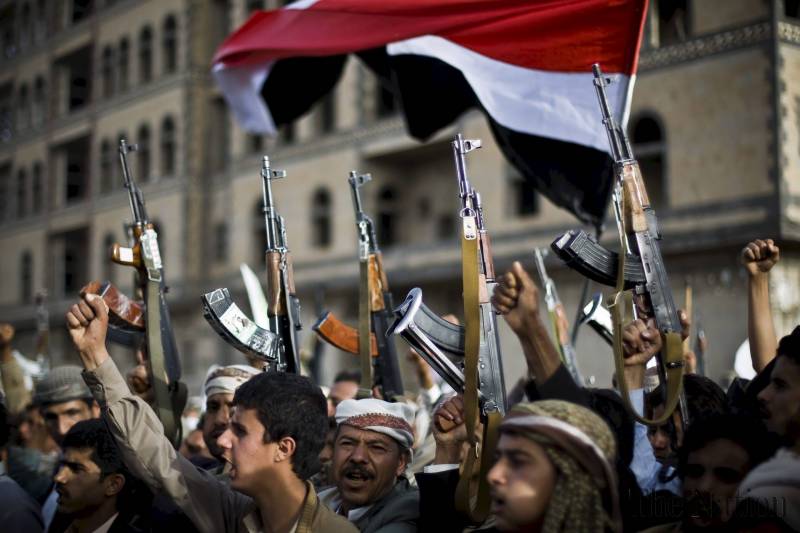

Editor’s Note: The emergence of the Houthis as a major player in the current U.S. and Israeli war against Iran demonstrates, once again, how formidable this group has become. Drawing on her recent congressional testimony, Nadwa Al-Dawsari of the Middle East Institute details the roles the Houthis are playing in the latest conflict and calls for a much more comprehensive effort to back the group’s enemies in Yemen and otherwise reduce its influence.
Daniel Byman
***
On Oct. 5, Yemen’s internationally recognized government launched Operation Dawn of Yemen to retake Houthi-held territory, including Sanaa, and end the Houthis’ coup. This dramatic development came as the threat posed by the Houthis has grown sharply in recent weeks. In a rapid offensive in September, the group seized the remaining stretches of Yemen’s Red Sea coast, including the strategic port of Mokha and Dhubab, and took control of key Red Sea islands, including Mayyun (Perim), Zuqar, and the Hanish archipelago. The advance has dramatically strengthened the Houthis’ position around Bab al-Mandab, one of the world’s most important maritime chokepoints. It is the latest stage in a transformation that the United States and the international community have repeatedly underestimated. The Houthis have grown from a local insurgency in Yemen’s northern mountains into a regional military actor capable of threatening international shipping and U.S. partners and interests across the Red Sea and beyond.
For more than a decade, the Houthis have told us what they intend to become. Their ideology is not confined to Yemen. The movement is a radical offshoot of Zaydi Shia Islam whose leaders articulate a messianic vision extending beyond Yemen to confrontation with the United States and Israel and a broader struggle for leadership of the Muslim world. Their official slogan—“Death to America, Death to Israel, Curse the Jews, Victory to Islam”—is not simply rhetoric. The Houthis have institutionalized this worldview through schools, summer camps, state-controlled media, public institutions, and military mobilization.
Iran helped give the Houthis the capabilities to act on that worldview. Its investment began well before the Houthi seizure of Sana’a in 2014, and over the following decade, Tehran provided weapons, technology, training, and expertise that helped transform a relatively small insurgency into a formidable military force. Today, the Houthis possess ballistic and cruise missiles, anti-ship missiles, sophisticated drones, unmanned surface vessels, naval mines, and other systems capable of threatening targets across the Arabian Peninsula and as far away as Israel, including U.S. forces and commercial shipping. They have also developed the capacity to assemble, manufacture, and modify weapons inside Yemen using components acquired through increasingly global supply networks.
This transformation occurred alongside the construction of a highly repressive system of rule inside Yemen. Since seizing Sana’a, the Houthis have subordinated state institutions, suppressed political and civic freedoms, detained and tortured opponents, and persecuted journalists, activists, women, and religious minorities. At the same time, they have built an extensive system of ideological and military mobilization. This is not simply about recruiting fighters for today’s wars. It is about shaping a generation of Yemenis around an anti-American worldview that did not exist before in Yemeni society.
For much of the past decade, U.S. policy toward Yemen has been driven by concerns about the humanitarian consequences of the war. The United States initially supported the Saudi-led coalition’s intervention in support of the internationally recognized Yemeni government but reduced aspects of that support as concerns over civilian casualties and the humanitarian crisis grew. The desire to reduce civilian suffering was understandable and necessary. But humanitarian considerations were too often treated in isolation from the political and military dynamics driving the conflict—and from the nature of the Houthis themselves. A fundamental flaw in this approach was the assumption that concessions to the Houthis would encourage reciprocal concessions and moderation. Time and again, the Houthis instead took advantage of these periods of deescalation to consolidate territorial control, recruit fighters, and build their capabilities.
The 2018 Stockholm Agreement illustrates the consequences of international concessions without reciprocity. An offensive that threatened Houthi control of Hodeidah was halted amid legitimate humanitarian concerns, but the Houthis failed to implement the agreement’s key provisions and retained the port. During the 2022 UN-brokered truce, they continued strengthening their missile, drone, and maritime capabilities while attacking Yemeni government oil-export infrastructure. The reduction in fighting did not moderate the Houthis; it gave them time to consolidate and become stronger.
U.S. military action has imposed real costs but has not solved this underlying problem. U.S. strikes, including the intensive 2025 Operation Rough Rider campaign, degraded Houthi capabilities and temporarily reduced missile and drone attacks, but air strikes cannot eliminate the territorial, economic, and human infrastructure that allows the Houthis to regenerate those capabilities. The United States cannot indefinitely sustain an exchange in which relatively inexpensive Houthi drones and missiles require costly naval deployments and interceptors. Sanctions, interdictions, and the foreign terrorist organization designation are important tools, but Houthi procurement and financing networks have repeatedly adapted by shifting suppliers, routes, and intermediaries.
Meanwhile, the threat is expanding beyond Yemen. The Houthis are developing networks across the Horn of Africa that move not only weapons and components but also people, expertise, and technology. Most concerning is their growing cooperation with al-Qaeda affiliates on both sides of the Gulf of Aden. Hundreds of al-Shabaab members have received military and ideological training in Houthi-controlled Yemen, while Houthi military engineers have traveled to al-Shabaab territory in Somalia to provide technical training. UN reporting has documented Houthi provision of weapons, including drones, and technical expertise to both al-Shabaab and al-Qaeda in the Arabian Peninsula, as well as discussions about cooperation in targeting international shipping.
These relationships reflect a larger evolution. The Houthis are no longer simply one “spoke” in Iran’s Axis of Resistance. They are increasingly becoming a hub connecting networks that were previously more separate: Iran and its regional partners, al-Qaeda affiliates, smugglers and criminal networks, and actors across the Horn of Africa. Weapons, personnel, expertise, and resources can increasingly move between these networks. At the same time, the Houthis have developed ambitions and regional relationships of their own. They should therefore not be understood simply as an Iranian proxy whose threat can be resolved through negotiations with Tehran.
The experience of the past decade points to a basic conclusion: The United States cannot bomb its way out of the Houthi problem, but diplomacy without leverage will not solve it either. The missing element has been a strategy aimed at the source of Houthi resilience—the territorial base that allows them to recruit fighters, generate revenue, control ports and smuggling routes, manufacture and store weapons, and rebuild capabilities degraded by air strikes and sanctions.
The United States should therefore make strengthening the internationally recognized Yemeni government a central component of its strategy. That would not require U.S. ground forces. But it would require political backing and coordinated assistance with regional allies to improve Yemeni intelligence, surveillance, and reconnaissance, command and control, counter-drone and air-defense capabilities, maritime security, counter-smuggling operations, and the ability of government forces to regain and hold territory.
Providing such U.S. backing is difficult, as the Yemeni government’s military weaknesses are real. Some of its forces have competing political loyalties and separate chains of command, divisions exacerbated by the divergent agendas of key backers such as Saudi Arabia and the United Arab Emirates (UAE). International pressure on the government and its regional partners to prioritize deescalation was not matched by a sustained effort to unify and strengthen government-aligned forces. This helped entrench their fragmentation, leaving rival factions to pursue separate agendas while the Houthis consolidated their military power. The recent collapse of government forces on the western coast exposed the consequences of political distrust and inadequate military coordination; forces nominally fighting on the same side failed to coordinate effectively or reinforce one another, helping the Houthis achieve a rapid breakthrough.
Since the UAE left Yemen in January 2026, Saudi Arabia’s emergence as the predominant external backer of government-aligned forces has offered an opportunity to address this fragmentation. A week after the Emiratis’ departure, Presidential Leadership Council Chairman Rashad al-Alimi announced the formation of a Supreme Military Committee to prepare, equip, and command these forces under the Saudi-led coalition. More concentrated influence over funding, training, and equipment could help bring separate formations under a common operational command. The current offensive, which Saudi Arabia has backed politically and militarily, is the first major test of that effort. The recent coastal defeat shows how far that effort still has to go, but it also underscores the urgency of using that influence to build military cohesion.
These weaknesses should shape U.S. assistance, not foreclose it. Washington should coordinate with Saudi Arabia to link funding, equipment, and training to practical steps toward military cohesion, including an agreed operational command, joint planning, and verified payrolls and oversight of weapons and funding. Saudi Arabia and Yemeni leaders must take the lead in resolving competing command structures and ensuring reliable salaries. The immediate objective need not be a fully integrated national army, but forces capable of conducting joint operations, protecting civilians, and holding territory under an accountable command. Support must also strengthen governance and preserve humanitarian access in the areas they control.
Air strikes, sanctions, interdictions, diplomacy, and maritime defense all remain necessary. But they should support a broader objective: reducing the territorial, economic, and military base that allows the Houthis to regenerate their power. The Yemeni government, with Saudi backing, is now attempting to do precisely that. The United States should support that effort and help ensure that government forces improve military coordination, protect civilians, and hold the territory they recover. The Houthis’ recent seizure of Yemen’s Red Sea coast and strategic islands highlights the cost of allowing that base to expand. The objective cannot simply be to intercept the next drone or destroy the next missile. It must be to address the conditions that allow the Houthis to keep producing them.
Note: Parts of this article were generated by using artificial intelligence to condense the author’s congressional testimony. The author then reviewed and edited the condensed text.