
Why Callais Doesn’t Justify Court-Packing
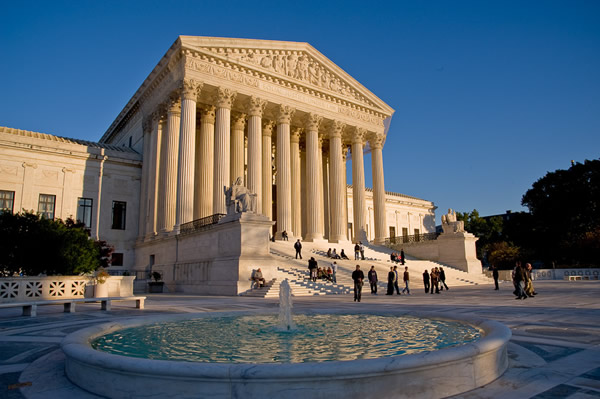

The Supreme Court’s recent decision in Louisiana v. Callais—barring nearly all use of the Voting Rights Act (VRA) to create majority-minority congressional districts—has been met with outrage by many on the political left and led to renewed calls for court-packing. For example Rep. Ro Khanna (D-Calif.) has said that “[w]e need to expand this morally bankrupt court from nine to 13.” House Minority Leader Hakeem Jeffries (D-N.Y.) has said that “everything should be on the table,” presumably including court-packing. Former vice president and 2024 Democratic presidential nominee Kamala Harris has expressed similar sentiments. A number of other Democrats advanced court-packing plans even before Callais.
The Callais decision has some flaws. And the conservative majority on the Supreme Court has made some serious errors in other cases, such as the Trump presidential immunity decision. But court-packing remains a dangerous idea that Americans across the political spectrum should reject. Callais is not without merit, and—at the very least—not as bad as its most strident critics claim. More generally, the Supreme Court is far from being a pure “MAGA” Court and has, in fact, constrained the Trump administration’s abuses on several important fronts, and has allowed lower courts to constrain it elsewhere. Court-packing would create a slippery slope to the destruction of judicial review, thereby benefiting power-grabbing presidents like Trump, and imperiling constitutional rights, particularly those of minority groups. To the extent Callais is a problem, it can be better addressed by steps such as banning gerrymandering. There are also better remedies for various other shortcomings of the Court, such as enacting term limits and imposing an ethics code.
Rights and Wrongs of Callais
Callais is certainly deserving of some criticism. But it is not the abomination many critics depict it as. Most obviously, it is not the death of the VRA or close to it. The act’s provisions barring states from depriving people of the right to vote based on their race remain fully in effect. The same goes for the use of facially neutral disenfranchisement tools historically utilized to remove Black voters from the rolls, such as literacy tests, which remain banned.
Callais does make it very difficult—perhaps almost impossible—to use the VRA to deliberately create majority-minority districts in response to “vote dilution,” which reduces the power of minority voters. Under previous Supreme Court precedent, such districts could be and were created in a wide range of circumstances in which minority influence might otherwise be diluted in the district line-drawing process, even in circumstances where there was no evidence of deliberate racial discrimination.
The VRA enforces the 15th Amendment, which mandates that “[t]he right of citizens of the United States to vote shall not be denied or abridged by the United States or by any State on account of race, color, or previous condition of servitude.” The ban on racial discrimination with respect to voting is categorical, and does not make any exception for racial gerrymandering intended to increase minority representation, rather than reduce it.
Deliberate racial gerrymandering for purposes of creating majority-minority districts is at odds with this categorical anti-discrimination rule. At the very least, it should be considered presumptively unconstitutional. Callais was right to construe the VRA to accord with such a strong presumption; long-standing precedent requires courts to construe federal statutes in ways that avoid constitutional problems.
Nonetheless, there are entirely reasonable concerns about Callais. The Court’s neutering of long-standing VRA precedent goes against the equally strong presumption against reversing statutory precedent. The majority’s attempt to elide this by claiming they are not really reversing the precedents in question is far from persuasive. The timing of the decision is also problematic, coming just a few months before the 2026 midterm elections. It has set off a gerrymandering scramble by southern red states seeking to increase the number of Republican seats.
It is also reasonable to fear—as Justice Elena Kagan argues in her dissent—that Callais might open the door to anti-Black racial gerrymandering by state legislatures. Because most Black voters support Democrats, race can be used as a proxy for partisan alignment. Callais could end up making it easier for GOP state legislatures to use race in this way, despite the fact that the ruling indicates intentional racial discrimination in redistricting remains illegal. Just this week, in Allen v. Milligan III, the conservative majority in the Supreme Court blocked a trial court ruling against Alabama’s attempt at mid-decade gerrymandering. A three-judge federal district court panel—including two Republican Trump appointees—had ruled that Alabama “intentionally discriminated against Black voters based on race.”
Allen is a short “shadow docket” ruling, with relatively little explanation of its reasoning. Nonetheless, many election-law experts fear that it is a sign that the Supreme Court will interpret Callais in ways that will make it difficult to block state legislatures’ use of race as a proxy for partisan alignment.
The Supreme Court Is Not a MAGA Rubber-Stamp
In addition to citing Callais, advocates of court-packing also contend that the Court is generally a rubber-stamp for Trump and his MAGA agenda. Such claims are falsified by the reality that the Court has in fact ruled against Trump and the MAGA right on several key issues. In Learning Resources v. Trump (a case I helped litigate), the Court struck down Trump’s massive power grab attempting to use the International Emergency Economic Powers Act to impose the highest tariff schedule since that which notoriously exacerbated the Great Depression. The Court emphasized that the president does not have the authority to “impose tariffs on imports from any country, of any product, at any rate, for any amount of time,” thereby significantly constraining Trump’s power to impose the MAGA protectionist agenda.
In other cases, the Court blocked Trump’s effort to use the National Guard against blue states (leading him to abandon the effort), and twice it used the “shadow docket” to block deportations under the Alien Enemies Act of 1798 and signal that courts could review Trump’s invocation of that law (though without issuing a definitive ruling on whether that wartime statute can be used as a tool of peacetime mass deportation). If the oral argument held in April is any indication, the Court will likely invalidate Trump’s attempts to deny birthright citizenship to children of undocumented immigrants and temporary visa holders. These cases all involve major abuses of power by Trump, often on issues central to the MAGA agenda, such as nativist hostility to immigration and trade. The Court also ruled against Trump and MAGA in a number of key cases that arose during Trump’s first term and in the Biden years, most notably rejecting his efforts to overturn the results of the 2020 election.
Obviously, the Court’s conservative justices have also issued some flawed rulings supporting Trump’s positions. Notable examples include the Trump v. United States presidential immunity ruling (which, however, did not give the president categorical immunity from prosecution for all actions taken while in office); a seriously flawed ruling constraining universal injunctions; and Trump v. Hawaii, the awful 2018 anti-Muslim “travel ban” case. I do not claim that the Court always rules against Trump when it should, or otherwise gets every issue right. Far from it. But the justices have constrained Trump and the GOP on a number of key issues and cannot be considered mere rubber stamps for MAGA. Absent the Court’s intervention, Trump would have gotten away with several additional major unconstitutional actions and abuses of power.
Perils of Court-Packing
Whatever the shortcomings of the current Supreme Court, court-packing would make things worse. If the Democrats increase the size of the Court (current proposals call for four new justices in order to flip the current 6-3 conservative majority to a 7-6 progressive one), Republicans will surely respond in kind as soon as they get the chance. The end result is that both parties will pack the Court anytime they get simultaneous control of the White House and both houses of Congress. That, in turn, would largely destroy the institution of judicial review. The Supreme Court would no longer be able to strike down laws and regulations backed by the party that controls the White House and Congress. This would destroy the Court’s ability to protect constitutional rights and enforce limits on government power against dominant political majorities.
The damage is unlikely to be limited to the Supreme Court. If the norm against court-packing is undermined, dominant political majorities could similarly move to pack the lower courts—the institutions that hear the vast majority of federal cases. The modern debate over court-packing was, in fact, in large part kicked off by prominent conservative law Professor Steve Calabresi’s 2017 article (which I critiqued at the time) urging Republicans to pack the lower courts. Calabresi’s plan was widely criticized at the time, and congressional Republicans did not seriously pursue it. But such proposals are likely to attract much greater support in the aftermath of any successful packing of the Supreme Court. As legal scholar Steve Vladeck—a leading critic of the current Supreme Court majority—puts it, “Court expansion, whatever its short-term benefits, would touch off a race to the bottom that would serve only to undermine the ability of all federal courts to play their intended constitutional role in the long term.”
Even if the lower courts remain un-packed, for a time, a packed Supreme Court could severely undermine their ability to protect constitutional rights against the administration in power. Such a packed court could use the “shadow docket”—that is, emergency rulings—to block or summarily reverse lower-court rulings inimical to the administration in power, often without giving the cases any detailed consideration. Critics claim the current Court already protects Trump in this way. But, as Vladeck points out, the Court has in fact blocked or overturned only a small fraction of the many lower court rulings against Trump, thus enabling lower courts to significantly constrain the administration to a much greater extent than many appreciate. In immigration detention cases alone, for example, lower courts have ruled against the administration some 11,500 times, including many decisions issued by Republican-appointed judges. Vladeck notes that the administration has not even tried to seek Supreme Court intervention in the vast majority of these cases, likely because they know they would fail. A packed court would be much more aggressive in forestalling lower court rulings inimical to the party in power.
In addition to undermining protection for the constitutional rights of unpopular minorities, a packed judiciary would open the door to dangerous executive power grabs, such as Trump’s imposition of massive tariffs, and other abuses of emergency powers. It is difficult for Congress to prevent such efforts, as doing so requires a veto-proof two-thirds majority. A Congress controlled by the same party as the executive will usually not even try. Absent judicial constraints, such power grabs can seriously imperil the rule of law, by leaving major economic and social policy decisions increasingly subject to the whims of one person. It is no accident that court-packing is a standard tactic of illiberal would-be authoritarians such as Hungary’s Viktor Orban and Venezuela’s Hugo Chavez.
It would also imperil U.S. national security. Allowing one man to unilaterally break commitments to allies—through trade wars and other coercive measures—erodes the credibility that undergirds American power. Dismantling the rule of law carries severe economic consequences as well: investors, consumers, and businesses depend on stable, predictable rules to plan and operate, and without them, confidence is likely to falter and could even collapse. Economic weakness, in turn, compounds the damage to America’s standing in the world and leaves its national security further exposed.
Some Democrats argue that court-packing would simply be a proportional response to the GOP-controlled Senate’s actions in 2016 and 2020, refusing to consider a Democratic Supreme Court nominee in the former year, while rushing through future Justice Amy Coney Barrett in the latter. Democrats would be justified in responding to these actions in kind, by—for example—blocking a Trump Supreme Court nominee should they regain control of the Senate in the upcoming fall 2026 elections. But, as I have explained previously elsewhere, court-packing would be a major escalation over these sorts of actions.
Better Alternatives
A Democratic-controlled Congress and White House has many better options for addressing gerrymandering and various issues related to the Court. Most obviously, Congress could use its power under the Elections Clause of the Constitution to simply ban gerrymandering of congressional districts nationwide. The Supreme Court has noted that Congress has this power in its 2019 ruling in Rucho v. Common Cause, which held (wrongly, in my view) that—unlike racial gerrymandering—partisan gerrymandering is a “political question” not subject to judicial review. While Congress might have a tough time figuring out what standard to use in constraining state legislative redistricting, any of several options would be better than simply letting state governments do whatever they want. And any Congress with a majority willing to enact court-packing is likely to be able to enact a ban on gerrymandering.
Congress could also go further and simply impose either proportional representation or a system of multimember districts. These approaches would eliminate gerrymandering more thoroughly than any reform of the single-member districting process. But they might be harder to persuade Congress to enact, because they would imperil the seats of many more current members of the House of Representatives.
Congress could also potentially legislate to address various concerns about the Court. Elsewhere, I have explained that Congress has the power to enact an ethics code, thereby dealing with complaints about the justices taking too many gifts from various private parties. It could also begin the process of imposing 18-year term limits on Supreme Court justices, thereby addressing concerns about justices exercising power for many decades on end. And, unlike court-packing, term limits would not destroy the institution of judicial review.
Term limits would, however, require a constitutional amendment to enact, which is extremely difficult to do. But the idea enjoys broad supermajority support from both experts and the general public (a recent poll finds 67 percent support, including large majorities of Democrats, independents, and Republicans), thereby making an amendment potentially feasible.
Such reforms would admittedly not achieve the goal of swiftly replacing the current conservative majority on the Court with a left-wing one. But the whole point of judicial independence is to ensure that the current political majority cannot bend the judiciary to its will anytime it wants. And progressives who want a judiciary that will protect various types of minority rights cannot achieve that goal by destroying the entire institution of judicial review.

-(2)-(2)-(1).jpg?sfvrsn=21cee67a_7)
