Within Bounds: State Authority to Regulate Federal Contractors
-1.jpg?sfvrsn=dadd5a85_5)

Private firms have always supplied the federal government with goods and services, such as pencils, construction, military equipment, and more. Today, however, the government routinely hires private actors to perform federal functions. This fundamentally changes the role of federal contractors, if not also the nature of government itself.
The U.S. Constitution was designed to handle inevitable conflicts between federal and state sovereigns operating in the same territory. It was not designed for the triangulated clashes between states and private actors doing federal work by contract.
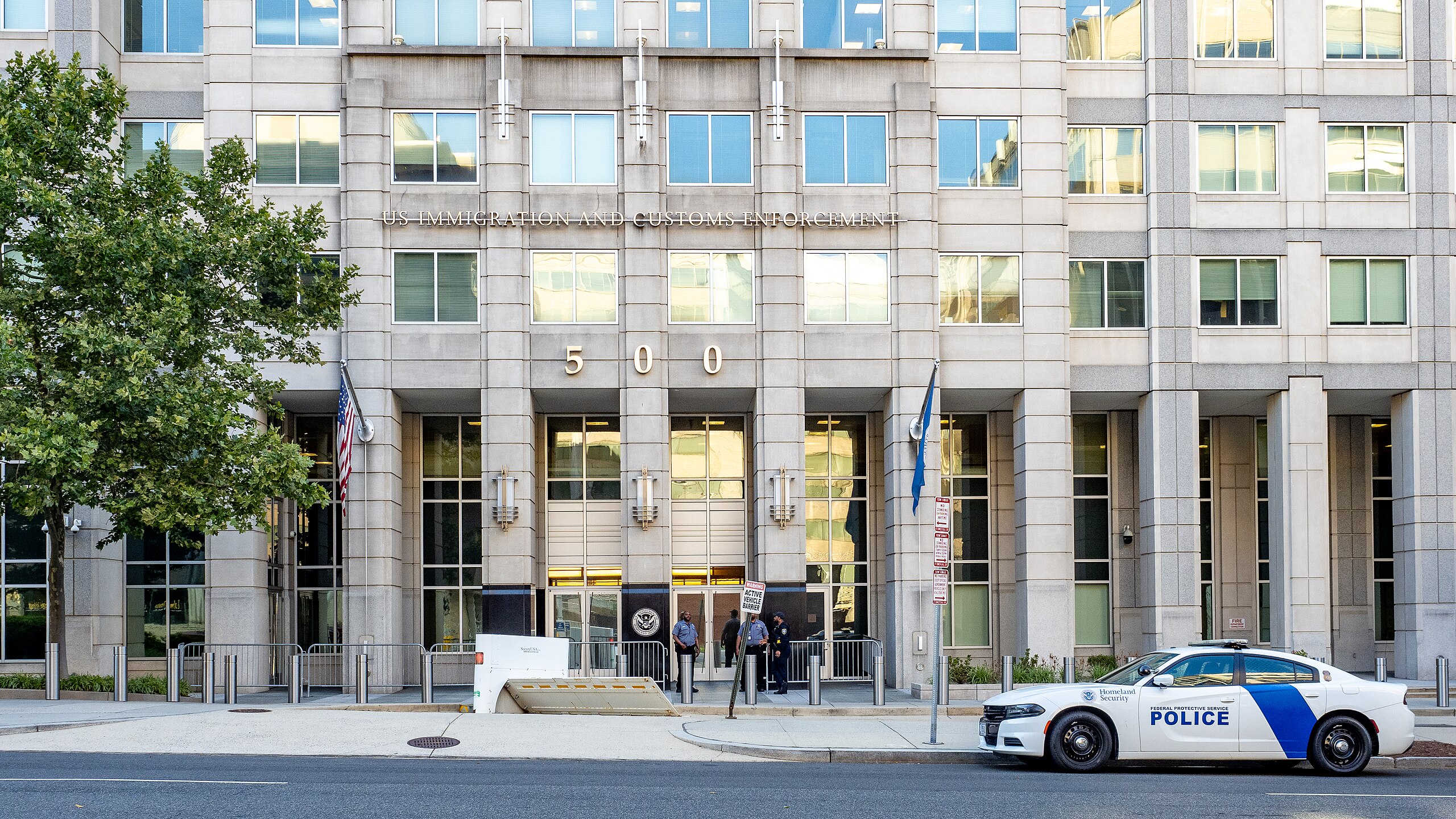
For instance, federal contractors run detention facilities, transport detained persons through state airports, implement benefit programs, and manage federal student loans. These operations affect state residents much as comparable private operations do. Federal contractors generate waste and consume public services. Sometimes, they violate civil rights and harm individuals, often with little or no meaningful oversight or repercussions from the federal government.
In response to stepped-up federal activity in states and localities, state officials and advocacy groups are mobilizing to hold federal contractors accountable to state law. Meanwhile, the federal government and its contractors are hoping to quash these initiatives on federalism grounds.
But to what extent may states regulate the activities of federal contractors operating in state and local communities? This is an increasingly pressing question. Contrary to the common assumption that states’ hands are tied, that simply isn’t the case. The Supremacy Clause of the U.S. Constitution imposes three constraints on state authority. First, federal law preempts conflicting state law. Second, intergovernmental immunity bars states from directly regulating the federal government or discriminating against it and those with whom it deals. Third, federal contractor defenses may displace state law when the federal government directed or authorized the challenged conduct. These limitations are important. But they do not preclude states from regulating federal contractors or the commercial ecosystem in which they operate.
States routinely establish workplace laws, license professionals, enforce building codes, and police consumer fraud. These are ordinary exercises of state authority. The difficult cases, however, arise when state regulation burdens federal operations carried out through private contractors.
Broadly applicable state laws are the easiest to defend. Thus, state laws governing health, safety, employment, licensing, property, and consumer protection are generally permissible under intergovernmental immunity, provided they apply to federal contractors on equal terms as other private entities. States have even more latitude when they act not as regulators, but as market participants or proprietors. Neutrality is not conclusive, however. A law may still be preempted if it overrides a federal contracting decision or imposes liability for conduct the federal government specifically directed.
Whether states should regulate federal contractors is a separate question from whether they can. The law leaves room for them to do so—within legal bounds—wherever the political will exists.
Regulating Federal Contractors
The intergovernmental immunity doctrine prohibits states from (a) directly regulating the federal government or its instrumentalities, or (b) discriminating against the federal government or those with whom it deals. Except in rare circumstances, contractors do not assume the status of federal instrumentalities merely by performing a federal contract. Thus, the doctrine’s first prong generally does not apply when states regulate federal contractors directly, rather than the federal government itself.
The real action is in the second prong: States may not discriminate against federal contractors. Put simply, states cannot treat them worse than comparable commercial actors. However, state laws that treat federal contractors on the same (or better) terms as comparable private firms are not discriminatory and thus generally permissible.
In Goodyear Atomic Corp. v. Miller (1988), for example, the Supreme Court held that federal law permitted Ohio to apply a supplemental workers’ compensation award to an employee of a federal contractor. More recently, in Nwauzor v. GEO Group (2025), the U.S. Court of Appeals for the Ninth Circuit held that Washington’s minimum wage law applied to detainee workers at a privately operated federal immigration facility.
So long as states do not directly regulate the federal government or single out federal contractors for discriminatory treatment, the intergovernmental immunity doctrine leaves room for neutral state health and safety rules. Under these principles, states concerned about an influx of new immigration detention facilities, for instance, can require health department inspections, fire suppression, and adequate egress for private facilities housing large numbers of people.
In Leslie Miller v. Arkansas, the Supreme Court held that a federal procurement regulation barred a state from using licensing to revisit a federal agency’s responsibility determination. However, states can ordinarily apply occupational licensing rules to medical and mental health professionals. They can also regulate private security personnel who carry firearms and other contractors who pose health and safety risks. Likewise, states can subject contractors operating on private land to the same local zoning authority that governs everyone else. Even on federal land, state regulations such as environmental permitting might apply, depending on contractual and regulatory arrangements among federal, state, and private parties.
It is true that state oversight and regulation may increase the operational costs of federal contractors. And in many cases, these costs are passed on to the federal government as the customer. However, that incidental economic effect does not by itself violate intergovernmental immunity. The legal question remains whether the state directly controls or discriminates against the federal government. Moreover, it should not be presumed that state oversight is always discouraged by federal officials. In some contexts, the federal government may welcome state-level oversight to ease the burden on federal officials.
Still, caution is warranted. Lower court decisions have stretched the doctrine to preclude states from effectively banning a federal contracting category. In GEO Group, Inc. v. Newsom (2022), for example, the Ninth Circuit struck down California’s ban on private civil detention because it would eliminate an entire category of capacity on which federal immigration authorities relied. Likewise, in CoreCivic, Inc. v. Governor of New Jersey (2025), the U.S. Court of Appeals for the Third Circuit invalidated a law barring state, local, and private entities from entering or renewing civil immigration detention contracts. The court reasoned that the federal government was the sole buyer in a market implementing a core federal power and that the law destroyed that marketplace. It also relied in part on the view that New Jersey intended to obstruct federal detention operations.
Both cases involved categorical bans, and both courts described their holdings narrowly. CoreCivic focused on a market in which the federal government was the sole purchaser of services implementing a core federal power. Newsom distinguished ordinary state regulation from a law that overrides the federal government’s choice of detention contractors. Nevertheless, both opinions drew sharp dissents. Supreme Court precedent generally permits nondiscriminatory state laws that impose incidental burdens, even if the indirect burden is substantial. In such cases, Congress is the proper actor to override the state’s actions through preemption, not through a judicially expanded intergovernmental immunity doctrine.
Moreover, the Third Circuit’s probe into legislative motivation is especially problematic. In CoreCivic, the Third Circuit devoted an entire section to finding that “New Jersey [i]ntended to” obstruct federal detention operations. This reasoning shifts the intergovernmental immunity inquiry from statutory design to legislative intent. That move finds no support in Supreme Court precedent. Under Supreme Court jurisprudence, intergovernmental immunity turns on whether a state law directly regulates or discriminates against the federal government, not on what motivates the state law at issue. For example, in Davis v. Michigan Department of Treasury (1989), the Supreme Court struck down a state tax that exempted state and local retirement benefits while taxing federal retirement benefits. After finding discriminatory treatment, the Court declared that “[t]he State’s interest in adopting the discriminatory tax...is simply irrelevant.” More recently, in Dawson v. Steager (2019), the Court reaffirmed this methodological approach. In both cases, the Court examined how the state defined the favored class, not why it drew the line where it did.
The Supreme Court has generally avoided motive-based inquiries in these doctrines for good reason: Multimember legislatures rarely have a single motive, much less one that is judicially discernible. A motive test gives reviewing courts wide discretion to characterize a law as targeted or untargeted, regulatory or proprietary, evasive or sincere. Nevertheless, because some lower courts are inclined to examine legislative motives, policymakers should be prepared to defend their intentions in court.
Regulating the Commercial Ecosystem
States can also regulate private actors who are not federal contractors, but who operate in the same commercial ecosystem. For example, a state may require data brokers to register and obtain consent before selling location or biometric data. It may also impose generally applicable fees or insurance requirements keyed to objective operational risks. The state’s interest in regulating these markets includes public health and safety, tax revenue and cost recovery, information privacy, and honest dealing.
Data brokers provide the clearest example. Federal agencies have procured commercial telemetry data, while private brokers aggregate and sell precise location data and other sensitive information through layered commercial channels. States can regulate the supply chain from collection through aggregation and distribution. They can require brokers to register, obtain affirmative consent before collecting or selling sensitive data, disclose the volume and categories of sales, honor deletion requests, and face private enforcement. Vermont, California, Oregon, and Texas have all enacted broker registration regimes. California’s Delete Act goes further by creating a centralized mechanism through which a resident can direct registered brokers to delete personal information.
States also have the authority to regulate business licenses and permits. For example, states can enforce neutral license conditions against establishments that serve unusually large crowds. Objectively ascertainable standards, such as noise, occupancy, sanitation, and emergency-access rules, regulate operational effects rather than protected expression. The same standards could apply to crowds associated with immigration enforcement and spring breakers alike. These obligations regulate the commercial intermediary, not the federal purchaser. A regime that singles out sales to federal buyers would present a different and more difficult case.
States as Market Participant or Proprietor
Beyond regulation, states can leverage their economic position as purchasers, investors, and owners of facilities. Thus, a state may prohibit state and local entities from contracting with the federal government or its contractors.
Intergovernmental immunity does not apply when states regulate their own institutions and actions. In McHenry County v. Raoul (2022), for example, the U.S. Court of Appeals for the Seventh Circuit upheld an Illinois law prohibiting state and local entities from contracting to detain individuals on behalf of federal immigration authorities. The court rejected an intergovernmental immunity challenge and found that Illinois was exercising its sovereign right to refuse participation in federal operations. Likewise, in United States v. California (2019), the Ninth Circuit upheld California’s SB-54, which limits cooperation between state and local law enforcement and federal immigration authorities.
Indeed, as purchasers, states can condition procurement on bidders’ disclosure of all active government contracts or their certifications of compliance with specified standards. They can extend these policies by using public debarment databases, flow-down requirements reaching subcontractors, and whistleblower protections for employees who report violations. The certification and disclosure requirements are most defensible when they apply uniformly to all government contracts rather than singling out federal contracts.
More recently, New Jersey’s pending S. 470 directs pension divestment from identified companies when that strategy is consistent with sound investment criteria and the fund’s fiduciary obligations. By contrast, divestment on purely ideological grounds exposes states to legal challenge. A federal district court recently struck down Texas’s S.B. 13, which required the state comptroller to maintain a list of financial companies deemed to be “boycotting” energy companies and directed state pension funds to divest from listed firms. The court held the statute’s boycott definition unconstitutionally overbroad under the First Amendment and impermissibly vague under the 14th Amendment. Divestment statutes that define triggering conduct through measurable financial-risk criteria reduce, but do not eliminate, this vulnerability.
Liability
The preceding categories concern the form of the state intervention; holding federal contractors civilly or criminally liable raises other questions. Federal law may sometimes displace a claim, and a contractor may have a defense when the government specifically authorized the challenged conduct and the contractor stayed within that authorization. But the federal contract itself does not confer sovereign immunity.
Federal contractors that operate detention facilities, transport detained persons, or provide enforcement-support services within a state perform functions that carry serious risks of injury, abuse, and death. State liability schemes governing comparable harms generally apply to federal contractors. Moreover, state consumer laws governing unfair and deceptive acts apply to contractors that advertise compliance with federal detention standards while failing to meet them, or that misrepresent conditions of confinement to families of detained persons.
Nor are federal contractors immune from generally applicable criminal law. For example, criminal laws governing the treatment of persons in custodial settings may apply on the same terms as state-operated and private facilities. Contractor employees who provide medical care or perform enforcement-support functions are likewise subject to general criminal statutes governing assault, reckless endangerment, and abuse. And where states impose enhanced criminal penalties for offenses committed against children, elderly individuals, or persons with disabilities in custodial settings, those enhancements apply to contractor employees on the same terms as any other person exercising custodial authority. While federal officers may assert constitutional immunity from state criminal law under the Supremacy Clause, no equivalent protection exists for private contractors.
* * *
State authority over federal contractors is substantial but not unlimited. Intergovernmental immunity prevents states from directly controlling federal operations or discriminating against federal dealings. Preemption and contractor defenses displace state law when federal law requires, authorizes, or protects the challenged conduct. But federal contracts do not categorically place private firms outside the ordinary law of the states in which they operate. Within those boundaries, states retain meaningful authority to protect public health, safety, and well-being while respecting federal supremacy.
_enforcement_and_removal_operations'_(ero)_officers_in_west_palm_beach-_florida_on_february_14-_2025_-_5-(1).jpg?sfvrsn=f84f9cf6_5)