Why Zelensky Can’t Hold Elections Yet
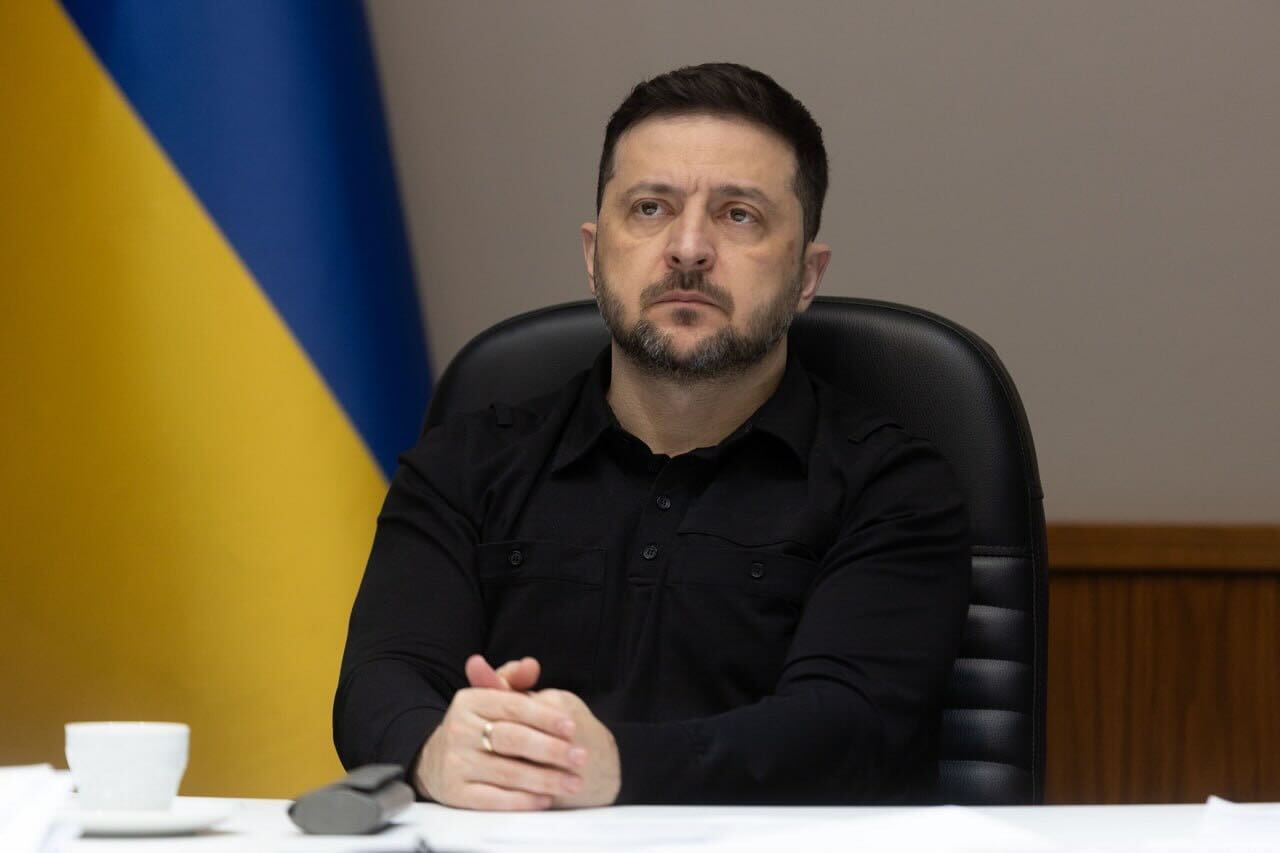

If it weren’t for Russia’s full-scale invasion, Volodymyr Zelensky probably would no longer be Ukraine’s president. His five-year term ended in May 2024, and only one of Ukraine’s six presidents managed to win a second term. Zelensky is still president because it is illegal to hold presidential (and parliamentary) elections in Ukraine under martial law, which has been in effect since February 2022. This means the president’s term is extended until the end of martial law, which the Ukrainian parliament votes to prolong every 90 days.
Polls show that the vast majority of Ukrainians, though critical of the president, are okay with putting off elections until peacetime. But Donald Trump and Vladimir Putin are not.
In a recent Politico interview released on Dec. 9, President Trump claimed Zelensky was “using the war” not to hold an election. “[The Ukrainians] talk about a democracy, but it gets to a point where it’s not a democracy anymore,” Trump said, arguing it was time for Ukrainians to head to the polls. The comments echoed the Kremlin’s own call for elections in Ukraine and its portrayal of Zelensky as an illegitimate leader who can’t be negotiated with.
In response to Trump’s comments, Zelensky told reporters he personally was “ready” to hold elections, but only if Ukraine’s allies agreed to ensure the country’s security.
The Ukrainian president was likely trying to avoid Trump’s ire amid high-stakes negotiations, agreeing to an election in principle, but shifting the responsibility to allies to make it happen. Zelensky’s careful response was rooted in the reality that holding elections during an active phase of war is an insurmountable task for Ukraine alone. Here’s why.
First, there is a legal problem. Ukraine’s martial law legislation, On the Legal Regime of Martial Law, prohibits holding any type of elections—presidential, parliamentary, and local. At the same time, the constitution explicitly outlaws parliamentary elections during martial law, while saying nothing about presidential elections. Amending the constitution during martial law is also prohibited. This results in a wartime legal conundrum: The parliament can amend martial law legislation to allow for elections, but it cannot change the constitution, which means only presidential elections are possible, since the constitution does not outlaw them.
But even if the government takes care of the legal problem, and the parliament passes legislation making a presidential election possible, an overwhelming number of challenges present themselves next.
How do you ensure safety on election day? The entirety of Ukraine is within reach of Russia’s drones and missiles, and towns along the front line, where first-person view drones frequently kill people, are especially vulnerable. Nothing short of a NATO operation to close skies over Ukraine can guarantee that Russia won’t strike a crowd of civilians lining up to cast their ballots. Kyiv and Moscow could theoretically agree on a short-term ceasefire, but given Russia’s record of ceasefire violations, Ukrainians would have little reason to trust it.
Where do you set up polling stations? Voting usually takes place in public infrastructure like schools, libraries, gymnasiums, and town halls. In cities and villages close to the front line, where many tens of thousands of people still live, much of that infrastructure has been destroyed or damaged. The deputy head of Ukraine’s electoral commission recently told CNN that only 75 percent of Ukraine’s polling stations are currently operational.
What do you do about Ukrainian refugees? More than 6 million Ukrainians are abroad. Roughly 1million are in Poland, where there is one Ukrainian Embassy and nine small consulates. Does the Ukrainian foreign service have enough logistical capacity to handle voting? What about in Germany, where a similar number of Ukrainians rely on just five diplomatic missions? What about other countries?
What do you do about the internally displaced Ukrainians? More than 4 million Ukrainians are displaced around the country. Making sure that they can vote at a location that’s different from their registration address requires a massive update to the State Register of Voters.
What do you do about soldiers? There are at least 800,000 people in the Ukrainian army, with many of them serving on the front line. How do you organize voting for thousands of men scattered in trenches, including those who have been sitting in holes in the ground for weeks on end under constant surveillance of enemy drones? Some form of a rotation is impossible because of Ukraine’s acute manpower crisis, and also because it would depend on Russia’s willingness to agree to a ceasefire, which it has refused to do for many months.
There are theoretical short-term solutions to these problems. Ukraine could quickly build up election infrastructure at home and abroad, Russia could agree to and abide by a ceasefire long enough to facilitate safe voting all across Ukraine, and NATO could agree to provide radically more air defense capabilities, potentially even its direct involvement to patrol the skies.
But all of this would require massive amounts of cash (at least $200 million, according to Ukrainian authorities), goodwill from Russia, and much greater risk tolerance from NATO—all things so scarce that it's almost impossible to believe they could ever materialize.
Apart from being a bank-breaking logistical nightmare, elections during wartime are also politically dangerous.
Key ingredients of wartime resilience are societal unity and government legitimacy. Both have largely held up in Ukraine since the full-scale invasion, with Ukrainians rallying around the president at critical moments, like the Trump-Zelensky Oval Office debacle.
Even during the country-wide protests that took place in the summer in response to Zelensky’s attempt to kill Ukraine’s anti-corruption agencies, the protesters were explicit in not calling for Zelensky’s removal but merely demanding that he change a policy. (I attended the protests in Kyiv; every time someone chanted an anti-Zelensky slogan, the whole crowd would suddenly get quiet.)
Ukrainians are wary of undermining Zelensky’s legitimacy in part because of how Russia’s first invasion of Ukraine unfolded in 2014. Russian troops showed up in Crimea just days after the Moscow-backed autocrat Viktor Yanukovych fled the country because of Euromaidan protests. As “little green men” took over military bases on the peninsula, Kyiv was still forming a new government after impeaching Yanukovych. This lack of a strong central authority was a terrible weakness, hobbling Ukraine’s immediate response to the invasion.
An election now would put an immediate end to societal unity, openly pitting not only politicians and their electorates against each other, but also potentially Zelensky against the leaders of the security apparatus—among those reportedly eyeing postwar political careers is Ukraine’s military intelligence chief, Kyrylo Budanov.
The inherently divisive election campaign will stoke division and chaos at a moment that could hardly be any more difficult for Ukraine, militarily and politically. Who is to say that Russia won’t try to exploit Ukraine’s weakness again?
“Together with our European partners, we can ensure the security needed to hold elections,” Zelensky told journalists on Dec. 9. “I'm asking now, and stating this openly, for the U.S. to help me.”
If President Trump is seriously concerned about Ukraine’s democracy, it’s his turn to act.