
Lawfare Daily: AI, Child Safety, and the Law
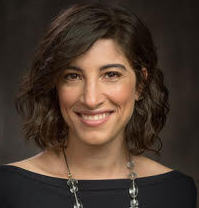
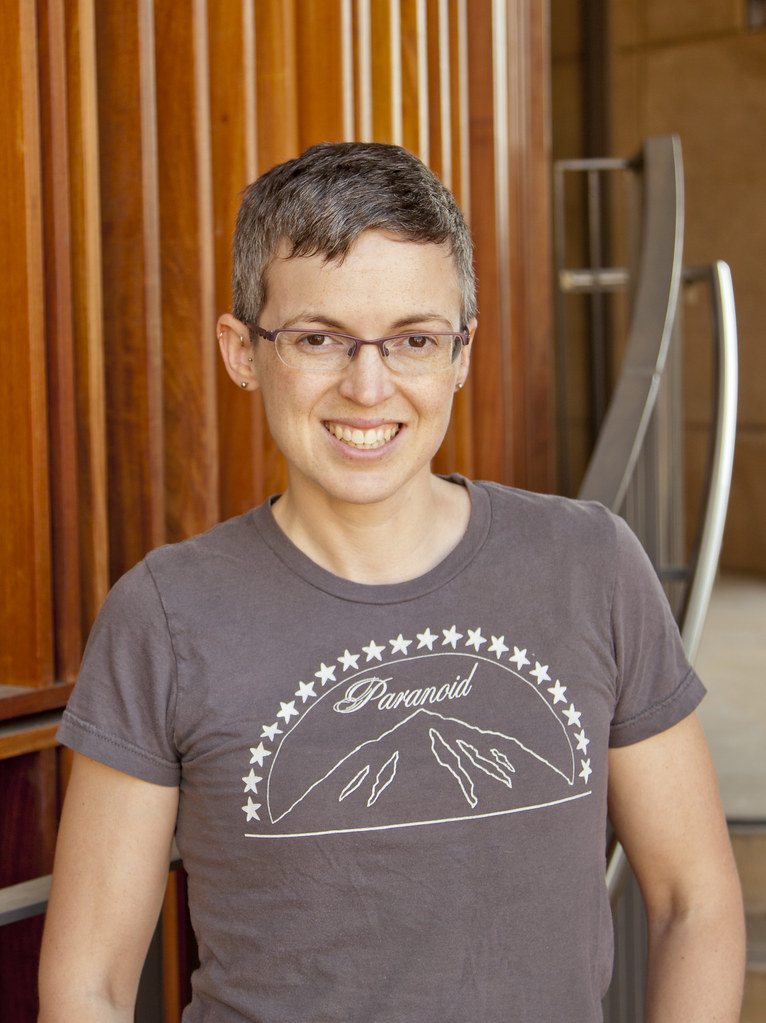

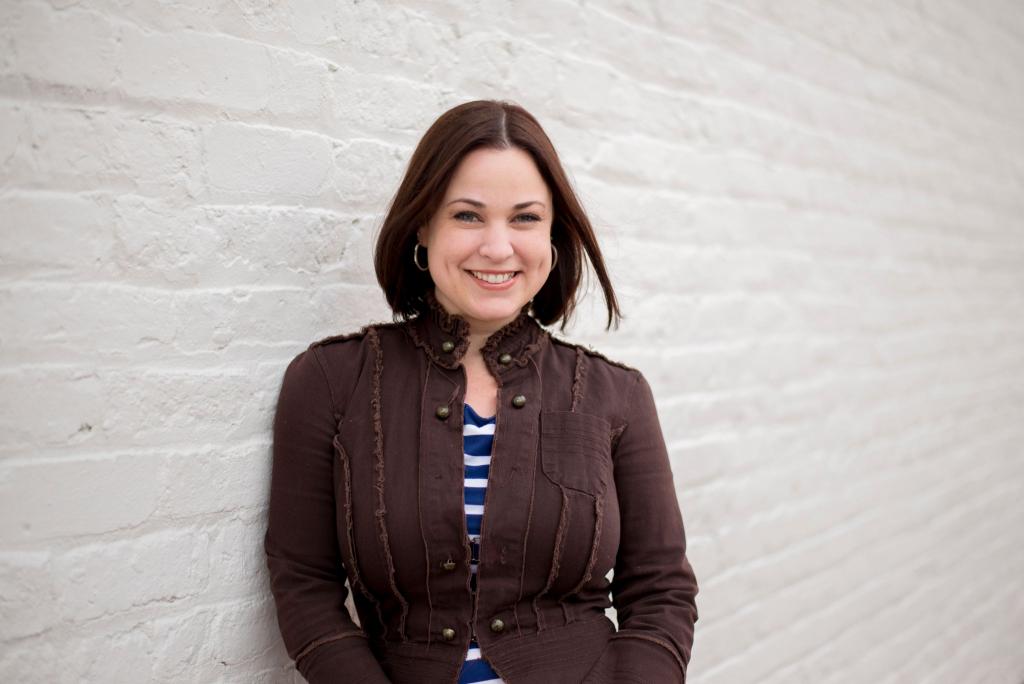
For today’s episode, Lawfare’s Renée DiResta sits down with Riana Pfefferkorn, a policy fellow at the Stanford Institute for Human-Centered Artificial Intelligence, and Cyndie Demeocq, a doctoral researcher at the University of Edinburgh’s School of Informatics, to discuss their new research examining how existing federal criminal law applies to AI-generated child sexual abuse material (CSAM), and what 71 federal prosecutions reveal about the legal issues created by generative AI.
Together, they unpack the Seventh Circuit’s recent decision in United States v. Anderegg; the First Amendment distinctions between real, AI-manipulated, and wholly synthetic imagery; and why the authors argue that existing criminal statutes are proving more effective than public debate suggests. They also discuss what the prosecution data can—and cannot—tell us about the scale of the problem, and how policymakers should approach defining the responsibilities of AI developers, platforms, and safety researchers.
Please note that this episode contains content that some people may find disturbing, including conversation about child sexual abuse material. Listener discretion is advised.
To receive ad-free podcasts, become a Lawfare Material Supporter at www.patreon.com/lawfare. You can also support Lawfare by making a one-time donation at https://givebutter.com/
Click the button below to view a transcript of this podcast. Please note that the transcript was auto-generated and may contain errors.
Transcript
[Intro]
Riana Pfefferkorn: You are accused of receiving material, which can include downloading the output of an online-based image generator from the internet, like, to your phone, you can still get prosecuted for that. If you produce it yourself, you can get charged for production. If you distribute it to others, you can get charged for that, and those are not First Amendment protected activities.
Renée DiResta: It’s the Lawfare Podcast. I’m Renée DiResta, contributing editor at Lawfare, with Riana Pfefferkorn, who is a policy fellow at the Stanford Institute for Human-Centered AI, and Cyndie Demeocq, who’s a doctoral researcher at the University of Edinburgh School of Informatics.
Cyndie Demeocq: What we notice as well is in that case, when you have actually creation of AI-generated CSAM by actual CSAM, and they were contact or funding to create a data set, you noticed really often as well that there is an increase of violence in the generated material.
Renée DiResta: Just a quick warning before we begin. This episode discusses child sexual abuse material, including AI-generated and manipulated sexual imagery involving minors. So, Riana and Cyndie, we are here today to talk about and explain to the Lawfare audience a little bit about some court cases that have really captured public opinion.
I’m a mom, and my Instagram feed sort of blew up with people all of a sudden realizing that the laws around CSAM were not entirely clear to them before, particularly AI-generated content that might involve images of children. So, I wanted to kind of go over what exactly is happening in this space, in your line of work, and to kind of educate the listener on what they have to be aware of, what the dynamics are, and then also just where is the law on this?
What are we what are we looking at here? So, we’re gonna be discussing your paper, Yes, It’s Already Illegal. The title is almost a direct answer to the growing public narrative that generative AI has created a legal loophole. What exactly is the misconception that you set about to try to correct with this work?
Riana Pfefferkorn: What I think I wanted to do was to figure out exactly what’s been going on, at least in the federal courts, what kinds of cases are getting brought, how are those playing out and what role is AI coming up as playing in these sorts of cases. I really wanted to focus on criminal prosecutions that expressly involve AI one way or another.
And I found, from combing through a lot of federal cases several dozen that involved AI explicitly. I found a lot more that somehow referred to computer-generated, but we don’t know, does that mean Photoshop? What does that mean? And what we see is that there is a lot of what we would call morphed image type cases, where somebody is taking a real child’s image and you know, an innocent image, an innocuous image, and then altering it to appear sexually explicit, and a relatively smaller number where the person is, who’s accused is only engaging with, like, fully virtual imagery.
There’s some amount of, you know, fully virtual imagery that doesn’t depict a real child in these cases. And we also see a lot of overlap where, at least in the cases that prosecutors choose to bring, which is a major sort of constraint on how the sample gets constructed basically because we don’t know what they didn’t choose to bring, there’s a lot of overlap where many, many, many defendants allegedly also had, you know, for lack of a better word, real or actual child abuse material in their possession in addition to the AI-generated material that they had.
Renée DiResta: So, let’s maybe explain to the listener the general ways in which generative AI has become a topic of some, you know, some concern in this particular field, ‘cause it seems that most big foundation models actually block users from creating this type of content. Where does this actually happen?
Riana Pfefferkorn: There’s definitely a big role played in the cases that we see by what are called nudify or undress apps.
Now that there is an easy-to-use way that anybody can just upload a picture to an online source and then get back a nudified or undressed version of that image, whether that’s of an adult or of a child, because of course, these are not, you know, good faith, legitimate websites in the first place.
They don’t necessarily have good protections in place against uploading images of minors. We see that named a lot, although unfortunately, not all of the cases name exactly what app it is. So, it can be a little hard to tell, like are there any particular bad actors that are more commonly getting used.
And then we do also see some attempts to use mainstream online services, or at least ones that decide to report to the Cyber Tipline which is the tipline run by the National Center for Missing & Exploited Children, or NCMEC for short by which online service providers report suspected CSAM on their services.
So that, that actually was a bit surprising, I think. In the cases that I looked at in trying to figure out what are the most common ways that these cases come to light, about a third of them came to light through the Cyber Tipline. So online services are not only reporting attempts to misuse their AI image generators, but also, they are catching people in the act of trying to exchange maybe it’s actual CSAM, maybe it’s synthetic CSAM, and then the investigation may turn up additional engagement with AI material as well.
There were a few cases that named what has become relatively notorious for being misused for CSAM, Stable Diffusion, an open source image generation model that people can download and run and tweak locally. And I think one of the interesting things about the new phenomenon of AI-powered CSAM is the split maybe between those who take the time to use a locally run model, tweak it, you know, have to engage with material at a slightly higher level than the real easy-to-use, simplified UI wraparound on existing open source models that we see with nudify apps.
Renée DiResta: I think a lot of people have heard about nudify apps, right? There have been a number of these very high-profile situations, news coverage of you know, middle school girls, for example, who become the, you know, who are nudified. That content then spreads, and a lot of times it seems like local law enforcement doesn’t really know what to do.
This comes up quite a lot in the reporting, this question of is it even illegal? I’d love to talk about maybe like the, the different buckets of content that fall into this realm related to whether it depicts an actual child or created or, you know, morphed imagery maybe.
Cyndie Demeocq: So, to report and to link with what research I’ve been doing with law enforcement and to try to answer to your question maybe more from a U.K. perspective since it’s where I am located and especially the law enforcement people with who I work with are located in that country.
That is definitely a challenge for everybody. But the thing I think to remember first is that AI-generated CSAM still for us, a CSAM in the U.K., so this is still very much a harmful content. There is different way that we are working on to— for the different type of detection for those type of very harmful material.
And as Riana already introduced, they all related to the different type of computing environment they’ve been created, such as, for example, yeah, the nudify app or the OpenWeb website, or the one that’s gonna be the OpenWhite model that you can indeed download. And all of those different type of model and tool to create those harmful material are related to different mitigation solution and different type of training system as well on which we are working on to address that issue with law enforcement and with other stakeholder around.
Renée DiResta: So, I think we have then, roughly speaking, you’ve got the original focus, the CSAM that was involving an actual child. Then you have the AI morphed imagery using something that is still an identifiable real child. This comes up quite a lot, this question of identifiability. And then there’s the fully synthetic imagery depicting a child who does not exist.
And Riana, you’ve talked about how these are treated differently. I think that the fact that the fully synthetic imagery depicting a child who does not exist is not, I think, illegal, stop me if I’m wrong… was actually surprising to a lot of people as this topic began to gain some attention in the media.
You know, they sort of understood intuitively why the nudifier apps would be illegal but not so much the fully synthetic.
Riana Pfefferkorn: Yeah, sure. And, you know, to be clear, like it is a confusing topic. Anytime that I talk about this, I have to talk about how there are different categories of speech that’s not protected by the First Amendment, and how they get bucketed differently according to the law, but in buckets that might seem to really overlap or converge, I think, a lot in the popular imagination.
So, the law recognizes a category of what on the books is still called child pornography, but which is now typically called child sex abuse material, or CSAM, and that is not protected by the First Amendment because of the harm involved, the criminal harm involved in abusing a real child. And so, CSAM basically requires a real child.
There’s some nuance there. I won’t go into it. And then separately, the law recognizes an unprotected category of speech in the form of obscenity. And obscenity can be sexual in nature. It does not necessarily have to be. It may or may not depict a child. It might or might not depict a real child. But obscene speech is also unprotected.
And back in 2002, the Supreme Court recognized a First Amendment right to imagery that is sexually explicit that depicts an imaginary child, not a real child, but that is not obscene. So that is First Amendment protected. That’s probably a pretty narrow category. It’s hard to imagine material that would not necessarily count as obscene under the, you know, decades-old test for obscenity, the Miller test that many people listening might be familiar with.
But what we saw sort of coming to a head more recently in the Seventh Circuit Court of Appeals decision from August in a case called Anderegg that’s been under a lot of discussion, is trying to figure out for that obscenity category where images, sexually explicit images of children that are obscene are not First Amendment protected, in general, and are covered by a federal statute for prosecuting them, what type of conduct specifically is protected by the law?
And in that case, the Fifth Circuit was affirming the district court in saying that purely private possession inside the home of imagery that does not depict a real child, that basically hits a very narrow target of being protected, again, under an obscenity rationale, and only because it doesn’t depict a real kid, whereas if it had depicted a real child, even if you privately possess it just inside the privacy of your own home the Supreme Court has said for a very long time, because it depicts a real child and because basically that overriding interest of the government in protecting actual children trumps even your First Amendment right to private possession of obscene material in the home.
So again, those are several different categories that it is difficult to necessarily tease apart, and that I don’t necessarily expect to be understood in the form of, like, a TikTok video that somebody is scrolling through, you know, as part of their day and that it takes me thousands of words to try to explain.
But it is, I think the popular conception of this ruling has been much broader than what the court actually held, and in particular I think it’s important to draw that distinction where the court was only talking about imagery of imaginary children, and that this would not cover nudified images, morphed images of real kids, which multiple courts of appeals, multiple courts engaging with defendants who are accused of AI material have said that’s still not First Amendment protected.
Renée DiResta: Right. Okay, so since I’m not a lawyer, let me make sure I let me make sure I’m following along then. So, we have the Ashcroft case that’s Ashcroft versus Free Speech Coalition, and that’s often summarized as virtual CSAM is protected speech provided it is not of a real child. Is distribution, is that a no under Ashcroft?
Riana Pfefferkorn: For distribution, so, you know, Ashcroft was covering basically saying if it doesn’t depict a real kid and it’s not obscene, then it is First Amendment protected. Congress’s response to that decision the following year was to pass the statute that Mr. Anderegg was being prosecuted under which is to pass the Child Obscenity Statute to say, okay, well we know obscenity is not protected, so we will tie our law to that instead.
And so sexually explicit depictions of real or imaginary children that are obscene are covered under this statute. And Mr. Anderegg got the possession charge dismissed under this Supreme Court it’s called the Stanley v. Georgia case from 1969 for the private possession inside the home, but he also faces charges for distributing the content that he allegedly produced with stable diffusion, including to a 15-year-old kid on Instagram.
And he faces a production charge, which he also tried to get dismissed on the same rationale under that same Stanley v. Georgia case. And the district court there said, no, we’re not going to extend Stanley to cover anything, you know, besides possession. The Supreme Court hasn’t said so, and both the Anderegg case and multiple other cases that I studied in the paper that I have coming out next year drew that distinction, where it’s only going to protect you under the First Amendment if you have imagery of imaginary children, it’s inside the home, and it’s only for possession.
So of course, this illustrates how narrow of a right the right to privately possess obscene material of imaginary children in the home really is, because how do you come to possess something without either producing it yourself or receiving it? Both of which the courts have said those aren’t covered by the Stanley case.
So, it’s a really narrow right, and I think that’s also something I’m trying to take pains to emphasize to people is that, you know, whether that’s somebody who’s a mom who’s concerned, whether that’s somebody who might be thinking that they now have the right to engage freely with this kind of material, that’s not true.
If you’re accused of receiving material, which can include downloading the output of an online-based image generator from the internet, like, to your phone, you can still get prosecuted for that. If you produce it yourself, you can get charged for production. If you distribute it to others, you can get charged for that, and those are not First Amendment protected activities.
Renée DiResta: That’s very helpful. Let’s talk very, very briefly just about one of the tech components to this, which is this question of the distinction between real child versus not real child. How is that evaluated given things like model training data, right? Or, you know, the extent to which models produce content that looks like, for example, celebrities or certain types of people.
Like, how... what is the intersection with some of the nuances around the generative technology itself?
Cyndie Demeocq: So, to me, as a technologist, there is always in somewhere real children behind almost every single synthetic image because you need to have a training set somewhere. And all of those different system that generate content today, there is really a difference in the way they’re gonna be trained and the way they’re gonna generate those image.
What you notice as well is the way those tool produce those image is not homogeneous. It’s not just one problem issue. It is really a chain. So, for example, you can start by a starter dataset from real children created— creating from the same image, the same face, so the exact face. You can create new image of the same child, or you can modify it.
So, I think also there is a lot of blurry boundaries about what you define as a real child or not, and this is why I said that in some way, there is always real children somewhere down the line. It just depend how deep you go. If you take, for example, a stable diffusion type of system, that type of system type to tend to recreate basically the image, whatever is almost exactly the same face.
When you take another type, for example, nudify app works a lot on some type algorithm that are related to autoregression, for example, which is another way to generate those type of content. And the way that those type of system are trained in compare to stable diffusion is very, very different, and the way they produce those image is also very different.
In that case, for example, on autoregression, it’s— there is not really the same level of recreation from scratch, even if the image is similar. There is almost in trying to speak simply almost a question of patch, basically. It’s like you cut around the face and you put it somewhere else almost, when stable diffusion is more creating from scratch.
So, you have all of those variation when you’re gonna have different level of is it that child identifiable? That’s usually the term that I use, is are you able to identify that child as a known child? Or how much the image has been modified and edited to create new synthetic image and until how much step do you need down the line to be able to consider that image as fully synthetic and the child not recognizable anymore?
Renée DiResta: That’s very helpful. Thank you. I’m curious, when I was looking at the Anderegg decision, there is a mention in there I think a concurrence, where there’s a comment that alludes back to the Ashcroft versus Free Speech Coalition decision. Justice Thomas’s concurrence then saying that if a technology ever became so good that prosecutors could no longer reliably tell whether an image depicted a real child or an invented one, then virtual imagery could begin to undermine enforcement of the laws protecting actual children, and then the constitutional balance might look different.
So, it seems like in the Anderegg case, they think the judges are saying that generative AI may have brought us close to that world that Justice Thomas talked about in 2002. But what I’m interested in is your paper seems to say that we actually have— you know, we don’t need to go back and have another sort of Supreme Court evaluation of this.
We actually have the tools necessary already that is already illegal, and that we have the ability to respond to it using the laws that we have now. I’d love to hear— I had a hard time sort of reconciling this maybe as a naive non-lawyer. But I’m curious how you think about it.
Riana Pfefferkorn: Yeah, I mean, that is one of the aims of the paper is to expressly say, actually, you know, prosecutors are doing just fine.
Again, in the cases that they choose to bring without knowing, like, what impediments do they face in the cases that they didn’t decide to prosecute. But the paper shows that almost all of the cases that I studied and the sample that I collected together, almost all of them have ended in a conviction.
From what I can tell, people are getting higher prison sentences on average than they would get in your average CSAM or obscenity case. And in particular, this child obscenity statute that was passed in response to the 2002 Ashcroft decision has really sort of found its match in the AI era, where it was really underutilized in the previous 20 years between when it was passed and when we saw the, you know, rise of AI-generated imagery using, you know, diffusion models, et cetera.
It didn’t get used that much mostly because prosecutors could use the other statute that governs CSAM, all types of, you know, everything to do with CSAM because it was generally pretty easy to tell that somebody was a real kid. And now that it may be more difficult to tell, maybe it would require a lot of investigation or maybe additional forensics work or something to tell if an image is of a real kid or not, prosecutors are able to charge the child obscenity statute and do so very successfully.
And in the cases that we looked at in the sample that we collected, there were actually very, very, very few First Amendment challenges either to the child obscenity charges or to charges for morphed imagery of actual children that were being charged under the CSAM statute. And the only person to succeed at all, even partially, is this one charge against Mr. Anderegg. His First Amendment challenge failed as against other charges under the same statute. Everybody else who even tried to bring a First Amendment challenge did not succeed, and that’s, you know, a total of 8 cases out of more than 70. And by and large, what you see is people plead out. Everybody who’s gone to trial has been convicted across the board.
There are a few cases still pending, and also this excludes 2026 cases because we decided those are still at a relatively early juncture. We wanted to study cases that had some time to develop and to conclude. But people are going to prison for very long times, and it has not been an obstacle to prosecutors that defendants are now using AI rather than previous generations of tools such as Photoshop that may have resulted in less realistic-looking outputs.
And if you look even at the Anderegg decision, it wasn’t the degree of the technology that was impeding the possessions charge. It’s the First Amendment, so, you know, it’s the law in this very narrow application and the, you know, verisimilitude of the imagery accused wouldn’t have made any difference.
There’s, you know, some very graphic descriptions in the Anderegg factual background about what these images were depicted and that they take care to say that they were photorealistic, but it wouldn’t have made a difference to the outcome. We see a lot of cases in the sample where people are being charged under the child obscenity statute for cartoon-type images, hentai-type images, where it doesn’t…
It’s very clear to even the most casual observer that it’s not a real kid at all. And so, I don’t think with all respect to the panel, that we have gotten to the place that Justice Thomas was predicting over 20 years ago, where the technology would make it hard to effectively prosecute these cases.
We’re seeing prosecutions work just fine. What I do think is worthy of closer scrutiny is the impact of AI on victim identification which is something, another one of the things that NCMEC does in addition to operating the cyber tip line, is that they do child victim identification in partnership with federal law enforcement, international law enforcement.
Hopefully, this is something that Cindy can speak to as well from her work interviewing members of law enforcement. And that is a distinct challenge from prosecution. And so, you know, that’s something that I’m trying to distinguish between is that, you know, Justice Thomas’s feared technological future has not materialized in terms of making it harder to bring people to, to account because this obscenity statute can apply whether we’re talking about a real child or an imaginary child, it can be prosecuted regardless.
But the challenge, I think, is having to deploy limited resources in order to try and tell whether a picture’s of a real child who is currently in need of rescue, or is this an image from an existing abuse series that has been altered using AI, which is also a very common use case. And, you know, we’ve talked for past research with my colleagues, with people who work at NCMEC, who, you know, those folks see the same image series over and over again.
And so, they can recognize very quickly when they see a new AI-altered image, they can say, ah, this is a new variation on existing imagery. We know that this person is not a child who’s currently at risk. This is a years-old image set. But that’s not necessarily gonna be the case when you are dealing with potentially thousands of law enforcement agencies around the country or around the world who get these things landing on their desks and may or may not have that level of expertise.
And so, I think we’re going to also see a need for advances in authentication or content provenance watermarking, those sorts of things where— And that’s recognized even outside of the child protection context in a world that has highly realistic-looking AI outputs. If it becomes impossible to tell the real from the fake, we should do more in terms of technologically labeling and verifying the provenance of what actually is real.
But I do think that is the biggest challenge potentially for law enforcement, is not prosecuting somebody because at least in the U.S. my paper shows that our laws are adequate, at least at the federal level. It’s the victim identification component.
Renée DiResta: Can you talk a little bit maybe Cindy, about building the data set and what the 71 cases, you’ve referenced a couple times, I just want the listeners to know what did the, you know, what was essentially the scope of the 71 prosecutions?
I think that one thing that stuck out to me was you see maybe two in 2022 to 40 in 2025. You know, is this a discoverability thing? Is this an, the technology has become more readily available, so more people are choosing to use it in this way, to abuse it in this way? I’d love to just hear you talk a little bit about the 71 prosecutions.
Riana Pfefferkorn: Because I have, unfortunately, a lot of experience dealing with the federal court records system, I was the one to go in and use various federal data sources as well as DOJ press releases and news items to try and locate these cases. My criteria were it had to, the, whether it was a charging document, a criminal complaint, something somewhere had to say that this actually involved AI, as opposed to from just computer-generated material.
I don’t know, does that mean Photoshop? Does that mean some other type of graphics software? And so, it had to explicitly say AI. So, there may be a lot of other cases that aren’t included in the sample that did involve AI, but it didn’t say so in any of the documentation that we could find. And in terms of the rise in popularity, you know, I think my guess would be either some combination of the rise in popularity of nudify apps or like spreading usage and awareness among like child offender communities of stable diffusion and the capacity of stable diffusion that would take us from just a couple of cases back in twenty twenty-two to this like twenty-fold increase that we see over time.
It might also reflect allocation of prosecutorial priorities as well. It may be that prosecutors might want to make a point about this type of material being illegal, and they may have an incentive to try and bring these types of cases to try and establish that. You can see going back several years at this point, public service announcements basically by the FBI saying, hey, AI CSAM is still CSAM, and it’s still illegal, and senior members of the FBI or of DOJ saying, we will prosecute you.
We have the laws, and we will go after you for this. So, it’s an interesting question, and I’m open to Cyndie’s thoughts on what could explain this, what looks like an explosion in prosecutions. Whether or not that reflects an explosion in use is I think a different question.
Cyndie Demeocq: So, I think what we noticed as well when we went through the cases as well with Riana is I think that there were also some level of effort from law enforcement to also detail the evidence in those transcript.
And this is also something that we noticed being developed. So, I think that as law enforcement also developed absolutely amazing skills in talking about AI and the, the evidence that are related to that, we saw that emerge more and more in the evidence cases as well. So, I think it’s as Riana said, maybe we miss some cases, maybe because they are not those detail that has been written down in those transcript, for example.
It’s possible that everybody is aligning more and more in term of skills to actually talk about this problem more effectively, and this is how we see also more detail and accurate description of exactly what has been found from those offenders, for example. So, I think that there is a level of that.
There is also more and more opportunities, I would say. So, as we talk, it’s not just one technical problem. You have obviously the open-weight model that you can actually re-implement offline. You have the nudify app, for example. You have the app you can download on your phone, and then for that you’re gonna have to come from an app store, and you can also do that on an open web website.
So, I think that there is also an increase as well of opportunity in somewhere where the boundaries are a bit blurry, and this is also what you notice as well in, in the cases.
Renée DiResta: Right. And I think one more set of stats that I thought was interesting on this was that I think the stat that you articulated is that actual CSAM was alleged in fifty-five of the seventy-one morphed imagery per your point, the nudifier apps in thirty-two, and then exclusively fully synthetic imagery only in nine.
So, does that mean that we’re still not seeing the widespread adoption of these open weight models? And, you know, this is to some extent the opportunity made available by how readily available nudify apps have become.
Riana Pfefferkorn: Yeah, I mean, again, this is where I’m so conscious of, you know, I don’t know what the full denominator is of, like, all the cases that prosecutors could have brought.
It might be that they-
Renée DiResta: Oh, right. That’s true, yeah.
Riana Pfefferkorn: ... yeah, if they decide to prioritize cases where somebody possesses both, quote-unquote, actual real CSAM as well as morphed or fully synthetic material, that would make sense to me. You know, if, even if you’re not totally sure whether you’ll be able to use the obscenity statute successfully, you can be pretty sure that you can get a conviction on the actual material that somebody has.
And so that might have been potentially driving prosecutorial, you know, discretion choices. And one thing that I think would be really interesting to do further research on is to try and figure out to what degree is there just overlap in offender interest in actual material versus synthetic material.
Is it going to be pretty inevitable that somebody has both and there’s only maybe a minority of people who have no interest in actual material and only wanna engage with synthetic material? But that was definitely an interesting finding, I thought, that out of the cases that I could find that expressly mentioned AI one way or another, that so many people allegedly had multiple categories and not exclusively synthetic material.
Where again, this makes Mr. Anderegg atypical not only in that he’s the only person to have any success whatsoever in asserting a First Amendment challenge and getting any of the charges against him dropped, but also that he is one of those nine who only is accused of having fully virtual material at all.
Cyndie Demeocq: If I can add a little bit on that as well is because there is also different technical environment to create those type of material, you also see different pathways in term of criminal behavior, and that depend a lot of, on the opportunity and also on the skills of those people to be able to create such material.
What you see quite often with people having a lot of synthetic material and actual material is usually the actual material has been used or even created in order to create AI-generated CSAM, and that is also something that you notice. I want also to raise really quickly as well that in alignment to everything that has been said by NCMEC, for example, or IWF, what we notice as well is, in that case, when you have actually creation of AI-generated CSAM by actual CSAM and they were contact or founding to create a data set, you noticed really often as well that there is an increase of violence in the generated material, and that go in alignment with everything that the online, the hotline already reported.
Renée DiResta: And I wanna talk about the First Amendment point that you raised, Riana, because I think as I read this, only eight out of 71 defendants, eight defendants out of the 71 cases, raised First Amendment challenges. Does that suggest that the constitutional debate around the First Amendment is much more prominent in legal commentary and public debate versus in actual prosecutions?
Riana Pfefferkorn: Yeah, I think I was also surprised to find how few of these cases raised that kind of argument. You know, criminal defense lawyers know that the deck is kind of stacked against them and that they don’t necessarily expect to win. And so, a lot of the times you can see people will just... You know, lawyers will try and throw whatever they can out there to see if anything can stick just to try and help, you know, reduce the level of charges or get something dropped against their client, get evidence suppressed, et cetera.
And so, for there to be this few First Amendment challenges was a little bit surprising in as much as this is kind of a new area, if not of law, at least of a application of the law to a newer type of technology. We do have, you know, existing case law from the appeals courts upholding the constitutionality of the child obscenity statute even outside of and prior to the generative AI context, and there are also plenty of courts of appeals cases to uphold the constitutionality of the morphed imagery definition of CSAM against attempts to say, oh, I have the First Amendment right under the Ashcroft case to possess morphed imagery, where the Ashcroft case didn’t deal with the constitutionality of morphed imagery.
It was only about a prior definition in the law that covered something that appears to be of a real child but isn’t. So, the Supreme Court has not weighed in on morphed imagery, but the courts of appeals have. And so, you have this background of a lot of appellate level decisions that already were unfavorable I think to efforts to try and assert a First Amendment claim, and therefore it’s not necessarily surprising that so many of those, but for Mr. Anderegg’s one possession count, that those arguments failed.
But yeah, we don’t necessarily see that many attempts in the first place. But also if you look at the outcomes of the cases of how many of these folks pled out, most people in the federal system, and in the state system for that matter, plead out, take plea deals, hopefully to maybe something that’s reduced charges, and that’s the same pattern that we see here where there’s like a maybe a slightly higher level of people trying to go to trial and take their chances there.
But by and large, people are pleading out, and that is largely, you know, inconsistent with trying to like take a First Amendment challenge all the way and test your luck that way. So, in that respect, having a lot of pleas and not that many First Amendment challenges I guess is not super surprising, and it may reflect an awareness that just because the technology is different, the law around this obscenity statute and the illegality of morphed imagery is pretty settled at this point.
And what these handful of First Amendment challenges have done is to reaffirm that is still the case in the context of AI-generated imagery and to reaffirm the narrowness of that Stanley v. Georgia holding that we were discussing earlier.
Renée DiResta: And I think, so stats-wise here, just so that listeners hear the sort of breadth of these things 59 of the 71 cases were guilty pleas, and then six were convictions at trial, right?
And so, 65 of 71 cases yielded convictions. I wanna ask about, you know, we’ve talked a lot about, you just mentioned the appellate court versus nothing reaching SCOTUS yet. If something does, what do you think that it should be? What is the question that if SCOTUS were to take an AI CSAM case that it should resolve?
Riana Pfefferkorn: Yeah, the DOJ has asked the panel in the Seventh Circuit to rehear this decision or to take a rehearing en banc. That’s probably kind of unlikely. The Seventh Circuit has these, its own weird set of rules that they try and preclude en banc rehearings from happening by just trying to settle things in the first place.
But one thing that the DOJ is doing in their petition for rehearing is reasserting an argument that they had made unsuccessfully to the original panel to say that the Stanley v. Georgia ruling on private possession inside the home of obscenity being First Amendment protected, that should be narrowed only to adults and it should not include obscene imagery even of imaginary children.
So, if there were to be a question certified on petition to the Supreme Court, if the Supreme Court were to take that up I think that might be what we might expect to see. Would they try and take a further narrowing of Stanley v. Georgia? I had been expecting the DOJ to potentially use this as an opportunity to square up an opportunity to get the Ashcroft case overturned from 2002 in part because of, like you mentioned, even the concurring judges, two of the, the judges wrote separately to say we think that Justice Thomas’s, you know, prediction may have come true.
Justice Thomas is the only person from the Ashcroft era who is still on the Court today, and so that might be something that might have some appeal to this Court. So, to my surprise, the DOJ was not trying to, at least on, on the face of it, angle for getting a second bite at the apple in terms of the Ashcroft case.
I think they may be trying to get an even narrower reading of the Stanley v. Georgia right to private in-home possession of obscenity to exclude imagery of even imaginary children so that they could then potentially bring possession charges like the one that was struck down by the district and the panel here.
Renée DiResta: So then if, per the premise of your paper, if criminal law already works, do you think policy should move in some particular direction?
Cyndie Demeocq: I mean, in the U.K. I think that we are moving definitely in the right direction. In term of policy, for example, we have the Crime and Policing Act that actually passed a few months ago, which criminalized, for example, the development of harmful model.
And I think that is absolutely, you know, like, fantastic to be able to also enable the work of law enforcement towards this. Trying to understand better how to evaluate different model in generative AI is still something that we still work on, even if we are and we have already very good mitigation solution.
It’s still very challenging to find a ground truth on what should be considered harmful and to what level, and this is also why we have all of those discussion about the challenge of those synthetic image. And on which I want really to emphasize what Riana was saying about the challenge of victimization.
It caused so much issue across the world in general, in the U.S. as Riana talked about, but also in the U.K. because it really can affect the work of law enforcement trying to find the victim and knowing if it’s somebody that you need to rescue urgently. So, trying to find and trying to develop policy around something that is solid around how to evaluate those system is something that we are working on.
And I think that in general, I mean, in the U.K. at least there is a lot of very great effort that is being done on that direction.
Renée DiResta: So, what about from the platforms? Well, how should they be thinking about this? Particularly I mean, we see a lot of ads for nudifier apps popping up on social media platforms despite the fact it’s supposed to be against their terms of service.
What should platforms be thinking about as far as their role here?
Riana Pfefferkorn: Yeah, I think there’s been a lot of good work done by folks like Alexios Mantzarlis at Indicator Media and others to draw attention to the role of intermediaries in advertising and monetizing nudify apps. And, you know, I have some sympathy for those who run ad networks or who you know, are dealing with search result quality in what a whack-a-mole job this is to try and figure out exactly which apps are nudify capable.
One thing that we learned from some prior research that that we had done and published last year was, and that I think you start seeing reaffirmed in other research, is that nudify capable apps will often try to obscure that capability in either an advertising or from app store review. And it might take more work than, you know, the level of vetting that at scale a app store review or policy compliance review is capable of doing to tell exactly what the full capacity is for some of these things that may be marketed as face-swapping apps or gender-swapping apps or, you know, kiss and hug type apps.
And so, I do have some sympathy there. It does suggest that there needs to be a lot more work allocated to, you know, policing these rather than just constantly pulling down particular domains or particular apps in response to yet another bad press cycle about how this stuff still is proliferating on your platform or on your app store.
And to add on to what Cyndie was saying, I think there’s also a lot of research work that is just starting to be underway by teams at places like MIT into how platforms for distribution of models and LoRAs and other software can try and fight this issue, because again, you know, one of the things that has been a problem is that the work of people who work on red teaming who work on trying to vet apps, you don’t want to generate imagery that itself might get you in legal trouble as part of trying to test out what an app is capable of.
And so, there is some work being done now to try and figure out when an app is uploaded to a model hosting platform, can you figure out that is CSAM capable without actually generating CSAM? So, platforms, I think, as well as distribution networks for ads, search results, the app stores, I think all have a role to play.
Renée DiResta: And I think you’ve written papers on that in the past about how these tests, this red teaming process, actually may itself create legal liability, and I think you’ve advocated for safe harbor on that front.
Riana Pfefferkorn: That’s right. And, you know, Cindy happily is in the U.K., which has, as far as I know, first in the world law to create a legal pathway where researchers who are vetted by, you know, by the government, who can work under the auspices of government and child safety organizations to do that kind of red teaming to test models.
Cyndie, I’m curious what your thoughts are about how that, that law is going to go.
Cyndie Demeocq: Yeah, so, I, it, I think it still is a work in progress to understand how to implement that. So that is part again of Crime Policing Act- And it is part of that act that some indeed organization that will be allowed by the government to test the system will be able to create under a specific condition those type of content.
It is not sure yet how that’s gonna be implemented, what’s gonna be the safeguard around. Everybody is working very actively in consideration of the wellbeing of the tester, trying to mitigate also creating those material as much as possible and exposing more people. There were some discussion with analysts who were saying that they already spend their day, you know, reviewing those type of very harmful content.
It’s also from our ethical perspective, not also necessarily useful to overexpose them to now new over and over again AI-generated content to test those systems. So, we all working together to understand how to put the boundaries of those type of testing because there is a safe harbor in that. And for now, this is still very much a work in progress, and that is being taken very seriously by everybody.
Renée DiResta: Is there anything, as we kind of come up on time here, I don’t know, I imagine you must get questions from the parenting community also about this or encounter it in your work. Is there anything that you think parents should know about this topic in relation to the kinds of things that you… Issues with posting photos of their children or anything along those lines?
Riana Pfefferkorn: Yeah, I think what I’m starting to see is a much greater awareness among parents about the potential downsides of posting their kids’ images online or letting their own kids post their own images online. And you start to see, I think I think I see, compared to a few year… even a few years ago, many more parents who will only post a kid’s picture if they’ve blurred it out, if they put an emoji or something over it, or a picture, you know, from the back of the kid’s head.
Much more care and awareness around that because a lot of the cases, some of the cases that we see that you read about in the news, people are taking images off of Facebook, off of the parents’ social media, or even, I think this is something where parents can get more involved in controlling their kid’s image for all the kid’s daily activities.
There’s, you know, the school volleyball team photo or whatever can be a source of pulling images off. And so I think we are probably going to face down a real norm change in terms of the willingness to put kids’ pictures online, not only because it might be your kid whose images might get nudified, but as we were talking about and Cyndie was describing earlier, so many kids’ pictures just got ingested as grist for the mill that can then be part of the sort of essential DNA of image generation models for their ability to produce lifelike imagery, even of non-sexual imagery of imaginary children.
That’s all built on tons and tons of real images of real children that were taken in as grist for the AI training mill without anybody’s consent, the child’s, the parent’s, anyone’s. And that I think is an under-discussed portion of this overall issue is that for any type of image generator, whether it’s something really gross like a nudified image of your specific kid or even the most innocent image in the world, all of that is built on, you know, taking people’s kids’ images without consent from the open internet.
Renée DiResta: So, being much more aware of the, the dynamics of unexpected ways in which your content might be used. Well, I know we’ve come up on time. It seems like to sort of summarize, the existing federal statutes have been more applicable to AI CSAM than some early commentary assumed. And I think the remaining questions, including ones you’re examining, are around where the law still has gaps, how First Amendment protections apply maybe at the margins, and then which interventions are best handled through existing criminal law versus changing the tools and the systems that are actually enabling the abuse from a technical standpoint.
Thanks to both of you for joining me for this conversation. I really appreciated having you here, and we will include in the show notes ways for people to find and follow your work going forward.
Cyndie Demeocq: Thank you very much.
Riana Pfefferkorn: Thank you.
[Outro]
Renée DiResta: The Lawfare Podcast is produced by the Lawfare Institute. If you want to support the show and listen ad-free, you can become a Lawfare Material Supporter at lawfaremedia.org/support. Supporters also get access to special events and other bonus content we don’t share anywhere else. If you enjoy the podcast, please rate and review us wherever you listen.
It really does help. And be sure to check out our other shows, including Rational Security, Allies, The Aftermath, and Escalation, our latest Lawfare Presents podcast series about the war in Ukraine. You can also find all of our written work at lawfaremedia.org. The podcast is edited by Jen Patja with audio engineering by Goat Audio.
Our theme song is from Alibi Music. And as always, thanks for listening.