
Lawfare Daily: Russian PMCs Update with Candace Rondeaux
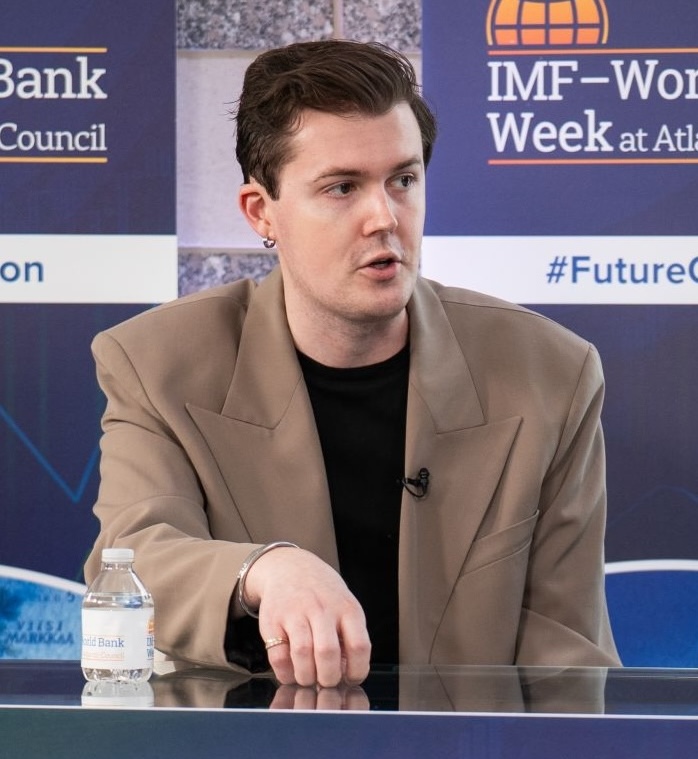
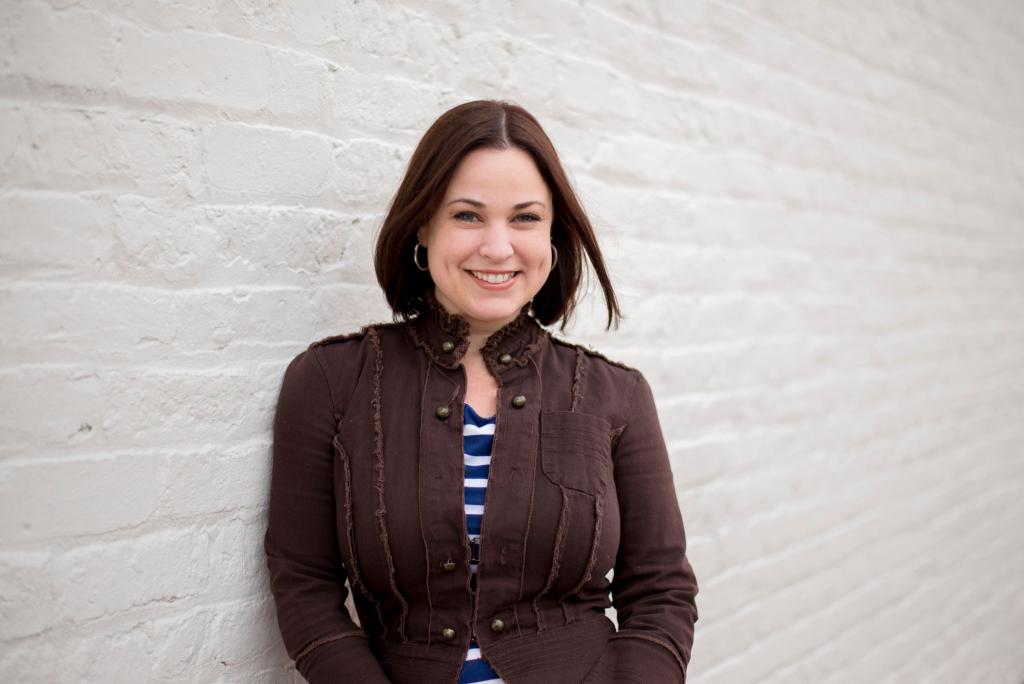
Candace Rondeaux, the founder and principal of Frontline Atlas, an independent geopolitical risk intelligence hub; a professor with the Future Security Initiative at Arizona State University; and a senior fellow in global security at New America joins Lawfare’s Justin Sherman to discuss the latest geopolitics, operations, and state of Russian private military companies (PMCs).
They discuss the current state of Russia’s Wagner Group and other Russian PMCs, their roles in recruitment of people to fight for Russia against Ukraine and the operation of Russia’s shadow fleet, and touchpoints with Iranian actors. They also discuss Russian PMC activities in Mali; how recent setbacks on the African continent might blow back on the chain of command, including Russian government actors; a recent legal case in the African court of human rights; and what steps the United States might take to better address Russian PMCs’ security threats.
To receive ad-free podcasts, become a Lawfare Material Supporter at www.patreon.com/lawfare. You can also support Lawfare by making a one-time donation at https://givebutter.com/lawfare-institute.
Click the button below to view a transcript of this podcast. Please note that the transcript was auto-generated and may contain errors.
Transcript
[Intro]
Candace Rondeaux: And
there are a lot of actors that are really deeply affected by these operations,
and I think we’re starting to see an escalation, if not of force, but certainly
an escalation of military presence in response to the shadow fleet that’s a bit
troubling.
Justin Sherman: It’s
the Lawfare Podcast. I’m Justin Sherman, contributing editor at Lawfare
and CEO of Global Cyber Strategies, with Candace Rondeaux, founder and
principal of Frontline Atlas, an independent geopolitical risk hub, and a
professor with the Future Security Initiative at Arizona State University.
Candace Rondeaux:
When we think about the cooperation between Russia and Iran at the state level
you always have to know that there’s a shadow lever- level as well and that
bears watching because I think it will be really transformative. And in some
ways, you know, if you can get your oil to market, in the case of Iran or in
case of Russia, there’s not a lot of incentive for you to start coming to the
negotiating table and I think that’s a factor that we need to keep our eye on.
Justin Sherman:
Today, we’re talking about the current state of Russian private military
companies, their global operations and connections everywhere from Ukraine to
Iran and Mali, and what’s coming next.
[Main Podcast]
Let’s jump right in. When you joined us last year, Candace, we
were talking about your then recently published book, Putin’s Sledgehammer, and
among other things, what had happened to Yevgeny Prigozhin and the Wagner Group
in Russia.
And so give us the overview, what has the Wagner Group been up
to for the last year or so since we last spoke to you, and what is the current
state of its organization and its operations?
Candace Rondeaux:
Yeah. Well, thanks for having me on. A quick recap to sort of connect the dots
from where we were just about a year ago.
First of all, as we all know, the Wagner Group, as led by
Yevgeny Prigozhin, the former CEO, was dissolved really in the summer of 2023
after his rebellion against the Putin regime and his march on Moscow, and then,
of course, his rather mysterious, although not so mysterious, death in a plane
crash in August of 2023.
And even as that was happening, y- we saw the Ministry of
Defense start to reposition itself as the main manager or operational manager
of these contract forces that were ostensibly cast as private military militias
or contingents, but in reality, were always connected to the Ministry of
Defense through an arm’s length arrangement with Prig- Prigozhin.
That arrangement, of course, collapsed. And when it did, Wagner
split into three branches, really. One was called the First Volunteer Corps,
and this was sort of the bulk of the forces. These were guys who had fought in
Ukraine in places like Bakhmut, really hard battlefield situations. And they
didn’t wanna leave because of course they had earned quite a lot, and there was
much to be gained from staying involved.
And the First Volunteer Corps largely is overseen by
Rosgvardiya, the National Guard of Russia. And that’s sort of a reflection of
an age-old relationship with Putin and the head of the National Guard at the
time. There is a third branch that was streamed into Belarus. And, you know,
Wagner already had a footprint in Belarus dating back to at least the pandemic
times when it was difficult for any air traffic getting out of Russia into the
Middle East and Africa, so Belarus became a sort of important hub.
And subsequent to that, Belarus has also been a really
important partner for probing operations on the western border of the NATO
parameters. And so there you have an estimated maybe four hundred, five hundred
Wagner remnants who have been tasked with overseeing the training of the
Belarus Special Forces.
And that’s gone, I think, relatively well at least from a
Belarus perspective, maybe not necessarily from a Russia perspective. And then
the third branch is the one that I think is the one that everybody understands
and knows better, which is the Africa Corps, which is a paramilitary
expeditionary force, really substantially not terribly different from Wagner in
form, even though maybe in name and brand it’s a little bit different.
We’ve seen Africa Corps over the last year take a lot of hits
in places like the Sahel, particularly in Mali. We’ll talk about that a little
bit. But to kind of just describe what Africa Corps is and sort of where it
sits within the overall infrastructure of the Ministry of Defense, it is
largely managed by the GRU, and it primarily serves the purpose of providing partnered
operations with Russian client states in Africa.
So that’s, you know, Burkina Faso, Niger, Mali. To a lesser
extent, at various points it had been Sudan Central African Republic. There has
been some expansion of the Africa Corps foot- footprint over the last year into
places like Togo and Guinea. This is a reflection in some, you know, in some
ways of Russia’s capacity for expansion of its oil and energy infrastructure in
the region particularly for Gazprom, which has long coveted some of the
offshore, you know, opportunities for oil and gas in the region.
And so we’ve seen Africa Corps s- spread its wings, but at the
same time we’ve also seen Africa Corps take a lot of heavy hits on the
battlefield.
Justin Sherman: Well,
thank you for that, and as you know, we often hear about Africa Corps, and I’m
thinking of news stories as well that probably are a little bit conflating that
with all of what Wagner turned into.
So we’ll dig more into that in a minute. But why don’t we
start... You mentioned several countries, and I sort of wanna go by area of
operations before we get into some other subjects. So, let’s start with
Ukraine. Has what’s left of Wagner you mentioned some anecdotes there, been
involved in any way in sort of the last 12 or so months with Russia’s continued
onslaught in the country or what does that look like today?
Candace Rondeaux: So
now those forces technically fall under the management still of m- the Ministry
of Defense, but under a hub called Redut, which means basically fort or
fortress. And Redut is really a predecessor of what we know as the Wagner
Group. It’s had a kind of competitor named Moran Security Group, and Redut is
run by a guy named Konstantin Mirzayants and some legacy commanders, like a guy
named Anton Troshev, who was very big in the Wagner Group command.
But technically, this is a little bit more of a hub, I think is
a better way to think of it, than it is a standalone organization. So it’s a
management tool for recruiting and deploying contract soldiers to the Ukrainian
front. As you can imagine, not many people in Russia are eager to go to the
Ukrainian front.
And we can talk a little bit about some of the manpower issues
that we’ve been seeing there that has led to the recruitment of everybody from
North Koreans to Africans from Kenya and South Africa over the last year. So
you have a situation where Redut as a hub kind of has these competing needs.
One is to stream contract soldiers into Ukraine, and the other
is to stream them into Africa Corps. And the challenge is w- you might sign up
for Africa Corps and find yourself suddenly rotated to Ukraine. There was a
story last year reported by RFE/RL by a young man who I think was in his 20s,
Russian guy, who had a big car loan, a lot of debt that he was trying to
resolve, and this is now one of the new recruitment tactics is not only will
you get a bonus and better pay than your average Russian soldier, but you also
will have your loans and your debts dissolved.
And that’s a big deal in a place where unemployment and high
credit risk is actually pretty rampant. So anyway, this young man joined up for
what he thought was gonna be an IT position with the Africa Corps, but ended up
be- being deployed to Ukraine, and there he was caught, and I think he
ultimately defected.
But that’s just one example of s- of, you know, the situation
where you have these competing needs that Russia is trying to meet, both on the
battlefield in Ukraine and then in this sort of this rear guard action in
Africa, which is really critical for sanctions evasion, but also building, you
know, inroads to markets that Russia would not be able to otherwise access.
And Russia needs markets because it is cut off from most of
Europe and most of Asia and most of the rest of the world. And so Africa has
really served as a really important pivot point.
Justin Sherman: Yeah,
I wanna get to that in a moment. Just because you mention it, have the PMCs
been playing a role in that recruitment pipeline from other areas?
I mean, maybe in Russia too, but beyond Russia to the Ukrainian
front?
Candace Rondeaux:
Well, it’s interesting. So one of the other offshoots of the Wagner sort of
breakup in 2023 is an organization called the Wagner Group Istra. And this is,
I kind of think of it as more of a marketing vehicle than anything else. It’s
run largely by commanders who gained a lot of notoriety for their fight on the
battlefield in Ukraine during the 2023, well, 2022 to 2024 period.
Many of them came back. They, you know, became sort of notable
heroes, and they went on the circuit around Russia to, like, schools and, you
know, different sort of public events as almost like an advertisement for the
kind of virility of the Russian way of war under the Wagner Group brand. And so
that kind of continues.
You can sort of see them online. They’re very active. They are
an important vector for recruitment, just as ev- everything also online is
also. You know, on VKontakte. It used to be on Telegram before it was banned.
Groups like Wagner Group Istra and commanders who’d sort of obtained a certain
notoriety for their flexing on the battlefield were a really important
advertisement for getting new recruits.
Justin Sherman:
Interesting. And you mentioned Telegram. I have been wondering the past few
days about that impacting recruitment and other things, but that’s a whole
other discussion. So, this is a good transition to one issue, among others,
that I know you’ve been tracking in your research and advisory work, which is
the involvement of Russian PMCs in Russia’s shadow fleet.
That is, as many listeners know, the fleet of ships that Russia
uses such as under the flags of other countries or fraudulent documents and so
forth, to do things like move oil illicitly around the world. And Candace, in
your answer, of course, feel free to, to modify my definition if you see it
differently.
But I’m curious if you could give us a rundown of the latest
state of the shadow fleet and then what you’ve been finding in your work there
vis-a-vis the PMCs.
Candace Rondeaux:
Yeah. So the interesting thing about the shadow fleet is it is one of these
unintended consequences of the economic warfare strategy that really started in
the first Trump administration and then began to expand pretty aggressively
under the Biden administration.
And since then, in the new Trump administration, we’ve seen a
shift in emphasis between cracking down on illicit oil that is brought to
market by Iran versus Venezuela versus Russia. There is a little bit more
prioritization, as I’m sure you can imagine from a Trump perspective on Iran
first.
Initially, it was also Venezuela. Russia, interestingly, has
become less of a focus. And, you know, there are some ancillary effects of
that. But, you know, the way to def- describe the shadow fleet is exactly as,
as you just did, which is these are- More often than not, old oil tankers that
are in many cases in pretty bad shape, on average they’re about fifteen to
twenty years old.
So, you know, and there’s not actually these days a really big
shipbuilding market for these tankers. It takes a long time to make them. And
so this old inventory has become part of really what is a globally integrated
network of tankers that have loose paperwork is probably the best way to
describe them.
They maybe don’t have a classification. They fly under flags of
convenience, often from Africa and other sort of smaller states like Seychelles
or Malta. Occasionally you might find the Marshall Islands in there, mixed in
there, Oman, Dubai are some other places. And they typically are managed by
brokers in maritime services who kind of operate on the underside of the licit
market where they’re kind of benefiting from the arbitrage between different
sanctions regimes that have been adopted by the United States, by the EU, the U.K.
In prior days there was a lot more alignment across the G7 bloc
in terms of, you know, sanctioning vessels and sanctioning maritime service
providers that were involved in moving Russian oil to market. Nowadays we see a
lot more fragmentation simply because the Trump administration is taking a new
tack different from its partners across the trans- transatlantic.
So what we, you know, have been seeing and what we, what kind
of attracted our attention, not surprisingly, was there were a lot of reports
last year from primarily the EU that interdictions of shadow fleet vessels, so
stopping them for inspection because they’re flying maybe false flags or they’re
operating in a shady way, resulted in reports of Russian military men or
paramilitaries on board.
And it turned out in several cases that these supernumeraries,
as they’re called, were basically put on board to do overwatch of the vessel’s
transit, but also overwatch of the actual crew and also to prevent potential
boarding and interdiction because of course we’ve seen in the last year or so a
lot more aggressive tack in terms of interdiction and intervention into shadow
fleet operations not just from the EU but also from the U.S. and we’ve seen a
few boardings and so I’ve seen for instance the French captured a vessel the
Boracay as it was entering French waters and they found a couple of guys on
board who worked for the Moran Security Group which is really the kind of the
granddaddy along with Redut of Russian paramilitary actors.
In fact the Wagner Group really grew out of a contingent a sort
of sub-contingent of the Moran Security Group way back in the day in early 2010
and 11 and 12 and it was the Moran Security Group that really gave birth to at
the time in early 2000s this kind of counter piracy effort on behalf of Russia’s
big oil producers like Rosneft and energy producers like Gazprom.
So it’s not new that you see you know Russian paramilitaries on
board big tankers. What is new is that there’s more enforcement on the part of
the EU, the U.K. and to a lesser degree the U.S., more kinetic interactions
that have exposed other things about the dual track nature of the mission of
these particular supernumeraries.
In one instance there was some allegation that a tanker that
had passed through Denmark might have been a platform for drone operations that
resulted in the shutdown of the airport at Copenhagen. There are the Eagle S in
Finland which was caught in Finnish territory waters that was accused of
severing a subsea internet cable and of course on board were you know Russian
paramilitaries and so there’s this idea now and particularly a deep concern
inside of the EU and in the U.K. that the shadow fleet is doubling not only as
a means of getting oil to market but also as surveillance and sabotage and this
is really challenging of course because the Atlantic is a big place and the
Baltic Sea of course is a big place and there are a lot of actors that are
really deeply affected by these operations and I think we’re starting to see an
escalation if not of force but certainly an escalation of military presence in
response to the shadow fleet that’s a bit troubling.
Justin Sherman:
Definitely trembling, as you said, and including the notion of a launching pad
for the operations is interesting. I mean, you’re just making me think, just to
editorialize for 10 seconds is you said the cable cuts is interesting as well,
right? Another example of, you know, sometimes you see press headlines that are
really hyped up and sort of saying that any Russian ship anywhere is, you know,
cutting everything out of the water, and then at the same time, I at least
personally sort of roll my eyes at some of the industry folks who say, “Oh,
there’s no way this could be anything but an accident.”
But but in any event, this is a great point you make that I
think maybe will apply to the next region I want to talk about, which is do you
see any connections between the collection of activity you’re discussing with
the shadow fleet, with PMCs, and what’s happening right now vis-a-vis the U.S.,
Israel, and Iran, as well as the Strait?
Is there any touchpoint there to include with Russian or other
kinds of oil, or are the, is that pretty, Are you not, are we not seeing
anything right now that sort of indicates any nexus with the Russian PMC
ecosystem?
Candace Rondeaux:
Yeah, that’s really interesting. In fact, so what’s super interesting about the
research that we’ve been doing and this is at Frontline Atlas the platform I
now run, we’ve been looking at roughly 200 ships that were We kind of call them
high risk because of their behaviors.
So they had a pattern of, you know, turning off their AIS
signals, which is the beacon that serves as their position, shows where their
position is when they’re en route to some place. We looked at whether or not
they also were reported to have had paramilitaries on board, so PMCs like Moran
Security Group on board, or former Wagner soldiers.
We checked the names of some of those soldiers against our own
database and found, in fact, those individuals did serve in places like Africa
and the Middle East and Ukraine. And so we kind of carved out, out of about 2,000
ships that we were looking at, about two hundred, so about 10 percent basically
of our overall sample that we were looking at.
And there are, you know, there are different estimates as to
how many shadow fleet tankers there are out there. I’ve seen as high as
thirty-three hundred from the Ukrainian sources. It varies, but what we do know
is that it’s well into the hundreds, and it is certainly well over two thousand
most likely, just because they span operations for Venezuela, Iran, and Russia,
and sometimes even North Korea.
We did look expressly at these two hundred because we were
really interested to see because some of them had actually had crossover with
IRGC networks, so, with the Quds Force and some of the shell companies that
Iran has used to support transport of its oil and naphtha to and from Venezuela
as an example.
Some of those vessels turned out to have crossover in terms of
brokers and shell companies and financial rails that we were able to trace to
Russian shadow fleet operators. And in particular, you might remember, Justin,
this was a kind of dramatic and very weird story that happened toward the end
of 2025, beginning of 2026, when there was a tanker called the Bella-1 that was
chased by U.S. forces out of the Caribbean waters as part of the interdiction
in Venezuela, and it was pursued all the way up to the edge of Iceland and
Scotland, and finally it was boarded.
It turns out, a-and along the way it changed its flag from a
Guyanese flag And so pulled that down and then painted, allegedly painted a
Russian flag on its side and changed its classification, changed its registry,
sort of mid-journey from Guyana to, to Russia, which was a little bit weird and
unusual.
There was a naval escort from Russia that was deployed as this
inter-interdiction was unfolding. It was pretty dramatic. U.S. Special Forces
and Coast Guard forces boarded. There was some assistance from the U.K.
military. All of that was super interesting, but what was more interesting as
we kind of looked deeper was in fact, of course, links to a particular broker
named Baranski and another one named Shore.
These two gentlemen are kind of Russian businessmen, is the
best way to put the, put it, who have been very active in the support of a
digital currency firm that has backing from a Russian, a sanctioned Russian
bank called Promsvyazbank, PSB. And it turns out that the Bella-1 had actually
been operated by a IRGC shell company before this whole drama unfolded in early
twenty twenty-six.
And so we became really curious as to why would it be, you
know, that the Russians would have this kind of overlap? And of course, we
looked deeper and we found that actually within this network, there were at
least twenty-eight ships that really seemed to have crossover between Iranian
and Russian networks.
And so we followed them during this period when the Treasury
issued a waiver for sanctioned Russian oil and actually Iranian oil to get to
market because of the energy crisis that the Strait of Hormuz has really
produced over the last couple months. And what we saw was millions of barrels
delivered by these shadow fleet tankers that had this crossover link between
Russia and Iran.
And of course, many of the brokers and the intermediary
companies are all situated in Dubai, which is another sort of interesting irony
here, is you have Iran attacking the UAE in response to this incursion by the U.S.
and Israel, and, you know, most of the kind of financial and sort of corporate
infrastructure for its entire shadow fleet actually sits in Dubai.
So there’s a little bit of irony here, but I think what we’ve
seen now with the extension of the treasury waiver, which means now even more
shadow fleet tanker oil can go to market, is Russia’s starting to recoup some
of its losses from earlier in the year when sanctions were least really
starting to bite.
And I think we’ve seen even Russia buying gold in the last week
or so. We’ve heard reports about that. It’s not to say that Russia’s fully back
on its feet, but the movement of shadow fleet tankers through the strait or
from, you know, where- wherever they were deployed in the Baltics or in Asia
and then moving over to China for delivery in India has been a boon for Russia
on the order of billions
Justin Sherman: Well,
there’s, I guess there’s building the plane as you fly it, and then there’s
painting the Russian flag on the ship as you outrun the multilateral collection
of vessels chasing you.
But that’s fascinating. I mean, I’m just, as an as- aside for a
moment or were you surprised by kind of the Russia-IRGC nexus in this area, or
the degree of it? Or kind of what was your reaction when you first found that?
Candace Rondeaux: I
wasn’t surprised. I suppose I was surprised at the scale. I wasn’t expecting...
You know, I was expecting maybe one or two. You know, you have
one example, you don’t expect it to be 20. But I think the bigger surprise, not
for me, but I think maybe for others, is that there is this overlap between
Iranian and Russian interests that penetrates almost every level, right? We’ve
seen that, of course, with the Shahed drones that have been deployed in this
current version of the conflict with Iran, many of them now being resupplied
from Russia as opposed to being resupplied from Iran, so that’s kind of
interesting.
I think if most people paying attention to Russia and Iran
understand that the partnership between the two has become more and more
integrated over time. We see that in all kinds of levels. We see that at the
level of sort of maritime exchange, defense equipment, and partnership. We see
it in space technologies increasingly, particularly around sort of satellite
deployments and the hope, for instance, of some sort of space shuttle or space
station that would be an Iranian-Russian partnership.
So we see deeper integration between Russia and Iran, and that’s
been growing for a long time. Historically there’s a relationship. But I think
what is interesting about the findings on the Shadow Fleet is it’s just another
indicator that to some degree, the economic warfare that the United States and
its partners have been waging against Russia, against Iran and to a lesser
degree, against Venezuela, is starting to lead to this deep fusion and overlap,
and almost an alternative market for getting energy to and from production
sites to refineries in, primarily in Asia and other places.
And I think that integration is pointing to something else
that, of course, we’re all starting to watch, I think, very closely, which is
the rise of digital currency payment rails in China as an alternative for
settlement of oil transfers and oil trades that we’ve now seen for Iran, but
also other players and a concern that perhaps China can be m- much more of a
competitor, much more influential on the value overall of the currency market
and could be a competitor to the dollar.
Justin Sherman: So
you’ve mentioned a collection of different Russian PMCs and some that overlap
or some that are antecedents of the other. How should we think about the Moran
Security Group and its relationship with the Russian state to include, you
referenced earlier that the GRU’s role in you know, Russian military
intelligence agency’s role in some of the oversight.
In Moran’s case, do we know which government organizations it,
it’s sort of overseen by or works with? And as a point of comparison, how does
that stack against some of the other Russian PMCs you track and also wrote
about in, in your book that I referenced?
Candace Rondeaux:
Moran Security Group is a really interesting example of an organization that
has its roots in a pretty legitimate need that Russia was facing, which is
essentially there was extreme levels of risk in the passage of energy resources
from Russia, from the Black Sea area, from the Baltics, through the Red Sea
area particularly around Eastern Africa.
You will may or may not remember this depending on how old you
are but of course in the late 1990s, early 2000s, there was a tremendous
problem with Somali and Sudanese piracy along the coast, along the Red Sea
coast in East Africa to the point where it was just, you know, tankers were
being interdicted and boarded and held hostage for transfer of cash for
millions of dollars in some cases.
And Russia, you know, really relies, of course, on those
passageways for transit of its oil and gas, and frankly, pretty much a lot of
its shipping goes through that area because Asia and Africa are such big
markets for Russia. And so in the 1990s, Moran Security Group was tasked with
essentially becoming the right hand, the paramilitary right hand of Sovcomflot,
which is Russia’s state-run and state-managed shipping company.
It is the largest for the country and one of the largest in the
world. I think maybe only Maersk which of course is the Danish shipping
company, might rival it in terms of its size and breadth and depth. And so Sovcomflot,
under a law that was passed, a couple different laws that were passed first
under Yeltsin and then under Putin that gave state security The state-run
agencies and companies like Sovcomflot, like Gazprom, they were given
permission to hire essentially their own in-house paramilitaries for security.
And that’s basically the origin story of the Moran Security
Group. There are other sort of personnel overlaps that date back to some
interesting adventures from the 1990s and early 2000s in Chechnya and Georgia
and Transnistria. That’s not important. That’s a bit too granular.
But what’s, what matters is the origin story is really about
protecting Russia’s, you know, big export arm for energy and then secondarily
protecting shipments of goods, particularly arms. This is sort of the origin of
the Moran Security Group. And in 2013 when Russia was starting to dip its toe
into trying to bolster the Assad regime in Syria, Moran Security Group
experimented with a small contingent that became kind of the progenitor of the
Wagner Group and in ca- in fact was led by one of the leading commanders,
Dmitry Utkin.
At the time technically Sovcomflot was sort of the overarching
administrative body controlling the Moran Security Group with a lot of
answering the mail to the FSB, which is kind of the FBI of Russia. And in fact,
one of its originators, one of the original company board members was from the
FSB a former KGB guy.
So it’s always had its roots in the sort of security, secret
security services of Russia. I’ve always sort of felt that actually Wagner was
really just Moran in disguise. Those relationships never really changed. We saw
sort of talk of Moran Security Group basically disappear the entire you know,
time that Yevgeny Prigozhin was in charge.
And then suddenly it’s, it sort of popped back up again. But
nothing ever really changed. It was always registered both in Hong Kong and a
couple other places in Belize, and some of those shell companies do overlap
with the Wagner Group networks that we saw during the Prigozhin’s day.
So the way to think about Moran is a little bit more like a
sort of, you know, a Russian nesting doll, as all of these things are. It’s
sort of like a shell within a shell. But it has always been the primary vehicle
for maritime security services for Russia’s state enterprises.
Justin Sherman:
Interesting. And to your point about shells, I know you have some and other
scholars, I always like the sort of graphics of the Wagner Group and other
shell networks, which of course start having many nodes and edges very quickly.
L- let’s segue now to a different region of the world. You
referenced it at the top of the episode, which is the African continent, and in
particular Mali. Much was made, I mean, certainly you’ve written about this
extensively about Wagner’s previous role in those areas, Central African
Republic, et cetera.
What are you studying of late with Russian PMCs in Mali, since
you mentioned that earlier in particular, and what are you finding?
Candace Rondeaux:
Well, what we’ve seen in the last month or so but with acute kind of pulses in
the last two weeks, we’ve seen in Mali, which has been the shining example, or
at least it was meant to be the shining, shin- shining example of Russia’s
ability to provide partnered operations in the Sahel, which is a very
challenging region for a variety of reasons.
Chief among them, of course, is the rise of Islamic extremism
and armed Islamic groups like JNIM which operates in the Sahel and in Mali in
particular. And we also have other rebel forces there, the Azawad Alliance,
which has been critical for Tuareg rebel groups, not just inside Mali, but also
across the border in places like Algeria and other parts of the Sahel.
Mali has had a really difficult time basically since twenty
nineteen, since the coup that led to the ascension of Assimi Goita who is kind
of the head now of the junta that rules Mali and has been the student or mentee
of both U... American forces that where he went...
underwent counterterrorism training, but also of Russian
forces. He also spent some time in Moscow doing offi- officer training,
basically. The junta has deep connections with Moscow for a variety of reasons
that are mostly historical dating back to the Soviet times. And in the last ten
days, we have seen rebel forces associated with JNIM and Azawad overrun bases
that were occupied by Russian forces, by the Africa Corps.
We saw a takedown in Kidal and then a withdrawal, which is kind
of this northwest northeastern military base in Mali. And then just yesterday
there was another base so a total of three bases now have more or less
collapsed under pressure from rebel forces. And there was a major assault in
Bamako that led to the death of Mali’s intelligence chief General Modibo Koné
who was, basically, you know, the main conduit for the relationship with Russia
in the first place.
A lot of targeted operations with an aim of pushing Russia out
is kind of what we’ve seen. And there are a lot of theories as to sort of why
Russia finds itself on the back foot. What we have seen in the Telegram chatter
you know, on Africa Corps channels and then sort of these adjacent you know,
right-wing militarist channels that Russia has, we’ve seen a lot of chatter
about dissatisfaction within the ranks about the way the Ministry of Defense is
running Africa Corps.
Last year, there was a sort of mini rebellion in one of the
detachments. There were complaints about having to pay for food and also
missing pay and missing care for those who were rotating out who had been
injured. So there’s a lot of I think morale issues and a lot of concern about
the current sort of structure of the middle management of the command.
And I do think that there’s also just kind of this natural
tension between Russia needing to have troops both in Ukraine and having them
in Africa. One of the other things, of course that’s really important, this’ll
be the last thing I say before we kind of move on, but we know from twenty
twenty-four when there was a incursion between rebel forces, Malian forces and
Wagner forces in Mali that resulted in, I think, about 84 casualties, Russian
casualties.
In that instance, there was some supposition that Ukrainian
forces, special forces, had given training to Azawad, Tuareg rebel fighters.
And we did see in this most recent confrontation, a lot more drone activity on
the rebel side, and it seems like there’s a growing sophistication. So I think
what we’re seeing is kind of maybe three things happening at once that are
leading to this kind of deleterious effect for the Wagner Group Africa Corps.
One is just this internal dissension, dissatisfaction with the
management. Low morale is leading to low performance. Complaints about, you
know, not just food, but also equipment shortages. That’s one. Two is a greater
sophistication on the part of these rebel forces. They are now much more
capable of using drones.
So the airspace is not dominated by Russian forces as it once
was. When you have helicopters fighting against, you know, swarms of drones for
dominance in the airspace, a lot of times in these kinds of environments, it’s
the drones that win. They can kind of give more capacity to forces on the
ground than a single helicopter could do.
So that’s another s- piece. And then the last I would just sort
of say is this really deeper tension over manpower and the need to kind of
rotate the more experienced and seasoned forces who might be working in Africa
back to the front line in Ukraine. There’s a real tension there that we’re
starting to see play out.
Justin Sherman: The
UAV thing is really you c- keep, I keep thinking, oh, I can go down that rabbit
hole, but I’ll try to stay on track here. But the UAV point that’s very
compelling as well. Related to all that then obviously, as you’ve said a few
times, these entities also, whether report is the right word or not but have to
be accountable to, at a minimum, fair to say I think, at least one of these
Russian security organs.
So with all of the developments you just said and what the
current state of play is in Mali, how does that sit with the GRU and the
Russian government, do you think? And is there any kind of questioning of the
utility of continuing that activity, or do you think that’s likely to stay
pretty on course in the coming months?
Candace Rondeaux:
Such an interesting question, and maybe the question to ask is, like, what is
the blowback effect on the actual command structure of the GRU from some of
this fallout in the Sahel? So far, we haven’t seen any kind of removal of, you
know, key individuals. So here I’m pointing to Andrey Averyanov, who is a
longtime officer in the GRU.
He’s very famous for, at one point, spearheading Unit 29155,
which was involved in the poisoning of Sergei Skripal. Alexei Navalny has been
sort of behind a lot of different sort of sabotage and assassination attempts
over the years. And Averyanov is often thought of as kind of the architect of
this special, Special Activities Services, which is a subunit of the GRU.
And technically, that is where the management of Africa Corps
actually sits, is under the SSA. And it is a curious thing that he has not yet
been removed, despite many years of what are pretty embarrassing reversals, not
just in Africa, but I would also say in parts of Ukraine. And I...
You know, you would also kind of look at the period in which
Yevgeny Prigozhin was technically the CEO of the Wagner Group, but in reality
was always answering to the masters in the GRU, which included Averyanov,
right? And in f- in fact, many people believe that Averyanov was the mastermind
befin- behind Prigozhin’s ultimate removal and killing.
So kind of a mixed track record on some level, because a lot of
the operations that he’s run have been outed over time, including sabotage
operations in Europe most importantly. So I think it’s sort of wait and see
there in terms of whether he will survive. As you know, there have been big
purges in the Russian military over the last year.
We just saw, for instance the arrest and charging of Ruslan
Tsalikov, who for many years was a really important key general and supporter
of the Wagner Group operations way back in the day, dating back to 2014, 2015.
We’ve seen a lot of people associated with the kind of the Wagner brand and
market swept up in this purge, and very recently, just I think in the last week
or so there was a leak of a European intelligence agency report about some of
these individuals perhaps being the cause of rumors of a potential coup being
led by the former Ministry of Defense, Sergei Shoigu.
Now, that seems to me a little bit of a stretch, but what is
interesting is there is, I think, growing tension within the ranks over the way
things are being run on the battlefield in Ukraine, and it has really led to a
reshuffling of power within the Ministry of Defense that so far hasn’t touched
the GRU, but maybe could given the circumstance.
And if we see more deterioration on the battlefield in Mali or
other places adjacent like Niger or Burkina Faso, it’s very possible that these
guys would be next on the chopping block.
Justin Sherman: That’s
really interesting. There was one other development, at least recently I do
want to mention. You had flagged it when we were chatting a little bit before
the taping, that there was a legal case filed recently against the forces in
the Afr- with the Mali Wagner situation or Africa Corps situation you were
referring to, a case filed in the African Court of Human Rights.
What is this case, and do you think it will have an impact on
the operations that we’re talking about? And if so, what might that look like?
Candace Rondeaux:
Well, this case is really emblematic of some of the other challenges I would
sort of say... I would name, and these are bigger, more strategic challenges.
You know, the Wagner Group and Africa Corps, Russian forces more generally, in
these expeditionary force operations have gained a reputation for brutality.
In fact, that’s where the name for my book, Putin’s
Sledgehammer, really comes from, a very famous incident involving a beating and
a beheading of a individual on camera with a sledgehammer by Wagner forces. And
this has become kind of, like, emblematic of the way Russia rolls, basically.
It’s kind of this idea of, you know, virility and violence and
sort of fear and terror, and we’ve seen that play out in Mali. And so this case
that was just recently brought by Trial International and a couple of other
human rights groups based in Europe with cooperation from the Berkeley Human
Rights Center that has been very instrumental in doing a lot of collection on
Wagner Group operations in Africa.
And also I wanna name All Eyes on Africa based in France.
These, you know, civil society organizations kind of combined forces and
decided to lodge a case in the African Court of Human Rights based on a two
massacres that actually took place in 2022 involving Malian and Russian forces
in a place called Moura and another place called Hombori.
These two interactions resulted in roughly 500 civilian deaths
and then untold numbers of injuries and wounded. And much of it was actually
caught on camera. Some of the aftereffects were caught on camera. And Russian
forces at the time, sort of Wagner and Prigozhin and friends tried to cast it
as an, a false flag operation by French forces as they were exiting.
That of course is not the case. There’s lots of documentation
about the Moura massacre in particular that the UN has raised and others have
raised pointing to severe violations of human rights and the international
humanitarian law the law of armed conflict. I think what’s interesting about
the case is this is a time when, of course, the International Criminal Court
has suffered some, you know, reputational blows for a variety of reasons, not
the least of which is kind of, allegations against the prosecutor, chief
prosecutor, and also is on the back foot because of the US stance on the ICC
vis-a-vis Israel and Afghanistan.
And so there are not very many international venues where you
could take this kind of set of violations and accusations against a group like Africa
Corps and Wagner. That said, the place to take it is where it’s actually
happening, right? And so I think it’ll be really interesting to see how this
unfolds in the court, and it could be actually an opening for even more cases.
As you know, there’s been lots of accu- accusations of
clandestine operations that have gone off the rails run by Russians in the
Central African Republic and in Sudan and also in Libya. And so if the African
Court of Human Rights becomes this kind of new venue for moving forward with
those kind of cases, it could really change Russia’s positioning on the
continent.
Justin Sherman: That
is I’m surprised to get a positive note in here, but I will certainly take it,
and that’s interesting vis-a-vis, as you note, obviously the other many out
there documented cases of rights abuses. So looking forward a little bit, what
are, you know, one or two things you’re tracking right now with Russian PMCs
that you find most interesting or that listeners might find most surprising, I
don’t know, in the next, you know, six to 12 months or so?
Candace Rondeaux:
Well, I continue to track the evolution of the effort to kind of use the Wagner
Group brand to attract, you know, young men to join sabotage operations in
Europe. We’ve seen that kind of turn down in the sense of, you know, direct
Wagner engagement, although I think that there’s plenty of evidence if we look
deeper at the roughly, I don’t know, 300 incidents that we know about, I think
we would probably find that actually telegram channels related to the Wagner
Group figured very prominently in a lot of recruitment drives, and that the GRU
and the SVR, which is the other sort of secret intelligence agency that’s got a
lot of purchase over these operations, have become very sophisticated in using,
you know, Telegram, in using other platforms, gaming platforms that’s another
place.
I think that’s one area that I continue to watch and monitor
because I do think it’s a little bit of a blind spot for Europe, and I think it’s
certainly a blind spot for the United States. Less so the U.K. because they’ve
had an incident there that’s been very high profile. The other thing I think
obviously that will be worth watching is will any of these escalating
interdictions with the shadow fleet result in a kind of clash or a clash of
arms between paramilitary forces aligned with the Marine security group or the
former Wagner fighters who are on board some of these tankers?
Are we gonna see a showdown, right? Or is it gonna continue to
be contained? What we do know is that the GRU has been giving pretty explicit
instructions to the guys on board. There’s been a lot of reporting about that
from crew members who have been captured in some of these interdiction efforts.
And I think, you know, the more we see aggressive interdiction
in places in and around U.K. and Nordic territorial waters the more there is a
risk of that, I think that we have to be watching and looking closely at. And
then last but not least you know, to what degree have these logistical networks
for transfer of sanctioned goods that what was known as a Wagner group put in
place?
How much of those actually are actively supporting some of the
action that we’re seeing in Iran in the Gulf region? I think we really have to
just keep in mind that when we think about the cooperation between Russia and
Iran at the state level you always have to know that there’s a shadow level as
well.
And that bears watching because I think it will be really
transformative. And in some ways, you know, if you can get your oil to market
in the case of Iran or in case of Russia, there’s not a lot of incentive for
you to start coming to the negotiating table. And I think that’s a factor that
we need to keep our eye on.
Justin Sherman: If
you could wave a magic wand tomorrow, how would you update U.S. law or policy
or strategy to deal with some of these latest evolutions? You mentioned
economic warfare earlier. I’m not sure if you have thoughts there but really
anything you, you think policymakers should think about vis-a-vis the Russian
PMC ecosystem?
Candace Rondeaux:
That’s a great question. So if I had a magic wand, there are so many things I
would do. But the things that come immediately to mind, first and foremost, you
might be aware there’s a pending resolution legislation now in Congress called
the HARM Act. And this calls for the Department of Defense and other executive
branch agencies to take more seriously the problem of Africa Corps to do a
little bit more work on intelligence gathering, you know, developing a report
on sort of what their activities are, who’s doing what and also monitoring the
financial networks that are sort of making things go.
I think that’s gonna be a really important piece of the puzzle
if it can get passed by Congress in the coming year or so. It could be a very
valuable tool. I won’t say that it’s like a perfect tool because it does call
for designating the Africa Corps as a a specially designated terrorist group,
and I don’t think that’s quite r-right.
It really is more like a transnational organized crime group,
and there’s a lot of political reasons why you might wanna kind of stay with
that label to kind of encourage other partners that are skittish about the
American characterization of terrorism to come on board with enforcement Having
said that, I do think the HARM Act is one pending legislation that really could
be passed and could be viable and could be useful for generating fresh
intelligence on how Russia is using Africa as this sanctions evasions market,
and that could be very helpful in kind of, again, making sure that your
economic warfare policy is actually doing, you know, more good than harm.
And we can’t really know that unless we have a better sense of
who the actors are who are benefiting from some of these shadow operations. In
the same vein there is also pending legislation that was forwarded by a
Republican congressman I believe it was Mr. Risch who proposed expanding
intelligence gathering on the shadow fleet in particular.
Now, the status of that bill seems a little bit murky. It was
first, I think, put into play in February of this year, and then it seems like
it was sort of struck out, or at least it’s been paused likely because of this
concern about the global energy market and sort of getting this oil to market.
But I would say if you can get those two things, the HARM Act
and this proposed Shadow Fleet Monitoring Act together, that would be one
piece. And then the second is just getting back to the good old-fashioned
enforcement routine. You know, making sure that if you know that there’s a
vessel that’s been acting in the shadow fleet, that you sanction it.
And syncing up with the European Union and the U.K. is really
critical because now it turns out that, you know, the EU and the U.K are
actually speeding ahead with a lot of their vessel sanctions and the U.S. is
way behind, and it’s that gap that tends to be exploited by Russia and some of
these arbitrage brokers.
So you wanna close that off. And lastly, I would just say, you
know, there is a tremendous room, and this is well beyond U.S. foreign policy
there are a lot of jurisdictions, I would name Germany, I would name Finland,
Norway a few others, that have the legal grounds to begin looking into the
activities of some of these Russian paramilitary companies and to see whether
or not there’s grounds for war crimes prosecution.
We should not forget that, you know, just because the Ukrainian
war is grinding on it may someday come to an end, and there is a lot that the
Wagner Group will have to answer for when that bill comes due.
Justin Sherman: That’s
all the time we have. Candace, thanks as always for joining us.
Candace Rondeaux:
Thanks for having me.
Justin Sherman: The Lawfare
Podcast is produced by the Lawfare Institute. If you want to support
the show and listen ad-free, you can become a Lawfare material supporter
at lawfaremedia.org/support. Supporters also get access to special events and
other bonus content we don’t share anywhere else. Please rate and review us
wherever you get your podcasts.
Look out for our other podcasts, including Rational Security,
Allies, The Aftermath, and Escalation, our latest Lawfare
Presents podcast series about the war in Ukraine. Check out our written
work at lawfaremedia.org.
The podcast is edited by Jen Patja, and our audio engineer this
episode was Goat Rodeo. Our theme song is from ALIBI Music.
As always, thank you for listening.