-

The Federal Government’s Aggressive Prosecution of Protestors
In the weeks following protests over the police killing of George Floyd, the federal government brought more than 120 different cases against protestors for a range of crimes—many concerning relatively m... -
The Lawfare Podcast: COVID-19 and its National Security Implications in the Middle East, South Asia and Africa
-
White Supremacist Prosecutions Roundup
How have state and federal prosecutors have addressed the ever-growing threat of white supremacist violence? -
Wuhan, From the Cultural Revolution to COVID-19
Four lessons about what the history of the province where the coronavirus emerged tells us about the Chinese Communist Party. -
The Week that Was: All of Lawfare in One Post
Your weekly summary of everything on the site. -
The Roger Stone Commutation Is Even More Corrupt Than It Seems
The president’s clemency for his confidante is totally unsurprising—which is part of what makes it so bad. -
Trump’s Aberrant Pardons and Commutations
The Stone commutation fits a pattern of abuse: Almost all of the beneficiaries of Trump’s pardons and commutations have had a personal or political connection to the president. -
Summary: The Supreme Court Rules in Trump v. Mazars
The 7-2 majority held that courts must take into account separation of powers concerns in resolving disputes over congressional subpoenas seeking personal information of the president. -
Summary: The Supreme Court Rules in Trump v. Vance
The court rejected both the president’s position that he was absolutely immune from a subpoena from the New York County District Attorney’s Office and the solicitor general’s position that the subpoena s... -
Today's Headlines and Commentary
Lawfare’s daily roundup of national security news and opinion. -
The Strategic Logic of Russia’s Bounty Policy
Moscow’s bounty program fits a pattern of Russian policy in Afghanistan rooted in the country’s desire to maintain influence in its near abroad. -
The Lawfare Podcast: The Subpoena Cases Come Down
-
Submarine Cables in the Law of Naval Warfare
The interdependence of global submarine communication systems means that a break in the vast network of seabed cables during armed conflict could have cascading effects on internet access. Yet the law of... -
The Supreme Court Rules in the Trump Subpoena Cases
In the end, President Trump has probably succeeded in his effort to keep his financial records from Congress through the November election. But if his goal was to prevent the judiciary from enforcing con... -
Today’s Headlines and Commentary
Lawfare’s daily roundup of national security news and opinion. -
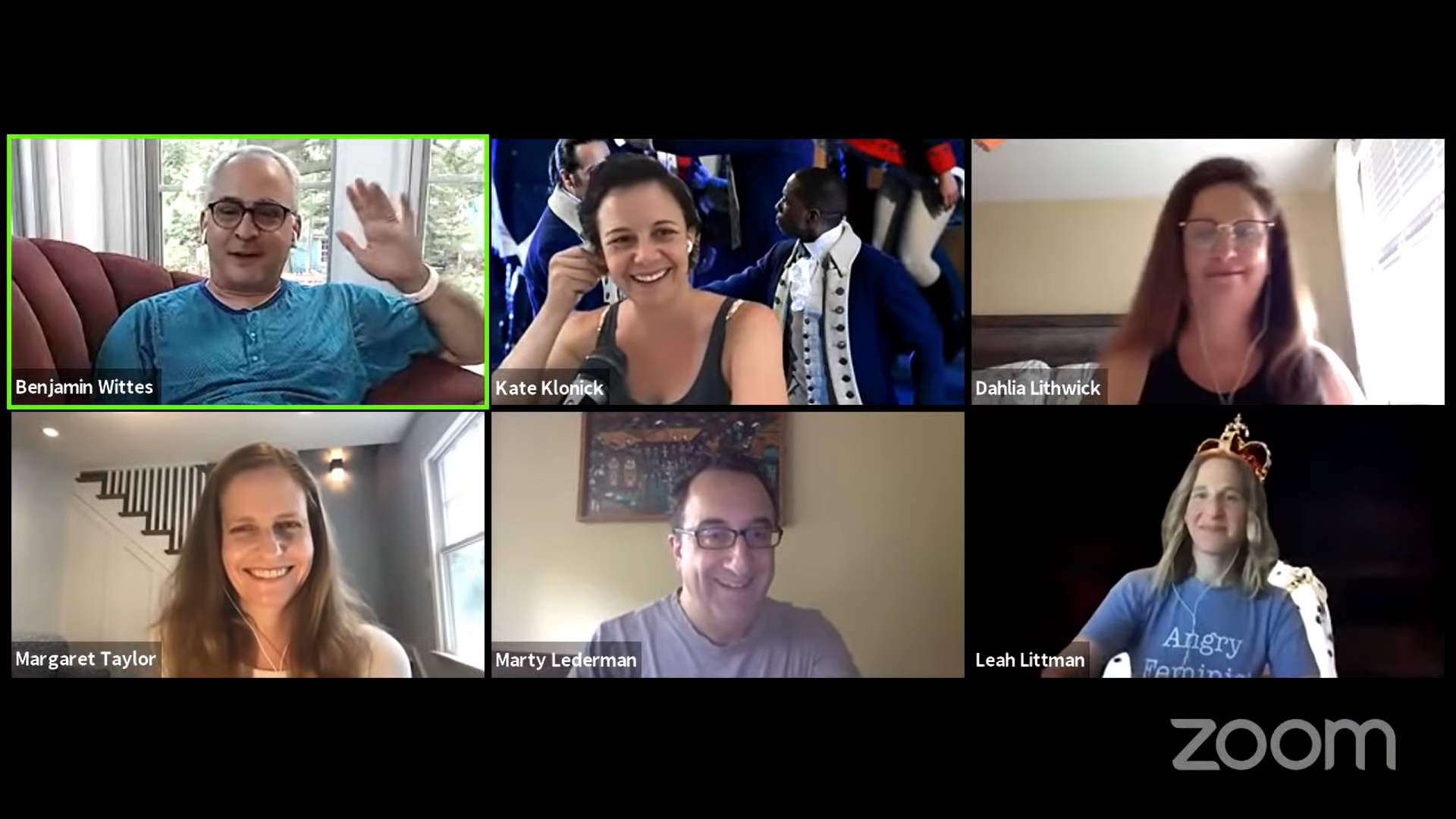
Livestream: Panel Discussion of Trump Financial Documents Cases on 'In Lieu of Fun'
-
Judge Emmet Sullivan Petitions for a Rehearing En Banc in Flynn Case
D.C. District Court Judge Emmet G. Sullivan filed a petition Thursday to the D.C. Circuit Court requesting a rehearing en banc after a three-judge panel ordered him to drop the prosecution of former nati... -
Former Manhattan Federal Prosecutor Told Congress Attorney General Barr Pressured Him to Resign
-
The Lawfare Podcast: Brandi Collins-Dexter on COVID-19 Misinformation and Black Communities
-
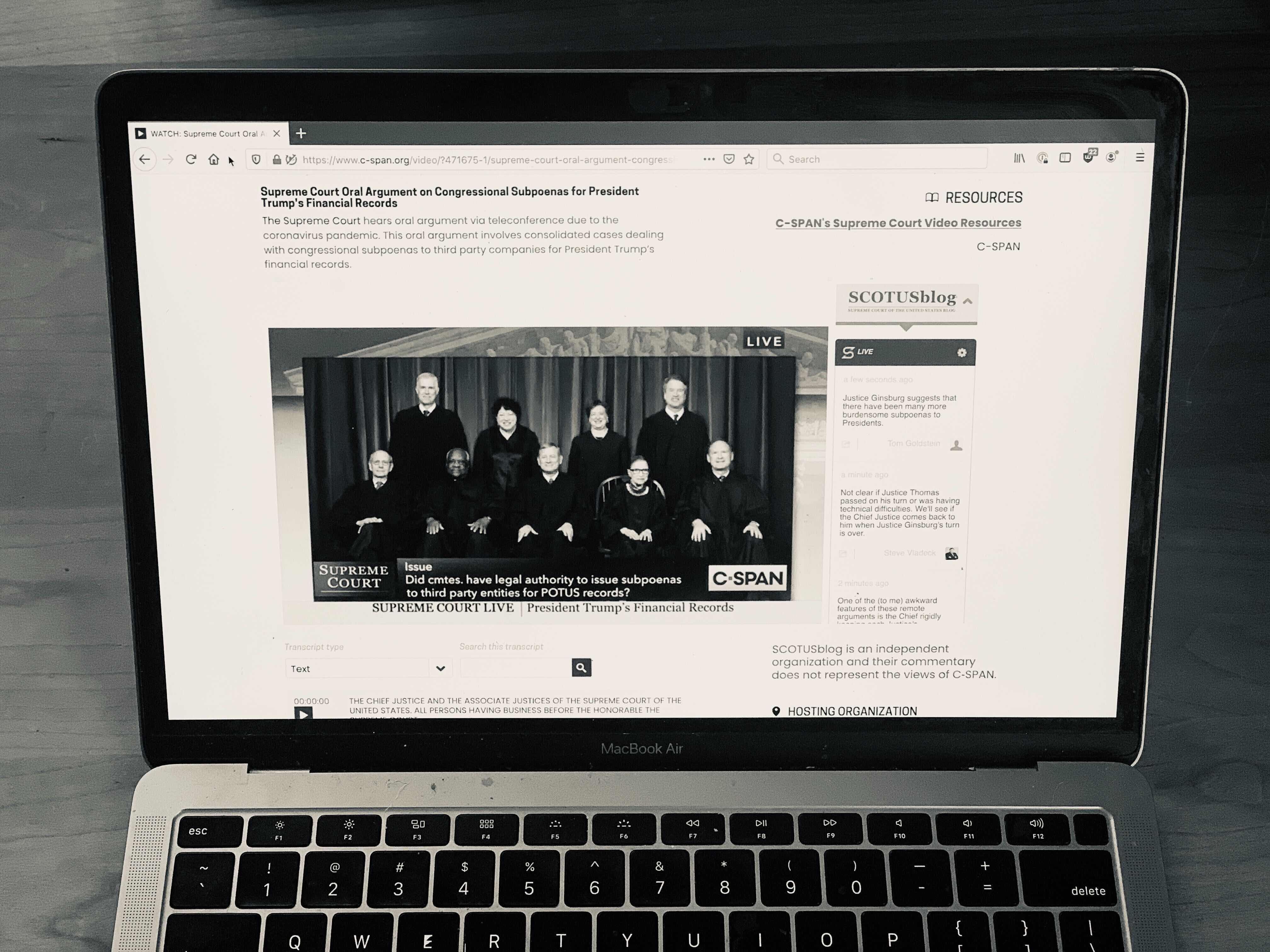
Supreme Court Rules in Trump Financial Records Cases




More Articles
-
The Week That Was
Your weekly summary of everything on the site. -
The Maritime Origins of Judicial Review
A review of Kevin Arlyck, “The Nation at Sea: The Federal Courts and American Sovereignty, 1789-1825” (Cambridge University Press, 2025). -
Colombia’s Transitional Justice Was Built to Survive de la Espriella
It is a global model for its domestic, not international, legal origins. Future peace may be the real cost of de la Espriella’s attacks.