A History of LGBT Officers & the Central Intelligence Agency
The CIA spent seven decades moving from purging LGBT officers to embracing them—until the second Trump administration began undoing that work.
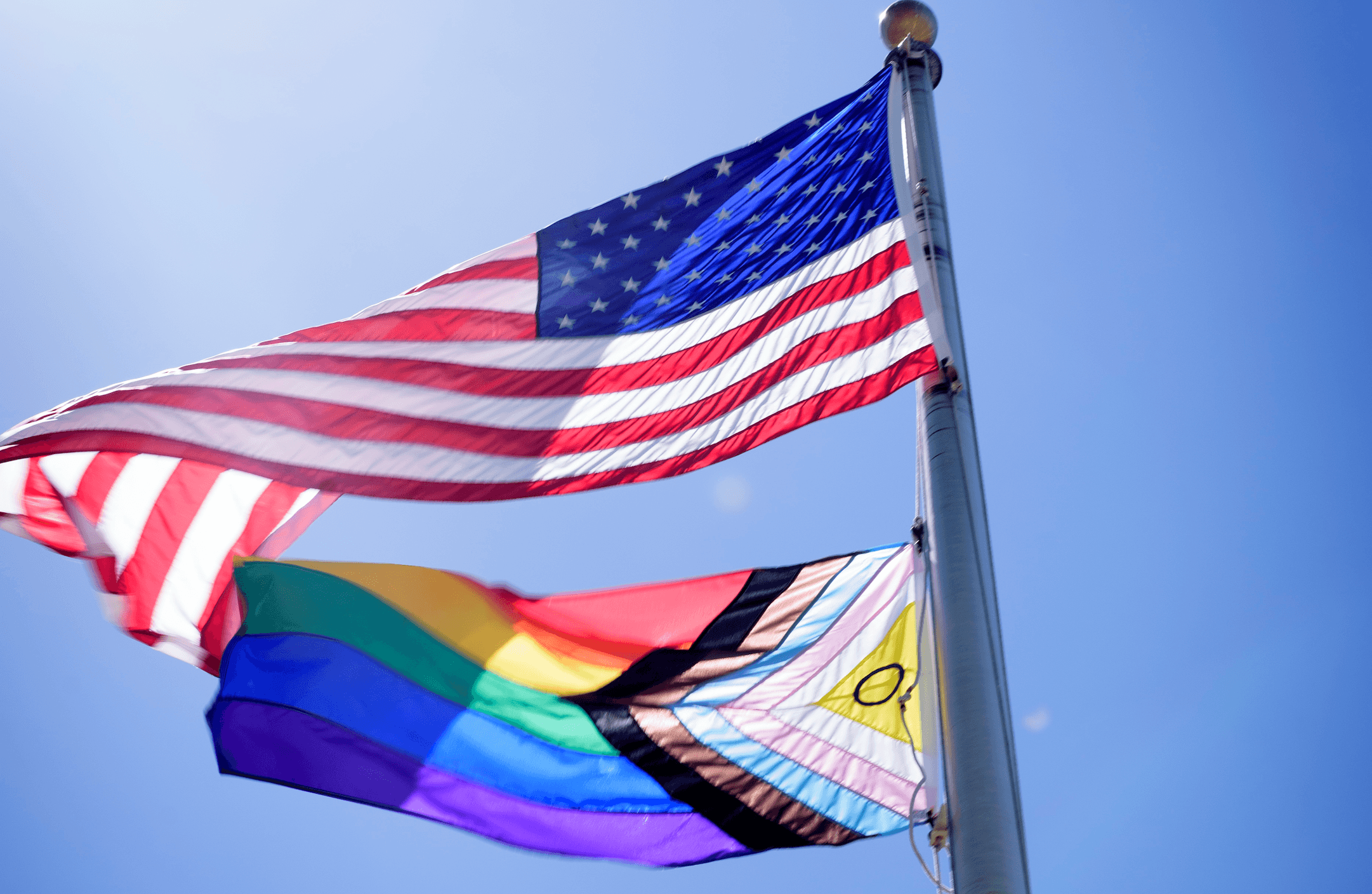


In the closing months of World War II, a gay officer of the Office of Strategic Services (OSS) led two operations to spirit German scientists and diplomats out of the Soviet occupation zone. Within a few years, that same officer—Carmel Offie—one of the earliest employees of the new Central Intelligence Agency (CIA), became the first known CIA employee dismissed solely because of his sexual orientation. He was among the earliest casualties of a sweeping campaign to purge lesbian, gay, bisexual, and transgender federal workers, an episode historians later called the “Lavender Scare.”
Over seven decades, the CIA moved from systematically hunting and expelling LGBT officers to actively recruiting them, celebrating their contributions, and extending full benefits to same-sex partners. Along the way, individual officers—many of whom served in silence for decades—challenged the assumptions that had cast them as security risks, while allies in the CIA’s leadership slowly but steadily dismantled the policies that had marginalized them.
The story has now come full circle, with a ban on the CIA’s LGBT group and Pride Month celebrations, an end to minority outreach and recruitment, and the firing of officers for participating in diversity efforts or transgender-related group chats.
Trump administration executive orders eliminating diversity, equity, and inclusion (DEI) initiatives and preventing transgender officers from using government restroom facilities have rolled back the considerable gains made in recent decades and threaten a new Lavender Scare that will harm the CIA’s ability to carry out its national security mission.
What follows traces this trajectory: from persecution, through grudging tolerance, to genuine embrace, to the uncertain present.
Part I: Historical Perspective
The Lavender Scare (1941-1960)
During World War II years, the demands of wartime left little appetite for policing sexual orientation within the OSS and broader military intelligence community. After the war, however, intelligence agencies began to regard homosexuality as an inherent vulnerability, reasoning that closeted employees could be coerced into betraying secrets. When the agency introduced routine polygraph examinations in 1948, CIA specifically included questions about homosexual activity to identify employees for removal.
This posture was formalized in April 1953, when President Eisenhower issued Executive Order 10450, establishing that “sexual perversion” constituted grounds for denying a security clearance. The order gave bureaucratic force to a practice well under way: the investigation, interrogation, and dismissal of anyone suspected of being gay, bisexual, or lesbian. Across the federal government, careers were destroyed and lives upended on the basis of rumor, suspicion, or a single admission extracted under the stress of a polygraph, according to various former CIA officers
Serving in Silence (1960-1980)
Through the 1960s and 1970s, the CIA’s posture toward LGBT employees began to soften—although change was inconsistent, and largely unofficial. Former officers from this era describe an environment in which it became somewhat easier to pass through the screening process, even as the CIA continued to regard overt homosexuality as disqualifying.
An internal debate raged over whether an admission of homosexuality during a polygraph should automatically trigger dismissal. Some CIA leaders argued for a more pragmatic approach—what would later be described as an informal “don’t ask, don’t tell” arrangement. Director of Central Intelligence (DCI) George H.W. Bush, who led the agency from 1976 to 1977, reportedly became the first DCI to openly question the rationale for disqualifying LGBT employees, challenging the assumption that an officer’s sexual orientation inherently made them susceptible to blackmail.
At the federal level, a 1967 congressional inquiry led to the removal of a question about “homosexual tendencies” from the medical history form required with civil service applications. This reform did not prevent the CIA from continuing to raise the question during medical screenings and polygraph sessions. One officer who served a 30-year career recalled that it became possible to push back on Office of Security recommendations to fire gay employees—though sexual orientation continued to be invoked as grounds for termination into the 1990s.
An Agency Divided (1980-1995)
The 1980s and early 1990s were a period of deep contradiction. Formal policy grew more nuanced, but individual officers continued to pay a price for being discovered.
A DCI directive issued in 1980 stated that homosexuality would be weighed as a factor in assessing an individual’s stability and susceptibility to coercion, but declared that being gay “in and of itself” would not preclude access to sensitive compartmented information. In practice, the agency fired an officer in 1982—one who had received outstanding performance evaluations—after he admitted being gay during a polygraph. A decade of litigation followed, ultimately reaching the Supreme Court, which upheld the DCI’s broad authority to terminate employees on security grounds. Between 1985 and 1992, federal courts repeatedly sustained the CIA’s refusal to grant security clearances to LGBT applicants and employees.
Personal narratives from this era paint a picture of a workplace still largely hostile. Almost all LGBT officers felt compelled to remain closeted, fearing termination. Some senior officials also reportedly continued to voice beliefs that gay employees would inherently undermine the organization. At the same time, the old blackmail rationale had lost its force. As more employees chose to come out, the leverage that secrecy might have provided to foreign intelligence services steadily diminished.
Early Inclusion (1995-2013)
The mid-1990s brought a watershed. In 1995, President Clinton signed Executive Order 12968, prohibiting the denial of security clearances on the basis of sexual orientation. Three years later, in 1998, he issued Executive Order 13087, extending the prohibition to all aspects of federal employment. The CIA’s human resources office revised its hiring and employment policies accordingly. For the first time, officers could in principle serve openly without fear of automatic dismissal—provided there was no other concern about “questionable judgment, irresponsibility, or emotional instability,” and that their orientation did not serve as a “basis for undue influence.”
In 1996, a group of officers led by one of the authors (Ballard) founded the Agency Network for Gay, Lesbian, Bisexual, and Transgender Officers and Allies (ANGLE). The group’s creation was itself a measure of how far the culture still had to travel; one retired officer recalled that ANGLE’s founding provoked open concern among some agency leaders. Officers who had previously concealed their orientation also reported worrying that coming out could retroactively expose them to consequences for having withheld personal information during past polygraphs or medical screenings.
Over the next decade, presidential directives, regulatory changes, and legal decisions gradually improved the benefits landscape for LGBT federal employees. Same-sex partners gained some travel benefits, but the most consequential barrier remained in place: the Defense of Marriage Act (DOMA), signed into law in 1996, which prevented the federal government from recognizing same-sex marriages for any purpose, including health insurance and spousal benefits. Many reported they had to secure private health insurance for partners who would have been covered automatically had they been a married heterosexual couple.
In 2009, the Office of Personnel Management added “gender identity” as a protected category, banning discrimination against transgender federal employees for the first time. In 2011, OPM for the first time outlined a process for gender transition in federal workplaces. In June 2013, one of the authors (Curlee) became the first transgender officer to successfully and openly transition at the CIA, with the support of CIA leadership.
For gay and lesbian CIA officers, the major turning point came in June 2013, when the Supreme Court struck down the core provision of DOMA in United States v. Windsor. The ruling meant that federal agencies, including the CIA, could at last extend full recognition and benefits to employees in same-sex marriages.
Part II: The Modern Era (2013-2025)
Marriage Equality and Its Aftermath
The Windsor decision cleared the most significant remaining obstacle to equal treatment of LGBT employees, and two years later, in June 2015, the Supreme Court’s ruling in Obergefell v. Hodges established marriage equality, requiring all 50 states to license and recognize same-sex marriages. For CIA officers, Obergefell resolved lingering complications from the patchwork of state laws.
Within the intelligence community, the practical effects were profound. Overseas assignments, long a source of stress for LGBT officers and their partners, became substantially easier to navigate. Same-sex spouses gained access to the full range of allowances available to heterosexual couples. Obstacles remained as host nations could still deny visas to same-sex couples, declare an accompanying spouse “domestic staff” for visa purposes, or require the accompanying spouse to depart and reapply for visas on a quarterly basis.
The Brennan Years and Institutional Recognition
Under Director John Brennan, who led the CIA from 2013 to 2017, the agency’s posture toward LGBT inclusion became markedly more visible. In 2014, Brennan commissioned the Diversity in Leadership Study, which found that many LGBT employees still felt pressure to conceal their identity to succeed.
In 2016, the agency published a formal three-year Diversity and Inclusion Strategy that explicitly named LGBT officers as a priority recruiting population and established metrics for tracking progress. That same year, the CIA received recognition as an employer of choice from outside equality organizations, such as Out & Equal, and the agency released a documentary, “ANGLE of Ascent,” chronicling the CIA’s cultural transformation on LGBT issues.
The First Trump Administration (2017-2021)
The first Trump administration undertook a series of steps that chilled LGBT inclusion at the CIA. Within days of the inauguration, the State Department removed from its website Secretary John Kerry’s formal apology for the Lavender Scare, along with other content related to LGBT issues. Across the federal government, references to LGBT employees and their contributions were quietly scrubbed from agency websites and public communications. Then-Attorney General Jeff Sessions also reversed an Obama-era interpretation of Title VII that had extended workplace discrimination protections to transgender federal employees.
Within the CIA, officers who had come out during the Obama era recalibrated how visibly they expressed their identities. Diversity and inclusion programs continued, but with a lower profile. The institutional infrastructure built during the Obama and early Trump years—ANGLE, the diversity office, the training programs for managers—remained largely intact, even as the broader political environment grew more hostile.
The most significant reversal came in July 2017, when President Trump announced via Twitter that the United States would no longer permit transgender Americans to serve in the military, including those detailed to the CIA. Agency officers working with intelligence community counterparts provided a memo to the director of national intelligence outlining the potential damage of the ban, including the loss of military officers with critical language and technical skills. The protracted legal battle ended with the inauguration of the Biden administration, which reversed the ban in 2021.
The Biden Administration (2021-2025)
President Biden moved rapidly on taking office to restore and extend protections for LGBT federal employees. On his first day, he signed Executive Order 13988, directing all federal agencies to implement the Supreme Court’s landmark 2020 decision in Bostock v. Clayton County—a ruling that established that employment discrimination on the basis of sexual orientation or gender identity constituted prohibited sex discrimination under Title VII of the Civil Rights Act.
Within the intelligence community, the Diversity and Inclusion Office at the CIA resumed full operations, and ANGLE once again partnered with agency leadership on Pride Month programming, recruiting events, and manager training. Biden also restored federal health coverage for transgender-related medical care.
Part III: A New Reckoning (2025-Present)
The Return of Exclusion
On taking office in January 2025, the second Trump administration moved with speed to dismantle the diversity and inclusion infrastructure built across the federal government over the preceding three decades. On his first day in office, President Trump signed Executive Order 14151, directing the termination of all diversity, equity, inclusion, and accessibility activities across the executive branch—banning ANGLE for the first time since its founding.
At the CIA, officers who had been temporarily assigned to the Diversity and Inclusion Office were placed on administrative leave or dismissed. A federal judge ruled in February 2025 that the CIA director possessed the legal authority to terminate these officers without recourse to appeal or reassignment, and at least 51 officers across the CIA and the Office of the Director of National Intelligence faced dismissal. Rumors that the CIA had compiled lists of employees who had participated in affinity groups also raised fears that past membership in ANGLE could become a basis for adverse personnel action.
The CIA also scrubbed references to LGBT issues and past diversity initiatives from its website, banned Pride Month celebrations, and restricted the use of pronouns on internal agency email signature blocks.
Targeting Transgender Officers
On the first day of the administration, the White House announced two executive orders that dealt serious blows to the ability of transgender officers to serve at the CIA.
Executive Order 14168 bars transgender federal employees from using bathrooms that match their gender identity—a restriction felt acutely by CIA officers at headquarters and overseas, where unisex alternatives are scarce or nonexistent. Executive Order 14168 also eliminated nonbinary passport markers and required documents to reflect sex assigned at birth, forcing transgender officers to carry credentials that contradict their appearance—a liability that can compromise cover, CIA operations, and, in some locations, endanger CIA officers.
On Jan. 27, 2025, President Trump signed Executive Order 14183, “Prioritizing Military Excellence and Readiness,” reinstating the ban on transgender military service. The new order immediately initiated involuntary separation proceedings for thousands of trans service members currently serving, including some supporting the CIA.
On Feb. 25, 2025, then-Director of National Intelligence Tulsi Gabbard announced the mass firing of 100 transgender intelligence officers, including three CIA officers, for participating in an officially sanctioned National Security Agency-run group chat where they had discussed transgender-related issues.
Echoes of the Lavender Scare
Observers and historians have been quick to draw parallels between the current moment and the Lavender Scare of the 1950s. The specific mechanisms differ. The authors are unaware of officers being interrogated about sexual orientation, but the campaign to identify, stigmatize, and remove members of a disfavored group from the federal workforce rhymes with that earlier era.
Marriage equality remains the law, and the Supreme Court declined to hear a challenge to Obergefell in November 2025. Gay, lesbian, and bisexual officers at the CIA are not, as of this writing, facing a systematic purge, but for transgender officers, the situation is grave, and the broader chilling effect on all LGBT employees and potential recruits is difficult to overstate.
The dismantling of institutional structures such as ANGLE and the Diversity and Inclusion Office removed the mechanisms through which the CIA’s culture changed over the preceding decades, and the risk of regression is substantial. In the year before it was banned, ANGLE had tracked a rise in defacement of Pride Month announcements and the harassment of LGBT employees.
* * *
The history of the CIA’s treatment of LGBT officers is a story about the distance between the values an institution professed and the treatment it afforded its own people. For decades, the CIA demanded its officers embody integrity, loyalty, and courage—to speak truth to power—while punishing those who were honest about who they were. The officers who endured that contradiction, who served in silence and fought for change from within, helped transform the culture of one of the institutions most critically important to the defense of the United States.
The gains of the past three decades were not inevitable, and the current moment is a reminder that they were reversible. The question facing the CIA now is whether the institutional memory of why inclusion matters will survive the current storm—not as a political slogan, but as a practical imperative for an organization that depends on the full contributions of every officer.
Editor’s Note: All statements of fact, opinion, or analysis expressed are those of the author and do not reflect the official positions or views of the US Government. Nothing in the contents should be construed as asserting or implying US Government authentication of information or endorsement of the author’s views.