
Ashley Deeks Comments on US Military Advisers in Africa and AQIM News Stories
Further to Bobby's and my posts on news reports of US government discussions around ways to address groups such as AQIM taking root in Africa - including discussion of US military and intelligence advisers, among other policy alternatives - Ashley Deeks (who has just joined the UVA law faculty) sends us this note:
I read with interest your post about AQIM and the role of U.S. forces. One question your post hints at but doesn't address squarely is the role of host state consent in the scenarios on which you focus -- that is, U.S.
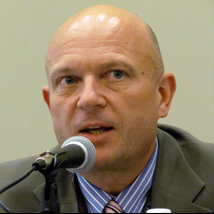
Further to Bobby's and my posts on news reports of US government discussions around ways to address groups such as AQIM taking root in Africa - including discussion of US military and intelligence advisers, among other policy alternatives - Ashley Deeks (who has just joined the UVA law faculty) sends us this note:
I read with interest your post about AQIM and the role of U.S. forces. One question your post hints at but doesn't address squarely is the role of host state consent in the scenarios on which you focus -- that is, U.S. forces assisting local forces in fighting armed groups that may have (a) strong links to AQ; (b) weaks links to AQ; or (c) no real links to AQ. As you note, it is possible to view some of the actions of the U.S. government as "acting as the air arm of the Yemen government in its civil war," depending on who the precise targets of that aerial action are.If the USG decides to explain with greater precision its legal rationales for these types of missions, consent to the use of force likely enters the picture. To that end, the USG may need to do some hard thinking about what host states can and cannot do under their domestic law and think through what those potential limitations mean for those U.S. actions where AUMF (or son-of-AUMF) arguments may not be available and the core legal hook for US action is host state consent.One key question re the Special-Ops-guys-are-helping-host-forces-fight-their-fight is a factual one: are U.S. forces actually using armed force in these contexts, or are they really just training and equipping? The role of consent gets gets most interesting in the use of force context. Even if U.S. forces are careful to stop short of actual force where there is not a clear USG AUMF/naked self-defense argument, I have to believe that many other countries' forces in regions such as the Maghreb aren't so focused on legal rules in this scenario and may be putting undue weight on host state consent.
Kenneth Anderson is a professor at Washington College of Law, American University; a visiting fellow of the Hoover Institution; and a non-resident senior fellow of the Brookings Institution. He writes on international law, the laws of war, weapons and technology, and national security; his most recent book, with Benjamin Wittes, is "Speaking the Law: The Obama Administration's Addresses on National Security Law."
More Articles
-

From Promise to Peril: The U.S. Retreat From Civilian Harm Response
Hegseth’s U-turn on decades of CHMR progress has contributed to more civilian casualties and left victims without access to repair and amends. -
Rational Security: The “Mosquitos and Heat and Sweaty and Eww” Edition
Scott Anderson, Anastasiia Lapatina, Tyler McBrien, and Ariane Tabatabai talked through the week’s big news in national security. -
The U.S.-Iran War: Fighting From ‘Neutral’ Territory
When war is fought from permanent overseas bases, international law struggles to explain what host states may allow and what belligerents may lawfully strike.
-(1).jpg?sfvrsn=af0bd5fc_5)
