Evaluating the ICJ’s UNRWA Advisory Opinion
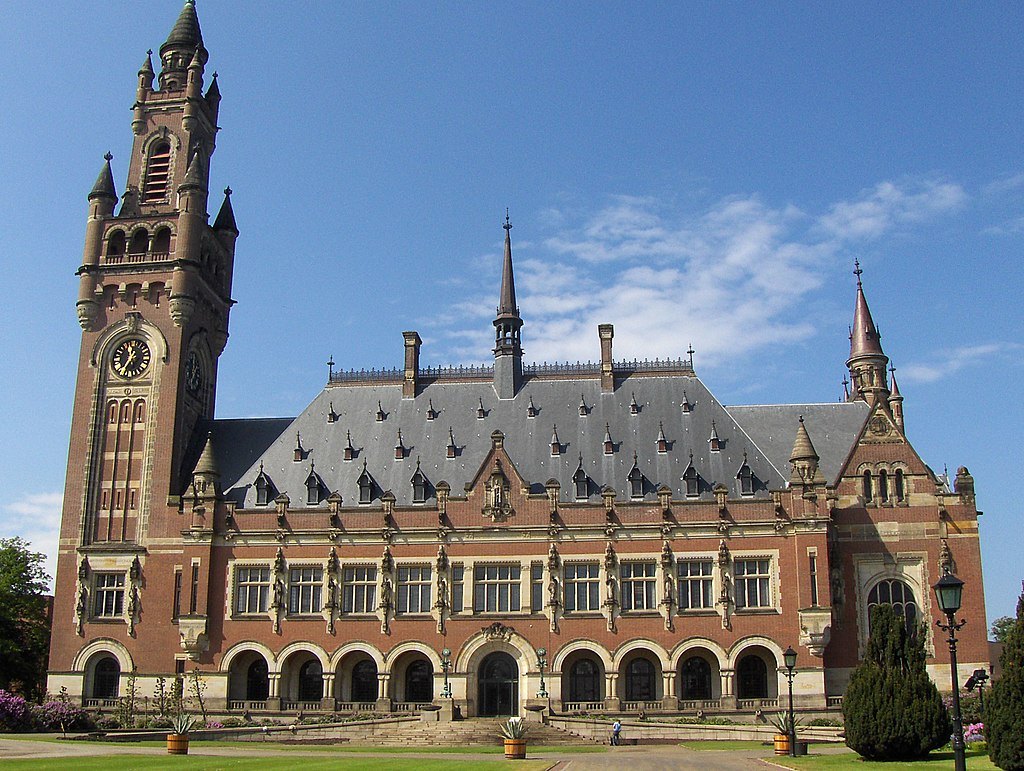


On Oct. 22, the International Court of Justice in The Hague (ICJ) issued its advisory opinion on Israel’s obligations toward the UN Relief and Works Agency for Palestine Refugees in the Near East (UNRWA). While the bottom line of the court’s opinion—that is, that Israel violated international law when it decided to close UNRWA’s operations without first providing a practical alternative—appears correct, in reaching this conclusion, the court also made some broader observations regarding UNRWA’s operations and the protections due to it, which we question.
The case—formally known as Obligations of Israel in Relation to the Presence and Activities of the United Nations, Other International Organizations and Third States in and in relation to the Occupied Palestinian Territory—is the fourth relating to the Israeli-Palestinian conflict addressed by the court in the past two years. In July 2024, the ICJ issued its advisory opinion on Legal Consequences Arising From the Policies and Practices of Israel in the Occupied Palestinian Territory, Including East Jerusalem. Two other contentious cases, mostly relating to the implementaton of the Genocide Convention (South Africa v. Israel and Nicaragua v. Germany—in relation to which provisional measures decisions were issued), are still pending before the court. There is yet a fifth case—Palestine v. United States—relating to the transfer of the U.S. Embassy to Jerusalem, in which oral discussions have not yet commenced.
The rising number of ICJ cases relating to Israel and Palestine is indicative of a growing interest in the legal aspects of the conflict and demonstrates a concerted effort by Palestine and its allies to utilize international adjudication in order to promote their legal and political interests and draw attention to the alleged violations taking place during the conflict.
The UNRWA case stemmed from a strategic decision by Israel in 2024 to terminate its cooperation with UNRWA. On Oct. 28, 2024, the Knesset—Israel’s lawmaking body—passed legislation prohibiting the operations of UNRWA inside Israel, barring cooperation with the agency and requiring an official cancellation of the 1967 agreement that facilitated cooperation with it.
On Dec. 19, 2024, the UN General Assembly requested that the court examine the legality of this new policy:
What are the obligations of Israel, as an occupying Power and as a member of the United Nations, in relation to the presence and activities of the United Nations, including its agencies and bodies, other international organizations and third States, in and in relation to the Occupied Palestinian Territory, including to ensure and facilitate the unhindered provision of urgently needed supplies essential to the survival of the Palestinian civilian population as well as of basic services and humanitarian and development assistance, for the benefit of the Palestinian civilian population, and in support of the Palestinian people’s right to self-determination?
Following written submissions made by several dozen states and organizations in March, and oral hearings that took place in late March and early April (Israel submitted written statements but did not participate in the oral hearings; Palestine participated in both the written and oral stages of the proceedings), the court issued its opinion on Oct. 22. Parts of the opinion were adopted unanimously and others by a 10-1 majority, with Vice-President Julia Sebutinde dissenting.
Below, we examine the main findings of the ICJ and consider their persuasiveness. While the court arguably reached the right conclusion in the case, some of its reasoning and observations raise questions. In particular, the court’s emphasis on belligerent parties’ obligation to facilitate humanitarian aid—without fully considering their right to insist on the actual neutrality of relief operations—is unconvincing.
Duties to Facilitate Aid
Following affirmation of jurisdiction and admissibility, the opinion surveyed the recent history of the armed conflict in Gaza since 2005; the humanitarian role played by UNRWA since its establishment in 1949; the resumption of hostilities following the Oct. 7, 2023, attack against Israel by Hamas and other militant groups; Israel’s allegations against UNRWA relating to the involvement of its employees and facilities in Hamas operations; the anti-UNRWA measures that Israel took in October-November 2024; and the deterioration of the humanitarian conditions in Gaza throughout the war, which coincided with Israel’s restrictions on the introduction and distribution of humanitarian aid inside the Gaza Strip.
The court then turned its attention to Israel’s obligations under international humanitarian law (IHL). It held that Israel has obligations to the local population of Gaza pursuant to the laws of belligerent occupation—a holding that builds on an earlier finding it made in its 2024 advisory opinion on the legality of the occupation (where it found that Israel’s obligations vis-a-vis Gazans are commensurate with the level of effective control it continues to exercise; we have discussed this conclusion in a previous article). This time the ICJ wrote: “[T]he Court finds that Israel’s obligations under the law of occupation have also increased significantly, commensurate with the increase in its effective control over the territory.” It left somewhat uncertain, however, the question of whether Israel should be formally considered an occupying power in the entire Gaza Strip. (Israel maintains it does not exercise effective control in areas where Hamas maintains a security presence.)
Within the legal framework of occupation, the court focused on Article 59 of the Fourth Geneva Convention, which obligates the occupying power to agree to relief schemes proposed by impartial organizations and to facilitate them if the local population is “inadequately provided.” It held that throughout the war there have been many indications that the local population was indeed inadequately provided, especially following the blockage of aid by Israel between March and May 2025.
While there is ongoing controversy regarding the precise categorization of the humanitarian crisis in Gaza, the “inadequately provided” condition was clearly met. The court was therefore correct in concluding that Israel has obligations to agree to and facilitate aid pursuant to Article 59. Such obligations are additional to obligations to ensure food and other basic supplies in the territories it occupies, under both IHL and international human rights law (IHRL) (the former complements the application of the latter).
A key question addressed by the court was whether UNRWA meets the conditions of impartiality indicated in Article 59. Although noting that impartiality and neutrality are distinct concepts, the court decided nonetheless to review the claim that UNRWA was not a neutral organization:
[W]hile neutrality is not a separate requirement under Article 59, the Court observes that the two concepts are related and neutrality plays a role in assessing the impartiality of the activities of humanitarian organizations. Thus, a lack of neutrality may affect whether an organization is “capable of acting effectively and worthy of trust.” (J. S. Pictet (ed.), Commentary on the Fourth Geneva Convention, ICRC, Geneva, 1958, Article 59).
Again, we agree with the court’s position. Article 59 and other IHL provisions relating to humanitarian aid set an equilibrium between humanitarian needs and security considerations. It is therefore unreasonable to require occupying powers to cooperate with relief organizations that align themselves with the opposing side during hostilities. (We return to this point below.)
However, the court rejected as unproven Israel’s claim that UNRWA has lost its neutrality and has been thoroughly infiltrated by Hamas: “The Court considers that the information before it is not sufficient to establish UNRWA’s lack of neutrality for the purpose of assessing its impartiality as an organization under Article 59.” It noted that the internal investigation has resulted in the dismissal of nine UNRWA employees for possible involvement in the Oct. 7 attack and that UNRWA is in the process of implementing the Colonna Report’s recommendations, which were designed to strengthen its neutrality. The court emphasized that although Israel is, in principle, free to choose the organizations it works with to fulfill its humanitarian obligations, given the central role played by UNRWA in providing basic needs in Gaza:
[I]n the current circumstances, it is not possible to replicate the capacity of the United Nations, acting through UNRWA, to ensure that the population of the Gaza Strip is adequately provided for. UNRWA cannot be replaced on short notice and without a proper transition plan.
It also noted that Israel is required under IHL to respect and protect relief and medical personnel and facilities, and cannot restrict their presence in certain areas as a way to facilitate the transfer of civilian population from these areas.
Duties to Assist UN Operations
The court then turned to consider Israel’s obligations as a member of the UN. It noted the UN’s “permanent responsibility” toward the question of Palestine until the matter is resolved, and it emphasized the central role of UNRWA, which it considered to be the “backbone” of the UN’s humanitarian response to the crisis in the Gaza Strip. It also found that Israel’s decision to terminate its cooperation with UNRWA has resulted—among other things—in its international personnel being blocked from entering the Occupied Palestinian Territory. Furthermore, during the war, there have been 907 military incidents impacting UNRWA premises and the people inside, resulting in the death of hundreds of local employees and sheltering people, and injuries to more than 2,500 people.
The court referred to the duties of member states to cooperate in good faith and facilitate the actions of the UN, pursuant to Articles 2(2), 2(5), 55, and 56 of the UN Charter. Applying this standard, it held that:
The obligations of Israel, and of all other Member States, to co-operate with the United Nations with respect to the question of Palestine is of paramount importance in addressing the critical situation on the ground since October 2023, in which the United Nations, together with other actors, plays a crucial role in delivering and co-ordinating humanitarian aid and development assistance to the Occupied Palestinian Territory, in particular through UNRWA in the Gaza Strip.
But the court found that Israel’s anti-UNRWA laws resulted in the obstruction of UNRWA’s operations, especially in the Gaza Strip. Given UNRWA’s mandate and crucial role in the humanitarian realm and in advancing the Palestinian right to self determination:
In the view of the Court, Israel is not entitled to withhold its co-operation with the United Nations by unilaterally deciding on the presence and activities of United Nations entities in and in relation to the Occupied Palestinian Territory. … [By contrast,] Israel may not obstruct the functions of the United Nations and must provide every assistance in any action taken by the Organization[.]
This holding was reinforced by the court’s treatment of UNRWA’s privileges and immunities. The court was of the opinion that UNRWA’s presence in the Occupied Palestinian Territory is not subject to Israel’s consent:
[W]ithin the territory of Israel, the presence and activities of the United Nations and its entities are subject to the consent of Israel. However, in the occupied territory, over which Israel, as an occupying Power, enjoys no sovereignty, it is not entitled to decide unilaterally, with respect to the presence and activities of the United Nations in and in relation to the Occupied Palestinian Territory, in the same way as in its own territory.
Furthermore, the UN continues to enjoy privileges and immunities under the UN Charter and the 1946 Convention on Privileges and Immunities when operating in occupied territories during an armed conflict. In the case of UNRWA, this includes the inviolability of premises whose functions and services provided by them serve part of its mandate.
A key paragraph of the opinion addresses the question of the applicability of privileges and immunities of UN premises in times of armed conflict:
The obligation to respect the inviolability of United Nations premises and the obligation not to interfere with United Nations property and assets must also be upheld in the context of armed conflict …. The Court acknowledges that the context of an armed conflict raises challenges, especially in the situation of potential loss of control by the United Nations over certain of its premises. However, it is for the United Nations to determine whether a particular facility remains the premises of the United Nations. In the view of the Court, such a determination by the United Nations creates a presumption that may only be set aside for the most compelling reasons and is to be given the greatest weight by States …. Damage to or destruction of the premises and other property and assets of the United Nations as a result of military activities may amount to a violation of obligations under Article II, Section 3, of the General Convention [from 1946].
In parallel, privileges and immunities also extend to UN personnel engaged in carrying out their missions. The court stated that “[s]uch protection is particularly necessary for United Nations personnel to discharge their critical functions effectively in situations of armed conflict.” This includes, according to the court, free movement “in and in relation to the Occupied Palestinian Territory.” The court noted that the UN’s activities and missions in the area were severely jeopardized by the killing of UN personnel (almost all of whom were UNRWA local personnel), expulsion of personnel from duty stations, and restrictions on their travel.
Regarding the claim that UNRWA abused its privileges and immunities, the court opined that the UN has a responsibility to prevent and address abuses and that:
[t]he privileges and immunities accorded to the United Nations and its personnel cannot be used as a shield for activities that are against the purposes and principles of the Organization or are outside the functions of its personnel.
Still, it noted that concerns about allegations of abuse must be handled by states in the framework of dispute settlement and not based on their unilateral assessment.
Critical Evaluation
Neutrality
In our view, the court rightly construed the term “impartial” in Article 59 as also implying—in the context of participation in a humanitarian relief scheme—an expectation of neutrality and trustworthiness. Whereas parties to a conflict must allow and facilitate humanitarian relief operations, and—when assuming the status of an occupying power—they must also ensure provision of basic needs to the local population, it is unrealistic to expect belligerents to fully cooperate with organizations that seem to support the other party to the conflict, and who cannot be trusted to guarantee that aid is reaching only the civilian population in need and not the opposing armed forces.
In the context of the Gaza war, fears of abuse of aid relief schemes are not an abstract concern, as there have been numerous reports concerning the looting of relief convoys by militants, the hoarding of supplies by Hamas, and its exercise of control over secondary markets in which goods provided by relief schemes for free distribution were sold, with sales taxes going to Hamas. While Israel is obligated to allow and facilitate aid schemes, it is also entitled to adopt reasonable measures to prevent diversion and smuggling of military or dual-use equipment, as well as to try to minimize the ability of the enemy party to derive direct financial benefits from aid donated to the civilian population.
Significantly, UNRWA itself accepts its duty to respect the principle of neutrality. On its website, it maintains the following:
Neutrality dictates that humanitarian actors must not take sides in hostilities or engage in controversies of a political, racial, religious, or ideological nature. … It is UNRWA’s neutrality that allows it to operate on all sides and among various parties, to ensure the safe, sustained and unimpeded delivery of assistance and protection in an effective and efficient manner.
Neutrality is essential for the Agency to access its beneficiaries and provide them with crucial aid and to communicate with all parties to ensure that its buildings are not affected during times of hostilities or armed violence. Neutrality also enables UNRWA to work with host governments to import medicines for its clinics and to secure visas for staff to enable them to carry out their professional duties.
However, the court’s conclusion that UNRWA meets this standard of conduct—that is, that it does not take sides in hostilities and does not engage in political or ideological controversies—is questionable. From Israel’s perspective, UNRWA faces structural challenges in meeting standards of neutrality, given its mandate and heavy reliance on local employees. These challenges have been compounded by a track record of hostility toward Israel by many UNRWA employees and their conduct in the recent war.
UNRWA’s work with Palestinian refugees dates back to Israel’s war of independence, which resulted in hundreds of thousands of Palestinian refugees, who were dispersed in the West Bank (then controlled by the Hashemite Kingdom of Transjordan), the Gaza Strip (then controlled by Egypt), Jordan, Lebanon, and Syria. Since the beginning of the Israeli occupation of the territories seized in 1967, Israel has agreed that UNRWA would provide relief, welfare, and education services to Palestinian refugees in these territories. By doing so, UNRWA allowed, in effect, Israel to discharge its obligations as the occupying power in these areas without incurring their full financial costs. This does not mean, however, that Israel viewed UNRWA as a friendly organization. In fact, throughout the years Israel raised several complaints against UNRWA
At the heart of Israel’s long dissatisfaction with UNRWA is its definition of refugees and refugee resettlement policy. In its early years, UNRWA was authorized to support the repatriation or resettlement of Palestinian refugees. Yet since the late 1950s, UNRWA has adopted the position that it does not support the resettlement of Palestinian refugees in the actual areas in which they live. Moreover, according to UN General Assembly Resolution 37/120 (1982), Palestinians registered with UNRWA are a unique case of refugees whose status is automatically transferred to future generations, and whose refugee status is preserved even if they acquire citizenship in another state. In practice, these policies effectively implied support on the part of UNRWA for keeping on the table the controversial Palestinian claim to a “right of return” into the sovereign territory of Israel, which has been a major stumbling block in Israeli-Palestinian negotiations over the years.
In addition, it is estimated that close to 99 percent of UNRWA’s employees are local Palestinians. In Gaza alone, UNRWA employs more than 12,000 Gazans. It is difficult to imagine, given the prolonged state of hostilities between Israel and the Gaza Strip, that an organization—which is so dominantly Palestinian in its composition—would refrain from taking sides in the conflict or from adopting controversial political positions. This state of affairs is compounded by the nature of UNRWA’s activities. In many spheres of life, it operates as the de facto civilian government of the Gaza Strip, interacting with hundreds of thousands of Gazans daily. It is unsurprising, under these circumstances, that some of the harshest criticisms against UNRWA pertain to its embrace of the Palestinian national narrative in the field of education. Although nominally an international agency, the schools are run by Palestinians, for Palestinian students, and almost inevitably teach a Palestinian point of view regarding the Israeli-Palestinian conflict, which has been alleged to involve, at times, hate speech and calls for violence against Israelis.
It is also telling that Hamas itself has regarded UNRWA and other international agencies as exercising responsibility over Palestinian civilian affairs in Gaza, leaving it free to concentrate its resources and efforts in the “armed struggle” against Israel. This division of labor between military and civilian responsibility for the people of Gaza accentuates the structural problem of neutrality UNRWA has. It is not difficult to understand why Israel views UNRWA as having taken sides in a conflict impacting the entirety of the Gaza Strip and its population.
These structural problems were exacerbated after Oct. 7, 2023. In an official document released in April 2025, Israel claimed—and provided supporting documentation—that out of 12,521 UNRWA employees in the Gaza Strip, at least 1,462 (12 percent) are members of Hamas or other designated terrorist organizations. Of these, Israel claimed, at least 18 UNRWA employees actively participated in the Oct. 7 attack. Moreover, the document claims that Hamas has exploited UNRWA’s extensive infrastructure in Gaza for military purposes.
Although the court engaged with claims regarding the participation of UNRWA employees in the Oct. 7 attack, it failed to consider the structural challenge mentioned above, nor did it consider Israel’s long-standing grievances and criticisms of UNRWA. It held that Israel has not substantiated its claims that a significant part of UNRWA personnel are members of terror groups, and that the organization’s prompt response to the allegations underscores its neutrality. It focused on the dismissal of nine employees who possibly participated in the Oct. 7 attack following an internal Office of Internal Oversight Services investigation, and on the gradual implementation of the Colonna report, which recommended measures to strengthen the organizational neutrality (yet these recommendations arguably confirm that neutrality remains a problem).
The difficulty with the approach taken by the court, as we see it, is that, on the one hand, it affirms the importance of trust in the context of cooperation in carrying out neutral relief operations and, on the other hand, it places the UN—which, as UNRWA’s parent organization, is not an impartial bystander in the conflict between Israel and UNRWA—as the arbiter of whether distrust is justified. Rejecting Israel’s claims against UNRWA for the reason that they were not fully verified by the UN (despite the fact that other states share the same concerns) is unpersuasive. It essentially compels a party to an armed conflict to cooperate in the carrying out of sensitive relief operations with an agency it considers to be politically hostile to it over many decades, whose employees participated in active hostilities directed against it, and which it deeply suspects to have been thoroughly infiltrated by a terror organization.
In a context in which Israel expresses its willingness to work with other UN agencies and international relief programs, the insistence on requiring Israel to work with the one agency it distrusts seems questionable. Holding Israel’s claims against UNRWA to a lower standard of evaluation—for example, whether such claims constitute an abuse of right, or amount to arbitrary refusal to cooperate with UNRWA—would have been more adequate in the circumstances of cases than the “verified by the UN” standard applied by the court.
Still, we agree with an alternative holding of the court regarding cooperation with UNRWA: Given its positive obligations to provide for the local population, Israel should have devised and put in place alternative effective means for providing humanitarian assistance to civilians in the Gaza Strip, before terminating its cooperation with UNRWA. Obviously, it has failed in doing so (as underscored by the Gaza Humanitarian Foundation fiasco).
As discussed above, the position of the court might be read to imply that Israel has a specific obligation to cooperate with UNRWA, according to Article 2(5) of the UN Charter, because of its position as a subsidiary body of the UN, and because the UN General Assembly decided on its mandate. This implicit holding has been criticized by some judges in their separate opinions. In a separate declaration, Judge Hilary Charlesworth suggested that Article 2(5) created an obligation of “good-faith cooperation” rather than a legal obligation to comply with General Assembly decisions.
Taken to its logical conclusion, however, a broad reading of Article 2(5) might suggest that Israel cannot refuse to cooperate in good faith with UNRWA—untrustworthy as it may be—as long as the UN has not released it from its obligations in this regard. For that reason, we think it is better to narrowly read state obligations under Article 2(5). The position that General Assembly resolutions create legal obligations on states to perform duties and cooperate with UN agencies—over and beyond their duty to respect their privileges and immunities—runs counter to the accepted interpretation of the UN Charter. In view of the controversy surrounding certain General Assembly and Human Rights Council mandates and the level of performance of some UN office holders and agencies, pushing an expansive interpretation of Article 2(5) at this time of geopolitical tension could create new legal conflicts and complexities.
Inviolability of premises and protection of personnel
Another problematic aspect of the court’s decision involves its handling of the issue of immunities afforded to UN premises and the protection of its personnel. As explained above, the court’s position was that UNRWA and its personnel enjoy the entire gamut of UN privileges and immunities. We note that this question has been historically contested in the Israeli-Palestinian context, since the text of the original 1967 agreement between UNRWA and the Israeli authorities (the Comay letter) allows for the the possibility that the privileges and immunities afforded to UNRWA by Israel were based on the agreement and not on the charter and the 1946 convention.
Still, the more important matter is the high bar that the court has set for removing these privileges and immunities in certain cases. The court stressed that “the obligation to respect the inviolability of United Nations premises and the obligation not to interfere with United Nations property and assets must also be upheld in the context of armed conflict.” It stressed that removing such protection can be done only by the UN itself, or for “the most compelling reasons and is to be given the greatest weight by States.” This is a problematic standard. Since the UN’s traditional position has been that UNRWA’s premises were absolutely inviolable, any Israeli claims with regard to military use of these premises would likely be viewed by the UN with a high degree of suspicion (for criticism of the UN position, see here). With regard to the protection afforded to UN personnel, including local personnel, the court also determined that only the secretary-general has the right to waive such immunity except for the most compelling reasons.
The broader problem with this approach to privileges and immunities is that it ignores the specific context in which UNRWA largely serves as the de facto civilian government of the Gaza Strip and operates hundreds of sites through which hundreds of thousands of Gazans pass every day. Arguably, these sites—schools, health clinics, food distribution centers, shelters, etc.—go beyond the classic functions of a UN premise for which the rules of immunity were originally designed. When hundreds of these premises are unlawfully used by Hamas—as Israel claims—for military purposes, including purposefully locating military targets within, next to, or under them, it is difficult to see how the privileges and immunities regimes can be operationalized in ways that are both realistic (that is, compatible with military necessities) and meaningfully add on to the already available protections for civilian objects and, in particular, for sensitive objects like schools and hospitals that exist under IHL (ICC Statute, Article 8(b)(iii)). The notion that every collateral harm suffered by a UN building or a UN employee as a result of hostilities undertaken from them or near them violates the UN Charter and the 1946 Convention, invites abuse of UN facilities and employees, and distorts the balance between military necessity and humanitarian protection that undergirds IHL.
***
In our view, Israel’s handling of the humanitarian relief scheme during the Gaza war is one of the most problematic aspects of the conduct of the war, and one that will continue to be litigated before various international courts. The ultimate conclusion of the ICJ—that is, that Israel violated international law when it decided to close UNRWA’s operations without first providing a practical alternative—seems therefore to be correct. Yet, in reaching this conclusion, the court also made some broader observations regarding UNRWA’s operations and the protections due to it, which we question. Some of these observations seem to go beyond what is warranted by international law. Specifically, the court stressed the obligation of the belligerent parties to provide adequate humanitarian protections, while underplaying their right to protect their legitimate military interests and to insist on the actual neutrality of relief operations. In doing so, the court seems to have expanded the state’s obligations vis-a-vis UN organs, without carefully analyzing the implications of this approach for complex battlefield situations like the one involving UNRWA in Gaza.