How Israel’s War in Gaza (Partially) Rehabilitated Counterinsurgency Theory

Editor’s Note: Although the United States seeks to focus on great power competition, not counterinsurgency, fighting guerrillas is hard to avoid. RAND’s Raphael Cohen details what Israel’s fighting against Hamas and other foes teaches us about counterinsurgency today.
Daniel Byman
***
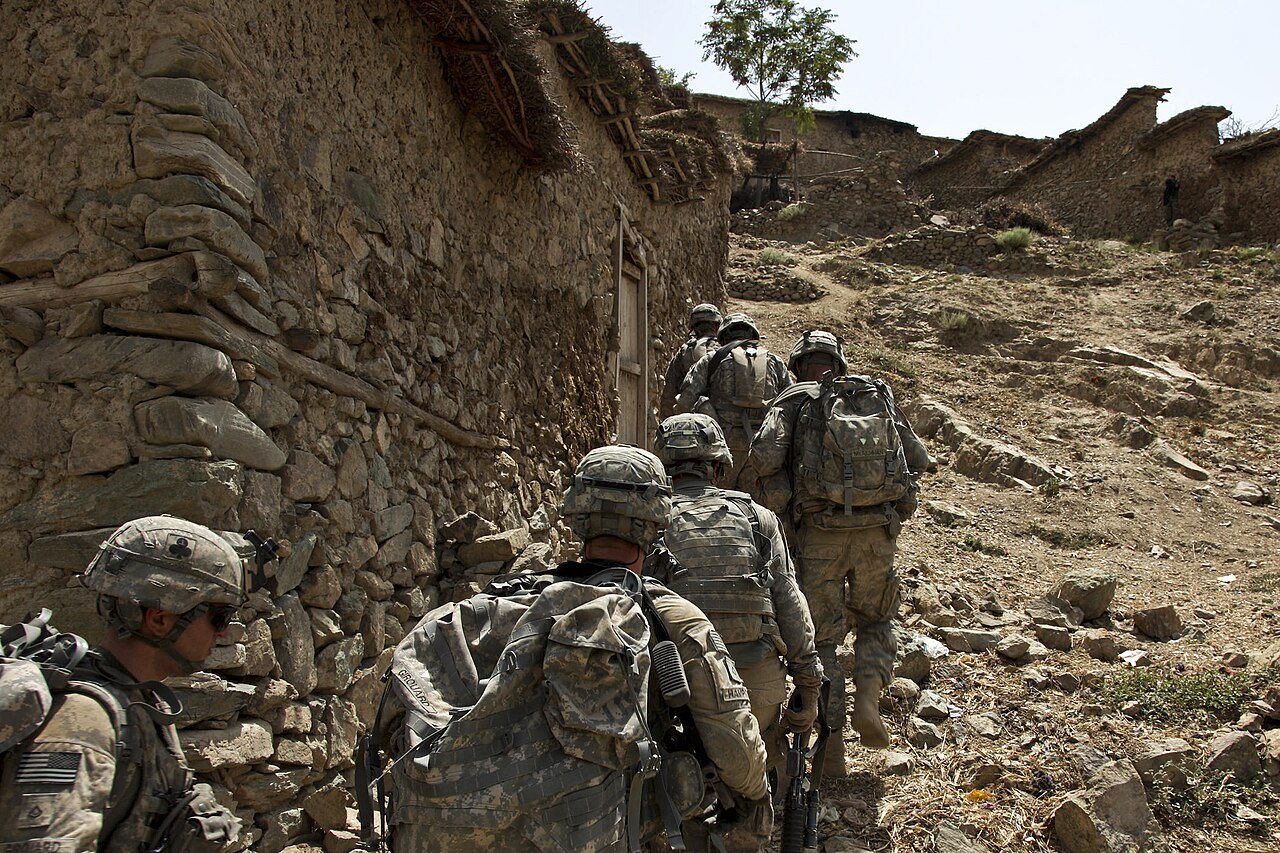
The U.S. withdrawal from Afghanistan in late summer of 2021 brought more than just the collapse of a country and diminished American prestige. It discredited an idea that was part of U.S. military strategy for the better part of two decades—population-centric counterinsurgency. Premised on Mao Tse-tung’s famed analogy likening guerrillas needing popular support to fish needing the sea, the theory posited that by winning over the population through a series of economic and political inducements, a government could starve an insurgency of its lifeblood. Advocates pointed to lessons from Cold War insurgencies like the Malayan Emergency and Vietnam to argue that this approach held the key to winning the Iraq and Afghanistan wars.
America’s fascination with population-centric counterinsurgency proved short-lived. For a time, the adoption of this strategy during the 2006 Iraq “surge” seemed to vindicate this theory. But a similar “surge” in forces and shift in tactics failed to yield comparable success in Afghanistan in 2009 and 2010. And while Iraq remained relatively stable for a period, eventually the Islamic State came roaring back in 2013. And so by the time the United States ceded Afghanistan back to the Taliban in 2021, many analysts viewed population-centric counterinsurgency theory as an ill-conceived recipe for costly, bloody defeat.
Hamas’s Oct. 7, 2023, terrorist attack and Israel’s subsequent war in Gaza has prompted another reevaluation of counterinsurgency. Unlike their U.S. counterparts, the Israeli security establishment never embraced the population-centric counterinsurgency model. Indeed, some Israeli analysts were openly disdainful of it, partly because they believed that trying to win hearts and minds among the Palestinian population was impossible. Oct. 7 only reinforced this long-standing belief. Polls taken a couple months after the terrorist attack showed that more than seven in 10 Palestinians surveyed supported the Hamas attack. And so Israel tried a different, far more kinetic, method in Gaza. As the war progressed, Israel learned that there may have been some merit to these ideas and that alternative approaches have their own shortcomings.
How Israel Spent Decades Running From Protracted Counterinsurgencies and Failed
Prior to Oct. 7, many in the Israeli security establishment—much like their U.S. counterparts—were keenly aware of the costs of occupation. They saw these operations as morasses that consumed blood and treasure and that drained the armies charged with fighting them of their initiative and combat power.
Much of Israel’s security leadership had served in its occupation of southern Lebanon from 1982 to 2000, sometimes dubbed “Israel’s Vietnam.” That conflict resulted in dozens of Israeli military fatalities per year and many more wounded. The occupation was counterproductive, too, sparking the creation of Lebanese Hezbollah, one of Israel’s most formidable adversaries.
Closer to home, Israel’s continued occupation of the West Bank and Gaza had an even higher price tag. It led to two large clashes in the First and Second Intifadas and sporadic violence ever since. By some estimates, prior to Oct. 7, up to half of active-duty Israeli soldiers were stationed in the West Bank, mostly tied down defending Israeli settlements.
Israel tried to extricate itself from the Lebanon and Gaza quagmires in the early 2000s. Israeli Prime Minister Ehud Barak—a former chief of the Israel Defense Forces (IDF)—ordered an Israeli withdrawal from southern Lebanon in 2000, arguing that the hazards of occupation far outweighed the security benefits of maintaining a security buffer. His successor, Ariel Sharon—also a former general—ordered an even more politically painful disengagement from Gaza in 2005, citing similar concerns about protecting Israeli settlements in the enclave with a far larger Palestinian population.
Neither withdrawal brought lasting peace. Israel fought the second Lebanon War a mere six years after leaving southern Lebanon. Gaza saw even more tumult. Hamas ousted the Palestinian Authority in 2007 and then engaged in a series of wars against Israel in 2008, 2012, and 2014. Israel also clashed with a smaller faction, Palestinian Islamic Jihad, in Gaza in 2021. Smaller scale violence occurred in between these conflicts.
During these ensuing conflicts, Israel aimed to avoid protracted occupations in favor of short, sharp wars. In fact, Israeli thinkers even coined a term for their strategy—“mowing the grass.” The idea was to cut down terrorist groups to a level where they could be deterred or rendered less dangerous with small scale uses of force. When the groups regained enough strength, Israel would simply repeat the process. Israeli strategists posited that this continuous but less intense campaign was still better than the alternative.
Israel tried other options to prevent a full-blown conflict in Gaza, too. It built a billion-dollar border wall around Gaza, hailed as the “most complex project” ever attempted, and invested in guard posts, remote cameras, overhead imagery, and signals intelligence to avoid surprise. In fact, it intercepted Hamas’s battle plan a year ahead of time. On the economic front, Israel allowed Qatar to send $100 million in aid to Gaza beginning in 2018 and allowed some 18,000 plus Gazans to work in Israel in order to relieve the economic pressure inside the territory and maintain relative quiet.
On Oct. 7, 2023, Israel’s entire strategic vision came crashing down. The attack showed that Hamas was neither deterred, nor contained, nor appeased. Israel’s bet on limited wars had failed. Israeli analysts proclaimed the “end of mowing the grass,” in favor of uprooting Hamas wholesale. And Israel plunged headfirst into what would ultimately become the very type of protracted struggle it had hoped to avoid.
The Revenge of “Clear, Hold, Build”
Twenty years ago, the United States blundered its way into a “clear, hold, build” construct. Army Gen. Raymond Odierno—then the military adviser to Secretary of State Condoleezza Rice—supposedly developed the catchphrase to explain the Iraq War strategy to Congress. At the time, Odierno’s bumper sticker was more a post-facto justification than a deliberate, forward-looking plan. Nonetheless, it captured something about the essence of these operations: Militaries need to first clear insurgent strongholds, then hold the terrain while building alternate governance structures to replace insurgent-dominated ones, if they hope to create long-term stability.
Going into Gaza, neither the Israeli military nor its critics envisioned Israeli operations as following a similar three-step plan. Israel’s original campaign plan—as described in interviews with Israeli planners in December 2023—was for its military to “clear” Hamas operatives from north to south and then retreat to the periphery of Gaza, conducting large-scale raids into Gaza as Hamas operatives reconsolidated. By staying on the offensive, the IDF thought it could avoid the costs of holding ground in Gaza.
By contrast, in the weeks after Oct. 7 but prior to Israel’s ground war in Gaza, some voices—particularly among the political left, mostly outside of Israel—argued that Israel should eschew a ground invasion in favor of air strikes, special forces raids, and negotiations to free the hostages and cripple Hamas. The underlying assumption, though, paralleled that of the Israeli military: Israel could achieve its war aims absent occupying ground.
In the end, both approaches were impractical. The light-touch special forces-centric tactics favored by Israel’s critics were never militarily feasible. Hamas spread its hostages all over Gaza in small groups, often inside a maze of more than 350-450 miles of tunnels buried deep beneath one of the most densely populated areas in the world. To guard them, Hamas had a full-fledged army with upward of 30,000 operatives organized into brigades and battalions. Any rescue effort would be operationally difficult and involve major ground combat. As it turned out, in two years of conflict, the IDF managed to rescue a mere eight of 251 hostages alive.
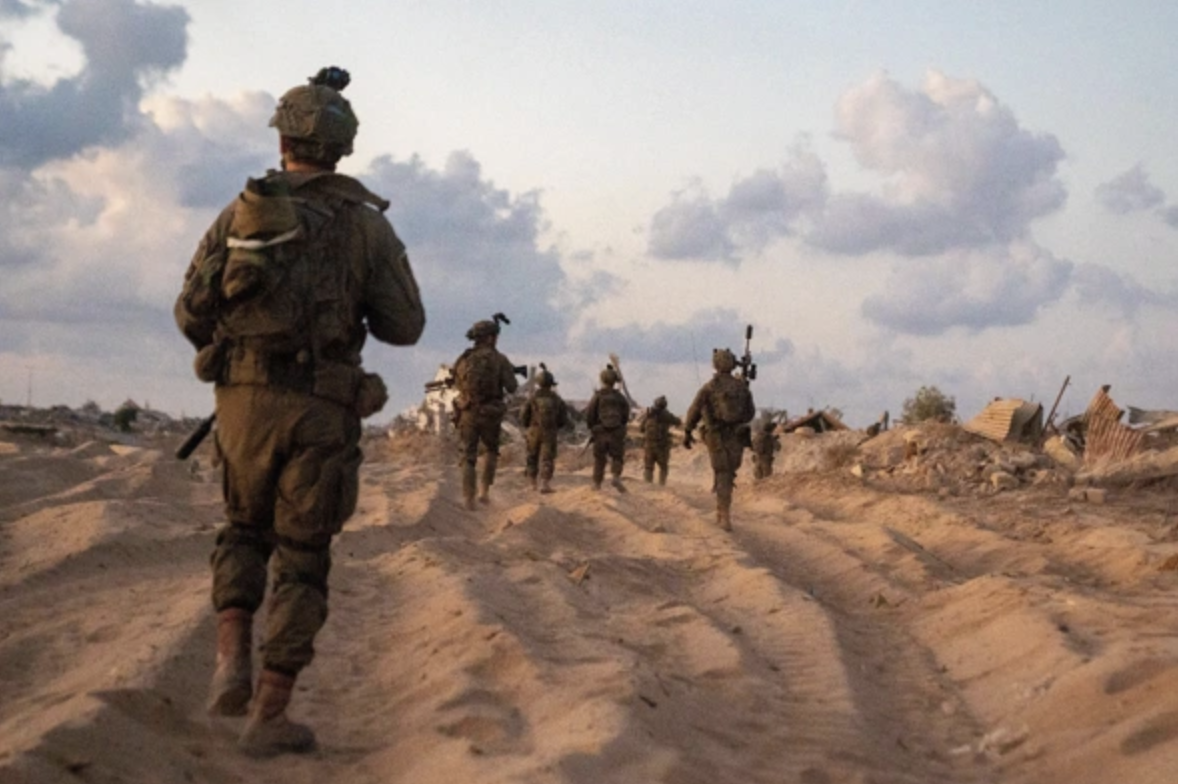
By contrast, the IDF’s “clear-only” strategy proved only somewhat more tenable. The IDF had to retake ground multiple times, launching three different large-scale operations in Hamas strongholds like Jabalia and Khan Yunis and two in Shuja’iyya. While these operations killed Hamas operatives and destroyed infrastructure, they failed to mount sufficient pressure to force Hamas to fold. Only in the waning months of the campaign, when the IDF switched to taking ground and holding it, did that balance begin to change.
But Israel’s reluctance to embrace the “hold” element pales in its unwillingness to accept the “build” dimension of Odierno’s tripartite instruction. Despite pressure from Washington, the Netanyahu administration refused to commit to any concrete plans for governing Gaza after the war. Only in late February 2024, months into war, did Israel lay out a bare-bones construct shunning the more established structures—notably the Palestinian Authority and United Nations Relief and Works Agency—and instead turning the territory over to unidentified local leaders as part of its plan to oust Hamas from the strip. The plan also precluded any reconstruction until after Hamas was fully demilitarized.
The IDF struggled to turn Netanyahu’s plans into reality. Israel eventually armed clans to hold ground, but Hamas began rooting them out as soon as the ceasefire took hold. Similarly, Israel partially relented—under U.S. pressure—to at least facilitate aid into the strip through the Gaza Humanitarian Foundation. While the foundation’s operations were still plagued with criticism, it at least helped Israel respond to growing global criticism of the humanitarian conditions inside the strip.
Arguably, Israel’s failure to fully embrace a “clear, hold, build” construct cost it one of its primary objectives—wresting control of Gaza from Hamas. Without a viable alternative, Hamas—though weakened by two years of fighting—remains the dominant actor in the half of Gaza not presently occupied by Israeli forces. Nor is this likely to change if and when an International Security Force assumes control of Gaza. While Hamas has signaled it might be willing to “freeze or store” its arsenal, it will not give up its weapons entirely and may even be rearming—meaning that it in practice will still be the power center within the strip.
Winning “Hearts and Minds” May Not Win Wars, but Losing Them Can Lead to Defeat
At the core of the U.S. counterinsurgency model was the ideal that these operations were as much a battle for public opinion as they were kinetic operations. As counterinsurgency expert David Kilcullen quipped, “If you have not studied counterinsurgency theory, here it is in a nutshell: Counterinsurgency is a competition with the insurgent for the right to win the hearts, minds, and acquiescence of the population.” While Kilcullen acknowledged that some force would be necessary to target those insurgents who were not persuadable, that force should be relatively limited in scope and the decisive element of the campaign would hinge more on the counterinsurgents’ use of carrots rather than its use of sticks to win over the population.
It’s an open question if the United States ever won “hearts and minds” in Iraq or Afghanistan, or whether that even mattered to the outcome of these wars. Indeed, there is a lot to suggest that battlefield successes were driven mostly by harsher methods, rather than by a carrots-based approach. But there are benefits of a “hearts and minds” strategy separate from its implementation with the population. Even if these efforts did not drive military victory, strictly speaking, they certainly shaped global perceptions of the counterinsurgent—and that matters particularly for Israel.
Judging strictly from the military balance sheet, after more than two years of war the situation in the Middle East looks like a decisive Israeli military victory. Israel killed an estimated 20,000-plus Hamas operatives, including most of the Hamas top command and Yahya Sinwar himself, and destroyed roughly 90 percent of the organization’s rockets. And while Hamas has recruited new members and attempted to rearm, it retains only a shadow of the semiprofessional, paramilitary organization that invaded Israel on Oct. 7.
Netanyahu has repeatedly claimed that Israel has “changed the face of the Middle East.” And he’s right. Between Israeli successes over Hamas and against Hezbollah, other Iranian proxies, and Iran itself, the Middle East looks very different than it did on Oct. 6, 2023. All of those achievements were accomplished by force, rather than through diplomacy or softer means of statecraft.
But these achievements have come at a cost. Global perceptions of Israel have plummeted. In surveys conducted by the Pew Foundation across 24 countries worldwide in March 2025, only Kenya and Nigeria had populations where 50 percent or more of those surveyed viewed Israel positively. Some of Israel’s key European allies—Germany, France, and the United Kingdom—had almost a two-to-one unfavorable view.
The erosion of support for Israel inside the United States potentially has more significant strategic implications. Negative views of the country have increased 11 points between March 2022 and March 2025 in Pew polling. Among self-identified Democrats, the negative numbers shot up from 53 to 69 percent. But even among younger Republicans (those aged 18 to 49), negative views of Israel have increased from 35 to 50 percent.
Public opinion is notoriously fickle, but even so, this erosion of Israel’s global standing should trouble Israeli policymakers. As a small country, Israel depends on trade with the United States and Europe to fuel its economy. The boycott, divestment, and sanctions movement that was supercharged during the Gaza war threatens Israel’s lifeblood over the long term. Moreover, if what enabled Israel’s success over the past two years was U.S. military and diplomatic support, then that may not be a given going forward—depending on who controls the executive and legislative branches at the time. If its position with the United States and its trading partners falters, Israel’s seeming victory in the past two years may at some point in the future be seen instead as a decisive defeat.
And so, the question becomes whether Israel could have stemmed some of the loss of international support had it embraced the “hearts and minds” side of counterinsurgency to some degree. Some of the backlash was likely inevitable no matter what tactics the IDF chose to employ. After all, Israel’s previous limited wars in Gaza also prompted similar anger around the world, just on a smaller scale. But even if Israel was bound to lose the public relations war in the end, minimizing the margins of that loss may matter for Israel’s long-term strategic position.
The (Partial) Rehabilitation of Counterinsurgency Theory
Stepping back for a moment, Israel’s experience in Gaza doesn’t quell the lingering debate about the conduct of the U.S. campaigns in the Iraq and Afghanistan wars. But the Israel-Hamas war should help frame how the United States thinks about such conflicts going forward.
Israel’s experience in the years running up to Oct. 7 should be a cautionary tale about states’ ability to avoid these types of conflicts. Despite Israel’s best efforts to keep on “mowing the grass,” it still plunged headlong into the bloody, protracted conflict that it spent more than two decades trying to avoid. That should serve as a warning to policymakers who think they can forever close the door on these types of conflicts going forward.
And if counterinsurgencies—as much as states may wish to avoid them—will be inevitable, then the question is what the best, or least bad, way is to fight them. The strategies the United States employed in Iraq and Afghanistan need to be judged not just on their own merits, but against the alternatives—like the strategy Israel employed in Gaza. Israel’s experience demonstrates that while victory in these wars may not work quite the way population-centric counterinsurgency surmises, there are nuggets of truth embedded in the broader approach.
More importantly, population-centric counterinsurgency offsets some of the political costs of these campaigns. And for democracies that value domestic and international support, that matters. To riff on Winston Churchill’s famous quip about democracy, population-centric counterinsurgency may be the worst strategy, except for all those other forms that have been tried from time to time.