Inferior Officers Protections Post-Slaughter
A district court judge has affirmed removal protections for inferior officers in the first case to consider the question post-Slaughter.
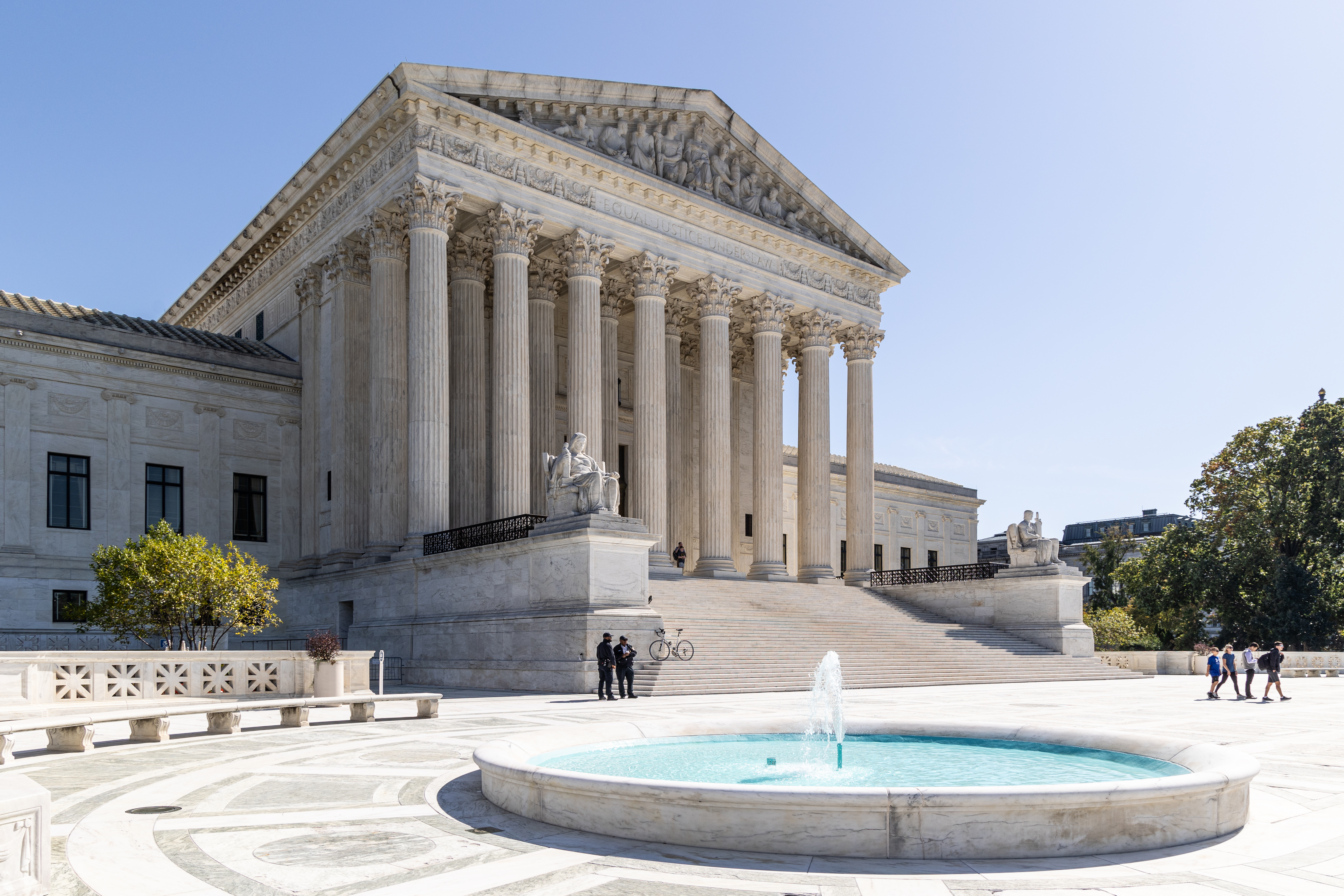



In Trump v. Slaughter, the Supreme Court held that the president must have the constitutional authority to remove his “subordinates.” Although Slaughter itself concerned the removal of a principal officer (specifically, a member of the Federal Trade Commission), the decision raised significant questions about which “subordinates” could be protected by Congress. Importantly, Slaughter raises the question of whether the Supreme Court’s 1886 decision in United States v. Perkins—which held that Congress may limit the removal of inferior officers—will survive. The class of inferior officers includes positions that exercise “significant authority” subject to the supervision of a principal officer, such as assistant U.S. attorneys, immigration judges, and administrative law judges.
In Comans v. Executive Office of the President, U.S. District Judge Michael Nachmanoff considered whether Perkins survived Slaughter. The plaintiff, Mary Comans, was fired from her position as the Federal Emergency Management Agency (FEMA) chief financial officer (CFO) on Feb. 11, 2025. Her position is in the Senior Executive Service (SES), which is the upper-level management in the federal civil service. Although Comans initially sought review of her firing before the Merit Systems Protection Board (MSPB), she ultimately filed suit in the U.S. District Court for the Eastern District of Virginia. In his decision, Nachmanoff reaffirmed Perkins and soundly rejected the government’s claim that the Constitution prohibits Congress from protecting certain inferior officers from removal. Nachmanoff previously rejected the administration’s claim that Comans must seek review before the MSPB.
Comans is significant as the first civil service decision to engage with important questions post-Slaughter. It illustrates three common questions that remain unanswered. First, does Congress have the power to limit the removal of inferior officers? Second, for purposes of the Constitution, what is the line between inferior officers and employees? Third and finally, do these cases belong in the federal courts or the MSPB?
Can Congress Limit Removal of Inferior Officers?
Article II of the Constitution provides a mechanism for appointing inferior officers in the federal government. The Appointments Clause provides that Congress may vest the appointment of “inferior Officers” in “Heads of Departments” as they deem proper. There is no provision in Article II regarding the removal of officers. Nevertheless, the Supreme Court held in Perkins that Congress may limit the removal of inferior officers. It stated:
We have no doubt that when Congress, by law, vests the appointment of inferior officers in the heads of departments, it may limit and restrict the power of removal as it deems best for the public interest. The constitutional authority in Congress to thus vest the appointment implies authority to limit, restrict, and regulate the removal by such laws as Congress may enact in relation to the officers so appointed.
In Comans, the Trump administration argued that the Constitution prohibits Congress from protecting Comans, because the Perkins exception applies only to “inferior officers with limited duties and no policymaking or administrative authority.” That language does not come from Perkins but relies on a single conclusory line in Seila Law LLC v. Consumer Financial Protection Bureau. In Seila Law, the Supreme Court struck down removal protections for the director of the Consumer Financial Protection Bureau but recognized the continuing vitality of Perkins. Nevertheless, the Court’s narrow description of Perkins in Seila Law has become the backbone of the administration’s claims that more senior federal employees, and particularly those in the SES, must be removable at will despite the language of the Civil Service Reform Act (CSRA).
Judge Nachmanoff framed the “ultimate question” as whether an inferior officer’s removal restriction is “of such a nature that it impedes the President’s ability to perform his constitutional duty.” He concluded that the answer to that question is “a clear ‘no.’” He noted that “the Supreme Court has recognized for nearly a century and a half, beginning in United States v. Perkins, that Article II does not create a plenary power to remove all inferior officers and that Congress may validly regulate the method by which they are removed.” Likewise, he determined that this line of precedent remained “unbroken” despite the Court’s recent jurisprudence that permitted the president to remove principal officers from their positions.
Nachmanoff’s decision rests on a long line of precedent dating close to the founding. In his influential “Commentaries on the Constitution of the United States” (1833), Justice Joseph Story expressed concern about the president’s unilateral power to remove principal officers. But he offered the following “consolation” in Section 1538:
[I]t will be a consolation to those, who love the Union, and honor a devotion to the patriotic discharge of duty, that in regard to “inferior officers,” (which appellation probably includes ninety-nine out of a hundred of the lucrative offices in the government,) the remedy for any permanent abuse is still within the power of congress[.]
In Section 1531, Story reiterated the broad rule that Congress, when it gave a department head the power to appoint inferior officers, had the power to decide both the terms of the appointment of the officer as well as the terms for his removal.
Perkins itself relied on this rule to uphold the removal protections for a cadet engineer in the Navy. When the Navy, as part of cost-cutting efforts, attempted to dismiss Perkins without following the statutory provisions requiring either a finding of deficiency on an examination or a finding of misconduct after a court-martial, the Supreme Court rejected the Navy’s argument. Instead, the Court concluded that when it comes to inferior officers, Congress has the authority to designate the terms of appointment by a head of a department as well as those for removal.
Perkins has now stood for over 140 years. In Myers v. United States, often heralded as the source of a strong removal power, Chief Justice William Howard Taft acknowledged that Perkins remained good law and that Congress could limit the removal of inferior officers. Dissenting in Morrison v. Olson, Justice Antonin Scalia went to great lengths to explain why his opinion was consistent with Perkins, agreeing that inferior officers could be protected from removal.
The principle stated in Perkins corresponds with the Roberts Court’s understanding of how the removal power enables presidential control of executive power. As two of us have explained, the president remains in full control of the executive power through the supervision inherent in the chain-of-command structure of federal employment. To be an inferior officer is, by definition, to be subordinate to a principal officer who can override the inferior’s decisions. Principal officers are answerable to, and (after Slaughter) removable by, the president. Inferior officers therefore do not independently exercise executive power but instead, as Article II demands, operate under the supervision and control of superior officers with final say over who exercises that power.
The Supreme Court’s broad rhetoric in Slaughter has nevertheless raised doubts as to whether Perkins will remain good law. The government argued that Slaughter reaffirmed that Comans was removable at will, because there is no “merit to the suggestion that the principles outlined in Slaughter apply only to principal officers.” According to the government, the “only exceptions acknowledged by Slaughter to the general-removability rule is for officers to whom executive power is not ‘attached,’ or for those limited to ‘functions traditionally handled outside the Executive Branch.’” Because Comans exercises executive power, Slaughter permits her removal under Article II despite Perkins.
Judge Nachmanoff, however, reaches the correct conclusion that Slaughter did not overturn Perkins. In fact, Slaughter itself relies on Story’s “Commentaries,” Myers, and Morrison—all of which reaffirm the principle that Congress may limit the removal of inferior officers. Despite this clear line of cases, the Trump administration continues to assert a broad power to remove inferior officers at will, making the issue all the more likely to end up at the Supreme Court soon.
Is Comans an Inferior Officer?
The government’s argument rested on a threshold assumption that Comans was an inferior officer rather than an employee. But officer status turns on whether the official exercises “significant authority pursuant to the laws of the United States.” Nachmanoff expressly doubted whether Comans was an inferior officer but did not need to resolve the question because Comans would be protected as either an inferior officer or an employee under Perkins. If the Supreme Court ultimately overturns Perkins, then the distinction between inferior officers and employees will become significantly more important.
Comans was a member of the Senior Executive Service, but SES status is not itself a constitutional proxy for inferior officer status. The SES includes positions that perform “important policy-making, policy-determining, or other executive functions,” yet the positions vary substantially in whether their authority arises to the level of “significant authority” for purposes of the Constitution. Many SES positions wield authority that independently affects the legal rights of private citizens or binds the federal government. Other positions, however, principally manage personnel, administer internal systems, provide technical advice, or advise superior officials. The wide variation within the SES personnel system makes it difficult to determine whether an official qualifies as an inferior officer or an employee for purposes of the Appointments Clause.
Comans provides a textbook case of the sort of analysis courts will need to engage in if the Supreme Court ultimately overrules Perkins. There is no question that Comans was a senior-level manager: She supervised approximately 450 employees and administered FEMA’s roughly $45 billion budget. But the central question is whether she exercised “significant authority pursuant to the laws of the United States.”
Many of Comans’s broader duties, standing alone, resemble those of a senior employee rather than an inferior officer. She directed FEMA’s financial operations, oversaw financial systems and controls, and advised senior FEMA and Department of Homeland Security officials. Much of that work was managerial, technical, advisory, or internally administrative. She did not promulgate rules, adjudicate disputes, enforce law against private parties, litigate, or determine eligibility for federal grants. Nor did she possess final authority over FEMA’s budget request or over how the agency would disperse its appropriations generally. Those limitations explain why Nachmanoff doubted that Comans exercised the kind of significant authority associated with inferior officers.
That most of Comans’s duties fall short of significant authority does not end the inquiry. As the Supreme Court explained in Freytag v. Commissioner, “The fact that an inferior officer on occasion performs duties that may be performed by an employee not subject to the Appointments Clause does not transform his status under the Constitution.” FEMA’s regulations vest the CFO with authority to approve certain disaster management-cost decisions, including approving interim obligations, changing the ceiling on a grantee’s indirect and administrative costs, and extending the time before that ceiling is set. Consequently, although Comans’s decisions could always be overridden by a superior, federal law entrusted her with discretionary decisions that had significant consequences for the allocation and availability of federal funds. This authority likely rises to the level of “significant authority” because it affects FEMA’s administration of appropriated funds within an existing statutory and regulatory program.
Although the question is close, Comans was likely an inferior officer. Under Perkins, she may be removed from her position only as provided in the governing statute, the CSRA. If Perkins falls, however, courts should expect to perform precisely this sort of analysis. Officer status will not track seniority, head count, or budget authority. Comans had all three, and the question was still close. It will instead turn on whether a statute or regulation routes decision-making authority to the official. This result is odd for civil service law. It is entirely possible that two officials of identical rank and even the same title may fall on opposite sides of the line because their agencies grant the officials different authority.
Can Comans File in Federal Court?
The final question is whether Comans’s removal claim should proceed in federal court at all. Ordinarily, federal employees may not walk into district court. The CSRA generally requires employees to exhaust and channel their claims before the MSPB. As discussed elsewhere on Lawfare, employees challenging Article II removals have developed two strategies for escaping this channeling regime. The first reads the text of the CSRA to show that the MSPB never had jurisdiction over an Article II removal in the first place. The second contends that the board has lost the independence Congress assumed when it built the review scheme. Slaughter bears on both.
Slaughter resolved whatever doubt remained about the second. The day after deciding Slaughter, the Supreme Court denied certiorari to former MSPB Chairwoman Cathy Harris, leaving in place the U.S. Court of Appeals for the District of Columbia Circuit’s holding that Congress may not restrict the president’s authority to remove members of the board. Those members now serve at the president’s pleasure, and the agency has responded accordingly. It has stopped calling itself “independent” in public-facing descriptions, and the administration has converted its attorney-advisers to Schedule Policy/Career, stripping tenure protections from the staff who draft the board’s decisions.
As we have explained, the board’s two remaining members held in Jackler and Jaroch that Article II deprives them of jurisdiction over the removal of any employee the agency can characterize as an inferior officer. Employees no longer receive an impartial hearing before the MSPB. As a result of Slaughter, the MSPB’s members are removable at will by the president and have endorsed the president’s theory of Article II. Requiring federal employees to bring their claims to an adjudicator controlled by their employer makes little substantive or procedural sense.
In allowing Comans to file in district court, Judge Nachmanoff took the first route. Comans had filed an initial claim with the MSPB, where the government argued that an Article II removal fell outside the board’s jurisdiction. Once she filed suit, the government argued the opposite. Nachmanoff rejected the about-face on the statutory text. The CSRA grants the MSPB jurisdiction over actions “taken under” certain statutory provisions that permit the removal of a career SES appointee only for misconduct, neglect of duty, malfeasance, or failure to accept a directed reassignment. A removal premised on Article II is not an action taken under the CSRA. Because Congress never routed Article II removals to the MSPB, “jurisdiction in federal district court, and not the MSPB, is mandatory.” Judge Jesse Furman reached the same conclusion in Comey v. Department of Justice.
This route, however, now looks considerably weaker. In June 2025, the U.S. Court of Appeals for the Fourth Circuit had endorsed it in National Association of Immigration Judges v. Owen, remanding for factfinding on whether the CSRA’s scheme still functioned as Congress intended after the president removed a special counsel and two members of the board. On May 26, the Supreme Court summarily reversed—not because the theory was wrong, but because no party had raised it. The Court also denied the association’s cross-petition, which asked whether the CSRA strips district courts of jurisdiction over claims the board’s own scheme cannot remedy. The institutional-dysfunction argument thus survives, but barely. Justice Clarence Thomas, joined by Justice Amy Coney Barrett, concurred to explain that the Fourth Circuit had erred on the merits as well: The president’s removals changed conditions, not the statute, and courts may not rewrite a scheme because they doubt it still serves the purposes Congress had in mind.
Civil servants are left with a narrow and contingent path to an Article III court. The textual argument in Comans works only because the government disclaimed the CSRA and rested on Article II alone. The institutional argument remains available, but Margolin requires that a litigant raise and develop it, and Thomas’s concurrence identifies at least two votes against it. If both paths close, the question with which we began—whether Perkins survives Slaughter—will make the path to a court much longer. Before the employee can proceed to federal court, the question must first be answered by an agency whose members serve at the president’s pleasure and have already accepted the government’s position.
Only after expending significant time and energy in that process would a terminated employee be able to seek review in court.