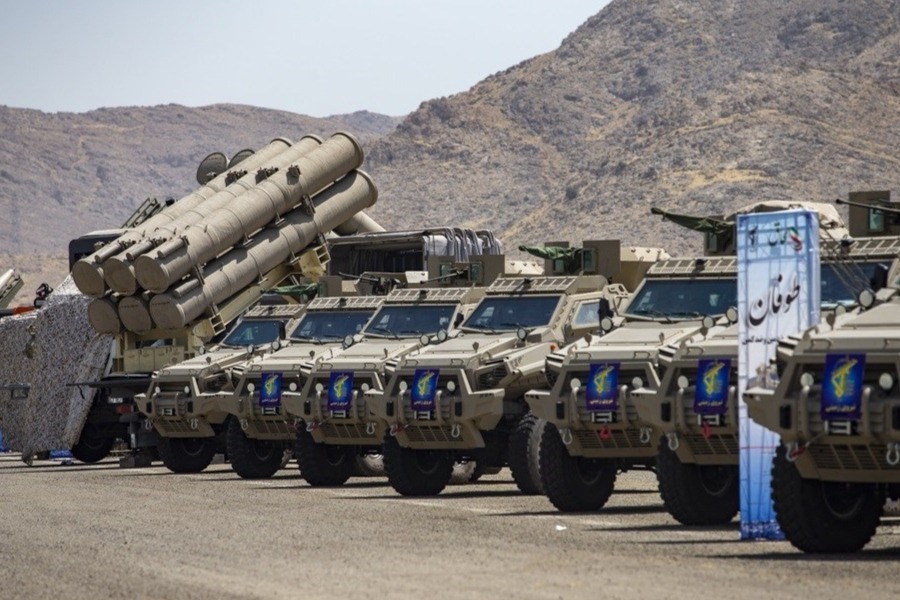
Lawfare Daily: Escalate to What End? Trump's Plan for the Iran War After the Midterms


Former NSC staffers Cole Bucy and Nate Swanson join Lawfare Contributing Editor and Vice President of Research, Security and Defense at the Chicago Council on Global Affairs Ari Tabatabai and Lawfare Public Service Fellow Julia Curlee to discuss the Iran war eight months in and the administration's likely approach after the midterms.
Cole and Nate's new piece in Foreign Policy, "Trump Unleashed" outlines why the president might escalate against Iran and why none of his options is likely to get him what he wants. Ari and Julia also discuss their piece in Foreign Policy, "How Could Iran Happen? An Autopsy," examining how the president's war on the "Deep State" led to this debacle in the Middle East.
To receive ad-free podcasts, become a Lawfare Material Supporter at www.patreon.com/lawfare. You can also support Lawfare by making a one-time donation at https://givebutter.com/lawfare-institute.
Click the button below to view a transcript of this podcast. Please note that the transcript was auto-generated and may contain errors.
Transcript
[Intro]
Cole Bucy: If you think escalation’s gonna solve it, I think I’m clear I don’t, but if you’re in the White House logic chain of one more good push will soften the Iranians up for a deal or collapse, then in that case, it’s better to get it done. Finish the war, escalate, get it done so that the long-term munition supply chains can begin to flow elsewhere.
Julia Curlee: This is the Lawfare Podcast. I’m Julia Curlee, a public service fellow with Lawfare. My guests today are Cole Bucy, Nate Swanson, and Ari Tabatabai. Cole is a former CIA analyst who was the director for Iran in the National Security Council. Nate is at the Atlantic Council and is also a former NSC director for Iran.
Ari is the Vice President for Research, Defense, and Security at the Chicago Council on Global Affairs, and is a contributing editor for Lawfare.
Nate Swanson: There’s a reason Iran hasn’t struck Gulf infrastructure for the last several months, and this is a repeat of what we, you know, we saw in 2019 and 2020 where, you know, Trump had maximum pressure going on against the Gulf, while the Gulf and the Saudis were cutting their own quiet deals, you know, with Iran and, you know, the Emiratis became, you know, the primary sanctions evasion mechanism for the Iranians.
Julia Curlee: Today we’re discussing how the president might escalate the war in Iran after the midterms, and why none of his options are likely to work. We’re recording today on October 22nd, 12 days before the election and nearly eight months into the war. Cole and Nate have a new piece in foreign policy, Trump Unleashed, how the president might escalate against Iran after the midterms, and why none of these options are likely to work.
[Main podcast]
Cole, let’s get right into it. Your piece argues that energy prices have been a real check on the president’s Iran policy. It pushed him toward the June memorandum of understanding settling at the time for something that was worse than the status quo ante. Since your piece ran, he’s pledged not to attack Iran before the midterms, and then said the election would have no impact on his thinking.
What should we think? Does that check out? What do you expect?
Cole Bucy: Yeah, and then of course that’s against the backdrop of other reports that they are still considering before, so who knows where we are? Yeah, I think this is a critical question, but one disclaimer first is you’re asking me fundamentally to dive into President Trump’s thinking, which could be a dangerous hall of mirrors.
I don’t have a psychology degree, but that being said I think the price at the pump for the American voter definitely influenced Trump’s desire for a ceasefire in June to open the Straight up, lower energy prices, even if that meant agreeing, frankly, to a deal quite favorable to Iran and not necessarily the United States.
But that was six months ago, before the election, when there was still enough time to ease inflation at home, pivot the narrative about the war, help the GOP be more competitive in the midterms. Now, where we are, I mean, the MOU quickly fell apart for a variety of reasons, but look, Trump was clearly sensitive to criticism from his own base and the broader media narrative that the MOU is a sign that Trump had lost the war, you know.
He sees his political power as coming from his image as a tough guy that wins, and he doesn’t like the idea of being seen as weak or a loser. His instincts sort of double down, never retreat, and I think that he’s frustrated with an Iranian regime that won’t cave, won’t collapse. And so, he wants to double down, be aggressive, but he had advisors and pollsters in his ear saying, look, this is an unpopular war.
You know, oil markets could spike again. We need those extra couple seats in the House and Senate that could still be at play if you do it before, if you, if we escalate before the war. But who knows what he’s thinking. Maybe he’s decided that’s baked in and he can afford to do it now. But I bet he waits, and I think you could see a situation where, after the midterms, you know, he’s no longer concerned about congressional seats in Kansas, or the gloves could come off.
He’s not worried about gas prices. He can satisfy his natural instinct to double down show strength that he wanted to show, and probably... You know, look, he’s got a lot of hawks around him that are convinced the Iranian regime is weak and that they can finish the job with one more strong blow that could dislodge the regime from power and, or maybe make it cry uncle and take a deal more on America’s terms.
I’m skeptical that will work, but I think that is probably where his instincts lie.
Julia Curlee: Yeah. So, Nate, in your piece you describe a battle of wills over economic pain with both sides convinced that time is on their side. You know, last week crude came in at $105 a barrel. I just paid $75 to fill up my minivan.
Which side do you think is right?
Nate Swanson: Neither side is right, right? They’re both losing. You know, there’s this, this idea in the U.S. if we just do a little bit more pressure that Iran will eventually capitulate or fall, you know, and that’s pretty faulty thinking. You know, we’ve had some version of pressure on Iran for 47 years, and they’ve gone through some very bad times before.
So, I think this idea that Trump’s had throughout the entirety of his war, and really the entirety of his presidency going back to the first term, is that, you know, pressure will lead them to capitulation. I just think we’ve seen the opposite proven time and time again. But where I think Iran has gone wrong, and I would put myself in this, is I don’t think they saw a world where Trump was gonna have a kind of pointless war go on for nearly eight months right now, right?
Something that would have the direct impact on the American economy, on his legacy, and I had assumed, and I think Iran did too, that at some point he would just say, this isn’t worth it, and move on, like he’s done otherwise. That hasn’t happened, and I think the risk going forward is obvious for both sides, right?
For the U.S., this idea that we’re just one more action away from where we wanna be I think, you know, could go on indefinitely. And I think for Iran, there’s this real possibility that we are... Well, for both of us, that we’re in some kind of version of a forever war where we have periodic on and off again fighting.
And in that scenario, I think everyone loses. It’s just a question of who loses most.
Julia Curlee: Yeah. Ari, I wanna bring you in on this. So, the president keeps predicting that Iran is gonna soften its approach after the midterms. It sounds like wishful thinking to me, but could you weigh in on Iran? Like, the leadership calculus.
Are they running out the clock? Do they even care who wins our midterms?
Ari Tabatabai: Yes, and yes. They are trying to run down the clock, and I do think that on some level they do care who wins the midterms. So, let’s start with the second part of the question, which is what happens with our midterms and what comes next?
You know, for all intents and purposes, if the projections currently hold, I think we’re gonna be looking at a lame duck president essentially, who’s going to be facing investigations, impeachments, not just for some of his cabinet members. Articles of impeachment were being introduced by Representative Massie before the, the Speaker of the House decided to send everybody back home, against Secretary of Defense Pete Hegseth.
There’s probably gonna be similar action against the president himself. There’s gonna be a lot of oversight. And look, we all know that foreign policy doesn’t really drive the American voter, but in this case, there are two big foreign policy items that folks keep hearing about when they go home and they do town halls and when they talk to their constituents, which is the Iran war and trade and tariffs, both of which are driving the price of gas and groceries up, as you described with, you know, having to fill your minivan with $75 for the load.
So, so these are all things that are gonna be drivers behind the kind of, what I assume will be more tension between the White House on the one hand and Congress after a new Congress is inaugurated in January. Then there’s that kind of interim period of, you know, post-November midterms before January, where I think the president might actually see a bit of an opportunity to try to finish off a few things, one of those things being the Iran war.
You know, there’s already some indications that he might look to escalate in that period to try to get a deal so that when the new Congress comes in, he’s not having to deal with that, and the one, you know, the, the appropriations are not held again because of the war, that, you know, you don’t have impeachment procedures and so on because of the war.
It’s not yet another driver of action against his administration. So, I think that is a real danger zone that we’re looking at right after the midterms and before a new Congress is inaugurated and actually has the ability to do things. In terms of how Iran is thinking about it, look, I think you’re... I agree with everything that Nate and Cole said.
This is a regime that is not budging, and I think for good reason. It is watching what we’re all watching when it comes to domestic politics here, a president who’s deeply unpopular, who... and an elite that is essentially, a government that is fracturing here, right? Which is the opposite of what’s happening in Iran, where you have elite consolidation.
And so, I think they believe that they can wait this out, and that the longer this, this goes on, in some ways they actually benefit from it, and they being the regime specifically, not the people, who are obviously kind of stuck between a rock and a hard place here. But the regime, the second the shooting stops, needs to start formulating real solutions to the deep governance problems that have just accumulated and have gotten worse with the war, and they, them, don’t really have any solutions to present.
And the longer this goes on, the more they can kind of hide behind this, you know, narrative that there is a war with a very powerful adversary or two very powerful adversaries. We’ll get to your problems that you’ve been protesting about when the shooting stops. And so, they… it’s giving them a bit of room to continue to hide behind this, I think.
And that’s why also they’re not that concerned about ending the war that quickly. In some ways, the worst of it has happened already. You know, the… we’ve had the decapitation of senior leadership within the regime, the targeting of key capabilities of the nuclear program, so on and so forth, and they clearly see that the, the United States is not ready to put boots on the ground, that the president is already, you know, getting a lot of pushback without even going that far.
So, I think they, they calculate that the worst is behind them, that they can withstand this, and that Trump and the administration cannot withstand it much longer. So, they’re ready to kind of hang, hang tight, and I think that kind of leads to what, Julia, you and I have argued for a while, which is that we continue in the steady state for the foreseeable future of cycles of diplomacy and then on-and-off escalation and targeting of one another’s assets, forces, etcetera.
And it kind of carries on for a bit longer.
Julia Curlee: Nate, I wanna get into the process details that national security nerds who come to Lawfare really crave. So, both you and I got to witness the destruction of the National Security Council which is something that Ari and I wrote about in a previous piece in foreign policy.
So, let’s get into this. So, Secretary Hegseth and CENTCOM, according to press, reportedly wanna resume strikes. Other advisors prefer sanctions. The president keeps going back and forth. You ran Iran policy process at the NSC. How does a decision to reopen a second campaign like this normally happen, and how will it likely happen in this administration?
Who is in the room to make those decisions?
Nate Swanson: Sure. So obviously, the way the Trump administration’s doing policy here is unlike anything that’s ever done before, including his own first administration, right? And so, the way it’s normally does, you have a series of processes, you know, where you have, you know, kind of a working level, you know, takes like the lowest common denominator issues, and they find consensus among the interagency.
They pass those up to deputies and principals, and then eventually the president. And in theory, you know, only the hardest, you know, 50/50 decisions are supposed to make it up to the president, where he makes the, you know, the hard calls. Yeah, that’s not how it works anymore in this admin. There is no process, and to the extent there is any debate it starts and ends at the top, right?
And so, you know, Trump kinda drives the agenda and then makes the decisions, and to the extent there’s debate, you know, it’s only within that close inner circle of decision-makers. And that really is actually quite a… even a big change from even his first administration. But I think it’s worth noting that part of the reason this has been such a debacle though is that even those in the room are afraid to speak up.
You know, if you look at the, you know, the Jonathan Swan and Maggie Haberman, you know, story about how Bibi came to sell this to Trump, you know, you had all these cabinet secretaries and senior national security leaders who think this is a terrible idea, but then don’t say anything, and only after the words of the debacle they say, well, I always thought it was a bad idea anyway, and start leaking stuff.
So, you know, not only do you not have a process, you have the very few who have the opportunity to sway Trump not speaking up. So, you know it’s a quite remarkable process, and this is how you get a debacle like this.
Julia Curlee: Yeah. Thanks. So, Ari and Nate just described how Washington is supposed to work, how it likely works now under the second Trump administration.
Could you turn this around for Tehran? The president said last week that he probably should have left the leaders of Iran in place so that he could have someone to talk to not radicalize the, the son of the dead supreme leader. Who is making the decisions in Iran right now and what’s that gonna mean for how they respond to a second campaign?
Like, will that push them to run for a nuclear weapon, for example?
Ari Tabatabai: Well, I think there’s another reason to have left some of that leadership in place is that we actually knew a lot about that leadership, right? You had a lot of consistency over the course of 4.5 decades of the Iranian regime, where we had a lot of insight into the individuals who were there because we had just watched them for such a long time, and now that’s just not as clear anymore.
So, I’ve asked myself the question of who… how is decision-making working in Iran right now? And I don’t know that I have a very clear answer, because there’s just so many known unknowns on top of unknown unknowns. And so, I think it’s— we’re going to learn more as the regime settles into its new format, its new iteration, as the new leaders kind of settle into the new roles that they’re now occupying.
And look, just to kind of talk about the supreme leader for a second, we went from somebody who had been in place for the majority of the regime, and Khamenei Sr., who had been there since 1989, who had been on the record on basically every single major issue, including the nuclear program, including negotiations, including nuclear weapons acquisition.
So, we knew a lot about his thinking on that. His son, Khamenei Jr., is pretty new. I mean, is very new to the role. He’s been around, but he has kind of been in the background. So, we don’t really know that much about his thinking on some of those things. We don’t really know where he stands on the issue of nuclear weapons or negotiations with the United States.
You also noted that he came to power because his father was killed. So, you know, there is this added level of personal grievances that the previous iteration of the regime didn’t have. They had ideological grievances with the United States. They did not have personal grievances in the same way. So, the things are a little different now than they were before.
Now, what’s important to understand, though, is that since its beginning, the Iranian system has had this kind of mix of formal and informal processes that have been in place, and a lot of those processes were formalized at the end of the Iran-Iraq War and throughout the 1990s. And now we’re kind of seeing a similar transition where the regime is having to rethink how it’s done things.
And while it’s doing that, I would assume that it is actually doing a lot more of the informal side of things than the formal kind of Supreme National Security Council processes that we’re used to at this point. Now, whether that continues, I don’t know, remains to be seen, but at least for now, while Khamenei Jr.
is still kind of, you know, hasn’t really been seen in public. We don’t really know what state of health he’s in, if he’s incapacitated or he is... Actually, there’s been some recent reporting that he is actively now engaged and making decisions. Whether that’s true or not, I don’t know. None of us really knows this.
But what that process ends up looking like as he settles into the role, as he potentially becomes more public over the next few months, all of those things will tell us a bit more about the trajectory of the regime. The last point I want to make is that I talked about how the United States government is fracturing in light of the elections and how on the Iranian side we’re seeing consolidation, and that consolidation is occurring around the Islamic Revolutionary Guard Corps and the kind of more hardline factions of the regime, which, you know, that kind of...
The way we had traditionally thought about hardliners in the regime is now skewing more in the mainstream, right? Like, the folks who used to be the most hardline individuals are kind of more in the middle now than they were before, not because they’ve changed their position, but because the regime at writ large is skewing more conservative, more hardline.
And so, that will certainly impact decisions with the IRGC calling the shots a lot more and having a lot more sway over how policymaking happens.
Julia Curlee: All right, Cole, Nate, let’s get into the escalation menu you guys lay out in your piece. Cole, so the first option you lay out is this more Epic Fury options, this reference back to the first wave of bombings last year.
The, that campaign didn’t change Iran’s behavior. They, you know, the president now is talking about hitting Pickaxe Mountain at Natanz. Is there a target set that actually would change Iran’s behavior? And then when you’re talking about that, think about the fact that… does the United States even have the munitions to carry on a campaign like this going forward, or will we just have to fall back on restraint?
Cole Bucy: I’m personally pretty skeptical that there is some magic set of targets that the U.S. and Israel can bomb to topple the regime. Iran’s military command and control has plenty of redundancy. I’m sure that is even more hardened after these past eight months of war. As I wrote, quick plug, my article in War on the Rocks yesterday, you know, I sort of half-jokingly say that I’m sure Iran’s leaders wonder, what are U.S. bombs gonna do that they haven’t already done?
Are you gonna decapitate and kill more Supreme Leaders and other senior leaders? Are you gonna mow the lawn, strike more missile launchers and radars? You already do that. Are you gonna strike drone facilities? You already do that. Are you gonna pile more rubble on Pickaxe Mountain or other nuclear sites?
You’ve already done that. So, I don’t know what it is that’s unique or different than Iran’s already endured during the war. But I will give credit, CENTCOM is very good at its job, and they are simply executing orders from the White House. Even if strategically we’re in a stuck position, tactically CENTCOM can be quite good.
I’m sure they have refreshed their target list, and they could probably very meaningfully degrade Iran’s tactical capabilities further than they already have, to the degree some have been reconstituted or moved or what have you. But that always gets back to the question, to what end? As I mentioned, the Israeli term mowing the lawn has seemed to have entered the U.S. parlance which I think speaks to the real disconnect between tactical brilliance and strategic success, because the grass will just grow back if that is all you’re ever doing, and I don’t know what’s unique or different about this.
I know the New York Times report from yesterday talking about rumors about plans for this new Epic Fury 2.0 said a… it would be an intense but short duration. Now, who knows if that’s true or not, but it speaks to the idea that they’re not necessarily thinking something long-term necessarily. But your point you raised about the munition shortages I think is an important one because and I know we mentioned this in our article as well, and I think it should urge for more restraint given that we’re limited on key munitions that we relied on in the early parts of the war, obviously interceptors being a key part of it.
But I think how the shortages perversely argue for escalation, right? Because you could say, well, if there are shortages, why are you escalating? But I think couple things to that. First, CENTCOM has lots. Even if the… some of the key go-to munitions are in short supply, I think CENTCOM is a powerful and deadly force with plenty of other platforms.
I don’t doubt their ability to come up with a very lethal strike package that could last days or weeks with what they still have, even if some of the munitions are short. But those are important shortages in certain areas, but I think that the real pain point there is probably more DOD-wide, right?
Affecting other AORs. There have been reports that have come out that EUCOM and Indo-PACCOM are complaining about their need for some of those munitions when it comes to a Taiwan or with Korea contingency, or EUCOM worrying about potential Ukraine-related contingencies. And God knows what SOUTHCOM has planned with Cuba, as we keep hearing every now and then.
So, there’s lots of other COCOM commanders that are saying, hey, we need some of those too. What we can’t have is CENTCOM hogging what little scarce supply of these key munitions is left, and we really can’t pivot and change the supply chain within DOD so that other COCOMs are getting their share, so to speak, preparing for their own contingencies that the U.S. cares about as well, until we sort of stop devoting the lion’s share of resources and the urgent need in the Gulf to… in it for the Iran conflict.
So, in a weird way, I think the logic for... if you think escalation’s gonna solve it, I think I’m clear I don’t, but if you’re in the White House logic chain of one more good push will soften the Iranians up for a deal or collapse, then in that case, it’s better to get it done. Finish the war, escalate, get it done so that the long-term munition supply chains can begin to flow elsewhere.
Which can be counterintuitive to those first thinking about it.
Julia Curlee: Well, I definitely agree you’re not allowed to start a new forever war until you finish the old forever war.
Cole Bucy: Right, right. Right, yeah.
Julia Curlee: I think that’s what we all were told by our parents. Nate, I wanna turn to you to talk about the economy again.
In the piece, you talk about a go-for-broke option on the economy, talking about sanctioning Chinese banks, refineries, ports doing business with Iran. But at the same time, the Secretary Bessent said that would be blowing up the global financial system. Since your piece ran, she visited Washington.
Every… they rolled out the red carpet, trade truce extended. Is this China option realistic, or is it now off the table?
Nate Swanson: No, it... They called our bluff, and it’s not really realistic, I think is the short answer. But since I don’t wanna be that short, can I just jump on Cole’s comments for a second and just say that I think, you know, the risk for Iran isn’t maybe so much that they... there’s some silver bullet where they, you know, the U.S. can magically create them to fall.
I think the real risk for Iran, and I think this is a risk for America, is that this just goes on forever, right? So, Mohsen Rezaei was out there earlier this morning saying, you know, Iran’s strategic goal and... who’s, like, the national security advisor equivalent for Iran.
He basically says, our goal is to not fight the next war, which, you know, from Iran’s perspective, I think makes sense, and is, you know, a smart strategic objective. But the problem with that thinking as I think about it is, like, this war just might not end. And so, while they don’t wanna fight the next one, this thing could just go on forever.
I don’t think that makes us any more likely to win it, but you know, you could start to see the outlines of a war that just, you know, we continue to say, well, we gotta do a little more. We gotta surge this. We gotta surge that. We gotta sanction China, whatever it is, and this thing just goes on forever.
And I think, you know, obviously, that’s a huge risk to American interests. But I think Iran is maybe under-appreciating the risk to themself that they just might be in this war forever, and maybe there’s some in Iran who are okay with that. I mean, they probably are. But I think that’s a really bad outcome for everyone.
So, you know, that wasn’t the question you asked, but you know, I just wanted to disagree with Cole a little bit.
Cole Bucy: Great. I would love to push back. I think, yeah, Iran, I think, is willing... I mean, my thesis of where Tehran’s head is at is that their view, as you said, is, right, is preparing for the for the next war, right?
I think I think we saw Jalili the other day said, we don’t need to end just the war. We need to end the shadow of war, right? And I think the way he meant that was You know, if you go back to the Soleimani strike, the 12-day war, February, they’re seeing these all connected, which is those hawks in Washington and Israel and the Gulf that don’t believe they can live, coexist with the Islamic Republic, they see this as all connected, and that the noose is tightening, and that even if they agree to ceasefire to end this current round, Israel and United States will be back to finish the job.
And it may be in six months or a year, but in essence, they’re gonna come try to kill us at some point. And right now, at least they have us a little off, on our back foot. We, they’ve got the, you know, they’re battling for the Strait, they have economic leverage, and, you know, we’re low on munitions.
So why would they agree to an off-ramp that allows the United States and Israel to regroup, resupply, and pick a timing of our choosing to come back for round four or five, depending on how you count it? All I have to say is, I think they’re thinking about their survival, and they probably think they’re probably their survival is touch or go in the best case scenario in their minds.
Their best chance of survival is to keep pushing now rather than let us regroup and come back when we want to.
Nate Swanson: Well, what’s their end game?
Cole Bucy: Survival. I mean, look, I’m not saying... I mean, this is something that happened to them. I don’t think they’re thinking strategically the way we would want them to. I think they’re thinking our best chance of survival is right now to keep pushing.
Nate Swanson: Yeah. Which makes sense. I guess I just wonder if they are fully prepared for this possibility of a forever war, which was unthinkable in the U.S., you know, you know, a few months ago.
Julia Curlee: I tend to fall down on the side of this is a hardened revolutionary regime, and they know that they have more staying power in an existential conflict than they, than we do with a public that opposed this war from the beginning.
But to finish off your escalation options Cole, I want to just turn back to you for one, one more item, which is your season finale. This is the Special Forces raid that you lay out, this go-for-broke going for hardened facilities, getting to the enriched uranium that’s buried and likely dispersed and trying to, I don’t know, do a heist and get it out of the country.
Can you walk us through this this option, whether it’s realistic? You know, drawing on your time as an analyst, how well does anyone actually know where this stuff is buried, especially now?
Cole Bucy: Yeah, this is probably a good moment to say, you know, I’m former intelligence, but I do not speak for the U.S. government.
I do not speak for the intelligence community, an important caveat that they like me to always clarify to make sure everyone knows that. But look I know it’s not gonna come as a shock to any of you, I think highly of the U.S. intelligence community. I think that they can probably give the president pretty good insight on some of those questions.
But the movies do overplay CIA, NSA, their all-knowing ability. It’s not the case in that regard. They can give confidence about where most of the HEU probably is. I’m... I bet they could do that, but it’s never gonna be 100%. They can’t rule out any kind of other places. But, you know, I think this is a place, Julia, where, you know, you’re such a serious, substantive person.
You’re looking for serious, substantive answers about how this could actually Get rid of the HU, and I think that kinda, you know, when we talk about the season finale, I think, you know, the irony is you’re being more serious than the president is to a certain degree in this scenario. I think in this scenario, it’s the spectacle, right?
It’s the idea of a made-for-TV action movie sequence where the president can use the narrative climax conclusion to the Iran war movie. You know, this is what’s going on, I think, in this scenario is does he, in his mind, need to give Fox News and other sort of pro-Trump media outlets a way to wrap up the narrative from a position of strength?
Look, you know, I... Nate, Ari, and others after the 12-day war last year, I’m sure they were pointing out that the U.S. bombs probably hadn’t totally obliterated Iran’s nuclear program even though the president kept saying it over and over again. I think that could be a similar dynamic where there’s a big spectacle, there’s some operation, and there’s a lot of focus on the Vegas lights of the tactics of the operation that the president likes to show strength.
But then you have think tank dorks like us going, well, actually you didn’t actually necessarily solve it, but no one’s listening to us, and that gets lost in some white paper when the president has moved on, declared victory. And I think that’s the idea is, you know, he... it almost is a version of the one we talked about earlier of Epic Fury, where it’s big, it’s loud, it looks strong, claims victory, and then tries to change the discussion.
Nate Swanson: The mother of all bombs?
Cole Bucy: Exactly.
Julia Curlee: Ari, you know, the enemy gets a vote. I wanna turn back to you. You know, the U.S. began this war at a time and place of its choosing, but I personally view the Iranians as having the decisive role in deciding when this war ends and how. So, Iran is clearly spreading the battlefield, at least Iran and its partners.
This month, the Houthis struck in Saudi Arabia, they killed an American at the Riyadh airport. They hit the oil fields. The IRGC is threatening to cut undersea cables in the Strait of Hormuz. Talk to us about Tehran’s escalation ladder. Can you preview it for us? How much control does it have over the Houthis?
Walk us through this.
Ari Tabatabai: Well, so to start with the Houthis, which is probably the easier question, you know, we’ve talked about this on the podcast before. The Houthis are not exactly your run-of-the-mill Iranian proxy, right? They are not as taskable as some of Iran’s other proxies. They have a history of saying no to Iranian requests for action.
So, it would be a mistake to kind of put what the Houthis are doing into the same bucket as what Iran is doing to respond to the war. There are certainly, there’s a Venn diagram, right? There are things that the Houthis are doing that are very advantageous to Iran currently, not the least of which being the fact that they’re essentially disrupting traffic through a second choke point, which is very helpful to Iran because it gets to pressure the United States, Gulf countries, and the rest of the international community, frankly, to try to seek an end to the conflict.
But the Houthis have their own agency, they have their own interests, and they’re kind of separate from what is going on with Iran specifically. In terms of the escalation ladder, look, I think what we’ve seen so far has been essentially what Iranian doctrine had been designing for a really long time, right?
We’ve talked about how Iran had been preparing for the scenario of a conflict with the United States and with Israel for decades, since the beginning of the regime, essentially, and everything we’ve seen play out has been exactly as advertised, I think. And so, I... Where do we go from here? I think it, in part it depends on some of the things we’ve talked about.
What happens after the midterms, what types of action, what might the president consider? Does it include you know, the Mother of All Bombs? Does it include special operations and taking out the HEU? Is it kind of more of the mowing of the lawn that we’ve seen hitting some radar sites and, you know, missile sites and so on and so forth?
That will determine how Iran responds, of course. But I imagine that we’re gonna see a lot of what we’ve seen so far, right? A lot of Iran not being really able to hit the United States homeland ultimately, and kind of taking it out on the rest of the region. So, the Gulf, I think, is gonna be front and center regardless of what happens here, and that includes their energy infrastructure the tourism sector, and all of the things that have made the, that have put the Gulf essentially on, on the map internationally.
And then the last thing, and this is maybe a reaction to what both Cole and Nate have pointed out, you know, I think ultimately the problem we have here is that we, and by we here I mean the, the U.S. government, had been planning for a war that would ultimately lead to a fracturing of the regime.
And if that didn’t happen, the plan B was gonna be let’s just kind of keep mowing the lawn, and we are in mowing the lawn scenario right now. And there is no good political objective that we have for it. What does that look like? To what end are we mowing the lawn? There is no good way to come out of it, right?
If your entire plan, and we saw some of this in the Biden administration, we can talk about it later, if your entire plan is designed around let’s just blow up radar sites here and there, you don’t really have a good outcome to point to. And so ultimately I think, you know, we can keep doing this thing for a long time.
There is, we’re just gonna be kind of depleting more of our stockpiles of things. And to Cole’s point, all the other command commanders are gonna be asking for some of the same things and not getting it because we’re blowing it up in the Middle East without actually being able to point to any real success or outcome that is tangible and advances U.S. interests.
Julia Curlee: Cole and then Nate, let’s have one more crack at sort of the worst case scenario. So, let’s put on your black armbands like any good analyst and tell us how everything goes wrong. So, the worst case scenario, which I read out of your piece, post midterms, U.S. strikes on Iranian civilian infrastructure, Iranian retaliations against Gulf energy sites, and now the White House post-midterms is willing to stomach an energy crisis ‘cause it, it’s not gonna face the voters.
The president’s obviously not facing reelection but his party will not face the voters for another two years. Walk us through this scenario. How bad could it get after November 3rd? And are there, is there anyone with a break to prevent this kind of global economic catastrophe?
Cole Bucy: Yeah, I think that to go to worst case scenario, if the president truly doesn’t care about sort of global energy markets, it could get a lot worse.
As you kind of laid out there, as we laid out in the piece, you know, the president has threatened to, you know, annihilate Iran, end its civilization, you know, some pretty cataclysmic warnings, but he’s largely held back on strikes on civilian infrastructure, water plants, electricity grid items. He’s hit some energy infrastructure, but a lot of it he’s held off on.
In part because of Iran’s tit for tat strategy with the Gulf, right? You hit, you know, something like, we’ll hit something like... You hit our water, we hit the Gulf’s water. When you hit our electricity, we’ll hit the Gulf’s electricity. That is kind of the rhetoric you heard from Iran that they’ve kind of lived up to in the back and forth when bombs were flying earlier in the conflict.
And I think the… part of the issue is Iran definitely has vulnerabilities there, but they do have more rivers and streams and water… for example, than the arid Gulf, who is more vulnerable to such strikes. So I think that’s why you’ve seen the Gulf quietly urge the White House to reconsider some of that because if Iran strikes back you could see some real water shortages or some electricity blackout kind of situations in the Gulf that could be more devastating or as devastating as those in Iran.
And so, I think the Gulf partners to the United States have understandable concern about them being the collateral damage of an escalate, of further escalation. In terms of energy market, there’s still a lot in the energy infrastructure in the Gulf that Iran could hit if their own targets are further struck in Iran.
And I think, you know, we focused on tanker flows and the concern, you know, how well it’s opened, the Strait of Hormuz, but there becomes a question of how much long-term capacity the Gulf can even put on a tanker if a lot more stuff starts going up in flames or is in rubble. Not to say they can’t rebuild, but that increases costs, and the long-term tail, so to speak, to global energy supply really becomes a question in addition to the more acute near term supply as well.
Nate, is there something I’m forgetting, or you want to add on there?
Nate Swanson: I agree with your, everything you said there. Look, I would just add two things, right? So, the Gulf is probably the most vulnerable in this entire war and this going on. So, you know, obviously they were well-positioned, some of them, not all of them, to, like, take these massive economic hits now.
But I question whether it’s possible in ‘27 and beyond, right? You have the whole economic and political model of a country like the UAE and Saudi Arabia is based on this idea of, you know, an oasis of stability. And, like, this goes well beyond just energy to include, like, you know, data storage and, like, I don’t know, all these other things I don’t understand related to trade and, so I mean, like, those are all at risk with this war going on as well. So, I mean, that, I think we cannot rule those things out, and Iran is explicitly threatening both, you know, undersea cables and you know, information storage. So that’s, like, a big deal that has huge implications. I think the other worst-case scenario, the one we haven’t talked about yet, is, like, we don’t have oversight into what Iran is doing on their nuclear program anymore.
So yes, while it was set back in June 2025, you know, the IEA is not there, and I don’t think we can rule out a chance of a covert breakout attempt by Iran. And so, as all of those other things… Cole talked about happened, you know, if this does, you know, move, morph into a forever war, I think the likelihood of an Iranian breakout only increases.
And, you know, all these are, you know, hugely problematic.
Cole Bucy: I would just add on to that point, I think one thing I know Nate and I have talked about as well in terms of worst case for American power, American influence, leadership in the world is if these Gulf countries really start feeling it and the devastation becomes unsustainable, you know, at what point do they seek a… their own separate peace with Iran that may help lower the damage to their economies, to their sense of normalcy?
But at the cost of potentially less U.S. influence, less long-term U.S. presidents, you know, at what point do they decide U.S. bases and U.S., you know, partnership is a liability instead of a protection or asset?
Nate Swanson: I think to some extent we’re already there, right? I mean, you saw the Reuters piece last week saying that, you know, the UAE is doing their own quiet deal to unfreeze assets for Iran in return for not being struck since May, right?
So, you know, who knows if that’s hard proof or not, but I think there’s a reason Iran hasn’t struck Gulf infrastructure for the last several months, and this is a repeat of what, you know, we saw in 2019 and 2020 where, you know, Trump had maximum pressure going on against the Gulf while the Gulf and the Saudis were cutting their own quiet deals, you know, with Iran.
And, you know, the Emiratis became, you know, the primary sanctions evasion mechanism for the Iranians. So, I think this is already happening, and I think it is hurting our credibility, but I guess the question is, like, how much lower can it go?
Julia Curlee: All right, guys, let’s put on our rose-colored glasses here for a couple questions.
So first, Nate, your last scenario is a bit surprising, I think, that after the midterms the president stops pretending to care about the war. Well, I mean, he might be not always pretending to care about the war, but for real this time and revive some version of the June memorandum, declares victory, the war is over, hooray.
Iran’s negotiators have said that the negotiating table remains in place. Qatar waiting for an answer on Iran’s proposals, answers to the U.S. counter proposals. The June ceasefire lasted for three weeks. What would a second version of this happy ending look like?
Nate Swanson: I think it will look similar to the June MOU but rebranded, right?
And so, the— substantively I think about it, it’s about as good as it’s gonna get for Iran. But the problem right now, and the reason you can’t go back to the MOU, is because right now neither the U.S. or probably Iran care about outcomes or solutions, they care about the perceptions and accumulating leverage.
And so, the end game still looks pretty similar, right? I mean, but the question is how. And I think this is why the Gulf is so important here, right? So, they are just absolutely in the crosshairs of this, and this cannot go on for them. So, I’m wondering if there’s an optimistic world where basically the Gulf can bail Trump and Iran out of their own mess and basically have something similar to the MOU, but Gulf-led.
And so, there’s a world in where that works for Iran and there’s a world where it works for the U.S. but you know, there’s a lot of obstacles, too. But to me, that might be the best-case scenario here, because I think the reason the MOU failed ultimately was, you know, the terms were vague, but also because president saw it as a political loser, and he didn’t like being— the criticism that came with it, especially from his conservative base.
So, if there’s a world where he acquiesces to the Gulf doing basically the equivalent on their own, maybe that’s a better world for us.
Julia Curlee: Ari, as a CIA officer, I’m constitutionally incapable of seeing an optimistic forecast on any grounds, so I want to turn to you now expecting you will take me back to the dark place where I’m comfortable.
The piece itself ends on a grim note that Iran is unlikely to budge, that the president can’t walk away without accepting Iran’s reading of the June memorandum, and the U.S. has to settle for something that’s worse than what it offered back in June. What do the people in Tehran actually need in order to say yes to get this war over?
Ari Tabatabai: Yeah, I mean, if you’re turning to me to brighten your day I’m really sorry, I have terrible news. Yeah, no I think— I agree with Nate. I— and here’s the challenge, right, is that the MOU is actually not a good deal for the United States, but it is the least bad thing.
Cole Bucy: It’s pretty terrible.
Ari Tabatabai: It is pretty— It’s a pretty terrible deal, and a deal that no predecessor to the current president would have agreed to for very good reason.
And yet, here we are. It is probably the best that we can get at this stage. The reason being that it’s already set a precedent for Iran, right? And I totally agree with Nate. I think it is the best they can hope for at this stage, and should probably take it because it’s not gonna get any better especially with more oversight potentially coming.
What do they need to get to yes? I think partially just having some sort of credible… some sort of credibility from the United States that it’s not gonna turn around, what Cole was saying, and bomb some more facilities in a few months. And that is very difficult with the current administration, which changes its position and policies every, you know, on a whim, right?
It’s very hard to show coherence and consistency when you are seemingly threatening your closest allies every other day, let alone adversaries. So that, that is going to be a major obstacle, I think, for Iran watching, thinking, okay. Well, we could take this MOU, but then what? What comes in a few months, right?
I mean, we’ve started Epic Fury right at… in the middle of negotiations last time around. So, there is no credibility that this administration has that it is actually going to abide by a deal that it signs. So that, that is one of the, I think, many challenges we have here.
Julia Curlee: All right. So, as we head toward the end let’s cast ourselves into the future.
It’s early next year, the Democrats have retaken, at very least, the House, and the… and the possibly even the Senate. Last year, both chambers passed war powers resolutions, 50 to 48 in the Senate. If Democrats are in control, can they restrain the President and force an end to this war using the Article 1 powers that they have if they can unite through oversight and funding you know, rejecting the $22 billion that, that the administration claims it needs to replace munitions?
Or is the president effectively unleashed either way?
Nate Swanson: I’m kind of mixed on this question. I think on one hand, I don’t think the President cares at all what Congress says and will you know, just do whatever he wants. But the optimist in me says, okay, Trump doesn’t actually have, like, a good off-ramp here, right?
We just talked about for all the reasons Ari just said. So, you know, if Democrats are constraining him, you know, maybe he can just blame them. oh, like, if I had only gone on, you know, if only I hadn’t been leashed by the Democrats, you know, I would’ve won the war that, you know, sleepy Joe Biden kept me from winning the war, or something like that.
You know, that might be our best behavior. No, I do think you know, look, the, the thing here is the budget, unfortunately, right? I mean, like, that is what the Dems will have the leverage over and that might, you know... you always wanna make sure our military’s, you know, fully funded to their capabilities, but, you know, there’s just an inordinate amount going to a war that is hurting us strategically.
So, I think that will be one of their, one of their leverages.
Julia Curlee: Cole and then Ari, look into your crystal ball. Tell me what’s gonna happen.
Cole Bucy: I think barring some will change somewhere, I think we’re in this cycle of flare-ups of more Epic Fury lite, and then back to what we see today as sort of this this middle ground status quo.
I think Nate’s right in that obviously Congress has the power of the purse, and they could try to restrict funding for the war. The challenge, of course, is politically it’s a loser to not be, you know, giving support to the troops. Specifically, in this case, the shortages around interceptors, which are a defense- largely defensive weapon.
So, what, you don’t want to defend U.S. soldiers from being hit by an Iranian missile? That gets difficult. But I think that there are still ways they could— They can make his life more miserable, but if he’s committed, I think there’s enough power given to the president executive to do what he wants, by and large.
I think he could use them as a foil and to blame them in some ways, as Nate laid out. But I think that’s more likely than actual restrictions on the president.
Ari Tabatabai: Yeah, I agree with everything that’s been said. And look, I think it’s not just Democrats, right? It’s Republicans as well, many of whom are fed up with this war and want it to end.
The challenge is it’s very hard to silo appropriations, as Cole was saying. You know, you can choose not to move forward with the $1.5 trillion the Department of Defense is asking for, but that doesn’t just fund the war, and even the things that do fund specifically things in the Middle East have implications for, for U.S. defense writ large, right?
Our bases, having to rebuild the bases that have been hit doesn’t just advance our operations in the Middle East, it also helps us elsewhere. So, there is that particular challenge as well. I do think, though, that any kind of move toward more oversight on the administration will be, will challenge the president in other areas that he wishes to pursue, and he may have to make trade-offs.
I do also think that we’re not dealing with a normal administration that is, you know, going to kind of say oh, Congress, you’re not gonna, you know, move forward with appropriations, or you’re not gonna confirm our appointees? Oh, okay. Well, then we’re gonna withdraw from Iran, right? This is not how this administration works.
It’s not particularly responsive to Congress. So, I think we’ll see a lot of push by the Congress. I’m not sure how much of a response we’ll get from the administration.
Nate Swanson: You know, it’s funny that, you know, the three of us worked together really closely in 2021, and we had a lot of, like, little tactical arguments about what we should do to get back into JCPOA.
And for me, you know, I think about that all the time, like, would this have made a difference one way or the other? And the answer probably is no. But I do think I really learned, like, two fascinating lessons from that time that I think are important moving forward, right? The first is that, like, Iran’s gonna do its own thing to some degree, right?
I mean, so we can argue about the tactics of whether we should’ve done more or less to get into JCPOA. But at the end of the day, it was on the table, maybe not as quickly as some would’ve liked, but it was on the table, and they, like, chose no when it wasn’t in their own self-interest. So, I think that’s an interesting point.
It’s like, even if we do everything right in the future, there’s a world in which Iran, you know, just may not do a deal, deal with the U.S. And so, I think about that a lot. And then I guess I also think about, you know, whether we were just too focused on not important details, right? We spent all this time talking about, like, you know, sanctions relief consistent with the JCPOA and, you know, playing by, you know, the hawks’ rules and the hawks’ framing of, like, what a good deal would be, where in the reality is we’re just, you know, so much worse off five years later.
So, I don’t know, I think about this stuff all the time, and you guys were there with us. You know, we lived this together in, you know, good and bad times. But it’s interesting to think about five years later, so.
Ari Tabatabai: As probably one of the hawks that was pushing for us to think about some of those details I actually agree with your larger point, though, which is that, you know, I think Trump identified a real challenge, but as is often the case, is doing all the wrong things about it, which is to say that we were incredibly slow to course correct when it came to the JCPOA and broader Iran policy.
We committed to a course of action coming into January 2021, and we decided that was gonna be the hill we’re gonna die on, come hell or high water, and we were gonna do that. And it was pretty clear early on, I think, to at least those of us here, speaking for myself anyway, that a return to compliance was not gonna play out on our terms and on our timelines.
And instead of saying, okay, we had planned for this. We were... We wanted this, but it’s not gonna happen Let’s try to think about what else we’re gonna do. We just kind of rainbow wheeled for the next few months until it was too late. And then the response was, let’s just start hitting a bunch of containers in Syria, sorry, Julia, to, you know, to trigger you here to restore deterrence, quote-unquote.
And here we are, right? Like, nothing meaningful really happened for the four years of the administration because we were just so slow to course correct and try to rectify and be flexible and adaptable in our approaches. And now we’re seeing the opposite, where the Trump administration comes in, and it doesn’t actually give anyone the time to kind of, you know, react or think or plan for things and just moves from, and swings widely from one thing to another, right?
Negotiations are still ongoing when it decides to just go and start mowing the lawn, not letting the negotiations play out. And then it can’t actually fully commit to the military action either to get to whatever objectives it wanted. Doesn’t even have objectives. So, you know, it’s kind of doing too much of the opposite.
So, it’s too hot, it’s too cold, it’s never just right. And I think going into a next administration, the major thing I would really urge us to do is to actually try to find that middle ground of trying to course correct on time without doing what this administration is doing.
Julia Curlee: Cole, do you want to end us here by apologizing for the JCPOA?
Would you like to take this opportunity?
Cole Bucy: No, I’d be happy to defend an alternate timeline where the JCPOA was never left and… but that’s a podcast into its own someday we can play. I would just say having, you know, sort of lived through several of these administrations and sort of the, the whiplash back and forth in terms of instincts and policies is I think when people came in 2021, I think there was a hopefulness or sense that they could go home again, they could get back to the JCPOA.
And setting aside whether how realistic that was or was not, for a variety of reasons, I think the lesson going forward to a future administration or policymakers after this current war is recognizing that we have to grapple with what has happened. Even if you’re out of government, when you come back in, you have to account and be responsible for where we are.
And so, saying, you know, Trump’s no longer in power, you know, whether it’s Republican or Democrat new president comes in and says, look, that’s behind us. Let’s get back to some accommodation, I think that is a bit naive to not fully understand that time has moved forward, people are dead, there are rubble everywhere.
That needs to be accounted for. There’s a different environment, and you have to sort of speak to that moment rather than try to get back to something else, or just blithely wave over what has happened. And unfortunately, I think that, you know, I’m in a pretty dark place about where I think that goes, and I don’t see a lot of room for accommodation.
Even in a world where the war ends, I don’t see a lot of potential improvement or progress strategically in the U.S.-Iran dynamic for many years to come.
Julia Curlee: All right, guys. Final question, lightning round, 15 seconds each. It’s New Year’s Day, where are we? Bigger war, a deal, same endless grinding standoff?
Cole, you’re first.
Cole Bucy: Same endless grinding standoff after another round of fireworks in late November.
Julia Curlee: Nate, hit us.
Cole Bucy: Yeah, I agree.
Julia Curlee: Ari, bring us home.
Ari Tabatabai: Plus one.
Julia Curlee: Boring.
Nate Swanson: I mean, I’d like to just disagree with Cole out of principle, but I think he’s right, unfortunately.
Cole Bucy: You are-
Julia Curlee: I think that’s good ...
Cole Bucy: In your defense, you are good at it.
Nate Swanson: Thank you.
Julia Curlee: All right, y’all. Cole Bucy, Nate Swanson of the Atlantic Council, Ari Tabatabai of Chicago Council of Global Affairs, thank you all for joining me.
Have a great day.
Nate Swanson: Thanks, Aaron. Thanks.
Ari Tabatabai: Thank you.
[Outro]
Julia Curlee: The Lawfare Podcast is produced by the Lawfare Institute. If you want to support the show and listen ad-free, you can become a Lawfare material supporter at lawfaremedia.org/support. Supporters also get access to special events and other bonus content we don’t share anywhere else. If you enjoy the podcast, please rate and review us wherever you listen.
It really does help. And be sure to check out our other shows, including Scaling Laws, Rational Security, Allies, The Aftermath, and Escalation, our latest Lawfare Presents podcast series about the war in Ukraine. You can also find all of our written work at lawfaremedia.org. The podcast is edited by Jen Patja, with audio engineering by Cara Shillenn of Goat Rodeo.
Our theme song is from Alibi Music. And as always, thanks for listening.