Technology, War, and the Limits of Innovation Power in the Middle East


Early on June 13, 2025, as Israeli F-35 jets entered Iranian airspace, a different kind of strike was underway—not from the sky, but from the ground inside Iran. For months, operatives had been smuggling drone components and missiles into the country through shipping containers, trucks, and suitcases, using commercial channels and largely unwitting business partners. Iranian state television later broadcast footage of a building near Tehran where components had been assembled into explosive-laden quadcopter drones. At zero hour, according to both Israeli and Iranian sources, the drones launched from concealed positions, destroying Iranian air defenses before a single Israeli aircraft was detected on radar.
Nine months later in Lebanon, a very different drone achieved its own record of success. Hezbollah operatives began flying first-person-view drones assembled from Chinese parts (bought on AliExpress) for a few hundred dollars each, steered via a fiber-optic cable that does not emit radio signals, making them immune to Israeli electronic jamming. The first drone’s impact was the result of years of intelligence work and can be used only once. The second drone could be built in a workshop by the thousands, without the same painstaking preparation.
The Twelve-Day War, Operation Rising Lion, was the Middle East’s most consequential military confrontation in decades. It was also only the opening round: On Feb. 28, 2026, the United States and Israel went to war with Iran again, in a wider campaign that remains unresolved. Both wars demonstrated what former Google CEO Eric Schmidt called “innovation power”: the capacity to not merely possess advanced technology but also to invent, adopt, and adapt it faster than an adversary. As Schmidt wrote in 2023, “If necessity is the mother of invention, war is the midwife of innovation.” Both Israel and Iran have applied innovation power in these wars, but in very different ways.
Israel’s innovation model is to execute bespoke military operations built on years of intelligence penetration. Historically, its technological edge has been most effective when deployed in short, sharp campaigns. For example, in June 1967, Israel’s air force destroyed most of Egypt’s air power on the ground in the opening hours of the war, relying on years of intelligence about airfields, radar gaps, and pilot routines. More recently, in 2007, Israel destroyed Syria’s undeclared nuclear reactor (confirmed by the International Atomic Energy Agency in 2026) in a single airstrike, having monitored the site without Syrian awareness, leaving no claim of responsibility and no escalation.
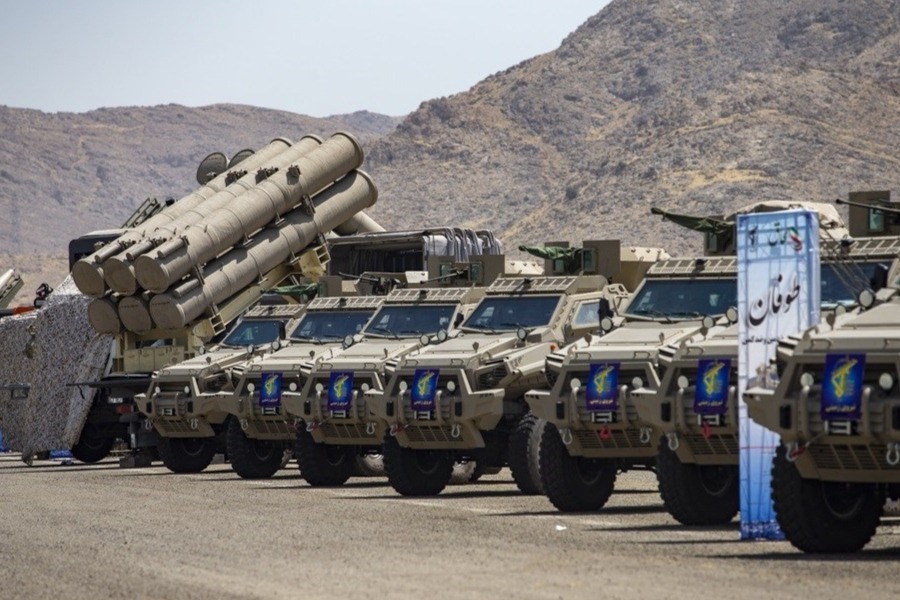
Iran’s model favors much longer, attritional conflicts, and gives primacy to cheap, expendable and scalable systems that any part of its proxy network can build. The goal is to impose heavy economic costs on its adversaries and outlast them. For instance, Iran’s support for Iraqi Shiite militias from 2003 onward through cheap weapons and financial support imposed asymmetric costs on U.S. forces and exemplifies Tehran’s use of attrition without need for decisive military victory.
In the ongoing conflict, each model has achieved a high degree of success on its own terms, which partly explains why the war has not concluded. Israel’s technology has achieved clearly defined tactical military goals (such as degrading Iran’s nuclear and ballistic missile arsenal, leadership decapitation, and weakening the “Axis of Resistance”), but its durable security requires diplomatic agreements and painful political compromise. Iran’s model, which is cheaper to sustain, has secured the regime’s survival to date, but little beyond it: neither sanctions relief, nor restored deterrence, nor the proxy network it spent decades building.
The Israeli Model: Sophisticated Yet Unscalable
Since Oct. 7, 2023, in its war against Iran and its proxies, Israel has demonstrated both the reach and the ceiling of intricate operations underpinned by superior technology. Its successes have required near-perfect intelligence and significant resources, but this painstaking work makes them inherently unscalable.
In September 2024, in an audacious supply chain operation, Israeli intelligence remotely detonated thousands of handheld pagers and walkie-talkies used by Hezbollah, devices the group had procured specifically to avoid electronic monitoring. Former Mossad officers detailed how the agency created shell companies disguised as legitimate foreign manufacturers and placed untraceable explosives into batteries. This operation paralyzed Hezbollah command and control, but it also precipitated a shift in adversaries’ communications security practices from cell phones and pagers to couriers and handwritten notes.
Operation Rising Lion (Israel’s June 2025 campaign against Iran) and the 2026 campaign, Operation Roaring Lion, were the product of years of preparation. Over several years, Israel collected footage from hacked Tehran traffic cameras, analyzed it with artificial intelligence (AI)-assisted pattern-of-life tools, and used the results to direct the strike that killed Ayatollah Khamenei in February 2026. In its multifront war against Iran, Israel designed its long-term innovation to accelerate the kinetic phase of conflict. AI-assisted targeting systems, such as Gospel and Lavender, have enabled the Israel Defense Forces to compress intelligence cycles.
Cyber operations similarly achieved specific and immediate results. In June 2025, Israel-aligned hacking group Predatory Sparrow carried out cyberattacks on Iran’s largest crypto exchange, Nobitex, destroying $90 million in cryptocurrency, and on Bank Sepah, one of the Islamic Revolutionary Guard Corps’ (IRGC’s) principal banks. Yet, as the war renewed in February has shown, these disruptions did not fundamentally change Iran’s ability to project power, inflict global economic pain, or continue its nuclear program. Israel’s military innovation power is unmatched in a short campaign, but each operation is unique and hard to repeat once the adversary adapts, as Hezbollah did after the pager attacks.
The Iranian Model: Expendable by Design
Rather than matching Israel’s technical sophistication, Iran has deliberately exploited cost asymmetry, using technological adaptation to impose costs instead of achieving dominance. Its continued ability to close the Strait of Hormuz by leveraging geography, mines, and asymmetric maritime forces even without a conventional navy and air force exemplifies this strategy.
Most notably, Iran’s Shahed drone costs on average between $20,000 and $50,000 per unit, compared with the $3 million to $4 million for a Patriot missile interceptor. While not a precision munition, the Shahed has still wrought extensive damage on key U.S. bases in the region, including Naval Support Activity Bahrain.
Iran’s low-cost drones are as economic an innovation as they are technological; they forced rationing of one of its adversaries’ most expensive defense systems, and have driven some Arab Gulf states to replicate the Shahed’s cheap design as a model for drone warfare.
Iran’s proxies have also made effective, low-cost adaptations. Since March 2026, Hezbollah has deployed fiber-optic-guided first-person view drones that account for one-third of Israeli fatalities in southern Lebanon. Adapted from the Russia-Ukraine battlefield and assembled for as little as $300 to $500 per unit, they are immune to Israel’s electronic jamming, emit almost no radar or thermal signature, and have struck Merkava IV and V tanks despite their Trophy active protection systems, which were designed to stop missiles, not improvised drones. Israel’s Alma Research Center warned that “hundreds of dollars are defeating millions of dollars.” The drones’ supply chain requires no state-level capability to sustain: Components are purchasable on the China-based e-commerce platform AliExpress, assembled in workshops across southern Lebanon, and according to Lebanese customs data, fiber-optic cable imports through Lebanese ports nearly doubled between 2023 and 2024.
Iran’s playbook has long been one of strategic extortion to generate leverage disproportionate to its conventional capabilities, and its technological approach is no exception. From the hostage crisis in 1979 to the kidnapping for ransom of dual nationals to the mining of the Strait, coercive leverage, not decisive battlefield victory, has been Iran’s consistent operating model. In carrying out its internet blackout in January 2026, the regime denied adversaries visibility into the country as it killed an estimated 30,000 or more people, according to senior officials, in a matter of days while simultaneously suppressing protesters’ ability to mobilize.
Inverted Information Warfare Costs
Iran has applied the same logic to the domain of information warfare, where the cost asymmetry is even starker. Beginning in March 2026, Iran’s state-linked “Explosive Media” production unit released a series of AI-generated videos using Lego figurines to mock President Trump, his cabinet, and U.S. military operations. According to the Canadian government, this content reached 83 million views in its first month and spread across TikTok, Instagram, and Telegram. In its Lego social media series, Iran has deployed cheap but culturally fluent AI-generated content that, in the words of Jessica Brandt—former director of the Office of the Director of National Intelligence’s Foreign Malign Influence Center—aims “to ridicule the United States or present Iran sympathetically.” The content is seeking to erode U.S. narratives about the war’s purpose and legitimacy. The traditional U.S. public diplomacy apparatus, structurally oriented toward formal statements and press releases, is poorly equipped to counter algorithmically optimized sarcasm designed to go viral. Iran has shown that the cost curve for information warfare has collapsed: Production costs approach zero as reach scales exponentially.
Israeli security commentators have also described an epidemic (in Hebrew, magefa, or “plague”) of Iran’s Telegram-based recruitment efforts in which Iranian handlers have paid Israelis in cryptocurrency to surveil political and military targets, vandalize infrastructure, and sow discord. Each recruited asset also serves as propagandistic “proof” of Israel’s internal vulnerability that the IRGC can amplify on Telegram at home and across the region.
Hezbollah’s information warfare has combined drone strikes on Israeli troops with Telegram broadcasts to maximize propaganda impact. This dual strategy helps Hezbollah resist pressure to disarm and revive its purported “protector of Lebanon” status. As momentum builds toward a lasting peace agreement between Israel and Lebanon—and toward disarming Hezbollah, which will be difficult—the organization has shown it can still play spoiler despite heavy losses.
Israel, despite its remarkable military successes, has been less adept at aligning national security priorities with the information domain’s evolving requirements. Part of the problem is structural: Public diplomacy responsibilities are divided among multiple ministries, and messaging is inconsistent. A few weeks after Oct. 7, 2023, the Israeli cabinet voted to shutter the Public Diplomacy (Hasbara) Ministry so that its budget could go toward rehabilitating devastated communities in the country’s south.
While budget prioritization during a national security crisis is understandable, the gap between the nation’s military prowess and the unaddressed need to consolidate those gains through adept diplomacy, policy, and digital media channels is widening. In the information domain, Israel (and for that matter, the United States) has not yet found an answer to Iran’s cheap, AI-enabled propaganda.
Blind Spots
Each country’s model of innovation power exploits the other’s weakness. Israel can destroy what Iran has built but cannot compel Iran to change course. Iran can make Israel pay but cannot protect the nuclear, security, and proxy architecture it has spent decades building.
Israel’s previous doctrine of “mowing the grass”—which relied on episodic and inconclusive campaigns, mostly through air power—failed not because its technology was inadequate, but because kinetic degradation without political resolution creates an assassination conveyor belt: tactically successful, strategically insufficient. Israel has killed Hamas founders and commanders, Hezbollah secretaries-general, and in 2026 Iran’s supreme leader. Yet Hamas retains security, economic, and political control over the majority of the Gazan population even as it surrenders formal governance and has lost more than 50 percent of the Gaza Strip’s territory. In addition, Hezbollah continues to fire rockets and drones into Israel from Lebanon.
The pager attacks, the Nobitex hack, and targeted assassinations are tactics that lack a settled answer to a prior question: What does success look like? Israel has not yet defined a durable security architecture for Gaza, a political settlement with Lebanon, or an end state for Iran short of regime change, an objective it cannot achieve unilaterally.
The regional context is shifting against Israel in ways technology is powerless to address. Gulf capitals are committed to deescalation with Tehran; several influential Gulf voices, such as Oman’s Foreign Minister Badr Al Busaidi and former Saudi Arabian ambassador and intelligence chief Prince Turki Al-Faisal, now argue that Israeli conduct has become the primary driver of regional instability. To be sure, Iran has spent four decades exporting revolution, arming proxies, and engineering instability from Beirut to Baghdad to Sana’a, a record not quickly forgotten. Gulf reassessments reflect a reckoning with the compounding costs of a conflict in which both sides have, in different ways, made the region harder to govern, not an absolution of Tehran.
Iran’s tactical innovations imposed costs, but not enough to alter Israeli decision-making. When the pressure was reversed, Iran’s strategic architecture proved far more brittle than analysts anticipated. The Axis of Resistance was designed to give Iran depth, deniability, and, in its crown jewel Hezbollah, the ultimate deterrent against a direct Israeli strike on its nuclear facilities. Iran’s “ring of fire,” the proxy architecture designed by former Qods Force commander Qasem Soleimani, was built to threaten Israel without exposing Iran to direct retaliation. But Israel treated the proxies as direct extensions of Iran and struck them accordingly, dismantling the ring faster than deterrent logic predicted. The collapse of the Assad regime in 2024 hastened the process.
Israel’s innovation power successfully decapitated the leaderships of Iran and Hezbollah, disrupted Iran’s financial infrastructure, and penetrated Iran’s inner circle at a depth and intensity unimaginable a decade ago. But it has not produced a political settlement, a change in Iranian behavior, or a productive arrangement for Gaza or Lebanon. The result is a fragile stalemate.
What Sustains an Impasse: The Domestic Factor
Israel’s military has logged one sophisticated tactical success after another but has not been able to win its wars politically. Israelis go to the polls on Oct. 27, in an election that will decide whether any government has the mandate to define what victory means. The U.S.-Israel alliance has demonstrated unprecedented levels of operational integration in joint strikes, intelligence sharing, and missile defense, but the two countries define victory differently, and the war remains unresolved.
In turning off the internet at home to suppress domestic unrest, and in blocking access to a major global chokepoint to gain external leverage, Iran’s regime has achieved tactical success, but still cannot force Washington’s hand. With its leadership gutted, the Islamic Republic has entered a new phase. The opening days of Operation Rising Lion in June 2025 killed more than 20 senior commanders and officials, among them the IRGC commander in chief, the armed forces chief of staff, the aerospace force commander, the head of military intelligence, and multiple nuclear scientists. The opening strike of Operation Roaring Lion on Feb. 28 killed Iran’s supreme leader, Ayatollah Khamenei.
But the IRGC’s prominence in Iran’s economy, politics, and society endures. The guards control much of Iran’s drone program, its ties to proxies, and its sanctions-evasion networks. At a time of increasing stress on Iran’s economy, the drone program and the sanctions-evasion networks are also revenue streams that depend on permanent confrontation with the West. Any long-term peace or entente beyond narrow nonproliferation goals or a modus vivendi in the Strait threatens the guards’ corporate interests.
Henry Kissinger, reflecting on Vietnam in 1969, observed that the United States “fought a military war; our opponents fought a political one. We sought physical attrition; our opponents aimed for our psychological exhaustion.” Today, Israel’s technological edge is similarly insufficient strategically. Its adversaries have not needed to defeat or even match it. They have needed only to survive it, and to use low-cost attrition to demonstrate their staying power to politicians and broader publics in Israel, the Gulf, and worldwide. Survival, however, is a far cry from the regime’s hegemonic ambitions for the region.
In today’s Middle East, the most consequential variable is not which side has the better drone, the more capable AI, or the more audacious operation. It is which side can first build the political conditions to translate military achievements into durable outcomes. So far, neither has. But the region has witnessed this conversion before. In the Yom Kippur War, Egypt’s surprise attack and limited gains alone did not return the Sinai; Anwar Sadat’s decision to fly to Jerusalem set in motion the process that ultimately produced the Camp David Accords. Sadat also had an outside incentive: Washington’s interest in making Egypt a partner and pushing the Soviets out of the region. Today’s nearest equivalent is the prize of Saudi normalization of relations with Israel, which Riyadh has tied to an irreversible pathway to Palestinian statehood, something no leading candidate for this year’s Israeli elections is publicly proposing in the short term.
The current impasse is expressed in the domestic concerns of the three main actors. Israel’s coalition has lacked the political incentive to define what enduring success looks like; the IRGC has lacked the institutional interest in a settlement; and the United States has lacked the domestic political consensus for sustained strategic engagement. For Israel, the choice is whether to accept an end state in Gaza that its governing coalition has so far refused: a governance and security arrangement with a role for a reformed Palestinian Authority and Arab partners, which is also the price of Saudi normalization. For Washington, it is an Iran policy built to outlast a single election cycle. The IRGC, whose finances depend on confrontation, will not move first. Each of these choices requires leaders willing to pay a domestic price for a diplomatic settlement, something innovation power alone cannot deliver.