Lawfare Daily: Civ-Mil Relations: Where Are We Now and How Did We Get Here?

.png?sfvrsn=ede41ea3_3)

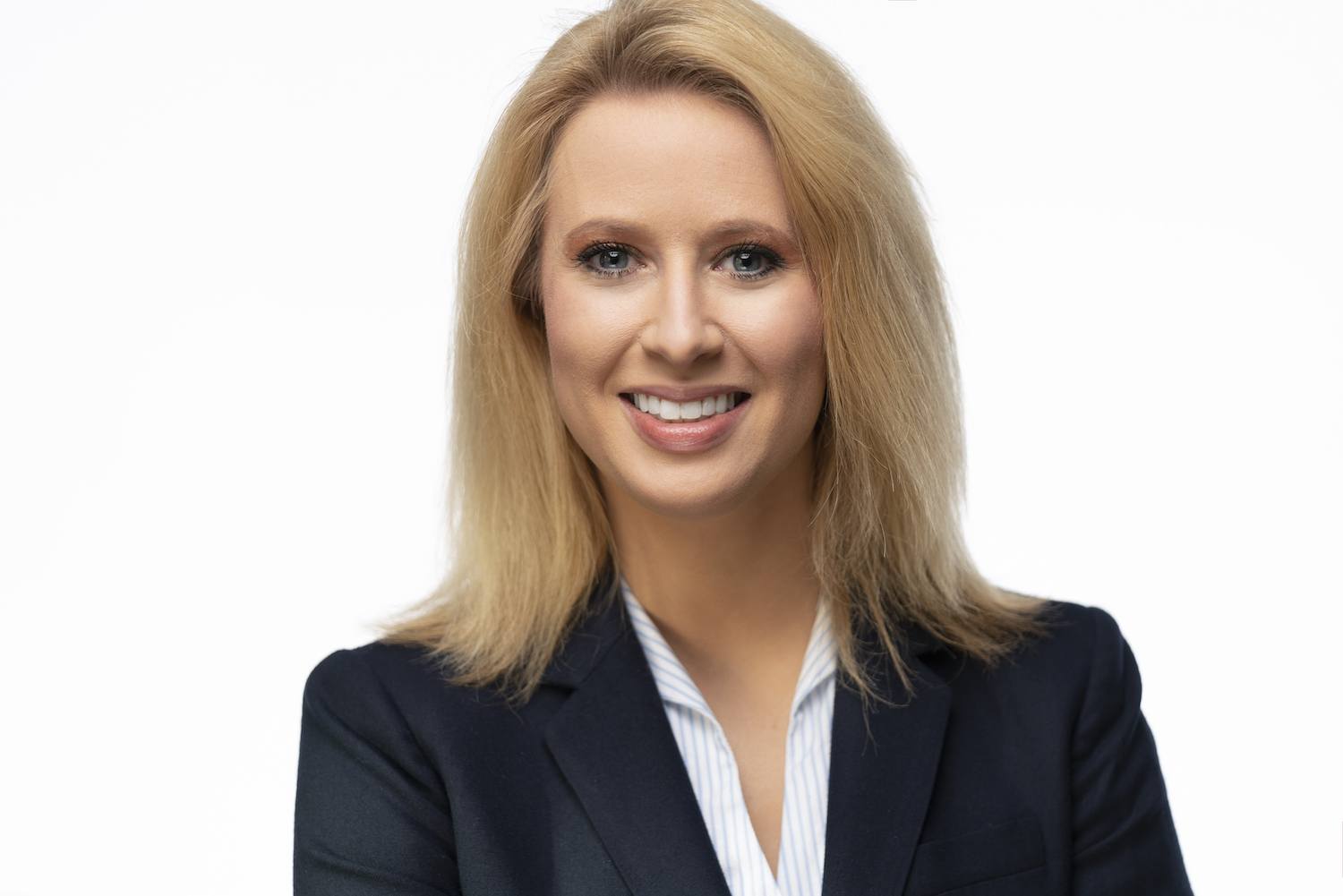
Loren Voss, Public Service Fellow at Lawfare, sits down with Kori Schake, senior fellow and the director of foreign and defense policy studies at the American Enterprise Institute, and Carrie Lee, senior fellow with the German Marshall Fund's Strategic Democracy Initiatives. They discuss how they assess a healthy civil-military relationship, the current state of civil-military affairs, potential unlawful orders, and what we should watch going forward.
Lee and Schake outline the frameworks they use to assess civil-military relations in the United States and how to think about unlawful orders and an “unprincipled principal.” Both Schake and Lee agree that the military should not bear the burden of being the solution; fixes must come from civilian leadership in the executive and legislative branches. The group concludes by identifying five indicators everyone should watch going forward to indicate the system isn’t functioning as it should.
To receive ad-free podcasts, become a Lawfare Material Supporter at www.patreon.com/lawfare. You can also support Lawfare by making a one-time donation at https://givebutter.com/lawfare-institute.
Click the button below to view a transcript of this podcast. Please note that the transcript was auto-generated and may contain errors.
Transcript
[Intro]
Kori Schake: I think
the crisis actually isn't a civil-military crisis. It's a civil-crisis, where
Congress is failing to use the Article One authorities that the Constitution
expects to balance aggressive presidential policy actions like the ones
President Trump is taking.
Loren Voss: It's the Lawfare
Podcast. I'm Loren Voss, public service fellow at Lawfare with Kori Schake,
senior fellow and the director of foreign and defense policy studies at the
American Enterprise Institute, and Carrie Lee, senior fellow with the German
Marshall Fund Strategic Democracy Initiatives.
Carrie Lee: You know,
as you're making increasingly controversial orders, I would not be surprised,
right, if you had senior civilian leaders really trying to pick and choose who
in that chain of command is going to be responsible for executing those types
of orders and what units they're selecting and what their own cultures are and
histories are.
Loren Voss: Today
we're talking about civ-mil relations. Where are we now and how did we get
here?
This is the first episode in a series on domestic military
power in a democracy. Over the past two decades, the U.S. military has become
the government's most trusted and frequently deployed institution, responding
not only to wars abroad, but to natural disasters, immigration enforcement, public
health crises, domestic unrest, and more.
Lawfare is examining the consequences of this shift. Why
has the military become America's default problem solver? What legal frameworks
enable this trend, and why are they failing? And most importantly, what can be
done to restore the balance between civilian governance and military power?
The news in the last six months has focused on domestic
deployments of the military, primarily the National Guard, in cities like Los
Angeles, Washington, dc, Portland, Chicago, Memphis, and Louisiana.
More recently, the United States stated it was at war with a
number of drug cartels. Which ones isn’t exactly clear, but it's resulted in 26
military strikes so far on alleged drug-smuggling vessels in international
waters. Both types of missions have raised significant questions about the
appropriate role of the military in the United States and how we think about viv-mil
relations. So Kori, I'm going to turn to you first to help us set up the scene
for us.
So how would you describe civ-mil relations in the United
States? Is there a framework you find most helpful for thinking about it?
Kori Schake: So while
there's a lot of justification in being worried about civil-military relations
right now, I actually think the system is working the way it's supposed to.
I think there are only two fundamental tests of civil-military
relations. And the first is, can the president fire any military officer he
wants? And the answer to that is clearly yes, he's fired 18 or so, three- or
four-star generals, and they have done exactly what we expect our military to
do, which is they pack up their office and become civilians.
And the second test runs the other direction, and it is, ‘will
the military carry out policies they advise against?’ And again, I think we see
quite a lot of evidence, especially in the last 20 years that the American
military thinks our political leadership of both parties is making bad choices,
hoices that are suboptimal for the national security of our country, but it's
their job to take the objectives and the resources that they're given and do
the best they can. Because that's what civilian control amounts to.
Loren Voss: Carrie,
what about you? Is there a framework that you apply when you think about civ-mil
relations?
Carrie Lee: Yeah, so
I tend to think of civil-military relations as a little bit broader than just
civilian control.
I tend to think of it as three overlapping principles that deal
with the military's relationship with its political leaders for sure, which we
sort of know as civilian control, and in democracies we think about as the
democratic ethos and the subservience of the military to legitimately elected
democratic leaders.
But there are two other principles that I think are equally
important, and that in a healthy society, they all kind of operate, they row in
the same direction. Second principle deals with the relationship between the
military and society, and it deals with the legitimacy of the military in the
eyes of the American public.
And so we have a ton of literature that looks at—much of which Kori
has contributed, to which I am, I'm super grateful—about how the American
public views its military and how the society kind of, how much faith and trust
the society has in the military's, not just ability to do its job, but that
it's a legitimate force.
And then the third principle is what I think about is the
profession of arms or kind of the military's relationship with itself. And how
it goes about as an institution protecting a code of ethics and how it's thinks
about its obligations to its own members and its obligation to society as a
profession.
For the current era, right, like as I said, when you have
healthy civil military relations, these all kind of flow in the same direction.
They're mutually reinforcing. A legitimate military is most likely to happen in
a democracy. Legitimacy is essential for a functioning profession because
society has to place trust in it, in order to see it as an expert and give it
faith and trust in the, for the military at least the incredible amount of
coercive power it wilds.
So in a healthy relationship, all of these are mutually
reinforcing. I think what's unique about the current era, and I know we're going
to get to this, is that they're not right now, and you have real conflicts
between these principles that are erupting in what, you know, the peanut
gallery like Kori and I call crises.
Loren Voss: Yeah. So
on that point, what is unique about what's happening right now, if anything and
is there a historical parallel or some other point in time that you could point
to say, you know, we've been here before?
Carrie Lee: So I'm going
to leave the historical parallels to Kori, because she just wrote this fabulous
book about the history of American civil-military relations. And so if I try to
jump in on that territory, then I'm going to get myself in a lot of trouble.
But I think there are two things that are super unique about
the current moment. The first is that we do have a lot of conflict between
these principles. And in fact, I would say in the current moment we have
conflict between every one of these principles where you have domestic
deployments of the military that are really threatening public trust. And
public trust in the military is bifurcating by party in ways that we haven't
seen before.
And yet none of the orders that they're being given are necessarily,
kind of patently unlawful. They're working their way through the courts, but
they're sort of following in line with this idea of civilian control.
But there's even tension in there because it's not clear that
the orders they're being given are necessarily good for democracy. So there's
tension when there's this idea of civilian control where the president has a
lot of authority over the military and yet he's using it in ways that aren't so
great for the way that we think about democratic institutions.
And in ways that also threaten the legitimacy of the military
with at least certain sections of the American public. We're also in an
incredibly populist moment right now, where society’s trust in the military is eroding
and trust and expertise generally is eroding. So this creates conflict between
sort of public trust and the profession, which relies a lot on expertise.
So you have these kind of big conflicts going on right now,
which again, as I kind of mentioned before, really result in a series of kind
of crises. And so it's very rare for you to have this kind of succession of
issues in civil military relations, a lot of times you have an event that pops
up, everybody comes up and says, oh my gosh, this is norm breaking, and
everybody come back to baseline.
And then we go back to baseline for a while, but it seems like
right now we're in a moment where you just have a succession of crises, and I
think it's because these principles are so often in conflict.
The other really unique thing right now is that civil military
relations is a norm-based exercise fundamentally, and it only really works when
you have both civilians and military officers, so both sides of this
relationship, are committed to upholding those norms.
Right now, you have a civilian government and a civilian
administration that really doesn't and sort of openly disrespects a lot of very
important civil norms that have traditionally held up this relationship. And so
you have defiant and sort of gleeful norm breaking going on the civilian side
of the relationship, and the military is left kind of not knowing what to do.
And that's a pretty unusual circumstance, I'll put it that way.
Loren Voss: Before we
turn to Kori, if I can just ask a follow up on that. Carrie, you said, you
know, the civilian leadership is not respecting civil-military norms. Can you
tell me what you mean by that?
Carrie Lee: So when
the president gets up in front of a whole bunch of young soldiers at Fort Bragg
and treats it like a partisan pep rally, right, and actively encourages them to
clap and cheer for partisan lines, including disparaging the former president
of the United States, Joe Biden, all Democrats, et cetera, when the Secretary
of Defense gets up in front of war college audiences and effectively does the
same thing, right?
When you have civilian leaders in the administration who really
don't respect key norms and tenets, like the nonpartisan nature of the military,
and openly try to politicize it in a regular and blatant way, this creates big
problems. There's just a couple of examples,
Loren Voss: Kori, if
we can turn to you on what you think is unique about the moment now, and
especially if you think there's any relevant historical parallels that we can
look at.
Kori Schake: So what
I think is unique about the moment, I agree with Carrie, that the civilian
leadership—but not just the President, Congress as well—is putting enormous
pressure of politicization on the military, they're trying to use the military
as a cudgel. In political and cultural disputes.
And that's not good for the military, it's not good for the
civilian leadership, and it's not good for the relationship between the public
and the military. Just to take one example, Senator Tuberville putting a hold
on hundreds of military promotions and assignments over something that he objected
to that the Biden administration had done as policy.
The military can't fix that. And so you are punishing the
military for complying with legal orders. And that is a dangerous trend.
A second thing that I think is that I agree with Kerry, that
the Trump administration is trying to associate our military with very
sharp-edged cultural and policy choices, like deportations, like policing in
American cities.
But I think I disagree with Carrie that it's so sweepingly
normative, because there's actually statutory restrictions on the president and
the secretary giving political speeches in front of military audiences. There
are actually statutory restrictions on a lot of things that the administration
is doing.
Just to take, I think, the most pressing example. There are two
pieces of legislation that govern the domestic deployment of the American
military, and they are both limiting pieces of legislation. The first is the
1807 Insurrection Act, which says that absent and invasion or insurrection, the
president cannot deploy the American military domestically, cannot use it
domestically, right?
The president has not invoked the Insurrection Act, and yet he
has deployed the military to American cities.
The second piece of restricting legislation, which binds the
President's hands even more tightly, is the 1878 Posse Comitatus Act, and it
says there are only three circumstances in which the president can use American
military forces for domestic law enforcement.
One is if he invokes the insurrection Act. The second is if
Congress writes a law telling him he can. And the third is if a governor
requests it. Those are the only three circumstances and none of those have been
met.
And so I think the crisis actually isn't a civil-military
crisis. It's a civil crisis where Congress is failing to use the Article One
authorities that the Constitution expects to balance aggressive presidential.
Policy actions like the ones President Trump is taking.
I think if we characterize it as civil-military relations, it
puts a burden on our military to be the solution to a problem that is neither
of their making, nor is an acceptable role for our military in a free society.
In our free society.
Loren Voss: Thanks, Kori.
I think that's a really critical point is we're talking through where we are
now and what the problems are, much, if not all of the solutions don't fall on
the military. These aren't things we would want the military to address. These
are things we would want civilian leadership in the executive branch in
Congress to address.
Kori, if I can follow up on that really quickly, you talked
about the role of Congress. I mean, we've had one hearing on domestic military
deployments, a number of closed-door briefings on the boat strikes. But you
seem to put this at the feet of Congress.
Can you just say a little bit on what you would in a healthy
society, you would expect Congress to be doing at this point?
Kori Schake: Yes, I
would expect Congress to threaten the precedent that without a congressional
authorization for the use of military force, he is restricted against striking
boats in the Caribbean on whatever basis. I mean, reasonable people can
disagree about the extent of presidential authority to take action when the
country's in danger.
But constitutionally, the president's supposed to have
congressional support and that Congress doesn't want to take responsibility. I
mean, didn't the House vote down an AUMF just in the last day or two? It was a
close call, 20-11 to 20-13, but Congress still denied it.
So I think historically, you know, the time that feels most
resonant for me is the constitutional crisis of 1866 and 1867.
In that case, you had a very aggressive president and a very
aggressive Congress disputing each other's authorities and trying to pull the
military into the middle of it. What I think we have now is a very aggressive
president taking advantage of the fact that his fellow Republicans in Congress
are unwilling to exercise their Article One authorities.
And so again, both the Congress and the President, but also
both parties in Congress are attempting to pull the military in as validators
of their positions. And I just think that's not a useful thing to want our
military to be adjudicating the constitutionality of these issues.
They're not educated for it. And it will change how we perform
as a democracy if we push the military into that role.
Loren Voss: Yeah, I
think that's a really critical point. We don't want them to have that role. Even
if they were somebody that had the expertise, you don't want them to be the
validator of these things.
That's not their role in our country.
Kori Schake: The only
historical example I can find in which the military is thrust into that role,
which is during the 1867 constitutional crisis where the Congress had impeached
the president and was threatening to have him arrested. The president was
threatening to disband congress.
Congress passed a law saying the president couldn't fire the
Secretary of War or General Grant, who was the senior military officer. The
president fired the Secretary of War anyway and tried to appoint Grant while on
active duty to both roles. Congress threatened General Grant with five years in
prison and a $10,000 fine.
The President offered to do the time and pay the fine if
General Grant would uphold his constitutional authority. And Grant, I think
awkwardly but meaningfully judge that in peace time Congress has the superior
claim on the military subordination than the president does.
But we really shouldn't want our military to be the people
making those judgements.
Carrie Lee: I can't
agree enough with Kori on that, right? Like as much as I think there's a civil
military crisis afoot, I think she's absolutely right in the diagnosis that the
greater problem is the civil-civil crisis the country is in.
Where you have an executive branch that feels highly empowered
to do any number of things, not just related to military affairs, right, but
any number of actions you think about disbanding USAID, you think about the
cuts to the Department of Education.
You think about the way that they came in and started sort of
wholesaling portions of the government, the attacks on courts. There's all
kinds of different things that you have a very empowered executive branch
attempting to do with effectively no resistance from Congress.
And so you have a real mismatch between Article Two authorities
in the executive branch and you know, the Article One authorities in Congress.
And we will see where Article Three ends up, although I don't hold a ton of
optimism for that.
So there's a huge kind of civilian constitutional crisis going
on right now, but underlying that, especially as we're dealing with national
security issues I would still say it's very important to think about the civil
military because you are going to have military leaders who are placed into
this position, and they're going to have to do something about it.
So we might wish that it weren't true, and we might agree, like
I can wholeheartedly agree that I don't want General Caine or General George or
anyone who is in the Pentagon right now in positions of high leadership to have
to make tough calls about whether they obey orders from Congress or a district
judge, or the Supreme Court versus the President of the United States versus,
you know, to what degree do you take any action at all if Congress just lays
down?
But I worry that day is coming. And so, you know, thinking
through why it's approaching and how does one think about these competing
obligations, I think is potentially a. A necessary if regrettable thought
exercise.
Loren Voss: Yeah.
Okay. So let's talk about that day. So, if a day comes in, which a military
member, you know, potentially a senior leader, potentially lower down is
unclear on the legality of an order that they're given, what do they do?
What should they do? Kori, do you want to take that first?
Kori Schake: Sure.
Well, every high-ranking operational commander has a judge advocate general at
their elbow to give them legal advice. But that advice is not binding, right?
So it does not remove responsibility from that military commander from making a
choice. Nor does it supersede, nor does the legal advice of the Judge Advocate
General supersede the Justice Department's Office of Legal Counsel or the
Secretary of Defense's legal counsel.
So I agree with Carrie that you know, if the civilian
leadership is coloring outside the legal boundaries, that puts the military in
a very difficult position. It's also true that refusing to obey an order is a
court marshaling offense.
You'll be relieved and court marshaled, and the burden of proof
is on the military officer to demonstrate that the law was violated. Very few
military officers are capable of meeting that standard in a court martial. So
what you are asking them to do—just to be clear, I'm not saying they shouldn't
do it—you are asking them to say, I am better situated than the lawyers in the
Secretary of Defense's office and the Justice Department to determine this and
I am going to destroy my career in order to do it.
I think that's what Carrie's talking about, what we are asking,
potentially asking them to do. Of course, the right answer is for the civilians
to color inside the legal lines.
And for the military, it's a very difficult choice. But they
are also, you know, they aren't 10 years old.
They are senior policy makers in enormously consequential positions
who have had years, and in some cases, more than a decade of training about
what to do in those circumstances. Which is, if you believe a law, an order is
unlawful or you cannot in good conscience carry it out, you have to accept the
consequences of being relieved and court-marshaled for it.
Loren Voss: Carrie,
do you have thoughts on that as well?
Carrie Lee: Yeah, I
think there's the kind of right, by-the-book answer about legality of orders,
right? Which is, you ask your JAG, the JAG is going to give you counsel as
commander, you own that decision, right? And so again, to Kori's point, when
the civilians aren't coloring inside the lines and when they're not respecting
their obligations and their ethics to do extreme due diligence right before
giving orders that involve the lethal use of force and putting military
officers in a situation where they have to take lives—which is a, an enormously
consequential operation—nd so when the civilians are not doing their due
diligence and they are abusing their ability to produce legal memos that
effectively, you know, may make anything legal, then that's a terrible position
to be in if you are one—the one who is commanding the forces and having to give
that order to execute.
And all the JAGs in the world aren't going to save you from
that particular scenario.
And so there are other things though, that you can do, right?
Write everything down, document everything. Acknowledge the advice from the JAG
officer and make sure that there is a paper trail so that when people do go
looking. Because people will eventually go look. That there is a written and
documented record of who is responsible for what order and what they said and
when, and what their intent was and how you understood their intent.
I think this is one of the things that could have done Admiral
Bradley a lot of good with the recent issue that we got into over the
operations in the Caribbean and, you know, the so-called no quarters order that
Hegseth was reported to have given.
So short of disobeying—which is an extreme option, and one
thing that I wish more Americans understood is that the bias in the system is
absolutely towards compliance, towards orders, period lawful or sort of
questionable legality.
And that's the way you want the system, right? You do not want
the lowly lieutenant or captain going point-counterpoint when they're sitting
in the missile silo about whether the president has the constitutional
authority to launch nuclear weapons unilaterally, right. Like, you don't want
that conversation happening because that system has to work.
And so the biases towards compliance, and that is why the costs
of non-compliance—or you know, colloquially, disobeying orders—is so steep for
leaders.
But there are things short of disobedience, right, that one can
do in order to make sure that you are doing your own due diligence and that you
can look at yourself in the mirror in the morning and know that you made the
most responsible command decision that you could.
Kori Schake: We often
assume that legal advice is yes or no, and it doesn't very often work that way,
right? A judge advocate general can say, I have some concerns about this, is it
possible to alleviate this or that? So there are negotiations in some sense
when there's time to negotiate, but they're also very often not a clear yes or
no on legality.
It's a contingent judgment very often. And so we assume it's
easier for military officers in the heat of operations to make sophisticated
judgements about legality or constitutionality. And I think that, too, places
an undue burden on the military itself.
Loren Voss: Yeah, I
think that's an important point.
That it is frequently not as clear cut as the examples that are
in the news or that people talk about. It's a very complicated system. It
depends on a number of factors in any decision that's happening. And I think
it's frequently not as straightforward.
You know, as Carrie said, there is, there's an assumption that
the orders are legal. And there's reasons for that. And in our current system,
there seems to be a number of legal opinions to rely on to say that what you're
doing is legal. So it puts people in a situation of, you know, they really have
to overcome a lot if they were to challenge that.
But I want to talk about maybe even a more complex situation. So,
orders that aren't unlawful, but are, you know, either for pretextual reasons
or Carrie, I think you described them as go against military ethics, so I'm
kind of curious if you could maybe give us an example or two about those types
of orders and what happens in that scenario.
Carrie Lee: So this
is by far for me, the most, dare I say, kind of intellectually interesting
question, but also I think the most likely question that a lot of senior
leaders are about to encounter. Which is that, what do you do when you're
issued orders that are professionally unethical and yet deemed to be lawful?
There is a common saying, and in fact it is often repeated at
West Point and other service academies that there is an obligation to disobey
orders that are amoral, unethical, or unlawful.
Now, that's patently false. There is only an obligation to
disobey orders that are patently unlawful. But it raises this question about
the moral and the ethical. And ethics, I think in also because so much of the
profession relies on having this kind of independent code of ethics and the
ability to function as a profession means that you have to be able to
self-police according to a higher code of ethics than simply what the law lays
out.
So you think about any number of kind of classic professions
like medicine or law or clergy. And they all hold themselves to a much higher
code than what the simple law would prescribe. And they all have protocols for
punishing their own members and self-policing their own members so that they
adhere to that code.
So what happens when you are given lawful orders that you are obligated
to obey, but that you see to be unethical. And here I think we end up in the
gray realm of, well, what are my other options, right?
You can either comply, you can disobey, but those aren't the
only two options. There are other actions that one can take, like resigning one's
command, like resigning one's commission. In the senior leader context, that
oftentimes looks like retiring early, right?
And then the way in which you do that is also open to you. You
can give the excuse that says, you know, it was just my time. You don't have to
say anything at all. Or you can be a whistleblower and say, you know, I
fundamentally, deeply disagree with this decision. I think it is compromising
to the profession's ethics and their ability to maintain trust with the
American public, for example. Therefore, I am resigning.
And that's probably the strongest signal, right? That a senior
leader could send short of outright disobedience. It's also normatively frowned
upon, historically, and exceedingly rare in historical memory.
So there are other options. They're rarely used and they each
come with their own costs, but the, that do present sort of additional choices
outside of outright disobedience for which there could be courts marshal and
other types of things.
Loren Voss: Can you
give us an example just so we kind of understand like what. What might be a
situation that a leader would find themselves in, like a hypothetical?
Carrie Lee: So I
think the one that's on my most, on my mind right now is that say the President
does declare the Insurrection Act. Right. And now you have in response to
protests because of, you know, maybe you have a repeat of George Floyd or maybe
there's some other issue or election contestation or you know, name your sort
of domestic issue, ICE raids that kill a small child and bring communities out
to finally protest and, you know, rise up against the immigration actions that
are happening domestically right now.
You know, there's any number of things that I can imagine that
might spark a big protest movement. And the president declares the Insurrection
Act so he can get around Posse Comitatus, there's a reasonable case to be made
that there's an insurrection.
Maybe there's some rioting going on. Some of the larger cities
and the military comes out, and whether it's the National Guard or the active
duty, and they're given the order to fire upon protestors in order to disperse
them.
This is something that could deeply damage the military's
relationship with the American public, particularly if the law-and-order piece
is seen as partisan and political rather than truly a law and order issue. Which,
I think, given the National Guard deployments and some of the legal
justifications and the very weak evidence that they've been able to provide of law-and-order
problems around the ICE facilities and in the cities that they've deployed the Guard
to, it’s not an unreasonable thing to, to think that it would be public
perception.
And so I'm imagining a one-star or a two-star who is sort of in
command of this division or even a, or a lieutenant in charge of a battalion
who's given this order thinking that, wow, this is going to profoundly damage
the legitimacy of the American military if it is seen as firing upon and
forcibly repressing the civil liberties of Americans, even though it may
technically be a lawful order because the Insurrection Act has been declared
because the president has produced a legal memo that says that the use of force
is necessary in order to restore law and order, et cetera, et cetera.
And so that is a disturbing dilemma that a—even a mid-level
leader may find themselves in, where they have to make judgements.
Kori Schake: I don't
actually think that's a hard one. It is almost unimaginable to me that an
American officer would obey an order to fire on their fellow Americans. And I
think we have actually some recent evidence.
So before, when the Marines obeyed, what they believed was a
lawful deployment order to Los Angeles, they spent two weeks training those Marines
to make sure that they weren't going to make any mistakes of that nature.
And in Carrie's category of things you can do when given a
lawful but awful order, one is obey it in a way consistent with your
conscience, right? Which is, train your troops about what they will and won't
do. Make sure that you don't put them in a situation—so, for me, the harder
cases are, you know, it's clearly a violation of the values of the United
States military to fire the senior female commanders, right? The American
military thrives on integrating women into the force.
And yet—I mean, I think that's a harder case because lots of
folks thought it was wrong. Lots of folks also thought that was consistent with
the secretary's authorities. And you just have to bite your tongue on it.
And in the 1990s, there was an enormous amount of friction
between the military and the civilian leadership and the Clinton administration
over issues like choosing not to serve in Vietnam or adultery.
Things where there were deep cultural differences. And we
worried a lot about civil-military relations then. I think those kinds of
issues are going to be much more what officers have to deal with. Because I
can't imagine an American military officer choosing to use lethal force against
fellow Americans.
Loren Voss: Yeah.
Thanks for that Kori. I mean, I think that's an interesting question.
I think I agree with you if the order were just to fire upon
protesters. But I think that there is efforts to potentially change the rules
for the use of force. Potentially, you know, redefine, make broader how we talk
about self-defense. So that you could at some point see some troubling
circumstances there.
I don't think we're there now. You know, as a veteran I hope
you're right and I think that you're right, that when, if it was an order that
broad, that troops would know that is not something that you do.
Carrie Lee: I'll
admit, I tend to be very glass-half-empty these days, and so I, I tend to play
the pessimist on these, on, in these types of scenarios.
Loren Voss: I think
that's good. And I also think that we shouldn't talk about the military as a
monolith, right?
Like we have active-duty forces, we have National Guards from
various states. We have different kinds of roles that people play. And the
training varies, the situations that they'll be put in varies, the leadership
that they have varies. So I think it's okay to be pessimistic.
Carrie Lee: Well, and
I might argue right, that with the strikes in the Caribbean, the president made
decisions, or the Secretary of Defense made decisions about who was going to be
executing those operations, right?
The relative balance between SOUTHCOM making those judgments,
Southern Command versus Special Operations Command, those are two very
different cultures. Different capabilities as well, but you know, as you're
making increasingly controversial orders, I would not be surprised, right, if you
had senior civilian leaders really trying to pick and choose who in that chain
of command is going to be responsible for executing those types of orders and
what units they're selecting and what their own cultures are and histories are.
So I hope to God you're right, Kori, and I, that I sort of live
in this terrifying world of like catastrophic and, you know, and maybe a little
bit—very pessimistic.
Kori Schake: One of
the things I have been watching closely is whether the officers appointed into
senior positions that Secretary Hegseth and the president have fired officers
from, whether they are appointing more audibly partisan officers. And so far
they are not.
And so that—
Carrie Lee: I agree
with that.
Kori Schake: That to
me feels like one of the really important canaries in the coal mine. And the
reason that I'm not as pessimistic as Carrie.
Although I share your point, Loren, that we need Carrie's
pessimism. It's how, it helps us navigate.
Loren Voss: We've got
a place for you, Carrie. Always.
Carrie Lee: We all
have a role to play, you know?
Loren Voss: Yeah.
Well, so I want to focus on this pessimism a little bit because, you know, Kori,
in your new book, “The State and the Soldier,” you mentioned problems that
could arise from—you called it an unprincipled principal, so I'm wondering if
you could talk to us a little bit about that and what you see as the problems
that could come up.
Kori Schake: Oh, I
would love to.
The term comes from the military ethicist Pauline Shanks Kaurin.
And it reinforces a point Carrie made earlier, which is that the American civil
military system is predicated on the basis that orders are legal, that civilian
leaders will behave in a principled way.
And what we are seeing now is that that is not holding in the
Trump administration. The principals, the senior civilians are behaving in an
unprincipled way. And it destabilizes the system.
And that's what's putting so much pressure on the military,
because they are having to navigate questions that the civilian leadership
ought not to push into military channels. That's the problem of the
unprincipled principal. It's, you know, making the military have to figure out
how to deploy to American cities.
And when the Insurrection Act hasn't been invoked, when
governors are objecting to the deployments and Congress is inactive. So the
problem of the unprincipled principle seems to me one of the biggest challenges
in civil military relations right now.
But again, the fix lies in the civilian realm. It lies in
Congress, exercising oversight over choices. It rests in Congress tying the
purse strings of policies they don't agree with. I thought it was an
extraordinarily positive sign that the Senate Armed Services Committee, on a
bipartisan basis, chose to dock Secretary Hegseth's travel budget until he
produced evidence on the strikes in the Caribbeans.
Congress has not been exercising its oversight, and that they
begin to, is a big part of how we fix this dilemma.
Loren Voss: Carrie,
do you want to add anything on this point?
Carrie Lee: Just that
the current era really brings into sharp relief how much of civil military
relations in the United States is norm-based. Kori pointed to a couple of
excellent examples of no-kidding legislated behavior.
Expectations, but those are the exceptions rather than the,
pardon my pun, the norm. And instead, because so much of modern civil-military
relations emerges, and our kind of modern ideas about civil military relations
emerge with the creation of the standing army, you know, in the aftermath of
the Korean War, this also coincides with decline from congressional activity
and congressional oversight. Because you have the growth of the national
security state.
And Arthur Schlesinger then calls it all the way back in the
1970s. He identifies the imperial presidency. And so you have the kind of dec—steady
decline of congressional action that reaches all the way back into the 1950s,
that coincides with the creation of a standing army for the first time in
American history.
And so there's very little legislation that exists in order to
try and scope the uses of the military. Again, the domestic deployment issue is
the one exception, and I think is in my mind at least, the strongest signal
that, you know, this is something Congress cares about. Although these pieces
of legislation, it shall also be written, noted, right, were written in the
19th century.
So this idea that you have a civilian ethic and that you have
norms of civilian behavior, that Alice Hunt Friend in her excellent book really
touches upon in some of her introduction, and again, in her conclusion, her
book “Mightier Than the Sword.” It's a really underexplored idea.
But one that we are now really coming to realize that is
absolutely necessary in order to make this system function. So this is going to
be a growth opportunity for those of us in the civil-military space, really
identifying, what does this civilian ethic look like?
What pieces can you legislate going forward in order to try and
give some teeth to this idea, and ensure that the unprincipled principle cannot
return, or at least faces more obvious consequences if it does happen again? But
it's really revealed a blind spot in both our study of the field and in our
practitioner's understanding of the relationship.
Loren Voss: So, so
far, both of you have flagged a number of concerns with things that are ongoing
now. But I'm wondering as we, we look towards the future, you know, what should
we be watching going forward?
Are there indications that we should be looking at? Like, how
should we think about the next couple months or the next couple years?
Carrie Lee: So I'll
take this one first and say, I think Kori's point about who gets hired into the
positions where folks are being fired from is a canary in the coal mine. How
openly partisan are these military officers?
You are going to get wholesale turnout, both—or turnover, I
should say—both because they'll be fired or they will resign or otherwise
shorten their tours of duty. But over the course of a presidency over four
years, there's just a lot of turnover amongst senior leadership. And so what I
am paying very close attention to is, who replaces those people?
What kind of backgrounds are they coming from? Do they have
overtly partisan backgrounds or different cultural backgrounds? And by culture,
like military cultural backgrounds. General Caine was an anomaly to be chairman,
because he's coming from the National Guard rather than the active duty.
And so those types of big cultural differences between National
Guard and active duty forces can have profound effects on the type of military
advice that the president might be getting and comfort level with politics in
general. So I'm going to be watching appointments for sure, going forward, and
the sort of politicization of the appointment process.
This is also a place where Congress has a real opportunity to
assert itself. And so as we're looking towards a Congress that may have some
life in it, after all, you know, that's an area where there's hope and where
there's opportunity for pushback on the civilian side.
I am also going to be looking at the president's willingness to
comply with orders from district judges, from appeals circuits, and from the
Supreme Court over the domestic use of the military and these court cases that
are ongoing over the use of 12406 as U.S. code 12406 as a mobilization
authority and a deployment authority.
And all of you know all that they have bound into this one
statute in what appears to be an attempt to get around using the Insurrection Act,
the degree to which they, they comply with those court orders and respect them
versus the way they appear to be doing, at the moment, versus how far down the
slippery slope do we get about we don't really have to listen to this person or
that person is a Democrat, or there are political enemies and they're out to
get us.
And you know, the sort of discrediting of the courts as final
arbiters between Article One and Article Two disputes. That's what I'm going to
be paying attention to because I think if we end up in trouble there then we're
really off to the races around, not just unethical orders, but you know, orders
that might really be kind of patently unlawful.
Loren Voss: Yeah. Kori,
can I turn to you? You know, what do you think we should be watching going
forward?
Kori Schake: I agree
with Carrie that senior appointments and compliance with the courts are, at the
high level, the two most important. I'm also going to be looking at recruitment
and retention.
Because it's not just senior officers who say, what are we
doing here? This doesn't feel like the military I thought I was joining. And I
mean, maybe that trends positive, maybe it trends negative, but I think it's going
to be instructive.
Also whether women and minorities remain in the force by their
own volition, if they feel like senior responsibilities are being denied to
them, or the system is no longer treating them fairly, I think that's a really
important point for the health of the American military. And in some ways it
has, it casts an even longer shadow than senior appointments will for the
force.
I'll also be looking at
whether Congress insists that it is the superior source of decision making on
military policy. You know, the president's national security strategy has major
force deployment and budgetary consequences. But Congress would have to
legislate either of those to be true, for it to be true.
And so whether Congress is complicit in the president making
changes that Congress has not authorized. I mean, the most recent example is
the president's announcement that service men and women were going to receive a
$1,776 bonus.
It turns out they're trying to move money from housing
allowances. I mean, Congress is the branch of government which has authority to
do those things. And whether they permit the president to do them in violation
of their own authorities, I think it's going to be a really important point,
since I think the military can't save us from this problem. And we shouldn't
want them to.
It's a civilian-on-civilian problem, and the solutions lie in
the civilian realm. As well to take the pressure off of the military that senior
politicians are putting on it.
Loren Voss: Yeah. I
think that's an important takeaway from today's conversation, that the solution
here is in the civilian realm.
You've both given us now five things that we should be tracking
going forward, so we're going to leave it there for today.
Thank you, Kori and Carrie, for joining me.
Carrie Lee: Thank
you, my friends.
Kori Schake: Thanks, Loren,
for having me.
Loren Voss: The Lawfare
Podcast is produced in cooperation with the Brookings Institution. You can
get ad-free versions of this and other Lawfare podcasts by becoming a Lawfare
material supporter through our website, lawfaremedia.org/support, you'll also
get access to special events and other content available only to our
supporters.
Please rate and review us wherever you get your podcasts. Look
out for our other podcasts including Rational Security, Allies, The
Aftermath, and Escalation, our latest Lawfare Presents
podcast series about the war in Ukraine. Check out our written work at lawfaremedia.org.
The podcast is edited by Jen Patja and our audio engineer this
episode was Goat Rodeo. Our theme song is from ALIBI music. As always, thank
you for listening.