
Lawfare Daily: Elizabeth Tsurkov on Her Captivity in Iraq
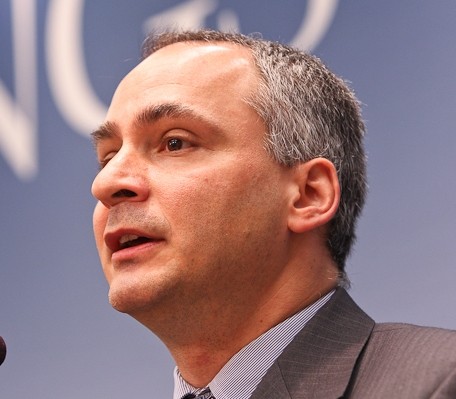
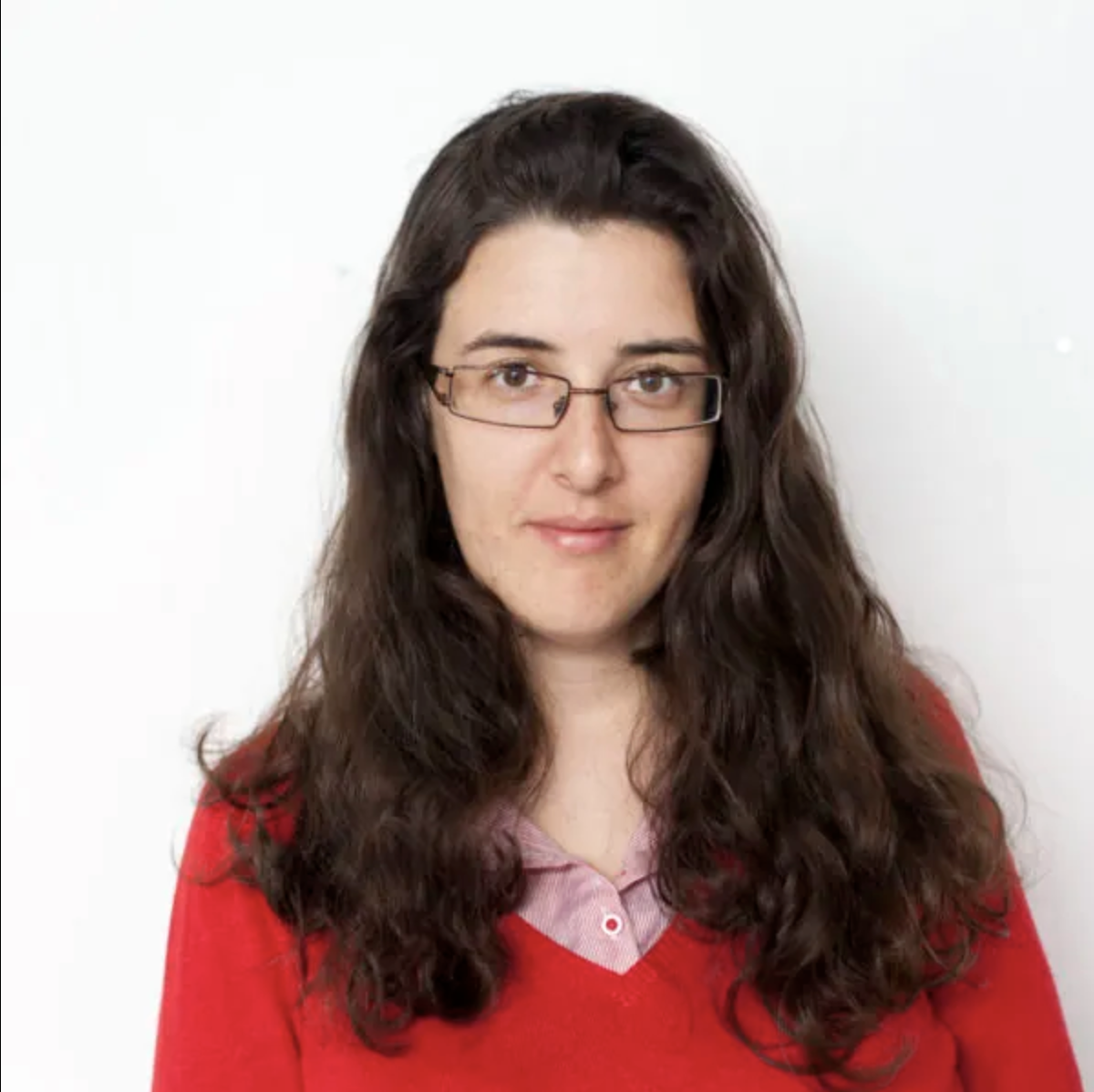

Editor in Chief Benjamin Wittes sits down with Princeton PhD candidate Elizabeth Tsurkov to talk about the 903 days that she was held in captivity by Kata'ib Hezbollah, an Iranian-backed militia in Iraq. Tsurkov describes the circumstances of her detention, the realities of life in captivity, and the sociological study she undertook of her captors while imprisoned. Wittes and Tsurkov also explore changes in U.S. hostage policy under the Biden and Trump administrations, as well as how various governments responded to efforts to secure her release.
For more on Elizabeth’s powerful story, see:
- “Held Hostage by Iran’s Militias: Where Are They Now?,” a talk by Elizabeth Tsurkov, moderated by Charles Lister and Benjamin Wittes, hosted by the Middle East Institute (January 21, 2026)
- “Lawfare Daily: One Year Since the Kidnapping of Elizabeth Tsurkov,” Ben’s conversation with Emma Tsurkov about her efforts to seek her sister’s release (March 25, 2024)
To receive ad-free podcasts, become a Lawfare Material Supporter at www.patreon.com/lawfare. You can also support Lawfare by making a one-time donation at https://givebutter.com/lawfare-institute.
Click the button below to view a transcript of this podcast. Please note that the transcript was auto-generated and may contain errors.
Transcript
[Intro]
Elizabeth Tsurkov:
When something humiliating like this happens, like we bought the explosives
that blew us up. It just, it really undermines this kind of driving force, the
sense of enjoyment of being part of this scare group because they're part of an
axis that is linked. So the failure of Hezbollah is their own failure as well,
right. And the weakening of Iran and the weakening of Hamas, et cetera is their
weakening, this is how they perceive it.
Benjamin Wittes: It
is the Lawfare Podcast. I'm Benjamin Wittes, editor-in-chief of Lawfare
with Princeton PhD candidate Elizabeth Tsurkov.
Elizabeth Tsurkov: In
Israel, after the gag order in Israel was lifted about my kidnapping in July of
23, because of my political views, because of my support for Palestinian human
rights, there was basically a campaign of incitement against me on social media
by right-wing, prominent media personalities, and a great deal of schadenfreude
that, ‘Look at this lover of Arab being kidnapped by Arabs,’ you know.
Benjamin Wittes: Tsurkov
was held for 903 days by an Iranian-backed militia in Iraq.
In this conversation, we talk about the circumstance of her
detention, American policy toward hostages under both the Biden administration
and the Trump administration, and the sociological study she made during her
captivity of the people who were holding her.
[Main Episode]
So, I wanna start with your very unexpected Atlantic article,
which I think when most people come out of captivity at the hands of a
terrorist group, the first thing they do in writing is not kind of to make fun
of the terrorist group.
And you wrote an article, I believe the headline was, “I've
been Kidnapped by Morons” or “Idiots” or,
Elizabeth Tsurkov: Yeah.
Benjamin Wittes: And
a lot of the article is deadly serious, but it is also funny and a lot of the
point of the article is that there's something comical about how stupid the
people who tortured you were.
So talk to me first about the relationship between, you know,
why when you were in, when you came out as the first thing you're gonna write
in a major publication, kind of poking fun at Kata'ib Hezbollah.
Elizabeth Tsurkov:
Yeah. Thank you for having me here. The article is titled “I was Kidnapped by
Idiots.” I basically wrote a draft of it already while in captivity.
Benjamin Wittes:
Wrote in your head or wrote on—
Elizabeth Tsurkov: I
wrote it—I wrote it initially in my head when I was in a torture prison for the
first four and a half months of captivity. And then in the second prison where
I was provided with notebooks, I literally wrote down the outline of the
article already. And then after I came out of captivity, I reconnected with
Syrian and Iraqi friends and Iranians and spoke with them about my experience
and to see if it tracks with them as well and what kind of insights I could
gain from this really, obviously horrible experience that had also many funny
elements to it.
And humor helped me stay sane while inside and at times when I
was feeling. You know, utter horror 24/7. At any moment there would, there was
no precise timing for when they would come and torture me. So it's basically, I
was on constant alert waiting for the next torture session and humor helped
deal with that.
Of course, when things that really bad things stopped being
funny. But really, I remember for the first month or so of captivity,
basically, you know, during the first month there was, there was minimal
torture, I would call it. I used to think that, you know, after I come out of
this, and I expected to come out very quickly, you know, because I knew that
I've been kidnapped for a ransom so that should be easy to arrange.
I thought that I would go on the standup tour and talk about
this experience and how funny it is, and I would tell this standup routine to
myself, you know, to cheer myself up, right. And, you know, I was always
surveilled by two cameras and basically the captors, they would occasionally
see me in the cameras just laughing to myself and not knowing what, like,
probably thinking that I'm losing my mind.
But in fact I was trying to preserve it, obviously without kind
of doing it in a cognizant way, like this is how I preserve my mind from
slipping, you know, and there is a, an element of vindictiveness to, to this
article. I understood that while interacting with them that the reason why many
people join these militias—and I've then, you know, spoken to friends who've
also interacted and unfortunately had interactions with such with such militias
and such regimes—obviously people joined for a salary, but also because of the
element of the ability to instill terror and to feel powerful and to feel
scary.
People enjoy this, enjoy, for example, being a member of Kata'ib
Hezbollah in, in Iraq and knowing that your neighbors are afraid of you,
knowing that you can, you know, park your car in their driveway, and they're
not going to dare to say anything because they're terrified of what you'll do
to them because you can literally kill them and get away with it.
So when you poke fun at them, it is something that undermines
their power. Actually, the person who probably the most wanted person in Iraq
right now is Ahmed Albasheer. He is the John Stewart of Iraq. Of course, he
cannot live in Iraq, and his program cannot air on any Iraqi channel, even if
he's abroad, because the channel would be basically blown to pieces.
So he's broadcasting on Deutsche Welle, a German channel,
Arabic and on YouTube. And the show is incredibly popular because it is against
the militias, but it also pokes fun at them. And this is something that is
deeply, I think it's much more effective than just saying, you know, these guys
are, you know, are Iran's puppets or something like that, which is the common
criticism of them in Iraq.
They're actually not too ashamed of being, you know, of serving
a foreign state. They are, however, very displeased with being found out to be
morons.
Benjamin Wittes:
Alright, so before we backtrack and get the story of how you came to be in
their custody in the first place, I wanna stay on this theme for a minute.
When you and I first talked about this, when you were released,
you mentioned to me that your mother had a similar history and had been in the
Soviet Union, prosecuted for, among other things, jokes.
Elizabeth Tsurkov:
Yeah.
Benjamin Wittes: And
so tell me about your family history of making fun of authoritarian torturers.
Elizabeth Tsurkov:
Yeah. So, both my mother and father were jailed in USSR for political crimes.
My father served seven years in prison and two years doing hard labor, and my
mother spent three years in prison. And my mother, she did a whole lot of
things against the regime. Both of them were dissidents seeking to change the
regime, replace it with a democracy, and my mother, she would be involved in
Samizdat.
Samizdat is basically the production of books and literature
that is banned in the Soviet Union. The Soviet Union controlled all the
printing presses, controlled all the Xerox machines, and basically people would
use other methods to basically move around this banned literature.
And there was tamizdat, which is, which are books that were
printed outside of the Soviet Union and were smuggled in, and samizdat, it
means self-production in Russian. And that was basically my mother would type
up entire books on her, you know, typing machine—his was before the era of
computers—and basically would make copies after copies of books of poetry.
And she would smuggle that around. She would travel around the USSR
and smuggle it around and distributed to France, distributed to other people.
You know, for example, the works of Solzhenitsyn, the works of Strugatsky, and
other, Kalich, who was a popular kind of, bard, poet. Those were the types of
works that she was distributing.
Also, George Orwell was banned, so that as well, so translation
of 1984 and Animal Farm. And she also, she would also meet with
families of dissidents who were jailed, would collect information from them
about the conditions of their incarcerated family members. She would then speak
to Radio Free Europe and give them the information about conditions in, in the gulags.
And one thing that she did kind of for fun was. You know,
maintain this collection of jokes and basically grow it gradually to encompass
hundreds of political jokes.
Benjamin Wittes: And
for people who don't know Soviet-era jokes, it's a, it's like an art form. They
are, they're unbelievably dark and funny.
Elizabeth Tsurkov: It
is. It's a very developed and sophisticated form of, you know, political satire
was basically transferred from one person to another as a form of resistance
that is, you know, could be called a, the weapon of the weak, right—in a
different context, but basically it is a way to resist that is risky, but you
know, not terribly not, you know, like going out into a protest against the
regime, which is obviously very dangerous. Or, you know, taking the bars or
whatever.
So, so my mother maintained this collection of jokes and while
she would never keep in the house any samizdat work that is kind of, you know,
political, the classic samizdat that, let's say the writings of Solzhenitsyn,
she kept the collection of jokes because she was so, you know, this is jokes,
you know, so then when the KGB raided her apartment, they found nothing except
this collection of jokes.
So this is what she was sentenced for it, even though she did a
whole lot more, you know, talking to Radio Free Europe, traveling around,
smuggling the samizdat,
Benjamin Wittes: But
what she actually went to prison for is a joke book.
Elizabeth Tsurkov:
Yeah. So the article in the law that she was sentenced for was [Russian],
which is spreading lies about the common Soviet order.
And the lies are the jokes, basically.
Benjamin Wittes: And
you told me that during her trial, they had to read the jokes as evidence.
Elizabeth Tsurkov:
So, so this was during the interrogations, basically, they would ask her to
tell them the jokes because that was basically the case against her. And
initially she resisted, she's like, oh, you're not going. Like, are you fucking
kidding me? Like you are going to then sentence me before telling this joke
now. So I'm not going to, you know, double up my sentence here. They’re like no, it's okay. You can just tell us. So
she started telling them the jokes and the funny thing is that they tried to
avoid laughing, right?
Because they need to be taking this seriously, but the jokes
are genuinely funny. So they just started laughing. So then she would just, you
know, pass the time and by telling them. And then afterward, after she was
sentenced, she was, the trial was in Leningrad, she was transferred basically
to serve out a sentence in Siberia.
And while she was on the train, like the guards were
accompanying them who were not KGB were just, you know, ordinary soldiers of
some or internal security or one of some kind, ask her, is it true that you
were jailed for jokes? She's like, yes, I was jailed for it, and I was
sentenced, you know, three years.
And they're like, tell us some of the jokes. She's like, are
you trying to get me sentenced for more years? Like, no please. And she's like,
no, I'm not going. And then they told her, why don't we, why don't you come to
our cabin and you will have, you'll have dinner with us and you'll tell us the
jokes.
So the offer of the dinner was very tempting. So she came in
and basically what they had, there was a big jar of homemade jam and she just
devoured this jam while she was telling them the jokes. So that was her payment
for the performance. And indeed, she was not they didn't, you know, rat on her.
They told her, you know, we're just commissioned, you know, you know, we are
doing like our obligatory service.
You know, we don't have anything to do with the KGB. We're not
going to rat you out. Just come and tell us the jokes. So that's what she did.
She told them the jokes in exchange for jam.
Benjamin Wittes: So
you, your parents moved to Israel when you were young?
Elizabeth Tsurkov:
Yeah.
Benjamin Wittes: You
are Israeli, Russian, and a graduate student a PhD candidate at Princeton.
How did you end up in Iraq, which is not a place that people
expect Israelis to end up? How did you end up in Iraq and how did you end up
specifically in Iraq, in the loving embrace of Kata'ib Hezbollah?
Elizabeth Tsurkov:
Yeah, so I was in Iraq. This was my seventh visit to conduct field work for my
PhD dissertation.
The dissertation is in the field of comparative politics. It
basically compares two political movements. One of them in Iraq, the Sadrist
Movement, which is the largest political movement in Iraq. And it compares it
with a Lebanese party a Maronite party, a Christian party in Lebanon. So I did
field work in both countries.
And basically, you know, you come into a country and you start
through the connections that you have to recruit interviewees. And I was
basically recruiting people who are for interviews, people who are Sadrist and
former Sadrist in particular, and also informed individual people from their family
who are not Sadrist, et cetera.
And my initial end was through activists who are members of the
2019 protest movement in Iraq called the Tishreen Movement, which was very
violently crushed by the militias. They basically slaughtered about 800 of
these protestors; kidnapped many of them, tortured many of them, and many of
them are former Sadrists.
And therefore they were my “in” into the Sadrist community. And
also I would just travel by myself to Sadrist areas and interview people. And
basically the—Qasem Soleimani, who was, you know, assassinated by the Trump,
the first Trump administration in 2020, oversaw the mass murder of these
protestors and their repression.
He arrived shortly after the protest began, and basically held
the meeting with the leadership of these militias and oversaw basically the
repression of these protests that were really nationwide and in comp—millions
of people came out into the streets across Iraq, and interestingly in, mostly
in majority Shia areas.
It was a revolt of the Shia against this regime that is
supposedly, you know, ruling in their name. So the repression was very violent,
and the Iranians similar to what, you know, how they present the, you know, the
last wave of protests in, in, in Iran, they presented the protests that were
taking place in Iraq as a foreign conspiracy basically led—that basically the
Americans made people come out into the streets and protest—whatever, which is
obviously bullshit, but this is something that they genuinely believe in.
So if you perceive them to be a foreign threat, the protestors,
you basically, then once the protest movement ends, and they're still activists
out there, what the militias did, I turned, I found out very unfortunately,
only while in captivity, was to basically recruit people from this protest, you
know, this activist milieu and also plant people to spy on other activists.
So basically, there were several people in my environment who
basically turned out to be plants of these, of these militias, and they used
them to essentially lure me out of my home. They used one of them to lure me
out of my home during the evening time and to be, for the meeting to be held
very, very close to my home so that I don't take a taxi and therefore walking
on foot and therefore kidnapping is easier.
And this is how it was. I was kidnapped.
Benjamin Wittes: And
they did not know at the time that you were Israeli, right? That you were not
kidnapped because you were a—
Elizabeth Tsurkov: No
Benjamin Wittes:
secret Mossad agent. You were kidnapped because you were available.
Elizabeth Tsurkov:
Exactly. They didn't know that I'm Israeli. They actually thought at first that
I'm American because I'm coming from a U.S. university.
I presented myself to everyone as a Russian, which I am, and so
they thought that I'm American and Russian, but then they asked for the
passport of my phone. You know, they were, they, the kidnapping itself was
extremely violent. So I knew that I have to comply.
And then according to the records that I now have, they
basically opened my phone about two and a half weeks after my kidnapping and
then rummaged through it. And then after a month came, you know, found enough
evidence to show that I'm Israeli. And then basically came in and started
torturing me, demanding that I confessed to being a spy.
Benjamin Wittes: So
just to be clear, you have no relationship with any intelligence agency?
Elizabeth Tsurkov:
Well, since coming back, I have been questioned by several intelligence
agencies.
Benjamin Wittes:
Right. But you had no relationship—
Elizabeth Tsurkov:
No, I mean, I did my obligatory military service in in Israel which is
compulsory for both men and women, and the director of intelligence who was an
intelligence analyst.
But that ended in 2007.
Benjamin Wittes: And
how did you come to speak good enough Arabic to conduct field research, not
just in Iraq, but also in Lebanon and Syria over many years, in—your Arabic is,
as best as I can tell, near native at this point.
Elizabeth Tsurkov:
Yeah, so I started learning Arabic in 2014 so quite late in my life.
This was driven by basically a changing dynamic on the ground
in Syria. So when, I joined kind of social media and Twitter and became
connected to many Arab activists back in 2008, in late 2008. And then many of
these activists became, you know, prominent members of the uprisings that
occurred across the Arab world, then known as the Arab Spring.
So I very closely followed, you know, developments in, in, in
Tunisia and Egypt and Bahrain, and of course was very supportive of those. I
think due to kind of very much the legacy of my parents and reading a lot of
new conservative literature as a young adult, I would say. So I was very
supportive of those uprisings.’
I remember speaking to Syrians before the uprising in Syria
started. They were debating, will it happen here or not? You know, the regime
is so brutal that is known for its brutality. Last time people rose in ‘82, in
Hama, you know, tens of thousands were killed. Entire neighborhoods flattened
by half a regime.
And then the uprising started, I started following it along
with following all the other uprisings in the region. And, you know, while
other uprisings succeeded in Tunisia and in Egypt, others were crushed very
violently, like in Bahrain. Others petered out in Syria, kept going, and was
more and more violent.
And I just, you know, kept following the developments and
connecting with more and more Syrians. And initially basically knowing English
was sufficient not to do any kind of high-quality research, but just to just
follow events. And then, my contacts and friends, people who became my friends
in Syria, who spoke English, were either killed because the regime very much
targeted, this kind of liberal elite that played a role in, you know, leading
the uprising, particularly in urban areas and during the first months of the
uprising.
So those individuals were targeted very heavily for arrest, for
killing. And many of them, as a result, those who were not jailed fled the
country. So to be able to continue to follow events, I started basically
learning Arabic. It was, it took a long time for me to be able to you know, to
speak fluently, for me to be able to read and write, it takes time.
It's not also the—Arabic also has multiple dialects. So, you
know, I learned, initially I learned Palestinian Arabic with a Palestinian
teacher. Then I had to adjust to Syrian Arabic to some extent. I studied with
Syrian teachers who were my friends, basically, and I would pay them to have
conversations with me. Well, Princeton would pay them to have conversations
with me. And that very much helped.
And then in Iraq, I just picked up from France, basically. I
would ask them, what's the Iraqi word for this? Because Iraqi is quite
different from Palestinian, from Shami, Syrian, or Lebanese Arabic.
So this is how I picked up the language and then. You can—during
the second part of my captivity, the prison without torture. I was given books
in Arabic, much of them in kind of classic Arabic, kind of, sixth, seventh
century Arabic. And basically had an opportunity over the span of the 25 months
that I spent in the second facility to also improve kind of my classical
Arabic. 'cause I studied it at university, but no one actually speaks it. There
I was held in isolation without contact with people and just, you know, really—
Benjamin Wittes: It's
a great, it's a great opportunity to learn a classical language.
Elizabeth Tsurkov:
Exactly.
Benjamin Wittes:
Because it's not like, it's not like you need dialogue with people.
Elizabeth Tsurkov:
Exactly. There was very minimal dialogue, unfortunately.
Benjamin Wittes: So a
lot of listeners are gonna hear this story and say, it is one thing to be an
Israeli who learns Arabic, who reaches out by Zoom and other electronic media
remotely to lots of activists in the field—it is quite another thing to pick up
and go on multiple occasions to Iraq and Syria and—
Elizabeth Tsurkov:
Lebanon.
Benjamin Wittes:
Lebanon, none of which have relations with Israel, all of which have factions
that are likely to view any Princeton graduate student who happens to be
Israeli as a spy. Why did you think that this was something you could do
safely?
Elizabeth Tsurkov:
Because I am, well, first of all I think that I'm not a widely known figure.
I'm not a journalist who is out there, and even Israeli
journalists have traveled to such countries. But I am basically known to quite
a limited number of people, basically, mainly people who follow me on social
media, on Facebook, on Twitter, things of this kind. So therefore, I'm not, you
know, my face is not well known.
On top of that, the name on my passport, the Russian passport
is, my name, but it's just the way it is pronounced in Russian, if you Google
that name, it does not lead to my English name, basically. So therefore, in
theory, and no one actually ever did that; in theory, someone you know has
access to my passport and Googles my name, they will not find anything that
links—
Benjamin Wittes: Because
it uses Tsurova or what? '
Elizabeth Tsurkov:
cause basically it's a, the Russian way of pronouncing my first and last name.
Benjamin Wittes: I
see. Right.
Elizabeth Tsurkov:
And basically, so that offered me some protection, I felt. And indeed I was
kidnapped not for being—
Benjamin Wittes: Right.
Elizabeth Tsurkov: Not
for being Israeli. And you know, many of the regions to which I went, for
example, Northeastern Syria, Iraqi Kurdistan, it's not even hostile to Israeli,
right?
It's not even a problem to be Israeli. And then Iraqi
Kurdistan, I would tell people that I'm Israeli. In Northeastern Syria, the
people who were my friends and people I was meeting through them all knew that
I'm Israeli. It was not an issue, obviously when I was in whole camp, you know,
that was holding ISIS families.
I'm not going to announce there that I'm Israeli.
Benjamin Wittes: So
you get kidnapped and after a few weeks they figure out that you're Israeli.
You have described the torture that you underwent elsewhere, and I don't want
to dwell on that except to say that it was appalling. One of the very striking
things about your engagement with this group of people over 903 days that they
were holding you is that you made something of a study of them.
And at the Middle East Institute yesterday, you gave a talk in
which you described—it's unlike any talk I've ever heard anybody give—a sort of
a sociological study of the psychology change in the Kata'ib Hezbollah universe
over the course of the 903 days that they were holding you.
Without rehearsing the entire speech, which I urge people to
listen to, and which we will link to in the show notes, give us a little
overview of how their psychology changed. What's the two- to five-minute
version of the 35-, 40-minute talk you gave yesterday?
Elizabeth Tsurkov:
Yeah. So, you know, I was kidnapped in March of 2023, and obviously October 7th
happened afterwards. And then, so I was already held in the second prison when
this happened.
And October 7th was really the most joyous I've ever seen. My
captors, they were very happy. They thought that this is an amazing victory to—
Benjamin Wittes: And
what were the, what were they happy about? Were they happy that, did they
believe this was the end of the state of Israel? Did they believe that? Were
they joyous that a lot of civilians had been killed? What was the source of the
joy?
Elizabeth Tsurkov:
Yeah. First of all, I think they generally don't have a problem with the death
of civilians, right. As a, I don't think they make any kind of distinction and
Hamas doesn't make either. And this entire axis doesn't, they kill, you know,
these militias, Kata'ib Hezbollah was the main actor responsible for killing
protestors in 2019, or clearly civilians.
So they don't make those distinctions. They were happy because
it was a huge blow for Israel. It was really something quite unprecedented. The
way also it was represented in media that was supportive of Hamas and of the axis
of resistance like al Jazeera and Al Mayadeen, et cetera, and Iraqi channels
that are financed by the militias basically, is that, you know, this is an
unprecedented blow.
It is a successful military operation. It was of course not
represented as mass slaughter of instant people and kidnapping of
overwhelmingly civilians. It was presented as something very different as you
know, constantly, I heard the TV of my guards, you know, they were constantly
talking about prisoners, not hostages.
They were constantly talking about soldiers, even though very
few of them were actually captured. Less than 10 or so soldiers alive, you
know, were captured. Actually most of them, six of them, were female soldiers
were not armed. And the others were male soldiers who were indeed armed and
were disarmed somehow.
And the rest were either civilians or corpses. So this was
something that was not told until this day, not told to people to watch these
channels. So they viewed it as a highly successful military operation and as
something that is really puts Israel at risk. And this is something that in
November of ‘23.
And IRGC commander in Iranian, came to demand that I record a
video in which I, you know, repeat the confessions that I made under torture in
the first prison, and then also add on top of it certain elements that are
connected to October 7th. And he told me, started debating with me before the
recording saying, you know, what do you think about this attack? And, you know,
about October 7th, et cetera.
And, you know, I said, clearly this is a huge failure on the
part of Israeli, you know, intelligence agencies. This is unprecedented.
Nothing like this has ever happened in Israeli history. That this, the
magnitude of this failure. Then he said, yeah, and the state of Israel, is it
risk? It's going to disappear. All the Israelis are leaving Israel en mass.
This is also another thing that was often repeated on these outfits, that
basically there's a wave of immigration from Israel and there is immigration, but
it's not something that is you know, significant and any kind of a statistical
manner.
Basically he asked me to repeat that on camera, that basically
Israel is at an, you know, unprecedented risk to its survival. The survival of
the state itself is in question and that, you know, immigrants are leaving in
huge numbers. The, you know, basically Israel is done with, right? And I didn't
want to say it because it's nonsense.
And you know, as a, obviously people who would watch it and
understand that I'm speaking under duress, but this part is like analysis,
right? So that made, people—
Benjamin Wittes: You
were afraid—you were afraid of giving bad analysis. Your torture,
Elizabeth Tsurkov: I’m
an analyst, you know, like this is obviously bullshit.
I don't want to be saying this, so I don't mind like, repeating
confessions that are already made on the torture. They're obviously, you know,
bullshit. But this is analysis. So in theory people may think, oh she's saying
it. You know, because she agrees with this, right? This is genuinely what she
believes.
But he insisted on it, and obviously this was only three months
I was, after I was transferred from the torch prison, no one told me at any
point in the second facility that I'm not going to be tortured. I was trying to
find out, you know, no one would give me a clear answer. So I thought, okay I
need to comply.
He insisted on it. He was, his tone was very firm, you know,
I'm like, okay, I'm just going to say it. And so, this was genuinely their
belief. Then things obviously started changing, you know, as time went on
particularly a major blow for them was the killing of several Kata'ib Hezbollah
commanders and other militias by the Biden administration.
This was in 2024. After basically, they targeted US forces in
Jordan and in Syria and in Iraq. So that made it clear to them that the efforts
that they made after the assassination of Soleimani and Abu Mahdi al-Muhandis in
2020, those were in vain. They're still deeply penetrated, intelligence-wise.
Then afterwards came the pager attack, and that was really—that day, they
walked around, shell shocked. They were in utter, they were just so
flabbergasted by what was done.
And there was a real humiliating element to this because
Hezbollah purchased the explosives, like it purchased tracking devices that
would track the movement of these. There were GPS trackers implanted into the
pagers and into the walkie talkies and, but also explosives obviously.
So this is something that is, that, you know, as I mentioned,
people join these groups to feel powerful, to lord over others, to feel that
they're scaring others. And when something humiliating like this happens, like
we bought the explosives that blew us up. It just, it really undermines this
kind of driving force, the sense of enjoyment of being part of the scare group
because they're part of an axis that is linked.
So the failure of Hezbollah is their own failure as well, right.
And the weakening of Iran and the weakening of Hamas, et cetera is their
weakening, this is how they perceive it. So, and throughout this, particularly
in the first month of the war, there was a real sense among them that the war
is about to end soon and that you know, they will be victorious and Israel will
accept the demands that Hamas was making.
And basically in—on Christmas of 23, I was given a TV and I
started following the news. I was given a TV in my cell, and I started
following the news and I was seeing that this is utter nonsense. This belief
that the war will end soon is utter nonsense. And I spoke about it with the
nurse who was allowed to come in and check on me from time to time and speak to
me.
He was the only one allowed to do so. And I told him, this
analysis is nonsense. This is, this war is going to last for a long time. It is
politically useful for Netanyahu to continue this war. It is very destructive
to his coalition if he stops it. This will just continue for a very long time
and there's no pressure from the Biden administration to stop it and.
He asked me to write this analysis for them. So basically I
started basically writing, I wrote multiple analysis papers for my captors.
Benjamin Wittes: So
this was a, they basically kidnapped a think tank.
Elizabeth Tsurkov:
Exactly. It was unpaid labor that I was performing for them, but it actually,
you know, kept my mind busy. So I enjoyed this process intellectually,
obviously there were exploitative elements to this whole story.
So, so the war dragged on and on. Then, you know, Nasrallah was
assassinated. The war on Hezbollah—they clearly, even though the public
rhetoric was different, and Hezbollah again proclaimed that this was another
victory in the series of victories that it has achieved. They clearly admitted
in private that, no, like, this is not true.
Like, we, like, Hezbollah lost. We lost, you know.
Benjamin Wittes: So
you watch them go from a euphoria ‘Yeah. Our victory is imminent. Yes, it is
unfolding before our eyes,’ to realizing that they had bought the explosives
with which they were being targeted to realizing that they had been defeated.
Elizabeth Tsurkov:
Yeah,
Benjamin Wittes: I
mean, that must have been an incredible emotional development to observe.
This was after the period of your torture. Were you aware that
you were watching something that basically no intelligent service has realtime
access to? I mean, except in the deepest—but to actually insinuate, not merely
a collector
Elizabeth Tsurkov:
Yeah.
Benjamin Wittes: But
a, an a really first-rate analyst into Kata'ib Hezbollah to watch the emotional
trajectory of this.
This was, I don't mean to make it sound like this was a good
thing for you, but it was an incredible intellectual opportunity.
Elizabeth Tsurkov:
Absolutely. Absolutely. I definitely would've forgotten it. But it really was
fascinating to observe it and also learn more because I purposefully, you know,
one of the things I did to avoid getting kidnapped is never ask any sensitive
questions, about anything related to military, to militia, to whatever.
So for example, with Shiites we would interview, they were
often formerly members of Jaysh al-Mahdi, the Sadrist militia. So I would ask
them, you know, tell me about your involvement with the Sadrist movement. And
they would start speaking and sometimes they would talk about their military
background and what they did. You know, this is information that is actually
irrelevant at this point. You know, this was 2004, 2005, et cetera.
And I would never pry and never push, and I would never get
close to militiamen, to these militias. Even though research-wise, it may have
been beneficial to basically compare the motivations of these two groups.
But I avoided it on purpose because they're dangerous people, right.
And here I got access to them, you know, and I'm already, the worst thing has
already happened. I may as well, you know, use this opportunity to research
them. So actually I got oral consent from two of my captors to conduct
interviews with them for my PhD.
Benjamin Wittes: Wow.
Elizabeth Tsurkov:
Because it's very useful information to understand how their motivations and
their worldview differs from that of Sadrist, because they're both Shia. But
one went in the direction of—and one went in, you know, stayed with the Sadrist
movement because many of these militias actually emerged from originally from Jaysh
al-Mahdi.
They split it off from it.
Benjamin Wittes: And
just for people who don't know the vocabulary, the, that's what English
speakers call the Mahdi army, right?
Elizabeth Tsurkov:
Yeah.
Benjamin Wittes: So
let's talk about the circumstances of your release and, but let's start with
the circumstances that did not lead to your release. Which is you had one
government, the Israeli government, that was otherwise preoccupied—
Elizabeth Tsurkov: Yeah.
Benjamin Wittes: For
most of the time, and did not particularly take responsibility for your case.
You had another government on whose passport you were traveling, who if memory
serves, told your family that you were a waste of oxygen; and you had a third
government which is to say the U.S. government that you were not a citizen of I
guess we haven't mentioned that, but you're not a U.S. national, but actually
was the chief agent—both during the Biden administration and during the Trump
administration—
Your sister, who was really the chief agitator for you the
entire time was convinced that the avenue that would get you released was
through American pressure. So talk to us about the three governments and the
two iterations of the U.S. government. Because of course the Biden
administration and the Trump administration were, as your story reflects quite
different in this regard.
So let's start with the Israeli government. You were there not
representing yourself as an Israeli, but as somebody who is an Israeli citizen
who grew up in Israel, who's, and yet the Israeli government did not, you know,
make you a headline issue the way it did with the hostages in Gaza.
Elizabeth Tsurkov:
Yeah.
Basically Israel, my family notified the authorities there very
early on, basically within the first 24 hours. And, a beneficial thing that
Israel did was at the time was to ask the FBI to open a case into my kidnapping
because the FBI has, you know, experts on Hezbollah because it has kidnapped
and killed Americans.
And during the first months of my kidnapping prior to October
7th, there were efforts to get me out. The problem is that my kidnappers did
not make any demands for a very long time. This is probably because they were
assessing basically my value. They were trying to get all the confessions out
of me, and basically through repeated rounds of torture, then the commander in
the base to which I was transferred, the second prison on the border with Iran.
He then also asked for my confessions to in written form. Took a very long time
to produce them. They were very long to type them up for him. Anyway, this
whole time, basically they didn't raise any demands.
So, Israel was quite limited in what it could do then basically.
and then, and eventually when the demand came, it was basically contradictory
from two different mediators. One asking for $600 million, the other for $500
million probably 'cause they wanted the, some, one of them wanted a larger cut,
basically from the ransom.
And Israel and the United States treated it as kind of a joke
number. Like basically this is like saying, you know, we want, you know, all of
the ice cream in the world, you know, something ridiculous like this. And
throughout the period of my captivity, this is something that, that both
Israeli and US officials have told me since coming out the Kata’ib, you know,
obviously they're deeply incompetent at their, you know, official, you know,
role of, you know, protecting Iraq's security or even serving the Iranian
regime.
And this is something I detail in the piece in the Atlantic,
they're highly ignorant about issues related to intelligence, et cetera.
Information that is not secret and is available out there. If you just read it,
you would know all these different things. They were not aware of them, but
there were also incompetent negotiators, which is not surprising, right?
So they would raise contradictory demands from different
intermediaries. So it was basically very difficult to negotiate with them in
Israel after the gag order in Israel was lifted about my kidnapping in July of ‘23.
Because of my political views, because of my support for Palestinian human
rights, there was basically a campaign of incitement against me on social media
by right-wing, prominent media personalities, and a great deal of schadenfreude,
that ‘Look at this lover of Arab being kidnapped by Arabs,’ you know, and the traitor
who is now there.
So this political climate, the fact that I went into Iraq
willingly, you know, was not sent there by my government in any way, is
definitely something that reduced the motivation of Israel to work for my
release. And indeed in particular, after October 7th, really the actions that
were taken were not significant.
Now with the Russian regime, my family met with the Russian
officials, reached high ranking
Russian officials, to Bogdanov, who is the Putin's advisor on Middle East
Affairs. And basically they refused to do anything they said, we have no
relationship with these with these militias. The United States created them.
They should be the one taking care of them.
And this is obviously bullshit because Russia is actually quite
close to these militias. It could have gotten me out, but it refused to do so.
And they were quite explicit when they met my family in D.C. at the embassy
that they're refusing because of my political views, because of my critical
writing of the about the Russian War crimes in Syria and Ukraine.
And that's when they said, you know, then I'm basically a waste
of oxygen and it's better if I die. So they did nothing. Even though they
could, Israel had more difficulty. It has no less—it had ful—
Benjamin Wittes: It
doesn't have an on the ground presence.
Elizabeth Tsurkov:
Exactly. Exactly. And doesn't have a relationship with these militias as
opposed to Russia that genuinely does.
And then the U.S. now, during the Biden administration,
basically they didn't see me as their responsibility because I'm not a U.S. national.
So, you know, it's an administration that follows things kind of by the book
and doesn't see, you know, even though Kata’ib Hezbollah is a terrorist group
in the U.S. it's hard.
Many Americans—
Benjamin Wittes: It fires
on U.S. troops. Yeah. On a semi-regular basis.
Elizabeth Tsurkov:
Yeah. Yeah. It used to, you know, before they got knocked on their head and now,
they've stopped doing that because they're terrified. But yes, it has killed
Americans and obviously. Some people inside the U.S. administration believed
that it would serve U.S. national interest to get me out.
Particularly also because, you know, as a researcher, I was
also, you know, briefing officials in many countries, including in the United
States. So I was well known to officials inside the Biden administration
Benjamin Wittes: Including
at very high levels.
Elizabeth Tsurkov:
Yes. You know, I was, as someone who conducted research in the region on the
ground, it is something that is appreciated in in the U.S. and in other
countries as well.
So the Biden administration essentially didn't do much, and
things really changed when Trump got elected and I'm saying elected because it
was even before he was sworn into office. Now everyone knows that my political
leanings are liberal, but. I genuinely believe, and that if Trump had not been
elected, I would've just died there in captivity.
This is just the reality because the same people who were in
the Biden administration running policy would've remained in the Harris
administration, and they too would've believed that this is not in our interest
to do anything to get her out. Some officials inside the Biden administration
even believed that it would be harmful to U.S. interest if I got out, because
it would cause a civil war between Iraqis, I don't know, maybe Iraqi factions
like the Shia factions, Sadrists.
And—
Benjamin Wittes: do
you wanna name names on that?
Elizabeth Tsurkov: I
mean, I think that people who listen to this podcast are familiar with the
geniuses who worked at the Biden administration and could venture a guess, as
to who would think such utter nonsense, I'm out and I'm free, and there's no
civil war in Iraq. Anyway, after Trump was elected, my sister, and Adam Boehler
was appointed as the special envoy for hostage affairs, she reached out to him
even before the inauguration and managed to meet him and his family home, him
and his wife and he just agreed to take on my case.
He felt sorry for me. He realized there was no one else
fighting for me. The governments whose passports I hold were, you know, not
interested, not able, you know, to do much. And he took on my case. And he also
recognized that U.S. has immense leverage over, over Iraq and over these
militias because they're terrified of the U.S. and particularly they're
terrified of Trump. You know, the former leader of Kata’ib Hezbollah, whom
really the members worshiped like a god, you know, would kiss his hand when
meeting him, really just saw him in this, you know, holy figure. Trump killed
him like that. And he was even—
Benjamin Wittes: Collateral
damage to the killing of Soleimani. Right?
Elizabeth Tsurkov: He
wasn't even the target. It wasn't even the fucking target. So they, they
genuinely fear Trump. This is something that I noticed in, during torture
sessions when, you know, Trump came up, this was still during the Biden
administration and the matter of the assassination of Soleimani came up, that
they were incredibly, obviously they hate him but also they're terrified of him
and they think that he's crazy.
And this is something that, so Adam Boehler got involved in
this case and, you know, met with, flew to Baghdad, basically uninvited barged
into a meeting with al-Sudani, with the head Iraqi Prime Minister, brought up
my case, demanded movement, demanded to be connected to the kidnappers so that
he can talk to them directly and get me out. Threatened that if they don't talk
to him, he said bombs will drop on them.
And then at a later stage really in, in early September, Mark Savaya,
who is an Iraqi American business person who is friends with Trump and
participated in the 2024 campaign in Michigan, he traveled to, to Iraq and met
with Prime Minister al-Sudani.
The meeting was on other issues. But he brought up my case and
he basically told al-Sudani, I want you to convey a message to the leadership
of Kata’ib Hezbollah, that if Elizabeth is not released within a week, you
will, guys will be killed. And that Trump is pissed. And he even gave him two
photos that show Mark and Trump in the same photo and Trump looking angry
basically. So he said, you know, tell them Trump is pissed. You know, this you
need to get this done.
And indeed, I was released within a week. Mark remained in
Iraq. He didn't fly out. He waited for me to come out. And then came, I was
taken to, from where I was held captive near the border with Iran. I was taking
to Baghdad. There I was in the Green Zone. Then I was handed over to the Iraqi
government. Iraqi government brought me to a very fancy guest house in the
Green Zone. And from there, Mark came to pick me up and took me to the U.S.
Embassy.
Benjamin Wittes: I
wanna dwell on a couple of themes that are latent in what we just, everything
we've just talked about.
Your politics are extremely complicated. On the one hand, just
within this conversation, you've described yourself as having your interest in
this, having been inspired to some degree by neo-conservatives; you’re a figure
of hate campaign in Israel because you have your pro-Palestinian stances on a
lot of issues; you take Arab democracy in many countries extremely seriously,
in a way that a lot of people do not; and you have advised and briefed many
people in the prior administration on all kinds of analytical questions; and
you're also very, you described yourself as left-leaning or liberal-leaning,
and yet you are frank that the Biden administration was ineffective and that it
is precisely the things that people fear about the Trump administration, which
is the chest thumping willingness to violate rules that is the reason that
you're alive and free.
And I want you to reflect, I was very struck by this in your
MEI speech yesterday that you know, you are not afraid of the complexity of the
world that you interact with, and you're not afraid to be a complicated figure
in that world. Situate for us, your core commitments, who are you as a
political being?
Elizabeth Tsurkov:
Yeah, so I think I would say that my core commitment is to human rights.
However, I, in the current political climate in the U.S. and also in Israel, I
don't feed fit neatly into any kind of category too well, because, for example,
human rights organizations would object to the use of force to achieve a goal
that is in my view, beneficial for the advancement of human rights and would
revert to issues related to international law, and this is not allowed, et
cetera.
I think that killing people who have harmed not just
Westerners, most of the victims of these regimes, of this axis of resistance,
the most and of oppressive regimes in general are—
Benjamin Wittes: And
just to clear, when you when you say axis of resistance, you mean the Iran back
world across Syria, Lebanon, Palestine, Yemen,
Elizabeth Tsurkov: Exactly.
exactly. Iraq, Yemen, et cetera. Exactly.
My opposition to this, you know, axis does not stem from their,
or does not just stem from their hostility towards, you know, Israel or the
United States. My problem is much more in line with what locals in the region
are saying is that these militias and these regimes are highly oppressive.
Most of their victims, overwhelmingly, most of the victims of
the Iraqi militias, of the Iranian regime, of the axis regime, of Lebanese,
Hezbollah are fellow Muslims and Arabs in the case of, you know, and Iranians.
So I, for me, it is very important, and it was important before my captivity,
and it's much more visceral now to acknowledge the suffering of these
individuals.
So, for example, after the assassination of Soleimani, when,
you know the people who are generally, you know, supportive of human rights and
liberals, leftists would condemn this killing. I went and spoke to people who
are victims of this man, or victims of Soleimani.
I spoke to Syrians and I wrote an article—it was published in The
Forward—basically of what Syrians think about this, of people who survived for
example, the siege on Kobani and Zabadani; those are two towns near the border
with Lebanon that were besieged by Lebanese Hezbollah, you know, which is run
was run by Soleimani, right—his network.
And children, they're starved to death. You know, people there,
you know, in Syria, many of the kind of traditional ways of taboon, like a way
to make bread, is basically those are ovens made with clay, mixed with salt.
People would break them up because they were lacking with salt. They were
fainting in the streets to just lick the salt off of the mud. This is what
people were driven into.
And so of course, people who survived this horror will rejoice
at the killing of this mass murderer. Soleimani, at the time of his killing,
was probably the person responsible for the largest number of deaths alive
because, you know, you know, the former North Korean dictator, you know, was
dead, you know, during the famine in the nineties.
This is basically a person who's responsible for propping up
the Asad regime. You know, since 2012, the Asad regime relied on Iranian
advisors, relied on Qasem Soleimani personally, and relied on Shia militias to
prop itself up. You know, lacked legitimacy, lacked popularity, and could not
trust his own military not to defect. So it relied on these forces and could
not rely on them to fight. So he's responsible for so much human suffering.
So this tendency to look at things from a legalistic and
international law point of view, those international laws were inherently, you
know, written by states. All of international law. It was not written by the
people that are oppressed by different regimes. It was written by states and
guarantees the rights of states and issues like sovereignty, et cetera. Now of
course, I'm not saying go around violating other country sovereignty willy
nilly, but when it serves an interest that advances human rights, I don't see
why the rights of a state, meaning a regime, trump the rights of human beings
that they oppress.
So, so therefore, I don't neatly fit into any kind of a box,
but in my mind it is a very clear commitment to human rights. And of course, I
would prefer human rights to be advanced solely by human rights organizations
and writing statements and diplomacy. But this is not how it works. These are
thuggish entities that don't hesitate to murder their own people.
So you cannot, you usually fail to deal with them through, you
know, kind of regular means that you would negotiate a trade agreement with
whatever country, you know, whatever democracy.
Benjamin Wittes: What
are your future plans? I mean, they took two years out of your career and life.
You emerged, we haven't talked about this, but with significant physical
injuries, hence the comfy chair that you're in.
Elizabeth Tsurkov:
Yeah. Thank for that.
Benjamin Wittes: What's
next for Elizabeth Tsurkov?
Elizabeth Tsurkov:
Yeah. Yeah, I am I'm very determined to finish my dissertation. I'm actually
working on it. Yesterday I sent a first chapter to my advisors that I've
written kind of a rough draft. While I was in captivity, you know, I was
disconnected from electronics and I had a great deal of time to think about my
dissertation and really flesh out the theory.
And I wrote kind of the outline of my PhD while already in
captivity, during the, in the torture prison. I would write it on cardboard
pieces, then I would confiscate them and I would write it again and again. So I
managed to memorize it and then was able to basically recreate it after coming
out from captivity, because a notebook with research ideas that I kept in the
second prison, I was not able, tragically, to take it up with me when freed.
But because of, I kept rewriting it, I managed to recall it. So
this is definitely my plan and, you know, I'm interesting in doing something
that affects policy. I very much enjoy academic work. I enjoy the process of
research, the immersion really, in your field. But at the end of the day, I
want to, in any way I can, you know, affect the lives of people in the region.
And this commitment has only been, you know, reinforced after,
you know, previously, the commitment to the rights of the people of the region
was from talking to friends, from knowing what they've gone through from, you
know, hearing, you know, about the torture that they went through, you know, in
Iraq, at the hands of militias, in in Iran, in Syria, in other countries as
well, obviously in Egypt, in Bahrain, et cetera.
And this commitment, after experiencing it myself is so much
deeper. So it's very important for me to do something that is impactful. And
so, so my hope is to be, you know, based in D.C. and doing something in the
policy-space basically, soon.
This of course really depends also on my health because at the
moment I can't live independently because of the back injury. So it's—I need to
do more physical therapy possibly if that doesn't work undergoing operation for
my back. But yeah, that is my hope.
Benjamin Wittes:
There's a lot in this conversation that is inspiring, but I wanna close it with
something you said at MEI yesterday, which you mentioned only in passing, but I
found inspiring and I think a lot of people who feel powerless in this
political environment for a hundred different reasons with a hundred different
causes will also.
Your sister—I have never seen anybody work harder on anything
than she worked on your release for two years and that, one, for those who
remember, she and I had a long conversation on this podcast I wanna say a year
after you were captured, which we will link to in the show notes.
But one thing she did in the course of that campaign was when
Iraqi Prime Minister Sudani came to Washington, she and your two other siblings
went on a multi-day harassment campaign of the Iraq—visiting Iraqi delegation
that included invading the Willard Hotel where they were staying and sort of,
you know, buttonholing, individual diplomats, it included shouting him, the
Prime Minister down at a Atlantic Council event.
Elizabeth Tsurkov: By
the way, that became a crazy meme Iraq. One of my captors told me about it
while I was in captivity. I didn't see the video since coming out, multiple
Iraqi friends had sent it to me, but I'm also just seeing it pop up in my feed
on Instagram and on TikTok. It's just, it has become a meme, you know?
Benjamin Wittes: You
know, she did not ask my advice about that.
I would've advised her not to do it, and I would've been so, so
wrong. I would've advised a polite question on the subject. So, you know, you
never know what's gonna be effective, but this campaign that they went on you
described an impact of it and a real-world impact that I want you to tell the
story of what happened as a result of this, because I think oftentimes people
think that the protests, they engage in, the activity that they're capable, the
signs, the “no kings” protests, so whatever, you know, the don't actually have
any impact on things.
So what happened as a result of your sister’s and brother and
other sister’s harassment of Prime Minister Sudani?
Elizabeth Tsurkov:
Yeah, so I'll just preface it by saying that you participated in that campaign
as well, and I'm very grateful to you for doing that. And I we've never met,
you know, until yesterday.
Benjamin Wittes:
Until yesterday.
Elizabeth Tsurkov:
And it's really astounding how, you know, in this experience, I really saw a
great deal of evil, you know. I really came face to face with it, you know? But
I also saw so much goodness in people, in other strangers, you know, who really
worked very hard for my release.
So, and you're, yeah. And you're one of those wonderful people.
And so, I'm very grateful to you for that. Now, with regards to the campaign,
so Sudani, you know, my family harassed him, U.S. officials spoke to him about
me, and after he came back, he,—and I know this from friends of mine, Iraqi
friends of mine, that they were contacted by the internal security, one of the
internal security agencies.
And basically they were told that the Prime Minister has given
an order to not spare any efforts to find Elizabeth, and that we have an
unlimited budget. They were telling this to my friend, if you can think of any
lead, we will pay you a lot of money to go and bring this information. So, they
were making an effort actually to get me out.
And I've confirmed this also with other sources that they were
really trying, particularly after this visit, they felt that this is an issue
that matters. And they didn't like being embarrassed. And I'm sure the Sudani
didn't like becoming a meme like, this is appearing my feed now, you know,
years later.
So, at the time it was even, you know, it was just utterly
viral and very humiliating for him. And, you know, the Iraqi government was
actually, from my knowledge, never able to locate me, never able to find me.
The area where I was held was an ex-territory that is not under their control,
but it did matter.
They did make an effort and they also conveyed to Qatar—first
of all, this is something that, you know, my sister mentioned that my captor,
one of them mentioned to me about my sister doing this. And they, I'm confident
because there's constant communication with them that he conveyed to them the
seriousness and that she needs to be released.
And I think this, you know, contributed to them, to their final
decision also to, to release me. This continues to be a problem. They're not
getting anything out of it. It is only, you know, bringing on down pressure.
And they're, they thought that, you know, they captured this, you know, this one-of-a-kind
super spy that is running eight different conspiracies for two different
agencies.
And they keep trying to sell me, you know, at the price that
they think is logical for this and no one is buying it. So I think they kind of
gradually lost hope and being able to salvage anything out of my captivity. And
they saw it particularly after Trump came in, as just a liability that they and
you know, this is something that I mentioned in the talk at MEI, because of the
changing nature of these militias, you know, the kind of, mass embezzlement
that they're engaged in of the natural resources that belong to the Iraqi
people. They've gotten the commanders of Kata’ib Hezbollah and other militias
have gotten incredibly rich and they, you don't steal so much to then become a
martyr for the cause. You know, so when Mark made their offer to them to become
martyrs, if they don't release me within a week, they passed on it very hard.
And let me go.
Benjamin Wittes:
We're gonna leave it there. I am so glad you are well and back. And I think
this conversation will give a lot of people, a lot of reason to explore your
other work. Both from before and since your capture, and we will have you back
early and often on the many areas of your substantive work.
Elizabeth Tsurkov:
Yeah.
Benjamin Wittes: And
thank you for joining us today.
Elizabeth Tsurkov:
Thank you so much, Ben. Thank you.
[Outro]
Benjamin Wittes: The Lawfare
Podcast is produced by the Lawfare Institute. You can get ad-free
versions of this and other Lawfare podcasts by becoming a material
supporter of Lawfare at our website, lawfaremedia.org/support. You'll
also get access to special events and other content available only to our
supporters.
The podcast is edited by Jen Patja, and our theme music is from
Alibi music.
As always, thanks for listening.
.png?sfvrsn=1f2a75b9_7)
