Lawfare Daily: Matt Olsen Talks Iran, the Justice Department, and FISA 702

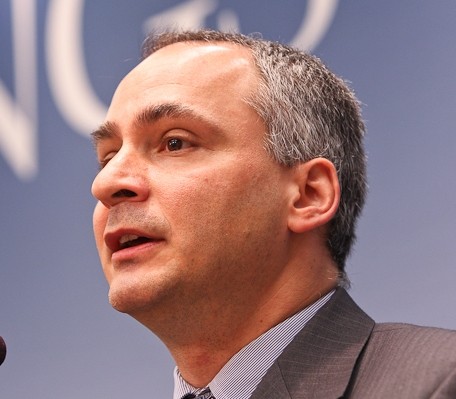


Former Assistant Attorney General for National Security Matt Olsen joins Lawfare Editor in Chief Benjamin Wittes to discuss the terrorist threat from Iran, the shocking lack of preparedness for Iranian malign activity at both the FBI and the National Security Division, and the pending lapse of the FISA 702 program.
To receive ad-free podcasts, become a Lawfare Material Supporter at www.patreon.com/lawfare. You can also support Lawfare by making a one-time donation at https://givebutter.com/
Click the button below to view a transcript of this podcast. Please note that the transcript was auto-generated and may contain errors.
Transcript
[Intro]
Matt Olsen: Not only
are they focused on other things not terrorism to the same degree as they focus
on immigration or election interference, but more to the point they've lost,
forced out, fired the most capable, the most experienced FBI agents, FBI
officials, and DOJ prosecutors that were working on the Iran threat.
Benjamin Wittes: It's
the Lawfare Podcast. I'm Benjamin Wittes, editor-in-chief of Lawfare
with Matt Olsen, former assistant attorney general for national security and a
partner at WilmerHale.
Matt Olsen: It's
indispensable to our ability to understand the Iran threat, Al-Qaeda, China,
Russia, increasingly narco-traffickers. So it's a really extraordinarily
valuable authority.
It's unmeasurable that Congress and the executive branch would
let it lapse given how important it's, but here we are approaching the sunset.
Benjamin Wittes:
We're talking Iran today, terrorist attacks inside the United States, the dismantlement
of American capability to repel them, and the pending lapse of FISA 702, the
tool most obviously usable to prevent them.
[Main Episode]
So Matt, I asked you on to talk about FISA 702 reauthorization,
which is coming up in a month or so. But before we get to that, we should talk
a little bit about the war in Iran and its likely implications for domestic
malevolent events by Iranian forces. The National Security Division under your
leadership and before had a long string of cases involving Iranian forces
trying to do everything from assassinate people to blow things up.
Talk a little bit about this history.
Matt Olsen: Yeah. And
I do look forward to talking about Section 702, as you know, something that
I've worked on for close to 20 years including a couple different conversations
with you over the years about it. But I, you know, I think it's important as
you point out to talk about the threat from Iran inside the United States.
You know, obviously we are now in a conflict and a war in Iran.
But as, again, as you said, when I was at the Justice Department, we worked
closely with the FBI to understand and tackle, disrupt the threat inside the
United States from Iran and its intelligence services.
Look, I mean, taking a broader view, I'm concerned as I sit
here today talking to you that there's every reason to believe that Iran is
looking to carry out a terrorist attack inside the United States. We know that
this has been part of their project going back many years. They've had a longstanding
commitment as you know, Ben, to target U.S. government officials more recently
in retaliation for the death of Qasem Soleimani last summer.
In 2025, the Department of Homeland Security and what the FBI
put out an alert about the Iranian homeland threat after the 12 Day War, the
bombings in Iran saying that there was gonna be a, there was a heightened
threat period. And law enforcement inside the United States should be on high
alert for the possibility of an Iranian terrorist attack inside the United
States.
I would either go back to my own time at DOJ, and I remember
sitting with the attorney general when we brought one of these cases, and he
talked about Iran being one of—the foremost sponsor of state terrorism. And
that at the time talking about Iran's lethal plotting with program inside the
United States, which included a plot to kill then candidate, now president,
Donald Trump.
So, this is a longstanding commitment from Iran to carry out an
assassination inside the United States, whether against a political leader or a
dissident a critic of the Iranian regime. And it was a significant threat when
I was in government, and I think there's every reason to believe that threat
has only increased with the current concept.
Benjamin Wittes: And
what is the magnitude of the, like how many different plots did you guys end up
prosecuting? I know there was the one against candidate Trump. There was also
one against Ambassador Bolton, I believe also in retaliation for the Qasem
Soleimani attack, but there were others as well there. It seemed like every few
weeks you would get an NSD press release about somebody being indicted for
working with Iran on a blank attempt to do X, Y, or Z.
What was the universe of these cases like?
Matt Olsen: So I
think your impression is the same as mine in terms of the pace of the Iranian
activity in the United States. And you know, on our side of the FBI, DOJ's
efforts to identify and disrupt these plots. I just went back in preparation
for talking to you and looked at some of the press releases from like 2021 to
2024, when I left, and there were four significant cases that we identified
that we charged during that time period.
One of the through lines of these cases is the Iranian use of
proxies inside the United States, or effort to use criminal elements to carry
out these attacks. So in one of the cases, going back to 2024 it was, when we
charged the case, it involved the indictment of three individuals. One Iranian,
two Canadians, one of whom was alleged to have been a member of the Hell's
Angels for seeking to carry out a murder for hire plot targeting individuals in
Maryland, one of whom was a dissonant against the Iranian regime.
There was another case involving the effort to target, again, a
murder for hire plot, targeting a dissident, an American citizen in New York
City that went pretty far along the path of being able to carry that out. There
was the case involving the former National Security Advisor in retaliation for
the death of cost of Soleimani.
That case involved the charge treasury against Iran individual,
Iranian member of the Islamic Revolutionary Guard Corps, IRGC. And then, you
know, the most recent case because it was just four days ago that the jury
returned a verdict of guilty against Asif Merchant. Merchant was trained by the
IRGC, sent here to carry out assassinations in the United States, including
against political leaders, including again, then candidate Donald Trump.
That case was disrupted. He was charged and ultimately went to
trial and was found guilty just this past Friday. So there's, there was a
steady flow of these cases. Now I've mentioned four that we had press releases
about. I will cite a counterterrorism expert Matthew Levitt, who described 17
plots in the past five years involving Iranian actors inside the United States,
or run in directed plots inside the United States.
So, 17 in the past five years, according to Matt Levitt. Again,
it's just a, I would say the threat from Iran was as high as any other
terrorist activity we saw inside the United States. You know, the fact that we
made it have not heard about so many cases in the past year or two, I don't
think anyone should think that means that there isn't that same level of
activity, I mean now.
Benjamin Wittes: Right,
so one reason that these plots didn't make a huge amount of noise is that the
FBI and you guys were quite effective in stopping them, and a lot of them were—At
relatively early stages of development, you had relatively early interdiction
and dogs that don't bark, or bombs that don't go off, or assassinations that
are, you know, failed, murder for hire plots that don't result in murder are not
the biggest news stories in the world, right?
I don't personally have a great deal of confidence that the FBI
right now is single-mindedly focused on this the way one would hope, given the
fact that eight days ago or nine days ago, we started bombing Tehran, killed
the supreme leader, killed a lot of leadership there.
How confident are you that the people who should be working on
this full-time are still employed at the Bureau or the National Security
Division, are still working the right cases? How should we understand the
interactions between this presumably rising threat level and the current
posture of the Justice Department?
Matt Olsen: Yeah, I
mean, I think that's exactly the right question. I think I agree with you as
I've sort of described, a rising threat level, whether it's today, tomorrow,
next week, next month, next six months, or a year from now, we know what Iran
plotted and how they viewed the death of the IRGC Commander Qasem Soleimani
several years ago.
We could only assume a much greater degree of interest in
retaliation for the death of the supreme leader, Khamenei. So, so heightened
threat environment—
Benjamin Wittes: Khamenei,
actually.
Matt Olsen: Yeah. Khamenei.
Right, exactly. So no question about it. Heightened threat environment. Now on
with regard to sort of the capabilities of Justice Department and including the
FBI to disrupt this threat.
I think one thing is, one point to start with is these are
investigations that are really complex. They are, you know, go out and find
somebody on the street and lock 'em up. These are long running investigations.
They involve some of the most sophisticated and complicated to investigate
tools that are available—
Like use of FISA to conduct electronic surveillance; the use of
well-placed sources that may take years to develop by the FBI; the ability to
have the judgment, to allow an investigation to proceed, often covertly where
the investigation is covert in order to understand the full scope of the
threat, see who all is involved and understand they're not just the
relationships to others in the United States, but their relationships to those
who are directing them back in Iran.
So the cases are really complicated and require experience and
judgment to run those investigations effectively. So with that as the backdrop,
look, I, it's hard to overstate how concerned I am about the loss of expertise,
experience, and capability at both the FBI and the Department of Justice among
the prosecutors.
We can talk a little bit more in depth about the specifics
there, but I'll say there's just not an exaggeration to say that they are not
as capable as they were a year and a half ago. And not only are they focused on
other things, not terrorism to the same degree as they focus on immigration or
election interference, but more to the point they've lost, forced out, fired
the most capable, the most experienced FBI agents, FBI officials and DOJ
prosecutors that were working on the Iran threat.
Benjamin Wittes:
Well, let's talk about the Justice Department side first, 'cause you're a
little bit more intimate with that. Your old division, I have heard phrases
like ‘sold for parts,’ ‘dismantled,’ ‘a remnant of it itself.’ How would you
describe in general terms, not specifically with respect to Iran capability,
the current state of the National Security Division?
Matt Olsen: Yeah, I
mean, I think all of those terms that you used are generally on point. I think
those are accurate. The National Security Division is not what it was. It's
been decimated. Effectively dismantled from the top down. So the front office
leadership that worked on counterterrorism and counterespionage was forced out
early on in the Trump administration.
In the front office alone, probably a hundred years of
experience working in the National Security Division, working national security
investigations was forced out.
Benjamin Wittes: And
so when we say forced out, do we mean fired? Do we mean life was sufficiently
unpleasant that they retired? What do we mean forced out when we're talking
about the NSD front office leadership?
Matt Olsen: Remember,
like these are career officials, so there are supposedly protections for those
career officials, but they were—the reason I use the word forced out is some of
them were sent to do work that had nothing to do with national security.
Effectively sidelined or marginalized within the Justice Department and were,
you know, made to be sort of irrelevant to the mission that they had worked on
in jobs that were made up jobs, nonsense jobs.
There are others and more on the line levels that were
unlawfully fired and just dismissed, you know, would given an hour to clean up
their desks. And that happened up and down the ranks within the National
Security Division. But you know, I used forced out as a general term to
describe the various ways in which these individuals were either fired or
essentially pushed out of their roles.
Benjamin Wittes: I
don't wanna name names 'cause these are career officials, but it's fair to say
you take somebody who has very specialized expertise, say in Iranian counterterrorism
and you assign them to, you know, an immigration task force that's gonna do no
work, that sort of thing?
Matt Olsen:
Precisely. And that's what happened day one of the administration with several
people.
So they were just taken off the, off of their job and not
replaced. And by and large, Ben, they are irreplaceable individuals. I mean,
there are people coming up the ranks. There are people who wanna do these jobs.
There are good people still within the National Security Division, but the
people doing the carrying out these responsibilities at the very top had been
working these cases and the, and this threat and working counter-terrorism for,
you know, 20, 25, 30 years in some cases.
Benjamin Wittes: How
many of these people are we talking about? Is this three people? Is it 30 people?
Is it 100 people?
Matt Olsen: Yeah. It
really depends on the echelon. At the very top we're talking about a small
handful of people again, but they are the cream of the cream of the crop.
And the beneath that, we have underneath that, then the line
supervisors also effectively forced out. And then by some reports up to half of
the line attorneys the frontline attorneys who work these cases day in, day
out, about half of those within the counter-terrorism section are gone.
And we're talking in that, you know, in the couple of dozen
people at the line level forced out or fired. Again, for no particular reason.
Benjamin Wittes: Right, how many people are we talking about who are focused on the Iranian target? You know, my sense of most national security prosecutors is that they sort of bounce between subjects, but they're, you know, you develop a kind of expertise in Iranian missiles and, to cite an example of one of our public service fellows, Troy Edwards, who was, you know, prosecuting a case involving, you know, Iranian missiles and how many people are we talking about with specialized Iran expertise?
Matt Olsen: You know,
it's a, you're right in your observation that within the prosecutorial ranks,
the counterterrorism prosecutors tend to work counterterrorism cases,
regardless of whether it's, if it's an Al-Qaeda threat or an Iran threat, the,
this expertise is in investigative techniques authorities and prosecuting those
cases working with the U.S. attorney's offices, whether it's an Iran threat or
you know, a non-Iranian terrorism, international terrorism threat.
It is the case that there will be repeat players because you do
understand, you do learn as a prosecutor a little bit more as you work on these
cases about Iranian tradecraft. How to, you know, how to understand the nature
of the threat because you've worked a couple of those cases and how to
recognize the signs of somebody who's a proxy here working for the Iranians.
But honestly that what you're really talking about, Iran, deep
Iran expertise. Then you're talking about the FBI and the investigators. Right?
More than the prosecutors.
Benjamin Wittes:
Alright, so let's talk about the FBI. There have been stories about how some of
the people who were fired for having worked the Mar-a-Lago case to which they
were assigned were fired from circumstances in which they were working Iran
issues.
First of all, do we know that to be true? And secondly, what do
we know more generally about the damage to Iran capability at the Bureau?
Matt Olsen: Yeah, I
mean it's a similar story to the one I just described in terms of the
dismantling of the National Security Division front office that it, the very
first days of the administration, the very top echelon of the FBI and its elite,
key counter-terrorism and national security leadership were effectively forced
out.
So you lost there in, in the same sort of parallel way as at
the Justice Department, the National Security Division. We lost decades, decades,
and decades of counterterrorism experience, that going back to 9/11.
The most striking though development was just the fact that
just days before we initiated the military action against Iran, some of the
leading Iran investigators, line FBI agents were fired from the FBI squad
within the Washington field office, a squad I worked with when I was in the
Justice Department and I can say that they were true Iran threat experts and have
worked the Iran threat over many years.
Again, that level of expertise, the understanding of the nature
of the threat, I mean, that's where it really matters to be focused on
particular threat country. They develop that understanding. They have expertise
over years, importantly, then they develop sources, you know, they have—
That's where the sources make so make such a big difference at
the FBI level. They have people who, you know, tell them the information that
they need in order to identify a threat at its earliest stages. So that was the
more, you know, I think newsworthy and remarkable development is the date right
before we started this bombing campaign, took the best FBI agents from the Iran
threat inside the United States, or were fired.
Benjamin Wittes: And
what do we know again about the reason for their firing? My impression is that
it was because they had been assigned to do work on the Mar-a-Lago
investigation. Is that correct?
Matt Olsen: So I
don't know. I don't know. I've not read any definitive account other than
similar sort of speculation or, you know, reporting along the lines that you
just identified.
So, in my view, it certainly can't be based on the capabilities
of these integrity of these agents. Everything I know about them is that they
were, you know, they were, you know, operated at the highest standards of the
FBI.
Benjamin Wittes: I
yield to nobody in my contempt for the Justice Department's current leadership
and the FBI's current leadership.
But if I were about to in, you know, start bombing Iran, firing
all the expertise about dealing with the Iranian threat vectors in the United
States would not be something that I would consider to be in my self-interest.
Do you know of any reason why Pam Bondi and Kash Patel should
be confident that they're in a position to deal with this by other means?
Matt Olsen: I mean,
my take on this, Ben, is that, that it's inexcusable to have forced out those
individuals both within the National Security Division at the prosecutorial
level, but even more of a concern is losing the Iran expertise at the FBI.
Again, these are agents who have gained years of experience
working in counter-terrorism cases and years of experience working in the Iran
threat in the homeland.
And it's not like there's, you know, dozens of people ready to
fill their ranks, in my experience. These are a handful of folks who are, you
know, sort of, uniquely positioned to run these investigations with a degree of
expertise that has effectively prevented an attack against multiple plots of
the past four or five years.
And now are no, we no longer as American citizens have the
benefit of that expertise. I just don't think there's any question that we are
not as safe as we were, you know, a week ago and certainly not a year and a
half ago. I think this was a risk.
Benjamin Wittes:
Alright, so. The Iranian response often has a long tail.
They absorb what they consider an affront, and then they get
revenge at some point. How long do you have to see things not happening before
you start to breathe more easily? Is this a, like, it feels to me like minimum
of a year, 18 months before I would say, like maybe Matt Olsen was
overreacting.
How long will it take before you say, huh, maybe that threat
was less than I thought it would be.
Matt Olsen: Look, I
think it's more than a year or 18 months. If you look at the plotting to
retaliate for the death of Qasem Soleimani, that plotting was being carried out
years after he was killed. So, you apply that same logic to the supreme leader
and a number of other Iranian leaders who've been killed in the last several
days.
I, it just, there's, I think there's every reason to believe
that, again, as you said Iran, that this is, you know, my experience as well
and my understanding from the intelligence assessments that Iran takes the long
view here.
This has been a long-term commitment and project by Iran to
have capabilities in the United States whether through criminal proxies,
whether it's through Hezbollah, to have the ability to really carry out for
them an arm of their foreign policy, which is asymmetric terrorist attacks
against their adversaries. And that's, you know, that is a platform of their
foreign policy that whether, you know, now is probably the, is, we're less
likely to see something happen just because obviously they're completely preoccupied
by the bombardment inside Iran.
But, I think that at some point in the, you know, near future
going out months to years, there'll be a heightened concern about retaliation
inside the United States.
Benjamin Wittes: All
right, in that context, let's talk about 702. Now, you and I have had a number
of podcast conversations about 702. Most of them when you were in government,
and I don't recall it being a month before the statute was gonna lapse, that
you came to me and said, Hey, we gotta kind of get our crap together and submit
something to Congress and, you know, start—
The current administration only the other day managed to convey
to Congress that it actually wants 702 reauthorized.
So I found that genuinely surprising given that they only have
like six weeks now to get it done. How do you understand the politics of where 702
reauthorization is? Because I don't think I have a good read on it.
Matt Olsen: I'm not
sure I have a great read on the politics either, Ben, to be honest. You're
right, you're absolutely right to observe that we're, you know, not about 30
some days away from the statue lapsing at sunset, I think April 19th, and I
think when I came—
When you were nice enough, gracious enough to host me at
Brookings, I think the last, it was a year out.
Benjamin Wittes: It
was like a year.
Matt Olsen: Yeah, it
was like a year before. And I came with a whole plan of how we're gonna get
this done and, you know, to start a campaign to talk about 702 and why it was
so important and to work with Congress to get it reauthorized.
So the politics are really hard, but if I could just sort of
harken back to our Iran conversation. In terms of just the value, and maybe Lawfare
viewers are fully up to speed on the value of 702, but you know, it really
drives the point home. It's one of the, if not the most important authority
that the U.S. government has to understand foreign intentions and capabilities,
whether of terrorists or spies inside the United States, and to be able to use
the fact that they are on U.S. infrastructure, they use U.S. networks to
communicate.
And it gives the U.S. the ability to quickly and at scale collect
the communications targeting non-U.S. persons overseas. So, so foreign
nationals outside the United States, and it's just, it's indispensable to our
ability to understand the Iran threat, Al-Qaeda, China, Russia, increasingly
narcotraffickers. So it's a really extraordinarily valuable authority.
It's unmeasurable that Congress and the executive branch would
let it lapse given how important it's, but here we are. Approaching the sunset
without a real clear path to its reauthorization. Although, as you point out in
the last day, in fact, there was some news just in the last few hours about
support in Congress and from the president for an 18-month straight extension
of the law.
Benjamin Wittes:
Alright, so, I wanna push you a little bit on the politics of it. 'cause it
seems to me they've gotten very difficult and frankly for good reason. When you
guys got it reauthorized, I think you had one vote to spare in the House. Is
that right?
Matt Olsen: Well, I
mean, technically maybe no votes to spare. It was, it was a tie.
It was a tie. And therefore, yeah, it was like 212 to 212. And
because it was a tie, an amendment that would've gutted the law was defeated.
'cause it didn't.
Benjamin Wittes: I
see. Okay. So, so less than one vote to spare. Since that time, the Republican
campaigns against FISA in general, which have their roots in conspiracy
theories and the Carter Page FISA, which of course had nothing to do with 702,
have continued and many Democrats have watched the abuses of law enforcement in
Minnesota and elsewhere and, reasonably, I think, concluded that the last thing
they want to do is to give the administration more power.
And I don't understand where the votes are gonna come from for
this anymore. Who is the member who's gonna look at this and say. I am
confident that the certifications that Kash Patel and Pam Bondi are gonna make
to the courts are gonna be factually accurate when we know that the Justice
Department misrepresents things to courts. The courts have been very plain
about that.
Who were the votes who were gonna say, yeah, I know they abuse
power, but they're not gonna abuse this power. Also, who are the people who
were gonna say, right, I know this involves reauthorizing—I wanna claw back
power from Donald Trump in general, from a presidency that's out of control in
general, but this power is too important and I trust him to use it in the Iran
context because he's been so trustworthy in the Iran context.
I'm just perplexed at the question of where the votes come from
to do this, and also whether it's the right thing to do at this point.
Matt Olsen: Yeah. So,
I've been working on FISA 702 since it was first passed in 2008, and I've sort
of watched, or been involved, in the debates directly as it's gotten more
difficult each time.
I think this might be the fourth reauthorization, and each time
I think the votes have gotten harder, the politics has gotten harder. In 2008,
there was even, you know, even though there was some, you know, we're coming
out of a period of upheaval with national security law, with Guantanamo and
enhanced interrogations.
There was still a degree of trust in the government’s hand. The
government a tool that is very valuable and has some oversight mechanisms built
in, and you had a broad consensus among both parties and in supporting it in
2008, a consensus that has eroded over time and may be, you know, at its lowest
ebb today when it comes to section 702.
I, look I do think, you know, if you start at one level, I do
think there remains a broad consensus even among the most, you know, fervent
critics of Section 702, that it's a very valuable tool that it has proven its
worth over the years, including, you know, when I was at the Justice Department
in assisting the government in stopping terrorist attacks and identifying spies.
So the value, I think the value proposition is well established
and I think there is a consensus in support of it.
Benjamin Wittes:
Yeah, I, and just to be clear, I do not in any sense, doubt the value
proposition.
Matt Olsen: Yeah.
Yeah. And I know I, from our conversations, I think.
I do think though, that you raised the right question in terms
of the erosion of trust in the executive branch and where, you know now on
Capitol Hill, where there's going to be, if there's gonna be sufficient support
to not just reauthorize it, but to also fend off some of the reforms that, you
know, I argued against, reforms that involved judicial warrants, for example,
to query the data.
That was something that I thought would've effectively misguided
some of the most effective aspects of the way the statutes used. And that was
where the vote was as close as it was that we just talked about. And I think,
yeah it's sort of hard to see where the votes come from 'cause of the, because
of the reasons you identify.
Benjamin Wittes: I mean,
my concern goes beyond—Like the warrant requirement that was proposed two years
ago, to me is not responsive to the concern that I have, which is the entire
program is predicated on a set of certifications that the Justice Department
and the NSA through the person of the FBI director and the attorney general
make to courts.
I had no doubt that I, you know, had my differences with Bill
Barr. Certainly. I had no doubt that those certifications would be accurate to
the best of his knowledge. I can't say that about Pam Bondi. I had no doubt
about that, about Chris Wray or Jim Comey or Bob Mueller, or, you know, go back
through the history of 702. I, you know—
I can't say that about Kash Patel. And then there's the fact
that if FISA judges, like Article Three judges everywhere else around the
country were to be finding that people were making false representations in
their courts, I would have no way of knowing that. And the way I have known
that historically is that there have been compliance errors, there were, you
know, and eventually they declassify opinions to that effect. But by the way,
they never accuse the government of not acting in good faith. Right. And so you
work with a basic understanding that there's a dialogue between the court and
the and NSD and NSA and the FBI, in which everybody's acting in good faith.
And yeah, there are mistakes and sometimes they're serious and
they get dealt with. But now, I don't have the confidence that people are
acting in good faith. I don't have the confidence in the accuracy of the
certifications, and I know that this is a group of people who, federal judges
around the country accuse of misrepresenting things in court.
And so the whole basis for confidence in 702 as an architecture
seems to me to be, if I were, Jim Himes, or, you know, I don't even think you
have to be Ron Wyden, right—You, it would be very much in doubt to me, and I
honestly, as somebody who's always supported the program, who believes in the
program and believes that Americans will die if you don't reauthorize it.
I don't know how to argue to a member of Congress that it's a
responsible vote, that we can really trust Pam Bondi to give good
certifications to the FISC.
Matt Olsen: So let me
see if I can convince you as a—Imagine you're a sitting, you know, member of
the House or Senate, right. So, and because these are some of the same
arguments that I made when I was at the Justice Department. I am not going to
con, maybe convince you, Ben, about sort of the individuals in, at the very
tops top of the Justice Department or the FBI.
But the argument I would make is that one, there are hundreds
of career people who work on this program. As you described, it's architected
in a way that requires legions of lawyers and operators from NSA to CIA to FBI
and lawyers at DOJ who generate the declarations and the certifications that
support the documentation. That ultimately gets assigned off on by the Attorney
General and then is submitted to the FISC.
But so there are, at one level, there are, again, hundreds of
people career people working on, on, on this program. And then it gets, it has
to be approved, not just within the executive branch, but as you know, by the
FISA court, by an Article Three judge.
That process is more open and transparent than it's not, you
know, it's classified, but it's more open and transparent than it has been in
the past for one, the law that was adopted in 2024 requires that there be a
leak in all 702 proceedings. So there's a, an outside lawyer who basically
represents the privacy and civil liberties perspective that has full access to
all the documentation, all the intelligence, and can argue to the FISC that
point of view, so it's not ex parte in the way it had been in the past.
The opinions, I think, are routinely released after not just,
they don't have to be an opinion that identifies a mistake, but rather an
opinion that it has a significant legal interpretation, I think is the
standard, or something along those lines is released in re-adapted form to the
public.
Members of Congress are now permitted to attend a FISC hearing.
So if there's a hearing on this, which there often would be for 702
certification process because it's happens annually, it's a big deal. Members
of Congress can attend those. So there's a degree of transparency around this
process that I think should give members of Congress and the American public
more confidence than I think you described.
I ultimately think that, while there's good reason and to be
skeptical. I mean, I faced a lot of skepticism for members of Congress and
talking about 702 and reauthorizing it two years ago. But if, of all the
intelligence programs I, one point I would make, 702 would be the last one that
you would want to use in a malicious or malign manner because of the level of
oversight, all three branches, a court involvement, career attorney's
involvement. It would, I just feel like it's not, the, that is not as susceptible
to abuse as other intelligence authorities.
Maybe that's not sufficient comfort for you under the current
circumstances, but it, I do think it is, it was designed in 2008 to have a
degree a high degree of oversight to guard against the kinds of concerns and
abuses that you're concerned about.
Benjamin Wittes:
Well, I mean, look, my degree of alarm is addressable because if you don't have
confidence in the attorney general and the FBI director and you think they are
systematically looting the Justice Department, your faith in all kinds of
processes deteriorates. So I wanna ask one additional question about this.
Because in the event of lapse, you are now describing a kind of
perfect storm with respect to Iran. Where on the one hand you have, you know,
the attacks, which give them this incredible motivation for revenge. Revenge
specifically of a type that they have attempted repeatedly in the past that is
terrorism and assassination, domestically.
Number two, you have a gutting of the FBI and Justice Department's
capacity to respond to that. And number three, you have the potential lapsing
of the principal statutory authority that the FBI and the Justice Department,
were they functioning properly, would be using for leadership intention and
planning and that sort of thing.
My memory is that what would actually lapse in a month is the
authority to seek new certifications, not the existing certifications. First of
all, is that right? And secondly, if it is over what timeframe does the
deterioration of the intelligence we're collecting happen? How seriously, how
quickly do we reach perfect storm weather?
Matt Olsen: I, well,
I think you're, you describe it perfectly in terms of the confluence of events
that would create this perfect storm of threat and lack of insight and lack of
capability. When it comes to people at the FBI and DOJ. There are provisions
sort of failsafe provisions in 702 to allow it, the authority, the existing
authority to continue for a period of time. I think it's about a year if my
memory serves.
But the point I would emphasize is even if there is a position,
an argument that those authorities remain in effect for a period of time even
if the statute lapses, we know from experience that the providers that are
under directives to provide information to the government—
Those companies and their general counsels and their boards
become very concerned about complying with the statute as no longer in attack,
even if it has language that says certain directives, made in attack. So I
think the degradation of intelligence that's collected under seven or two
starts at midnight on April 19th if there's not a new law.
It might not be a totally going dark situation. It might not be
turned off altogether, but it will start to degrade because of lack of
compliance and concern about complying by the providers that will, I think,
start right away. And we know that from some, you know, I know that from
experience.
Benjamin Wittes: Right,
because there was a lapse last time before the reauthorization was finally
passed.
Matt Olsen: That's
right. The, I think the time before April of ‘24, there was a lapse and there,
then there was debate about the impact of those provisions. So yeah, I think
it's like they're starting really late. It's not too late from, and maybe
there's a lot of work going on behind the scenes to convince Congress the
importance of this and to find a legislative path forward.
I think, you know, 18-month extension is certainly the right
answer for the moment. My personal perspective then would be to end the sunsets
on 702 and allow it like every other intelligence authority to remain in effect.
But that seems maybe you have to be in the cards.
Benjamin Wittes:
Yeah, so Stewart Baker argued for that on Lawfare recently, and I would
just submit that whatever the terms of reauthorization, if it's possible at
all, will not be clean and will not be permanent.
Matt Olsen: That's
fair. You know, one other point to make quickly is that. If it's not
reauthorized, there's another scenario that should give people concern, and
that is the president relies simply on Article Two authority to engage in the
same type of surveillance.
So it'd be similar types of surveillance grounded in an
expansive view of Article Two that does not have any of the oversight from the FISA
court or Congress built in.
So to me, if you wanna build, if you wanna create a sort of
real, sort of nightmare scenario. That's the one to be most concerned about.
Benjamin Wittes:
We're gonna leave it there. Matt Olsen, you're always the bearer of such
wonderful news. It's great to see your face, however. Do come back early and
often.
Matt Olsen: Yeah.
Thanks a lot, Ben. Thank you. I appreciate it.
Benjamin Wittes: The Lawfare
Podcast is produced by the Lawfare Institute. You can get ad-free
versions of this and other Lawfare podcasts by becoming a material
supporter of Lawfare at our website, lawfare media.org/support. You'll
also get access to special events and other content available only to our
supporters.
The podcast is edited by Jen Patja, and our theme music is from
Alibi music.
As always, thanks for listening.
_enforcement_and_removal_operations'_(ero)_officers_in_west_palm_beach-_florida_on_february_14-_2025_-_29.jpg?sfvrsn=132a52cd_5)
_enforcement_and_removal_operations'_(ero)_from_baltimore-_maryland__ride_along__on_2_august_2023-1.jpg?sfvrsn=50aeaecc_5)