
Lawfare Daily: Unearthing and Reckoning with the Intelligence Excesses of the Cold War
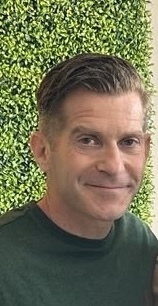
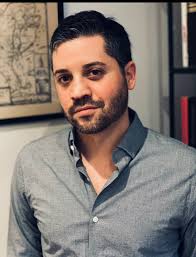
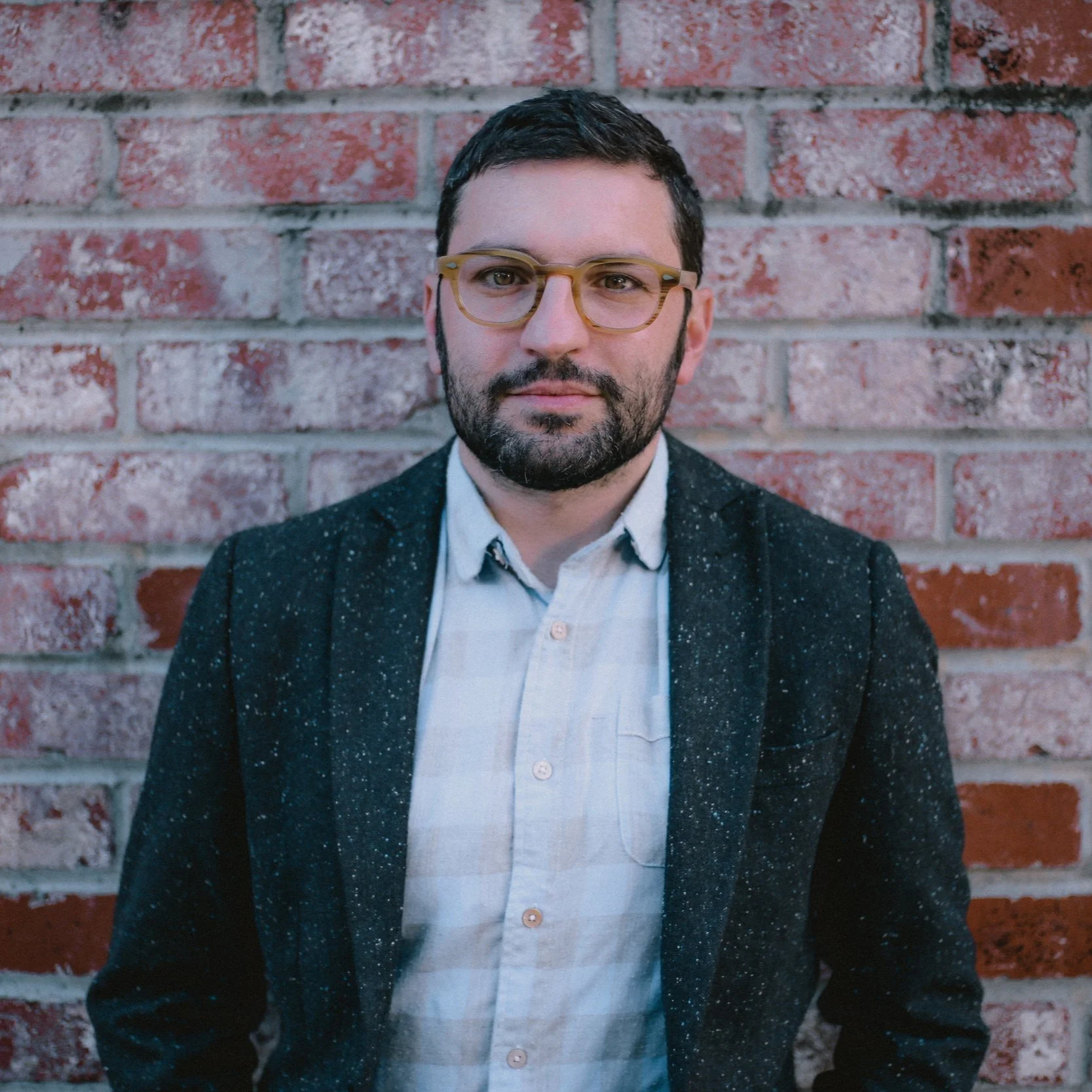
Lawfare Senior Editor Michael Feinberg sits down with Matthew Guariglia and Brian Hochman to discuss their new book, “The Church Committee Report: Revelations from the Bombshell 1970s Investigation into the National Security State,” in which they chronicle the law enforcement and intelligence community’s Cold War excesses, the Senate committee which uncovered them, and what we can learn about the resulting report in terms of our own era.
To receive ad-free podcasts, become a Lawfare Material Supporter at www.patreon.com/lawfare. You can also support Lawfare by making a one-time donation at https://givebutter.com/lawfare-institute.
Click the button below to view a transcript of this podcast. Please note that the transcript was auto-generated and may contain errors.
Transcript
[Intro]
Brian Hochman: This
is really, like, the worst sins of the American government's activities in the
period of the Cold War. Everything from the attempted harassment, surveillance
of Martin Luther King, to the assassination plots against Fidel Castro, to the
CIA's extraordinary record of drug testing on non-volunteer human subjects.
Michael Feinberg:
It's the Lawfare Podcast. I'm Michael Feinberg, senior editor at Lawfare
here today with Matthew Guariglia and Brian Hochman.
Matthew Guariglia:
Any political movement you've seen over the last 50 years since the Church Committee
report have had some variation—maybe not as illegal and as violent as under the
Church Committee report—and oftentimes a lot of this burden has been shouldered
by local police and maybe not the federal government, but to some extent, the
playbook for how to disrupt a political movement is still very much relevant
and still very much readable in the Church Committee report.
Michael Feinberg: Today,
we're talking about their recently published edition of the Church Committee report
containing revelations from the bombshell 1970s investigation into the national
security state.
[Main Episode]
Before we get too deep into what the Church Committee found and
what we can learn from it, I was wondering if you two, in whatever order you
choose, would sort of tell our listeners about how you came to write this book.
Matthew Guariglia: So,
Brian and I are both scholars who have been interested in the history of
surveillance and policing more broadly. So I was actually a reporter during the
2013 NSA revelations, and it was there that I kind of encountered the Church
Committee for the first time, and started combing through book two about
surveillance on American citizens and got really interested in it, and always
kind of kept it in the back of my mind that I wanted to do something about the Church
Committee report.
Fast forward to 2019, I started working at the Electronic
Frontier Foundation, legal nonprofit that focuses on technology policy and
civil liberties, and I started to work a lot more hands-on with national
security law and the realities of national security surveillance.
And it was around that time that Brian's book, “The Listeners”
came out, which is the history of wiretapping. So, I'll toss it over to Brian.
Brian Hochman: Yeah.
So, both of us have shared an interest, I think, a fascination with the
workings of the Church Committee and its findings.
The other thing I guess I'd add is that historians have long regarded
this document and consulted this document as a holy grail of American political
history in the years following World War II, basically from 1945 to 1975. And
everyone cites it, but very few Americans have read it or are familiar with it.
And what we've done is try to make a document that is eminently
readable and eminently resonant to our contemporary moment to introduce it to a
new audience of readers.
The original document, which has been floating around on the
internet for years, is about 3,100 pages long. So, one of our primary tasks, of
course, was to narrow things down to its core findings, its core revelations,
and also reframe it so that a new generation of scholars, and also interested
readers, can learn from it.
Michael Feinberg: My
law school actually had, as part of its congressional records, the entire
transcripts of the Church Committee, or at least those that had been not held
in any sort of classified manner. It was considerably longer than 3,100 pages,
so as somebody who, for a project, had to read it, cover to cover, and then
another volume, cover to cover, and so on and so forth, you have done yeoman's
work in making this accessible to the general public.
Why don't we start by having you give an overview of why the committee
was convened and the sort of stuff that it was hoping to bring to light.
Brian Hochman: So the
committee is convened in early 1975, shortly after a bombshell report is
published on the front page of the New York Times, right around Christmas 1974,
alleging an extraordinary record of wrongdoing at the CIA and that record of
wrongdoing, in part, involved the CIA violating its charter and operating on
American soil.
So this was a real watershed revelation, in keeping with an
activist press in the Watergate era. Very quickly the Senate convenes a
committee, the House convenes a committee. And the Senate investigation begins
to widen its focus beyond the CIA, to explore possible illegal,
unconstitutional, or unethical activities at other government agencies
operating under the aegis of national security and also in, basically, in the
dark, in secret.
The FBI very quickly comes under the investigations focus, and
also the NSA, which was an agency, at that point, in 1975 that most Americans,
even Americans who worked in Washington for the federal government, had never
heard of.
And over the course of about 16 months, the committee works
tirelessly, calls hundreds of witnesses, who are interviewed behind closed
doors. It holds upwards of, I believe, 21 public hearings, and produces this
final report in 1976 that really blows the lid off of a variety of wrongdoings
on the part of the spy agencies—and also importantly confirms what many
Americans, particularly Americans who were fighting against the Vietnam War, or
fighting on behalf of the civil rights, or were agitating for labor, what
Americans had long suspected the government was doing.
So there's a combination in the investigation, the hearings,
and then ultimately the report of both revelation and also confirmation that I
think is quite important to note.
And those revelations and confirmations, just to give your
listeners a sense of what was involved, this is really like the worst sins of
the American government's activities in the period of the Cold War. Everything
from the attempted harassment, surveillance of Martin Luther King; to the
assassination plots against Fidel Castro, Patrice Lumumba, and Rafael Trujillo
in the Dominican Republic; to the CIA's extraordinary record of drug testing on
non-volunteer human subjects.
All of that and much more is contained in this report, and it's
a really harrowing read, even 50 years later.
Michael Feinberg: So,
I'd like to elaborate upon your answer and make it actually a little more
harrowing for our listeners who may not be as familiar with these archives.
It wasn't just that Martin Luther King, Jr., was being
harassed, the FBI through its COINTELPRO operations actually tries to induce
him into committing suicide. And, you know, the MKUltra program that CIA was
running, which I think is what you were referring to in terms of testing drugs
on unwitting subjects, I mean, if I recall, somebody threw himself out of a
window at one point under the influence of LSD he had unwittingly taken.
There were real human consequences to this beyond the relatively
straightforward violation of civil liberties and founding charters. I mean,
there was an actual human cost to a lot of these programs.
Matthew Guariglia:
Yeah, absolutely. I mean, Martin Luther King was sent two audio tapes of
recordings made by surveillance in hotel rooms that were designed to humiliate
him to get him to commit suicide, in order to pres—
So, you know, according to the note, supposedly written by the
FBI, to preserve the legacy of him and of the Civil Rights Movement, they tried
to discredit him with universities, with religious institutions, with the Pope.
They, especially after receiving the Nobel Peace Prize, the FBI really tried to
discredit him with a lot of significant institutions that had given him a lot
of his credibility and his platform.
As well as, you know, a lot of the other things you said had
very real human consequences. I mean, people very much did die as a result of
this. This wasn't just, you know, audio taping in people's houses. This was
things like framing people to look like they were informants. This was trying
to stoke tensions and violence between various factions and groups in movements
including, you know, street gangs against various political groups in the Civil
Rights Movement and in the Black Power Movement.
So, you know, people were killed, marriages were broken up,
families were destroyed by these tactics that were meant to do exactly that. They
were meant to make the cost of political participation so high that people
would rather drop out and not be involved and not be public figures, rather
than have this massive machine of the state working against them to destroy
their lives and potentially kill them.
Brian Hochman: You
cite, Michael, some of the most extraordinary, even spectacular human costs of
this period, both the surveillance and harassment of Martin Luther King, the
mysterious death of army scientist, Frank Olson, who was the unwitting
participant in an MKUltra experiment, who either was thrown or leapt to his
death in New York shortly after having received a dosage of LSD without his
knowledge. These are the classic cases. These are the cases that Americans
remember. To the extent that they remember it at all.
But it's, I think, important to note just how dramatic the
costs are, even on a mundane, quotidian level. Individuals’ livelihoods were
destroyed, marriages were broken up, as Matthew pointed out. And just a general
era of distrust was sown by the intelligence agencies in this period.
A really remarkable story that we heard a former staffer of the
Church Committee tell us in our research on the subject, and we tell this story
in our introduction to the book was the story of a University of Michigan
professor, a mathematician, named Anatol Rapoport.
Rapoport was a world-renowned theorist, mathematician, and also
an outspoken anti-war activist—was very involved in the student movement as a
faculty member at the University of Michigan in the late 1960s. In and around
1966, 1967 letters start flooding into the offices of university administrators
complaining about Rapoport, letters start coming into the Michigan state
legislature, and the FBI pays him a visit, basically making his job untenable
and he had to resign, what was then a very lucrative, cushy faculty position,
and move his family to Canada to Toronto.
Years later, Loch Johnson, a former staffer of the Church
Committee, while he was on the Church Committee
Michael Feinberg: And
he ends up writing his own book about the hearings as well.
Brian Hochman: Yeah,
he does. So while he's at work for Senator Church, he pays Rapoport a visit in
Toronto and, basically, hands him his very thick FBI file and the two men sat
together thumbing through its pages and Rapoport started to cry, knowing just
the cost of his political stance. It basically had totally changed his life.
I also like to think, we like to think that those tears were
also tears of vindication, that he finally recognized what had been done to him,
that he had known all along, and here it was in the official record. So, that's
not quite the story of Martin Luther King, that's not quite the story of Dr.
Frank Olson.
But it is a story nonetheless, a story that was far more common,
I think, than we might recognize. And those costs also, I think should be part
of our accounting of this historical period.
Michael Feinberg: So
I wanna tease something out of what you just said as we move from the most
infamous, and the most known, most egregious actions and get into the, sorta,
more quotidian, day-to-day activity, although I certainly imagine it was not
quotidian to the victims.
How much do we know about what happened? Was this a concerted
effort on the part of the FBI? Was it simply a case of rogue agents facing no
real guardrails and there's sort of a perfect storm of circumstances where this
happens multiple times across the country? Or is it hard to say whether it was
concerted?
Do we know?
Matthew Guariglia: It
certainly weren't rogue agents, like this was a fully institutionalized and, to
some extent, a centralized attempt to dismantle any kind of left-wing political
movements and to, in their minds, swart out communist influence over the
American political sphere, through sabotage, surveillance, humiliation, any
means necessary.
And when we say that this was centralized, I mean there were
official documentation about how to do a black bag job, how to break into
somebody's house. There was, you know, an official designation, “do not file,”
in which paperwork discussing the use of these illegal tactics were, was
generated and, once it was, expected to be burned or incinerated or shredded by
whatever field offices had done that work.
So, there was certainly a well bureaucratized and centralized
way of doing illegal surveillance on Americans that was not just a couple of
rogue people. It was a large, well spread program.
Michael Feinberg:
What we've been talking about so far is, with the exception of the drug
testing, is largely FBI activity. Are other agencies and organizations also
active on the domestic front at this time?
Brian Hochman: The
CIA is active on the domestic front as I mentioned, in violation of its
charter, the program that, essentially we, we now know got Seymour Hersh reporting
on all of this mess, was a CIA program called CHAOS, which was an attempt to
create files on the anti-war movement, particularly the student movement and
the new left across the country, at the discretion, or the direction rather of
multiple presidents.
So the CIA is a part of this, the NSA is part of this, dating
all the way back to the 1940s, reading the telegrams of Americans that had been
sent over the wires of major telecom firms, and also sharing that information
with the FBI and the CIA. And there was also a great deal in the report that
implicated the Defense Department, the National Security Council, and, of
course, the White House.
This went all the way up the chain and was the product of a
sort of bipartisan consensus in Washington from Eisenhower, roughly Eisenhower forward
that the FBI, the CIA, the entire national intelligence bureaucracy,
essentially, could operate at the discretion of the president outside of the
boundaries of law, beyond the guardrails of the Constitution, and sometimes, as
we note in our introduction, beyond the realm of common sense.
Some of the most extraordinary stories narrated in the report
involves, say the CIA, partnering with the criminal underworld, with the mafia,
to assassinate Fidel Castro. This is not an ordinary outcome of a system that
has just gone rogue. Really, what this is a product of, is a series of top-down
directives, of protecting the political status quo at home, and protecting
American foreign policy interests abroad, at all costs and by any means
necessary.
Michael Feinberg: So,
as this is being unearthed by Senator Church and his committee, is it coming
out in drips and drabs, or does the public really not get wind of it until the
committee has concluded its business?
Matthew Guariglia:
The, a lot of the committee hearings are televised, so they are on, you know,
primetime television, being listened to by Americans. You know, they are
talking about the revelations in newspapers. They're columnists on both sides,
calling this either a threat to national security, or a triumph of civil
liberties.
They are partisan accusations that they're going, you know,
much harder investigating the sins of Republican White Houses and not Democratic
White Houses. So, it is something definitely being litigated in public.
Michael Feinberg: And
what's the general reaction to the public as they start to absorb what these
agencies that, if we're being fair, and I mean among the three of us, I'm
probably the most partisan for the national security state.
So, what is the reaction of the public when they realize that
these major agencies with, at the time almost unlimited budget and power, are
operating essentially without any oversight whatsoever?
Brian Hochman: So
it's a complicated question. More complicated than you'd think.
During the hearings and as the stories are trickling out, there
is shock. There is outrage. There's also confirmation of a semi-paranoid story
that a certain segment of Americans had believed all along. And you would
think, as a result that the committee had extraordinarily high approval
ratings, but it didn't. And there's a couple reasons for that.
One, it's important to note that the Church Committee hearings
are coming just a couple months, after half a year after the Watergate
hearings. The Watergate moment comes to this dramatic conclusion. So there was
a certain sense among the American public that we've been through some of this
before. We're a little tired of this narrative of distrust. We're tired of
partisan grandstanding. We're tired of politics. We just kind of wanna move on.
And as a result, I don't think at least in its public phase, the committee had
as much of an impact as it could have.
The second thing that complicates the story of the committee's
approval, or lack thereof, on the part of the American public is Frank Church
himself. Church was an extraordinarily promising politician, a kind of paradox
by contemporary standards. He's an outspoken, civil liberties, civil rights,
anti-imperial voice in Congress from a deep red state: Idaho.
And as the hearings drag on, as the report starts to come
together, Church announces a run for the White House in 1976 and this story,
his campaign, which eventually fell short, complicated the theater on the
Senate floor. Many believed—many felt that what was going on was merely in the
service of his own political brand, when in reality what was going on was
simply a political figure and an entire committee following the facts and
reporting the truth in a bipartisan way to the extent possible. Church's campaign
starts to muddle that story. And by late 1975, the American public had a, sort
of, tired of the proceedings, and there was a concerted backlash, stoked also
by the White House at the time. That's a different story.
So there is a kind of mixed bag at the time, and it's hard as a
result, just, you know, from our contemporary vantage point, just given how
shocking these findings are, it's hard to really grapple how that could be. But
if you're thinking about what it's like as an American viewer turning on your TV,
seeing yet another round of hearings after the Watergate controversies, people
were sort of fed up.
Michael Feinberg: And
it does have a real impact on the culture.
I don't think it's coincidental that this is the same time you
start seeing movies like “The Parallax View,” “Three Days of the Condor,” “Winter
Kills,” which criminally few people have seen. But there, there does become
this real genre of the seemingly paranoid protagonist fighting the invisible
security state.
Matthew Guariglia: And
I think that comes from a number of incidents, not just the kind of revelations
about large scale CIA surveillance and you know, over that December 1974. But
also, you know, there was a succession of scandals, which led Americans, many
Americans to think that like there were no parts of the government untouched by
the rise of conspiracy.
So, you know, at the FBI, the 1971 break in at the Media,
Pennsylvania office, which revealed COINTELPRO to the public for the first time.
The Pentagon Papers, which revealed the government was lying about the war in
Vietnam. And then eventually the death of J. Edgar Hoover in 1972, which
allowed a lot more about how the FBI had been run to leak out.
So I think there was a succession of scandals that led to a
climate of paranoia and conspiracy that both inspired the Church Committee, but
also inspired the larger public and culture makers in general.
Michael Feinberg: So
one thing I wanna, sort of, ask you that gets about how it inspired the larger
public—the Church Committee is not, as you mentioned, operating in isolation.
In a roughly similar timeframe, I realize they're not
contemporaneous wholly, but like, you also have the Pike Committee in the House,
and you have the Rockefeller Commission convened by the White House, but nobody
talks about the latter two. So, what makes the Church Committee different from
other inquiries into the national security state that are happening in roughly
the same era?
Brian Hochman: So,
the Rockefeller Committee is the first investigation to follow up on Hersh’s
reporting, and that was an investigation run out of the White House. And
because it was run out of the White House, there was a real limited scope, and
Congress understood that because the White House controlled the investigation,
and I think the American public understood that because the White House
controlled the investigation, that really the full facts wouldn't come out.
At the same time that the Church Committee is convened, the
House convenes the Pike Committee. And that committee, while it did produce a
report that was eventually leaked to the Village Voice, a year later ends up
getting mired in some partisan squabbling, a number of leaks to the press that
I think lowered the committee's credibility in the minds of the American
public.
The Church Committee was extraordinarily diligent in its effort
to deal with sensitive government information, to not leak its findings to the
press, and also to follow the facts wherever they led.
And this is one of the extraordinary things about the findings
that are reflected in the report, is that they cast a harsh light on both Democratic
administrations and Republican administrations. And because there was no fear,
no favor in the reporting, as the saying goes, I think there, there was a real
aspect to the Church Committee that the Pike and the Rockefeller committees
lacked.
The Pike Committee's report, which was eventually leaked to the
Village Voices, is a pretty interesting document, a remarkable document, but
it's not nearly, to my mind as well sourced, or really as well written, as the
Church Committee report is. And it's one of the reasons why when we first
started this project, we wanted to go to the real historiographic gold
standard, as opposed to bringing in some of these other documents of the
period.
It's not just also, I should say, the White House and the House
of Representatives that are investigating the agencies, the agencies are also
investigating themselves.
The CIA produces this extraordinary document called the “Family
Jewels” in 1973, which is basically a catalog of the agency's sins under past
directors, going all the way back to the founding of the agency after World War
II. And this document becomes the document that produces Seymour Hersh’s
reporting the Pike Committee, the Church Committee, and also, the Rockefeller
Committee. So everyone is examining themselves, and that culture of
self-examination is both a result of pervasive distrust, and also a catalyst
for pervasive distrust among the American public.
Michael Feinberg: And
just for our listeners to know, pretty much any time you have seen a movie
where the CIA is inextricably intertwined with some aspect of American history,
the inspiration is in the “Family Jewels.” Every conspiracy of which people are
aware involving the CIA is written in there. But if I recall, the whole thing
does not become publicly available until I think about a decade ago, right?
Brian Hochman: I
believe so, and by then, much of its contents are well known as a result of
subsequent investigations, memoirs that various players involved had written
over the years.
But much of the investigative field of the Church Committee still
remains classified. As many pages as there are, as many materials as there are
public, you can find them online, you can find them in our book, many more, an
untold number of materials, remains classified.
And given the state of the nation's declassification apparatus,
who knows when we'll ever see any of it.
Matthew Guariglia:
And many of Frank Church's own papers remain under protection, under lock and key,
at Boise State University. And in fact, in part of the research we did for
this, looking up what CIA and FBI files we could find on Frank Church and
members of the committee, one of the stories that we came across was the CIA,
decades later, trying to get access to some of the papers in Frank Church's
personal papers at Boise State and pretty brave archivists and librarians
telling them that they were absolutely not available to them.
Michael Feinberg:
Alright, so, in theory, when Congress conducts a hearing like this, it is with
the goal of affecting some sort of legislative change.
So what is the result? When the last witness is interviewed,
the last document produced, and, I guess at the time this was being written,
they run out the typewriter ribbon and have finished their report. What happens
next, in terms of how these agencies that have been committing these civil
liberties violations, are treated going forward?
Matthew Guariglia: I
mean, there is a race to create some infrastructure of transparency and
accountability, which had not been before. I mean, the system of congressional
oversight before was rather informal. It was, you know, you take your buddy and
the CIA out to dinner, and you ask them like, what are you up to right now?
And so, they really wanted to formalize that with the creation
of the permanent intelligence committees, which—whose whole job would be, in
Congress, to keep an eye on and to get reporting from intelligence committees
about what they're up to, including classified information. So, the creation of
the Permanent Select Intelligence Committee is one.
And the other big one is FISA, is the Foreign Intelligence
Surveillance Act, which creates the FISC, the Foreign Intelligence Surveillance
Court, which is supposedly a new judicial check on conducting overseas
surveillance for intelligence reasons.
So, you have these creations of both the legislative and the
judicial branch that attempts to create some kind of mechanisms for oversight
and accountability, which, as we've learned over the years, don't hold up that
well over the decades. That there is some rubber stamping that goes on that,
that despite how much the Church Committee and its staffers and its members
were eager to create more oversight and accountability, that there were some
lapses and some developments over time, which I don't think held up quite as
well as they had hoped.
Michael Feinberg: So
let's get into that. In both of your views, maybe we'll start with you,
Matthew, and then go to you Brian—What did they do that worked, and what did
they do that turned out not to be enough?
Matthew Guariglia: I
think the two big takeaways from the Church Committee report, and one of the
reasons why we wanted to re-release it into the public now, and to put it out
in this kind of digestible, readable fashion is because,
one, I think it is still the most complete explanation and
blueprinting of the government's plans, for their playbook for disrupting
political movements, that their tactics pre-existed the Church Committee report,
and they have gone on past the Church Committee report. I mean, any political
movement you've seen of the last 50 years since the Church Committee report
have had some variation, maybe not as illegal and as violent as under the Church
Committee report, and oftentimes a lot of this burden has been shouldered by
local police and maybe not the federal government, but to some extent the
playbook for how to disrupt a political movement is still very much relevant
and still very much readable in the Church Committee report.
I think the other reason why it's useful, especially right now
and moving forward, is that it provides a template for how to do a wide
reaching and very deep congressional investigation of very sensitive materials
that might be useful to lawmakers going forward as we move into the second
Trump administration and onward.
Brian Hochman: I
don't think I could have said it any better than that. The only other thing I'd
add on this front, and this is somewhat circumventing your question in terms of
successes and failures, what worked and what didn't.
I think, obviously, the oversight architecture that the Church
Committee created over time proved somewhat ill-suited for the task at hand,
particularly following the attacks of September 11th and the rise of the war on
terror, the game changed somewhat, and as a result, I think the spirit of the
committee's recommendations began to erode over time. There's also, of course,
an important story about technological change that happens in this same period.
I want to say though, I think there are some real successes.
While the political spectacle of the Church Committee hearings and its report
did sow distrust among the American public, it still created a record. And that
record has stood the test of time. It really is, the Church Committee report, a
kind of skeleton key to the American century and generations of historians, of
policymakers, of scholars have returned to its findings to unlock the hidden
corridors of the nation's secret intelligence bureaucracies.
And that I think does matter. There is some value to truth. I
think we should still lay that claim now more than ever in the year of our
Lord, 2026. And that, for me is the great success.
And maybe I say that as a historian and less as a policy wonk
or certainly not as someone who himself has maybe, you know, endured some of
the hardships that targets of the surveillance that the Church Committee documented,
endured, but I think that abstract outcome needs to be on the table somewhere.
And while there are some political hiccups, while there are
more missed opportunities than successes in terms of oversight, I think the
truth is a valuable thing, and the committee's work, and its findings and its
report especially, have stood the test of time.
Michael Feinberg: I
wanna ask you two questions to follow up on what both of you have said about,
sort of, the long-term value and duration of the report. The first question is
gonna be a soft ball. The second question is gonna be deliberately contrarian,
but I think we can, you know, get a good discussion out of it.
And I say this as a very recent refugee from the deep state—Would
you guys agree that for, essentially from the passage of FISA and the
establishment of the Senate Select Committee on Intelligence and its House
counterpart, pretty much up until September 10th, 2001, that we have a pretty
good run of, generally speaking, respecting civil liberties.
You're allowed to disagree. I'm just saying comparatively
speaking to what came before then and what came after.
Matthew Guariglia:
Yeah, there, I think there was still certainly infiltration of groups for their
political beliefs. There has been a lot of scholarship written about
infiltration of environmental movements, anti-globalization movements in the
1990s, the anti-apartheid movement. So there were a lot of political movements
that certainly had their share of infiltration, and maybe even sabotage, based
on people's First Amendment-protected beliefs and their political expressions.
And that being said, I mean, I think also when September 10th,
September 11th happens, you know, the day before, there was already a lot of
infrastructure laid that set the tone for what came the next day, that the
Patriot Act changed a lot of things, but it did not create a lot of
infrastructure which had already been in place.
I mean, the NSA's ability to tap overseas cables and listen to
telecommunications overseas, and including, as we live in an increasingly
globalized world, the U.S. sides of those phone calls when people call
overseas, a lot of that predated September 11th.
So I think if there was something to look for in that pre-9/11
moment, I would say that like, yes, there, there was definitely some violations
of civil liberties. It definitely was not, I would say, as extreme as it was in
the pre-1975 moment, or in the post-2001 moment.
But I definitely think that the groundwork was being laid for
abuse, and that the groundwork was being created in a way that might not have
considered what would happen when less responsible people ,or even just people
more inflamed in the passions of war, of national terror, of fear, what would
happen if they got their hands on that infrastructure.
Michael Feinberg:
Okay, so I don't think we actually disagree on any main points, to the extent
that we are in disagreement on this. I think it's simply a question of degree
and extent.
But I wanna posit an account of what happens after September
11th that is different than the one you are going towards, and I'm not sure I
even believe what I'm about to say, but I think it's worth at least discussing.
Does the state become more rapacious and willing to seize,
collect and process communications and personal information that it should not
have access to, or does the massive proliferation of networked technology
create an environment where citizens are simply willing to give that stuff up?
And they might not think about it as giving it up to the government, but
they're certainly willing to give it up to incredibly large and small Silicon
Valley companies, multinational corporations—
You know, I think back on my time as an FBI agent working national
security matters, and obviously I'm not gonna get into specifics, but the
number of times I was able to collect information about somebody from a party
they willingly gave it to, no matter how personal or private it was, versus how
many times I had to generate surveillance that solely involved government
equities, it's no comparison.
The amount of information I could get off a publicly available
database like Lexus or ChoicePoint dwarfs what my predecessors in the FBI could
have gotten 40 years earlier through a year of investigation.
So, I'm just curious, like, is this just the state's fault, or
have we actually entered an era where, A, Americans don't care or don't do the
research that would make them care about giving up their data, and we've just
centralized it.
Matthew Guariglia:
Well, I will take this answer quickly and then punt to the person who wrote a
history of wiretapping. But I think, you know, what you're getting at here is
the rise of kind of third-party doctrine, which I imagine most of your
listeners are familiar with.
But if you're not, it's this idea that, you know, the Fourth
Amendment, the government's ability to search and seize and collect information
on you, has to be done with a judicial warrant unless you've given that
information to a third party and once it's given to a third party, you
relinquish control over who that third party gives it to.
So when you hand data over to Facebook or to Google or to
Verizon, the arrangement between Verizon or Google and the government is
different than your relationship to the government—that they could give over,
if they wanted to, that information without a warrant, without you really being
able to say.
Now a lot of companies require a warrant, but not all of them.
And even if they do require a warrant, it's their own internal policy. It's not
the law. And so I think to some extent, yes, there is a rise of we all give so
much data to third parties that we don't necessarily imagine will wind up in
the hands of the government, so I think that is true.
But I also think that there is a renewed impetus in a
globalized world for the government to see threats coming from potentially
anywhere, in a world where somebody could be radicalized through their Facebook
messages to somebody in the Middle East or Russia or wherever, that I think
there is a paranoia and a motivation for the government to not only
inadvertently collect a tremendous amount of data through third parties because
it's very easy and because the infrastructure is there and because to some extent
the legal justifications are there through FISA and the FISC.
But also, I think there is an interest in doing that because
they think radicalization in a globalized world could come from anywhere that,
you know, it doesn't necessarily look like somebody from another country
getting on a plane and arriving here. It often can be based in communications.
And I think about the kind of administrative subpoenas that
have allowed the Department of Homeland Security to watch every wire transfer
of money from Western Union to Latin American countries, and, in the hopes of
finding, you know, narcoterrorism or drug trafficking or human trafficking, but
really they're just watching, you know, hundreds of thousands of people send
money back home to their families.
And so that's the kind of globalization that has created, I
think, a desire to collect that data, as well as the digital infrastructure to
collect it very easily.
Brian Hochman: This
conversation is difficult to parse and it opens up a can of worms.
But I wanna come back to something that Matthew said earlier
that I think is important to note, that the architecture, the infrastructure
existed on September 10th and in the post-9/11 period, that architecture, that
infrastructure gets mobilized towards a certain set of ends.
So how do we think about where that infrastructure, that
architecture comes from? I think we have to think about two parallel histories,
a political history on one hand, and a corporate history on the other, to the
extent that these histories can even be disentangled from each other.
So, let's think about the corporate history, the post-9/11
surveillance state, call it, even though I don't quite like that term, emerges
on the back of a rise of technology companies whose entire business model, eventually
becomes, by 2010, 2011, the monitoring and monetizing of personal information.
So this is the Internet's entire business model to a certain extent, and we
can't understand what goes on after 9/11 without understanding those seemingly
non-political set of incentives.
The other story has to do with the history of technology and
the politics of technology. And already by the early 1990s, the federal
government has basically mandated new technologies, particularly new
communications technologies, be designed and implemented with surveillance
readiness.
Michael Feinberg: We're
speaking of, what we in the government would refer to as lawful access
programs.
In other words, a telecommunications provider, and I think it's
largely limited to telecommunications providers, cannot build a system of
communication that cannot comply with a court order.
Brian Hochman: Yeah. This
is the result of a 1994 law called the Communications Assistance for Law
Enforcement Act, also known as CALEA, which was the product of an extraordinary
backroom drama between the FBI and the big telecom companies that were at the
time starting to roll out new devices, new features, new infrastructures that
we associate with the digital communications revolution; everything from fiber
optic cables to cell phones.
That law is inextricably bound up with the politics of the war
on drugs, which is an important, I think, political backstory here that gives
birth to, gives rise to, in a kind of indirect and sometimes direct way, to the
war on terror, architecture, infrastructure. And I think it's impossible, while
that law is solely limited to communications technologies, it's impossible to
think of that solely in like narrow legalistic terms. I think CALEA, while it's
a kind of forgotten piece of federal regulation today, unless you work in like
communications policy, you don't really think about it. It establishes a norm.
And the norm for all technology products, for all communication
services, for anything that we plug into, we talk on, we later text on for all
of our likes, our dislikes—the norm is that, at some point if the government
comes knocking with a lawfully signed warrant, the companies themselves need
to, in a very timely manner, be able to hand over the information.
And I think that these are two really important stories to
think about, how the political and the corporate and the technological, which
is a kind of third story that bisects the two, how they help create this
broader architecture.
Now, this doesn't answer, I think the right question that
you're asking Michael about how users themselves, willfully or not, surrender
their personal data, but they exist in a universe that's created by a set of
norms and a set of technological infrastructures that hue toward the monitoring
and the monetizing of personal information.
And this creates a set of conditions that get exploited in the
post-9/11 period, and we certainly see those conditions exploited today.
Michael Feinberg:
Yeah. I do want to note there is—one thing that I always found interesting is I
think there actually is a split within the intelligence community now about how
involved they should be in terms of mandating lawful access, because, I don't
know that a lot of people realize, when it comes to just, for example,
end-to-end encrypted messaging services. The heads of NSA and CIA have been,
you know, heavily in favor of keeping those away from the government, they
think the best thing we can do for national security is to not try and break
end-to-end encryption. Whereas the FBI, with its law enforcement mission, let's
just say, has taken a different view.
So I don't want people to walk away thinking that it's
monolithic. I don't want to walk away wholly trusting the intelligence community,
either, just to recognize that—and maybe this is one of the second or third
order better consequences of things like the Church Committee—but there's a
recognition among the, at least some members of the intelligence community,
that these issues have nuance and it's not black or white.
Matthew Guariglia: I
mean, I think there's something to be said that like there are a lot of people
in government who benefit from secure encryption, who need to be able to
communicate with people securely, and building back doors in, if for no other
reason than for the FBI or law enforcement to use it, is still the creation of
a backdoor that other people, including bad actors, could be able to have
access to.
Michael Feinberg:
Yeah, it's impossible to make a backdoor to which somebody else cannot craft.
Matthew Guariglia:
And I think there's one other part of this conversation that we haven't brought
up yet is, we've only been talking about federal law enforcement and the
intelligence community, and I think one of the other stories of, you know, the
war on drugs in the post-Church Committee era up through September 11th and to
the present, is the militarization and the digitization of local police.
I mean, local police departments now, especially at large
cities, have the intelligence capabilities that maybe even the NSA did not have
in the 1970s. And with their crowd control capabilities and their
militarization, I mean, there is a lot to be said about, you know, if you, if
we're looking for where civil liberties infractions are, when it comes to law
enforcement, we have to, even in the pre-9/11 period, we have to start to take
into account, in a way that often people didn't in the pre-Church Committee world,
local police.
And of course this predates 1975. It goes back to, you know,
local police sabotage of the Civil Rights Movement; it goes back to red squads
and radical squads in the 1920s and before that. But I think local police, and
especially now with how technologically advanced a lot of them are, and a lot
of—I mean, the NYPD is essentially an intelligence agency itself. And a lot of
the large police departments are.
And so, I think that, you know, we miss a huge part of the
conversation about civil liberties and surveillance and the state of policing
if we're only looking at the federal government.
Michael Feinberg:
Well, on that slightly despairing note, that tells us all: we have much more to
worry about in terms of safeguarding our privacy and communications and
personally identifiable information than we thought before we began this
conversation.
Let's leave it there. I wanna thank both of you, Matthew, and
Brian, not just for coming on the podcast today, but also for putting together
this book, which, for anybody interested in the history of law enforcement and
national security in the United States, really provides a roadmap to the entire
modern era that previously was not available.
So, you have done a real service to history and scholarship on
these issues. And I will just say that I wish you'd done it about 30 years
earlier when I was in law school combing through the original transcripts. So,
thank you.
Brian Hochman: Thank
you so much. Really appreciate it. Thank you.
[Outro]
Michael Feinberg: The
Lawfare Podcast is produced by the Lawfare Institute. If you want
to support the show and listen ad-free, you can become a Lawfare
material supporter at lawfaremedia.org/support.
Supporters also get access to special events and other bonus content we don't
share anywhere else.
If you enjoy the podcast, please rate and review us wherever
you listen. It really does help, and be sure to check out our other shows,
including Rational Security Allies, the Aftermath, and Escalation, our latest Lawfare
Presents podcast series about the war in Ukraine. You can also find all of our
written work at lawfaremedia.org.
The podcast is edited by Jen Patja with audio engineering by Cara
Shillenn of Goat Rodeo. Our theme song is from Alibi music.
And as always, thanks for listening.

-final.png?sfvrsn=b70826ae_3)
