
Lawfare Daily: National Security, Counterintelligence, and Counterespionage: A Guide for the Perplexed

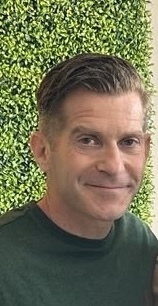


In today's episode, Lawfare Senior Editor Michael Feinberg sits down with his former FBI colleague retired Assistant Special Agent in Charge Derek Pieper to discuss the differences between counterintelligence and counterespionage investigations, the skill sets needed for each, and the dangers of politicizing the cases.
To receive ad-free podcasts, become a Lawfare Material Supporter at www.patreon.com/lawfare. You can also support Lawfare by making a one-time donation at https://givebutter.com/lawfare-institute.
Click the button below to view a transcript of this podcast. Please note that the transcript was auto-generated and may contain errors.
Transcript
[Intro]
Derek Pieper: Counterintelligence
has been around forever. I mean, espionage is, what, the second oldest
profession? So, I mean, and the way that they conduct it, espionage is
essentially, you know, the technology's different, but I mean, the goals and
the aims are really the, the same to get up and get an advantage over your
global adversary.
Michael Feinberg: It's
the Lawfare Podcast. I'm Lawfare Senior Editor Michael Feinberg
with former FBI Assistant Special Agent in Charge Derek Pieper, who oversaw a
counterintelligence branch at the Washington Field Office.
Derek Pieper: You
know the idea that any agent is sitting there, culling through data, trying to
find the next case. They're too busy for that. You know, and you deal with the
ones that actually rise to a level that they could be predicated. Nobody's got
time to, you know, say, Hey, I'm gonna target this person.
Michael Feinberg: Today,
we'll be discussing the difference between counterintelligence and
counterespionage, the skill sets needed for each, and what happens when these
cases become overly politicized.
[Main Podcast]
The reason we're doing this now is that as most people know,
roughly two weeks ago on a Friday evening, the news media began reporting that
at the FBI's Washington Field Office, a squad, which focused among other things
on Iranian counterespionage matters, was summarily fired for their role in a
politically sensitive matter.
The very next day, the United States functionally went to war
with Iran. And in the human cry that followed in most media from the center-right,
moving left, following that chain of events, there was a lot of discussion that
conflated counterterrorism, counterintelligence, and counterespionage as if
they were one thing, which they emphatically are not.
So today I thought it would be helpful to have Derek, who also
left the FBI, similar to the way I did as in ASAC within a counterintelligence
division, for us to have a conversation about what exactly counterintelligence
looks like, how it differs from counterespionage, and why the nation should
care, particularly in a time of conflict.
Derek, with that said, would you be willing to sort of tout
your own credentials and explain to us why we should care what you in
particular have to say about counterintelligence?
Derek Pieper: Sure,
Mike. And thanks for having me. You know, this is my first opportunity to talk
about myself in a while, so I appreciate it.
So, yeah, like you said, I mean, my entire career at the
Bureau, almost 21 years was spent working counterintelligence. I was assigned
to a CI squad in New York. So the first half of my career was as a New York
field agent working counterintelligence, worked on Russia counterintelligence
stuff.
And one of, one of the cases that people have heard about is
like the Ghost Stories, Russian “illegals” case. So that was part of what my
squad did when I first joined the Bureau. The other part of what my squad did
at that time was work espionage cases. So we had a lot of, actually internal,
FBI cases where, you know, an agent would be suspected or there would be an
allegation that, that, you know, there was an espionage allegation or at least
some sort of misconduct that there was close enough to espionage that we took a
look at it.
So, from the very beginning of my career I was doing this
hybrid thing where I was looking at Russian “illegals,” and I was looking at
espionage cases. After the illegals case ended in 2010, I moved over to the New
York offices espionage squad. They had decided that they wanted to have their
own standalone squad right around 2009. And I, I was sent, transferred over
because I had some experience working those cases.
So I did that for a couple years. Worked a variety of, of
almost all, well it was all espionage or media leak or mishandling cases on the
espionage squad in New York. I became a supervisor after that and that's when
the first time I went over to the global-side bureau.
Counterintelligence tends to be broken up into kind of like,
Russia matters, China matters, and global matters—and global being the catchall
for everything else. And so I moved over to become a field supervisor in New
York on a global squad. So we did a variety of, of cases against a variety of
countries.
After doing my supervisor time there, I went to headquarters
and that's where I met you. I was unit chief over the Internal Espionage Unit
in at FBI headquarters. So the Bureau, you know, has its field offices where
they're looking at, you know, the regional problems. Then you have the
headquarters, which is supposed to be looking at the program as a whole.
So any internal espionage case against a Bureau employee across
the country would've fallen into that unit. So I was working there, managing, helping
field offices with, with resources or, you know, some guidance and, and
basically overseeing those cases, pushing them along to make sure that they
were addressed properly.
After that, what they do—In fact, in New York for a hot minute.
And then I came back to headquarters. I worked over at CIA as a detail for the Bureau
in the, in the Russia operations section. So being the, the senior FBI person
over at CIA headquarters, working on Russia matters. This was during Skripal
and all those kind of big kind of dust up between the U.S. and, and well whole
world and Russia at that time. So it was a busy moment.
After that came back was the chief of staff in the
counterintelligence division for a little while, working for the assistant
director, helping them with whatever they needed. And then I became a WFO ASAC.
So Washington Field Office has three assistant special agents in charge within
the division within the field office. It was broken up into criminal, CT, CI,
and then there's mission services, and so I was one of three. I had the global
group, so if it wasn't Russia, it wasn't China, I had it.
So I mean, that's kind of where my and my career ended. I, I
ended up staying there five years until, until last January when I decided I
could retire. So I would. Insist I'm not—I'm enjoying retirement.
So over the course of my career, I've, I've touched on both the
CI side of counterintelligence side of counterintelligence, but also the counterespionage
side, which I always thought the two sides of the same coin really. And, and
one of the things that I used to do with, with new agents would be assigned to
my division—Quantico, you remember this, doesn't do a real good job of
preparing agents for counterintelligence work.
Michael Feinberg: I
think I got a grand total of three hours training in counterintelligence when I
was at the Academy.
Derek Pieper: Yeah, I
don't even remember what mine was, but I remember it not being very impressive.
And I mean, in 2004 when I went through, I mean, it wasn't that long after Hanssen,
you know, there was some significant, you know, counterintelligence work going
on or had just finished.
I think I read the Wise book on Hanssen at the academy and
thought, well, that sounds interesting, but I don't remember very much about,
about learning about counterintelligence and counterterrorism training was even
worse. So yeah, you get a new agent that gets assigned and a lot of new agents
end up at Washington Field Office, and they get assigned to a CI squad and
they're have no idea, like, all right, I don't know what this is.
So what I used to try and explain to them is. We got the CI
side, which is, you know, looking at the counterintelligence activities of your
adversary. What, what is, what is a, an intelligence officer from another
country doing in the U.S. to try and either hurt, steal, recruit, you know,
Americans here or our interests. So there's that angle on, on CI.
I should caveat this as I only have big office experience. New
York and Washington Field are the two biggest counterintelligence programs, I
worked in both of them. So this is going to differ if you're working in a small
office, in the middle of the country somewhere. The programs are smaller, the
threats are, are, are not quite as apparent as they are in Washington and New
York.
That's the CI focus. So you're, you're looking at the actual
foreign actors who are within the U.S. who are, who are trying to hurt the U.S.
Counterespionage side is looking at the people that have either
been recruited or volunteer to work for a foreign adversary, whether they're
providing the access or materials or secret information or, you know, a whole
wide variety of different things that they could be doing.
So on the one side, you're looking at the foreign actor and on
the espionage side, you're really looking at the American.
Michael Feinberg:
Okay, so this, this might be a good place to pause, because you and I have sort
of lived in this universe for close to two decades each—for a little more than
two decades for yourself. A little under for me.
And I just wanna make sure, 'cause I worry that, some of our
listeners may be in the same position of somebody who just graduated from
Quantico and is assigned to a counterintelligence squad. So I just wanna sort
of like do a one-minute encapsulation of what you're saying and make sure that
you and I are tracking on the same definitions.
Derek Pieper: I was always
told you're gonna hear acronyms and if you don't know ask. So now's the time to
recap if you caught what I said.
Michael Feinberg:
Yes. So essentially counterintelligence is, as a general matter, identifying
foreign spies in the United States and at the risk of broadly oversimplifying
things, figuring out what they're up to.
And then counterespionage is looking at the individuals who are
usually United States citizens that have access to classified material or
national defense information, who have been recruited by those foreign spies to
help them in their efforts to steal secrets.
Derek Pieper: That's
a good recap.
Michael Feinberg:
Okay, so I do wanna talk about something because we're gonna dive more into the
nuances, but I think when you and I first joined, that definition of
counterintelligence was actually pretty narrow.
You were looking at spies, in their attempts to recruit U.S. persons
to get classified information. By the time both of us left, the universe of
what counterintelligence entails had probably expanded quite a bit. I think
when you and I joined the Bureau, for example, was not really looking a lot at
foreign influence efforts or economic espionage or theft of technology.
Could you maybe talk a little bit about how and why that
expansion might have occurred? And, since neither of us work for the
organization anymore, feel free to give your opinion on whether that expansion
was generally a good thing or if it's distracting from what used to be the
primary mission.
Derek Pieper: Yeah, I
mean, if you have the core mission of what are the spies doing, I think it's
logical and made sense for us to begin to go down the path of what are the
spies doing and what are the spies—or why are the spies doing it, and who are
they targeting? And so, you know, the whole Foreign Influence Task Force, I
wanna say that was 2015, 2016—
Michael Feinberg: It
was 2017. They started it because it was in response—
Derek Pieper: The formalization
of that, you know, so we had, we had started looking at, at, you know, how are
foreign countries, you know, influencing our opinions, our policies, our
politics. And I think the big difference between when I started and that point
was the ability for foreign actors to do this stuff without being there.
So they could do it from overseas and, you know, the whole
cyber angle and the fact that you could have people sitting in a basement, in
Russia, let's call it, influencing the American elections or influencing
American opinion on something. Back in the day, you would've had to relied upon
those spies who were already here, the, the intelligence officers or the
diplomats, and how they were, who were they meeting and how are they doing it—
Where now they're doing it over the internet really. And so,
you know, the world changes. I mean, and even when I left—I mean, the other
comment I used to make a lot was, you know, well counterintelligence has been
around forever. I mean, espionage is, what, the second oldest profession.
So I mean, in the way that they conduct it, espionage is, essentially,
you know, the technology is different, but I mean, the goals and the aims are
really the same. To get up and get an advantage over your global adversary. So,
you know, whether you're the tradecraft is a thumb pack in a, in a park bench,
or whether or not you're using a thumb drive or you're using encrypted, you
know, apps. It's all really distilled, you know, be able to effectively and
clandestinely trade information that another country wants.
Yeah. So I mean, I, I saw a change and I think, you know, as
technological advances were made and coverage got better, it just sort of,
you're peeling back the onion into, into stuff that you can see or you find
out, and then it's like, how do we not look at this?
And, yeah, you start walking down that path, it is dangerous
because you're gonna anger somebody, but how do you—
Michael Feinberg:
We'll get to that. Yeah.
Derek Pieper: Yeah.
And how do you realistically say, well, we didn't look at it. You know, I mean,
if, if the comment is nobody's above the law. Well, if nobody's, you know, if
somebody's breaking the law, how's the Bureau not supposed to look at this?
And the Bureau has a ton of tools and tons of ways to do this,
and, you know, and to, to wield those tools, you know, in a legal way using all
the avenues that you are provided. I don't know how you don't, you know, and,
and I don't think it sidelined the Bureau from its CI mission.
I think it was just in the natural extension of the CI mission
to see like, who are these people who are being influenced and what, what's the
point of it and, and how effective is it, how do we counteract that, and how do
we get the word out that what you need, maybe looking at online is not what you
think it is or is paid for by somebody else.
I mean, I think, you know, it's such a, it's such a sticky,
sticky problem, but I, I don't know how you don't look at it. And if you, if
the Bureau's not looking at it, then who is?
And if nobody is, how is that not a problem?
Michael Feinberg:
Well, we may find out, I mean, as you know, the Foreign Influence Task Force at
the FBI has been disbanded, as has the Foreign Maligned Influence Center at
ODNI. So I'm not in the government anymore. I don't know what efforts are being
made on the foreign influence front, but if they are being made, they're a lot
less demonstrative in public.
And if they're not being made, we're gonna have a natural
experiment in what happens.
Derek Pieper: Yeah.
No, I, I think, I think we may be at that point where we're gonna fool around
and find out, you know, like for all the criticism that the Bureau got over the
years about, well, they shouldn't be looking at this or, or this was a witch
hunt or whatever.
Now we're gonna get to the point where, okay, well the Bureau's
not looking at it, so what happens best? You know? And I think, I think that's
a serious, I think it's a serious problem.
Michael Feinberg:
Yeah. And it's funny, I was actually, I did an interview. A couple weeks ago, I
think, where I was trying to explain to somebody the difference between
dropping the ball in counterterrorism and dropping the ball in
counterintelligence.
And the way I explained it was, if you drop the ball in counterterrorism,
people are going to die then and there. If you don't stop a plot, there's gonna
be a bomb somewhere. There's gonna be a shooting, there's gonna be a truck
veering off the road. And at a discrete moment in time, people tragically are
going to lose their lives.
Counterintelligence, on the other hand, if you drop the ball,
it might not be clear right away that there was a failure. It might not be
clear for a decade.
And I think back to my time in Los Angeles. Because like you, I
served mostly in large offices, and the LA office overlooked a veteran
cemetery. And one of my early supervisors pointed out to me all the graves from
World War II, and he said every single one of those deaths is a
counterintelligence failure. Because we didn't get ahead of figuring out what
the Japanese or the Germans were trying to do to us, and as a result, that had
real ramifications in battle and in war.
So if we fail in Chinese counterintelligence today, for
example, we might not know until we're unable to defend Taiwan, if China
chooses to invade in a year or a decade.
Derek Pieper: No, you
know, you know from the Bureau you'll have a, you know, an arrest and it's,
it's in the criminal side and it's very kind of cut and dry, person's in jail,
you know, CT side, maybe you disrupt a plot, you can kind of articulate, but
even then, if you disrupt the plot, you don't get the kind of credit that you
probably deserve for keeping things from blowing up.
CI, you may just never even know whether that was gonna happen
or not. But if it did, I mean, I always said the CI emergency is an actual war.
You know, it's like, you know, so you, you know, if you missed something or if
there was something that you should have been tracking that you had in your
coverage, or you should have had in your coverage, or you should have been
paying attention to, or it was dots that should have been connected and you
didn't—
I mean, I think, you know, the other countries, and U.S. is too,
we all don't expend the amount of money and human capital to go try and get up
on our adversaries for no reason. You know, I mean, so, you know, and, and when
you look at the amount of effort it goes into a China or Russia or you know,
any other country to go put people here to find out information about what the U.S.
is gonna do, we're doing the same thing.
And if the FBI, as the counterintelligence, people aren't
figuring that out or aren't tracking that, I mean, we're gonna get hit with a
surprise that we should have probably seen coming. And that's dangerous.
And I mean, like, you know, you asked about the economic
espionage. I mean, that was, that was not so much of a thing when I first
started, but it became a thing, you know, in the 2010s period, where all of a
sudden people were noticing that, you know, a Chinese operative steals, you
know, a seed, you know, now they can, they can take this overseas and
regenerate it where they're, they're skipping all of the research and the
developments that the U.S. did and the amount of time and the effort and the
money that the U.S. spent and just now they've got, I mean, that it saves them
so much time and effort and that, you know, and now there's, there's an
advantage that has shifted that they didn't once have.
You know, the biggest problem I always had with the economic
espionage thing was they would—And maybe you saw this presentation at 1.2, is
they came in and they talked about the importance oof economic espionage, and
they were beaming up the faces of all the people that they had done. And then
it was like, sentence was like, time served
Michael Feinberg: Five
years. If that.
Derek Pieper: Yeah,
right. You're, you're kind of like, you know, you spent seven years making the
case, but the guy got five, you know, and that's not the Bureau's fault.
That's, that's Congress, you know, not taking, taking economics espionage
serious enough to put some sentencing. It didn't actually mean something.
But what we really started seeing what other countries,
particular China, you know, is, is stealing and walking off with, you know,
without having to expend much effort other than, you know, recruiting somebody
it's devastating, you know, and I mean, it's a loss of money. It's a loss of
opportunity. The losses just rack up.
Michael Feinberg: So
I wanna pivot off something you just said about recruiting people. I think you
and I would both agree, I think most people who've worked national securities
would agree that one of the most important things even we do as
counterintelligence agents is recruit confidential human sources.
And one thing I always noticed was that some people are very
good at recruitment and other people are very good at handling the sources once
that recruitment has occurred. But it's very rare that somebody is good at
both. They're just, they're different skillsets, and they take different
personality types.
I'm curious to sort of get back to the counterintelligence
versus counterespionage divide. Do you think it's similar that some people are
better at general CI and some people are better at counterespionage, or are the
bodies fungible?
Derek Pieper: I think
that like in an office like WFO where you have enough people working CI, where
you,
Michael Feinberg: And
just again WFO is the Washington Field Office.
Derek Pieper:
Washington Field Office. In a place like that, or a place like New York where
you have enough agents assigned to counterintelligence where you can kind of
mix and match skill sets, I think it's a little different, but I do think, I
think you're absolutely correct that, that there are people in the Bureau who I
knew who were fantastic recruiters—
They could get in front of somebody and they could convince
them that it was in their life's best interest to help the United States
government in some way and they could, they could recruit just about anybody
'cause they were just that good at it.
And handling is different. I mean handling is not the, the
first date. It's the living with them. And there's a whole different set of
skills there. And I know, you know me, I'd be, I was, would not be a good
recruiter. I was, I would be a better handler. One of the important things I
think about a CI still is to know which of those you are because you put the
wrong person in the wrong role. It's, it's not helpful.
And so, I mean, a lot of times we would have people who we knew
were good at recruiting, go out and talk to whoever it was because they were,
they were good at that, and then they could hand them off to a handler. But I
mean, all about the recruiting is, is building that initial trust and then the
handling is the keeping that trust and continuing to get the information. And,
you know, and making that source feel, feel valued and trusted and that they
trusted you.
And so I think that's a huge skillset. And that doesn't come
out overnight. I mean, you don't just learn how to do it. And, and one of the,
you know, the amusing anecdotes I think that I, that I used to have is people
would bring me like a recruitment plan and they would think that—and they were,
they'd be newer and they would think that this was the greatest idea. And they
came up with this and it's like, yeah, but we've done this before and it didn't
work.
And they just didn't know, 'cause they hadn't been in long
enough to generate the history. They weren't, certainly weren't trained on it. So
a lot of it is, you know, follow on training or getting briefings or just
working the carbon with other people who know what they're talking about. And
you know, you'd have to shoot down an idea that, you know, just wasn't gonna
work. Or they'd be want to be the recruiter and they want to be the handler. And
then if they went overseas, they wanted to do that too. You know, like, this
isn't how these work.
You can't, you know, if you've already outed yourself because
you've done surveillance on them and now they know you're trying to recruit
them, you, how are they gonna trust you? You just pretended you were something
else for the first six months that they knew you and now you're gonna
transition?
You know, it just didn't know any better. And that's where the,
on the job training. You know, and the CI stuff is so important, which means
timing your CI means time on the target knowing that, you know, I was valued to
work on a Russian because a Russian would expect to see the gray hair. You
know, you're fresh outta Quantico and you can do a thousand pushups saying, you
know, and you look like you've been in five minutes. That's not what a Russian
is going to expect, because that's not what their mindset is.
And so if you, if you're that person, you try to recruit them,
a Russian guy, or you come back to me with somebody more senior, I may not know
anything, but I look more senior. So, you know, and, and so it's knowing the,
kind of, knowing how, how it works and, and gathering that information over
time, it just, it's, it's not a skill that you can just replace on the fly, you
know, like, oh, well, we'll just find somebody else to do it.
The massive loss of, in particular, I think with all the people
that that, that have left in the last year, you just don't replace that
overnight.
Michael Feinberg: So,
I, I still wanna get more, a little more at the dichotomy between the two
disciplines though. I mean, I think you and I are in agreement based on what we
just talked about, that becoming a skilled CI agent, so much of your work is on
recruiting sources and then doubling them back against the agency they're
purportedly working for takes time.
You, you just like, you could do all the simulations in the
world and all the role playing in the world while you're at Quantico, but
there's nothing that is a substitute for real life experience. And at least, in
the way I learned, there was nothing that was as good a substitute for screwing
it up.
Like I learned more from the recruitments that failed than I
ever did from the ones that worked
Derek Pieper: Well, the
other, the other danger just is if you are going to sit in a room with an
intelligence officer and try to recruit them, they're also trying to recruit
you.
Michael Feinberg:
Right. Exactly. Yeah. So, alright, so that's sort of like the bread and butter
of counterintelligence.
But once you get into the counterespionage realm, I argue it's
a very different skillset for the sole reason that, and I'm gonna generalize
here, and I know, and we could both think of people who would disagree with
this characterization, but a really successful counterintelligence case, pure
counterintelligence, probably ends in a recruitment. A real successful counterespionage
case probably ends in an arrest.
So if I've been working counterintelligence for three to five
years, what have you, and I get pulled to a counterespionage squad. What are
the new skills that I need to learn and what are the potentially bad habits I
might need to break?
Derek Pieper: Yeah.
So if you're coming from the CI world over to the espionage, counterespionage
side, it's a hybrid of the criminal world because you are now dealing with
prosecutors. You're dealing with trying to take a case to court, whereas you're
still working on the CI side because where did that predicate information come
from? It could have come from a highly sensitive human source, a technical
source.
So you may not be able to even use the predication for that
case. Like how do you know to look at this person? Well, you better rebuild
that in a different way that you can use in court.
Michael Feinberg: We
would traditionally call that just for the audience building alternate
predication. In other words, you got a tip about Mr. Smith that the government
is never going to admit in open court how it got, so you've gotta come up with
an equally legally valid reason to look at Mr. Smith, that does not involve
classified information.
Derek Pieper: Yeah,
and that's where I think having a bit of a CI background helps because you
understand the nuances of why information might be more sensitive than not, you
know?
Or like, all right, this
is why I can't give it up, because there's a human source on the line who might
get killed if this comes out and we're not going to trade, you know, this, for
that guy's death. You know? So having that CI background I think helps. I mean,
I mean, my background before the Bureau was public corruption, so that was
another good avenue to, to looking at the internal type cases because there was
a corruption angle and not, you know, and criminal as well.
So having that, a little bit of a criminal background. I know
people who have had a CT background, which was particularly relevant on the
global side because a lot of the countries—you know, take Iran. You know,
you've got, you've got state sponsored espionage being committed by China or
Russia.
In Iran, it's kind of like state -ponsored espionage, but they
also might throw a bomb. So, and, and that's why there, there's this big angle,
a nexus between CT and CI on, on the Iran threat in particular. It's, it's a
complicated threat because so much of it is not symmetric like you would
normally think.
You know, it's, it's an asymmetric type threat where you'll
have a, somebody will be doing a correct of life, somebody will be doing a
cyber act. I mean, they, they use all these things that are all sponsored by,
by the state, which creates some, a big problem, you know? But, but again, Iran
doesn't have an embassy, so I mean, it, it takes a different type of, you have
to take a look, a different look at that particular target versus like a China
or Russia.
But like a counterespionage agent, I mean they, they can come
from all different backgrounds. Whenever I would select them to put on that
squad, it would be somebody who had done something else before, who was
meaningful, who was sensitive, and that they understood the nuances. And I also
didn't want to have anybody who would come in and tell me they wanted to
capture the next Hanssen.
Because your goal is never on an espionage, cases is not to
arrest the subject, or it may not be. It is to identify whether that person did
it. And if they did, then you run them down and you figure out what damage they
did and how do you stop that damage, and then how do you prosecute them.
But oftentimes, there's a lot of cases that get opened that the
guy didn't do it, did something else that got a spotlight put on them. It
wasn't espionage, you know, it may have been some other kind of infraction, or
it may have been something, or it could have been totally innocuous—
And I, I always felt like the role of counterespionage agent
should be to understand that there's huge risks to letting that case go on any
longer than it needed to go, identify the threat, deal with the threat. What
happened to the information that they may have went out or clear them as fast
as you could so they could go back and not have a career that's, you know, goes
down the toilet it because they were an espionage subject.
So you need very, I think, mature agents. You need very, you
know, good dose of common sense, but you also don't need the glory hound who,
you know, wants, wants the director's award 'cause they caught the next spy.
And I mean, I, I.
I moved agents away from that squad when I got the sense that
they were really thinking that every case they opened was the next Hanssen. 85%
of 'em weren’t, so.
Michael Feinberg: Yeah,
you know, I don't think most people realize most espionage leads turn out to be
nothing. There's a lot of grunt work separating the wheat from the chaff. And
one thing I found most frequently in the ones that I came across was not a case
of somebody giving classified information away.
It was somebody having an affair or doing something not related
to national security at all that caused them to act in a particularly furtive
manner that raised their colleagues' suspicions.
Derek Pieper: Yeah, I
mean, just, I had an instance where we were watching this particular person and
the allegations seemed sound, there was stuff backing it up, but among the
things that he was doing, was he was also buying real estate.
And so he would, he would meet some random guy in an alley, and
he'd be looking at a building and, and you know what do spies do? They might be
meeting with somebody you don't know in an alley, but they also might be
meeting with a real estate agent. So, you know, it, it, you have these moments
where you're like, oh my God, is this it? And then you find out it's, it's his
broker, you know?
So what I found with almost all of those cases, especially the
internals, is there was always, there was always a good reason why probably
that person shouldn't have been trusted to be an FBI agent, but it often wasn't
espionage. You know, they, they didn't join the Bureau to steal secrets and
they didn't come disgruntled and work with the foreign intelligence agency.
They got frustrated with the rules and they drove their Bureau
car somewhere, you know, and, you know, so there was always separating, you
know, the, is this guy a spy? Should he, you know, or, and if he's not, and if
he's not, should he still be trusted with or secret information? Should he be
put in a position of trust?
Oftentimes those answers turned out to be no, but they weren't
spies. And yet, you know, and, and that's why a lot of the cases I worked you
never heard of because they ended up being dismissed from the Bureau for some
other reason, but it wasn't, you know, they weren't arrested for spying.
Michael Feinberg:
Yeah. An agent you and I both know who is still in so will remain nameless,
told me that the most important quality for a counterespionage investigation,
in his view was always emotional maturity.
Because you have to realize when you're investigating somebody
who has access to classified information, you're investigating a public servant.
Which means that you are, if you are totally wrong and totally off base, you're
investigating a bonafide patriot who is doing their country good.
And one of the things that worries me when you jettison an
entire squad, as we saw happen two weeks ago, have experienced counterespionage
agents, is that they might get replaced by people right outta the academy who
they haven't been tempered yet by experience and they might not make that
connection.
Derek Pieper: Yeah,
because you, you get an espionage case in the Bureau. It may not be the biggest
case in the Bureau, but it's on everybody's radar as a—
Michael Feinberg:
And, and to be clear, when we talk about an espionage case in the Bureau or an
internal case, what we're referring to is an allegation that somebody actually
employed by the FBI is the spy you're looking for.
Derek Pieper: Yeah,
and if you get one of those, you've got the attention of everybody who knows
about it, 'cause there's also broke—compartmented and it's, you know, so it's a
small pool of people who would know about the case, but they're all looking at
you if you're the case lead, you know how long, you know what's going on today,
you don't take days off on a case like that.
And what I always told my people that work for me who got cases
like that was, yeah, you worked that case hard, but you also realize that you
should work that case like as if you were the subject, like how would you want
to be treat treated professionally? You know, you're not gonna, you're not,
you're gonna, you're gonna do it right.
You're gonna, you know, pursue it hard, but you're also gonna
do it professionally and 'cause that person, you may clear that person and they
gotta come back to work and that's your colleague. You know, your colleague
until you, until you prove that they're not
Michael Feinberg: Right.
There's a, there's act, there actually is a presumption of innocence.
Derek Pieper: Yeah.
In one, and once you kind of turn that corner and yeah, this is legitimate,
then you know what? They've earned the right to have the Bureau, you know, come
with them full force. But while it's just an allegation or while it's, you
know, work it hard, work it fast, figure out if it's real, but the assumption
can't be, this is the next Hanssen, then, then you're thinking about the
outcome as opposed to following the evidence and the facts.
Michael Feinberg:
Alright, and that, so that sort of gets to something that is gonna be an
elephant in the room for a lot of people, which is the Bureau, in certain
quarters, has gotten a reputation for using the counterintelligence or counterespionage
program to go after people for political reasons,
and I don't think that's true. I've made the argument that it's
not, but can you talk briefly, hypothetically, why does the counterintelligence
division so often have to bump up against high profile people from both sides
of the political spectrum?
You and I could probably name half a dozen career politicians
on both sides of the aisle whom the Bureau has publicly investigated, and we
could probably name a lot more who are still not known to this day. Let's not.
Can you talk about why is it that so many of these cases become
so high profile?
Derek Pieper: Well, I
mean, they become high profile because of who they are, and then when once
becomes known that, that the Bureau's looking at them. It seems like over the
last, you know, dozen years, the kneejerk reaction is just to label it as this
is political, you know, and it never was in my experience, you know, there was
something in a coverage or something that came in from a lead, or some piece of
information that the Bureau would collect, usually in its routine coverage or
would be brought to them.
And the decision had to be made, do we look at this or not? The
kinds of information that would come in, you know, if you're in Washington, D.C.
you know the politicians in Washington or staffers or people working on the Hill,
working in the White House, they all have contacts with foreign nationals. They
all have contacts with different foreign countries. They all have overseas connections
in, in one way or another.
Michael Feinberg: And
let's be clear, most of those are legitimate.
Derek Pieper: Yeah.
And most of them are legitimate, but the Bureau will know about them one
through some means or another. And it's not because anybody's looking in at
anybody in particular, but it just comes up in, in, in coverage in the sweeps,
or it comes in directly from, from some lead.
But my feeling would like, look, if we're looking at this
allegation and it can be predicated properly and, and it's supported by, you
know, some other independent facts and it makes enough sense, you, how do you
not look at it? Because if you don't look at it, you're being just as political
as you'd be accused if you did.
And, and that's, that's the worrisome thing that, that I saw
happen over the second half of my career is, you know, you were, you were
damned if you did, and you were damned if you didn't. You were political no
matter what, because, you know, half the people would say, well, it's
political, and the other is, how could they?
You know, it, it was extremely frustrating, especially when you
boil it down to, all right, well, did they have this contact and did they do
this thing and, you know, did they report it or handle it properly?
You end up on, on the Bureau's radar if you do something that
puts you on the Bureau's radar. And if you don't want to be on the Bureau's
radar, then don't. I mean, you know, you know, the Bureau will look at a
legitimate contact and say nothing to see here. You know the idea that any
agent is sitting there culling through data trying to find the next case.
They're too busy for that, you know, and you deal with the ones
that actually rise to a level that they could be predicated. Nobody's got time
to, you know, say, Hey, I'm gonna target this person.
And, and like I said, when, when the last five years, I mean,
we, we work on cases, on, on, unfortunately, on both sides of the aisle. I
mean, you know, and egregious behavior. You know, nobody's above the law and
they deserve to be investigated and it should have been run out. And if they
were, if there's enough to go to a grand jury, it should go to a grand jury. If
there's enough to go forward with a trial, it should go forward with a trial.
You know, I, the idea that the Bureau is making decisions for
political reasons, that wasn't my experience whatsoever. And I mean, I went
through my 21 years, and I don't think anybody could tell you how I voted, if I
voted, you know, and I would say, well, I, I would vote A for adults.
Michael Feinberg: So,
alright. I'm gonna ask you a question that to you and I is probably rhetorical,
but I think it's important for it to be reiterated for the public as much as
humanly possible.
What happens when the investigators get punished for working
those sort of cases?
Derek Pieper: I mean,
you lose the ability to get people to want to, willing to work that stuff. I
mean, when we had the previous special counsels that happens prior to me
getting there. So the earlier Crossfire Hurricane, all those kind of things,
the agents who were brought in to those cases got so slammed that you couldn't
get them to volunteer or even assist with other legitimate cases because
they're like, no way. I'm not, I'm not, I'm not gonna do it.
And if the current climate is, if you worked those cases, you
are gonna be fired for something as simple as you know, wasn't necessarily the
case agents that got fired, it was the support staff who worked on the
spreadsheet, who put together a list of phone numbers who got fired.
That just sours the morale of the entire office, 'cause nobody
knows, you know, if that's the reason you can get fired, everybody can get
fired.
And therefore you steer away from those kind of cases, you,
it's better to make the decision to not, you know? All right. We just won't
deal with that because, I mean, I, you know, my, my impression is if you found
something like that these days, if you pushed it up the chain. Nobody would
wanna support it. Nobody wants to get fired for bringing, for bringing a case.
And you shouldn't, you shouldn't fear retribution working a
legitimately predicated case that had evidence to support it, it was collected
lawfully and by the proper means, and was not targeted in any way. You
shouldn't, you shouldn't be fearful for your job.
And those are the professionals that are here. You know, I worked
for four different presidents, you know, and I worked under four different
directors. I never, there was never a change in what my mission was or what I
was asked to do or expected to do, or how I was told to do my job in any of
those change orders.
Until, until last year. So,
Michael Feinberg: Yeah.
And, and there's public data to support this. We don't have to sort of dance
around it.
If you look at, for example, when the DOJ inspector general
does a report of eviscerating, a number of agents who worked on certain FISAs,
as Michael Horowitz did in the aftermath of Crossfire Hurricane, and then you
look at the publicly released numbers for how many FISAs were sought the year
after.
It's a cliff. I mean, it is a, like, I think we're talking like
over a thousand less, if not more.
Derek Pieper: No, I
mean I was in a meeting over CD during that time period where—
Michael Feinberg: CD
is counterintelligence.
Derek Pieper: Yeah.
At headquarters, you know, where somebody asked, well, why are the FISA numbers
so far down? And I, I kind of sat there and I, junior, I wasn't gonna say the
obvious, but I'm like, you just vilified everybody who's working on a FISA and
you've, you know, and, and the press is running about how the Bureau has, has
done this, done that.
Like, why would anybody sign up to do that? And then, and you
know, and they're costly and do we wanna be looking at this up?
And we always did the, the calculus of do we need to be looking
at this country or that, you know, would be working through who, who
constituted more of a threat? Because you can't, you can't devote resources to
everything. But you were always having that conversation, which I think is
legitimate, but the, oh, well, we're just not gonna renew stuff, or we're not
gonna pursue FISA on a legitimate case because we don't, we just don't wanna
deal with it.
I mean, that, that's a huge, that's a tool that, that solves
cases. It's, it identifies plots. It, it helps keep things from going boom. I
mean, it, it, it's a, it's a it powerful tool that if used correctly, and in my
experience always was, it keeps America safe.
And if you're too worried about the fallouts to put one up.
You're not gonna find out the information you needed to stop a plot or to find
a terrorist or find a spy. I mean, these are all terrible decisions made by
vilifying, you know, the Bureau and the agents themselves who work the stock.
Michael Feinberg: On
that wildly optimistic note, I think we will wrap things off. Derek Pieper,
recently retired assistant special agent in charge, thank you for joining us
and for sharing your knowledge on this topic. Look forward to talking again
soon.
Derek Pieper: All
right, thank you.
Michael Feinberg: The
Lawfare Podcast is produced by the Lawfare Institute. If you
wanna support the show and listen ad free, you can become a Lawfare
material supporter at lawfaremedia.org/support. Supporters also get access to
special events and other bonus content we don't share anywhere else. If you
enjoy the podcast, please rate and review us wherever you listen. It really
does help.
And be sure to check out our other shows, including Rational
Security, Allies, the Aftermath, and Escalation, our
latest Lawfare Presents podcast series about the war in Ukrainian. You
can also find all of our written work at lawfaremedia.org. The podcast is
edited by Jen Patja with audio engineering by Cara Shillenn of Goat Rodeo. Our
theme song is from ALIBI Music.
And as always, thanks for listening.
_enforcement_and_removal_operations'_(ero)_from_baltimore-_maryland__ride_along__on_2_august_2023-1.jpg?sfvrsn=50aeaecc_5)

_enforcement_and_removal_operations'_(ero)_officers_in_west_palm_beach-_florida_on_february_14-_2025_-_29.jpg?sfvrsn=132a52cd_5)
