Lawfare Daily: Russia’s ‘Tradecraft, Tactics, and Dirty Tricks,’ with Sean Wiswesser
Sean Wiswesser on his new book, “Tradecraft, Tactics, and Dirty Tricks: Russian Intelligence and Putin’s Secret War” (U.S. Naval Institute, 2026)
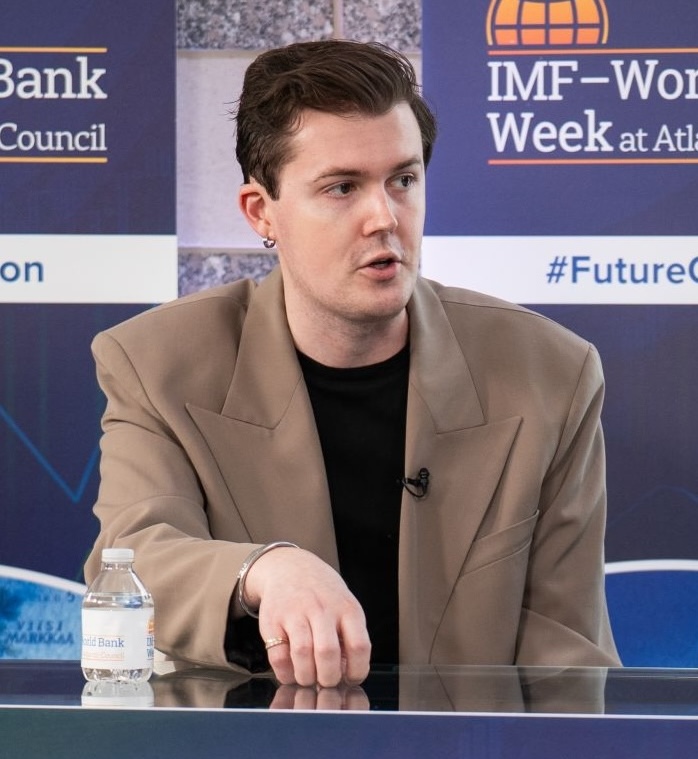

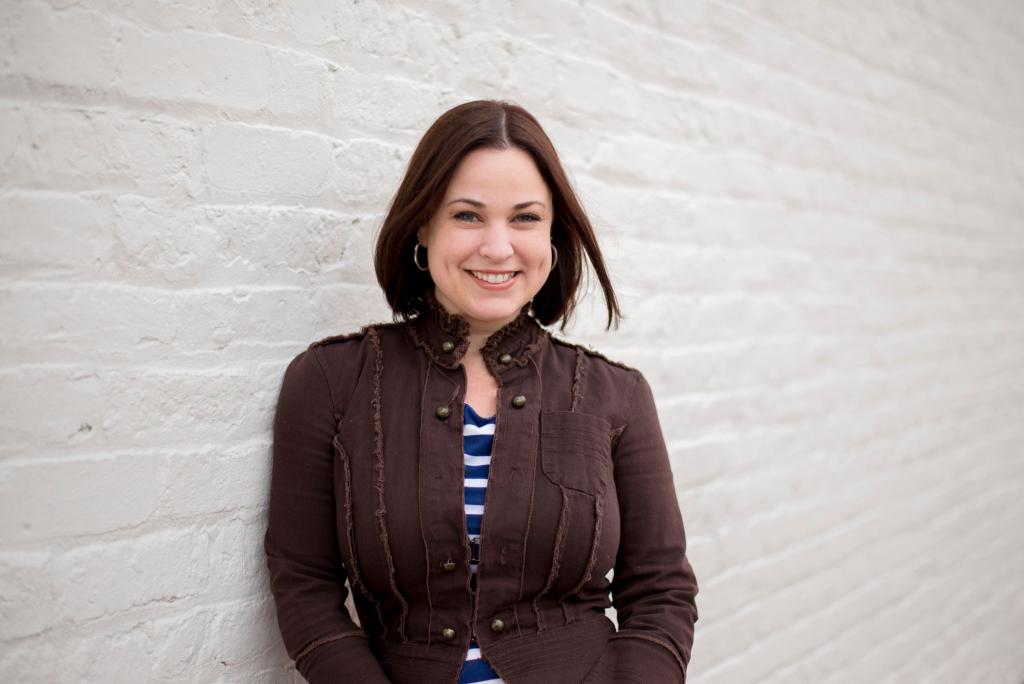
Sean Wiswesser, author of the new book, “Tradecraft, Tactics, and Dirty Tricks: Russian Intelligence and Putin’s Secret War,” and a former senior operations officer with the CIA, joins Lawfare’s Justin Sherman to discuss the major Russian security organs and their training, characteristics of Russian “sticks-and-bricks” surveillance and counter-surveillance tradecraft, and the Russians’ use of coercion, kompromat, and sex (often dubbed “sexpionage”) to recruit and pressure people. They also discuss corruption in the Russian intelligence services, illegals and assassination programs, brazenness and sloppiness in Russian operations, and the future of the Russian intelligence threat to the United States and the West.
To receive ad-free podcasts, become a Lawfare Material Supporter at www.patreon.com/lawfare. You can also support Lawfare by making a one-time donation at https://givebutter.com/lawfare-institute.
Click the button below to view a transcript of this podcast. Please note that the transcript was auto-generated and may contain errors.
Transcript
[Intro]
James Pearce: Hi, I’m James Pearce, former public service fellow, now a contributing editor at Lawfare. I was honored to come to Lawfare after serving in government because I always trusted Lawfare to deliver reliable, non-partisan, and thoughtful analysis on critical issues. We are living at a time when the rule of law is under threat, and Lawfare continues to provide balanced and sober coverage, but that work depends on continuing support from people like you.
Lawfare is a 501(c)(3) nonprofit, and we rely on our readers and listeners, on you, to keep that work going. Head to lawfaremedia.org/support and become a material supporter. You’ll help us continue to offer all our content for free to everyone. Think of your support to Lawfare as what you can do to meet the moment.
Thanks for listening.
Sean Wiswesser: Their goal is to thwart democracy, to undermine democracy, the United States and all of our allies, particular allies in NATO. And so the, my mission with the book is to undermine them, to expose them for the frauds they are in many ways, the complete frauds, incompetent, bungling operations they carry out, but also to also explain at the same time they remain a formidable adversary.
Justin Sherman: It’s the Lawfare Podcast. I’m Justin Sherman, contributing editor at Lawfare and CEO of Global Cyber Strategies, with Sean Wiswesser, author of the new book "Tradecraft, Tactics, and Dirty Tricks: Russian Intelligence and Putin’s Secret War," and a former senior operations officer with the CIA.
Sean Wiswesser: And so it’s dissidents and defectors that are some of the greatest threats to that regime, that and democracy, which is a mortal threat to Putin.
He can’t have functioning democracies on his borders, of course. It’s too much of a threat to him and his hold on power. That’s why he invaded Ukraine.
Justin Sherman: Today, we’re talking about Russian intelligence tradecraft and operations, their simultaneous sophistication and recklessness, and the future of their activity and threat to the West.
[Main Podcast]
Sean, let’s kick off with you telling us, to the extent you can, of course, about your career at the Central Intelligence Agency and in the U.S. National Security community.
Sean Wiswesser: Sure. So I have over 30 years now in the intelligence community. Started out was hired as a intelligence analyst. Did not do that very long, mid-’90s but it got me kind of into the community, and then I was foreign service for about six years.
And then the vast majority of the remainder of my career, I was a CIA case officer in the Director of Operations, and my focus was on Russian intelligence in particular, and also something we call denied area operations. I spent a lot of time and work on that, as I mention at a couple points in the book.
Retired as a member of our expert cadre with a focus on those two issues in particular. And then I’ve been contracting since doing some contracting in the defense and intelligence sectors but that’s a snapshot of what was a very long three decades and I’m proud to have served with a lot of really great people in the intelligence community, maybe some of them dialing in now.
Across, across the military and intelligence community, I did a lot of joint duty assignments, too. I did a total of five of them in my career. So appreciate everyone that’s served, particularly as we’re taping this after Memorial Day weekend.
Justin Sherman: Yeah, certainly. I mean, just for a moment, do you want to... I mean, many listeners al- already know what this is, as you’re noting, but do you wanna just give a sentence or two on denied area operations before we jump in here, since that’s, of course, relevant?
Sean Wiswesser: Yeah, sure. So denied area operations is how to operate, do our intelligence and espionage work for CIA in the very toughest environments of our adversaries, and that’s Russia, China, of course Iran, North Korea. So the term denied area is kinda... it’s interesting because I mention Burton Gerber in the book.
He’s a legend of Russian operations, and also Mike Sulick, who was our Deputy Director of Operations in... for my career, and he also wrote the forward to the book. So Gerber and Sulick are two giants in the field of denied area operations, and as Burton Gerber was fond of saying we can’t have denied areas for CIA.
So what it means is we wanna be able to operate in those very tough environments where surveillance, even before the days of today, ubiquitous tech- technical surveillance, which we can talk about a little more, but before the days of cameras at every intersection, those were always tough places to operate, in China and Soviet Union, now Russia.
And so I specialize a lot in that in my career and touch on it a bit in the book, but I focus, of course, mostly, as you know, Justin, the book is 10 chapters on the bad guys’ tradecraft, how the Russians do their espionage and their intelligence operations. But my expertise in those areas, of course, fed directly into the book and part of the reason why I wrote it.
Justin Sherman: Well, let’s dive right into that. So as we heard in the intro, this new book you have out is titled "Tradecraft, Tactics, and Dirty Tricks: Russian Intelligence in Putin’s Secret War," published by the U.S. Naval Institute Press. You know, I’ll give my plug not that you need it, but, you know, as some listeners know, I read many Russia books a year.
This one is absolutely excellent. It’s interesting, I think both because of the depth of the analysis you have in, but as you noted, also drawing on your extensive experience and expertise firsthand with some really interesting stories. So I would highly recommend that folks get a copy. One thing, we’re gonna get into the substance of the book in a second but you alluded to your motives briefly.
I appreciated and found it interesting that you were pretty forthright about your reasons for writing this book, and in particular, the impact you think it could have or you might be looking to have on not just the US and its allies and partners, but also on Russia. And so, you know, do you wanna talk a little bit more about that, what compelled you to write this book and what you’re hoping it might achieve?
Sean Wiswesser: Yeah. Thank you, Justin, for that endorsement. I really appreciate it. The book’s been a team effort, not only with my publisher, Naval Institute Press, but a lot of very senior members of the intelligence community that have endorsed the book and are behind me in this effort.
Very honored that Keith Melton, a legend of as an author and spy historian, one of the founding board members of the Spy Museum, just endorsed my book two weeks ago. So I consider it a team effort. The book is a mission. And the mission of the book is to counter our Russian adversaries to, as I mentioned in the introduction of the book, do maximum amount of damage to our Russian adversaries and their intelligence operations around the world.
Their goal is to thwart democracy, to undermine democracy, the United States and all of our allies, particular allies in NATO. And so the, my, my mission with the book is to undermine them, to expose them for the frauds they are in many ways, the complete frauds, incompetent, bungling operations they carry out.
But also to also explain at the same time they remain a formidable adversary because in their system they can do no wrong. They get replenished. They constantly get resources from President Putin, who was one of their own, of course, a KGB veteran and head of the FSB himself at one point. So when you can do no wrong, when you have constant unending replenishable resources, they remain a formidable threat.
In fact, I characterize them as the most professional intelligence adversaries we have in the world. I believe China is the most important military threat to the United States and a rising one at that, but continuing to challenge the United States militarily with our, their navy now with more ships than our navy.
But Russia is the intelligence threat that’s been at it the longest, has 100 years of history working in things like information operations. They’re very good at it. So that’s the mission.
Justin Sherman: Yeah, so let’s start where you begin in the book, which is talking about the main Russian services and their training.
So what are those core security organs, and what does that training look like? How has it evolved over this long arc of history that you just noted?
Sean Wiswesser: Yeah. So for the work and the research, I focused on the three main largest Russian intelligence services. That’s principally the FSB, the Federal Security Service, which is their internal service, largely, although not exclusively.
I can-- I’ll explain that a bit more. The GRU, or now they call themselves just the GRU or ГУ, in Russian is for Glavnoye Razvedyvatelnoye Upravlenie or the main intelligence directorate of the general staff, the Russian military. That’s their intelligence, military intelligence. And then the SVR, which is their foreign intelligence service, the former remnant of the first chief director to the KGB, which was in charge of foreign intelligence.
So the first two chapters of the book are the history of those services and organization very briefly, just as an outline, and then I talk about their training and preparation, kind of how they carry that out in their services. And through it all, of course, Justin, as you know, having read the book, through it all and through everything they do is the corruption that just undermines everything that they try to do in the Russian system and the Russian government.
Corruption bleeds through it all. So, but outlining principally their missions, again, the FSB is a vast bureaucracy. There are no analogies to the United States with any of their intelligence services. I think the best estimates I’ve read and seen in open sources is the FSB now is probably about four hundred thousand officers and personnel across Russia.
That includes roughly two hundred thousand border guards under the FSB. It is a giant monolith of a bureaucracy. They’re-- they have hands and corruption bleeding into companies and front companies and forced coercion and corruption against all sorts of levels of state bureaucracy. So the FSB’s principal role is survival of the Putin regime and him personally in power, and we can’t forget that because everything else is secondary to that So a brief overview of the GRU is, again, there’s no analogy to the DIA or m- our military intelligence.
It is a huge bureaucracy that encompasses signals intelligence, what is our NSA, our NRO that runs the satellite constellations. The GRU has all of that plus traditional military human operations, as well as their tier one elements of Spetsnaz, which are their special operations units equivalent to our Navy SEALs and Delta Force.
They have 10 ground brigades and four naval brigades I touch on briefly in s- the special operations chapter of the book. And so that’s briefly an overview of the GRU. Very difficult to estimate their numbers. They’re the one of the three that’s constantly re-reorganizing and gives the least amount of clues in the open sources.
And I, I should say everything I’m detailing in this podcast, just like in my book, is from open sources. My views are mine alone, don’t represent those of the U.S. government. So the GRU, I estimated it between seventy-five and a hundred thousand probably. And then the SVR is the smallest of the three.
It’s probably around thirty to forty thousand. I think all of these services tend to grow in wartime, and Russia’s been at war now for four years. The SVR is in charge of foreign intelligence. They also have the lead role, although not exclusively, in information operations when it concerns their foreign targets.
So what the Russians call aktivnye merepriyatiya, they have an entire intelligence directorate called Directorate MS in the SVR devoted towards information warfare. So those are brief overview of the three services.
Justin Sherman: That’s helpful. Is the training, just to double-click on that for a moment, kind of, relatively similar across these organizations, different?
How would you describe how they’re-- We’ll get into their operations in a minute, but how are they trained?
Sean Wiswesser: Yeah, I think there were similarities at one time. I think one of the features I touch on in chapter two of the book is that, you know, their training has suffered a lot over the decades. Their professionalism has gone down.
I think some of it’s been cost-saving measures. Like back in the ‘90s, they were suffering a lot, of course from budget shortfalls after the collapse of the Soviet Union. And so th-this is where it leads-- led to them doing things on the cheap, deploying illegals that weren’t fully trained, like the Ghost Stories case that I touch on in, in a lot of detail.
So this is where the SVR developed that category of illegals they called special agent illegals, trying to deploy them in broad-- abroad without the, you know, the eight-year timeline that the leader of the illegals directorate of the KGB, Yuri Drozdov, from the 1980s, you know, in retirement later, he talked about this.
You know, it takes a long time to deploy, training the illegal properly. So at a time when budgets were constrained in the ‘90s, I think that the-- all three of these services kind of tried to do things on the cheap. And that’s where you see a lot of the officers now getting caught in very bungling operations abroad.
I, I joke that the great illegals, for instance, of the 1930s and ‘40s, people like Rudolf Abel, you know, the Hollow Nickel case. He was compromised not because of his own failures, but he was turned over by another illegal. But he was a professional, you know, really highly trained at his craft. The illegals that helped support the Manhattan Project spies that stole our atom bomb designs.
You know, these were real pros, Justin. These were really good intelligence officers. The recruiter of the Cambridge Five, Deutsch, that I talk about in the book Again, real pros. That’s why they’re called the great illegals in Soviet espionage history. Nowadays, not so much. And so part of it is the lack of professionalism at their academy, and then it’s the corruption, the stories I touch on.
I’m happy to share one or two if you like now, but touch on in the book too.
Justin Sherman: Yeah, I certainly wanna circle back to corruption, ‘cause that, among other things was very compelling in your book. So l- it’s a good transition to some of the operations and tradecraft that, of course, are a core focus.
You write about, of course, how surveillance, both carrying it out and then ensuring that you lose it when you’re conducting an operation is, of course, such a core part of intelligence tradecraft. So what are some of the characteristics of Russian-style, quote-unquote, “sticks and bricks,” as you put it, surveillance and counter-surveillance?
And are there areas where you think they are quite proficient versus quite deficient and, you know, or really show some of these cracks in the foundation?
Sean Wiswesser: Yeah. So you’ve been an astute reader of the book, Justin, I can tell, and I appreciate that. So let’s delve into some of their sticks and bricks, as we call it in CIA, what the Russians call «Pravo konspiratsii» you know, their tradecraft, their rules of conspiracy.
You know, they do have a long intelligence history going back to the time of the Tsars and then the Bolshevik Revolution the Cheka, you know, Felix Dzerzhinsky, Iron Felix, set it up. His vision for intelligence and security work was that it be motivated and driven by terror. His famous line is, you know, “We stand for organized terror.”
But they were and are very proficient at clandestine tradecraft. Historically, they were. The problem nowadays is as I relate in my research and my work, Russians of the current generation are not prepared for the level of ubiquitous technical surveillance that’s out there in society. So this is where you see Russian intelligence officers deploying to do operations like, like the attempted assassination of Se- Sergei Skripal in the U.K., where they’re all over cameras and seem to have-- be blissfully unaware that they’re being filmed for the entirety of their trip from Heathrow through to Salisbury, where they attempted the assassination, when they cased out his residence, when they cased out parts of town.
It was all under camera surveillance, and they weren’t very good about being aware of it at all. So again, that’s that lack of fundamental good training, and I think the corruption bleeds into it too. They don’t get the training they should because as one story I relate in the book, you know, the surveillance training of the SVR at the academy, they weren’t allowed to use vehicles because as one instructor told Russian intelligence officer, later debriefed and related it to me, “Well, we can’t use the cars because those are reserved for the instructors with their girlfriends on the weekends.
So we were never allowed to use the cars.” That’s the corruption. That’s the entitlement in their services. So, onto a little bit of the tradecraft. Russians are notoriously very aggressive at their surveillance tradecraft, both carrying out surveillance or what we would call countersurveillance of their operations to see if they’re being covered, but also what we call surveillance detection, seeing if they’re being watched or followed themselves.
They’re typically very aggressive. They’re-- they don’t mind running red lights, speeding on highways, trying to see if they’re being followed. Why is that? Unfortunately, for decades in the United States and in NATO countries, they weren’t getting a lot of attention paid to them. They could get away with that.
Radical Islamic groups were getting a lot of heavy focus of intelligence and security services, so the Russians got used to... They were spoiled, sort of knew they could get away with being aggressive, carrying out their operations to reveal the presence or absence of surveillance. You know, one anecdote I relate in the book, you know, if other intelligence officers from the United States or other countries try to do that in Moscow, the Russians will let air out of our tires of vehicles, you know, things like that to retaliate.
So we typically in the West weren’t paying enough attention to the Russians, weren’t covering them enough, so they got spoiled by very aggressive tactics.
Justin Sherman: When the Russians recruit people, whether for informing or supporting operations or something else, as you note, they still today frequently resort to tactics like coercion, kompromat, the use of sex to entrap people, which many frequently dub sexpionage.
How do the Russians use these methods and why do they do it? Are they actually effective? Is this the kind of thing in general that a Western intelligence agency might prefer for recruitment or is this really a Russian sort of mindset to use these tactics?
Sean Wiswesser: The Russians definitely have a preference for the stick versus the carrot, and they’re not the only ones.
A lot of repressive kind of autocratic regimes, they do this at home. So, you know, the Russians for going back to the revolution I mentioned Iron Felix. You know, Fe- Iron Felix’s saying, of course, was we need... We stand for organized terror, and Lenin believed in it too. Had a somebody challenging me recently that, “Oh, h- prove that Lenin was for terror.”
Well, look at what he did. Look at what they carried out. They carried out the Red Terror. For four years, hundreds of thousands of people were killed right after the revolution. In fact, I referenced a memo that Lenin wrote to an, a underling, I think his name was Krasinsky, telling him and Dzerzhinsky, “Bring the terror.
We need the terror as soon as possible so that the people are afraid of any type of counterrevolution.” So when you practice terror, you practice extortion as state policy internally. It’s natural that their intelligence services rely on that a lot in their work on foreign intelligence as well. So they do believe in what I mention in the book you know, the KGB’s historical term was compromising material operations.
Means it could be sexpionage, like you mentioned, Just- Justin, the case of Lonetree—In my research talk about Clayton Lonetree, the Marine guard who was famously seduced by a Russian working at the embassy in Moscow and he sadly committed... You know, betrayed his country for that. But it’s not just that.
Gambling, just businesses trying to do business in Russia, businessmen are extorted all the time. “Either work with us and help us, or we’ll run your business out of town, or we’ll throw you in jail.” So they believe in the stick. A lot of services in that part of the world, the former Soviet Union, not including the Baltics are of course fully functioning democracies integrated into Europe and NATO, but in some of the countries sort of called the Stans, and they’re very sensitive to criticism, but they deserve criticism.
They’re despotic regimes. They try to claim, “Oh yeah, we’re also for the West.” At the same time, they’re heavily embedded with the Russians for intelligence operations. They rely heavily, too, on extortion, coercion sexpionage, the use of swallows. So yeah, it’s a go-to tactic for not just the Russians, but a lot of those regimes in that part of the world.
It always was a go-to of the KGB.
Justin Sherman: You referenced corruption earlier, which I think is both a th- a theme of the book, and then you have several deeper dives into it. You talked a little bit earlier about corruption, but perhaps if you want to give us more color on how this really materially impacts the day-to-day and then the broader efficacy of the three main Russian organs, their recruitment their analysis or anything else you want to hit on.
Sean Wiswesser: Well, I hope your listeners will consider checking out the book. I relate a lot of these anecdotes, as you know, Justin, but let’s take one from, you know, chapter one of the book, I talk about a day in the life of a Russian intelligence officer, and I mentioned Sergei Tretyakov, who was the deputy rezident of the SVR residency in New York.
R- a residency being a station, what CIA calls a station or an office of the SVR abroad. It’s called a rezidency. GRU uses the same term. So Sergei Tretyakov relates in his own book with Pete Early, Comrade J. I had the honor to debrief him, though, and get a chance to work with him some. You know, he said he was tired, he was worn out as a senior officer with the entire purpose of the residency being about corruption.
You know, feeding the corruption back in Moscow. Every time they had a senior visit in town to New York, where he was working and defected out of eventually shortly after he worked in New York, he relates how he’d have to constantly take them for visits to, you know, electronic stores or whatever the latest fashion stores are for their wives, and then they used the diplomatic pouch to ship all these things back to Moscow.
And I’m not just talking like one or two TVs. I mean, you know, 20 TVs, or I relate the example of them buying ostensible electronics. You know, this happens around the world. The SVR will buy 50 iPhones claiming that they’re for operational purposes. But the amount of money they were given for 50, they’ll claim they could only buy 20, and then the remaining 30 are sent back via the diplomatic pouch to their buddies in Moscow to sell on the black market And so there’s constant scheming and scams, and those are lower level.
But then at the higher level, you’re talking scams involving millions and sometimes tens and hundreds of millions of dollars carried out by all three of these services across Russia. So corruption is what drives those services, and it’s a feudal system and works its way up the chain all the way to Putin.
In fact, Litvinenko, one of the defectors who was executed, you know, not... Well, assassinated really with polonium in the U.K. Litvinenko claims the reason why he was killed and he died a horrible death towards the end, he said it was about the corruption, that he was relating the organized corruption of the FSB that he had tried to tell Putin about when Putin headed the FSB.
And he claims that’s why he was killed, of course. So yeah it’s part and parcel of everything they do. It bleeds through every part of their system. And when they try to do operations, it’s fruit from a poison tree because of the corruption.
Justin Sherman: You reference assassinations. That’s something else part and parcel of many Russian global operations.
So how does wet work fit into everything we’re talking about? And how, if at all, has Soviet and now Russian thinking on assassinations changed over time?
Sean Wiswesser: Yeah, so the Russians do use the term mokraya dela, wet work, but they also use the term promoye deystvie, you know, carrying out direct action.
And they also often reference, the Russians will use the term, you know, the highest measure of punishment. And so when they’re carrying out assassination at the orders of Putin, they’re carrying out the vysshaya mera nakazaniya, so the highest measure of punishment And so traditionally th-this has been ordered by, at the highest levels from Putin, I believe.
It’s ordered by him against defectors and dissidents because they’re such a threat to the system. You know, so defectors like Sergei Tretyakov who uncover and are willing to reveal the levels of corruption, levels of incompetence, indifference of the Russian intelligence services to protecting their own people, they’re the greatest threat, of course, that and democracy.
And so that’s why Putin, I believe and also has been evidenced by European services have shown Navalny was killed by the state. They used a toxin of a tree frog. You know, that’s not organized crime. That can’t just be somebody in prison that carried it out. That’s the state. And so it’s dissidents and defectors that are some of the greatest threats to that regime, that and democracy, which is a mortal threat to Putin.
He can’t have functioning democracies on his borders, of course. It’s too much of a threat to him and his hold on power. That’s why he invaded Ukraine. And so those assassinations have remained a staple of this regime, using murder as a form of state-sponsored policy and a policy of coercion. So I cite the example of the Rheinmetall CEO in Germany targeted by the GRU, and the Ger- the Germans have the Russians dead to rights on this.
They know it was the GRU. They have the evidence to show it. Trying to kill a corporate leader, you know, when have we ever seen that level of brazenness and recklessness, though, during KGB times? Sure, they targeted dissidents and defectors. As I mentioned, that’s always been a part of their malign, you know, murderous statecraft.
But trying to kill a corporate leader in another country, it shows the level of n- there’s no accountability anymore, the level of recklessness and the re- level of escalation the Russians are willing to risk right now. So yeah, I think it’s-- there’s been a history to it, Justin, but now it’s escalating, and now they’re carrying it out in more and more reckless ways.
Justin Sherman: Well, this is a really important point, and you use the word I and others often use, which is brazen. And this is something in particular I was looking forward to asking you about. And I know you talk some about this in the book but for those that are really brazen, and of course you mentioned the GRU perhaps being the foremost one, although tell me if you disagree.
Do you think that some of these operatives, such as with the recklessness you mentioned or with the botched poisoning attempt of the Skripals in 2018, which of course killed other people, not the intended targets, is that just sloppiness? Is it they don’t care about getting caught? Is it, as you’re saying, because these killings or whatever are meant to send a message they wanna get caught?
Like, what explains this sort of disregard for the fact that, you know, their bios and passports are on the Bellingcat website, and they just kinda keep doing what they’re doing?
Sean Wiswesser: I think it’s two things. First, I would mention I think the FSB and GRU are equally involved in terms of the assassination sabotage wet work abroad.
It’s largely those two services, although I think the SVR is also engaged. They sort of all want in the effort to impress the boss Justin, and that’s how the intelligence services reference Putin. He’s the sh- he’s Shev, he’s the boss, much like Stalin was called the boss back in his day, and that’s purposeful.
You know, those allusions are purposeful. Felix Dzerzhinsky, his statue was just put up last month at the FSB Academy. You know, they want these allusions to the terror and the repression of Stalin’s times. They want those to help sort of keep the Russian people in line today, you know, with the war going on.
I think that we’re gonna see more of this this, the sabotage, the assassinations, the wet work, it’s all an effort to imp-impress Putin and to try to use, again, coercion as a state policy. So European countries and the United States are helping Ukraine in the war effort. We’re not directly involved, but we’re selling arms.
We’re trying to help that democracy to-- in their fight for freedom. So Russia believes, okay, well, that makes you all fair game, so we’re just gonna do whatever the hell we want, and if we use teenagers or misfits of society that they’re recruiting in many cases, they believe that gives them veil deniability.
At the same time, Justin where’s the accountability in the West? So let’s talk about brazen. Let’s talk about FSB assassin Vadim Krasikov, a former bodyguard, personal bodyguard of Putin, who in 2019, in the most brazen of ways, assassinated in broad daylight, shot a Chechen dissident in Germany, and he was caught immediately dead to rights.
Well, for years, of course, the Russians refused to acknowledge him, although at the same time they were trying to get him swapped out, and finally in 2024 they included him, and Putin insisted Krasikov be in-included in any swap of spies and assassins like him that were swapped out, along with some illegals from Slovenia, were swapped out for innocent civilians like Gershkovich and Brittney Griner and in a host of these swaps that have happened.
Why do I mention Krasikov? It’s important to note that Putin greeted him with a bear hug on the tarmac at Sheremetyevo Airport in Moscow. He wanted his elite from the FSB and the FSO, his protective service, to know, hey, if you kill for me I’m gonna take care of you. And he did. He got Krasikov out after just a few years in prison.
And then shortly after that, Peskov, the spokesperson, acknowledged, “Yes, we decorated him. He’s a decorated FSB officer.” They did want the whole world to know. They wanted the whole world to know, “Yeah, we ordered this.” Krasikov was doing it on Putin’s orders. Why else, again, acknowledge him as an FSB officer after they got him out, greet him with a bear hug on the tarmac?
So I think there’s been no accountability, though, Justin. Until we in the West provide enough of a unified and substantive a deterrent to Russia to say, “Hey, you don’t ever try to kill our citizens on our soil,” they’re just gonna keep doing it. They’ve gotten away with it. Their assassins get away.
In the case of the Salisbury, you know, attack on Skripal, those assassins got away and were never held to account. So that’s what I think is happening. I think it is state-ordered. I think it... I think they’ll continue to do it unless we provide more of a unified response, and one that matters to the Russians, but we haven’t, unfortunately.
Justin Sherman: What do you think that unified response looks like? And I’m thinking both about the United States, but also you mentioned Europe, right? And I was reading something a few weeks ago where someone else had remarked, you know, we see whatever it is, as you allude to, sabotage or something else in the news in Europe, and then, you know, yet another headline saying, “Oh, this is a wake-up call,” you know, when the 80th wake-up call.
And so I’m just curious for both, both the U.S. and Europe what you think, yeah, we need to be... what that should look like.
Sean Wiswesser: Yeah, I’m gonna be speaking on these topics. I was g- in the U.K. I’m, I was very honored to be un- invited to both Cambridge and Oxford Universities in just a couple weeks. I’m gonna talk about Russian hybrid war and here’s what I believe.
This is Sean’s opinion. Again, my views are my own, certainly don’t represent the U.S. government nor CIA. But, you know, during the days of the Cold War, Ronald Reagan was a great president, and he was also a great deterrent to the Soviet Union. You want to carry out escalation in the arms race? We can do things that you’ll never be able to do.
That was Star Wars, at least the threat of Star Wars and SDI, many believe helped bring down the Soviet Union. So we have the greatest intelligence services, I believe, in terms of capabilities in the world. We have the greatest capabilities of our military. Look at what they carried out with Maduro. Look at the bin Laden raid.
So here’s what I believe, Justin. There’s consequences and in the Ukraine war that we could be carrying out. There’s weapon systems that we’ve always been giving willy-nilly to the Ukrainians or selling from both Europe and the United States. Give the Ukrainians the tools they need to finish the job.
What has Russia not done during this war? What weapon systems haven’t they used? They just used another hypersonic missile against civilians in Kyiv. They’ve blown up and attacked maternity wards. Thousands and thousands of Ukrainian children have died in this war. What has Russia not done to Ukraine? So the first thing I believe is there’s a lot we can be doing for Ukraine and we should be doing in their fight for freedom, and those are consequences for Russia of the hybrid war they’re carrying out in Europe.
And then a second thing I think we need to do is more of a unified response, sharing intelligence and sharing every single instance where this is happening. Stop giving the Russians the benefit of the doubt. You know, those drone incursions that happened in Poland, all this debate in the West among different countries in Europe.
Well, geez, were they accidental or not? Wow, dozens and dozens of drones in a 24-hour period going into Poland and crashing or being shot down near some key military and facilities and bases. That might be by chance. Of course it wasn’t by chance. What about the cable cuts in the Baltic Sea? They have more cable cuts in the Baltic Sea, and I mention in chapter eight of the book They’ve had more cable cuts there in the past two years than at any other place in the world.
No other body of water in the world has had as many cable cuts as have happened with these Russian shadow fleet tankers accidentally dragging their anchors. But again, Justin, every time it happens, you know, there’s this benefit of the doubt Russia gets. I was in Helsinki giving a talk last fall on hybrid war when a Finnish court released a crew, a Georgian captain from the country of Georgia and p- some other Russian and Russian-speaking crew members.
Well geez, there’s just no evidence that anchor drag was accidental. Arrest them every time. Seize the crew every time. Seize the ship every time. Start to target these r- GRU and other officials that are carrying out assassinations abroad. And when I say target, I don’t mean f- for wet work like they do.
We’re not that low. We’re not gonna carry out, we’re not gonna target civilians ever in war like they do. We’re also not gonna carry out assassinations. But they travel abroad. They go out on vacations to Cyprus, their families do. Arrest them, detain them, render them to justice like we rendered terrorists suspects throughout 20 years of war against Al-Qaeda.
We should be m- more creative carrying out reprisals against the Russian intelligence services, and there’s a variety of ways we can do it, and I’ll just leave it at that.
Justin Sherman: All right, yeah, and that’s interesting ‘cause you covered I think both the war component or what we would call full war, you know, kind of like with Ukraine, and then as you’re noting also then kind of intelligence war, active measures issues.
Kind of looking forward then, I mean, and this is part of, you answered part of my question already, but do you see the United States continuing to underestimate the Russian threat? Hopefully more accurately size the Russian threat over time. Do you think- the continued war in Ukraine has shifted that at all?
Or how do you think we’re looking in the United States with appropriately confronting this adversary?
Sean Wiswesser: Yeah, Justin, good- really good question. I’ve had other journalists... I’ve been honored to have a num- number of interviews, inc- including with European outlets recently. I get asked a lot, “Well, how can they be incompetent at the same time you’re saying they’re a formidable adversary?”
They are both, okay? They do really reckless, stupid, incompetent at times operations, and yet they’re formidable because, again, they get so many resources. They can do no wrong in the Russian system. They’re not held to account. For most of the past 20 years, Justin, let’s look at national security strategy, the unclassified versions.
Russia was barely top 10, right? Literally, they were barely top 10. We had the war on terror, we had Iraq, which some argue and not whether we should’ve in- been involved in Iraq at all. You know, I’m not taking a position on that. I’m just saying we were involved in a war there, major effort. We had China, we had proliferation concerns, WMD, whether it existed or not, and biological, chemical weapons targeting the United States.
Russia was barely top 10. So it’s no surprise then that while we weren’t focusing on them, they’ve never taken their eyes off of us. As I relate in my book, you know, that Russian intelligence officer who reminded me early in my career, “You’re the United States. You’re the main adversary for Russia, and you always will be under Putin.”
As he said, “You were, you are now, you always will be for the Russian intelligence services and for Putin.” So we took our eyes off them. They never took their eyes off of us. I believe they don’t get enough focus and attention. That’s why I wrote the book. I think it’s appropriate we kind of end where we started, you know?
My book is trying to expose them for who they are. They’re the most formidable threat to democracies that we face in the West. They’re targeting our elections. They’re using information warfare. They’re using cognitive warfare now more than ever cyber operations. And so, so yeah, I think we have a lot of work to do getting the message out about just what they’re doing to us and how focused they are like a laser on, on the United States and our allies.
Justin Sherman: That’s all the time we have. Sean, thanks for joining us.
Sean Wiswesser: Thanks for having me, Justin. I’m honored to be on the podcast with you all.
[Outro]
Justin Sherman: The Lawfare Podcast is produced by the Lawfare Institute. If you want to support the show and listen ad-free, you can become a Lawfare material supporter at lawfaremedia.org/support. Supporters also get access to special events and other bonus content we don’t share anywhere else. Please rate and review us wherever you get your podcasts.
Look out for our other podcasts, including Rational Security, Allies, The Aftermath, and Escalation, our latest Lawfare Presents podcast series about the war in Ukraine. Check out our written work at lawfaremedia.org.
The podcast is edited by Jen Patja, and our audio engineer this episode was Cara Shillenn of Goat Rodeo. Our theme song is from ALIBI Music.
As always, thank you for listening.