Lawfare Daily: The State of Syria, with Charles Lister
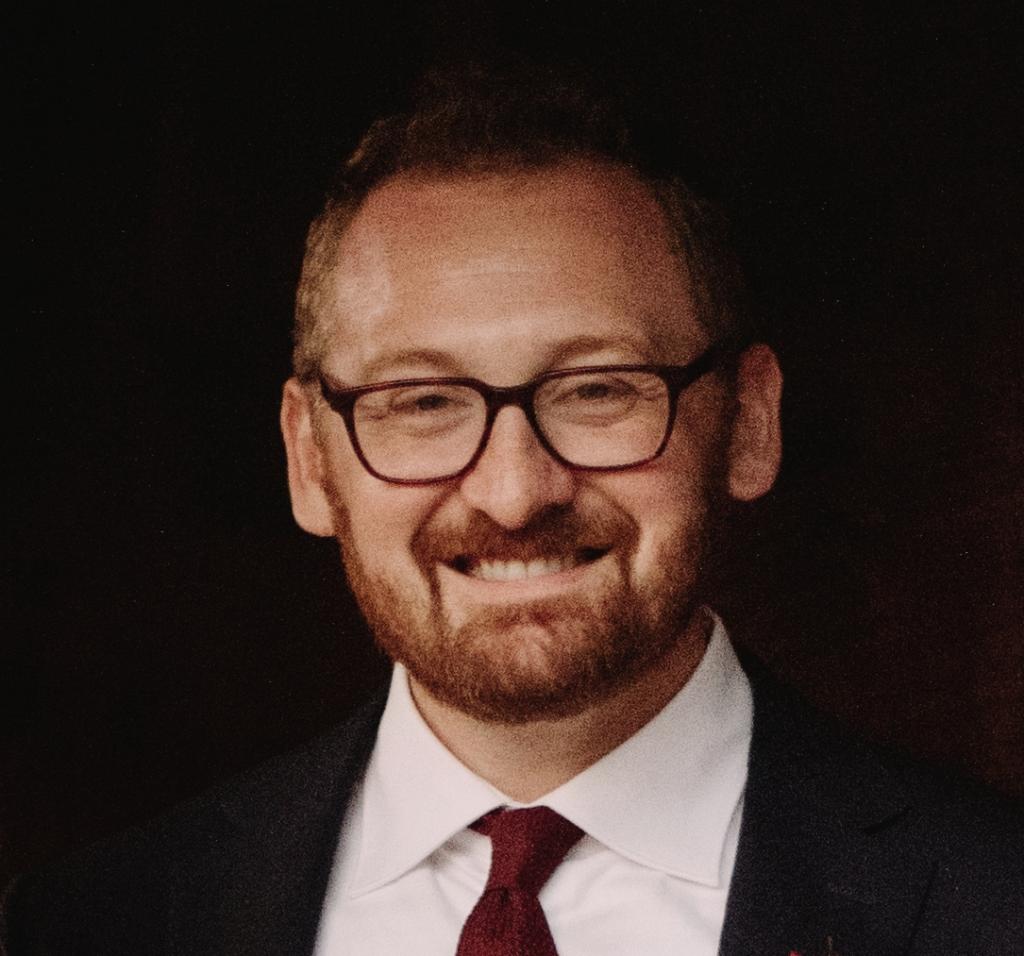
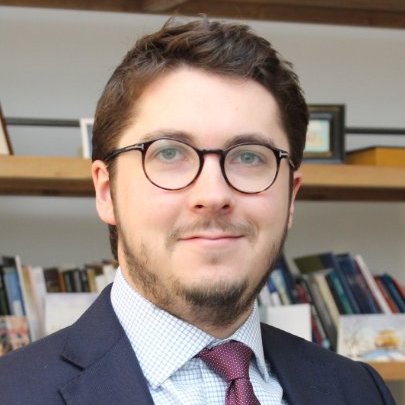
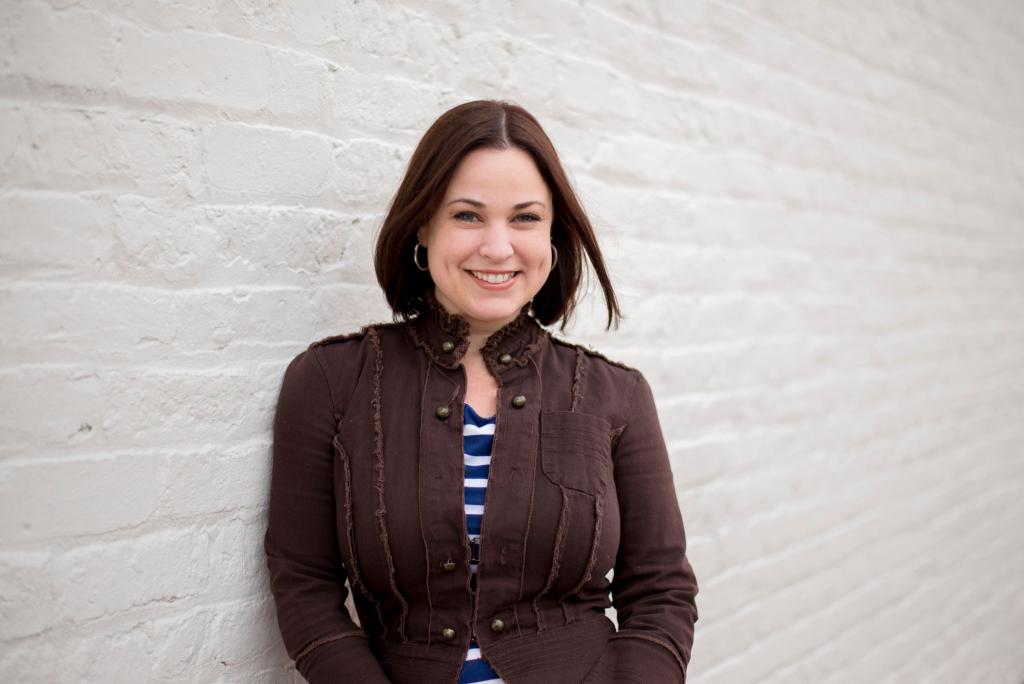
For today’s episode, Lawfare Senior Editor Scott R. Anderson sits down with Charles Lister, a senior fellow at the Middle East Institute and head of its Syria Initiative, to talk about the dramatic developments that have taken place in Syria the past few weeks, which have ultimately led to the impending withdrawal of U.S. troops after more than a decade in country.
Together, they discuss the challenges Syria has faced since the fall of the Assad regime, how the new transitional government in Damascus has managed its relationship with the Syrian Democratic Forces, what the exit of U.S. troops means for efforts to combat the Islamic State terrorist group, and the role the United States has played in it all—and is likely to play moving forward.
To receive ad-free podcasts, become a Lawfare Material Supporter at www.patreon.com/lawfare. You can also support Lawfare by making a one-time donation at https://givebutter.com/lawfare-institute.
Click the button below to view a transcript of this podcast. Please note that the transcript was auto-generated and may contain errors.
Transcript
[Intro]
Charles Lister: The
moment conflict moved into SDF core areas, the Arab tribes flipped in 12 hours
and almost overnight, 75 to 80% of the SDF territory had flipped to government
control almost without a bullet being fired.
And that was kind of the death nail in terms of the SDF being
able to maintain itself as a significant actor on the stage. And it basically
forced them into the integration agreement we see today.
Scott R. Anderson:
It's the Lawfare Podcast. I'm Scott R. Anderson here with Charles
Lister, senior fellow at the Middle East Institute.
Charles Lister: Does
it make sense for American military bases to still be in SDF controlled
northeastern Syria? Not very much. Does it make sense, however, that the US
military and the intelligence community seek to invest in a more government to
government relationship through Damascus to explore continuing to pursue, you
know, shared interests? Yes. And that's what we are seeing
Scott R. Anderson: Today,
we're talking about the end of the U.S. military presence in Syria and what it
says about the state of the country.
[Main Episode]
So, Charles, I think it's fair to say Syria has been through
what might be the most dramatic 15 months that I can imagine in terms of a
country's transformation.
We went from the collapse of the Assad regime. Which had, you
know, overseen, instigated, participated in a brutal civil war, brutal
campaigns, suppression in the country for over a decade collapsed suddenly and
unexpectedly in December of 2024. We see the resistance movement that pushed it
aside, set up a government that rapidly, establishes a transitional government
in March of 2025 that then gets a fair amount of international legitimacy, spent
several months getting degrees of recognition from the international community,
establishing itself as transitional government, having normalization,
withdrawal of sanctions, re-engagement with the global economy, and working on
internal reconciliation with some stops and starts.
Then earlier this year, we saw a big obstacle come up in that
front with the other big actor, I would say, in Syria, the Syrian Democratic Forces
that has now led to a end, apparently impending end, I should say, to the U.S.
security presence in the country that's been there for better part, more than a
decade at this point.
So let's start by catching our listeners up to where we were at
the beginning of the year before this kind of latest instigating conflict arose
in January. Where was the transitional government and the state of Syria at the
end of 2025 and what were the big outstanding questions and challenges that
were still facing it?
Charles Lister: Yeah,
well, I mean in terms of challenges you know, 1,000,001 and the list will
continue Syria after, yeah. 14 years of civil conflict, brutal civil conflict,
and more than 50 years of rule by the Assad dynasty has, you know, faces I
immeasurable challenges, but at the end of 2025, I mean—
The first year of the transition 2025, was I think what I would
sort of loosely term the year of Syria's kind of coming out from the cold. Foreign
policy was clearly the foremost priority for the very fragile transitional
government, getting Syria back onto the international stage, as you say,
reacquiring assemblance of international legitimacy, trying to reintegrate into
the global economy through, you know, sanctions removal.
And I think, you know, by and large that was, that was mostly
accomplished. I mean, in fact, it was accomplished far more so than any of us
would've expected, when, you know, Ahmed al-Sharaa, former Al-Qaeda commander,
named himself transitional president, I don't think anyone would've imagined
that within 12 months, Syria would be where it was on the international stage
with Oval Office meetings and addresses to the UN General Assembly and
everything else.
So I think having accomplished that. Syria went into the
beginning of 2026 knowing that it was gonna need to focus much more inwardly on
all of its domestic issues. And that's where this issue of the SDF was a
particular challenge. It's also where, frankly, 2026 is gonna be, in my view,
the year of the economy.
If Syria cannot prove to its people, that it's gonna get the
economy back onto its feet, it's gonna face increasing protests and and
instability as a result of the persistent humanitarian crisis. You know, nearly
90% of the population still live under the poverty line in Syria today. So the
removal of asset didn't some miraculously resolve any of those underlying
issues.
But yes, it did mean that towards the end of the year, once all
of those foreign policy accomplishments had been achieved and sort of
consolidated and Syria and its un unusual, government felt secure in that new
status, it sought to resolve some of those internal issues. One being, yes, the
economy, but two being much more sensitive issues like the SDF, which
controlled at that point 25% of the country, about 80% of Syria's natural
assets and natural resources, significant border crossings with neighboring countries
and was very much clearly seen as an issue that needed to be resolved.
And so I'll close out this long answer by saying—In 2025, there
was a process of U.S. mediated talks between the Syrian government and the SDF
aimed at peacefully resolving this issue by peacefully, and sort of
diplomatically integrating the SDF into the state.
Long, long, very complicated story short, those U.S. mediated
talks never resulted in an agreement being implemented. And I emphasize that
latter part because in October last year, there was an agreement made be around
a table with U.S. officials and in fact, French officials on the other side of
the table.
But for a number of reasons, the SDF particularly, refused to
publicly declare itself as supporting that agreement, mostly due to internal
issues. And as a result of that, we ended up seeing, you know, things flare up
quite significantly at the beginning of this year.
Scott R. Anderson: So
this question of integration and autonomy, I guess kind of two interrelated
questions, there have always been so fundamental to the question of the SDF—
Because the SDF for folks who may not remember, while it's an
effort to put a kind of non-sectarian framing around what was predominantly a
Kurdish military force that became a governing entity over a good part of the
region, the Rojava government, regional government that worked closely with the
United States in the counter-ISIS campaign and had pretty strong security
relationship with the United States up until this past year I think it's fair
to say, with some stops and starts during the first Trump administration.
So talk to us about what this integration looks like. What's
the pressure points in the negotiation between the central government and the
SDF? The SDF has, as I recall, correct me if I'm wrong, even under the, when
the side was still in power, they said, we don't wanna separate from the Syrian
state, but we want a degree of self-government and autonomy within the Syrian
state.
So what have their demands been and what has the transitional
government been able to give them and what haven't they been able to give them?
Charles Lister: Yes.
I mean that, that's exactly it. So throughout, for many years we've had the SDF
as the military entity, and then we've had what they called their autonomous
administration of North and East Syria, which was their kind of governing front
and the word autonomous being the key one here.
So their objective has always been, at least on paper, not
secession, not breakaway, but political autonomy or administrative autonomy as
they've often worded it. And I think that the key issue here is, you know, if I
rewind in my life in a former life, played a very significant role in a big
kind of track, 1.5 process, speaking with Syrians from all sides, including
from the regime and everything in between.
And at that time and throughout the entirety of Syria conflict,
the only thing you could get every single person to agree on, no matter where
they stood on the conflict, was the idea that Syria would never be broken up.
So even at the height of military conflict, everyone could only agree on that
one point that Syria needed to remain a cohesive state, even if it was divided
and, you know, and in the midst of conflict.
And so the definition of autonomy has always been, you know,
the definition of the SDF’s seeking autonomy has always been this big crunch
point. What do they really mean by that? Do they mean having their own
government? Do they mean having, being part of a central government but having
more control over how they govern their areas?
You know, where does that interpretation lie? And that really
was at the crux of the disagreement amongst the U.S. mediated negotiations in
2025, was where do you draw the line? Ahmed al-Sharaa as the transitional
president, came in basically wanting to replicate what Syria has known for
decades, which is this strong central leader that seeks to have, you know,
total control over matters, you know, left, right, and center.
And of course we had the SDF seeking to have a very different
model. Sometimes the word federalism has been thrown out there too, and for
many Syrians in other parts of the map, federalism sounds like a slippery slope
towards breakaway states. So it it's less been about, you know, strict
interpretations of words and much more about perceptions.
You know, again, to rewind and then I'll come to more to the
present. You know, right after Assad fell, my first trip into Syria, at the
time I was struck by and I traveled all across the country. Everyone said that
they suddenly saw the SDF as occupiers. The occupation was the word that people
were using in the Alawite coastal you know, region on the Mediterranean, Idlib
and Aleppo down in the south, everywhere.
And so suddenly the interpretation or the perception of what
the SDF was seeking became much more important than perhaps what they really
were seeking. And again, that's probably was the reason why the negotiations
ultimately failed, is because there was very little trust that the SDF meant
that they didn't want to break away. Everyone feared that it was just another
step towards, you know, pushing in that direction.
Where are we now that there is an integration agreement in
place? I think, you know, I have to say coming on the heels of the conflict
that did develop between these two actors at the beginning of this year, I
wasn't particularly optimistic that we would see a sort of smooth integration
process. But I have to say, so far, so good.
Both sides, despite their significant differences in their
history of hostility, have been extremely patient, very pragmatic, very calm,
very understanding when there have been difficulties, for example, around the
sort of famed Kurdish town of Kobani, which didn't integrate immediately in the
way that it was originally designed to in the agreement.
They thought you know, both actors thought outside of the box
about ways to build confidence and then we've seen things move forward. So
actually remarkable progress, still a long way to go, but really encouraging
early signs. And I think ultimately that still tells us that the vast majority
of Syrians, even when they hold diametrically opposite political opinions have
had enough with conflict and that they are, when push comes to shove—
And this really did take some pushing and shoving. People are
willing to try their very best to put their differences aside for the sake of
not returning to hostilities. And I think that's, you know, as lower a bar as
that is, that's still what we are gripping onto in the hope that this will
continue to be a smooth process.
There are, I should say, tensions, and there are still very
significant bumps along the road that are likely coming. And in fact there's
been some clashes just this morning before we're recording this. And so, you
know, we should all go into this with open eyes, but encouraging early signs
nonetheless.
Scott R. Anderson:
So, so let's dwell a moment on what exactly the military conflict changed and
what precipitated it. Because it happened very quickly, and frankly, for
American consumers, which is probably the majority of our audience, it happened
at the exact same time as the U.S. intervention and the capture of Maduro, or
overlapping in the media kind of envelope after that.
So, fell off the front pages for a lot of people, whereas I
think a few years ago, something like this happening in Syria would be very
much about bigger news and a much more direct impact at the higher foreign
policy priorities for the administration.
So, so we know this outbreak of hostility started in January. What,
you know, what exactly was the objective of the two sides? Because the
transition primarily, you know, the, this concern about occupation—Was it tied
mostly to the SDF fact that the SDF had come into control of areas, non-Kurdish
areas like that were strategically important, like their Assur or their natural
resources and, you know, other urban centers.
So what was the motivation? What were the objectives of the
government going into this military campaign?
Charles Lister: Yeah,
so I mean there are two things that I would highlight as important background.
One of them to reiterate the fact that we'd had these talks throughout most of
2025, and that ultimately, I mean, there was U.S. imposed deadlines of August
2025. Then it was October 2025, and then it was December, 2025 for these talks
to come to an agreement.
Of course, all three of those deadlines passed without a
publicly announced agreement. It was fairly well known that around the table,
the core framework of the agreement had already been agreed, but nothing had
been agreed publicly.
So the first thing to bear in mind is that's, that was the
background, an increasingly kind of frustrated failure of a significant
investment of Syrian and international resources to make these talks succeed, had
failed. By the end of December—
You know, I'll give you this sort of personal anecdote. I had
meetings with, let's say, very senior Syrian government officials going right
up to the top in early December and separately and unprovoked or unprompted. Both
of them said to me, plan B, that means the military option. Plan B is now back
on the table. That was early December. So it was very clear that even when we
had still technically a few more weeks left to meet the final U.S. deadline,
the Syrian government was thinking that they were going to have to turn to a
military option.
So that's the first bit of background. The second bit of
background was that in the midst of all of these negotiations, as you say, a
significant majority of the territory that the SDF-controlled and governed was
Arab majority territories. And throughout the period of time where the SDF was
controlling these territories and that.
This goes back many years, way prior toad's fall, it was open
secret that there was significant and increasing tensions between the Arab
communities being ruled by the SDF and the SDF sort of overall leadership,
which is predominantly Kurdish. After Assad fell, those tensions spiked
significantly. Those Arab communities wanted to be part of the rest of the
country, and the SDF’s refusal or perceived refusal to agree to an integration
agreement was fueling those tensions very significantly.
So from the summer of ‘25 until the end of ‘25, over 800 Arab
men were arrested by the SDF simply for having photographs of Ahmed al-Sharaa
on their cell phones. So cell phones would be checked at checkpoints, and if
you had any photographs associated with the Syrian government, you were
arrested. So real uptick in those tensions.
So those two things, the failure of the talks and the rising
internal tensions fed together into a dynamic in which basically as 2026 began,
it was only gonna take the tiniest little spark to see significant conflict
arise as it happened.
It didn't begin in the core SDF held areas of the country. It
held in two, it started in two small districts of Aleppo City which was still
controlled by SDF linked militia men and women, technically speaking, not to go
too much into the weeds, but earlier in 2025, those two districts had been part
of an agreement negotiated by the Americans between the government in Damascus
and the SDF, whereby military SDF forces were to withdraw from those city
districts.
And the only people left should be what was called the Asayish,
which is like local police, local security forces, only with light weapons.
After that agreement, the government had consistently been insisting that there
were still SDF military forces in those areas and that there were still heavy
weapons. So it was a kind of grating continued frustration or allegation by the
government that the SDF had violated this agreement.
Long story short, that's where we ended up seeing conflict
begin. Very clearly, the SDF did still have heavy weapons in those districts
because the conflict there was particularly severe, minimal casualties, but
heavy clashes.
And within four or five days, the government took control of
those districts. The SDF was forced to withdraw, and I think that was kind of
the straw that broke the camel's back. The extent to which we would see
conflict then spread to core SDF held areas in the northeast was then just
inevitable.
And the only other thing I would say here is as a sort of third
part of the background that I should have mentioned is that as a result of
those rising tensions between Arab communities ruled by the SDF and the SDF
itself, the government in maybe, I think maybe August last year made a decision
to appoint what they called a presidential envoy to the tribes.
And basically, this was an individual whose job it was to build
relationships with tribes across the country. The original impetus for this was
to avoid what we saw happen in the Druze area of Syria in the South, where
really the tribes, just tribal militias, took matters into their own hands and
were responsible for a significant amount of atrocities that happened in that
area in July last year.
But as it happened, this tribal, you know, envoy ended up
building a significant amount of leverage with the tribes in Eastern Syria
under SDF Control. So the government internally was very confident. That if and
when conflict arose with the SDF, they had all the tribes on hand. All the
tribes had basically quietly pledged their allegiance to Damascus if and when
that happened.
So the government was overconfident, extremely confident that
if it took the decision to do this, it would win. And that's, you know, to be
blunt, that's exactly what we saw happen. The moment conflict moved into SDF
core areas, the Arab tribes flipped in 12 hours and almost overnight, 75 to 80%
of the SDF territory had flipped to government control almost without a bullet
being fired.
And that was kind of the death nail in terms of the SDF being
able to maintain itself as a significant actor on the stage. And it basically
forced them into the integration agreement we see today.
Scott R. Anderson: So
talk to us about, a little bit more about this integration agreement and where
it leaves the SDF, both it and the conflict.
The SDF isn't completely out of business. There are parts of
the country, it still controls core Kurdish parts, but obviously has lost the
hold it had on a lot of very important strategic areas for so long, having
controlled 25%, sometimes more than that of the state as a whole.
We know that we've seen a couple high level appointees
recently. We've seen a military commander appointed from somebody who's at
least reported being associated with the Kurds political leader in the East,
being appointed who's associated with the Kurds. So there is kind of steps
being made in this direction.
What does it, this agreement envision in terms of what autonomy
or self-government or anything looking like that looks like for the Kurds and
how far does it go and what does it mean for that last readout of Kurdish
control that's in the country?
Charles Lister: Yeah.
Well, I mean, I would say, I mean, I'll come to the agreement and what's being
implemented now and what its vision is. But this is where I would start again
by saying that this, there is a core difference in interpretation over what
this agreement should end up.
Sort of resulting in core difference interpretation between the
government and the SDF, or at least parts of the SDF, which I think could still
become a big stumbling block going forward. But in the letter of the agreement
and per every U.S. official who's had a role in negotiating it, it is basically
that the SDF essentially dissolve itself into the state.
So not that SDF personnel or people who were SDF personnel are
suddenly gonna become unemployed and have no role, they will all be, remain in
their jobs as either soldiers or as police or as civil servants. But they will
no longer be under an autonomous administration or SDF umbrella. They will be
under a government ministry umbrella. But it in the letter of the agreement,
that's what should happen. So people stay in all their roles, but they are
fully government actors, not SDF actors. So the idea of autonomy here has kind
of gone out the window per the letter of the agreement.
The difference in interpretation is that there are some within
the SDF who are continuing to say this agreement has achieved them autonomy.
And it hasn't to be blunt, it hasn't, but that's where this difference has
emerged. But in terms of actually what's happening on the ground, so the SDF as
per the agreement has been granted four military brigades within the Ministry
of Defense.
Three of them in Hasakeh in the far northeast of the country.
And one in Aleppo around Kobani, which will be integrated into it, preexisting MOD
division in Aleppo. And of course those brigades will be fully staffed, fully
by SDF, you know, fighters. The SDF’s local security unit, which is basically a
kind of militarized police called the Asayish, are being folded into the
Ministry of Interior.
So their salaries will be paid by the MOI. They will be
commanded officially under an umbrella of the Ministry of Interior, but they
will remain in their posts. Both of those processes of integration have already
begun. So the whole lists of personnel that the SDF wants to be part of, those
brigades are now being vetted by the Ministry of Defense in Damascus.
Those people are already wearing Syrian Ministry of Defense
uniforms rather than their SDF uniforms. The commanders of those brigades have
already been named and identified. So progress on the military front.
In terms of the Asayish, the kind of local security forces,
they are already teaming up. With joint checkpoints with Syrian government,
ministry of Interior personnel particularly joint checkpoints in more sensitive
areas between Kurdish majority areas and Arab majority areas.
That's been very positive, although I would add that's all
those joint checkpoints have also been a source of increasing protest by Arab
majority communities, saying that they do not accept the presence of Kurdish
personnel at those joint checkpoints. And so that could easily become, if that
increases, an increasingly sensitive position that could threaten a return to
some level of hostilities.
And then on the civil level, we've already seen a significant
integration in terms of health. So the Ministry of Health is now officially in
control of all hospitals and medical clinics in Kurdish majority areas of the
Northeast, the Ministry of Education has issued a public order for every
curriculum or every level of the schooling system in Syria to be translated
fully into Kurdish for implementation at the beginning of the next school year,
which will, you know, begin in the fall.
That's been a very positive step, but it's also triggered other
disagreements. The SDF wants to have more Kurdish language instruction than the
government is currently offering, which I think is two hours a week. And the
SDF wants more Kurdish language instruction than that, so that, so there's
progress, but you know, when it comes to the devil in the details, there's
still some level of disagreement.
And as you say, we've had s senior level appointments being
made. So the governor of Hasakeh is an SDF official himself now, Noureddin
Ahmed. A couple days ago, the Ministry of Defense announced a new level of
appointments of commanders of different regions of the country, northeast,
south and west and center, and the center of the country, and the east is an
SDF guy.
In fact, he's a PKK veteran, so a significant step from the
government because this guy, Sipan Hamo, is very controversial widely alleged
to have been responsible for a number of suicide bombings in civilian areas of
government control during the conflict with Assad and the Turks certainly don't
like him very much either, so a significant message by Damascus that it's
willing to make some significant concessions.
But again, his appointment has triggered significant protests
in those border regions where you have Arab communities bordering Kurdish
communities, significant protests, demanding that he be you know, fired or
dismissed from his new appointments.
So it's been not without difficulty, but in terms of decisions
and implementing steps of integration, it's all been basically positive so far.
And that I think tells you that at the leadership level, they're both being
very pragmatic, the challenge is with the population who aren't quite as
pragmatic about things.
And that's where I think we'll continue to see, you know,
people rubbing up against each other and these occasional spikes in intentions
and potentially some level of hostilities from now and then.
Scott R. Anderson: So
a unique aspect of the Syrian conflict generally, but in particularly the
Kurdish element of it in recent years is that it isn't strictly internal.
We've seen at least two major—well, regional and major powers
play a pretty intrusive role in the setting aside, you know, Iran and proxies
and that sort of question as well. I wanna talk to the United States,
ultimately that's a big part of this, particularly for our audience.
Before I do that, let's talk about the Turks, who you just
mentioned, who of course, you know, engage in military intervention in Northern
Syria, 'cause of concerns about the STF, you know, five or six years ago, more
than that now, I guess, had been, I believe still is holding parts of Northern
Syria or at least maintaining military presence there as a kind of hangover for
that intervention.
What was their posture during the conflict and has their
posture been towards both this rapprochement and the controversial aspects of
it, and particularly in terms of the degree to which the SDF is gonna be
allowed some continued autonomy either within the government structure or
alongside it.
Charles Lister: Yeah,
so I mean, this has always been the kind of key kind of elephant in the room
amongst the negotiations in 2025, the conflict in 2026, and now the integration
in 2026. And I think the sort of complicating factor, or the new factor in all
three of those phases over the last 14, 15 months is that Turkey's been engaged
domestically in its own peace process with the PKK and of course it's long
accusation against the SDF is that its Kurdish component was the Syrian wing of
the PKK.
And for the record it is. And you know, it was named that by
the CIA, by the State Department and everybody else when we made the decision
to work with them. So as a sort of matter of fact, it is and it was, and, but
that's always been the core of the issue.
But because of Turkey's decision to explore this peace process
with the PKK domestically, it's willingness or the strategic rationale for
remaining, you know, flat out hostile to the SDF was far reduced by that. If
they continued to, you know, persistent hostile action against the SDF, then
its own peace process domestically would immediately have been discovered.
So. I guess by chance almost those two dynamics ran in parallel
over the last 15 months and have helped a lot. I mean, throughout 2025, Turkey
undertook zero hostile actions against the SDF for a first time in a long time,
and that helped create the conditions for what could or should have been, you
know, a successful negotiation process to secure the SDFS integration into the
state. It certainly helped.
Having said that though, by the time 2025 ran out and there had
been no successful diplomatic agreement, I think there was no question that
when the, we saw the hostilities develop in early January this year. I think
there's no question that Turkey did some things to help the Syrian government
speed the process along.
So not necessarily that Turkey said right time for military
action, but when the Syrian government made that decision, I, they, I think
there's no question Turkey provided ISR support to the Syrian government. I
think, no question they probably provided intelligence and some kind of
strategic guidance on, on, you know, the sequencing of a military campaign.
In part, I think because they didn't want it and it wasn't in
Turkey's interest to be a messy conflict. They want it to be short and sharp,
make the point and finish it so that domestically, that PKK peace process could
continue and that ultimately there would still be a peaceful resolution at the
end of all of this, which is at least for now, where we are.
So from Turkey's perspective, it's got most of what it wanted
out of all of this, which is a significantly weakened or undermined PKK slash
SDF slash you know, YPG, all the acronym presence in the northeast of Syria,
which has forced it to integrate into a state with which Turkey has a strong
relationship, which means that it is safe enough from Turkey's perspective, it
also hasn't damaged the peace process domestically with the PKK.
So again, from Turkey's perspective, so far so good, minimal
damage done, and it's getting what it wanted out of Syria all along, which was
never a complete expulsion of the SDF or the PKK, but a situation in which they
were no longer unilaterally governing a quarter of the country.
Scott R. Anderson:
And that brings us, I think, to the United States, to the other country that
has played a central role in supporting the SDF as it assumed control over such
a big swath of Syria. You know, when it moved into ZO to take it to be clear
from control of the Islamic state at the time that was done with air support
and the SDF was able to maintain control of the country for so long, even in
the face of Assad regime from Russian mercenaries and others in part 'cause of U.S.
air support.
We know the United States relationship with the SDF has oscillated,
weakened I think in the last few years, certainly compared to the high days of
2015, 2016, and particularly under this administration, which very quickly has
had this kind of echelon with the new government at least relatively quickly
from my perspective in Damascus has always put a new question saying, how long,
how sustainable is this?
So now we're getting these reports about U.S. troops leaving
the country again, who've been there more than a decade at this point, or at
least I think approaching it, that certainly U.S. troops been operating there
more than a decade, leaving the country by April. How is that? How are we
envisioning the kind of U.S. security presence or participation in the country?
I believe I've seen reports about other U.S. military
components working with the new transitional governments armed forces and
having engagement there. Obviously we had the commander of CENTCOM visit and a
very high profile visit towards the end of last year. So there is still U.S. military
engagement very much so.
But is it shifting from the SDF to the new central government?
Is there gonna be some remaining ties there and in particular, what happens to
the counter-ISIS mission that was the legal and policy foundation for
everything the United States has really been done in Syria for the last 12
years.
Charles Lister: Yeah,
I mean, so this is a key question.
I think as soon as Assad fell, I mean, we were at the tail end
of the Biden administration and to give them their credit, given the fact that
they were very much on their way out, the Biden administration and the State
Department, Barbara Leaf at the time as the assistant secretary for Near East,
you know, made the swift decision to get to Damascus as fast as possible, meet
with, you know, Ahmed al-Sharaa at the time, who, you know, an hour before
Barbara Leaf arrived, still had a $10 million bounty on his head.
But as she arrived, that had been removed. But it immediately
made the decision that, and this is a wider conversation than perhaps we're
having here, but immediately made the decision that the fall of the assets
presented a historic opportunity—
That despite how unusual and potentially problematic the nature
of some of this transitional government was, if we could make Syria stable, it
would unquestionably have positive ripple effects across the rest of the
region. And so again, to give the Biden administration credit, they made the
decision to move very quickly in, which takes me to the point of the U.S. military,
which after the Biden administration left and when the Trump administration
came in, we have what we always have in a transition period, which is, you
know, not much of a policy on very much as a transition gets settled and
figures out what it wants to do on things.
And in that kind of vacuum CENTCOM in particular, U.S. Central Command,
whether they would, you know, publicly describe it in this way, I don't know,
but basically took U.S. diplomacy on themselves in Syria. It became CENTCOM's
job defacto to become the representatives of the U.S. government in exploring
this new relationship.
So to give them huge credit, I think they were the ones that
filled that gap. They did it very effectively. They earned, and bought, you
know, not financially, but like earned and bought early trust in Damascus with
again, very unusual, you know, transitional government. And I think that helped
a lot.
So by the spring of 2025, as I understand from American
sources, not Syrian. In the spring of 2025, we started to give, we being,
despite my British accent, I am an American. We started giving intelligence
packages to Damascus to test their willingness and their ability to go after
shared threats.
And the first one was a network of Iranian linked Syrian clans
in Eastern Syria near the Iraqi border. That had been the linchpin of the
IRGC'S weapons smuggling network into and through Syria. And as was described
to me, within 24 hours, the Syrian Ministry of Interior mopped up every single
tunnel, every warehouse, every clan leader was captured alive for
interrogation.
And again, as it was described to me, they did as good a job as
we could have done, they being the Syrians. And that started to create
confidence that, again, despite the unprecedented and unusual nature of some of
this transitional government, there was a reason to explore a security
relationship with it to pursue these shared interests.
And I say all of that as background to say that gave the U.S. government,
including CENTCOM, which had always been the linchpin of the relationship with
the SDFs, very different strategic framework with which to view the Syrian lens
with, which, in other words. It didn't make strategic sense for us to continue
to overwhelmingly prioritize a relationship with a non-state actor.
That was already a complicated one given the Turkey dynamic we
discussed earlier, and even despite the controversial nature of Damascus, it
did make sense that we pursued a relationship with a sovereign government with
which we have many other opportunities suddenly become available than working
with a non-state militia. And so that became the primary priority.
So we maintained what's always been called a tactical,
transactional, temporary relationship with the SDF, but there was a significant
investment in exploring a deepening relationship with Damascus. And so where
are we today? In that transition process, and the only way it was ever going to
be a transition for the United States was if there was an SDF’s integration
into the state, which thankfully now be, it appears to be happening.
So in that scenario, does it make sense for American military
bases to still be in SDF controlled northeastern Syria? Not very much. Does it
make sense however, that the U.S. military and the intelligence community seek
to invest in a more government to government relationship through Damascus to
explore, continuing to pursue, you know, shared interest? Yes. And that's what
we are seeing.
So there is now, in Iraq—In fact, in the headquarters of
Operation Inherent Resolve, which runs the counter ISIS campaign, there is
what's called the Damascus Coordination Center, which is a dedicated mechanism
for OIR Syria coordination. By the way, there are several Syrian military
officers in that coordination center, it was the first kind of outfit of its
kind. That's the new framework for the U.S. Syrian security relationship.
There are continuing efforts in cooperation with the Syrian
Ministry of Foreign Affairs in Damascus to find, not necessarily a military
base, but a compound from which, you know, JSOC and SOCOM, Special Operations
Forces, along with the CIA and others can operate in and out of in Damascus to
continue to institutionalize their relationships with Syria's Ministry of
Interior, the General Intelligence Director, those are the entities in Syria
that go after ISIS. It's not the Ministry of Defense.
And so, yeah it's evolving, but it's evolving in the way that
it would always have evolved in any other context. The relationship goes
through the government, not with militias. But hopefully that government will
have incorporated the SDF as that militia. And then we have maybe even an
easier path into those institutional relationships I described.
Scott R. Anderson: Do
we have a sense of what we think the operational profile of OIR efforts in
Syria is likely to be moving the forward. I mean, we saw, I think it was a hawkeye
strike, right? An operation take place in January, I think more or less in the
midst of kind of the central Syrian government SDF conflict.
That was kind of a, you know, framed as a retributive strike
for a bombing in December that killed some U.S. service members as well as some
Syrian partner forces, as I recall. Is that what we should expect moving
forward in Syria? We talked about Afghanistan, after U.S. withdrawal there,
focus on air power, drones working at a distance, or is there a real possibility
we'll still see special forces soldiers or maybe even substantial military
forces be deployed to Syria, but this time with the consent of the Syrian
government?
Charles Lister: Yeah,
I mean, I think if you'd asked me that question two or three months ago, I'd
probably have given you a different answer than I do today, in part because
yes, that one attack in December that left several U.S. service members dead,
did emanate from an individual whose job it was to be part of an arms depot
within the Ministry of Defense, Ministry of Interior who was the perpetrator of
that attack.
So that, that raised some question marks over the extent to
which the Syrian government being so relatively, you know, young and fresh and
very ragged around the edges, was ready for that kind of formalized bilateral
military relationship.
But then far more significant than that, I would say was the
conflict with the SDF. So even though everything I just described about, you
know, CENTCOM filling the diplomatic gap and figuring out that the relationship
was gonna need to change and should change, that doesn't take away the more—And
I don't want to sort of un underplay it here, but that doesn't take away the
kind of emotional response that hasn't been made public.
But there is deep frustration and to an extent some anger
within the U.S. military about the fact that the SDF was militarily attacked
and basically militarily defeated by the Syrian government. So great
frustration and I think that's dented the relationship somewhat.
I think it will certainly recover. And I haven't heard anything
from OIR itself that would suggest that there is any reduction or change in its
engagement with Damascus. But at the senior leadership level, certainly it's
damaged the relationship, at least in the interim. But ultimately, yeah, I, we
may not see special forces on the ground, but they will be in and out of Syria.
I think unquestionably, I mean, they continue to be in and out
of Damascus, coming mostly from Jordan. And certainly the U.S. intelligence
community will maintain a constant presence in Damascus as they basically
already do working in hand with their sort of Syrian partners. So I think all
of that is is to be to, you know, to be assumed as, to be taken for granted.
I think top level, we're looking at more over the horizon,
quote unquote activities. More of a focus on capacity building, so building the
capacity of Syrian government entities to take over more responsibility for counterterrorism,
countering organized crime, you know, keeping an eye on Iran.
That's a long-term effort. And again, sort of to put it into
context, the Ministry of Interior, just to reassert, is the primary entity in
Syria that is responsible for all of those challenges. The Ministry of Interior
six months ago was still buying desktop computers and printers because there
was basically none in the building when they took over in December 2024.
This was a, the Ministry of Interior was the most powerful
government entity in Syria. It had files on eight and a half million people in
the country, wanted, or allegedly wanted for any number of, you know, political
crimes, in other words, being against the regime. Every single one of those
eight and a half million files was paper.
There was no digital infrastructure. There was no computer
system, nothing. So when we're talking about capacity building here, we're not
just talking about military training and what have you. We are talking about plastering
the walls, providing Wi-Fi, you know, everything from the bottom up is required
to get these actors where we would expect them to be.
That's not to say they're incapable of doing some of the jobs
we would need them to be doing now, which they seem to be quite capable at tactically,
but structurally they need a great deal of help. And I think there is a lot of
conversation within OIR and other circles about how we could be helpful in
providing some of that more structural assistance.
And then I'll just end by saying, you know, I mentioned over
the horizon. In other words, airstrikes launched from outside of Syria. I think
that will certainly continue, but the ISIS threat in Syria today isn't a threat
that is easily dealt with by airstrikes. In other words, ISIS is no longer
hiding out in Syria's deserts.
They're in the towns and the cities. This is now much more of
an urban threat. This is the big adaptation ISIS has undertaken over the last
six to nine months. That means that yes, the onus will be on Syrian personnel
to be collecting the intelligence, to be acting on it, to be launching, you
know, raids.
It's much more of an emphasis on law enforcement as well as
intelligence. But there is still a role that the U.S. can play in assisting
that too with, you know, intelligence personnel on the ground, with special
forces on the ground. But it's different than everything we've been doing for
the last 10 years.
Scott R. Anderson: So
there is one big part of the counter-ISIS effort that the SDF was still playing
an integral role in beyond just actually targeting ISIS and stuff that was
still ongoing. But they had primary responsibility for operating a number of
major detention facilities that have been housing a lot of people detained in
relation to supporting the Islamic State during that conflict as a, as some, in
some cases, been detained for a very long time at this point. Many people born
into and being raised in those facilities.
You also have, of course, you know, refugee camps like al-Hol,
the kind of famous slash infamous refugee camp that have become both a little
bit of a nest for Islamic state and affiliated sort of sentiments in some
quarters, but also was concerned over how it would be treated by various
quarters if they took over.
So you had a U.S. military presence there until recently that
did eventually hand it over to the central government. In both of these cases,
what do we think is gonna happen to these both vulnerable populations, but also
populations that carry with them potentially substantial security risk?
We know the Islamic state targets prisons certainly has in
Iraq, I believe has in Syria as well as a way to bolster their numbers and
bolster support and get people out. And here, you know, in the midst of the
transition, it seems like a lot of people have kind of been lost track of, or
at least according to media accounts. We don't know where large numbers of 'em
are. More the refugee side, I think, than the detaining side, but to some
extent both.
So what is actually happening in regards to these populations?
How big a problem is it and what's being done to try and mitigate some of those
risks and harms?
Charles Lister: Yeah,
so you, I mean, you're right to raise it and you are right to differentiate
between detainees, in other words, male fighters or previously male fighters of
ISIS and, you know, displaced people, primarily women and children. So I'll
tackle them separately.
When it comes to the detainees, you know, the SDF managed.
Anywhere between 12 and 20 prison facilities in northeastern Syria at different
times, housing upwards of 9,000 ISIS male fighters from a plethora of countries
around the world.
And the decision was made quite early on this year that it was,
we were gonna have to move a significant chunk of those male detainees outside
of Syria because there was very little confidence at that time amidst conflict
between the SDF and the government, there was little confidence that the
ceasefires we were managing to negotiate, every now and then we're gonna hold.
And there was very little confidence that in the midst of major
hostilities, those prison facilities were gonna remain a priority for the SDF.
The SDF has always said, you know, if our existence comes into question, our
priority is not gonna be to guard the prisons or the camps. It's gonna be to
protect our own, you know, lines of defense.
So again, long story short, upwards of five and a half thousand
of those men were flown mostly and some bust to Iraq. And they are now in one
single prison facility in Iraq, where, and again, Iraqi commentary on this from
the government varies. Where either they are all going to be prosecuted or
investigated and prosecuted and sentenced, or where some of them will be
prosecuted and sentenced and others will hopefully be repatriated to their
countries of origin.
So a little unclear as to what their ultimate fate will be. But
a significant chunk, upwards of two thirds of all of the male detainees are now
in Iraq. The rest that are still in Syria are Syrians. And they remain in
facilities controlled by the SDF for now, or SDF personnel. Although, as I
understand, as part of the integration agreement, those prisons will still
ultimately be folded under Syria Ministry of Interior, albeit that the guards
and the personnel working there will remain the same people who were working
there before who were SDF or Asayish and other Kurdish forces.
So there will still be that latent two and a half thousand or
so Syrian ISIS detainees that will need to be held in continued detention.
Which, you know, poses continued questions around the fact that most of them
are being held arbitrarily. So there's been no kind of due process whether the
Syrian government will seek to try to initiate due process investigations and
prosecutions, I think remains to be seen.
Right now, they certainly don't have the resources to do that,
but I do know for a fact that's their principle position is, you know, many of
these men unquestionably are bad guys, but we don't believe that it is sort of
just to help hold them arbitrarily. So I think that's clearly them hinting at
the idea that there needs to be process at some point.
Then we come to the more displaced populations of almost
predominantly women and children. So we had al-Hol, which was a camp that
originally held about 75,000 people who had come out of ISIS controlled areas.
Again, almost all of them women and children. And then we had a
much smaller camp in the northeast called Al-Roj, where about two and a half
thousand women and children currently reside. And almost all of them are third
country nationals. So they're not Syrians and they're not Iraqis.
In the context of the fighting that happened earlier this year al-Hol,
sorry, the big camp, which by then only held about 20,000 people due to
significant returns to Iraq, local releases in Syria, changed hands. Let's just
say, 'cause I've done a lot of work on this over the last few week. Let's just
say accounts on exactly what happened, conflict, or, you know, there's no
unifying agreement on exactly what took place during that change of control.
What we definitely know is that there was at least five or six hours in which
nobody controlled al-Hol, and then the government forces arrived to take
control because the SDF left.
Long story short, though, al-Hol is no longer. There is no one
there. The whole camp is empty. Around three or 4,000 of the residents of al-Hol
are now in an IDP camp in rural Aleppo called Berhan, a much better equipped
IDP camp that just happened to have been empty and ready. It has Wi-Fi, you
know, some of the units even have the ability to have air conditioning units,
you know, so it's much better organized.
It's much better equipped. And so roughly 3000 former residents
are now there. The vast majority of the rest of them are out free somewhere,
presumably all in Syria. Now, there appears to have been more of a, I dare to
say process because it was chaos, but there, there appears to have been some
process amidst some of the either escapes or releases by government forces.
And I say that because the UN, UNHCR in particular has over the
last few weeks suddenly started revealing the extent to which its staff in
other areas of Syria are working with people who had. Either escaped or being
purposefully released from al-Hol—
Providing them with humanitarian assistance in cooperation with
Syrian government ministries, particularly the health ministry and the
education ministry to ensure that, for example, their children have places in
local schools, that their local communities are accepting them back into their
communities of origin that they have, you know, access to running water, to
electricity. So there appears to have been some process in at least some of the
releases.
But I think, no question, the government made the decision very
early on, and this is probably the most important point, is that the actors who
now represent the Syrian government have a wildly different perspective about
these camps than the SDF or frankly, the U.S. government.
The U.S. government had consistently presented al-Hol and Al-Roj
as a security threat, one, two, and three, and then perhaps number four, five
and six was, it was a humanitarian issue and it was a legal issue and a
diplomatic one. The Syrian government says they are basically a humanitarian
travesty.
The fact that we had at one point 75,000 women and children,
and I should say about 60% of that was children under the age of 12, in prison
camps with basically no facilities whatsoever. Cholera, tuberculosis,
everything you could, you know, hope not to have in an IDP camp was there. Was
a total travesty of, you know, humanitarian and legal justice.
And so the government made it very clear that they did not see
these camps as just, and that they wanted to see these camps emptied. And it
may very well have been that either formally or informally, they made that
decision very early on that these women and children were victims and that they
should just be allowed to make their way out.
And I suspect there was a good deal of that towards the end.
But now we're gonna have the test. To close out my very long answer. Now we're
gonna have the test as to whether or not we were right to consider it or we,
the U.S. government was right to consider it a security threat, one, two, and
three, or whether others saying that this was more of a humanitarian issue,
were right.
We don't know the answer to that yet. What I can say is weeks
later, after the breakout or after the closure of the camp, there haven't been
any security implications from it. The women and the children have gone very
quiet back to their areas of origin or into other camps. There's been no
security repercussions yet, but it's early days.
So you know, TBD, to be determined, I think for now.
Scott R. Anderson: So
that is definitely, one thing, I think we, and I'm sure U.S. policy makers,
global policy makers, will have our eyes on in our last few moments before we're
out of time for our conversation, talk to us about what you're looking at.
You mentioned that you think 2026 is the year of the economy. 2025
is the year of foreign policy now we’re in the year of the economy, but you are
at the same time still dealing with these very significant internal political
and foreign political interwoven, interconnected considerations regarding the
SDF. We only briefly got to touch on other sectarian conflicts. We know we've
had sectarian violence involving … and parts of Syria and Druze communities.
It's been a point of tension with Israel, including, you know,
some hostilities with Israel under the new government. So talk to us. What are
the big flashpoints? What are you looking for? You know, where are the red
flags and where are you looking for good signs of positive trajectory.
Charles Lister: Yeah,
I mean all of the above.
I think I mean I think either way, I think I framed it at the
very beginning, 2025 was the year where Syria's government focused outwardly on
trying to secure its place in the world. And now 2026 will be the year where it
has to focus inwardly on resolving or dealing with a lot of those internal
issues, the economy is gonna be the biggest one because it affects everything
else, you know, from minority concerns, humanitarian conditions, questions of
everything, rely on the economy, being able to recover.
And so I think this is gonna be a big test. We've finally seen,
you know, the vast majority of sanctions removed. Now, can Syria benefit from
the, that those significant moves, which basically ended at the end of 2025 in
terms of sanctions removal. But beyond that, there are still geopolitical
challenges.
Yes, Israel is one of them. You know, it should be reiterated
that you are right to say there's been hostilities, although the Syrian
government has not acted in a hostile fashion towards Israel even once. But
we've had over 2000 ground incursions and air and artillery strikes by Israel
in 14 months.
So squaring that away, and again, this is something that the
Trump administration has sought to mediate and we had a positive round of talks
in, in, in Paris, France, and on January, early January this year. But none
since. And I don't think that's because there's no confidence in the talks, but
obviously Iran and other issues have sort of taken over.
Since that round of talks, I should add that Israel has halved
its rate of ground incursions into Syria. So that doesn't happen by accident,
that has that rate of ground incursions has consistently been at half the level
since January the sixth than it was in the last four or five months of 2025. So
that was clearly an Israeli decision to deescalate, which is good.
But there's still no deal, there's still no security agreement,
which is what the U.S. government has been trying to negotiate.
Linked to that, there's the issue of the Druze in Suwayda.
That's the only now territory of the country that is outside of government
control. It's a small corner of the country, relatively insignificant. There's
no resources there.
But from Damascus's perspective, it wants to have all of Syria
under government control and authority, and that remains very much unanswered.
It's a standoff between those two entities. I would describe it though, as an
untenable standoff. The government is willing to wait. Its perspective on this
is quite cold.
Its perspective is if they don't want to talk, if they refuse
to engage in dialogue, so be it. You know, they're not gonna get to benefit
from the recovery in the rest of the country. And the only time when they will
is when they're willing to talk and be, you know, find some kind of a
negotiated solution.
And in the meantime, while Damascus waits, and I should say
again, the U.S. and the Trump administration has been trying to mediate on this
file too. Tensions within Suwayda, within this region are growing. Tensions
within the Druze community are growing. There have been a number of targeted
killings, a number of arrests within the Druze community because the current
defacto leadership refuse any level of dialogue.
So anyone found to have been secretly communicating with the
government is then more or less disappeared. There have been a number of big Druze
defections to the government in the last few weeks as a result of all of these
tensions. So we may be heading towards some situation where it comes to a
crunch point, hopefully not to hostilities, hopefully to diplomacy and to
talks. But that's certainly gonna be another potential flashpoint.
And then, you know, just beyond that, I would just say the
bigger questions around transitional justice, the extent to which the
government can demonstrate an ability and a willingness to see justice served,
both for crimes committed during serious conflict, but also crimes committed since
Assad’s fall will be something that particularly minority communities will be
watching for very closely. Certainly the government hasn't really achieved much
on that front until now.
Again, most, I don't think that's really due to a will. It's
due to a lack of resources. The only area of the country where salaries have
been increased is judges because the government is desperate to try to recruit
judges to be able to undertake some of the trials that they need to do publicly
in front of the population.
So there's lots and lots of different challenges and, but most
of them now are much more domestic than they are outwardly facing.
Scott R. Anderson:
Well, that is a lot for us to watch for in the months to come, but we are out
of time for today. We'll have to revisit it in a future episode. Until then,
Charles Lister, thank you for joining us here today on the Lawfare
Podcast.
Charles Lister: Sure
thing. Thank you so much for having me.
Scott R. Anderson:
The Lawfare Podcast is produced by the Lawfare Institute. If you
want to support the show and listen ad-free, you can become a Lawfare material
supporter at lawfaremedia.org/support. Supporters also get access to special
events and other bonus content we don't share anywhere else.
If you enjoy the podcast, please rate and review us wherever
you listen. It really does help. And be sure to check out our other shows,
including Rational Security, Allies, the Aftermath, and Escalation, our latest Lawfare
Presents podcast series about the war in Ukraine. You can also find all of our
written work at lawfaremedia.org.
The podcast was edited by Jen Patja with audio engineering by me. Our theme song is from Alibi music. And as always, thank you for listening.