Lawfare Daily: Breaking Down the Lebanon Ceasefire
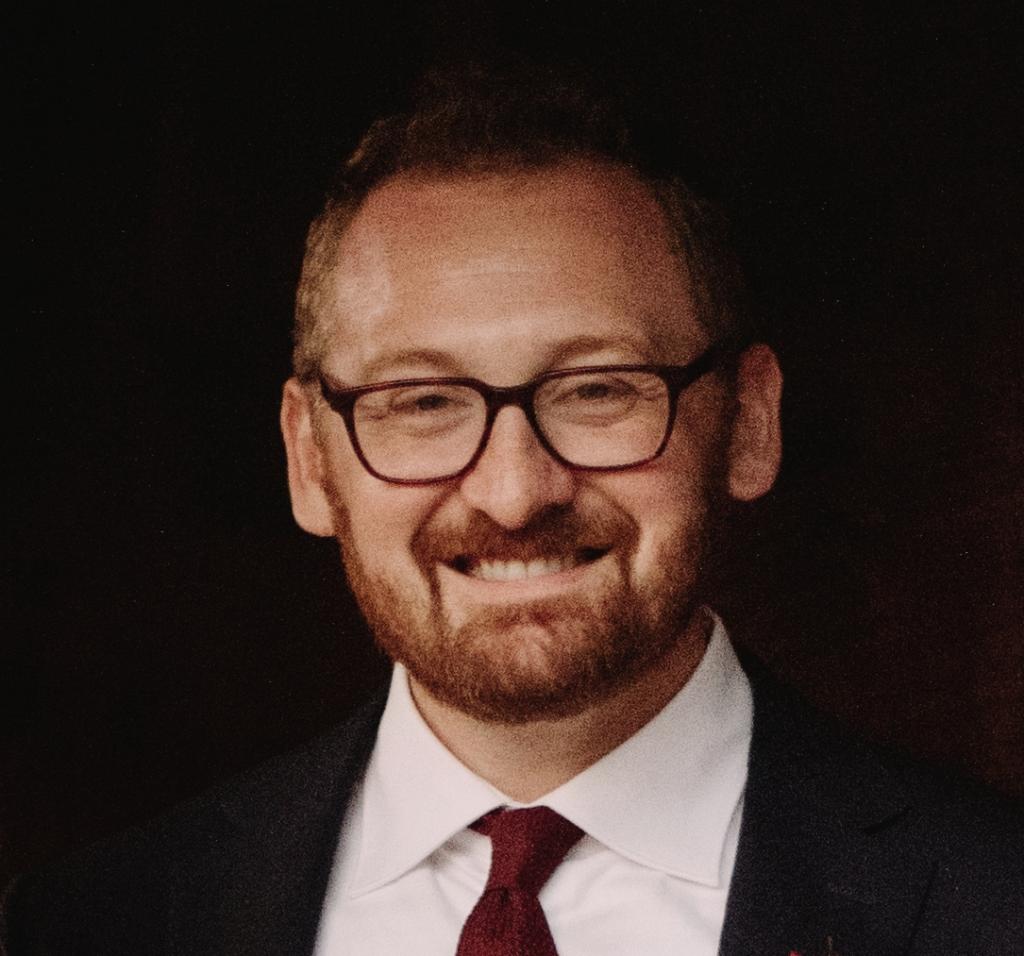

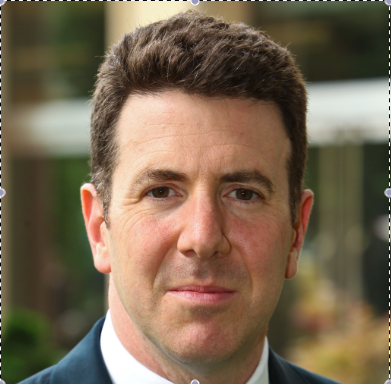


On today's episode, Lawfare Senior Editor Scott R. Anderson sits down with several leading experts to break down the recent ceasefire between Lebanon and Israel and what it might mean for their ongoing conflict, and the broader conflict with Iran.
Joel Braunold is a contributing editor at Lawfare as well as the managing director of the Center Project. Dan Byman is a foreign policy editor at Lawfare as well as the director of the Warfare, Irregular Threats, and Terrorism Program at the Center for Strategic and International Studies (CSIS). Mona Yacoubian is the director of the Middle East Program at CSIS.
Together, Scott, Dan, and Mona first discuss the contours of this latest Israel-Lebanon war, the nature of the ceasefire, and what will likely be needed for it to lead to a more enduring and stable resolution of the conflict. Scott and Joel then sit down separately a day later to specifically discuss Israel's view of the conflict and approach to the ceasefire, and what recent events might tell us about, among other things, Israeli-U.S. relations.
To receive ad-free podcasts, become a Lawfare Material Supporter at www.patreon.com/lawfare. You can also support Lawfare by making a one-time donation at https://givebutter.com/
Click the button below to view a transcript of this podcast. Please note that the transcript was auto-generated and may contain errors.
Transcript
[Intro]
Daniel Byman: I will
point out, this is a very unilateral approach to this whole problem, where
Israel is simply saying, look, we're gonna solve this by removing the threat
completely, rather than negotiating over it or otherwise trying to build up
alternatives to Hezbollah.
Scott R. Anderson:
It's the Lawfare Podcast. I'm Senior Editor Scott R. Anderson, here with
Dan Byman and Mona Yacoubian of the Center for Strategic International Studies,
and Joel Braunold of the Center Project.
Mona Yacoubian: Are
they able to reach some kind of interim agreement? I do not see the big
comprehensive deal that includes Iran's nuclear ambitions, et cetera, being
addressed in this round of talks.
Scott R. Anderson: Today,
we're discussing the reentc cease fire in Lebanon and what it may mean for the
broader region.
Due to some scheduling difficulties, I first sat down with Dan
Byman and Mona Yacoubian for a conversation on April 21st, then talked with
Joel Braunold separately the next day, notably after the Islamabad talks, which
were ongoing during my first conversation with Dan and Mona and had ended inconclusive
conclusively. Here's my first conversation with Dan and Mona recorded on April
21st.
[Main Podcast]
So we've seen a very eventful a couple of weeks, but
particularly a couple of days in regards to Lebanon. We know Israel started a
second front in Lebanon or engaged in a second front—I think it's a little bit
open for debate who started it after the initial conflict with Iran a couple of
weeks ago that has been ongoing and a point of tension as part of the broader
conflict with Iran.
As soon as the United States and Iran hit upon a two weeks
ceasefire about two weeks ago now, we saw what some have described as the Black
Wednesday strikes on Lebanon by Israel, aggressive and tactically, impressive.
I think it's fair to say set of strikes hitting hundreds of hundred targets in
a short window of time, inflicting a lot of damage on Hezbollah infrastructure,
hitting targets in Beirut and other parts of Lebanon as well.
But that has proven to be a diplomatic point of concern for the
broader U.S.-Iran discussions, which led the United States to push for and
apparently successfully secure late last week a ceasefire between Lebanon and
Israel. A particular sort for the next or for 10 days. We're now about a week
from out from today.
So Dan, I wanna start with you. Talk to us a little about where
this ceasefire leaves this conflict. As, as far as we know that the Israelis
are trying to secure, basically have secured at this point control of a kind of
security strip in southern Lebanon that raises sovereignty concerns, raises
political concerns for Lebanese, for many others.
We also know that there is, while this is a ceasefire, there
have been some rules that seem to be a little bit of an evolving target about
the types of action Israel is allowed to take, particularly in that protective
ban. So talk to us about where the ceasefire leaves this conflict at this
particular moment, and how that fits into the strategic vision that Israel at
least has been pursuing in terms of what it's trying to accomplish.
Daniel Byman: So the
ceasefire leaves Israel in physical possession of parts of Lebanon, and also
the ability to control, or at least shape, I'll say the kind of who goes in and
who goes outta other parts of Lebanese territory near its border. So right
along the border, there's a strip that Israel has declared. That effectively is
not annexed territory in a legal sense, but that this is territory that is
going to be an Israeli buffer zone.
And beyond that though, there are areas where Israel is telling
Lebanese not to go, not to return to. And these areas will be areas where
Israel wants to control who lives there, wants to control the activities there.
And then you can think of a further strip where Israel is seeking that the
Lebanese government exert control.
And some of these are due to geography, but part of it's simply
due to weapons rage. So the strip immediately along the Israeli border part of
the reason for his distance is because that's the rough range of anti-tank
guided missiles, which Hezbollah has been firing into Northern Israel and
Israel's belief, which I think is correct, is that if it controls that
territory, it reduces the effectiveness of this particular weapon system.
However, and this is a very important, however, Israel has set
very vague and some grandiose goals for this operation where it wants to
devastate Hezbollah. But this is an organization that is deeply rooted in
Lebanon, has thousands of fighters. And even after what, at least what I
would've characterized as devastating Israeli attacks and many wars in 2004,
and then numerous follow-on attacks in the months that followed.
Hezbollah is still probably the strongest single organization
in Lebanon. So many Israelis are looking and saying, yes, Israel has achieved tactical
benefits on the ground for Israel in terms of creating some security space. But
Hezbollah itself is still strong and Netanyahu’s critics, of course,
politically are eager to point this out.
I will point out this is a very unilateral approach to this
whole problem, where Israel is simply saying, look, we're gonna solve this by
removing the threat completely rather than negotiating it over it or otherwise
trying to build up alternatives to Hezbollah.
Scott R. Anderson:
That gets to one of the challenges that I think this military operation
presents to Israel, which is that in terms of a domestic political situation,
we know big swaths of northern Israel have been evacuated substantially under
threat when not evacuated really for the past several years to some extent
because of the tensions and infrequent hostilities with Hezbollah, particularly
over the last several months.
Domestic figures in Israel, the leadership in various quarters
have signaled look a goal of this operation to let people go home to the north.
But to what extent, Dan, is there a sense that you can create enough stability
through these military measures to allow that return?
Or is there going to have to be some sort of diplomatic
solution? And do we have a sense about the Israelis acknowledging that in terms
of getting to the level of confidence that they won't have rockets and other
things coming in that will force a further evacuation or otherwise inhibit life
in northern Israel, which has been a real hardship a lot of Israelis have been
experiencing.
Daniel Byman: So in
my view, in the end, this is gonna have to be a diplomatic solution. Now I
think Israel's approach though is diplomatic solutions are temporary,
diplomatic solutions signal weakness, and their post-October 7th security
policy is very much, we can't trust the intentions of our adversaries. We have
to make sure their capabilities are weak. We have to effectively cripple them.
And Israel's taken that approach, obviously in Gaza but also
Lebanon is now trying to do so in certain ways with Iran. But if you look at
Hezbollah simply because of its extensive networks within Lebanon, it's going
to be very hard for Israel or anyone else to uproot it completely.
And so it's going to be there. Yes, if it's weaker, it's gonna
pose less of a threat. But in terms of disrupting the lives of Israelis living
in northern Lebanon, the occasional rocket attack can do that. And so to me,
this has to come from some sort of effort where there are restrictions on
Hezbollah, where the Lebanese government is built up.
That's a very painstaking effort. It's going to have lots of
fits and starts. I could see why there would be frustrations with it, but to
me, in the end, it's the most realistic, long-term alternative as opposed to
military operations every couple years that pushes Hezbollah back, devastate
Lebanon, but still cost disruption from many Israelis despite the suffering on
the Lebanese side.
Scott R. Anderson:
And let's talk and shift our focus to the Lebanese side. Mona, let's start with
just a clear understanding about what this conflict has meant for Lebanon and
for the thousands of Lebanese civilians that have been caught in this conflict.
Give us a sense about the humanitarian situation that is facing Lebanon, its
urgency, and particularly southern Lebanon.
Those areas that have been most targeted by military operations
and now by an Israeli military occupation.
Mona Yacoubian: I
mean, it's been pretty devastating for Lebanon, this conflict that kicked off,
I guess, March 2nd. And it did start with Hezbollah shoot, you know, shooting
off drones and missiles in protest or in solidarity with Iran following the
Israeli-U.S. strikes that led to killing of Ali Khamenei, the supreme leader.
When I say devastating, I mean devastating. Like more than a
million Lebanese have been displaced. There are numbers as up to 1.2 million,
at least 20% of the population. The majority of them, Shia from the south, as
well as from the Hezbollah dominated suburbs in southern Beirut. The, and this
has had an enormous effect because they have been increasingly constrained in
terms of where they can go.
This speaks to the underlying sectarian tensions in Lebanon
that have been exacerbated by this latest chapter in the conflict where you
have confessional communities who are simply not willing to host displaced chia
for fear that they too will come under bombardment.
Some of this has been reported in the New York Times, where the
New York Times is reporting that there are even Israeli military commanders
noting to villages in southern Lebanon of other confessions, do not allow
displaced Shia to come and seek safe refuge in your midst. And so they have
refused. And so what you're seeing is that these displaced are actually in a
smaller and smaller, more narrow confined part of Lebanon.
For example the population of Beirut has increased by 50%, and
the majority is in Wwest Beirut, which is predominantly Muslim rather than in,
in east Beirut. So you're seeing this enormous displacement. Of course, there
have been an estimated more than 2000 Lebanese killed, which is a significant
number given again, the country's small population.
And then this has also had devastating economic impacts. This
is a country that was already dealing with compounding crises, beginning with
the collapse of the economy in 2019, followed by the COVID crisis and the
Beirut port explosion in August. So this, they've been contending with crisis
upon crisis upon crisis.
It's estimated that the country witnessed a five to 7%
contraction in GDP just in the five weeks since this latest conflict has kicked
off. So it's really put Lebanon on the back foot, and in many ways, I think put
it sort of at the precipice of even potential collapse, if in fact conflict
resumes.
Scott R. Anderson:
Part of the demands that the Israelis have made that inter—other people in the
international community have suggested would be at least a useful step if not a
hard demand, is the idea of disarming Hezbollah and minimalizing its political
role.
Hezbollah has been, I think, arguably I think most people agree
the, if not among the, if not the most powerful political actor in Lebanon,
both within the political system and outside the political system as a separate
armed group. So talk to us about the extent to which that's even a realistic
demand, and how the Lebanese government has been engaging, both the
negotiations with Israel and with Hezbollah, how they're trying to navigate
this relationship between this powerful domestic actor and the demands of
Israel, its neighbor who is with whom it's in an armed conflict.
Mona Yacoubian: It's
extraordinarily complex and I think Dan laid out well the dimensions of the
challenge. Let's go back because I think this really sort of begins in 2023,
2024 in particular, 2024 when Israel responded with a pretty significant
offensive beginning in September with the pager attacks that then, and then
ultimately the decapitation strikes that led to the killing of Hassan Nasrallah,
the very charismatic Hezbollah leader and very significant assassinations down
two and three levels of Hezbollah leadership as well as, you know, eroding—
Although clearly not completely it's arsenal of missiles. This
then led to eventually a Biden administration mediated or negotiated, I should
say, ceasefire in November of 2024, which really left Hezbollah decimated very
much on the back foot and frankly paved the way for a very significant
political transformation that we have seen in Lebanon in the ensuing months.
It paved the way for the first time in decades the election of
a president and a cabinet, really not under the sway of Hezbollah and
Hezbollah's political power. And this is significant and I think with it came
real hope that the country could embark on a trajectory in which it would be
able to regain its sovereignty to address longstanding need for reforms—
Economic, political, judicial reforms, address longstanding
challenges with pervasive corruption, and there was hope at that time, in the
intervening times, taken quite some time, but eventually you had the Lebanese
government, in fact announce a plan to disarm Hezbollah throughout the country,
which is again significant.
They began this phased plan. It was to become out in five
phases in September. Announced the completion of the first phase of that
disarmament in early January of this year. Now, by most accounts, that
disarmament plan proceeded far too slowly. It was far too timid and there are
real concerns and questions about whether Hezbollah was re-arming faster than
the Lebanese government could disarm, or the Lebanese armed forces in
particular.
But again, very complex question because there are issues about
the capacity of the lift to undertake this disarmament operation. The need for
more resources from the us. And others and just real questions about how to
indeed uproot this deeply entrenched militant group. The other point I'd make
though, is I think one of the lessons learned is that disarmament in Lebanon to
be successful has to be a whole of government effort.
It can't simply be the kinetic action needed to take
Hezbollah's arms away, but rather has to really get to the root of how it has
built its support within the Shia community. It has to, we have to look at
things like economic off ramps for an example, but also kind of how the
government. Can actually regain its position as a central government that takes
care of all Lebanese citizens. So there has to be engagement with the Shia
community as well.
Last point I'll make is that while it's understandable why
Israel is doing what it's doing, given its post-October 7th security doctrine
and the need to sort of preempt threats outside of Israel before they
materialize into attacks inside Israel.
We also have to understand that this desire to create a buffer
zone, a security zone in southern Lebanon simply feeds into Hezbollah's
narrative of resistance and allows them to point to this Israeli occupation as
a rationale for why they should be able to continue to hold their arms.
Scott R. Anderson: So
Dan, Mona mentioned the involvement of outside forces, and there's at least one
presence that we should mention in discussing this conflict that's been there
on the border between Lebanon and Israel for the last several decades.
That's the United Nations interim force of Lebanon, UNIFIL, a
UN peacekeeping mission. Our monitoring mission, I perhaps should say that's
been there since the end of 1978. Israel-Lebanon conflict, was originally set
to wind up its mission next year, but has already been caught in the middle of
this conflict, including having many personnel injured, I believe a couple of
them killed.
And potentially being involved either accidentally or by some
accounts being targeted by different sides of this conflict. Talk about the UNIFIL
mission, the role it is playing or isn't playing in this current conflict, and
perhaps what it might signal in terms of the involvement of the United Nations
or other elements of the international community, any potential resolution to
this conflict.
Daniel Byman: So the UNIFIL
mission in my view kind of has always been a disjuncture between what
peacekeeping was, you know, imagined to accomplish, but the actual powers and
authorities given to the troops in question. So the hope was that, you know, this
would keep the peace between Israel and Lebanon and that these troops would be
an assurance to both sides, and especially to Israel, that Hezbollah or other
groups would not do attacks from Lebanon into Israel.
There would not be cross-border attacks, and at the same time,
the presence of UN troops would discourage Israel from doing its own operations
because of the risk of creating international complications. At the same time,
the UN president would serve to—and it would say that there are violations,
whether on the Israeli side or by Hezbollah or the Lebanese side.
The problem though is the mandate given to UNIFIL was
exceptionally cautious. The troops that were in there were a mix of
nationalities. Where they were not there to keep the peace in a broader sense,
and they're there to try to keep the peace between, you know, Hezbollah and
Israel, both of which are exceptionally powerful actors compared to UNIFIL on
the ground.
And well before October 7th, Israelis were very frustrated
because they found that Hezbollah had reestablished its presence along the
Israeli border, and they saw this as a direct threat. And then after October
7th, they worried that Hezbollah, which is much stronger than Hamas would be
able to do a similar attack, but perhaps even more lethal. And that UNIFIL
would do little.
Israelis complain, I think with some justification that when
they brought violations to UNIFIL’s attention, not much happened. And the UN in
general has is very negatively perceived among Israelis and they see UN
agencies as having bias against Israel. So this fed into a broader narrative
that you could hear about Palestinian refugee camps and UN support in Gaza or
the West Bank, or critical UN resolutions.
And in reality, I think that the UN presence simply wasn't
matched to what was realistic here. That it, this was not gonna be a UN force
that was going disarm Hezbollah or enforce a peace against very powerful
adversaries. And so, in a way, it was kind of the worst of all worlds. You had
this group there that was I think bound to disappoint both sides.
At the same time, was putting its own forces at risk and was
simply, you know, a presence without being able to complete any serious
missions.
Mona Yacoubian: Yeah,
I would agree with's exactly how Dan has framed it. But I think it then teed up
another question, which is, as the UNIFIL mandate was coming toward a close,
then what?
What fills that vacuum? And this is of course, before this
latest iteration of the conflict, and there was no Israeli occupation in the
South other than post-November 2024, ‘25 posts along the border. But this was,
this sort of elevated, I think the urgency for, Okay, if Lebanon is to regain
its sovereignty with a weakened Hezbollah, then the Lebanese armed forces need
to fill in those areas that ultimately are going to be vacated by UNIFIL.
And this sort of then added to, I think the pressure that its
capacity, the laughs capacity needed to be built out. And that this was yet
another argument for why there needed to be more support. And again, I should
note with Lebanon's devastating economic crisis, Lebanese Armed Forces soldiers
were making a pittance.
Certainly compared to Hezbollah recruits, there was
longstanding concern. There were some of them time, sometimes they were holding
down more than one job, even though these are, you know, members of the
Lebanese Armed Forces. And so this is why I think this pressure or these
questions about what is the disposition of southern Lebanon post UNIFIL and how
to ensure that as a Lebanese government seeks to strengthen its sovereignty
throughout the country to gain a monopoly over arms, as it's called in the country
that it's the need to bolster the laff, I think was, you know, even became even
more important once it was clear that the UNIFIL mandate was not going to be
renewed.
Scott R. Anderson:
There is of course, at least one other significant actor we should talk about
in relation to this conflict, particularly for this audience as we have a
mostly American audience that is the United States government.
The United States obviously played a pretty significant role in
pushing the ceasefire, particularly in persuading the Israelis to get on board.
We saw a fairly unusual social media message from President Trump essentially
declaring the ceasefire, insisting that there would be no violations, making
fairly strong statements about the Israeli position.
We've seen equally interesting comments by Tom Barrack, the U.S.
ambassador to Turkey, who's also a special envoy to Syria just the last few
days. Essentially describing both sides of this, of the ceasefire as equally
untrustworthy, I think is the quote. I saw. So, some unorthodox diplomacy
saying the very least, and some clear tension between the United States and to
some extent both sides, both Israel and Lebanon, although notably the president
said actually very nice things about the Lebanese government in his social
media message.
And there's been some more positive messaging there. So, Mona,
lemme start with you and Dan, I'd welcome you to supplement this. Talk to us a
little about what American engagement has looked like so far, how productive
it's been, direction seems to be pushing in and how much follow through you
expect to see.
They seem to be signaling, they may be following through to
deliver these sorts of support that, as you described, Mona, it's likely to be
necessary to actually achieve a meaningful and enduring ceasefire in this
conflict.
Mona Yacoubian: Well,
I think U.S. engagement on Lebanon has been episodic. You know, it's been up
and down depending on the circumstances.
I think most recently, of course, our attention pivoted to Iran
with that conflict. But even before, I think there's a sense from some
observers, I would put myself in that category. That again, with this
decimation of Hezbollah, with this new government in Lebanon, there was an
important opportunity to seize, to try to help build up the Lebanese armed
forces as an important counterweight to Hezbollah and to help push through this
project of disarmament.
Well, I think what we've seen now is, as I said, this sort of
episodic engagement on the part of the United States at times, you know,
pressuring the Lebanese government, which I think is incredibly important.
Also, pushing on the Israelis. for necessary restraint. But I think what's
missing is sustained commitment to this project, and I fear that without the
United States playing a key role, things can very quickly unravel.
So let's see what happens there are, there's a second round of
negotiations slated to take place later this week on Thursday between Israel
and Lebanon mediated by the United States. This is, I think, an example of the U.S.
playing an important role here. But can the U.S. sustain its diplomatic
engagement and will there be continued support for the Lebanese Armed Forces,
which at times is controversial.
There are some on the Hill who are opposed to supporting the
Lebanese Armed Forces. And so that's another impediment I think moving forward.
Scott R. Anderson:
Dan, anything to add on that?
Daniel Byman: Yeah,
lemme just briefly add, I think Mona really is stressing to me the most
important point, which is sustained engagement.
Right? And you could say sustained pressure and sustained
diplomatic attention. The United States has often treated Lebanon as an
afterthought, and so it's linked to Israel, Israeli wars with Hezbollah, where
the United States might become engaged. And now with of course, the broader
Iran war, but the Trump administration's focus perhaps understandably, is very
much on the Strait of Hormuz and on Iran.
And so it is seeing Lebanon as a way of, as a distraction and
something that might be an impediment to a deal that is working towards with
Iran as opposed to an important theater in its own right. That is a source of
regional instability. That needs sustained attention because the disaster that
has been Lebanon since, well before the October 7th attacks, really has the
potential to pull in other powers, not just Israel.
And that sustained instability could be a long-term problem
that if the United States doesn't really take advantage of to me, what is a
genuine moment to move things forward right now, it's really gonna be a missed
opportunity.
Scott R. Anderson: So
Mona, you recently published a piece in foreign policy laying out what you
think the United States, Lebanon, Israel, the other actors involved should do
to make the most of the ceasefire to make progress on disarming Hezbollah and
towards working towards a more sustainable solution for all parties here. Talk
us through what you think needs to happen and where we are seeing progress and
where we may be falling short.
Mona Yacoubian: Yeah,
so I do think as I call the piece a moment of reckoning, which I believe it is
in particular for where Lebanon, with Hezbollah, with Israel, with its own
population. I do think it's also an opportunity.
But to your point, Scott, it is essential that this opportunity
be seized. It's a very narrow window. So in the piece, I certainly laid down a
clear-eyed view. Of all of the various challenges that lie ahead, but I do
think there are important steps each actor can take to move the ball forward if
the ultimate goal is lasting peace and stability, both within Lebanon and I
very much concur with Dan’s point that stability in Lebanon is critical, not
just for Lebanon, but has regional implications.
And so in this regard, what I call for is: number one, that the
Lebanese government does have to continue to demonstrate its commitment,
especially now the tour disarming Hezbollah, especially now that there is a
ceasefire. And one way to do that is to move forward on a plan that has been
floating around to disarm Hezbollah within Beirut proper.
Which on some level would be quite symbolic. You don't have a
major Hezbollah presence inside Beirut proper, but nonetheless, very important,
especially the Lebanese government demonstrating its control over its own
capital. It also, I think, would go a long way toward, or some way, let's say,
toward diminishing concerns within other confessional communities about Hezbollah
elements within the midst of displaced Shia.
So I think that's an important step to be taken. We've also
seen, I think, a lot of courage on the part of the Lebanese president. He gave
a really powerful speech last week in which he raised the possibility of
building on the ceasefire and really ushering in his words, you know, a new
chapter, a new stage for Lebanon, and he talks about negotiations with Israel,
not as a concession, as it's often portrayed, but actually as an important
entry point to moving the country as a whole forward. And so I think, you know,
that kind of building of political support is also really important.
For the Israelis. I think it's all about restraint. I think
that it is about seeking to maintain this ceasefire. The ceasefire does give
Israel wide latitude to undertake strikes against not only imminent threats,
but even planned threats. And so I think restraining itself and not undertaking
all of these different strikes is important. I also think it's important for
Israel not to broaden. Its target, set target against the Shia community in its
entirety, which I think has all kinds of negative implications and escalatory
implications within Lebanon and also with Israel.
And lastly, I really highlight, as we've been talking about for
the U.S. as essentially indispensable here, both in terms of its diplomatic
role, its pressure to both parties, to both Lebanon and Israel, but also, again,
to providing support, if not directly, then also catalyzing key actors, the
World Bank, for example, and some Gulf partners who also have an important role
to play here in supporting the Lebanese government as it seeks to exit from
this multifaceted crisis that it's contending with.
Scott R. Anderson: So
Dan, we would be remiss if we did not acknowledge the broader context in which
this ceasefire has been accomplished and which these negotiations are ongoing,
and that is the broader conflict between Israel, Iran, and the United States.
Media reports suggests at least that a big part of the reason why the Trump
administration pushed so hard for this ceasefire was because the issue had been
linked to its ongoing efforts to get a ceasefire with Iran and the reopening of
the Strait of Hormuz and resolution of a variety of other issues, I think some
of the specific reporting noted that they needed essentially some breathing
room to get some resolution on the Iran- U.S. and to some extent like Israeli
negotiations. And that ultimately is what persuaded them to put enough pressure
on the Israelis to concede to the ceasefire.
Now, at least, according to some reports, there's a goal or a
hope on the part of the US administration to de-link these two issues, be able
to get a separate track going on Lebanon that isn't contingent upon Iran-U.S.-Israeli
negotiations, which are ongoing as we speak in Islamabad, Vice President Vance
is there.
And of course the two weeks ceasefire there ends I think
tomorrow we're recording this on the 21st, so I believe it's set to expire
tomorrow. Talk to us about the challenges of delinking. These, to which extent
these two conflicts are inherently linked, and whether there is a path forward
to potentially being able to segregate out the Lebanon issue, make progress
there. Even if progress on the other fronts of the Iran- U.S.-Israeli conflict
might lag or they too integrated that trying to address them separately is
unrealistic.
Daniel Byman: So I
would say that it is realistic to address them separately in times of peace,
but at present it's not realistic to address them separately.
And lemme go into a bit more detail on that. So right now, as I
mentioned. Israel feels that the job is at best half done in Lebanon and that's
a very important point politically in Israel, where Netanyahu is being
criticized for not doing enough against Hezbollah. And he clearly has agreed to
cease operations because of U.S. pressure.
But should events in Iran go south, which to me is, I don't
wanna say likely in a long-term sense, but I'll say there will certainly be ups
and downs and I could easily see moments when the United States decides to
resort to limit uses of force. Once that happens, I believe Israel's going to
try to seaside and use force in Lebanon.
That it will say, okay, you know, we stop this in order to
encourage the Iran deal. That's not happening. Therefore, we don't have to stop
anymore. So I think you're gonna see Israel waiting for that moment because it
feels that it shouldn't have stopped in the first place. Also, from Hezbollah's
point of view, this is a group that, as Mona pointed out, started the latest
round of attacks in solidarity with Iran. And now that was not something that
the vast majority of the Lebanese people wide, it was criticized by the
Lebanese government for doing so. But it has historically always had an
extremely close relationship with Iran and that continues.
So you're gonna see both Hezbollah and Iran and Israel all
seeing this as an interwoven conflict. Now at times, different times in
different historical periods, they've been able to separate where you haven't
had conflict between Israel and Iran. It's been more of a proxy battle within
Lebanon. It's the United States that really sees them as quite different, and I
don't think U.S. preferences are gonna easily carry through, given how all the
other actors see the conflicts as interwoven.
Scott R. Anderson: So
obviously we are entering into a delicate moment, both in the next 24 to 48
hours between Iran, the United States and Islamabad, and over the next week
between Israel and Lebanon, other parties in the Middle East. As we watch
events unfold over the next few days, what will you all be looking for and what
should our listeners be looking for to get a sense about what direction things
are headed in?
Mona, I'll turn to you first and then Dan, I'll give you the
last word.
Mona Yacoubian: Well
first let's see if these talks actually come off in Islam bot. 'cause I think
there's some conflicting reports as we speak at 2:45 PM on April 21st,
Washington, D.C. time. And then if they do come off, are they able to reach
some kind of interim agreement?
I do not see the big comprehensive deal that includes Iran's
nuclear ambitions, et cetera, being addressed in this round of talks. I also am
not, it's not clear that President Trump is going to issue yet another
extension of the ceasefire deadline. We've seen him do that a few times. I
think each time he does it, his credibility is eroded and the Iranians come
away feeling that they have the upper hand.
So I'm gonna be watching for what happens in Islamabad, and
then what happens in Washington, D.C. Is there some way to build on this very,
very fragile momentum that has started between Israel and Lebanon in their
efforts to seek some kind of modus vivendi? Let's say it like that. And then in
particular, what do we see happen inside Lebanon?
We haven't really talked, I had not really addressed much the
simmering sectarian tensions, which are not insignificant and the very, very
tenuous nature of the extent of the situation on the ground in Lebanon. Is
there something that happens that in fact leads to an unintended or unexpected
outcome?
And I agree with Dan as well on the role that Hezbollah could
play, for example, as a spoiler, if things go south between the U.S. and Iran.
There are all kinds of ways in which this very fragile and very tenuous
progress can be derailed. And unfortunately, then we're back to conflict both
with Iran and also between Israel and Hezbollah and Lebanon.
Daniel Byman: I think
Mona summed up the big points very nicely. So, let me just briefly add a few
small points. One, first of all, does the Lebanese government continue to push
against Hezbollah,? As Mona has pointed out in a foreign policy piece and in
her remarks, this is a big step and this is something that the United States
should be building on.
We have to recognize that it's incomplete and there's a huge
distance to go, but it's something that should be supported. But if they don't
feel they have the support, they're going to be very cautious and recognizing
that their own position within Lebanon might be weak. So that's one thing I'm
watching is how strong will the Lebanese government be as they're asked to do
more and more.
The second is politics within Israel. Are Israelis who are
exhausted by war still wanting this conflict to continue, even if it might drag
on, and the answer right now seems actually to be yes. Where many Israelis,
especially supporters of Netanyahu, believe that this is incomplete and Israel
needs to finish the job.
But how pressing a political concern is that? to me is a very
important factor because all elections are coming up in October in Israel.
Netanyahu is a very political creature, and I think he's gonna be looking at
home as much as strategically as he decides his next steps.
Scott R. Anderson:
Well, we will all have to keep our eyes peeled for developments along these
various avenues, but until then, we are out of time.
Dan, Mona, thank you for joining us here today on the Lawfare
Podcast.
Mona Yacoubian: Thank
you, Scott.
Daniel Byman: Thanks
for having me, Scott.
Scott R. Anderson:
Now here is my second conversation with Joel, recorded the next day on April
22nd.
So Joel, we've been talking about the ceasefire in Lebanon.
Remind us what has been the Israeli posture towards this latest round in the
conflict with Lebanon?
You know, what's triggered off, what its demands have been and
the condition that led to it accepting the ceasefire.
Joel Braunold: Well
during this war with Iran, I think early on the question was Hezbollah going to
join in? And quite early on, I think it was in three days of the war, there was
a rocket or a missile that was fired.
And in many ways the Israelis said this is proof that Hezbollah
is still there, that the disarmament that was supposed to happen after the
previous ceasefire 2024 hadn't worked and we're gonna go in. And they went in
extremely hard. There was a big grand maneuver. And the IDF went and to try and
create a buffer zone within south Lebanon.
So there's a question about whether the Israelis were waiting
for an excuse or whether Hezbollah gave them an excuse, but Hezbollah did and
there were questions and some commentary about whether this was Hezbollah or a
rogue IRGC commander. In many ways, it's irrelevant to the Israelis. The north
in Israel since October 8th, so the day after October 7th had been being
shelled by Hezbollah, and it's been under significant threat.
Unlike in October 8th, though, when Israel evacuated the
communities in the north they were determined not to evacuate the communities.
And so Israel decided to say, we're going to clear up to the Litanis, so the
whole of South Lebanon, we're gonna push all of the population and we're gonna
actually flatten.
Their words like we're gonna, or the words of cats, the defense
minister, we're gonna do to the buffer zone around South Lebanon. And those
villages, we're gonna flatter them like we did in Gaza. And by doing so, we're
gonna create a real buffer of, I think 10 kilometers that we're just gonna
permanently occupy.
Or at least until, you know, Hezbollah has been fully disarmed
and whatever else, and we're gonna try and push the entire population north of
the Litani and bomb the bridges over the Litani to prevent Hezbollah from
coming back. And so it, the Israeli operation was very clear to say, look,
we're gonna need strategic depth in Lebanon in order to prevent this rocket
fire.
And yet. This military ground operation is very reminiscent of
when Israel had previously occupied South Lebanon. That was from the eighties
until the government of—in the early two thousands. And so you've got this
generational trauma where parents and grandparents of soldiers who had occupied
South Lebanon and now sending their children and their grandchildren to do
exactly what they had done before.
And so that, unlike other arenas, there's a real reticence in
Israel about this particular grand operation. Because also there's a question,
you know, if you push Hezbollah north of the Litani, well, you know, missiles
and rockets can still fly. It might be that they have less rockets 'cause it's
a further range, but it's not like they have no rockets.
And throughout the war with Iran Hezbollah after this was, has
been firing mercilessly rockets into the north and there's been mass
frustration from the residents of the north, from mayors and city council
members and everyone who said that the north is being destroyed and that
they're complaining that there's been a historic underinvestment in bomb
shelters by the government.
And so there's a deep level of anger and frustration of the
northern residents and a weariness to say, why will this time be any different
from previous times? Like, if you are telling us at the end of this. The threat
will be over, great. But if you cannot get rid of this threat through military
force alone, figure something else out because we can't live like this anymore.
And I think that's why you've seen a huge pushback about this
concept of a ceasefire in the north, because if it's just gonna keep the
problem happening again in six months, we can't live like this. So if you're
going to make a deal that truly ends this but if you're not making a deal that
can truly end this, then what was the point in any of this anyway?
Scott R. Anderson: So
this latest ceasefire, most of the reports suggest from the media that there is
a strong role of U.S. pressure being put on Netanyahu and the Israeli
government to accept the terms. We saw a very kind of extraordinary social
media message by President Trump late last week essentially saying there will
be no violation of the ceasefire.
Giving some nice words towards the own government in Beirut for
their cooperation. We saw some other comments by Tom Barrack, just this last
few days, basically suggesting that both sides of the ceasefire are equally
lacking in credibility or equally untrustworthy in terms of enforcing its
terms.
So it, it's an interesting posture, the United States and the
Trump administration has taken both towards the ceasefire and to some extent
towards the Israeli government's engagement in this broader conflict talks
about the, what this tells us about the dynamics between the Trump administration
and the Netanyahu government, perhaps Israel more generally at this particular
stage.
Joel Braunold: I
think that one of the main reasons, or at least war aims that both the Trump
administration and the Netanyahu government at least could agree on, was about
preventing Iran's proxies in the region from threatening the region. The
Israelis have a major problem. We've discussed before on previous podcasts
about having non-state actors operating from sovereign territory of a different
territory, and that post-October 7th, they're not just gonna put up with it,
that if the government, if the sovereign government doesn't deal with it, the
Israelis will.
'cause they're not willing to be surrounded by Iranian armed
militias on their borders. It's just not gonna, it's not gonna fly anymore. And
so there was a real worry in Israel and there was a real red line that if the
Trump administration does a ceasefire in Iran in Islamabad and the Islamabad talks,
this can't cover Lebanon because if it covers Lebanon, you are reinforcing the
concept of proxies that what happens in Islamabad governs what happens in
Beirut, even though the government of Lebanon isn't there.
And so this is why you had this bizarre thing where the grand field
marshal and the prime minister of Pakistan announces cease far. And in their
tweet they say it includes Lebanon. You have the Israelis basically saying it
does not include Lebanon. And the next day on April 8th, the Israelis have a
massive bombing raid in Beirut outside of just the neighborhood that really,
truly shocks the Lebanese.
There was really no warning when people were picking up people
from schools you know, people were still digging through the rubble afterwards.
The reports are over 380 people were killed, hundreds were injured. The
Israelis say that over half of those were Hezbollah commanders. There's disputes
about who wasn't, but it was a deeply shocking moment for Lebanon.
And the Trump administration actually in my view, quite
smartly, tried to find a face saving way that they could get the ceasefire by
basically trying to broker this through the government of Lebanon and the
government of Israel. And therefore it's the Lebanese government asking for a
ceasefire rather than the Iranian IRGC basically who are doing it.
And in doing so, reasserting the serenity of Lebanon while
trying to maintain a ceasefire, which they also need for Iran. Now for the
Israelis, not only, you know, to agree to a ceasefire in Lebanon when Hezbollah
is still there and that the Israelis felt that they were hammering Hezbollah
and they were really pushing them back is a deeply difficult political
construct in many ways, even more difficult than the Iran ceasefire with the
Iranian ceasefire.
The Israelis can claim that they degraded the Iranians. You
know, there's all the talk, nothing I had promised, total victory. But him and
Trump are aligned about saying what they've achieved when it comes to Lebanon.
You know, it's very clear that the threat still exists. Hezbollah still is
there, and there's still a big skepticism about whether the government of
Lebanon has the ability to disarm Hezbollah.
And so what do you do? And so Bibi is suddenly, you know,
facing an election in six months with the North furious at him and his
opposition basically saying, look, not only have you now become a client state
of the United States that President Trump can literally write, you are
prohibited at destroying buildings.
'cause don't forget, the Israelis weren't just trying to fight Hezbollah,
they were trying to flatten parts of Southern Lebanon to prevent, you know, any
lived communities that could live within a 10 kilometer border of Israel.
President Trump's prohibited that, and suddenly Netanyahu is acting as if he is
a, a literal client, state of America because the president is dictating terms.
And President Trump announces this ceasefire before Bibi and
has a chance to call the Security Cabinet. So in many ways, he doesn't call a
vote of the Security Cabinet. He just does what President Trump wants. So
you've limited the Israeli decision making to literally just one man in this
case.
Prime Minister Netanyahu felt completely obligated given the
dependency on President Trump to give this to him. And then President Trump
further prohibits him from doing things in order to show strength. And so for
these, for Prime Minister Netanyahu, it's a very difficult moment.
So what do we see? You see in English, ironically in all in
Hebrew, a whole series of tweets from the Israeli Prime Minister's office
basically saying, look what you know, this use of force has taken us so far,
and now we're gonna have to try diplomacy to see if we can actually get rid of
this threat from Hezbollah once and for all by working with the Lebanese
government and other allies in order to strengthen this relationship and see if
we can have a historic peace agreement with the Lebanese and basically saying,
look, this promise that we will eventually have a meeting—
Though if you notice President Joseph Auon has not agreed to
meet with Prime Minister Netanyahu yet, and wanted to ceasefire first, which
he's gotten, and I think we'll try and delay having a meeting with Prime
Minister Netanyahu until he knows that he's not gonna give that sort of reward
before an election to Prime Minister Netanyahu if it doesn't come with real
rewards for Lebanon.
But the prime minister's basically moving away from what was a
very much October 7th thinking that just the utilization of power and military
power in and of itself was success, that we could just bomb our way to security
and say, no, you also need diplomacy. And in many ways, this is starting to
create the first formulations of post-October 7th thinking now that the limits
of power have been recognized and what I would say, Scott, is very important is
that if Prime Minister Netanyahu's current coalition that includes—and all
these things that we've spoken about before can come up to say, look, there has
to be a diplomatic answer alongside military pressure.
It gives space for a future government to also say, look, we
need to have diplomatic answers and not just military pressure. And so I think
that this move, even though it was coerced by President Trump quite clearly
onto the Israelis, is forcing them into a new format and utilization of force
doctrine that actually could be more promising for things moving forward than
more threatening.
But it requires this diplomacy to be successful, and to the
extent that the Trump administration links what happens in Tehran to what
happens in Beirut strengthens the proxy construct. And so what's gonna be the
test case if things go badly in Islamabad, and that war restarts? Does the war
restart in the north in terms of between Lebanon and Israel again, or does it
not?
Have they truly broken these proxies or have they not? I think
that's gonna be our big test case, because there will be tremendous pressure if
the war in Iran starts for the Israelis domestically to once again start in the
north as well.
Scott R. Anderson:
And that kind of gets to the core question. We've heard chatter from reports
from particularly U.S. administration officials about hopes of finding a way to
separate the Lebanese ceasefire from the broader Iran conflict.
Put it on a separate track, hopefully separate conversations.
Does that seem plausible to you all or are realistic. Is there an avenue to
towards doing that? And if not, what are the prospects of actually having a
successful lease ceasefire lead to a more enduring resolution of this conflict
if the Iran war, broader Iran war remains at its current point, which is still
an ambiguity around the ceasefire, but no clear resolution on either party nor
clear path towards one.
Joel Braunold: You
know, it goes to a central question about the war with Iran. Like, does Iran
control territory that it's not theirs? So can they really give the look the
Lebanese were furious, your average person, Hezbollah, for dragging them back
into this. Like, why should we, you know, Hezbollah is reacting more to the
assassination of a supreme leader than Hassan Nasrallah in some ways, right?
Like, you know what it is, but it also demonstrated to the
Israelis that Hezbollah still has a prominent and punch to it, right? It hasn't
been completely defeated, so. Can it succeed separately? I think that the
question is gonna be what does the government of Lebanon need? And you know,
when we talk about state to state normalization, there are breaking many
taboos.
You know, there's a, there's been media reports that there's a
push from the U.S. for the Lebanese to uproot theirvery infamous anti-normalization
laws that prevent Lebanese citizens from engaging with Israeli citizens. Now,
as someone who believes in peace building, I think it's essential that law goes
away.
But do you do it all at once? Instantaneously like the, you
can't. You need to push strong enough that you can overcome institutional
barriers to peace. But if you push too quickly, you could shatter the country
and very quickly get to civil var. And in many ways, one of the arguments that
the Shiite community that I've had is like, you know, Lebanon is a patchwork
quilt of different minorities, and there are compacts in that try and hold the
country together.
And if you move too quickly through too many taboos, just
through pressure alone, you could literally get into a scenario where you go
back to civil war, which is something that the Lebanese really fear. So how do
you do this successfully is gonna require both extreme smarts, diplomatic
nuance, patience, but not patience for patience’s sake.
And the ability to have strong partners behind the Lebanese
government that can give them enough strength, credibility, literal ammunition,
and economic ammunition to be able to disarm Hezbollah, which is something that
most, you know, not Iran, but people in the non-Iranian access do want to see.
They don't want to see armed militias that suddenly throw the region into
conflict again.
So the success will be, if the region can find a way to
strengthen the Lebanese to do this. And again, to the extent that this is tied
into a wider regional integrative picture, to the extent that this can also
help stabilize Syria, the extent that this progress somehow, not just on Gaza
but on the West Bank, if this moves into a wider regional framework of
integrating, I think that there's a good opportunity that this can be done.
But if you try and segment these things out from the rest of
the context, you just put the Lebanese government in an incredibly difficult
position of how do you simultaneously try and create a separate piece of accord
with Israel if other things are going on that are also creating crisis and
distress.
It doesn't mean that it's all or nothing. Of course, you should
be able to progress. It's in the Lebanese interest for them not to be Hezbollah
on the border, right? And for the, for them to be able to control one person
among that. And they don't want to be fighting with Israel. But the Israelis
also have to understand that therefore they're gonna have to demarcate
territorial border.
They can't just permanently occupy southern Lebanon, they're
gonna have to agree on Shabba farms and all these other things. So if the
Israelis can actually come up with real borders that they can negotiate with
the Lebanese and demonstrate at the same time they're not trying to liquidate
the entire future of the Palestinian national cause there's probably a way
forward in order to do that.
And we have seen, Scott, that whether it's in camps in Lebanon
or you know, in other parts in Syria, that at least President Abbas and some of
the PA factions, at least with ach, have tried to disarm Palestinian camps in
Lebanon to try and demonstrate that all militias in Lebanon should be disarmed.
So it's not just Hezbollah putting down its arms, but also some of the
Palestinian militias.
And the Lebanese in return have tried to change some of their
constitutional bans about some professions that Palestinians can work in, 'cause
they were trying to prevent the Palestinians from integrating into Lebanon. So
it's not just, you know, this weird left wing perspective that everything's
connected.
I mean, the Lebanese Israeli conflict is connected to the
Palestinian conflict because the amount of refugees in Lebanon and the
constitutional barriers, both in terms of engagement with Israel and in terms
of the integration of Palestinians into Lebanese society are part a parcel of a
similar picture, but.
One of the big questions in Israel that I think they're
struggling with is, do we want strong states around us or do we want weak
states around us? We know that, you know, we don't want non-state actors, so
you need to have a strong enough state that they can prevent non-state actors
from doing that, right.
So we know we want that, but yet if those states are dominated
by what we feel are regional competitors, if you have a Turkish-dominated Syria
or a Turkish-dominated Lebanon or whatever else, it might be an Iranian-dominated
Lebanon that's definitely not good for us. So we'd rather have a weak state if
it's gonna be dominated by someone else.
So for the Israeli strategic questioning, it's how do we create
a strong enough state that it can prevent non-state actors. And yet it's not
dominated by a different regional power that threatens us. That's a very
complicated scenario because if the Israelis continue to power project, it
inspires others in the region to counter power project and also work with
governments that are clearly more friendly to them than those that they've been
historically at war with AKA Israel.
So this is some, you know, what is Israel's sense of security
and how it can actually translate that into policy is one of these big
questions. And so how the Israelis handle the Lebanon file is gonna be really
interesting and indicative, I think, to many in the region about what maybe a
post-Iran conflict compact could potentially look like.
Scott R. Anderson:
There is a lot to monitor in that broad, interconnected picture you've given us
of this conflict and how it fits in the broader region. We'll have to turn back
to that at another time though, 'cause for now we are out of time. Joel
Braunold, thank you for joining us here on the Lawfare Podcast.
Joel Braunold: Always
a pleasure, Scott.
[Outro]
Scott R. Anderson:
The Lawfare Podcast is produced by the Lawfare Institute. If you
want to support the show and listen ad-free, you can become a Lawfare material
supporter at lawfaremedia.org/support. Supporters also get access to special
events and other bonus content we don't share anywhere else. If you enjoy the
podcast, please rate and review us wherever you listen. It really does help.
And be sure to check out our other shows, including Rational
Security, Allies, The Aftermath, and Escalation, our
latest Lawfare Presents podcast series about the war in Ukraine. You can
also find all of our written work at lawfaremedia.org.
The podcast is edited by Jen Patja with audio engineering by Noam
Osband of Goat Rodeo. Our theme song is from ALIBI Music.
And as always, thank you for listening.