Lawfare Daily: Trump's Board of Peace and What's Next for Gaza, with Joel Braunold
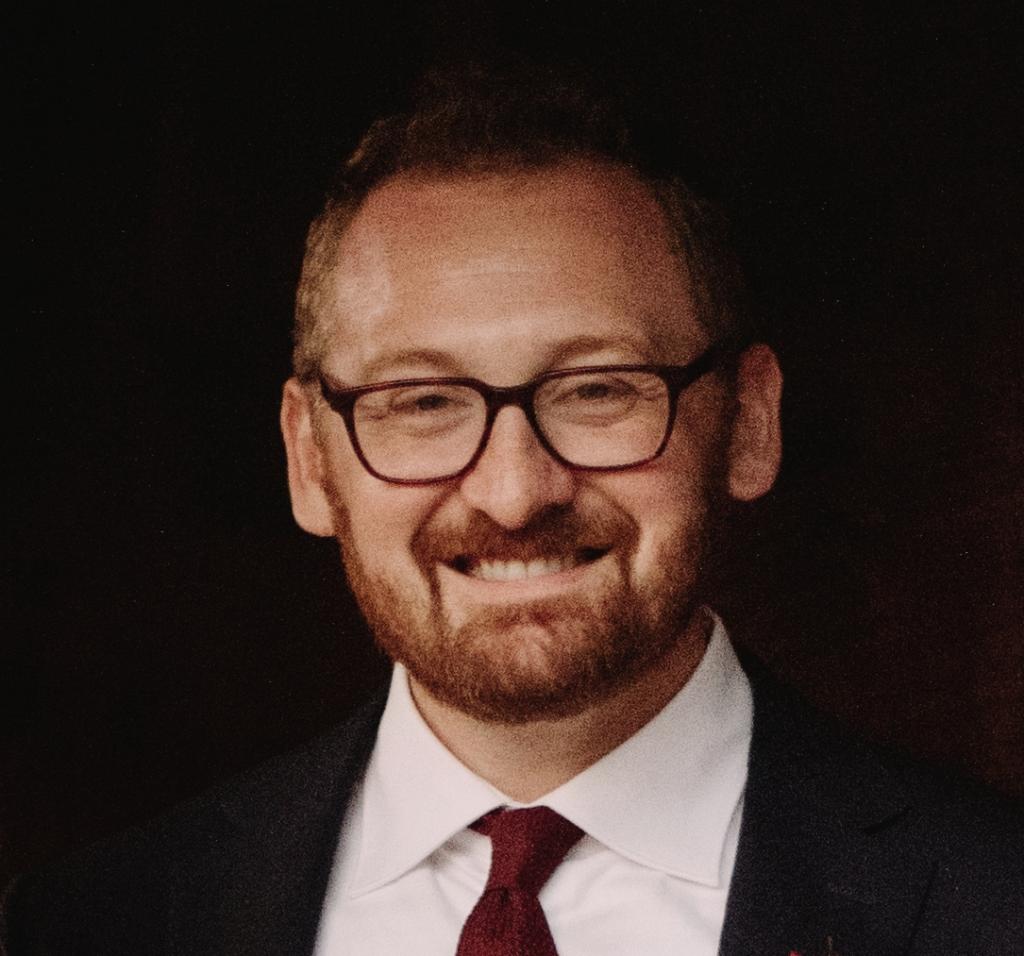
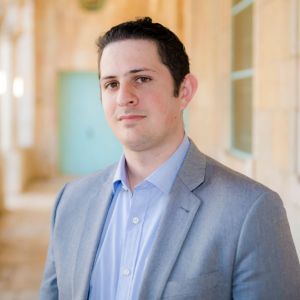
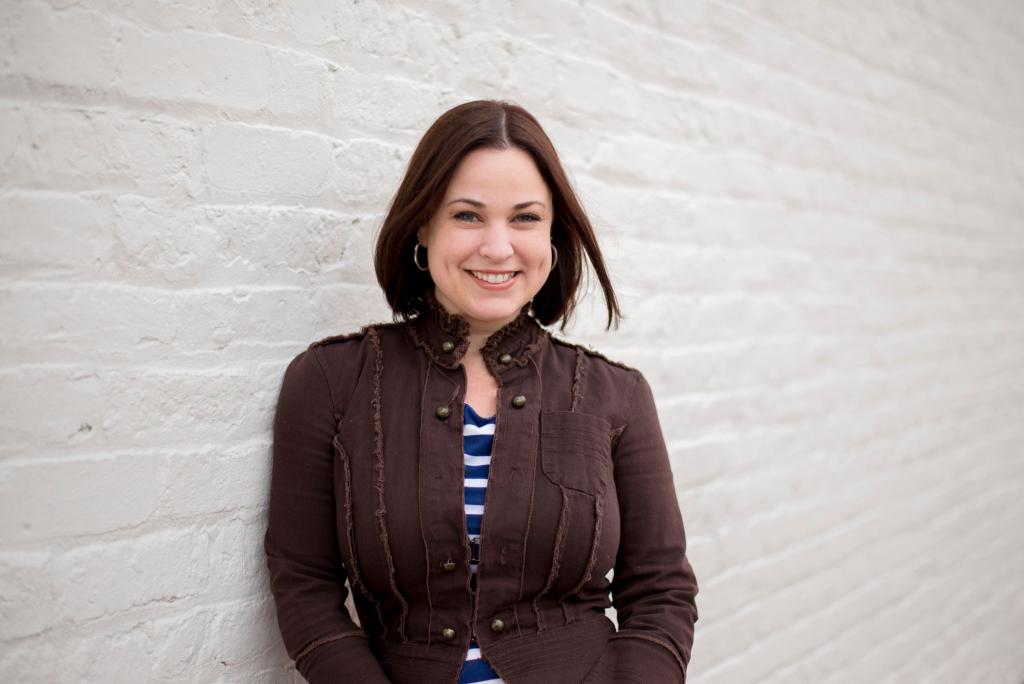
On today's episode, Lawfare Senior Editor Scott R. Anderson sits down with Joel Braunold, the managing director of The Center Project and a Lawfare contributing editor, to talk over the Trump administration's recently released plans for the Board of Peace tasked with implementing its peace plan for Gaza.
Together, they discuss the details of the plan, how it intersects with the Trump administration's twenty-point peace plan, the state of international relations surrounding the ceasefire in Gaza, and what it can all tell us about what might come next.
To receive ad-free podcasts, become a Lawfare Material Supporter at www.patreon.com/lawfare. You can also support Lawfare by making a one-time donation at https://givebutter.com/lawfare-institute.
Click the button below to view a transcript of this podcast. Please note that the transcript was auto-generated and may contain errors.
Transcript
[Intro]
Joel Braunold: Who is
going to pay for the reconstruction of Gaza? And are people willing to just pay
if the reconstruction is just on the Israeli side? The Qataris have—the Doha
forum has now said that they're not willing to invest on the Israeli side of
Gaza. It's seemingly clear the Saudis are not willing to join.
So will the UAE be the only ones funding on sort of that side
of Gaza again? Again, unclear, what is that gonna look like?
Scott R. Anderson:
It's the Lawfare Podcast. I'm Senior Editor Scott R. Anderson with Joel Braunold,
Managing Director of the Center Project.
Joel Braunold: One of
the main stays for Israel is to try and avoid the internationalization of the
Israeli-Palestinian conflict and what's gone on in Gaza, and with the Board of
Peace and all of these different international vehicles, even though they're
dominated by President Trump, goes against that in a pretty hardcore way.
Scott R. Anderson:
Today we're discussing the Trump Administration's new Board of Peace, and the
role it appears poised to play in rebuilding and maintaining peace in Gaza.
[Main Episode]
So, Joel, we are recording this on January 20th. This is the first-year
anniversary of the second Trump presidency, and really one of the big foreign
policy accomplishments, and I think one of the ones that at least I would argue
is more well-earned among the various plots this administration of sometimes
claims is the fact that it's achieved this peace plan in Gaza that now has
buy-in from the UN Security Council, to some extent, buy-in from a number of
regional actors, and that hit a milestone of its own this past week, at least
according to the administration, which said they're officially entering phase
two of that plan, which ultimately is supposed to end with a restructured Gaza
and a peaceful Gaza, a resolution of a lot of the issues that have been
outstanding there.
Talk to us about where we are, what this means to be entering
phase two and where we actually are in terms of the trajectory out of the Gaza
crisis we've all been living through for the last several years.
Joel Braunold: Thanks
Scott. And it's great now in 2026 to continue our quarterly updates.
And always a pleasure to be with you in Lawfare. So for
the listeners to be reminded, the Gaza plan that President Trump put together
was really a three-phase affair. Phase one was really a hostage release
prisoner exchange deal that would end hostilities and set up the main contours,
which was there would eventually be a full Israeli—a commitment of a full
Israeli withdrawal, a commitment that Hamas would disarm and that would not be
in control, and that they would give up the hostages. Israel would release
prisoners. And that the war would end.
And so that was phase one, just sort of those broad contours to
agreement. Phase two, which we'll talk about was how does Gaza get to a new
governance structure and how has Gaza reconstructed? And then phase three is
how does this tie into a wider political process with a political horizon in
terms of a pathway forward for Palestinian self-determination.
So after the plan was announced and endorsed by both sides, I
mean, President Trump took what he thought was yeses, sort of fudged between
phase one and phase two, back just after UNGA back in September. All but one of
the Israeli hostages, alive and dead have been returned. There's still one
missing body that is still holding up quite a bit of the deal, but that's been
successful.
The IDF has withdrawn to the first line of withdrawal. So, the
Israelis are still in control of around, I think it's 52 or 53% of Gaza. Hamas
is in the other part of Gaza. There's around 40, to 50,000 Palestinians living
on the Israeli side of Gaza, and the vast majority of the population are on
Hamas’s side of Gaza.
Since then, you've had the U.S. create something called the
CMCC, the Coordinated Military Civilian Command Center, where for the first
time really the U.S. has taken operational control, really of Gaza. The
Israelis still have the ability to go in, but traditionally, most of the time
they've been checking with the Americans.
Sometimes it's after the fact, but you've got CENTCOM basically
having a base in Kiryat Gat and having like 28 other countries come in, where
since that point, they've been trying to work out every different technical
solution to every problem that Gaza could face. And as you said last week, President
Trump is, and his two main leaders on this, Jared Kushner and Steve Witkoff,
announced that they're moving to phase two, where they announced the
establishment of this Board of Peace, with multiple committees as well as a
Palestinian technical committee which for them is the beginning of the ushering
in of the next phase,.
Which should lead to Hamas disarmament or decommissioning of
its arms, I should say, when we look at the text of the agreement opening up of
Rafah in both ways, and we can talk about that still stuck, the beginning of
reconstruction and then potentially IDF withdrawal in the deployment of the ISF,
the International security—Stabilization Force, that should be taking up those
positions.
Each of those are a complicated question. It's still extremely
unclear. Today is Tuesday. On Thursday, so in two days, President Trump should
be revealing the initial countries that have signed up for the Board of Peace
and it's seemingly expansive mandate, but that's where we're up to. And I'm
happy to go through each part of the Board of Peace and what does that look
like as we go forward.
Scott R. Anderson: So
let's start, Joel, with this Board of Peace, 'cause I think this has been the
biggest news that's come out, certainly over the last couple days, and it's
kind of an extraordinary organization with an extraordinary structure that's
very much centered on Donald Trump, the man. And then with a composition of
these bodies where you've got a set, a Board of Peace that he seems to be
taking the lead in, forming as the chairman of the authority to form.
But that provides some options where you can have some
countries buy a seat on this board of peace with a billion-dollar contribution.
In the first year of its existence, which I guess, has officially kicked off now,
will kick off shortly.
Talk to us about what we know about the structure, who's
involved so far, and who we expect to be involved come Thursday and, in the
weeks, come after when we get a sense about who may have actually paid this
billion dollars to sign up and participate.
Joel Braunold: So I
think it's very important that we go back to what is the purpose of the Board
of Peace; what its legal mandate has been from the UN Security Council; where
it seems President Trump is taking it; and what it's actually mandated to do
according to the UNSC.
So if you remember, so President Trump comes out with this 20-point
peace plan that the parties agree to. He's widely applauded by everyone in the
world for being able to stop the war and to try and move forward. And then he
basically twists the arms of everyone. And we had a podcast with former Ambassador
Jeff Feltman, when we went through this where he basically gets the UN Security
Council to give him and this Board of Peace the authority to run Gaza till, I
think it's like November 2027 where there'd be a Board of Peace and whatever
organs that it does.
But the UN Security Council, of course, is limited to Gaza. And
at the time, Ambassador Feldman and myself sort of went through the reasons why
different people would've agreed to give the U.S. this ability, which is pretty
unique. It's not an organ that is created by the UN Security Council. It just
welcomes its creation and basically gives it its ability to run the territory.
And it was really because people were fed up with the conflict,
recognized that the U.S. was the only one who could restrain Israeli action, and
that being useful to President Trump seemed to be the best mentality forward
specifically on this conflict. And so, the UN Security Council gave authority
to this organ that was going to be created specifically on Gaza.
So, President Trump announces the Board of Peace, and when he
announces it, he announces that there will be a Board of Peace, but doesn't say
who's gonna be on it. And then he announces three committees. The first is what
is called the Executive Committee of the Board of Peace.
Again, when announced, this was last week, we still didn't have
a chart or anything else of the Board of Peace, and he appoints to that
committee Secretary of State and National Security Advisor, Marco Rubio, Steve
Witkoff, Jared Kushner, I mean, no one's surprised by that, Ajay Banga, who's
the head of the World Bank again, you know, probably not that surprising for
anyone.
And then we have three names that, you know. One is the former
Deputy National Security Advisor Robert Gabriel. Okay. Then you've got Sir Tony
Blair, who we, you know, as we mentioned, Blair's been around. Some people
thought that the Blair Institute was the one who created the concept of the
Board of Peace.
And then lastly, we've got Marc Rowan. Marc is the head of
Apollo Capital. He's a billionaire hedge fund manager, was until recently the
chair of the. Jewish Federation of New York and a very prominent Republican
donor and had been in the running to be treasury secretary according to
reports. And so he's also there. Unusual, but in the appointment, it says that,
you know, this executive board is about leaders with diplomacy, development,
infrastructure, economic strategy.
Okay, cool. And that each executive board member will have a
detailed portfolio critical to Gaza's success. Okay. Alright. It's about Gaza
apparently. And the, this is the announcement from the White House. Okay. And
about governance capacity, regional relations, reconstruction investment, large
scale funding, capital mobilization. Cool.
In light of the operating model, the chairman appoints two
additional advisors to the Board of Peace. One is Aryeh Lightstone, who has
been Kushner's man on the ground. Another one is Josh Gruenbaum, who is
technically in charge of federal acquisitions. Again, very interesting, but
sure, why not? And the, they're basically chaired with leading day-to-day
strategy and operations and translating the board's mandate and diplomatic
priorities into a disciplined execution.
Alright, then it gets slightly more complicated. So then you've
got Nickolay Mladenov, who was the former UN Special Representative for the
Israeli-Palestinian conflict. He's the former Bulgarian foreign minister. He
was very highly well thought of by both parties. He's appointed as the high
representative for Gaza. Okay.
And he is the on the ground link between the Board of Peace and
something called NCAG, which NCAG stands for the National Committee for the
Administration of Gaza. This is a committee of 12 technocrats that was
announced the day before. It's chaired by Dr. Ali Shaath who's a former Deputy Minister
of the PA. And he's also announced in this announcement.
Okay, so that all seems to make sense and that, basically
you're gonna have Nickolay work with NCAG as the link between them on all
issues of governance, reconstruction, development, coordinating, coordination,
civilian security pillars. So far so good. Hey, it doesn't seem that
complicated.
You've got an executive board. You've got a rep to the
Palestinian Technical Committee. You've got Palestinian technocrats who are
appointed, who are 12 of them, and then what would be the last one? Okay, you
who's gonna run the ISF? And so then the next announcement is that Major
General Jasper Jeffers is appointed the commander of the ISF where he'll
basically lead demonetization, safe delivery of humanitarian aid, and
reconstruction materials.
Okay, again. Perfectly logical. Doesn't seem out of the ordinary.
Actually very reasonable and well thought out, which for the Trump
administration is not often things that people associate. Okay.
Scott R. Anderson:
And the ISF, we should note something UN Security Council expressly authorized
as part of its broader package.
Joel Braunold: Yes,
exactly. So all of this is very much as the announcement says, is in line with
the UN Security Council resolution. The announcement then continues. And this
is where, okay we're having another body. So in support of the Office of the High
Representative, which is Nickolay’s office, and NCAG, which is the technical
committee, a Gaza executive board is being established.
So we've got the executive committee of the whole Board of
Peace, and now there's an executive committee of the Gaza, specifically for
Gaza. And this is supposed to help governance and delivery of best-in-class
services to advance peace, stability, and prosperity for the people of Gaza. So
who's on this, now, Gaza executive committee?
So Steve Witkoff, he's also on the main board; Jared Kushner is
also on the main board; Minister Hakan Fidan, the Turkish Foreign Minister;
Minister Ali Al Thawadi, who is the Qatari representative; General Hassan
Rashad, who's the head of Egyptian General Intelligence; Blair, who, again, is
on the previous one; Marc Rowan, who again is on the previous one; Minister
Reem Al Hashimy, who's the UAE representative; Nickolay, that makes sense, he's
the high rep; Yakir Gabay, who is an Israeli-Cypriot billionaire who is part of
sort of Jared's inner a working team; and then Sigrid Kaag, who is the UN, the
Secretary General's representative for humanitarian assistance in Gaza.
So we suddenly have an additional executive board only dealing
with Gaza, and then you've got an executive board of something called a Board
of Peace, right? So that's sort of the model. Now, most of the news articles
has now taken what is now happening at Davos, which is, well, the Board of
Peace clearly is bigger than Gaza.
But before we get that, and we can get that because this is a
podcast about Israelis, Palestinians, Gaza, at least this episode, I really
wanna concentrate on this vertical; 'cause it seems like what you've got, is
that you've got the four guarantors of Gaza, so the U.S., Egypt, Turkey, and
Qatar all having representation.
You also have the UAE having representation. And then you've
got a bunch of billionaires, a UN rep, Nickolay being that, and the technical
committee. So it seems like that is the probably right amount of people. The
Israelis, however, have reacted furiously and a very rare public condemnation
by Prime Minister Netanyahu to the Trump administration.
Furious that the Turks and the Qataris, who the Israelis blame
for October 7th and for being pro-Hamas and with the Turks, really see them
almost as a new Tehran, really that they are on this executive board for Gaza.
You know, this isn't just, oh, Erdogan and the Amir on like some big board of
peace. This is them in the real details of this and, you know, whether it's
just for public consumption or not.
Prime Minister Netanyahu has furiously reacted to this and has
ordered his Foreign Minister Gideon Sa’ar to raise this with Marco Rubio, but
it's already been announced, so it's very unclear what's gonna happen. You've
also, as I said, have this 12-member technical committee that was announced.
They were announced in Cairo.
There had been a lot of channels going backwards and forwards.
It was welcomed by the PA in Ramallah and actually the State Department; welcome
the Pas, welcoming of it in Ramallah, which again freaks out the Israelis
because for the Israelis there should be no PA. But if the PA is recognizing
it, what does that mean?
Also, the Hamas said that it's willing to give up its governing
functions to this new technocratic committee and the other factions, you know,
Palestinian, Islamic Jihad has reacted negatively, but in general, there's been
a support for at least as beginning of the technocratic committee. Seems out of
the 12, there's two, two names that are sort of closer to the Dhalan, who sits
in the UAE, who's sort of a competitor to Mahmoud Abbas, but in general, you
know, one of them is the brother of a PA minister.
As I said, the chair is a former PA deputy minister. I mean,
okay, it's not PA, but all these people have governed in some capacity before,
so it's a technocratic committee because it's not made up of the political
factions as such, but no one's losing sleep in the Palestinian arena of who
these technocrats are, who is gonna be the technocratic governance of Gaza, but
we're sort of still stuck.
So this has been announced, and we'll get to Davos in a second,
but just on this, Rafah is still not open. And the Israeli security cabinet on
Sunday night at least, from the leaks publicly in their frustration, the fact
that the Turks and the Qatari on the executive board for Gaza have said they're
not opening Rafah in both directions.
The technocratic committee has been blocked from entering Gaza
by the Israelis. So how could they possibly do their job? It's very unclear who
their civil servants will be. So who will actually be running Gaza? We still
don't know which countries have committed to the ISF though today it seems that
the Moroccans have said that they will donate and contribute troops in some
way.
We are still unclear about what disarmament will look like, and
the Israelis are like, we expect every AK-47 to be gone. Whereas for others, it
seems, well, let's start with heavy weapons and tunnels and let's see where we
go from there.
There's a lot of difficulties in terms of how the second stage
goes. Because one of the big questions, Scott, is Israel still controls 52% of
Gaza. 47% of Gaza is still in the hands of Hamas. So what's the plan? Right? So
everyone's saying “Hamas has to disarm. Hamas has to disarm. Hama has to
disarm.”
Okay. So if Hamas agrees to disarm. Does that mean that
reconstruction can happen on both sides of Gaza? And if it does that mean that
the IDF withdraws to the third line, which was part of the peace plan, and then
people feel comfortable investing by people? I mean, Gulf States feel
comfortable investing in what's going on.
What happens if Hamas doesn't decide? Well, one of the, I think
the 16 points of the plan said this plan will still happen even if Hamas
doesn't move forward. So in that case, there's been this, what I think it's
called Operation Sunshine or Hope Rise or something where, supposedly around
Rafah, there'll be sort of a mega development that's developed as sort of like
a site to demonstrate what the new Gaza could look like with the aim of making
the Israeli controlled site of Gaza look beautiful and amazing, and encouraging
the population to move over there, leaving Hamas by themselves there, and then
either the IDF or the ISF goes and physically disarms Hamas.
It's unclear, but that's another modality. But I think one of
the biggest challenges, there's really three right now. Number one, the
Israelis are furious that the Turks and the Qataris are as involved as they
are. They've already said there will be no Turkish and Qatari troops on the
ground. So how you get to Hamas disarmament without Turkish and Qatari
involvement on the ground is unclear.
Number two, who is going to pay for the reconstruction of Gaza
and are people willing to just pay if the reconstruction is just on the Israeli
side? The Qataris—during the Doha forum, has now said that they're not willing
to invest on the Israeli side of Gaza. It's seemingly clear the Saudis are not
willing to. So will the UAE be the only ones funding on sort of that side of
Gaza? Again, uncleared, what is that gonna look like.
And the third difficulty is the governance is technocratic.
Governance needs the ability to move in through Rafah, right? When is Rafah
gonna reopen 'cause it needs to reopen both ways. The Egyptians and the
Palestinians and the region have rejected just a one-way exit of Rafah to
Egypt.
They want it both ways. And so far the Israelis have said no.
And so again, it's like, as we move into phase two, will the Trump
administration now put pressure on the Israelis to actually hold up their end
of the bargain even as they search for this last remaining body of a hostage or
will they not? And so that's sort of a collective as well as then how does the
ISF come in because all of these questions are surrounding the same problem
set.
If Hamas complies, it's far easier to get countries to donate
troops if they're not trying to sort of shoot at Hamas. The Israelis are
convinced that Hamas won't comply, and even if they do comply, that they're
basically faking it and will hide in the shadows ready to kill anyone who
disagrees with them. And therefore, it's all a con anyway. And ultimately, we
need to give Trump this ability to try and when he fails, we'll then go back in
and finish the job, unrestrained by hostages being there and with the full
support of the Americans. I mean, I, you know, that's sort of where the Israeli
mentality is, and sitting behind all of this is that this year, 2026 is Israeli
elections.
So whether the election happens early, sort of in May or it
goes all the way till October, the running an election while giving sort of
Qatar and Turkey a say, you know, a say over Gaza after war and October 7th and
everything else is not a particularly good vote winner. And so the Israelis are
definitely not incentivized to go along with this, and yet they, more than
probably any other country on earth, are the most dependent upon President
Trump.
So that is just on that vertical, just on the Gaza side of
things. What's Blair gonna be doing? What's Mladenov gonna be doing? How can
the technocratic committee move forward? When will the ISF get troops? All of
this stuff is dependent upon will Hamas disarm and who gets to say that they've
disarmed enough?
What's the linkage between what's happening in Gaza and the
West Bank is another big question and like how all that will play out. But just
before we hit the Davos and this other crazy parts of the Board of Peace that I
know we wanna talk about, that's the Gaza vertical, which actually was the
mandated purpose by the UN Security Council of this Board of Peace.
Scott R. Anderson:
So, that's really useful overview, very thorough. I wanna break it up a little
bit for people who haven't been following, can't digest all that at once. Let's
start with the Board of Peace part of it, which is the, particularly the extra
Gaza part of it, because it is strongly suggested in these documents, in these
statements,
The Board of Peace is a body at some points framed as a rival
to the United Nations or a replacement to the United Nations, a broader
peacemaking operation that obviously is aiming to fund itself in part
potentially through these billion dollar contributions for permanent membership
or lesser contributions, presumably by some unknown assembly of people.
We'll get a little more clarity on this later this week after
we record this podcast. Do we have a sense about what the broader purposes this
is likely to be leveraged for? What context is gonna be applied? Are we talking
about Venezuela? Are we talking about other things in the region? What is the
vision for this board of Peace and what does it that tell us about how it's
gonna intersect with this Gaza special vertical as you describe it, which is
the one part of its operations that seems to be flushed out so far.
Joel Braunold:
Unclear. So as you said, alongside, so President Trump seemingly invited every
world leader. Like I love that we've had tweets all week being like, I've been
invited to the Board of Peace. I've been invited to Board of Peace. You've been
invited to Board of Peace. Right? So it seems like every member of the United
Nations, including China and Russia, and like, you know, Belarus and everyone
else and the Israelis, you know, they've all been invited to, to participate in
the Board of Peace
And to join, there is no cost by the way, you get a three year
membership. Everything, by the way, is at the admission of the chairman. And as
I said by the way, in November, and people are like, oh, that's interesting.
This is not President Trump being the chairman as virtue of him
being the president of the United States. He reads, the UN Security Council
resolution is naming him in his individual capacity, which means that he thinks
this is gonna continue for as long as he chooses it to continue. So he is
acting both as the U.S. representative and being the chair.
Sure, why not? And that he's inviting people, everyone, to join
this club. And so if you join and you sign, you get a three year membership.
But if you wanna have an exclusive membership, that is just forever and I can't
remove you unless I choose to remove you 'cause I've got all the power, you can
pay a billion dollars and then you are there forever.
Okay, cool. You can read the whole charter. A bunch of
different organizations have that; I know Times of Israel published the whole
thing. The charter is like a slap dash 14-point charter that basically lays out
that the chairman has the full authority to do anything he wants. You need like
a two-third majority on of all voting members, though he gets to set the
agenda.
So I dunno how you'd get there. He needs to appoint a successor
should he become incapacitated. Again, very unclear. And then he can form
executive boards as he sees fit and all these other things. And this is, I
think, what is driving people sort of potty about this whole thing, being like,
this is clearly a rival UN.
So in some people's estimations of sort of the neoconservative,
the concept of having a rival UN of democracies is wonderful, right? You know,
this is something that people have dreamt of. And then he invited China and
Russia and sort of different, various non-democracies to join. And so this
dream came crashing down into a Trumpian dictatorship basically, where
President Trump gets to say the rules of the right.
And it seems very clear that since the agreement on Gaza, President
Trump has become very enamored with this concept of, let's not have big
international treaties. Let's just put points down and let's then just hammer
them out. And so, you know, this has been tried to be replicated on Ukraine and
Russia, and I'm sure in other places he just wrote to the president of Egypt, tried
to do something with Ethiopia.
Like there's something, like, he likes this mentality of being
the guy people come to, to solve conflicts. He'll come he boasts constantly
about how many wars he's solved and other things. And each one, I've solved the
war. Here it is. And so I think honestly, he wants an institution to capture
that.
And that if you wanna have a seat at how he thinks about
foreign policy, this is the place you can sit. The only place the UN, of
course, has granted this authority is in Gaza, and that's why I think you have
this flashed out and people are sort of torn between, they want to support the president's
efforts in Gaza within their own mandates and remits, but yet do not want to
replace the United Nations of a Security Council five to a security council of
one.
Which has weird legal authorities. And Scott, you are the
lawyer and I'm not, but I, you know, while President Trump's the president, he
can do what he wants. But if the U.S. is gonna be bounded by a new
international organization and the charter says that it should have the, I
think, what is it, the characteristics of an international organization, I
think you need a treaty vote if we're going to be bonded by that.
And somehow, I don't see this getting a two-thirds majority in
the Senate. So how this survives post-President Trump, very unclear, at least
in the U.S. sense.
Scott R. Anderson:
Yeah, it is really interesting. I'll just note as a legal perspective,
interestingly the UN Security Council did do two things legally. It authorized
the stabilization force, which we’ll get to for a second, and then it did say,
Hey, you can establish entities with legal personality.
So in theory, there's a UN charter derived obligation on member
states to recognize a legal personality of this body, so it can hold property
and it's an international legal person. It can enter into treaties, that's not
unusual for international organizations, but it is like—that has some official
status countries will feel compelled to recognize.
One thing it doesn't have is privileges and immunities, what it
actually addresses in the charter. That's something that you have seen in other
cases, like, after the U.S. occupation of Iraq, when the UN Security Council
sanctioned that there was an effort to guarantee some degree of privileges and
immunities, that wasn't included here, which actually is a big complicating
factor about how this organization will operate its charter. And the UN
Security Council resolution suggests it'll negotiate privileges and immunities.
I'm not sure how that's gonna go exactly. I mean, I suspect the
Trump administration will probably grant it privileges and immunities to the
extent it can. And I believe it can under existing kind of legal framework as
it is an international body that the United States presumably will have a
membership in. But beyond that it's a little bit complicated. Needless to say,
it is a real question about how, where exactly this goes, time horizon-wise.
But I think the key question point here is the Board of Peace is
one thing and we have to figure out what exactly the intent is with that so
far, 'cause it's a bit of an open question. We'll find out more in the days and
weeks to come. Let's go to the Gaza executive board then, and talk about where
this operates.
'cause this does seem like a place where you're getting a
little bit more serious 'cause there are serious involved people involved in
here. We have, you know, Mladenov, who was previously worked for the United
Nations previously, I believe Minister of Defense for Bulgaria before his UN
career.
Joel Braunold: I
think he was a foreign minister, but I might be wrong.
Maybe foreign minister, maybe I'm misremembering. Maybe,
possibly both. You know, a couple of serious people here. Obviously, it has a
lean towards the Kushner circles to some extent, and that, of course overlaps
substantially with the Trump circles, although not entirely, you could imagine
a Trumpier board of people working on this issue set. Or more pure Trump, MAGA group
of people.
Talk to us about what we think this is communicating how we
think this is likely to operate. You know, is this especially 'cause it has so
much buy-in from regional actors except for Israel at least at present. What do
we get a sense about how it’s gonna come through? And particularly how is it
gonna tie to funding?
'cause presumably a lot of the Gulf states that are represented
here, UAE, Qatar, not Saudi, although maybe Saudi's gonna be at the higher
level. They're gonna be the big ones who are expected to foot the bill for big
chunks of at least the early stages of Gaza repair.
So how does this intersect with that?
Joel Braunold: So, as
I said, it really comes down to disarm, decommissioning, strike disarmament, and
should the IDF withdraw to its next line in the agreement. If the IDF
withdraws, I can see most of the Gulf deciding to come in as well as European
countries and others through like a World Bank Trust fund, help fund the
reconstruction of Gaza.
Should Gaza remain sort of divided between the 47 and 52%? I
find it far less likely that groups will decide to fund just on the Israeli
side. Would the UAE be the sole country that decides to fund that? Maybe I, I
don't think that's a guarantee, but it could. But I can't see the Qataris. I
think the Qataris already said that they weren't willing to fund on the Israeli
side, so where you are gonna get the required funds to do this is very unclear.
And it was reported in the Israeli press a while ago that the Trump
administration was demanding a billion dollars from the Israelis for getting
rid of the rubble and others, and so, you know. But these are small amounts
comparatively to what's gonna be needed.
So the executive board, as I said, is a mixture of Trump
officials who are currently there: Blair, Mladenov, a UN representative,
Kushner's sort of friends, a Blair friend, like a sort of Kushner's friends
with like Marc Rowan and Yakir Gabay, sort of doing maybe the finance side of
things. And then you've got Egypt, UAE, Qatar and Turkey on this executive Gaza
committee that's supposed to help Nickolay as the high rep.
And Nickolay is the representative to the Palestinian Technical
Committee and also to Ramallah. And we know that 'cause Nickolay went to the
region two weeks ago and met with Prime Minister Netanyahu and with President Abbas
in a circle to have these conversations. So this is what the operation
structure is.
Again, you know, the Israelis have said very clearly, and we
heard in the Mar-a-Lago press conference on the 29th of December. You know, President
Trump said, I expect Netanyahu to do the right thing by the West Bank. No one's
sure what that means, but you know, when pushed on it, Prime Minister Netanyahu
spoke about Palestinian Authority reforms. So one would assume that if the PA
wants to be involved, they're gonna need to reform.
Now, you mentioned that Saudi isn't on the executive committee.
Saudi was not a guarantor of the Gaza peace plan. So it's not surprising and if
you read carefully the statements coming out of Saudi and what they've decided
to get involved in, they've decided to put their chips behind Ramallah, like
they wanna get involved on education reform and financial reform, they've
helped kick in some money to the PA.
And so I think that for the Saudis, the most important part of
this is how does this link to a wider pathway forward for Palestinian
self-determination. I think that one of the challenges of this executive board
that they're going to need to do is to make sure that as phase two is built
out, how does this link to the last part of the Gaza plan, which is points 19
and 20, which is sort of a Israeli-Palestinian political process that leads to
some level of self-determination.
And that, of course would go into regional integration as well.
So I think the Saudis are holding their powder dry for that. And if they can
see that, and they can see that's real, then that's when they would probably
decide to throw their hat in the ring. But until that point, let the UAE, let
Qatar, let Turkey figure out all the other parts.
But I think they're more interested in ensuring that you've got
a strong Ramallah, a Ramallah that's reformed, a Ramallah that should there be
a reintegration, not of Hamas, I can't ever see that, but of a different
political party that would represent a more Islamist dynamic into the PLO that
they're integrating into a strong PLO and a strong sort of reformed Fatah
movement rather than a weak, decrepit one that could easily be taken over.
So I think that's why I would see that. And in many ways,
Scott, it sort of reflects the ongoing fight between the UAE and Saudi, we're
seeing regionally with Saudi and others looking to maintain the integrity of
different territorial aspects, whether that's in Yemen or Somalia, you can even
argue in Syria at some points.
Whereas the UAE and the Israelis have far less problems sort of
supporting separatist movements, Somali land and other things. And so I think
that, again here, the Saudis, the PA, and the PLO, despite its challenges and
criticisms as something to invest behind rather than trying to pick your own
leadership and hoping that works out.
Scott R. Anderson:
Well, and that brings us to the third tier, which I wanna spend a little time
on, which is the National Committee for the Administration of Gaza. There's a
clear intersection here between this and the questions of Palestinian
self-governance, reform of the Palestinian Authority. This is the body that's
supposed to be on the ground doing the administering.
Although we don't know who the civil servants will be, we don't
know who's gonna be working for it exactly yet, whether they can't even access
it right now, as you noted earlier in the conversation. But we do know a couple
of the key figures here. What does it tell us about who the factions are that
are seen as being credible enough that they, at least this body thinks they can
play this role?
How realistic does that seem from your perspective, and how
does that intersect with the broader PA political dialogue around things?
Issues like reform and leadership transition, which obviously they are as a
matter of biological reality from Mahmoud Abbas facing at some point in the
next few years, although he's beat expectations so far.
So, you know, how does this body seem likely to intersect with
all those broader conversations which have to be resolved before you can get to
the end state that the 20-point plan envisions?
Joel Braunold: So
there are two different paradigms, okay?
Paradigm one, you build the perfect technical democratic, liberal
with a small “L” society in Gaza through this technocratic committee, free of
corruption, free of all of the challenges, and then whatever works there, you
then import back into the West Bank. So that you develop an idealistic society
in Gaza and then import it back into the West Bank, right?
The other one is that you reform the West Bank and then you
import the UN reforms into Gaza. Okay. Sort of think of it as like a
competitive race about who can do it first, but let's be honest, Scott, right.
And if we're just being realistic, right. The majority of the international
community really don't care about mathematics standards. And they're not really
concerned about vaccine mandates or whatever else it might be that is in
Palestinian law.
They care about prisoner payment reform. They care about
incitement and education, religious content. You know, security reforms. Make
sure there's a functioning judiciary system. Okay? So as much, I think as that
can be taken from the existing Palestinian legal frameworks that are not
controversial, I'm pretty sure they're gonna take in like land registry, all
these sort of like basic societal functions. What day is trash pickup? What are
the taxation rates? Like all this sort of stuff.
Now, you know, seeing is that a lot of people wanna make money
here. What is the operating environment? Who do you need to get concessions
from? What are tax rates? I don't know if people are gonna play around with
those in Gaza, vis-a-vis Ramallah, whatever else, but while the Trump
administration doesn't have a policy towards the West Bank, Ramallah’s still
main operating formula is to try and be as useful as possible to the U.S.
So I can't see them being irritants as long as it doesn't touch
on what they see as their core national interest. So if the U.S. wants to flip
around with some tax rates or some special concessions and they need Ramallah to
okay them to make sure that the technocratic committee feels okay with it.
Fine.
Ramallah wants there to be a dotted line between them. Well,
lemme be clear. Ramallah would like to control the committee. That's not gonna
happen. So they want to have a dotted line. Is that dotted line Mladenov, is
there an additional dotted line? You know, it seems like at least finance-wise,
the functioning of the Gaza technocratic committee will not be funded out of PA
bank accounts.
It will come from something else, right. That was an important
thing from the Israelis to show this isn't the PA, so what's the banking
structure? How do they fund their civil servants? But you know, when people
talk about education reform, I mean, there's not gonna be an additional 50,000
teachers just suddenly show up.
All of the unemployed teachers that Israel seems to hate will
probably just go and get reemployed. Now as teachers of this new technocratic
committee who now need to operate, same with the, you know, healthcare, all the
different things. I think that when it comes to military, the guy they put in a
former, past security general as in charge of internal security police.
And again, this gets to a question, who's gonna be doing the
disarmament? The most likely thing I've heard is that you'd probably have a
significant force of Egyptians with a token force of Palestinians that you
would increase the amount of Palestinian police increasingly, and that if Hamas
is gonna give up any weapons, they'd give them up to other Palestinians.
But one of the challenges, Scott, is that in return for this, I
keep saying disarmament, it's not actually the term. In return for
decommissioning, Hamas wants some level of legitimacy, and of course the PA
does not want to give Hamas legitimacy because giving them legitimacy to hurts
them. Now ideologically, Turkey and Qatar are very happy with Hamas getting
legitimacy and if it can't be Hamas, 'cause they can't be in charge, a
different Islamist party, whatever else it might be.
And so, you've got a push and pull where the PA don't want to
see Hamas rewarded for disarmament, they want to see them sort of accept the
PLO principles that Abbas has set out, where it's one person, one gun, and that
whatever democratic decisions are made at the PLO, they're governed by, so can
you get them into the PLO?
And of course, the Israelis are sitting on wait, saying if
Hamas or this transform party, or this new party joins the PLO, does that mean
that the PLO is closer to now this Islamism part or are they gonna be
nationalized? And if they're nationalized, are they nationalized in a way that
we think are reformed or not reformed?
So the Israelis are still keen to say, look, in the UN Security
Council resolution, yes, it talks about a pathway and everything else, but that
the PA and PLO have to reform to such an extent that it's never gonna happen.
Who gets to set what the reform agenda is? Who gets to say that if the PA has
reformed and has not reformed? These are huge questions. And who gets to do it?
If the Israelis get to set the red line and then say if they've
met it or not? It's never gonna go anywhere, 'cause there's never an incentive
for the Israelis to ever say that they've successfully done it if it's the U.S.,
traditionally, that hasn't worked though, now that you've basically
internationalized Gaza, which is something that the Israelis have always
resisted, but have now fallen into, could you conceive that the Gaza executive committee
becomes the place that determines whether the reforms have gone far enough?
So either welcome or not welcome, and then if you are, I mean,
having Egypt and Qatar and Turkey and even the Emirates on that, and then plus
or minus, basically people completely loyal to President Trump and not loyal to
Prime Minister Netanyahu, make that determination is not an ideal circumstance
either for Prime Minister Netanyahu or any other future Israeli Prime Minister.
And in many ways, the Israelis have found themselves now
completely dependent upon an international structure that might not be the
United Nations but is completely and totally and utterly dependent on President
Trump, who is, and wants to demonstrate his success about getting through this
agreement.
And as I said before, the Israelis believe this is all
fanciful, that there's no way that Hamas is gonna disarm. They're not gonna
demobilize, they're not gonna decommission. And ultimately, the only people
willing to go in and physically do it is the IDF. And ultimately, President
Trump will realize that and will give them the permission to do that.
And I think that's what the Israelis are banking on, whether
even if they are banking on it, more force can actually achieve their political
objectives. I don't know why anyone thinks that is true, but that's at least
the current operating modality that you are hearing out of Jerusalem.
Scott R. Anderson: So
that brings us to the fourth tier, if you will, though it hasn't really been
framed that way. The other body here, that's the stabilization force that we
have. We have an American general who is in gonna be involved with this is
General Jasper Jeffers, somebody with experience in income, experience in
special operations command.
Talk to us a little bit about what we know about the role he's
gonna be playing that American troops, American military will be playing. And
where we know international forces, you mentioned Moroccan troops coming in
earlier, I know previously we talked about Indonesia and Pakistani potentially
contributions.
Do we have a sense about what that's gonna look like and how
that's gonna report to the NCAG, to the National Committee for the
Administration of Gaza, to the Executive Committee to the Board of Peace, how
it integrates with this broader structure, to give a sense about who's actually
gonna be deciding the more military operational, at least overseeing the
military operational decisions that presumably this body will at some point
soon be making.
Joel Braunold: Well,
it's very clear that the ultimate decision maker as the Chairman of the Board
of Peace, which is Trump, right? So before anyone gets any imagination that
anyone else's in charge. He's in charge.
Okay, so who he defers authority to? I don't know, and I don't
think anyone knows. I think one of the challenges about why it's been difficult
to get troops for the ISF is what's its mandate and there's, since the day that
the plan was put down, there's been a question, is the ISF responsible for
disarming for the disarming or the decommissioning of Hamas?
Are they right? Are they actually physically going in and
taking them off? Because if that's the case, you're not gonna get troops for
it. And that's the IDF’s argument. No one's gonna do it. We're gonna have to do
it. Like, so then if they're not doing that, are they then doing local policing,
right. Are they going in and doing sort of police operations? Again, most
countries don't want their soldiers to be doing that. Let Palestinian police do
that and we'll support, right? The Egyptians can be in a big supporting role.
We can do drone support. Lots of things we can do, right? If you wanna do a
buyback program, can we like be there at the warehouses and buy the backfire?
Where I think there is support for what the ISF could do is to
act as almost like a peacekeeping force or a sort of sitting in between the IDF
and Gaza and sort of, just sort of try and keep the piece and make sure no one
comes near the fences, right? And so, what's the deployment look like?
Now for the Israelis, their thought was that if the IDF pulls
back the ISF moves in today's positions and prevents the ISF from filling that
void. And so how that actually looks is a big question. And what the mandate
will be will dictate which of the troops will come in and what they will do. I
can't imagine we're gonna see U.S. troops actually on the ground.
I think that far more likely like, you know, it could be
private ministry contractors that we saw during the Gaza Humanitarian
Foundation disaster. I genuinely don’t know how else to talk about that, but
you know, I think you already have the CMCC with other countries there, so I
could imagine that the CMCC would be that.
The Israelis have made it absolutely clear there will be no
Turkish or Qatari troops on the ground. Okay. But could they be in the Sinai?
Could they be in Jordan? You know, what does, you know, there's no troops on
the ground. Are there drones in the sky? I don't know, but that's complicated.
And very, very, very, very, very concerning for Israeli security interests, should
the Turks manage to get a foothold of the Qataris in Gaza. And that's something
that is keeping the Israelis up at night.
And that, by the way, again, like it, it could all be for
public consumption, having the Turkish foreign minister sit on the exec. It's
one thing if Erdoğan is on the Board of Peace with a hundred other world
leaders, knock himself out. To have the Turkish foreign minister as one of 10
people on the Gaza executive committee is a different thing. And something that
I think the Israelis find very worrying.
And so what is the mandate of the ISF? Where are they deployed?
What is their mandate, I think is essential to see who's gonna come. I think
the most likely, the Israelis don't wanna be in a position where they would
ever be operating in a place that they could kill someone else's troops. They
don't want that. It's an absolute nightmare scenario for them.
And they also want Hamas to demobilize and disarm. And they
don't want to leave a power vacuum. So how does it work? I can't imagine the
ISF being deployed anywhere except for on the outskirts of Gaza and maybe
along, you know, like the Philadelphi with an Israeli security umbrella,
whatever else, maybe around the Rafah crossing, some stuff like that.
But to actually be deployed inside Gaza I find it very
difficult to believe for all the reasons I've just listed, but we'll see. I
mean that one of the big questions will be that and when the Board of Peace
meets not just for the signing of this charter—now at one point they're gonna
have to create policies and mandates, and what is the mandate of the ISF and
how does that all spell out? I think is gonna be interesting. Does Kiryat Gut
become a permanent base?
And there are some Gulf countries and some others who would
like to see whatever mechanism the ISF does in Gaza eventually to be repeated
in the West Bank. The PA has been calling for years for international
protection against what they see as Israeli encroachment, and of course, sort
of violence by extremist vigilantes against Palestinians, and also Palestinians
attacking Israelis and, you know, have some international observers there.
The history of international observers has not gone well. We've
seen people get killed and others by Israeli troops at different points. And so
the Israelis, the one of the mainstays for Israel has to try and avoid the
internationalization of the Israeli-Palestinian conflict and what's gone on in
Gaza and with the Board of Peace and all of these different international
vehicles, even though they're dominated by President Trump goes against that in
a pretty hardcore way.
I think that whereas many of us are of the belief that, you
know, when President Trump leaves office, whatever that may be, and all of
these things disappear. If the Israelis have become enamored with whatever
mechanisms are there, they basically say to the next administration, you keep
this in place, or that get rid of it, and whatever else, you know?
We're also speaking today on the day that Israel sent
bulldozers and destroyed UNRWA’s headquarters in East Jerusalem, to basically
say it's done and they're really rejecting any UN anything within that. And I
think that's the beginning of the implementation of the Knesset laws against UNRWA
across the board.
So if it's being replaced now by like a Board of Peace type
mechanism, does that become even more intrusive? Because unlike the UN that
there's no real consequence for the Israeli. You're upsetting United Nations, one
might argue there would be significant consequences for them upsetting a U.S. administration
that's sort of running an international task force.
I'll say this. The dependency that the Israelis have on the U.S.
have created real significant weak spots for them. One is on like military
assets that we've seen Netanyahu say he wants to end U.S. basically the
military aid that was sort of a headline three weeks ago. Lindsey Graham said,
let's do that as quickly as possible.
President Trump, it was reported, is against that move. So
that's one weak spot, sort of military dependency and sort of the aim to build
their own ammunition. But another one is now that they've opened up
internationalization of their own backyard to an international community, even
if it's run by the U.S., is a loss of serenity. It just is.
And what does that look like and how does that work and what
will that mean? Not just for Gaza, but potentially also for the West Bank? The
Palestinians have managed to steal a march on the Israelis by getting the
international community in there, even in this bizarre format of the Board of
Peace.
But it's definitely an advantage to what they had before.
Scott R. Anderson: So
before we wind up this conversation, I do want to take a step back from the
legal documents, the charters, all these structures are being put up, to look
back at the facts on the ground in Gaza and where we are particularly on two
different fronts.
One is the humanitarian front. We are a few months past now Global
Humanitarian Foundation, as you quote it, as you described a disaster of a few
months where we got to the point where a famine was declared in Gaza by
international authorities. Real, genuine crisis moment. I'm curious if you can
talk to us about the state of humanitarian conditions there.
We've seen a move back towards UN and other channels for
distributing different types, conventional channels for distributing
international assistance. They are represented notably in the executive
committee. That's the one place you have a clear UN representation is on the
humanitarian front. I believe, if I understand what this person's mandate is,
who's on that body.
The other front is the security front. With the last few weeks
or months, people watching this closely, there was never a, I would say, a full
extended cessation of hostilities for more than a week or two, I think is the
longest you've ever got of anything meaningful, but it has seemed to up tempo a
little bit the last few weeks in terms of Israeli operations and potentially
responses.
I don't know if it's to the point where you can say there's a
breakdown. I would say probably not. But nonetheless, there has been a little
bit of a spike for the last few weeks. So talk to us about those two fronts.
What are the conditions like on the ground that these new
bodies that are now established are gonna be entering into and working with?
Joel Braunold: So
let's start on humanitarian and then we'll go to security. So there's two
different things happening at the same time. One, the level of humanitarian
goods coming in is, has gone up significantly. And I think the latest report UN
was like it's at a level that's sustaining but not sustainable, if that makes
sense.
Like there's enough that it's avoiding starvation and
disastrous, but like rough, you know, we need to get back to a sense of
normalcy and we're not there yet. The CMCC that I mentioned before has really
taken over humanitarian access and since that point, and that's been one of the
biggest successes of the Trump 20-point plan so far. With the release of the
hostages and prison releases and everything else, you've had a stabilization of
humanitarian access.
At the same time, the Israelis have completely changed the way
they register international humanitarian organizations, they want vetting lists
of staff, I don't think beneficiaries, but who's funding you, and they really
are trying to kick out anyone that they see as connected to the Muslim brotherhood
as well as other entities that they feel could be seen as anti as well, and
they basically deregistered a vast swath of international humanitarian
organizations.
Some have made it through, so Catholic Relief Services has made
it through, All Hands and Hearts, Samaritan’s Purse, a few others. So they now
have Israeli registration and can therefore have customs and import licenses
and bring stuff in. Those who don't have lost their registration and their
staff are being kicked out the country.
So there's a huge uproar and you've seen that about Israel
deregistering these. The registration is an inter-ministerial committee headed
by the head of the Minister for Diaspora Affairs and combating antisemitism. So
you can see where the Israelis are sort of situating this. So it moved from the
welfare ministry to that. So it has a real foreign policy, sort of public
diplomacy lens on this stuff which you don't traditionally assume in the
humanitarian lens, but the Israelis do.
And so that, that's been a real backwards and forwards in terms
of criticism. And the Israelis, as I said today with UNRWA have basically made
their red line no one can touch on. And if you touch on where it's done. And I
think that the World Food Program has been stepping up increasingly enough in
Gaza to do a lot of the other work.
Again, the majority of the population is still on the Hamas-side
of Gaza. They're not on the Israeli side of Gaza. So that's where the access
has been coming from and through into that part of Gaza, providing people with
hot meals and kits and everything else. The Israelis have not allowed permanent
housing or more stable housing, but they have allowed tents and better tents
in.
There's been big questions about tents that require metal poles,
could they be dual use? So we're back to all of these games. It's been a pretty
windy and rainy winter. A lot of people have been very worried about what's
been going on there. So it's by no means solved and there's still a significant
amount of suffering.
But comparatively, to where we were before, there was the
ceasefire agreement, it's remarkably better.
On the security front when it first happened, there were, you
know, questions that, you know, did Hamas break the ceasefire at one point? And
the Israeli, you know, cut out one point and said, yes, Hamas did break.
And then did the Israelis break? The, there was like a bunch of
Hamas fighters they found on the Israeli side near Rafah, under a tunnel. And
there was a big question about how you could get them out of there. The
Israelis wanted them to surrender their weapons. There was a big question
about, well, that wasn't the agreement. It was to decommission them. Went
backwards and forwards. Backwards and forwards. They were trying to work it
out.
Could this be a test case for the whole cease fire? The
Israelis also decided to take out a senior Hamas commander and then told the
Americans later, and that was them pushing the envelope to see can we really
get away with basically just continuing to hit high value targets if we see
them and then just ask for forgiveness rather than ask for permission.
And it seems like so far that's been the modality that's
worked. Even though the CMCC is there and is supposed to, you know, be in
charge. The Israelis at different points, when they see a key asset or they see
something that they think is threatening to them, have gone in and taken
action. And really the Americans haven't really done anything.
So, on the security sense, it seems like there have been times
that Hamas have attacked Israeli positions and in Israel has enforced the cease
fire through force. There's been other times that Israel has taken preemptive
strikes against what they see as legitimate targets even though that is a
violation of the ceasefire, absolutely.
But so far there hasn't really been consequence, which has made
many supporters of the Palestinians just think this whole thing is a farce
anyway. And the fact that the, it's like an open talking point in Israel that
there's a desire to go back into the Israeli, the Palestinian side of Gaza.
I will say, after one of the violations, the Israelis did want
to increase the amount of Gaza they were controlling, and the Trump
administration said no. So it hasn't been like an unrestrained Israeli ability
to do whatever they want. There has been some level of restraint and honestly,
we're gonna go back to the question of how far can the Trump administration
push the Israelis when it comes to the reopening of Rafah and the ability for
this technocratic committee to operate.
Because if they can't even get themselves into Gaza, then what
is anyone talking about? So, I think that's gonna be the next case. You know,
who are they going to be talking to? What's gonna be their civil servant
structure? These are questions, not just that the technocratic committee are
asking, but also the Israelis are asking, and I think that sort of the plane is
being built while it's been in the air and how this is gonna land is gonna be a
complicated situation.
Scott R. Anderson:
Well, needless to say, there is a great deal more to talk about among all those
points. We're out of time for today. We'll have to revisit it in the next
conversation of this series. I'm sure we're gonna have many more episodes in
this series for too long. But until then, Joel Braunold, thank you for joining
us here today on Lawfare Daily.
Joel Braunold: Thanks
so much, Scott.
Scott R. Anderson:
The Lawfare Podcast is produced by the Lawfare Institute. If you
want to support the show and listen ad-free, you can become a Lawfare
material supporter at lawfaremedia.org/support.
Supporters also get access to special events and other bonus content we don't
share anywhere else.
If you enjoy the podcast, please rate and review us wherever
you listen. It really does help. And be sure to check out our other shows,
including Rational Security, Allies, the Aftermath, and Escalation, our latest Lawfare
Presents podcast series about the war in Ukraine. You can also find all of our
written work lawfaremedia.org.
This podcast is edited by Jen Patja with audio engineering by Cara
Shillenn of Goat Rodeo. Our theme song is from Alibi music
And as always, thank you for listening.