Rational Security: The “Hip to Be a Square State” Edition
Scott Anderson, Daniel Byman, Julia Curlee, and Ariane Tabatabai talked through the week’s big news in foreign policy.


This week, Scott sat down with his colleagues Lawfare Foreign Policy Editor Daniel Byman, Lawfare Public Service Fellow Julia Curlee, and Lawfare Contributing Editor and Vice President of Research, Security and Defense at the Chicago Council on Global Affairs Ariane Tabatabai, to talk through the week’s big news in foreign policy, including:
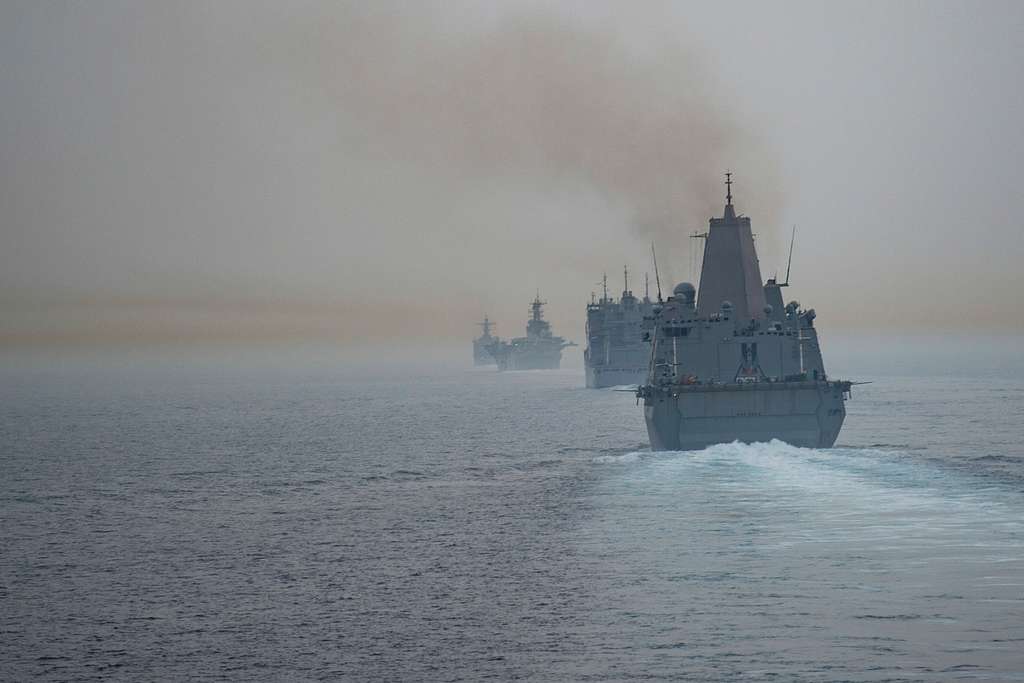
- “Truce or Consequences.” The fragile ceasefire that had paused the U.S.-Iran war since the spring now appears to have collapsed. After Iran struck several commercial vessels transiting the Strait of Hormuz, the United States has launched several successive nights of strikes, hitting more than 300 targets across Iran. Iran has in turn retaliated against U.S. bases in Bahrain and Kuwait. Speaking from the NATO summit in Ankara, President Trump declared the June memorandum of understanding “over” even as he insisted that talks toward a lasting peace could still continue. By the weekend, Iran had declared the Strait of Hormuz closed, and U.S. officials were describing the ceasefire as fully “broken down.” Then, on Monday, Trump escalated further—declaring that the United States would “keep” and “run” the Strait as its self-styled “Guardian,” reinstate its blockade on Iranian ships, and charge a 20% fee on all cargo passing through, an arrangement Tehran has flatly rejected. Is the war back on? And is there any diplomatic path left to pull both sides back from the brink?
- “Rutte Awakening.” NATO’s leaders gathered in Ankara last week for a summit that Secretary General Mark Rutte billed as the launch of “NATO 3.0”—a stronger, more self-reliant Europe inside an alliance less dependent on the United States. Allies touted rapid progress toward last year’s pledge to spend 5% of GDP on defense, announcing more than $50 billion in new procurement and at least €70 billion in fresh military aid for Ukraine. But the gathering was overshadowed by friction with President Trump, who publicly berated allies for declining to help in the Iran war and briefly revived his campaign to acquire Greenland before ending on a somewhat more conciliatory note. What did the Ankara summit actually accomplish? And what does “NATO 3.0” mean for the alliance’s future?
- “Bad Bromance.” The once-close alliance between Washington and Jerusalem—and between President Trump and Israeli Prime Minister Bibi Netanyahu—is showing unusual public strain. Trump has repeatedly clashed with Netanyahu over Israel’s continued operations in Lebanon—which have threatened the Iran ceasefire—and over the stalled second phase of his Gaza peace plan, which has all but wilted as Hamas refuses to disarm and Israel refuses to withdraw. Defense Secretary Hegseth abruptly canceled a planned trip to Israel, and a possible F-35 sale to Turkey has added to the unease. The tensions turned vivid this past week when Democratic Rep. Ro Khanna said he was detained for more than an hour by armed Israeli settlers—and then by IDF soldiers—during a West Bank visit, and armed settlers attacked a CNN crew and other journalists days later. At home, Israeli confidence in Trump has plummeted in advance of Israeli elections in October, even as U.S. primaries have produced a record number of candidates critical of Israel, particularly on the left. Just how strained is the U.S.-Israeli relationship? And how might Israel’s coming elections—and America’s midterms—reshape it? (Also see the Atlantic article by Thomas Wright that Julia references here.)
In object lessons, Dan reviews the movie The Invite, and it’s complicated. Ari reviews Israeli jazz musician Avishai Cohen’s new album “Eternal Child” and is totally engaged. Scott remembers the influential life and career of Lindsey Graham, separating himself from any alleged involvement in a long-ago gym-mat scandal. And Julia is in love with post-SCIF life, especially one in which she can work from the serenity of her mother’s paradisiacal porch:
To receive ad-free podcasts, become a Lawfare Material Supporter at www.patreon.com/lawfare. You can also support Lawfare by making a one-time donation at https://givebutter.com/lawfare-institute.
To receive ad-free podcasts, become a Lawfare Material Supporter at www.patreon.com/lawfare. You can also support Lawfare by making a one-time donation at https://givebutter.com/lawfare-institute.
Scott R. Anderson is a Senior Editor at Lawfare and General Counsel of the Lawfare Institute. He is also a Senior Fellow in Governance Studies at the Brookings Institution and a Non-resident Senior Fellow in the National Security Law Program at Columbia Law School. He previously served as an Attorney-Adviser in the Office of the Legal Adviser at the U.S. Department of State and as the legal advisor for the U.S. Embassy in Baghdad, Iraq.
Daniel Byman is a professor in the School of Foreign Service at Georgetown University and the director of the Warfare, Irregular Threats, and Terrorism Program at the Center for Strategic and International Studies (CSIS) in Washington, D.C.
Julia Curlee is a Public Service Fellow at Lawfare and a former CIA analyst with twenty-five years of experience in national security. She served as an NSC director in the Biden and second Trump White Houses and as a PDB briefer to the Vice President. She completed multiple tours in the Middle East and South Asia and served in CIA's China Mission Center. She holds master's degrees from the National War College and American University. The opinions presented here are her own and not those of the U.S. government.
Ariane Tabatabai is the Vice President of Research, Security and Defense at the Chicago Council on Global Affairs and a contributing editor at Lawfare. Previously, she served in a number of roles in the U.S. Department of State and Department of Defense, including as Deputy Assistant Secretary of Defense for Force Education and Training. She is the author of "No Conquest" and "No Defeat" and co-author of "Triple Axis – Iran’s Relations with Russia and China."