Russia’s Partnership With Iran: Short-Term Gains, Long-Term Losses


Editor’s Note: Russia is helping Iran fight the United States, but Moscow has often proved a fickle partner for Tehran. Barnard’s Kimberly Marten and Carol Saivetz of MIT explain why Russia’s current support for Tehran might be a high point and lay out several scenarios where Moscow might cut or reduce support for Iran.
Daniel Byman
***
It may seem that Russia and Iran are destined for a long alliance because of their tight cooperation in current war-fighting. Yet history suggests that a deep vein of distrust runs through their relationship, and their core interests do not always align. It is probably a mistake to assume that their current security cooperation will be permanent, especially because Russia is fundamentally so much stronger than Iran and over the long term will likely need the relationship less.
The simultaneity of their two wars has propelled Moscow and Teheran into a bilateral partnership of convenience, one that is opportunistic and not based on any long-term trust or military integration. Indeed, the relationship has been costly for Moscow’s other security goals in the Middle East and is unlikely to remain at its present strength after either of these states’ current wars end.
Recent History of the Russia-Iran Relationship
Although Russia and Iran have a long history of conflict, they began engaging in significant military cooperation in 2015, when they engaged in joint military planning and operations alongside Iran’s proxy, Hezbollah, in support of dictator Bashar al-Assad’s regime in the civil war in Syria (which Assad nevertheless lost in 2024). Their involvement in the Syria war allowed both to showcase their military projection capabilities abroad and to support a fellow authoritarian leader against what began as a popular uprising. Since 2016, Russia has been Iran’s sole foreign source of weaponry, though Russia has refused some Iranian requests for more advanced armaments. But these forms of cooperation did not place them directly at odds with the United States, and even as Russia and Iran cooperated in Syria they found themselves competing for influence on the ground there.
The U.S. unilateral withdrawal from the Joint Comprehensive Plan of Action (JCPOA) in 2018 and resulting snapback of sanctions on Tehran put Russia and Iran on a converging course against the United States. The leaders of both countries saw themselves waging a struggle against Washington and what has been (at least until recently) the U.S.-led global security and economic order. Both aspired to restore their prior status as regional hegemons, with political leverage and effective territorial control over surrounding countries.
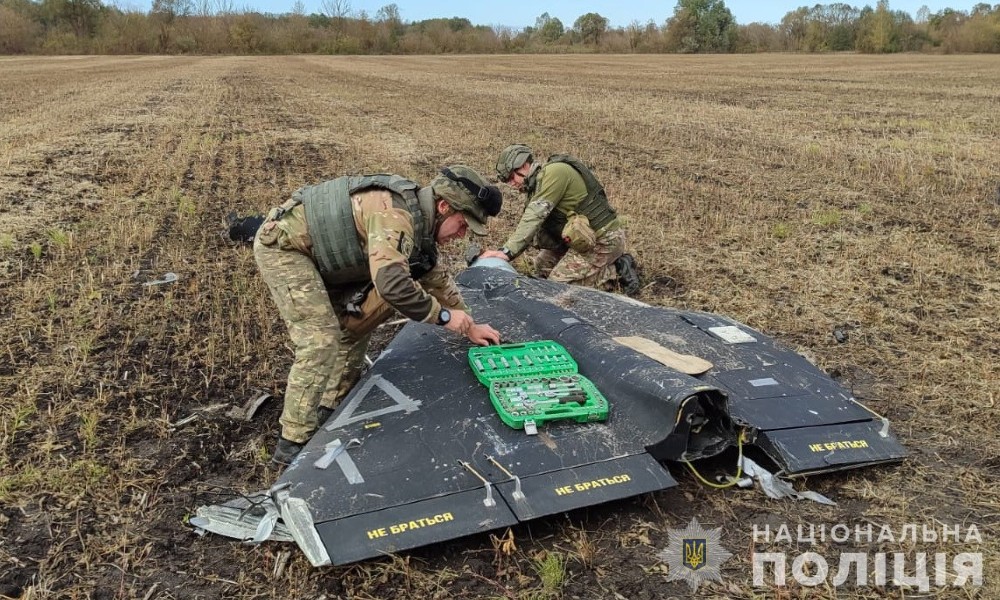
It was not until Russia’s full-scale invasion of Ukraine in February 2022, however, that they moved to a much closer strategic relationship. Iran began assisting Russia in August 2022, when it first delivered its Shahed drones to Russia. By spring 2023, those Iranian drones comprised more than half of Russian airstrikes. Later that year, Russia and Iran cooperated in a $1.75 billion deal to build a new drone manufacturing complex for Russia in Tatarstan. Using Iranian blueprints and technology transfers—and Chinese engine parts—Russia began manufacturing its own “Geran” drones, based on the Shahed design, with increasingly sophisticated communications and engine power. Russia now needs Iran far less than it did, although since 2024 Iran has continued to send Russia short-range ballistic missiles and trained Russian soldiers in Iran on their use.
In March 2026, Russia reversed the flow of the drone pipeline and is now sending its improved versions of Iranian drones back to Iran. According to statements by Ukrainian intelligence sources, Iran used those Russian-made drones in its targeting of U.S. military bases. Russia is also supplying Iran with explosives and other munitions. Recent reports indicate that Russia is also providing targeting information to Iran and its allies to assist in strikes on U.S. bases and Saudi sites.
Despite this arms and intelligence collaboration, Moscow did practically nothing when the United States and Israel bombed Iranian nuclear sites in the 12-Day War of June 2025, illustrating the limits of this partnership of convenience. The Kremlin condemned the attacks in no uncertain terms but proved unwilling to take any supportive military action, even though Iranian Foreign Minister Abbas Araghchi traveled to Moscow in an apparent bid for Russian help. In the aftermath, Russia’s Rosatom signed a deal to build eight new nuclear reactors in Iran, which could be considered symbolic support in light of the attempted destruction of Iran’s nuclear capabilities, but this merely finalized a preexisting plan.
Russia’s calculations changed between Iran’s 2025 and 2026 wars, and it is not clear why. Perhaps the 2025 war started too suddenly and ended too quickly for Russia to be able to give Iran much assistance, at a time when Moscow’s position in the Middle East was severely weakened by the collapse of the Assad regime in Syria and Russia’s laser focus on its war against Ukraine. Or perhaps in summer 2025 Russian President Vladimir Putin still had hopes that negotiations with President Trump would end the Ukraine war on Russian terms and did not want to provoke Washington.
Whatever the key factor that limited Russian support to Iran may have been, the start of another war, launched by the United States and Israel in February dramatically changed the nature of the relationship between Moscow and Tehran. According to media reports, officials in Tehran and Moscow began discussing Russian assistance within days of the U.S.-Israel attack. Despite initial Kremlin denials and claims that Moscow was delivering only humanitarian assistance, Russia provided Iran with satellite imagery, targeting data, intelligence support, and sophisticated Geran-2 drones. Most important, Russia reportedly shared satellite data with Iran that allowed Tehran to carry out precision strikes against U.S. and British military facilities across the Middle East. Since the United States had shared similar data with Ukraine, allowing it to hit energy targets inside Russia after Russia’s 2022 invasion, Putin saw this as a potential quid pro quo and reportedly offered to stop sharing the data with Iran if the United States ended its support for Ukraine. Other reports indicate that Russia is helping Iran develop advanced supersonic cruise missiles, which would be a serious addition to Iran’s arsenal capable of evading its adversaries’ missile defenses.
Short-Term Gains
Putin’s investment in Iran’s fight with the United States and Israel seems to be paying off—so far. Russia has significantly intensified its nightly assaults against Ukrainian civilian targets—including schools, day care centers and trains, to name a few—resulting in a dramatic increase in civilian casualties. Using the upgraded jet-powered drones and missiles, Russia seems intent on pummeling Ukrainians into submission. Simultaneously, the Kremlin has stepped up sabotage operations in Europe, airspace incursions, drone attacks on ships in NATO waters, and so-called gray zone activities—all designed to undermine confidence in Europe.
More importantly, the standoff in the Gulf has had a dramatic impact on the availability of vital air defense systems. Each salvo of interceptors shot to defend against Iranian attacks depletes the supply of similar weapons for Ukraine. Since February, the United States has used up an estimated three-fifths of all Patriot interceptors and half of its Terminal High Altitude Area Defense (THAAD) missiles. The very fact that the war is exhausting U.S. weapons supplies is a win for Tehran and a double-win for Moscow. Not only is Kyiv weakened, but so is Europe.
Equally important, the ongoing Gulf war and stalemate have significantly disrupted worldwide energy supplies. The global spike in prices and President Trump’s threats to resume the war have proved perhaps the biggest boon to Russia’s war against Ukraine. Now, whatever oil Russia can get to international markets is earning, according to one estimate, $150 million per day more than before the Iran war. Additionally, because of the partial inaccessibility of Gulf oil, India and China have been purchasing additional Russian energy.
U.S. domestic politics multiply Russia’s windfall exponentially. The Trump administration, facing pushback from consumers, canceled sanctions on Russian oil and lessened pressure on India to stop buying Russian energy. In the words of the Financial Times, “The Iran War offers Russia a chance to tighten its grip on energy markets at the expense of the Gulf states that are unable to export their products.” Just two and a half weeks before the U.S. midterm elections, Trump worsened Ukraine’s plight and moved to shore up Russia’s finances by removing all sanctions on the sale of Russian diesel fuel and announcing an energy ceasefire. Ukraine abided by the call while Russia did not. After three days, Kyiv resumed the attacks on refineries and pipelines. Angered, Trump implicitly threatened Kyiv if Ukraine refused to halt attacks on Russian energy facilities.
It’s not just that sanctions have been lifted, but that the United States has agreed to buy 300,000 metric tons of that diesel. Even though this constitutes less than a day of U.S. diesel consumption, its symbolism is tremendous. In reality, it signifies a move to lift all sanctions on Russia. Unable to extricate the United States from the war against Iran—which is what is causing the diesel shortages—Trump instead offered a windfall to Moscow and tipped the balance between the two combatants in Russia’s favor. In late October, Trump additionally issued a waiver against the Lindsay O. Graham Sanctioning Russia and Iran Act of 2026.
In the midst of this bleak picture for Ukraine, there is a partial opening for Kyiv. Ukraine has developed innovative technologies to protect itself against incoming drones and missiles. Since the U.S.-Israel attacks on Iran and the Iranian retaliation against Gulf states, Ukrainian President Volodymyr Zelenskyy has traveled to the Gulf to offer help in defending oil installations from drone attacks. He even at one point proposed a swap of the Gulf states’ Patriot missile batteries in return for Ukrainian drone technology and training. Doha and Kyiv have signed a defense cooperation agreement that includes the exchange of expertise in countering missiles and unmanned aerial systems; similarly, Riyadh and Kyiv signed a memorandum that lays the foundation for future contracts, technological cooperation, and investments.
The Downsides for Russia of the Partnership
The war against Ukraine in and of itself has complicated Russia’s ability to maneuver in the Middle East. For example, both the volume and relative share of Russian arms exports to the Middle East and North Africa have plummeted as Russia has needed to use and replenish its weapons. As the Kremlin shifted its economy to a military footing and raced to manufacture arms, Moscow even quietly requested that prior arms transfer recipients return equipment and parts to Russia, for example pushing Egypt to send back helicopter engines and other spare parts.
But Moscow’s partnership with Iran has also exacerbated Russian weaknesses in the Middle East in other ways, jeopardizing the goodwill and influence Putin cultivated over many years. Russia’s once-friendly relationship with Israel, built partly on tacit cooperation in Syria, deteriorated sharply after Moscow embraced Hamas following its Oct. 7, 2023, terrorist attack, amplified Hamas propaganda, and reportedly provided Iran with intelligence used in strikes against Israeli targets. Although Russia has maintained and even expanded trade and investment ties with Arab states, including Saudi Arabia and the United Arab Emirates, its regional security influence has waned as that of the United States and Turkey has risen. In Syria, Russia and Iran backed the wrong horse: The overthrow of Assad in 2024 allowed Turkey to become the dominant external power, while Russia lost sovereign control of its military bases and much of its ability to project power into Africa. Moscow was subsequently excluded from the October 2025 Gaza ceasefire negotiations, its alternative United Nations proposal was ignored, and Putin was forced to cancel a planned summit with Arab leaders when few accepted his invitation. Russia now risks further alienating Saudi Arabia through its support for Iran’s Houthi allies in Yemen, to whom Moscow reportedly supplied targeting intelligence for attacks on Red Sea shipping.
Future Scenarios
Russia needs Iran much less than it did in the early years of its war against Ukraine. In addition, Moscow would likely welcome the opportunity to loosen its ties with Iran and rebalance its Middle East interests. Three plausible future scenarios would likely cause Russia to downgrade its security relationship with Iran, even if arms sales, joint military exercises, and domestic regime-supporting intelligence sharing continued as before.
First, the United States and Iran could come to an agreement, akin to the June 2026 memorandum of understanding, that would reopen the Strait of Hormuz. While, in theory, Russia could serve as an intermediary to help negotiate a deal on the reopening of the strait, since it has already publicly offered to mediate a deal with Washington on Iran’s nuclear developments, reopening the passage would actually harm Russia’s core interests. Oil prices would plummet, cutting into Russia’s current hopes for using its own oil exports to boost its war economy. The Trump administration would lose a key reason to buy diesel fuel from Russia and to exempt Russia from congressional sanctions. Iran would also resume its shadow fleet exports to China, further constraining Russia’s export possibilities.
This scenario highlights that despite their current security cooperation, and even their cooperation on shadow fleet use, Russia and Iran are oil market competitors. This fundamentally conflicting core global economic interest is a limit on their partnership and on Iran’s ability to seek help from Russia.
Alternatively, Iran could suffer an outright defeat, either as a result of a massive U.S.-Israel attack or as a consequence of the blockade and other measures that are hobbling the Iranian economy. Moscow, well aware of this threat, dispatched Foreign Minister Sergei Lavrov to Tehran to reassure his Iranian counterparts. While there, he recommitted to the 20-year strategic partnership and announced that specialists would return to the Bushehr Nuclear Power Plant. None of this, of course, mitigates the military threat; instead it illustrates how fragile Iranian ties with Russia might be, especially given the weakness of Russia’s own economy. Given official reports out of the Kremlin about Russia’s increasing military expenditures, budget deficits, and concerns about macroeconomic stability, it seems highly unlikely that Russia could provide the level of economic assistance, food, or medicine that might be required in such circumstances.
On the symbolic level, attacks that destroyed Iran would represent a defeat for Russia. It would clearly undermine the partnership as questions would be raised within Iran about why Moscow could not protect its client. Indeed, other potential clients or supporters of Russia might also be wary of relying so heavily on one backer, especially as this would come on the heels of Russia’s inability to salvage regimes it supported in Syria and Venezuela.
Finally, Moscow, with the support of the Trump administration, could achieve a ceasefire in Ukraine that Russia finds favorable to its interests. This seems increasingly possible as Trump’s antagonism toward Zelenskyy has once again intensified and reports indicate that the United States is delaying approval for European transfers of Patriot air defense missiles to Ukraine and limiting Ukraine’s use of Starlink and/or Starshield satellite internet for more than two weeks.
Russia would probably use such a ceasefire as a pause or breathing space to rebuild and reconstitute its forces, its military equipment, and its weaponry. This would also augment the number of personnel available for defense industry production, as troops withdrawing from the front would need work. Russia would then have much less need going forward for Iranian missiles and munitions, as it would be able to resupply its stocks with domestic production, likely with continuing use of the advanced technology it currently receives from China. Moscow could afford to reduce its ties with Iran, while resuming its arms sales and other security outreach to Arab states in the Middle East.
This scenario highlights that Russia’s favoring of Iran was heavily conditioned on its temporary need for drones and missile replacements. As its relationship with Iran increasingly becomes a diplomatic liability, Moscow could quietly downgrade the importance of Tehran in comparison to other potential partners.
Conclusion
The partnership between Russia and Iran has certainly made each more dangerous to the United States and its allies in the near term. Each has been better able to fight its wars because of the other’s help, and the technology that each has shared with the other will likely have long-term benefits for the military industrial complexes of both.
But if the Iran war is tamped down with an opening of the Strait of Hormuz, if it is ended by an Iranian defeat or economic collapse, or if a ceasefire favorable to Russia is reached in Ukraine, Russia has strong incentives to step back from being a close ally of Iran. Even if arms sales, joint military exercises, and regime-supporting intelligence sharing continue between the two countries, Moscow will likely seek to rebalance its relationships in the broader Middle East by distancing itself from Tehran’s toxic aggression.