
Takeaways for Iran a Year After the Syria Sanctions Rollback
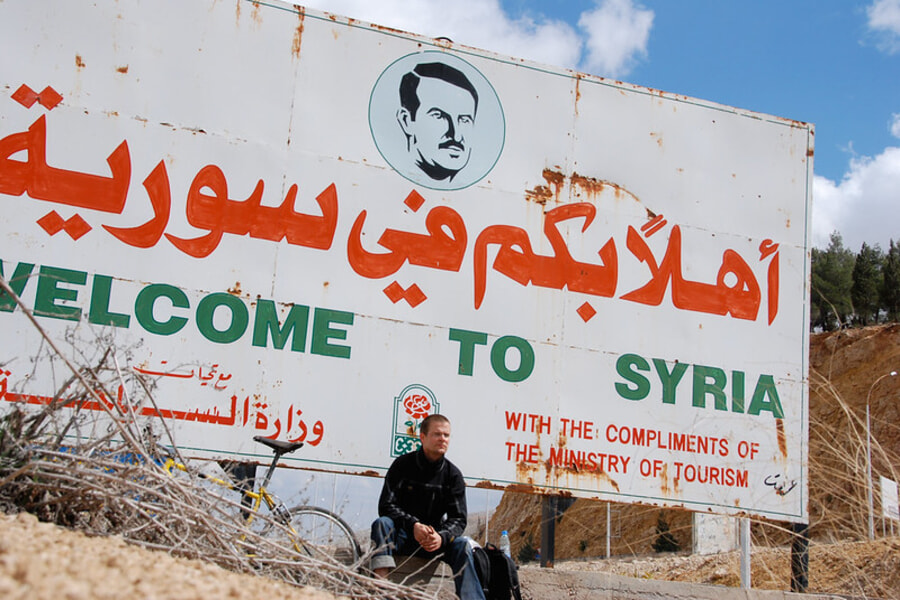



On June 30, 2025, President Trump signed Executive Order 14312, terminating the United States’ comprehensive sanctions on Syria, a historic moment that followed the overthrow of Bashar al-Assad by Syrian opposition groups and marked the beginning of a new chapter for the people of Syria. Just over a year later, the State Department has finally announced the removal of a critical barrier to U.S. companies’ investment in Syria: the rescission of the country’s designation as a state sponsor of terrorism (SST). Amid intense uncertainty over the future of the Trump administration’s agreement with Iran, which contemplated a “termination” of all U.S. sanctions on Iran, the case of Syria offers lessons in the difficulties of genuine sanctions removal, even when the original goals of U.S. sanctions appear to have been achieved.
Timeline of the Syria Sanctions Program
As of December 2024, Syria was subject not just to comprehensive sanctions by the United States but also to a variety of restrictive measures by the United Nations, the United Kingdom, and the European Union. U.S. persons were prohibited from providing services to Syria except for limited authorized activities such as humanitarian assistance. The government of Syria was “blocked,” meaning its property in the United States was frozen, and no U.S. persons could engage with it. Many Syrian officials, companies, and organizations were listed on the Department of the Treasury Office of Foreign Assets Control (OFAC) list of specially designated nationals and blocked persons (SDN list).
The opposition group that later led the overthrow of Assad, Hayat Tahrir al-Sham (HTS), was designated under counterterrorism authorities as a specially designated global terrorist (SDGT) group and a foreign terrorist organization (FTO). Any non-U.S. companies that provided support to the Syrian government risked facing mandatory sanctions under the Caesar Syria Civilian Protection Act of 2019 (Caesar Act). On top of financial sanctions, almost all U.S. exports to Syria were prohibited by the Syria Accountability and Lebanese Sovereignty Restoration Act of 2003 (SAA) and Executive Order 13338, which imposed strict export controls for all U.S.-origin goods, apart from food and medicine not specifically controlled for export (known as EAR99 items). Syria was also designated as a state sponsor of terrorism, resulting in further export controls, foreign assistance restrictions, and financial and trade limitations.
| Comparing International Sanctions Before the Fall of Assad | ||||
|---|---|---|---|---|
| Overview | Government of Syria | HTS | Other Restrictions | |
| U.S. | Comprehensive | Fully blocked, Syria designated an SST | Yes (FTO, SDGT); and leader designated | Restrictions on petroleum/petroleum products, providing services, new investment |
| UN | Counterterrorism sanctions only | Certain ministers | Yes and leader of HTS | None |
| U.K. | Counterterrorism and human rights designations, and key sector restrictions | Certain ministers and government entities | Yes (terrorist organization), and leader of HTS (as implementation of UN sanctions) | Restrictions in banking, energy, insurance, transportation sectors |
| EU | Counterterrorism and human rights designations, and key sector restrictions | Certain ministers and government entities | Yes and leader of HTS (as implementation of UN sanctions) | Restrictions in banking, energy, insurance, transportation sectors |
On Dec. 8, 2024, rebel forces led by Ahmed al-Sharaa, then known under his nom de guerre Abu Mohammed al-Jolani, seized Damascus. Al-Assad fled to Moscow along with many of his senior officials. Al-Sharaa was appointed as president on Jan. 29, 2025. Six months after Assad’s fall, on May 13, 2025, Trump announced his intentions to lift all sanctions on Syria, directing his administration to begin the administrative and legislative processes necessary to do so.
As outlined in a previous article, the U.S. government and Congress removed many sanctions and some export controls on Syria over the second half of 2025:
- May 23, 2025: OFAC issued General License (GL) 25, which broadly authorized all dealings with the new transitional Syrian government and certain sanctioned individuals and entities, including al-Sharaa. The State Department issued a 180-day waiver of sanctions under the Caesar Act, removing secondary sanctions risks to foreign companies for dealing with the Syrian government or certain industries.
- June 30, 2025: Trump issued Executive Order 14312, “Providing for the Revocation of Syria Sanctions,” which revoked the six executive orders that made up the Syria sanctions program and delisted over 500 persons blocked pursuant to the orders. This order also waived requirements to impose export controls under the SAA and the Chemical and Biological Weapons Control and Warfare Elimination Act (the CBW Act) and waived sanctions imposed under the CBW Act related to Syria. The secretary of state was directed under the executive order to consider whether to suspend Caesar Act sanctions, to “take all appropriate action with respect to the designation of” HTS and al-Sharaa, and to review Syria’s SST designation. The June order also further amended Executive Order 13894 to expand sanctions authorities related to “accountability” for former Assad officials and their supporters.
- July 7, 2025: Secretary of State Marco Rubio removed Hayat Tahrir al-Sham as an FTO, which removed not just certain sanctions risks for dealing with HTS but also additional criminal liability for providing material support to the group. HTS remains designated under the Treasury Department’s SDGT authorities.
- Aug. 26, 2025: OFAC removed the Syria Sanctions Regulations from the Code of Federal Regulations.
- Sept. 2, 2025: The Commerce Department’s Bureau of Industry and Security (BIS) published a rule allowing the export of EAR99 items to Syria and expanding the license exceptions for other categories of non-EAR99 goods. The rule also updated BIS’s licensing policy to one of presumed approval for anyone asking permission to send otherwise prohibited goods to Syria if they support Syria’s economic development.
- Sept. 25, 2025: OFAC renamed the “Syria Related Sanctions Regulations” as the “Promoting Accountability for Assad and Regional Stabilization Sanctions Regulations,” emphasizing that U.S. sanctions related to Syria target individual bad actors, not the Syrian government.
- Nov. 10, 2025: Rubio issued a Caesar Act suspension, replacing the expiring waiver.
- Dec. 18, 2025: Section 8369 of the National Defense Authorization Act for Fiscal Year 2026 repealed the Caesar Act.
The UN, U.K., and EU have also taken actions to remove sanctions on Syria and its new
| Removal of International Sanction | |
|---|---|
| March 6, 2025 | The U.K. removed freezes on key Syrian entities, including the Central Bank of Syria, Syrian Arab Airlines, and energy companies. |
| April 25, 2025 | The U.K. removed additional sanctions relating to trade, banking, transportation, and energy to help Syria rebuild, while maintaining sanctions on Assad and associates. |
| May 28, 2025 | The EU lifted all economic restrictive measures in Syria, as well as the designation of the Central Bank of Syria, but it maintains sanctions on individual persons and entities. |
| Oct. 21, 2025 | The U.K. removed HTS from its list of terrorist organizations. |
| Nov. 6, 2025 | The UN removed al-Sharaa from its sanctions list. |
| Nov. 7, 2025 | The U.K. removed sanctions on al-Sharaa. |
| Feb. 27, 2026 | The UN removed HTS from sanctions lists. |
| March 2, 2026 | The U.K. implemented UN removal of HTS from its sanctions list. |
| March 9, 2026 | The EU delisted HTS to implement UN removal. |
| April 22, 2026 | The U.K. amended Syria sanctions regulations to remove trade restrictions on luxury goods, gold, precious metals, and diamonds. |
| May 11, 2026 | The EU reinstated full application of the EU-Syria Cooperation Agreement, restoring certain trade provisions for the first time since 2011, sending a political signal that the EU is ready to support Syria’s economic recovery. |
| May 18, 2026 | The EU renewed sanctions targeting individuals and entities linked to the former al-Assad regime, noting that “the situation in Syria remains fragile and risk of destabilization persists,” but removed designations on ministries of defense and interior. |
What Remains?
The rollback of sanctions and certain export controls opens the door to badly needed investment in Syria after nearly 15 years of brutal civil war. As the World Bank has warned in multiple reports, Syria needs massive reconstruction of its infrastructure, residential buildings, and nonresidential buildings such as health facilities and schools. Syria’s economy has been “profoundly reshaped” by conflict and sanctions, resulting in a collapse in foreign trade; a shift in Syria’s trading partners away from Western countries in favor of Iran, Turkey, the United Arab Emirates, China, and Egypt; and a sharp increase in informal and illicit economic activity.
The Trump administration has made clear its policy with respect to investment in Syria. On May 22, the U.S. Embassy in Syria published a series of “Syria Investor Guides” that covered the basics of not only establishing and operating a company in Syria but also investing in Syrian oil, gas, electricity, banking and financial services, telecommunications and technology, and real estate. These comprehensive guides note that “U.S. persons may now generally transact and invest in Syria, subject only to targeted restrictions on designated individuals and entities, including terrorist groups, human rights abusers, and proliferation-linked actors.” The U.K. has similarly issued guidance to support businesses in reengaging in Syria.
Throughout this period, Syria’s SST designation has remained a major obstacle to foreign investment and development. Syria was the longest-running member of the SST list, which Congress formally established in 1979 to enact harsher penalties on countries that supported terrorism against U.S. citizens.
On July 8, Rubio announced that Trump has informed Congress of the administration’s intent to rescind Syria’s SST designation in 45 days. To initiate this rescission, the secretary of state is required to certify to Congress that the government has not provided any support for acts of international terrorism during the preceding 6-month period and that the government has provided assurances it will not support acts of international terrorism in the future.
The SST designation meant Syria was subject to the following:
- Restrictions on export licensing for controlled goods and services, under Section 1754(c) of the Export Control Reform Act of 2018, which replaced Section 6(j)(1)(A) of the Export Administration Act of 1979.
- Prohibitions on most foreign aid, the U.S. Peace Corps programs, nonemergency agricultural aid, and Export-Import Bank funding, under Section 620A(a) of the Foreign Assistance Act of 1961.
- Prohibition on sales and transfers of arms and related goods and services, under Section 40(d) of the Arms Export Control Act.
- Denial of immunity under the Foreign Sovereign Immunities Act, allowing victims of terrorism and their families to file lawsuits against Syria in the United States. According to John Balouziyeh and Charles Lister, “Syria’s existing legal exposure [under such judgments] already exceeds its entire annual economic output.”
Even aside from the legal restrictions related to the SST designation, many U.S. financial institutions simply would not meaningfully reengage with Syria while it was designated as an SST, due to internal risk policy. The country’s financial system, which is critical for the country’s recovery, will require stronger U.S. correspondent banking relationships in order to facilitate international trade and investment. The SST designation, particularly when coupled with Syria’s current status as a “Jurisdiction under Increased Monitoring” by the Financial Action Task Force (FATF) (i.e., the FATF “grey list”), was a significant barrier to Syria’s reintegration with the international financial system and access to foreign trade and capital.
The State Department’s announcement marks the beginning of the end of this remaining legal barrier to U.S. investment in Syria’s economy and hopefully begins a period in which U.S. businesses and banks can assess how to meaningfully reengage with the Syrian economy.
Lessons for Iran from Syria
Negotiating the end of the U.S. war in Iran has been complicated and already subject to policy reversals. The United States and Iran signed a memorandum of understanding (MOU) on June 17, but following multiple Iranian attacks on commercial shipping in the Strait of Hormuz, Trump declared the MOU “over” and resumed airstrikes on Iran.
The MOU, which is now in limbo, contains three commitments regarding U.S. sanctions on Iran. First, the United States will undertake:
to terminate all types of sanctions against the Islamic Republic of Iran, including the United Nations Security Council resolutions, IAEA Board of Governors resolutions, and all unilateral U.S. sanctions, primary and secondary, in an agreed upon schedule as part of the final deal. The Islamic Republic of Iran and the United States of America acknowledge the critical importance of the sanctions termination issue above mentioned and express their intentions to immediately address these issues in the negotiations in order to achieve mutual agreement on them.
Second, the United States “will not impose any new sanctions … in the region.”
Third, “immediately upon the signing of this MoU, and until the termination of sanctions, the U.S. Department of Treasury will issue waivers for the export of Iranian crude oil, petroleum products and derivatives, and all associated services including banking transactions, insurances, transportation, etc.”
The United States actioned the third commitment on June 22 through the issuance of GL X, “Authorizing the Production, Delivery and Sale of Crude Oil, Petrochemical Products, and Petroleum Products of Iranian-Origin through August 21, 2026.” GL X—issued under multiple Iran, counterterrorism, weapons of mass destruction, and Russia-related sanctions authorities—authorized all transactions ordinarily incident and necessary to the production, sale, delivery, or offloading of crude oil, petrochemical products, or petroleum products of Iranian origin, through 12:01 a.m. ET, Aug. 21. The GL also allowed the use of blocked vessels.
The notable limit to this otherwise very broad GL was that it did not permit dealings with anyone designated under the FTO Sanctions Regulations, which includes the Iranian Revolutionary Guard Corps (IRGC). Further, the State Department never disclosed whether it issued accompanying waivers, which would be necessary to remove secondary statutory sanctions risks.
However, on July 7, just two weeks after the issuance of GL X, the Trump administration revoked GL X and replaced it with GL X1. GL X1 allows for a 10-day wind-down period for transactions previously authorized by GL X, ending at 12:01 a.m. EDT on July 17. GL X1 also requires any payments to blocked persons to be made into U.S. blocked accounts and forbids any new transactions on or after the day the GL was issued, including purchases or loading of Iranian oil. This revocation followed a period of Iranian attacks on commercial ships using the U.S.-approved southern route through the Strait of Hormuz.
As of July 14, negotiations to end hostilities are continuing. Presumably, the removal of U.S. sanctions on Iran remains of great interest to the Iranian government, although perhaps less important than maintaining control over the Strait of Hormuz. If the Trump administration does continue to negotiate a peace agreement that involves waiving, suspending, or ultimately removing U.S. sanctions on Iran, the Syria sanctions rollback process offers lessons for both how Iran sanctions removal could unfold and the challenges the administration may face in the process.
Role of Congress
U.S. sanctions on Iran are underpinned by a web of statutes with mandatory sanctions, including the Iran Sanctions Act of 1996, the Comprehensive Iran Sanctions, Accountability and Divestment Act, and the Iran Threat Reduction and Syria Human Rights Act of 2012. Congress has not attempted to rein in the Trump administration’s temporary relaxation of Iran-related sanctions via general license, but both chambers are full of Iran skeptics across both parties, meaning the Trump administration will have a difficult road ahead to fulfill this commitment.
Threat of Snapback if Sanctions Are Not Fully Removed
The Trump administration moved quickly to issue GLs and waivers after the fall of Assad, but many private-sector actors were hesitant to reengage until Congress fully repealed the Caesar Act. It is simply too risky to make loans or investments in major infrastructure projects based on temporary sanctions waivers when projects require multi-year or even multi-decade capital commitments.
GL X1 is an excellent example of why Western companies will likely be even more risk-averse in Iran. Anyone who relied on GL X and began dealing with previously off-limits Iranian oil must now scramble to wind down transactions within 10 days. The tail on oil-related transactions can be long, from demurrage to insurance claims. Many foreign companies have been caught in the crosshairs of past U.S. policy reversals on Iran. If Congress declines to repeal the statutory sanctions on Iran and the Trump administration is forced to rely on general licenses and waivers, U.S. and Western companies will likely remain hesitant to engage with Iran beyond activities such as simply purchasing or trading Iranian-origin oil or petrochemical products, as opposed to investing in Iran or reestablishing relationships with Iranian companies.
SST Overhang and the IRGC
Syria’s SST designation proved to be sticky even after a decisive regime change. In Iran, unlike Syria, the conduct underlying its SST designation is ongoing, and the country is now led by what some observers have described as a new generation of “technocratic” IRGC leaders. As long as Iran remains a designated SST and the IRGC remains designated as a FTO, U.S. companies will be exposed to significant legal risk for dealing with anyone linked to the IRGC. Because the IRGC is deeply embedded across Iran’s economy—from energy and construction to telecommunications—that exposure is difficult to avoid in practice, and it will continue to deter investment even if broader sanctions are lifted.
Importance of Banking Channels
Even after most sanctions were revoked, some export controls removed, and the Caesar Act repealed, Syria’s reintegration into the international financial system has remained slow, hobbled by global financial institutions’unwillingness to take on risk given Syria’s FATF gray-list status and SST designation. The same dynamic will certainly shape any Iran relief. Iran remains on the FATF black list, and it now relies on an elaborate “shadow banking” system after severe sanctions left it without the banking relationships that underpin cross-border trade.
Looking Ahead
After the collapse of the Assad regime, the Trump administration acted quickly to begin relaxing sanctions on Syria to support its economic recovery. However, even after a decisive regime change that eliminated the foundational reason for U.S. sanctions on Syria, sanctions removal still took over 18 months. The situation in Iran is even more complex and volatile. Time will tell whether the U.S. government will resume its campaign of “economic fury” against Iran or whether further diplomacy will result in deescalation and the reinstatement of the U.S.-Iran MOU or a full peace agreement. If the Trump administration does successfully reach a deal that calls for the lifting of sanctions on Iran, as the process of negotiating, entering, and then leaving the Joint Comprehensive Plan of Action demonstrated previously, the road will be long and winding, and will require the support of Congress and coordination with the UN and other countries. And uncertainties will remain long past the initial signing of an agreement.
-1.jpg?sfvrsn=dd1c6b99_5)
