The 25th Anniversary of the 2001 AUMF
It’s not terribly important today
Editor's note: This piece is cross-posted with "Executive Functions."
Twenty-five years ago today, Congress passed the 2001 Authorization for Use of Military Force (AUMF), which President Bush signed into law a few days later. The AUMF famously authorized the president “to use all necessary and appropriate force against those nations, organizations, or persons he determines planned, authorized, committed, or aided the terrorist attacks that occurred on September 11, 2001, or harbored such organizations or persons.”
This statute has for a quarter century been the central legal authority for the United States’ military operations against terrorist organizations. But today its importance has dimmed. In part this is because the United States is almost out of the detention business. In part it is because certain terrorist threats have withered. In part it’s because presidents have developed robust substitute Article II theories. And in part it’s because Congress has quietly, through means other than the AUMF, approved and managed the “forever war” against terrorists.
***
When Congress passed the 2001 AUMF, many members believed they were authorizing force against nations, organizations, and persons with an actual nexus to the 9/11 attacks, and not beyond. But the nexus constraint was never firm. The Taliban and especially al Qaeda proved to be fluid organizations with loose and changing affiliations, and new threatening terrorist organizations sprang up.
Over time presidents stretched the AUMF through interpretation to meet these new threats. The Bush administration construed the AUMF to cover “associated forces” of al Qaeda and the Taliban. The Obama administration went along with this basic view and added a second important stretch when it extended the AUMF to cover the Islamic State, a group that did not exist on 9/11 and at the time of designation had no affiliation with al Qaeda.
On these and related theories, presidents since 9/11 invoked the AUMF to use force against an array of terrorists and terrorist organizations around the globe and as the legal ground for detention of many hundreds of alleged terrorists at Guantanamo Bay.
Today, however, the 2001 AUMF has less practical relevance than at any point since 9/11. As supplemented by the 2012 National Defense Authorization Act, the 2001 AUMF remains the basis for detention of the six people at Guantanamo who have not been charged with offenses. But the United States is otherwise out of the long-term military detention business (where AUMF support was vital) and relies now on a combination of targeted killing/incapacitation, proxy detention, and civilian trials.
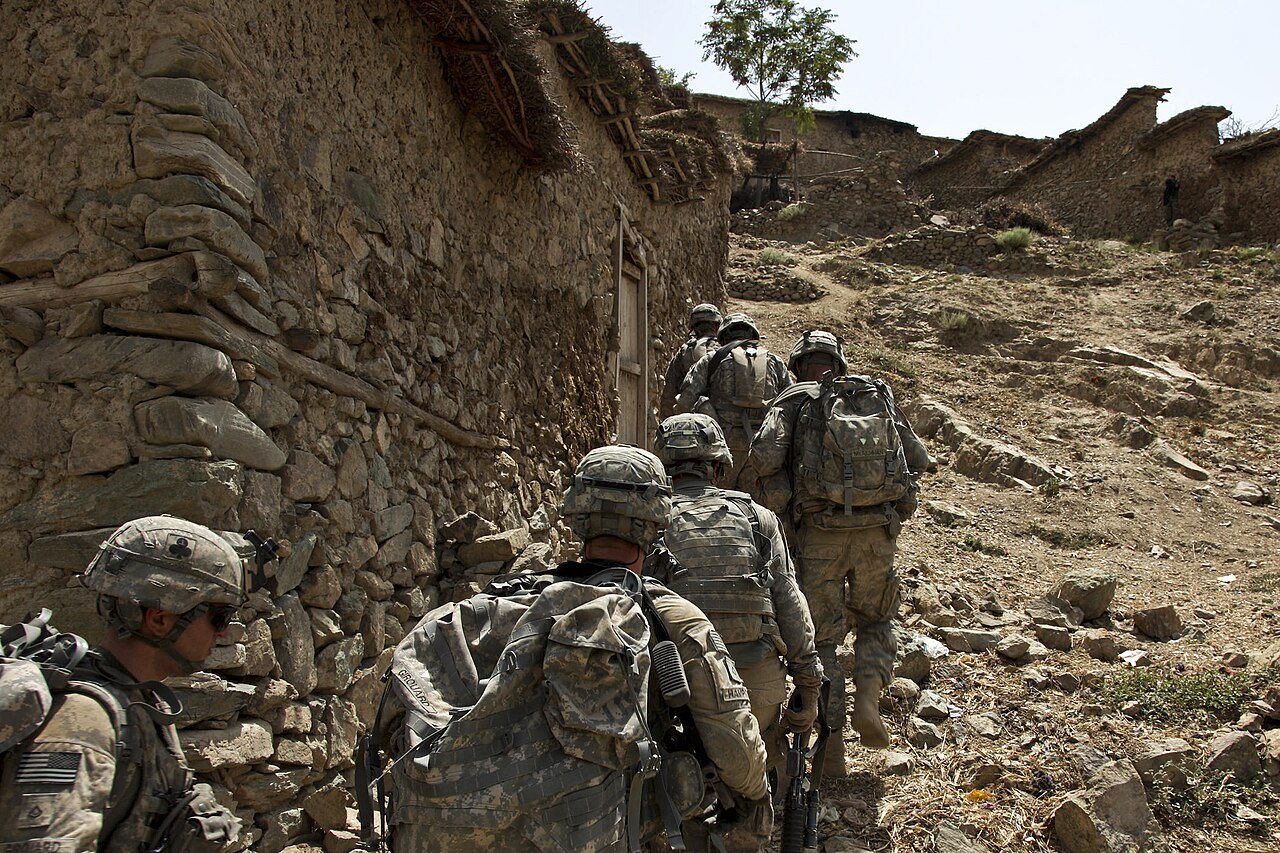
As for the AUMF’s relevance to uses of force, the core al Qaeda threat is diminished but far from dead. (The United States does not appear to have used force against core al Qaeda since it killed Ayman al-Zawahiri on July 31, 2022.) For years the 2001 AUMF was the main domestic legal authority supporting U.S. military involvement in Afghanistan, but the United States withdrew in 2021. The Taliban now runs the government of Afghanistan, but hostilities against it have ended.
Some 2001 AUMF-related terrorist threats remain. The second Trump administration has invoked the statute to use force against al-Shabaab, the Islamic State, and al Qaeda-linked fighters in at least four countries.
But for uses of force against these organizations, and for all future threatening terrorist organizations, the AUMF is no longer practically important. As Bobby Chesney saw as early as 2014, Article II of the Constitution can operate as an omnibus use-of-force workhorse for counterterrorism operations.
Chesney showed that executive branch legal positions entailed the view that the president’s Article II power to act in self-defense of the nation gave him all the authority he needed to target terrorists and terrorist organizations. The key idea was a “continuous-threat model” under which “the Executive Branch has inherent authority to use force against a terrorist organization that has attacked before and is capable and willing to do so again, even absent evidence of a particular, looming plot to be stopped.”
This model combines the president’s broad Article II authority to use force in self-defense with a very flexible and expansive conception of imminent attack. Chesney discerned the model in pre-9/11 executive branch practice (involving proposed operations against Hezbollah, the 1986 strikes against Libya, and the 1998 strikes on al Qaeda in Afghanistan and Sudan). He then traced it through 9/11 and especially in Obama-era documents.
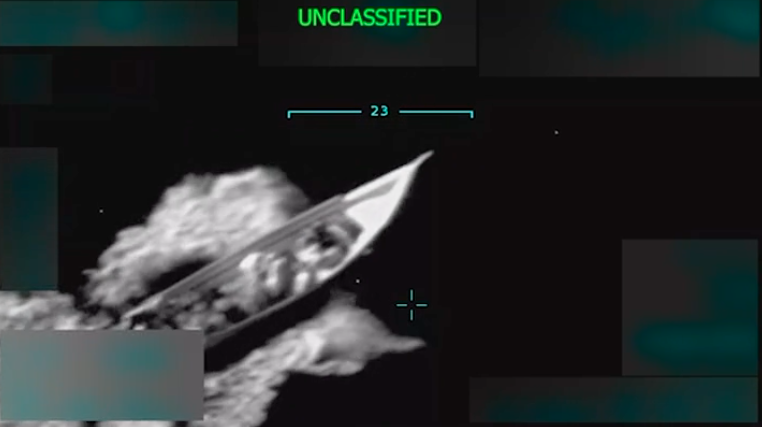
Something like this Article II theory of self-defense with broad imminence has been the basis for U.S. uses of force against Iran-backed militia groups, the Houthis, and, in a new-level legal move, suspected boat drug runners. Presidents have also expanded their self-defensive military powers against terrorists along other dimensions, including collective self-defense of partner forces. Today the Article II self-defense power as understood by the executive branch is even broader than when Chesney wrote.
Article II as interpreted by the executive branch thus provides everything a president needs to use force against any threatening terrorist organization, including all of the al Qaeda-associated and successor forces for which the AUMF is now invoked. Put another way, if Congress abrogated the 2001 AUMF tomorrow, the president would have all of the authority he needs under Article II to continue using force against all current terrorist threats around the globe.
Presidents will surely continue to invoke the 2001 AUMF against legacy terrorist organizations for path-dependent and prudential reasons. But they don't need to, for the legacy organizations, or for future threatening terrorists or terrorist organizations that rise up.
This last claim is largely limited to what Matt Waxman and I have referred to as “light-footprint warfare”—manned and unmanned air power, long-range missiles, cyber operations, and special operations. This is how force is being conducted against terrorists today. But the relevance and sufficiency of the continuous threat model would be less certain if it once again becomes necessary to fight terrorists with heavy boots on the ground, since such military actions are harder to justify under Article II alone. That said, we know from the current Iran war and from past conflicts and executive branch positions that an Article II self-defense theory alone can justify massive concentration and uses of force.
Another conceivable limitation on the Article II theory is the War Powers Resolution (WPR), which requires the removal of troops from “hostilities” after 60 days unless authorized by Congress. (This requirement does not apply to congressionally authorized actions, including AUMF-authorized ones.) But the executive branch, again of both parties, has come up with powerful interpretive workarounds to render the WPR limitation a practical dead letter, at least with regard to light-footprint warfare.
Congress has not defended the WPR from erosion. Nor has it checked the president’s expansive interpretations of the 2001 AUMF and Article II in the counterterrorism context.
Indeed, Congress has been on board for presidents’ counterterrorism conduct since at least the Obama administration. It funds U.S. operations against terrorists, including actions the executive branch justifies under Article II. Through various statutes Congress has fostered “by, with, and through” campaigns that pursue counterterrorism objectives primarily via local partner forces with U.S. training and equipment support. These operations are often “the occasion for Article II-based [U.S.] uses of force against Islamist terrorists in unit self-defense or ‘collective self-defense of Coalition partnered forces.’” Congress funds these operations, and associated self-defense actions, as well.
***
The experience of the last 25 years yields three perhaps-obvious lessons.
First, presidents will construe statutory force authorizations broadly. And courts are inclined to go along. The Supreme Court in Hamdi blessed the argument that the authorization to use force included the power to detain. And the lower federal courts basically went along with presidential expansion of the AUMF to cover associated forces and others. If Congress wants to constrain a president’s use of force under an AUMF, its best bet is to impose a sunset requirement, which is hard to circumvent via interpretive glosses.
That said, and second, AUMF reform is now largely beside the point in light of the president’s continual expansion of his Article II war powers. And “if history is any guide,” as I once wrote, “courts are not likely to adjudicate a case that raises the legality of unilateral presidential uses of force abroad.” That leaves Congress as the only federal institution that could conceivably check the president here.
Third, Congress is not dead. Its 2012 NDAA intervention on detention was important. It recently repealed the 2002 and 1991 Iraq AUMFs. And as noted it has supported global counterterrorism operations and quietly managed them through mechanisms independent of the 2001 AUMF.
The real challenge is whether Congress can claw back or constrain the super-broad claims of Article II use-of-force power that the executive branch has made over the decades, not just in the counterterrorism context, but in other areas too. Such reform would require a top-to-bottom rethinking of congressional military funding and oversight, retractions of the delegations to the president over global deployments, and serious engagement and pushback (with defunding, confirmation, and other tools) by Congress against presidents’ expansive uses of Article II powers.
This is a very distant prospect indeed.