The U.S.-Taiwan ART’s Export Control Puzzle
What does “alignment” require?
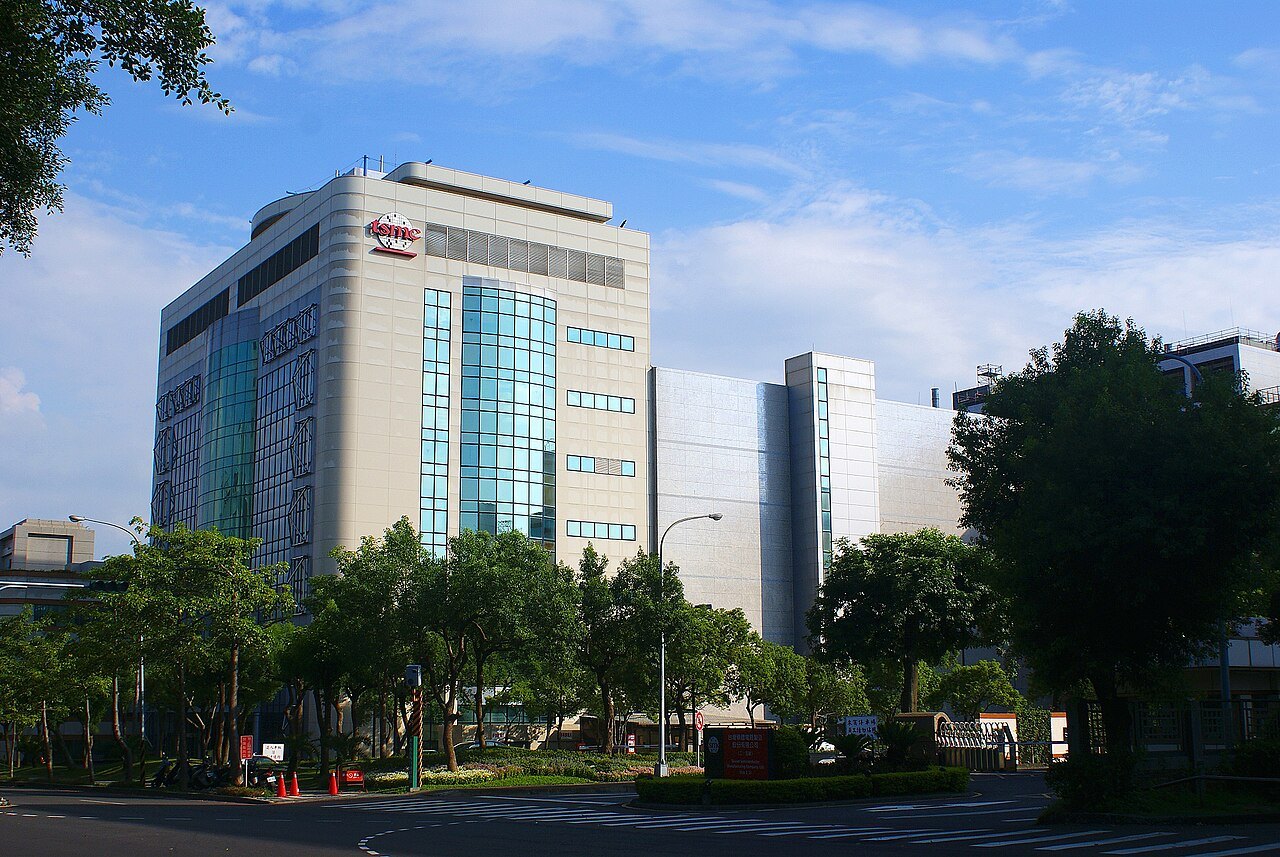

On Aug. 6, House Select Committee on the Chinese Communist Party (CCP) Chair John Moolenaar pressed the U.S. Commerce Department’s Bureau of Industry and Security (BIS) to clarify that the Foundry Due Diligence Rule—adopted in January 2025 after the diversion of Taiwan Semiconductor Manufacturing Company (TSMC)-made chips to Huawei—remains in force, the latest reminder of the stakes behind the export control alignment provisions in the U.S.-Taiwan Agreement on Reciprocal Trade (ART). Under the ART, signed in February 2026, and a January 2026 U.S.-Taiwan Memorandum of Understanding, the United States agreed to reduce the reciprocal tariff rate on Taiwanese goods from 20 percent (on top of existing most-favored-nation rates) to 15 percent. In return, Taiwan agreed to reduce tariffs and non-tariff barriers, and Taiwanese firms pledged to invest at least $250 billion to expand advanced semiconductor, energy, and artificial intelligence (AI) production in the United States, backed by at least $250 billion in Taiwanese government credit guarantees. The U.S.-Taiwan ART is distinct for the extensive economic security commitments that Taiwan committed to adopt across trade, sanctions, and investment security, and in aligning with U.S. export controls, particularly on the U.S. Foreign Direct Product Rule (FDPR).
Although the United States has already signed ARTs with 10 economies as of October 2026, none quite match the depth of the export control alignment commitments that Taiwan has undertaken. While the agreement states that Taiwan “shall align” its export controls with U.S. rules, what that “alignment” looks like in practice is unclear. Many in Taiwan recognize the flaws in Taiwan’s existing export control framework but differently interpret the legal commitments that Taipei must undertake to achieve alignment under the ART.
Ambiguity runs through much of the export control alignment provisions in the ART, arguably to the benefit of both parties. Taiwan’s Article 5.2 commitment to “align” with U.S. export controls could result in (a) an administrative expansion of the Ministry of Economic Affairs (MOEA) list of items restricted for export to mainland China to include AI chips or (b) a legislative amendment criminalizing such exports altogether. A similar ambiguity in Article 5.2’s FDPR provision could require Taipei to adopt its own FDPR or to enhance assistance with U.S. enforcement. How Taipei resolves these ambiguities has implications beyond its own borders, as a test of Washington’s novel project to bind other foreign jurisdictions to its export control regime and broader economic security architecture through such bilateral trade agreements.
Taiwan’s Existing Export Controls Architecture
The Foreign Trade Act, originally passed in 1993, establishes Taiwan’s export control program for strategic high-tech commodities (SHTC), which requires exporters to obtain a license from the International Trade Administration, an administrative agency under the MOEA, before shipping designated dual-use or military goods. Taiwan maintains five export control lists: country-specific lists restricting exports to Russia and Belarus, North Korea, and Iran, and a general List for Dual-Use Items and Technology and Common Military List.
Under Article 13 of the Foreign Trade Act, every SHTC export requires a permit, regardless of destination. However, Taiwan’s list of “restricted regions” determines whether exporting an SHTC item without one is a crime. While exports of high-end chips to Iran, Iraq, North Korea, Sudan, and Syria in violation of Taiwan’s existing controls incur criminal penalties, most exports to Russia and Belarus and the People’s Republic of China (PRC) incur only administrative penalties. Exports to mainland China are restricted for only “12 categories of semiconductor wafer fabricating equipment for SHTC,” including chemical mechanical polishers and photoresist strippers. Advanced AI chips, however, are absent from the list of categories restricted for export to the PRC. Taiwan’s existing regulations primarily reach the upstream equipment used to fabricate semiconductors—including tools such as etchers and polishers used inside TSMC fabs—not the downstream graphics processing unit (GPU) chips used for large-scale AI model training that those fabs produce. However, Taiwan does require permits for exports to parties on its SHTC Entity List, which since June 2025 has included Huawei Technologies and Semiconductor Manufacturing International Corp. Thus, in general, exporting advanced chips to mainland China is not currently a criminal offense under Taiwanese law.
Taiwan’s current export controls also reach only tangible goods, not intangible know-how. Taiwanese law has no equivalent to the U.S. “deemed export” concept, preventing Taiwanese regulators from exercising jurisdiction over the release of controlled technology or source code to a foreign national within its own territory. Taiwan’s regime relies on export permits as well as border inspections and cannot control any exports that do not physically cross a border.
To date, Taiwan has regulated the outflow of sensitive technologies principally through legal authorities other than export controls. The National Security Act (NSA), amended in 2022, criminalizes the theft, unauthorized use, or disclosure of trade secrets related to “national core key technologies” (NCKT), imposing enhanced penalties where the offender intends to use the technology abroad, including in mainland China.
However, this regime is primarily reactive, and the extent of cooperation from a private trade secret holder can significantly influence the strength of the case. Under the NSA, a “national core key technology” is protected only to the extent that it is also a “trade secret,” defined in Article 2 of the Trade Secrets Act as information that (a) is not known to persons generally involved in information of that type, (b) has actual or potential economic value because of its secrecy, and (c) its owner has taken “reasonable measures” to keep confidential. Without the trade secret holder’s records and an account of its internal controls, prosecutors face an uphill battle in establishing that information qualifies as a trade secret in the first place. For example, “reasonable measures” to preserve secrecy is an element that the holder itself establishes through its own practices, so the viability of a prosecution can turn on how well the company secured the information. The burden rests with Taiwanese prosecutors to show that an item qualifies as both an NCKT and a trade secret. Furthermore, proving an offender’s “intent” to use the NCKT overseas is difficult and often relies on internal corporate communications, for which prosecutors require cooperation from the private company to obtain.
Export Control Commitments Under Article 5.2
In Article 5.2 of the U.S-Taiwan ART, Taiwan commits across several subsections to effectively align its export control regime with U.S. control lists, entity designations, and enforcement expectations. These provisions reflect both U.S. pressure on Taipei to stem outflows of advanced chips and know-how to the PRC and Taiwan’s own growing recognition that it should not enable a potential PRC attack against the island with advanced technology.
The first two subsections describe Taipei’s core substantive obligations to achieve alignment. Article 5.2(1) stipulates that Taiwan shall maintain an “effective and robust export control regime,” align that regime with U.S. controls, and ensure that the controls are “not backfilled or undermined.” Under Article 5.2(2), Taiwan must promulgate additional measures to prevent diversion of advanced semiconductors, related equipment, machine tools, advanced computing items, and other critical technologies to “covered nations”—defined in 10 U.S.C. § 4872(d)(2) to include North Korea, the People’s Republic of China, Russia, and Iran. These categories largely track the items that the Bureau of Industry and Security has controlled since October 2022, suggesting that Taiwan can no longer draw its list from the multilateral export control regimes alone. The provision against “diversion” responds to prior incidents in which advanced chips reached PRC end users through Taiwan despite U.S. controls, such as TSMC’s fabrication of chips for Xiamen Sophgo Technologies, a PRC chip designer, that were ultimately discovered in Huawei’s Ascend processors, and the U.S. Department of Justice’s indictment of three individuals tied to Super Micro Computer, a U.S. manufacturer of AI servers, alleging sales of $2.5 billion in AI-training servers with advanced Nvidia GPUs to a company based in Southeast Asia for onward shipment to mainland China.
Subsequent provisions extend Taiwan’s obligations to align to the Foreign Direct Product Rule, catch-all controls, and U.S. entity lists. Article 5.2(3) stipulates that Taiwan shall align its export control rules with the United States, particularly with the FDPR on semiconductors. This provision distinguishes the U.S.-Taiwan ART from the export control alignment provisions in other ARTs signed with countries like Indonesia, Malaysia, and Cambodia—none of which, based on their publicly available texts, appears to include such a far-reaching obligation. Article 5.2(4) requires Taiwan to establish “effective enforcement mechanisms” for both administrative and criminal enforcement against export control and smuggling violations. Article 5.2(5) requires Taiwan to initiate “necessary legal reforms” for implementing catch-all controls outside of weapons of mass destruction proliferation concerns and to extend export controls to “intangible technologies.” Article 5.2(6) requires Taiwan to “cooperate and regularly consult” with the United States on restricting Taiwanese nationals’ dealings with parties identified on the BIS Entity List, the Office of Foreign Assets Control Specially Designated Nationals (SDN) List, and the Non-SDN Consolidated Sanctions List. Article 5.2(6) sits alongside a separate restriction in Article 5.1: When Washington imposes an import restriction on a third country for economic or national security reasons and notifies Taiwan of such a restriction, Taipei “shall regulate the importation of that good or service” through “measures having equivalent restrictive effect.”
If Taipei fails to comply with its export control obligations, the ART, in theory, lets the United States terminate the pact and potentially reimpose tariffs. If Washington judges Taipei’s export control efforts to be inadequate, Article 7.4 provides that the United States may “take action in accordance with its law.” Article 7.6 of the ART is an ordinary mutual six-months’ notice clause in which either party may withdraw from the agreement on written notice to the other. Separately, under the “poison pill” provisions in Articles 4.3 and 5.4(6), the United States may terminate the agreement if Taiwan signs a digital trade, bilateral free trade, or preferential agreement with a “covered nation.”
Achieving “Alignment” With the U.S. FDPR Under Article 5.2(3)
Article 5.2(3) highlights the ART’s unresolved textual ambiguity that runs through many of the trade pact’s export controls provisions. Under this provision, Taiwan “shall align its export control rules” with the United States, “particularly with respect to the U.S. Foreign Direct Product Rule on semiconductors and related technology.” This textual ambiguity raises two plausible readings: that Taipei must adopt its own FDPR or help enforce the U.S. FDPR on its own territory.
The FDPR, codified at 15 C.F.R. § 734.9 of the Export Administration Regulations, asserts U.S. jurisdiction over foreign-produced items located outside the United States when they are a “direct product” of U.S.-origin “technology” or “software,” or are produced by a plant or major component of a plant that is itself a direct product of such technology or software. Through the FDPR, the United States can control a chip made entirely outside the United States by a non-U.S. company, such as Huawei’s Ascend chips used in PRC data centers to train frontier AI models.
Read literally, the provision would require Taiwan to adopt its own FDPR and assert jurisdiction over foreign-made items incorporating Taiwanese-origin technology, software, or equipment. However, this interpretation is less plausible because of where Taiwan sits in the semiconductor supply chain. The United States can implement its FDPR because U.S.-origin software and know-how are embedded in chips worldwide, whereas Taiwan’s leverage lies mainly in fabrication and advanced packaging, rather than in the software or design layer. Thus, what a Taiwanese FDPR would look like is not clear. Taiwan also likely lacks the licensing bureaucracy, intelligence apparatus, and extraterritorial enforcement infrastructure that such a far-reaching rule would require—not to mention limits imposed by the island’s exclusion from membership in multilateral export control regimes.
The second reading is less consistent with the text but more plausible. Taiwan would assist the United States in implementing and enforcing Washington’s own FDPR. This provision would depart from the status quo, under which Taiwan has no standing obligation to align its export control regulations with U.S. law. Currently, the primary channel for U.S. enforcement requests on Taiwan soil is the 2002 Agreement on Mutual Legal Assistance in Criminal Matters, a case-by-case mechanism by which the U.S. can request Taiwanese assistance with specific investigations or prosecutions, and vice versa. On this reading, however, Article 5.2(3) would impose a standing obligation on Taipei to enforce U.S. export control law. But questions remain, including how the United States expects Taiwan to operationalize such assistance—whether through increased information sharing, closer coordination with the BIS Entity List, or both.
Two Paths for Overall Alignment
Officials in Taiwan differently interpret the island’s commitment in Article 5.2(1) to maintain an “effective and robust export control regime” and to “align with export controls in force by” the United States. Two paths are plausible.
First, Taiwan can expand the category of items restricted for export to mainland China to include AI chips and servers via administrative regulation. Under Taiwan’s existing Strategic High-Tech Commodities (SHTC) export control framework, only 12 categories of semiconductor manufacturing equipment of over 10,000 controlled items are restricted for export to mainland China, including lithography equipment and etchers. For items not on the restricted list, unlicensed exports carry only administrative, rather than criminal, penalties. While the MOEA designated mainland China a “restricted region” for all strategic high-tech commodities in 2002, a 2012 administrative decision, issued during the Ma Ying-jeou administration, narrowed the scope of those controls. Under this view of alignment, Taiwan’s Ministry of Economic Affairs, which administers Taiwan’s lists of “restricted regions” and restricted goods, would amend its announcement to add high-end AI chips to the items controlled for export to mainland China. This path is the most feasible in the short term because it requires no legislative approval and can be achieved via administrative regulation alone. Already, Minister of Economic Affairs Kung Ming-hsin has said that the MOEA is reassessing the existing list of categories of items restricted for export to the PRC, while cautioning that any statutory amendments would require further research and interagency consultation.
Second, Taiwan can amend its Foreign Trade Act to write specific export restrictions of AI chips and servers to the PRC into statute. Currently, unlicensed exports of high-tech chips to mainland China carry only administrative fines of between NT$60,000 ($1,867) and NT$3 million ($93,335) under Article 27-2 of the Foreign Trade Act, while unlicensed exports of strategic high-tech commodities to Iran, Iraq, North Korea, Sudan, and Syria can incur criminal penalties of up to five years’ imprisonment. Legislator Chung Chia-pin has proposed adding an Article 13-2 to the Foreign Trade Act to bar the export of “specific integrated circuits” and “semiconductor wafer-related process equipment and products” to mainland China without a license. While passing this amendment through Taiwan’s divided legislature will be more politically difficult, some in Taiwan believe that alignment with U.S. controls can be achieved only through a permanent, legislative fix that future presidential administrations in Taiwan cannot easily undo.
The Benefits of Ambiguity
The ART’s ambiguous “alignment” obligations benefit the United States and Taiwan for different reasons. For Taiwan, ambiguity may buy time. A bilateral agreement with fixed benchmarks—such as adopting a defined list or deadline for implementing legislation criminalizing the export of high-tech chips to China—would force Taipei to adopt immediate legislative fixes or to otherwise risk violating the agreement. However, existing deadlock in Taiwan’s divided legislature and concerns about the economic impacts on Taiwan’s semiconductor industry makes immediate alignment unlikely. Undefined terms enable Taipei to point to incremental progress such as an MOEA list update or consultation with U.S. trade officials without being measured against a fixed objective that it cannot yet meet.
For the United States, such ambiguity in a bilateral agreement may be another policy tool in its expanding economic security arsenal. Under Article 5.4(8), the United States will consider Taiwan’s implementation “when considering [Taipei] for preferential trade arrangements or other favorable treatment, including exceptions to tariffs or other trade measures.” Thus, Washington can invoke the ambiguous requirement for Taipei to “align” with its export controls whenever it deems Taiwan’s efforts insufficient, a judgment mostly reserved for U.S. discretion. Washington can tighten or loosen the open-ended standard by which it judges whether Taipei has done enough to “align” with U.S. export controls without renegotiating any text. The context in which both sides negotiated and signed the ART is also important. That the United States has asymmetric bargaining power relative to the island of Taiwan—which relies heavily on the United States for its military security—also bolsters Washington’s ability to wield such ambiguity as a policy tool to drive changes in Taipei’s behavior.
* * *
How Taiwan implements its export control commitments under the ART may be watched closely by other jurisdictions that negotiated similar—if narrower—export control alignment provisions. While Taipei is likely to adopt some substantive changes to its domestic export controls regime, the extent to which such changes amount to substantive alignment with U.S. export controls remains an open question. Although the U.S. Supreme Court's invalidation of the Trump administration’s International Emergency Economic Powers Act tariffs in Learning Resources, Inc. v. Trump has unsettled the ART’s legal basis—and the agreement itself has not yet entered into force, pending submission to and ratification by Taiwan’s legislature—Taipei is still likely to take its commitments under the agreement seriously. Cases such as that of Super Micro, which implicated Taiwanese nationals, have revealed to officials in Taipei the flaws in the island’s existing export control architecture. The stakes of these questions are sharpened by the ART’s asymmetric structure and the risk that the United States could respond to perceived shortfalls by reimposing tariffs for noncompliance or terminating the agreement altogether.
Right now, Taiwan is a test case for a broader, novel U.S. project: institutionalizing an extraterritorial export control architecture in other jurisdictions through bilateral instruments, rather than through multilateral, consensus-based control regimes like the Wassenaar Arrangement. Substantive alignment in Taiwan’s domestic laws could presage similar moves elsewhere, while symbolic alignment without real follow-through could signal the opposite precedent. How Taiwan interprets and implements such ambiguous “alignment” with U.S. export controls, then, will likely have consequences beyond the island’s own borders.